• Skip to primary navigation
  • Skip to main content
  • Skip to primary sidebar
  • Home
  • About
  • Contact
  • Privacy + Terms
  • Affiliates

The Chaos and the Clutter

  • Facebook
  • Twitter
  • Pinterest
  • Google Plus
  • RSS
  • Email
  • School at Home
  • Sensory
    • Sensory Processing Disorder
    • Awesome Sensory Play Activities
      • Sensory Bins
      • Sensory Bottles
      • Sensory Bags
  • Family Games
    • Minute to Win It Games
  • Special Needs Parenting
    • Childhood Anxiety
    • Reactive Attachment Disorder
    • Sensory Processing Disorder
  • Store
  • Course Login

Sharla Kostelyk

Valentine’s Chocolate and Strawberry Playdough

By Sharla Kostelyk

To create this Valentine’s sensory station, I used strawberry and chocolate playdough. I added other items to encourage imaginative play. This playdough invitation to play held the attention of my kids and I loved the creative ideas they came up with. Strawberry and Chocolate Playdough Valentines invitation to play #sensoryplay #chocolateplaydough #playdoughinvitationtoplay #playdoughStrawberries and chocolate are something I think of when I think about Valentine’s Day. Chocolate playdough was easy to make. I used red glitter in the dark pink playdough to make it look like strawberry.
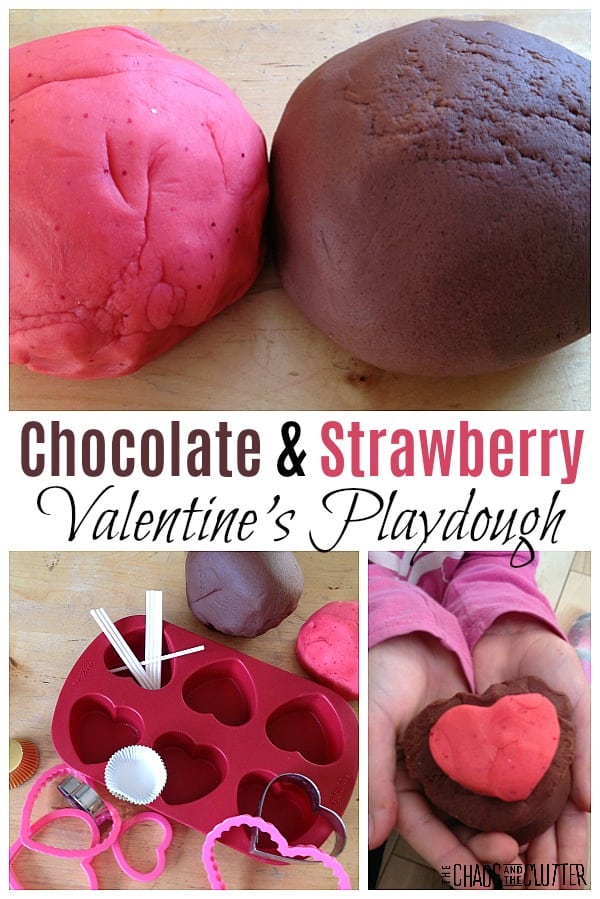
Supplies for the invitation to play:

  • pipe cleaners
  • gold foil candy cups
  • heart cupcake liners
  • various heart shaped cookie cutters
  • heart treat mould
  • lollipop sticks
  • rolling pin
  • chocolate and strawberry scented play dough (recipes below)

I was so surprised at what the kids created with the playdough! They are much more creative than I am.

They made cake pops, heart shaped lollipops, bon bons, little creatures, desserts, and cookies. Einstein even made a cookie that looked like someone had taken a bite out of it!
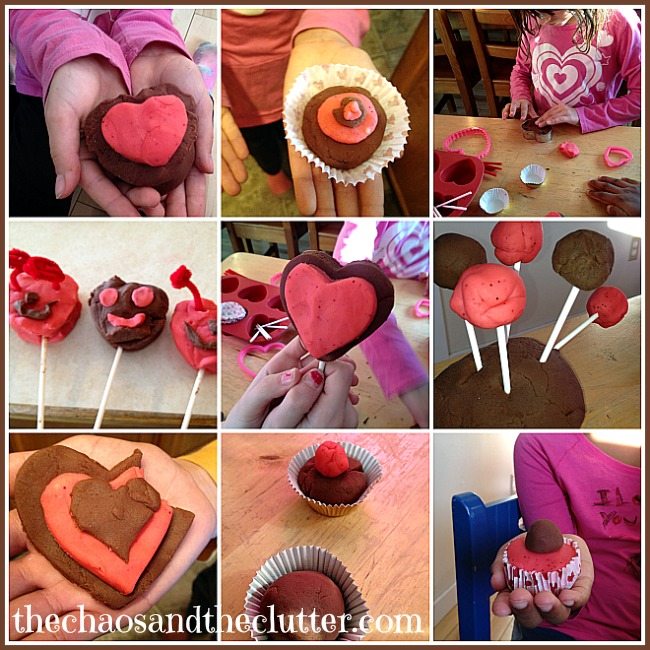
Valentine's Sensory PlayHere are the recipes for the play dough. Both recipes can also be found in my Sensory Bins ebook.

Chocolate Playdough Recipe:

  • 1 1/2 cups flour
  • 1 cup salt
  • 1/2 cup cocoa
  • 2 Tbsp. cream of tartar
  • 2 Tbsp. vegetable oil
  • 2 cups water

Stovetop instructions:

Add all ingredients to a saucepan and cook over medium-high heat, stirring constantly until it forms a ball and your arms are ready to fall off! Scoop it onto wax paper and allow it to cool. When cool enough, knead it and it is ready to play with.

No cook instructions:

Add the flour, salt, cocoa, and cream of tartar to the KitchenAid mixer. With the dough beater (the flat one), begin mixing on low and add the oil. As it mixes, pour in 2 cups of boiling water and continue to mix on low until it resembles playdough texture.

Remove the dough from the mixer and knead it by hand for 30 seconds to a minute.

The smell of this chocolate playdough is amazing!

This dough keeps soft for months if stored in an airtight container or resealable bag. 

Strawberry Playdough Recipe:

  • 1 cup flour
  • 1 cup water
  • 1/4 cup salt
  • 2 tsp. cream of tartar
  • 1 Tbsp. vegetable oil
  • red food coloring or pink food paste
  • red glitter
  • optional: 3 drops of strawberry essential fragrance oil

Stovetop instructions:

Put all the ingredients except for the essential oil and glitter into a pot and stir. Cook over medium heat, stirring constantly, until it forms a ball. As soon as it goes into a ball, take it off the heat and dump it onto the counter on wax paper.

When it is cool enough, add essential oil and/or glitter and knead it until it is nice and soft. Store in an airtight container or resealable bag.

No cook instructions:

Add the flour, salt, and cream of tartar to the KitchenAid mixer. Using the dough beater, begin mixing on low and add the oil, food colouring, and essential oil. As it mixes, pour in 1 cup of boiling water and continue to mix on low until it resembles playdough texture.

Take the dough out of the mixer and knead it for 30 seconds to a minute. Add the glitter in at this point and mix through by kneading.

The scented strawberry and chocolate playdough create a sensory experience that includes olfactory, tactile, and proprioception sensory systems.

If you are looking for other sensory activities, you may want to join me for a free 5 part email series Sensory Solutions and Activities and get your Sensory System Behaviours Easy Reference Cards.

Check out some of our other play dough invitations to play:
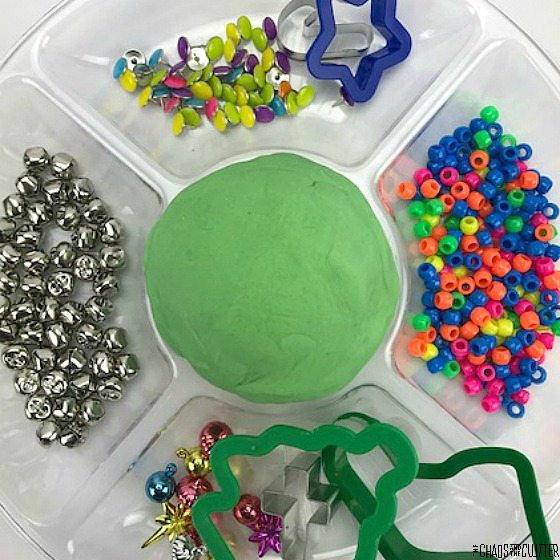
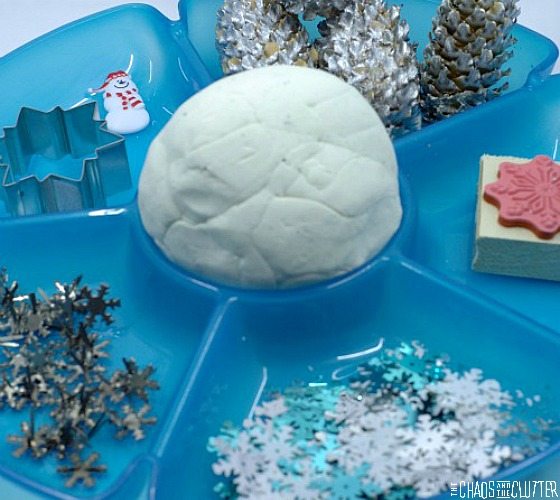
Peppermint Essential Oil Playdough Snow Playdough Snow Playdough and invitation to play

Filed Under: Crafts and Activities, Sensory Tagged With: playdough stations, sensory play

Penguins in the Snow Sensory Fun

By Sharla Kostelyk

Our family is back from our winter getaway to the mountains. The kids had fun skiing and snowboarding and swimming (although Snuggle Puppy was too sick with a cold and fever and stayed in and slept and snuggled). It was nice to get away from our house repairs and from the appointments and chaos and spend some time reflecting and just being together.

Given that we were just skiing and spending time in the snow, I thought it might be fun to feature some creative penguin and snow sensory ideas. I find it fascinating that even though the themes are similar, the materials and methods are unique. Our daughter Granola Girl has been obsessed with penguins since she was very young. She still enjoys learning about them.

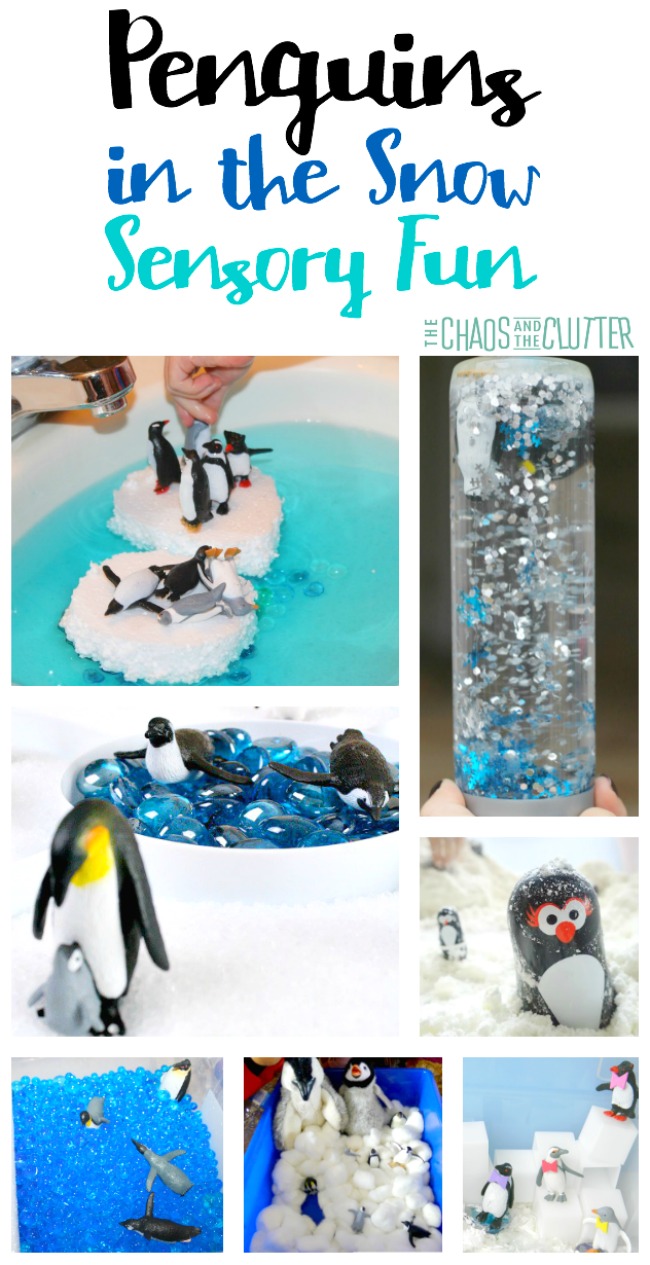
Penguins in the Snow Sensory Fun for kids
These penguin sensory activities are adorable. They use a variety of textures and materials.

Penguin Sensory Bin from here on The Chaos and The Clutter (pictured)

Penguin Sensory Sink from Teaching Mama (pictured)

Snow & Ice Penguin Small World from Stir the Wonder

Penguin Sensory Bin from Inspiring NH Kids

Penguin Winter Sensory Play from Fantastic Fun and Learning (pictured)

Penguin Sensory Bottle from Teaching Mama (pictured)

Penguin Sensory Small World Play from Learn Play Imagine

Penguin Sorting Sensory Bin from Powerful Mothering (pictured)

Build a Penguin World from Adventure in a Box

Penguin Water Bead Sensory Bin from 3 Dinosaurs (pictured)

Penguin High Frequency Words from Adventures of Adam

Tacky Penguin Sensory Bin from Stir the Wonder (pictured)

Penguin Sensory Bin from Adventures of Adam

Sensory Bins ebook

Join me for a free 5 part email series Sensory Solutions and Activities and get your Sensory System Behaviours Easy Reference Cards.

Filed Under: Sensory

Candy Sensory Bin

By Sharla Kostelyk

Earlier this year, we were reading the book Charlie and the Chocolate Factory. I like to come up with corresponding activities to go along with our book studies in the hopes that it will cement the learning and usually come up with a sensory bin as part of that. It seemed only natural that a Candy Sensory Bin should go with Charlie and the Chocolate Factory!

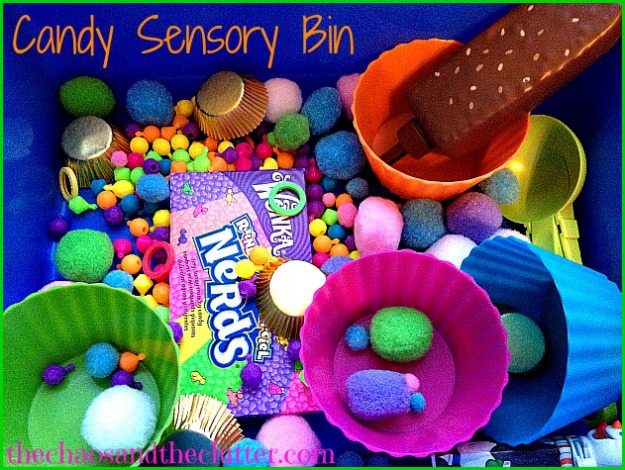
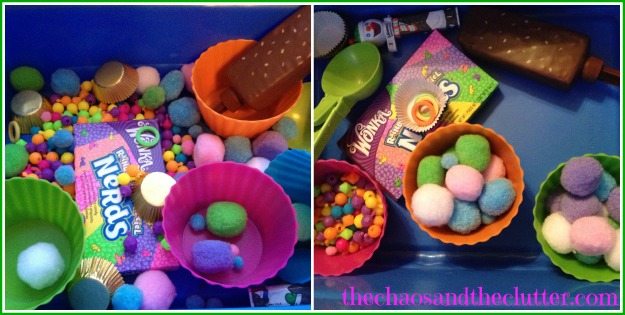
Candy Sensory Bin - The Chaos and The Clutter

I included various sizes of pompoms, little beads that can be strung together to make a necklace that looked candy-like, gold foil bon bon cups to represent the Golden Tickets, an empty Wonka Nerds box, an ice cream scoop, a Pez candy dispenser, ice cream bowls in bright colours, a Fudgesicle bubble blower which was chocolate scented, and the little rings that you can put on keys to tell them apart (which I bought for $0.99 for a pack of 4 and thought they looked like Life Savers and they have great sensory elements to them).

At one point, I bought a pack of Wonka Gobstoppers and ate them so that we could use them in the bin (the sacrifices I make for my kids!) but the empty box likely got thrown away so I bought another box and with that one, I shared them with the kids, but that empty box also somehow got thrown away so after two failed tries, I gave up on having Gobstoppers in the candy sensory tub!

It was neat to see how differently the kids approached playing with this bin. Some got in there and smelled everything, mixed things all around, made a necklace out of the beads and wore it while they played, while others were more methodical in their approach and separated things by colour or just organized the bin in the way they felt best.

Candy Sensory Bin PlayI didn’t disassemble this bin because I’m planning to pull it out again for Valentine’s Day week and will add some plastic conversation hearts to it for that. Double-duty sensory bin!
If you are looking for more sensory ideas or information, you may be interested in my book and by following my Sensory Bins board on Pinterest.

The Ultimate Guide to Sensory Bins

Filed Under: Sensory, Sensory Bins Tagged With: sensory bin, sensory play

How I Teach Fine Arts to Multiple Kids with Special Needs

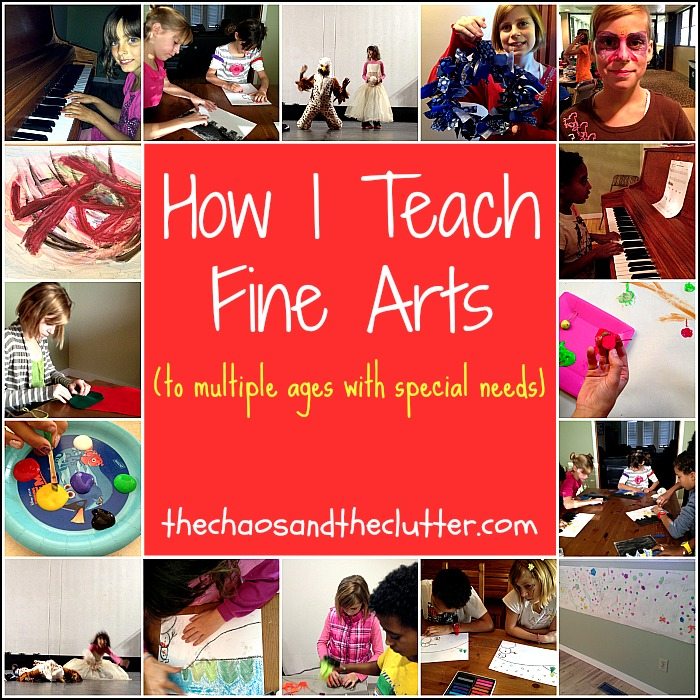
How I Teach Fine Arts to multiple ages with Special Needs

By Sharla Kostelyk

How I Teach Fine Arts to multiple ages with Special Needs

Music

The kids have a fantastic piano teacher who comes to the house Tuesday mornings to teach them piano and theory. They have a recital coming up next week. They really enjoy their piano lessons (although practising is another story for some of them!).

Having a teacher come into our home works for so many reasons. I can homeschool the other kids while lessons are going on with each one. There is no travel time. The kids feel most comfortable at home and are able to relax. We have tailored the lessons (both the content and the length) to each of the kids and their individual needs.

Music Appreciation

For music appreciation, we are using the Zeezok Music Appreciation Program. It studies individual composers and their music. We are currently learning about Haydn. We also in the past have used Color the Classics in which the kids color pictures pertaining to a particular composer and his life while listening to that composer’s music. Both of these programs work well with my kids because they use a variety of senses, are easy to adapt and we can set our own pace.

Art

Art is not my gift. I enjoy scrapbooking and crafting but can’t sketch beyond a stick man. I was always afraid to teach art so for all these years, my kids have taken Homeschool Art Classes through our local Recreation department. This year, one of the instructors had to recuse herself and the classes for three of my kids were cancelled. I consider art to be important so I mustered up the courage to give art lessons at home a try thanks to the Simple Start in Chalk Pastels tutorials. I shared how I used the Christmas Chalk Pastels tutorials to finally accomplish effective art lessons taught by yours truly last month. I have since started using one of the other books to continue their art lessons.

I love how easy they are to teach and the finished products are gorgeous! What I like the best though is that there is something about us sitting at the table and doing chalk pastels together that seems to calm the kids. It’s a great way to start the day so we usually do it first thing in the morning and it seems to work on chaos days to settle things down a bit if we pull them out in the afternoon.


Art Appreciation

I use mainly books to teach the kids art appreciation. We have several, including M is for Masterpiece, Famous Paintings, and the Usborne Introduction to Art. 

We also have visited art galleries and art exhibits and discussed different art periods and influences throughout history.

Drama

The kids have taken homeschool drama classes over the years and some of them have attended one day or one week drama workshops. We haven’t had the opportunity to take them to many live theatre events but sometimes are able to attend one put on by a local high school. It is also sometimes possible to get very inexpensive tickets for dress rehearsals for major productions.

Fine arts are something that I do consider important to learn but even more critical is that some of my special needs children seem to have an aptitude for creativity. I want to give them a chance to explore and improve on those talents.

Miss Optimism has always loved fashion and may just become a fashion designer one day. We got her a sewing machine for Christmas/her birthday and she will start taking lessons soon (though lack of teaching has not stopped her from sewing a housecoat, cell phone snuggies, purses, and a quilt!).

Filed Under: Homeschooling

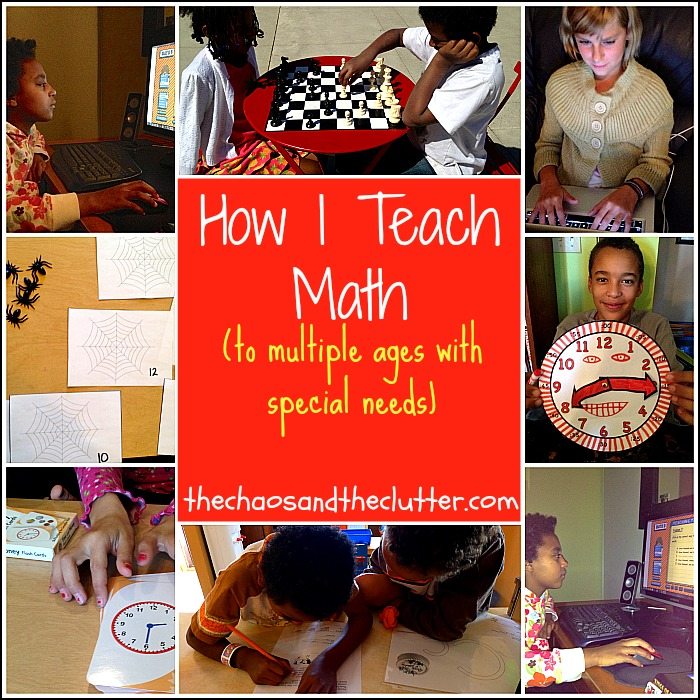
How I Teach Math to Multiple Ages with Special Needs

How I Teach Math to multiple ages with special needs

By Sharla Kostelyk

I should start off by saying that Math is not my forte. In fact, I barely passed high school math and I am scared of it. Yes, I have a fear of math. For the most part, my kids have inherited my math skills and it is a weak point for them, with the exception of Snuggle Puppy and Dancing Queen. Dancing Queen has cognitive delays and is functioning at a preK level in everything else, but she is doing exceptionally well in her third grade math!

How I Teach Math to multiple ages with special needsMath is the thing about homeschooling that I am the least confident about and probably worry about the most. For this reason, it is also the thing that I am the least eclectic about, in that I use a set curriculum for most of it. We started way back then using Abeka and then switched to Math U See. Math U See served us well for a number of years because of the teacher on the DVD, the manipulatives and the slow pace but then we hit a plateau and no one seemed to be progressing.

If there is one thing that I have learned by homeschooling, it is that if something doesn’t work, change it. Also, what works for one family, will not necessarily work for another and you may even have to use one curriculum with one child and another for your other children. I knew going into this year that we were going to have to find something new.

In my quest to find a math curriculum that would be a good fit for us, I compiled a list of different reviews and opinions. I researched and second guessed and finally settled on Teaching Textbooks. So far, it’s been a really good fit for all of the kids except Einstein. I would have predicted that he would like it the most since it is on the computer but it has been like pulling teeth to get him to do his math. I may have to give him the option of buckling down with Teaching Textbooks or going back to Math U See.

For the other kids, Teaching Textbooks has been wonderful. They have enjoyed being able to do it on the computer, the immediate feedback it offers, listening to the instructions and that it is not full of busy work. I like that it includes things like days of the week and months of the year and that it goes over old concepts and mixes them in with the new so that there is ample practise and review opportunities.

The other reason it works so well for us is that the kids all have their own usernames and passwords and it saves their information to the disk so they can move at their own pace.

We also use Take it to Your Seat Math Centers in their workboxes, math printables and hands-on activities in their workboxes, multiplication flash cards, money and time flashcards, the Multiplication Rap CD, the Math U See Skip Counting CD, and unit studies.

We did a unit study earlier this year on telling time and I have one planned for later this year on money. As my kids need a lot of repetition, practise, hands-on, and practical application practise, I am have a lot of hands-on activities planned for the money unit and am going to set up a mock store at home with a cash register and pretend money for them to practise with.

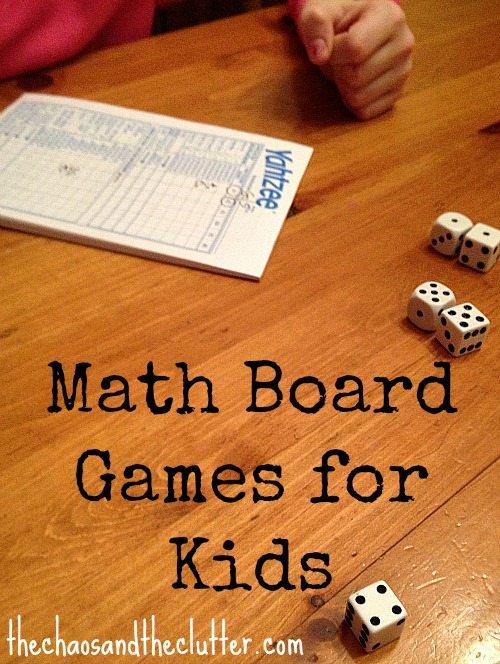
We also play A LOT of cards and board games so the kids pick up math skills very naturally that way. Some of the board games are designed to teach math skills specifically while others reinforce those skills in a less obvious way. (Update: I’ve created a more specific list of math board games because of the questions about this. You can read the full list and details of how we use games for math here or by clicking the picture below.)

Math Board Games for Kids


Filed Under: Homeschooling

How I Teach Language Arts to Multiple Ages (and Special Needs)

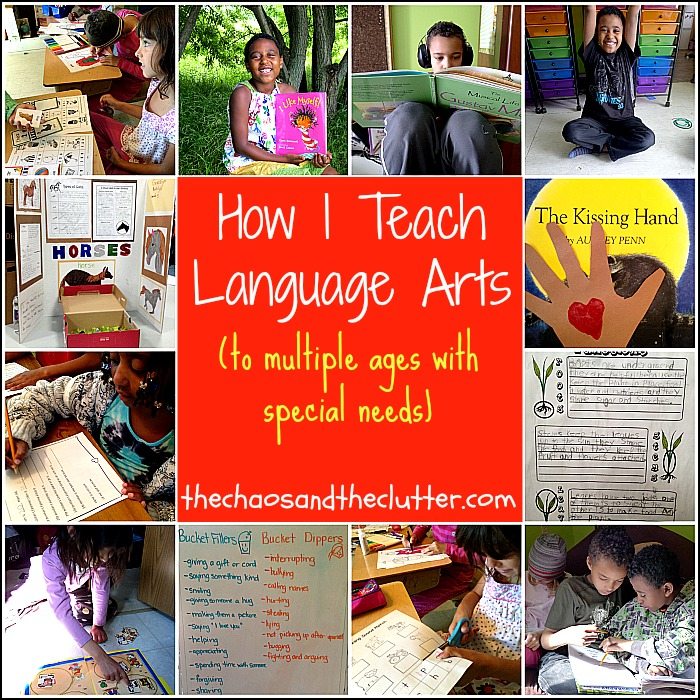
How I Teach Language Arts to multiple ages with special needs

By Sharla Kostelyk

I have probably the world’s most eclectic program put together for our language arts homeschool program. I have tweaked it over the years and am always looking at ways to add to it that would be effective with my kids or take things out that are no longer working well.

How I Teach Language Arts to multiple ages with special needs

Workboxes

Workboxes are a big part of our homeschool days. I find it an easier way to organize our day and the kids respond very well. There are so many benefits to this system including small things like the fact that the kids have to get up out of their desks in between each activity and that physical change is good for them. Our son Einstein who has Aspergers likes that with the workbox system lets him know exactly when the work will be done. I have written an in-depth explanation of how we use our workboxes if you would like more details in how to implement this in your classroom.

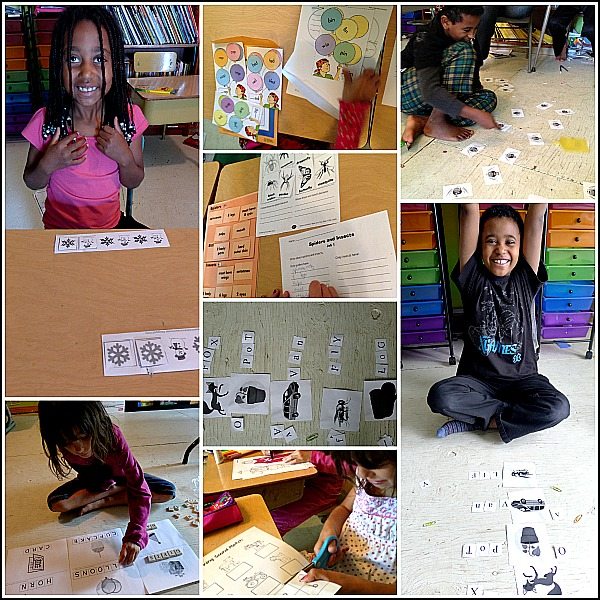
There are several language arts activities put into the weekly workbox rotation. These change from week to week but include audio books for them to listen to at the listening station, file folder games, Take It to Your Seat Centers from Evan Moor (we have all levels and all types), and printables from different websites.

Most of the printables I find at:

Free Homeschool Deals
Confessions of a Homeschooler
This Reading Mama (some excellent language arts resources here)
3 Dinosaurs
1+1+1=1.

language arts workbox activities

Spelling

I have in the past used actual programs such as All About Spelling which is a really great program and helped a lot but what works for us right now is a very unstructured made by me program based on the book A Measuring Scale for Ability in Spelling. This little gem of a book is one that I have had since one of my sisters-in law gave it to me in about my first year of homeschooling (for the record, that is over a dozen years ago at least!).

It contains a list of the 1,000 most common words, in the order of their frequency in the English language. I sometimes use this list to choose sight words for the kids to learn. It just makes sense to me that teaching them the most commonly used words would be the most useful.

The words are then divided into groupings based on determining spelling at grade level. I also find this tool useful and these lists are what I use for impromptu spelling tests. For me, the grade level bit isn’t as relevant as with the kids’ special needs, my expectations are adjusted but it helps give me an idea of where they are at.

Phonics/Reading

As with everything, I have found that hands-on works the best for most of our kids in learning phonics. We use letter cubes for blends and sentence building tiles.

We always have one or two chapter books on the go that are read-aloud and each day, we also read at least one or two other read-alouds. These are some of our favourites.

We also do activities to accompany the books we read. We expand the learning using food, sensory bins, crafts, writing, and notebooking.

I do one-on-one reading with my early readers. This is a bonding time as well as a learning one.

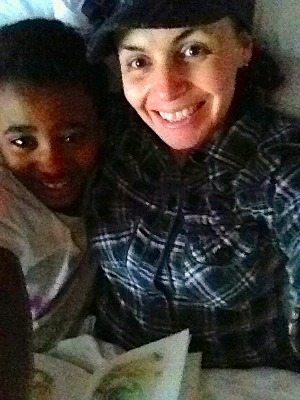
Snuggle Puppy and I reading

Grammar

I love Daily Grams! I have been using it for many years and I like that it’s not busy work. It doesn’t make the kids do 25 of the same thing over and over on a page. It teaches letter writing, punctuation, plurals, capitalization, dictionary skills, sentence combining, synonyms and antonyms, contractions, and more.

Handwriting

We have been using A Reason for Handwriting for a number of years. It allows the kids to go at their own pace.

Poetry 

We haven’t done a lot of work on poetry except for a brief study of Haikus, but each week the kids work on memorizing a poem. Sometimes it’s just a goofy poem like something from Shel Silverstein while other times it is a short poem by Frost or Blake. Right now, they are memorizing The Cremation of Sam McGee which is a lot longer than I remembered and we may stop halfway because it’s also more morbid than I remembered (!) but they enjoy memorizing poems and it is giving them a foundation in poetry appreciation.

Poems are also a place that we find a lot of our vocabulary words to discuss.

Sentence Writing

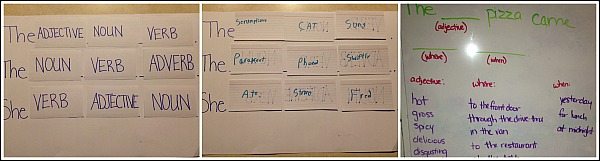
I have written about how I teach strong sentence writing which includes a homemade mad-libs type of game and a brainstorming technique found in the book Write a Super Sentence.

sentence writing ideas

Board Games

Our family really enjoys board games and they are such an easy and fun way for kids to learn. Games such as 5 Second Rule (Spit it Out!), Scrabble Junior, Boggle Junior, and Apples to Apples get pulled out on almost a daily basis around here.

Our made up game of dictionary wars which means racing against each other to locate a word in the dictionary.

Pop for Sight Words (we have the first and the second one) have been excellent for our early readers and the way that the game works, it can be played by all different skill levels at the same time with everyone having a chance to win.

Other

Language Arts gets incorporated in many other areas of our homeschooling. The kids gets the opportunity to practise their writing in unit studies, notebooking, science, history, and Bible. The kids enjoy writing most when it is for practical applications such as letter writing or list making.

Filed Under: Homeschooling

  • « Go to Previous Page
  • Page 1
  • Interim pages omitted …
  • Page 101
  • Page 102
  • Page 103
  • Page 104
  • Page 105
  • Interim pages omitted …
  • Page 128
  • Go to Next Page »

Primary Sidebar

Categories

We are a participant in the Amazon Services LLC Associates Program, an affiliate advertising program designed to provide a means for us to earn fees by linking to Amazon.com and affiliated sites.

Copyright © 2026 • The Chaos and the Clutter • Site Design by Jeni @ The Blog Maven

Return to top of page

Copyright © 2026 · Chaos and the Clutter 2.0 on Genesis Framework · WordPress · Log in