• Skip to primary navigation
  • Skip to main content
  • Skip to primary sidebar
  • Home
  • About
  • Contact
  • Privacy + Terms
  • Affiliates

The Chaos and the Clutter

  • Facebook
  • Twitter
  • Pinterest
  • Google Plus
  • RSS
  • Email
  • School at Home
  • Sensory
    • Sensory Processing Disorder
    • Awesome Sensory Play Activities
      • Sensory Bins
      • Sensory Bottles
      • Sensory Bags
  • Family Games
    • Minute to Win It Games
  • Special Needs Parenting
    • Childhood Anxiety
    • Reactive Attachment Disorder
    • Sensory Processing Disorder
  • Store
  • Course Login

Sharla Kostelyk

Parenting a Sick Child: Taking Care of Your Other Kids’ Needs

By Sharla Kostelyk

Having a sibling with a chronic or terminal illness can have a lasting negative impact. Here are some suggestions for helping your other children cope with the illness of a sibling.

Growing up as the sibling of a sick brother or sister is difficult. In addition to much of your parent’s attention being directed toward the child who is ill, there is also a lot of worry and uncertainty in your life.

One of our daughters, Miss Optimism, has a chronic health condition that at times, has kept our family hostage. To believe that her condition has not impacted our other children would be naive. We have had to cancel family vacations when her condition was unstable. Even our daily plans and routine are never guaranteed because of the uncertainty her health involves. There have been periods of our lives, including an eight month block, when my attention needed to be focused on keeping her alive. When that is my focus, it only stands to reason that the other kids miss out on my time and attention. If I am not careful, their resentments will start to build towards me, and towards their sick sister. There are some steps that you can take to preserve your family and protect your other children, even while dealing with the demands of caring for a sick child.  So often, we take care of the most immediate issue, which is the health of that one child, without considering the impact the situation is having on the mental health of the rest of the family members.

Have them help. You do not want your other children to have to slip into the role of caregiver for their sibling, but having them help with small things pertaining to their sibling’s care will help them to feel involved. Helping will also give them some time with you and give them the opportunity to ask questions and learn more about their sibling’s health condition. It also will give them more empathy towards their sibling if they see what type of treatments they go through. I sometimes ask one of my sons or other daughters to carry my daughter’s medication bag to me. I use this opportunity to praise them for their help and also to tell them what the medications are for. Each time that my daughter goes in to the doctor for injections, she chooses one sibling to go with her. She likes to show them how brave she is when she gets her needles and they like to go because they get a lollipop from the nurse afterwards and get to spend some time with me.

Talk openly. This is by far the most important thing. If you take nothing else away from this article, please remember this. Children have very active imaginations and they will imagine things that are far worse than the reality. Thinking that you are shielding them from the truth by not telling them or by only telling them certain things is misguided. Of course, you will need to determine what to share based on the age, maturity and personality of the child. You can ask a doctor or therapist for their advice on this or take cues from your child.

Having a brother or sister who is sick is scary and they are probably already imagining the worst case scenario and living in fear. Be honest with them. By sharing as a family what is really going on, you will also open up the doors so that your child will be able to ask you questions and share their fears with you. Children commonly assume that they will also become ill with whatever condition their sibling has, but do not express this unless you open the door for that conversation to happen. If their sibling is terminally ill, talk about the possibility that their brother or sister could die. Ask them how they feel about that and give them the opportunity to do or say what they need to.

Spend the time. Having a sick child feels like it takes up all of your waking (and non-waking) hours. It also feels like it takes up every ounce of your energy. Sometimes the thought of trying to make extra time for your other kids just feels like too much. But it is imperative that you do. You need to find a way. That could mean that you utilize a babysitter, respite service, or a relative to care for your other children or that you just allow one child to stay up later than the rest on a rotating schedule so that they will have one-on-one time with you. You can also spend time with them while you are caring for your ill child by involving their help or bringing them to appointments with you.

At one point, our daughter was going to see her specialist at least three times a week for months. When I would take her to those appointments, I would be gone for at least four hours. That kind of time away from the rest of the kids takes its toll. By bringing one of them with me to the appointment, I also took some of the mystery away. They no longer had to wonder what I was doing when I was gone to these appointments because they had each been there. Of course, time with the other kids is not always possible such as when our daughter is in the hospital, but them seeing that I am making the effort when I can goes a long way with the kids.

Get professional help. Having a child with a long term illness takes a toll on the whole family. Being aware of the impact that it is having on your other kids is a good first step, but that may only add to your guilt that they are not getting a “normal” childhood. There comes a point when you cannot cope alone. Get your other children in to see a therapist, enrol them in group therapy where they can talk to other kids who also have a sibling who has an illness, or check with your local hospital to see if they have any sibling programs. They often do. Some of the sibling support groups will be very specific, such as ones where all the kids have a sibling who has cancer. The more specific programs are generally better, though any therapy or program specific to siblings is probably better than none.

Books. There are many children’s books available that confront the things that may be scary to your children. There are books on hospital stays, doctor’s appointments, sickness, and even death for children of all ages. Choose books that are age appropriate and remember to also read them to the siblings of the sick child, not just the sick child.  We often remember to read a book on going to the hospital to the child who will be going, but forget that their siblings may have fears as well and would benefit from learning more about it.

Children’s books about going to the hospital:

Going to the Hospital Sticker Book
Franklin Goes to the Hospital
Going to the Hospital (this one has pictures of real people which I like)

Children’s books about going to the doctor:

The Berenstain Bears Go to the Doctor
Going to the Doctor Sticker Book
Say “Ahhh”: Dora Goes to the Doctor

Children’s books for siblings:

When Molly was in the Hospital: A Book for Brothers and Sisters of Hospitalized Children
What About Me?: When Brothers and Sisters Get Sick
When Someone You Love Has Cancer: A Guide to Help Kids Cope

Ask for help. Ask for help from those around you so that you will have more time to devote to all of your children. Many churches have programs where they will deliver meals to families who are dealing with illness or loss. They also may be able to get volunteers to come in and clean your house or sit and read to your ill child while you play with your other children. You cannot do this alone. Ask for help from your community, your neighbours, your friends, your church, and your family.
Filed Under: Parenting in the Chaos, Special Needs Parenting

Bunny Easter Muffin Tin Lunch

By Sharla Kostelyk

Well apparently Spring is coming, though the large amounts of snow that keep falling around here aren’t exactly indicative of that promise!

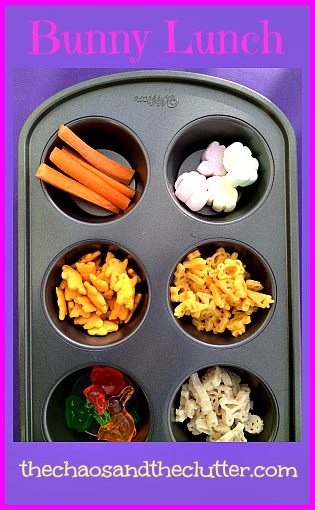
When I was in the U.S. last week, I picked up a bag of bunny shaped marshmallows and chose to create a themed muffin tin tray around them which proved very easy to do. Who knew there were so many bunny shaped edible delights out there?!

Included in this Easter lunch are:

  • carrots (of course!)
  • bunny shaped marshmallows
  • Annie’s organic cheddar bunny crackers
  • Annie’s organic bunny shaped mac and cheese
  • bunny fruit gummies (*see note below)
  • and Tinkyada gluten free bunny pasta with butter and parmesan.

*Note: fruit gummies are really just the way moms like me feel less guilty about feeding their kids candy because really, isn’t that essentially what “fruit” gummies are?!

Filed Under: Home

Christ-Centered Easter Sensory Bin

By Sharla Kostelyk

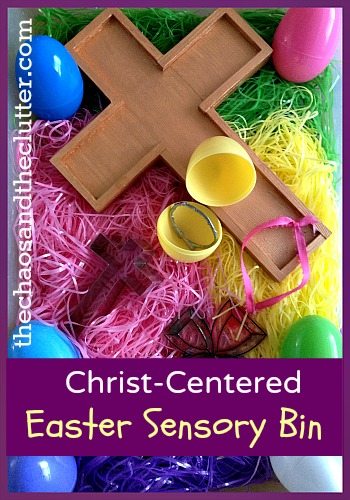
This was a very simple sensory bin to make. I used four colours of Easter grass as the base and added a cross shaped cookie cutter, a wooden cross the kids had painted gold, and a stained “glass” cross. I am also adding Resurrection Eggs as we complete them. We use Resurrection Eggs every year, but this is a new way to use them.
After we discuss the item in each egg and how it relates to the Easter story, I add that egg and its item to the sensory bin and the kids can then play with them when they play in the sensory bin and reinforce their learning.

Check out my book of sensory activities!

Join me for a free 5 part email series Sensory Solutions and Activities and get your Sensory System Behaviours Easy Reference Cards.

Filed Under: Sensory, Sensory Bins Tagged With: sensory bin, sensory play

St. Patrick’s Day Sensory Bin

By Sharla Kostelyk

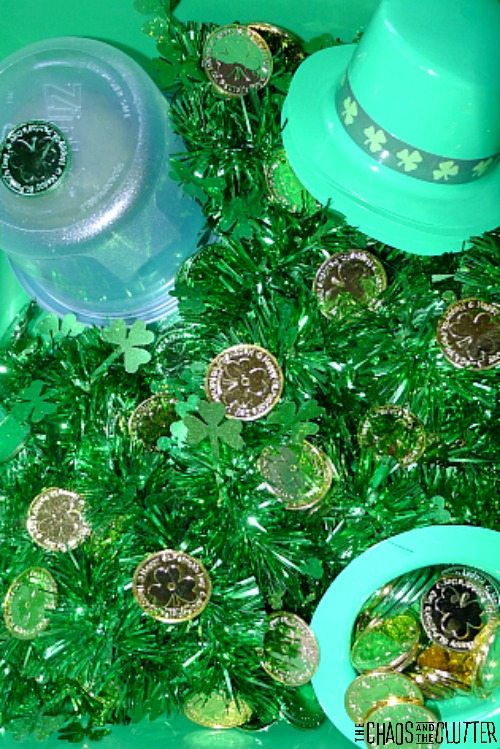
One of the great things about all the just for fun holidays when you’re a mom with kids who have sensory issues is that it’s a lot easier to create your sensory bins! For our St. Patrick’s Day sensory bin, I kept it very simple.

Simple St. Patrick's Day Sensory Bin for kidsI used a green plastic bin to go along with the theme and filled it with a shamrock garland, homemade green playdough in a plastic container, gold and green St. Patrick’s coins, and plastic Leprechaun hats. I purchased all of the items at the dollar store other than the playdough.

st-patricks-day-sensory-binI also used the extra coins to create a treasure hunt for the kids.

If you are looking for a fun way to start your day, you can read how to make and easy St. Patrick’s Day breakfast.


If you are looking for information on making sensory bins, you may be interested in my book. The Ultimate Guide to Sensory Bins

Filed Under: Sensory, Sensory Bins Tagged With: sensory bin, sensory play

Camping Muffin Tin Lunch

By Sharla Kostelyk

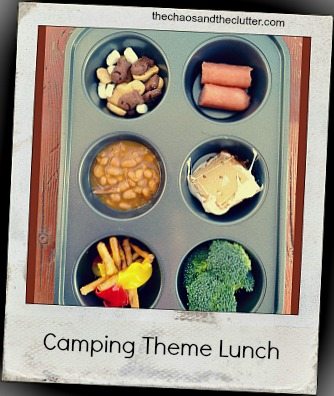
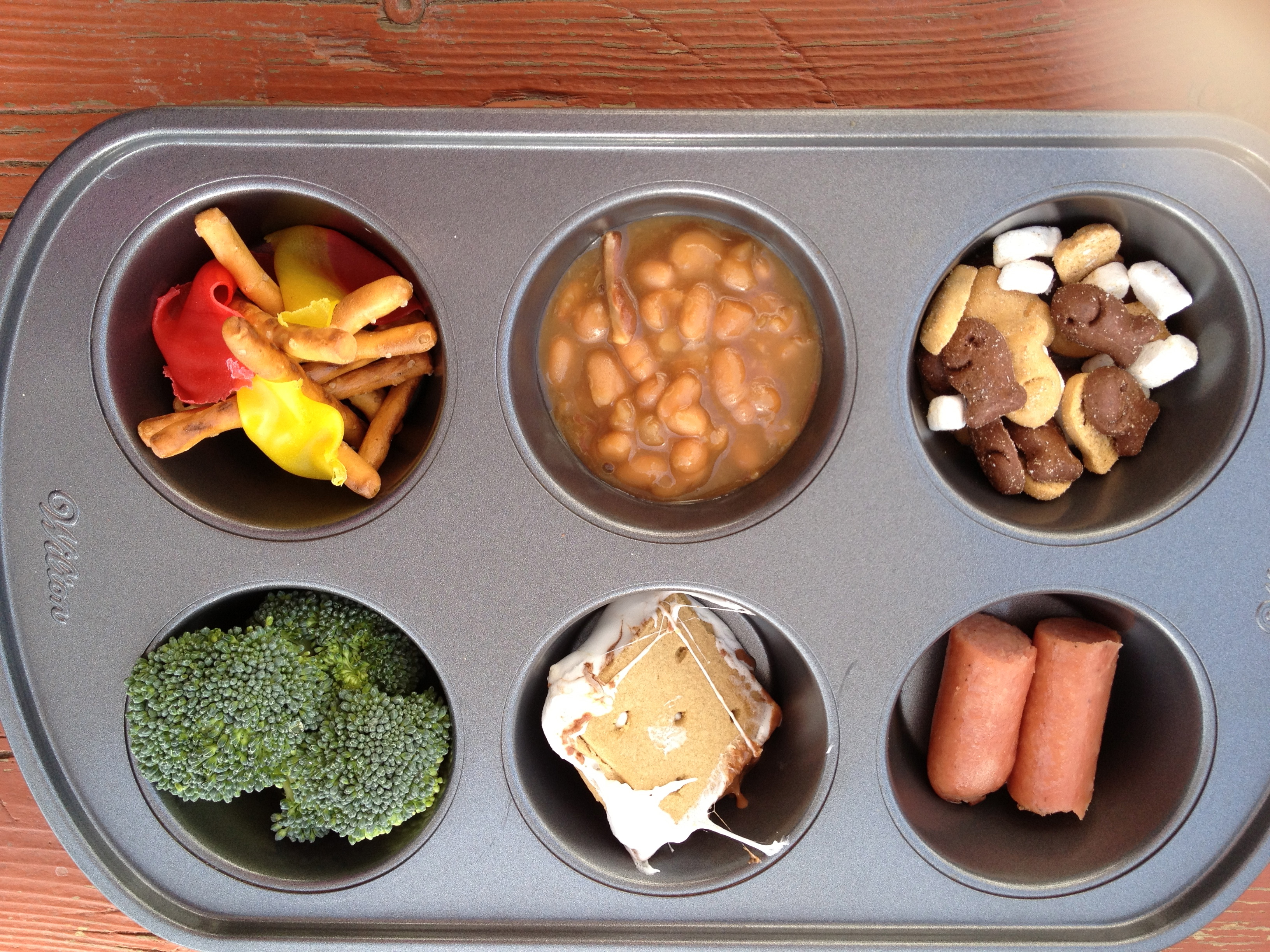
I found some S’mores goldfish crackers while I was in the States and the kids and I brainstormed how to turn them into a themed lunch.

-campfire made with Glutino pretzels (logs), raisins (coal) and fruit roll ups (fire)
-pork and beans
-s’mores goldfish crackers
-trees (broccoli)
-s’mores made with gluten free graham crackers in the microwave
-hot dogs

Filed Under: Home

Answering the Rude Questions

By Sharla Kostelyk

Following yesterday’s post about when your family is a walking ad for a certain type of non-traditional role, I received a lot of comments both on the blog, on Facebook and via e-mail. The main issue people raised was not knowing how to handle when strangers ask rude questions. I can only speak for myself and how I have chosen to handle that situation. I can also speak to what I have found to be the most effective method over the years of trial and error in this regard.

I want to first clarify that I am not speaking about the usual curious questions that families that stand out get when in public. These techniques are for using only when the questions or comments are rude and spoken in a tone that conveys that rudeness.

There are three main ways that I think these scenarios can be handled…by being blunt, by being honest or by being cheesy. I will give several examples of each of these in real world scenarios to give you a good foundation on how they work and then I will tell you which one I have found to be by far the most effective.

“How much did she cost?”

Blunt – “I’m sorry about the look on my face but I am honestly shocked that you would speak about my daughter as though she were a piece of furniture!”

Honest – “There is no price tag on human beings. If you are asking how much her adoption cost because adoption is something you are considering, I would be happy to give you the phone number of our adoption agency.”

Cheesy – “Like all of my children, she is priceless!”

“Where is her real mom?”

Blunt – “Her real mom is standing right in front of you.”

Honest – “It is generally accepted to use words such as ‘biological’ or ‘first parent’ when referring to what I assume you are referring to, however I am about as real as it gets!”

Cheesy – “I am so proud to be her real mom. Aren’t I blessed?!”

“How do you handle being with them all day? If I had to homeschool, I think I’d kill myself.” (yes, all of these are honestly questions I have fielded over the years!)

Blunt – “If I had to homeschool your kids, I’d feel the same way!” (ok, I’m kidding! I would NEVER actually say that!)

Honest – “There are certainly days when it is a challenge but I rely on God for my patience when I get to the end of myself and He hasn’t let me down yet.”

Cheesy – “Their childhoods goes by so quickly and I don’t want to miss a moment!”

“My kids knew better at that age.” (in reference to my then-9 year old tantrumming)

Blunt – “Congratulations on raising your neurotypical kids well!” (I probably couldn’t say that with a straight face.)

Honest – “Some special needs are invisible and compassion goes a long way.”

Cheesy – “It has been both a challenge and a privilege to raise a child with special needs but I wouldn’t trade him for the world!”

I previously wrote more on some of the real world questions we have encountered that are so strange they just boggle my mind and on how I chose to respond to them.

Another way that works to some degree is to speak in generalities like in the case where someone asks:

“Were they orphaned?”

Generalities – “Children come to adoption for a variety of reasons. Some of these reasons include poverty, their first family being unable to care for them due to illness, the death of one or both parents, war or famine, or a first parent making an adoption plan for their child.”

“Why don’t you just have your own children?”

Generalities – “People choose adoption for a variety of reasons. These reasons may include infertility, secondary infertility, feeling called to adopt, or wanting to provide a home for one of the more than 147 million orphans in the world.”

The benefit of generalities is that it allows you to answer the question without divulging any of your child’s personal story. The negative of generalities is that when using this technique, the answer is usually followed by many more questions.

The most important thing to keep in mind when answering any question:

The stranger standing in front of you will be in your life for a few minutes. Your kids who are within earshot of the conversation will be in your life forever. I tailor every answer so  that it builds my kids up and lets them know that I love them, am proud of them and would do it again (adopt them, birth them, homeschool them) in a heartbeat!

The most effective way to end the conversation but keep your kids’ hearts intact:

By far the single most effective way to shut down conversations that are making you uncomfortable is to use either the cheesy technique or to bring God into it because who can argue with God? An example would be:

“Why would anyone choose to have this many children?”

God – “God called me to this and I’m so glad He did. It has been a challenge but such an incredible blessing!”

(Do you see how I combined giving God the glory and the cheesy technique?!)

By using the cheesy technique, you are able to stop the conversation before it starts while at the same time reinforcing to your kids that they are a blessing.

Keep the conversation going in the car.

After a rude encounter with a stranger, I feel that it is important to acknowledge it with your kids afterwards to see if it brought up any feelings in them that they need to discuss. You may choose to say something such as, “you know when that woman in the store asked me why you were brown, how did that make you feel?” It’s also appropriate after they have shared your feelings to share your own feelings about the situation too in an age-appropriate way that keeps the child’s dignity intact. You can also turn it into a learning experience by discussing what sorts of questions are and are not appropriate to ask of strangers.

Join me for a free 5 part email series, Little Hearts, Big Worries offering resources and hope for parents.

Filed Under: Adoption, Homeschooling, Special Needs Parenting

  • « Go to Previous Page
  • Page 1
  • Interim pages omitted …
  • Page 113
  • Page 114
  • Page 115
  • Page 116
  • Page 117
  • Interim pages omitted …
  • Page 128
  • Go to Next Page »

Primary Sidebar

Categories

We are a participant in the Amazon Services LLC Associates Program, an affiliate advertising program designed to provide a means for us to earn fees by linking to Amazon.com and affiliated sites.

Copyright © 2026 • The Chaos and the Clutter • Site Design by Jeni @ The Blog Maven

Return to top of page

Copyright © 2026 · Chaos and the Clutter 2.0 on Genesis Framework · WordPress · Log in