• Skip to primary navigation
  • Skip to main content
  • Skip to primary sidebar
  • Home
  • About
  • Contact
  • Privacy + Terms
  • Affiliates

The Chaos and the Clutter

  • Facebook
  • Twitter
  • Pinterest
  • Google Plus
  • RSS
  • Email
  • School at Home
  • Sensory
    • Sensory Processing Disorder
    • Awesome Sensory Play Activities
      • Sensory Bins
      • Sensory Bottles
      • Sensory Bags
  • Family Games
    • Minute to Win It Games
  • Special Needs Parenting
    • Childhood Anxiety
    • Reactive Attachment Disorder
    • Sensory Processing Disorder
  • Store
  • Course Login

Homeschooling

Teaching Children About Blindness

Teaching Sighted Children About Blindness

By Sharla Kostelyk

Browsing through the shelves at the bookstore, I happened across perhaps one of the coolest children’s books I have ever seen! As a side note, I do not allow myself to go into bookstores often as I get lost in all that there is to see there and spend far too much time (and money) so this was a rare treat. The book that caught my eye was called The Black Book of Colors.
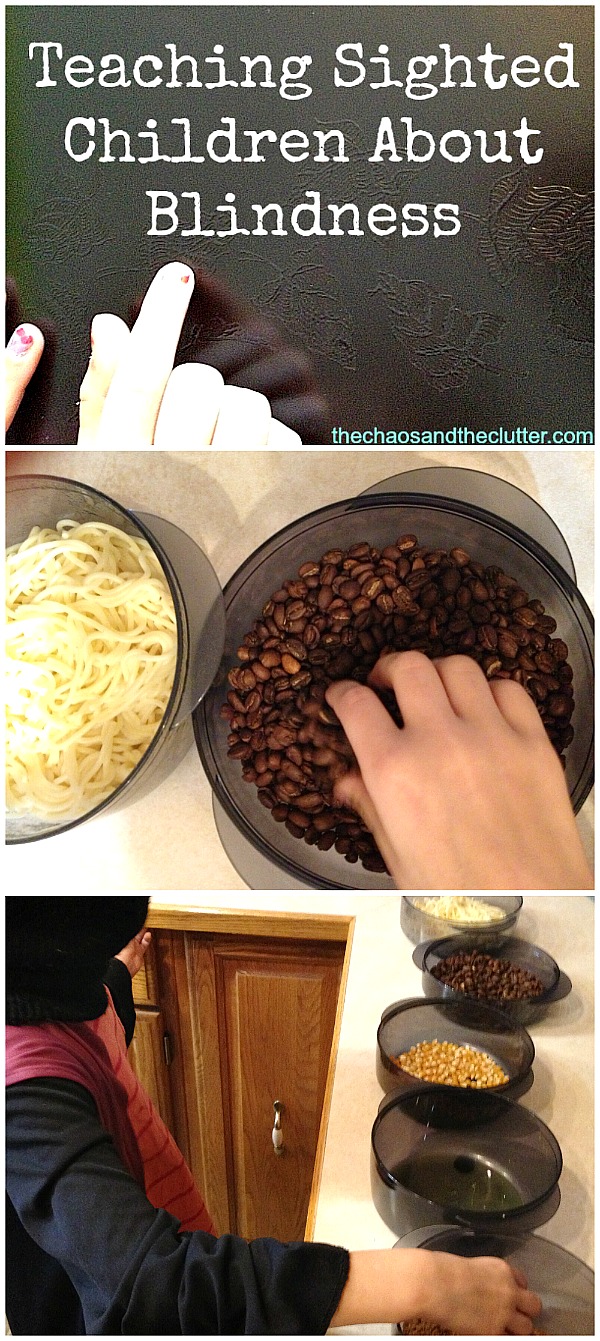
Teaching Sighted Children about Blindness through activities, discussion and an amazing book.The title of the book intrigued me so I opened it up to take a peek and was met with black pages with raised black pictures that had to be felt more than seen. On the opposing page was text in white along the bottom with the braille version at the top. The book explained what colors “look” like to someone who is blind.
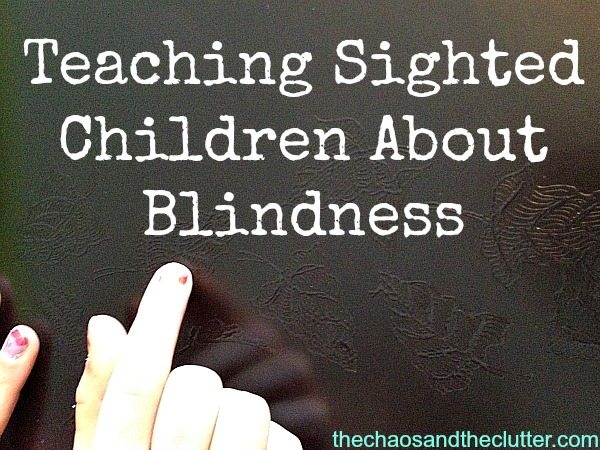
Teaching Sighted Children About BlindnessI decided to turn it into a small unit study so I planned a few activities for the kids to go along with the book.

I set up containers of coffee beans, cooked spaghetti, dish soap, popcorn kernels, and taco spice seasoning. I blindfolded the kids and brought them into the kitchen one at a time. They had to guess what was in each container using their other senses, hearing, tough, smell, and even taste if they were brave enough! It was a fun activity that led naturally into discussion about how those who are blind use their other senses to navigate the world.
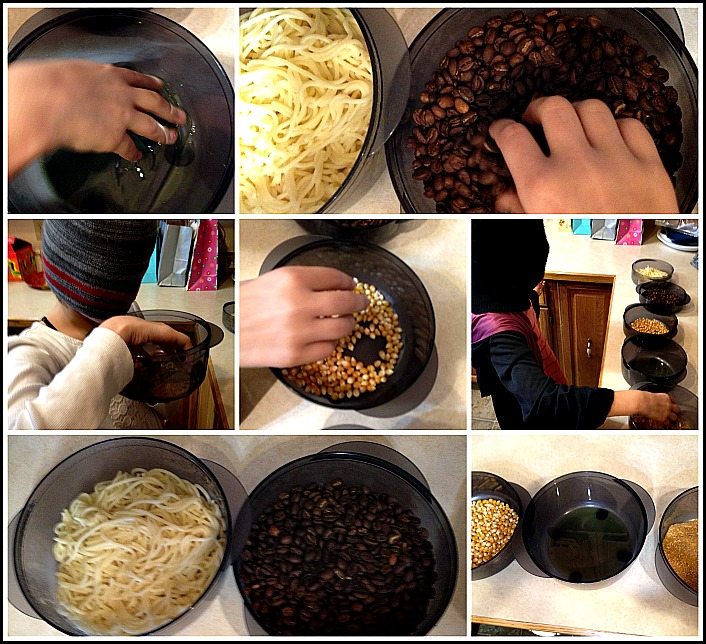
guessing based on senses other than sightI read the Black Book of Colors to the kids and they later took turn reading it themselves and feeling the pictures and Braille letters.

The kids also took turn trying to navigate their way through the house while blindfolded and talked about their observations. They also took turns helping to guide each other using their voices.

I found a wonderful online resource for sighted kids who wanted to learn more about blindness. It has information about Louis Braille, braille trivia and games.

There is a Braille alphabet printable at Enchanted Learning.

Lastly, we watched the Helen Keller Nest video and the kids completed the corresponding workbook. They love Nest videos and found this one especially interesting.
Filed Under: Homeschooling

Winter Art Tutorials

By Sharla Kostelyk

Art is not a talent I possess. My mom is an artist (oil painting mostly) and my brother is an artist (photographer and graphic designer). I’ve even seen some sketches my dad did many years ago that clearly show he is gifted as well but it skipped right over me! I have creative talents outside of art but the best I can draw is a stick man, so I have never felt much confidence in teaching art to my kids.

Winter Art Tutorials at The Chaos and the Clutter

In the past, we have done some artist studies and the kids have attended homeschool art classes regularly. This year, the instructor for the homeschool art classes had complications with her pregnancy and the classes were cancelled so I was no longer able to farm out this part of my kids’ education! I’ve been procrastinating on doing any art teaching, telling myself that since we do crafts, it’s almost the same thing.

I had heard of a series of books on chalk pastels that had very good instructions and finally decided to take the plunge. We own two of the books in the series, Chalk Pastels Through the Seasons and A Simple Start in Christmas Chalk Pastels (full disclosure here: I bought the first one and asked Tricia if she was willing to send me the other one in order to try it out and review it and she kindly agreed so I was provided the other one for free but am sharing my honest opinion of how it worked for us).

I ordered the special paper from Amazon (although you can apparently use printer paper instead) and bought a starter set of 24 chalk pastels from a craft store nearby.

Before you sit down to do art with chalk pastels, be sure to have some wipes (baby wipes work well) or wet washcloths and paper towels. Also, use art smocks or wear clothes that you don’t mind getting coloured because the chalks stain. And they get everywhere. We also sprayed our finished artwork with acrylic sealer but hairspray would work to seal them also. This is an important step so that they don’t smudge or smear onto other things.

Normally, the mess of the project would be enough to have me not do it again or to not even attempt it in the first place, but this is worth the mess!

Since the books are in ebook format, I brought my laptop to the table along with the supplies and had it there to reference while we worked through the lesson. If you don’t have a laptop or tablet, the lessons are short enough that you could jot the steps down ahead of time or even remember them if your memory is better than mine!

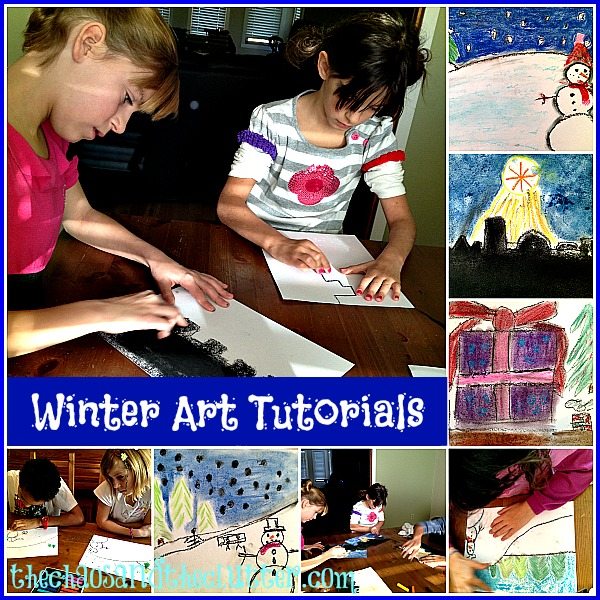
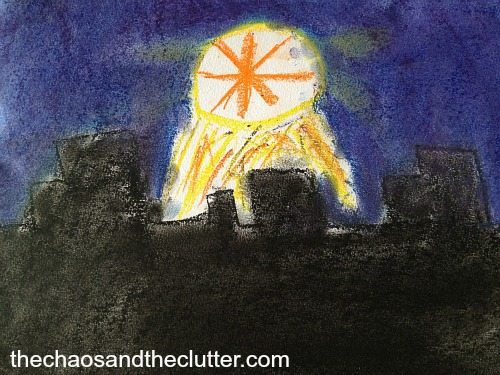
The first one we did was a Christmas star. I was surprised at how easy it was to go through the steps with the kids and have the finished projects all work so well. The other thing that really struck me was how calm my kids were during the art lesson. The relaxing atmosphere this created is actually the main reason we went on to do another lesson the next day and then to do yet another lesson today. I have one planned for tomorrow as well!

Christmas Star in Chalk PastelsThe second one we tried was a winter snowman scene. One of the things that I most appreciate about the book is that is gives the basic instructions but encourages individual artistic expression. You can see from the pictures below how different each of the kids’ pictures turned out. Some added tobogganers, another added a chair lift and a skier, one of them even has the snowman’s head fallen off beside him!
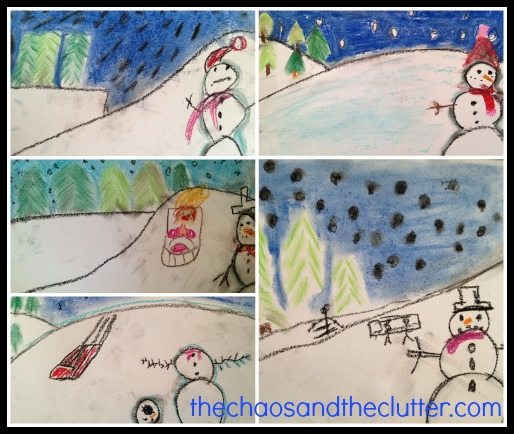
Snowman Chalk Pastel ArtThe one we did today was a present and again, the kids all put their own spin on it. Granola Girl drew hers beside a Christmas tree with other smaller presents. Einstein made striped wrapping paper and Dancing Queen drew a picture of Jesus on hers. Miss Optimism made hers in pretty girly colours!
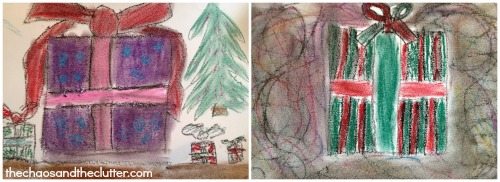
Christmas gifts in Chalk PastelsThe art sessions have been such a success that the kids have even asked if they can stay at the table longer and work on their own creations. I was blown away by this one made by Snuggle Puppy without a tutorial or instruction of any kind using many of the techniques we had been learning about in our sessions:
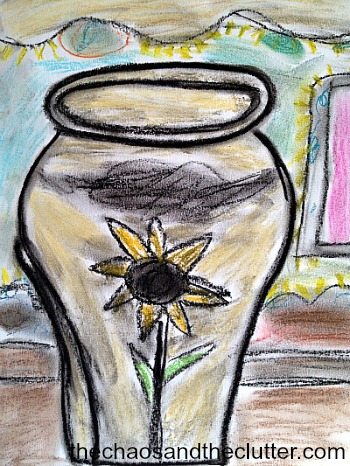
Chalk Pastel ArtI’m loving our morning art sessions and look forward to this becoming a regular part of our homeschooling routine. The kids are finding it relaxing and are learning a lot about different techniques and methods. They are also gaining confidence as they learn.
A Simple Start in Christmas Chalk Pastels is available for just $4.99 or you can purchase the Chalk Pastels Through the Seasons bundle of 3 books valued at $16.93 for $12.99.

Seasonal Chalk Pastel Bundle

Filed Under: Christmas, Crafts and Activities, Homeschooling

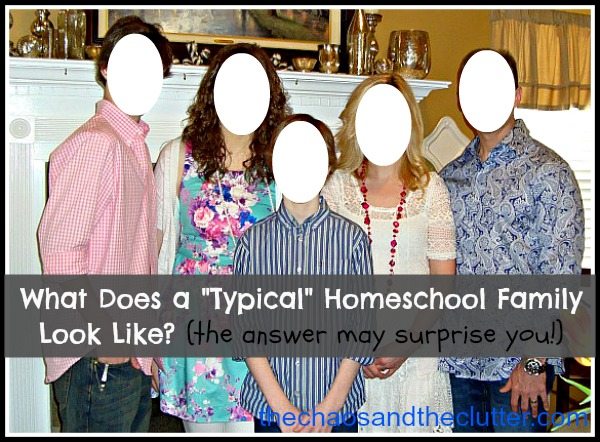
What Does a “Typical” Homeschool Family Look Like?

What Does a Typical Homeschool Family Look Like?

By Sharla Kostelyk

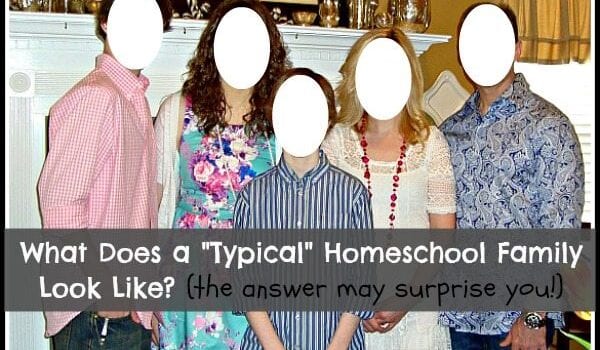
What does a typical homeschool family look like? The answer may surprise you! What Does a Typical Homeschool Family Look Like?A few weeks ago, someone in my local homeschool community expressed not feeling like she fit into the group because of some things that she felt made her different. Others chimed in right away to share similar feelings.
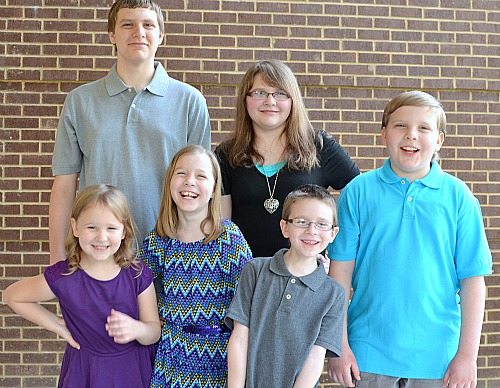
Some expressed that since some of their kids attended public school or because they were school at home instead of unschoolers or other such things that they viewed as differences, they felt like outsiders. It struck me right away that I also feel that our family stands out for certain reasons. Therefore, I have often felt like we don’t fit into the homeschooler mould.

Human nature is that we want to feel like we belong, that we fit in. I don’t know that there is a typical homeschool family anymore though.

As far as homeschool families go, there are working homeschoolers, single parents, adoptive families, military families, unschoolers, families with some kids in public school and some being homeschooled, families living abroad, first year, large families, families with an only child, blended families, former teachers now teaching their own children, and many others.

There is so much diversity now among homeschool families that every homeschool family is a typical homeschool family!

I decided to share with you some actual homeschool families. Perhaps you will see a bit of yourself in one of their stories and it will help you to know that you are not alone. All of us are “normal” in our own unique way.

Real Life Homeschool Families:

Sam is married to her high school sweetheart who became a preacher and is a mother of six blessings. She went into the world of homeschooling kicking and screaming. Three of her children attended public school, the oldest making it to the sixth grade. She is determined that the youngest three will never step foot in a public school door.

While homeschooling always seemed like something other people did {and they just weren’t right in the head}, homeschooling has been the perfect fit for their family. Her home isn’t always quiet, her children are not great at math, and you will easily discover that fun and laughter {sometimes very loud laughter} abound far more than science projects.
 
Things changed a lot in the Kelley house when Sam went back to work over the summer, and now they find themselves in an even smaller homeschool niche, the working homeschool mom family. Although it isn’t ever easy, it is always worth it.

homeschool family 1

Caitlyn is the proud geek-mom to two children. Her kindergartner son loves superheroes, dinosaurs, and is using comic books to learn to read. Her toddler daughter doesn’t talk much but she’ll dance like a maniac if she hears classic rock or grunge music. Her husband served 8 years in the US Army and the family spent the last 3 years of his service living in England, which was an amazing experience that they thoroughly enjoyed. The whole family loves hiking, gaming, and listening to the How to Train Your Dragon series on audio book.

homeschool family 2

Alisha is the wife of Jason, a minister who travels all over the world teaching in Bible schools, churches and pastors’ conferences. She is the homeschooling mom of three kids, one of which recently graduated. As a work-at-home mompreneur, she is the owner a health and fitness business, as well as a mixed-media artist. She is the author of the book, God Said So (31 Bible Truths Every Kid Should Know). Alisha blogs at Flourish.

homeschool family 3

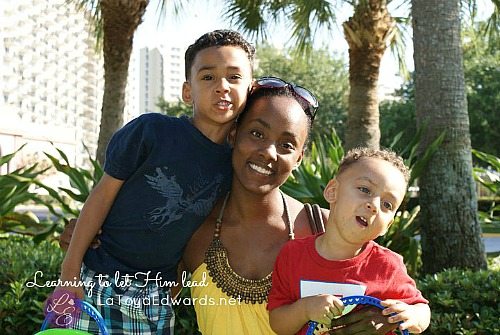
LaToya is a single mom of two boys. She is the first person in her family to homeschool. Her oldest son is all over the autism spectrum: SPD, ADHD, and ODD.

homeschool family 4

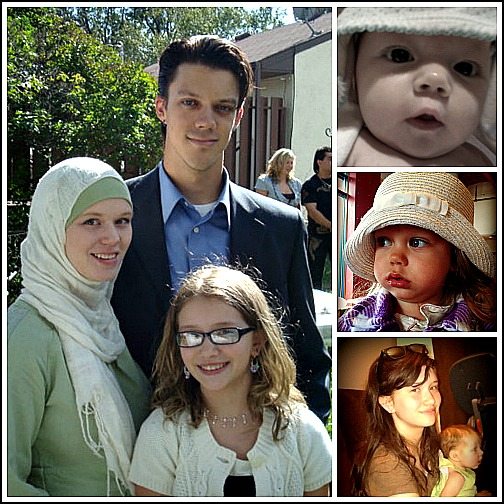
As a teen mom, Shannen beat the odds and stereotypes by diving into her newfound faith, finishing a bachelor’s degree, and starting her blended family (in that order). Shannen homeschools her 14 year old daughter, and is excitedly awaiting the homeschool years for her 3 year old and 8 month old in the coming years.
homeschool family 5

The Bussingers are a military family currently stationed in South Korea. Aadel stays home and unschools their three kids, ages 13, 8, and 3. She also works freelance writing jobs, blogs, and attends full-time online college working towards her counseling degree. This is their 9th year of homeschooling.

homeschool family 6

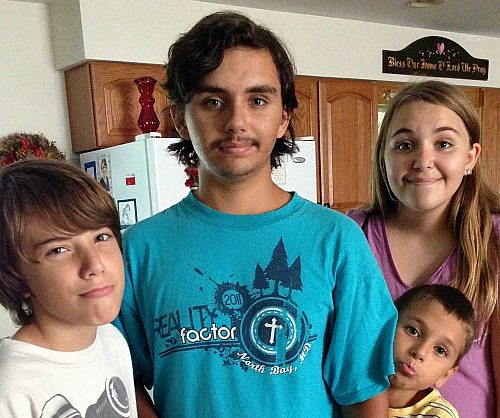
Stacey is the mom of 4 kids. Her oldest son is a freshman at college, her daughter is a sophomore in high school, her second son in 7th grade and her third son in 4th grade. Her oldest daughter follows a classical mode of education but due to learning needs, the youngest 2 boys follow a delight-directed education. Their annual income is less then $35,000 but they still manage to homeschool. Stacey works part-time for a homeschool publisher.

homeschool family 7The Browns are Christian homeschoolers who are now in their 6th year of schooling. Michael and Renee were married for 12 years before they were blessed with the unexpected blessing of a child through an adoption they had not sought out but gladly welcomed.

Their one son who is now 10 years old doesn’t follow any typical grade level for learning. For a few subjects he is working in the 4th or 5th grade level while other subjects he is working at higher levels of learning. For example, he is currently working in high school level geometry.

They chose to homeschool so that they could customize an education to meet his unique learning style while providing that education in a faith filled environment.  You can read more about the Brown family at Renee’s Blog, Great Peace Academy.

homeschool family 8Jen is a Catholic homeschooler. She and her husband recently moved their whole family to pursue a dream to be closer to the ocean. They have six children, all of whom joined their family through International adoption (from Russia, South Korea and the Caribbean).

Jen is also a fitness enthusiast. She shares that homeschooling many children and children with special needs can be done!

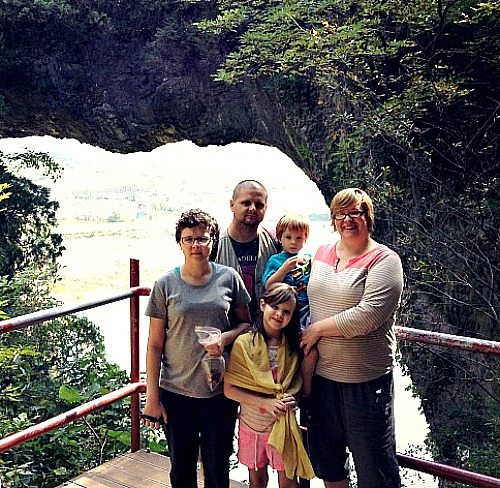
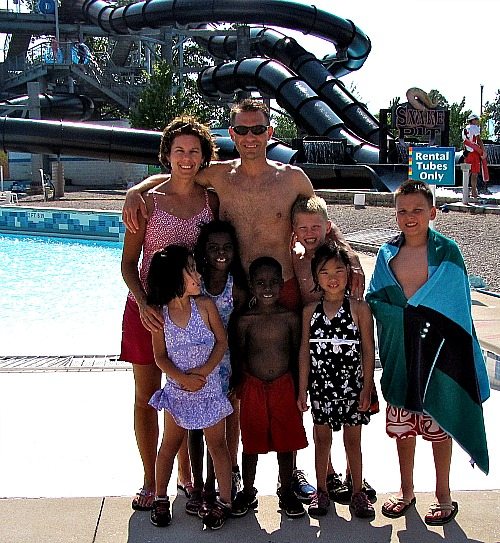
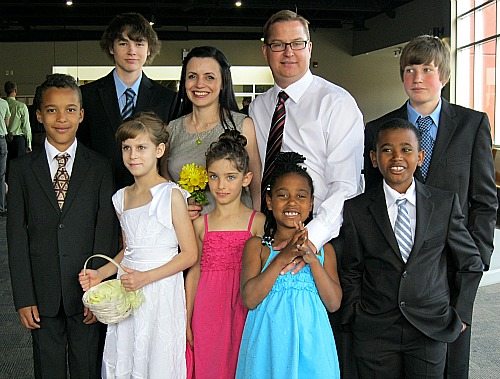
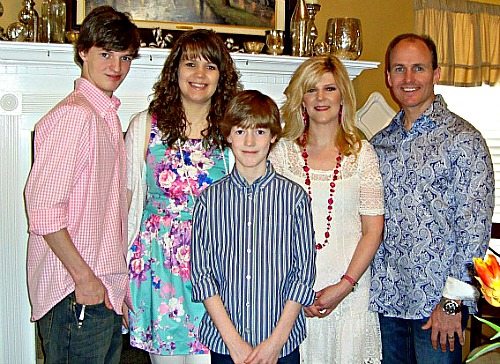
homeschool family 9And then there’s me. Sharla is the mom of seven kids who apparently hasn’t had time to get a family picture since the one below at a wedding two years ago when she still had long hair! Five of her kids are adopted and have special needs. One of her sons is graduated and her second oldest is attending his third year in a brick and mortar school and loving it while she homeschools her younger five kids. She works from home as a writer and blogger.

typical homeschool family #10Do you consider yourself a typical homeschool family? What are some of the things that you think make your family unique to homeschooling or that fit the mould you have envisioned for homeschoolers?

Filed Under: Homeschooling

Farm Theme Unit Study

By Sharla Kostelyk

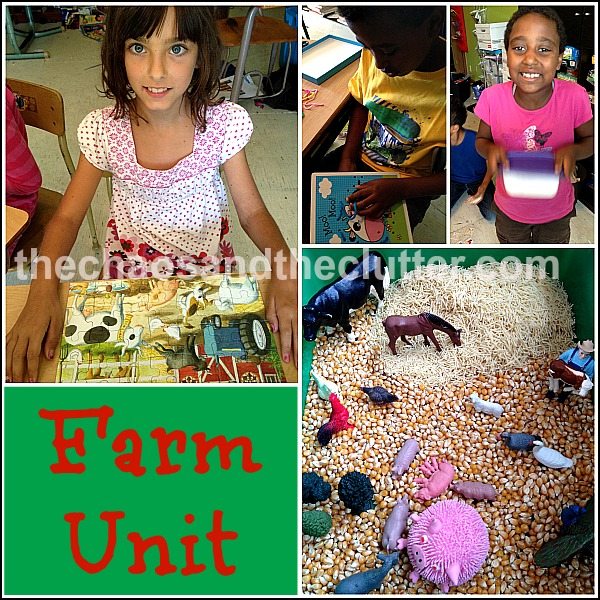
Last month, we did a two week Farm Unit Study. It was easy to prepare for and the kids really enjoyed it. I was able to find ways to incorporate math, science, social studies, language arts, sensory, music, and reading into this unit.

Farm Unit Ideas

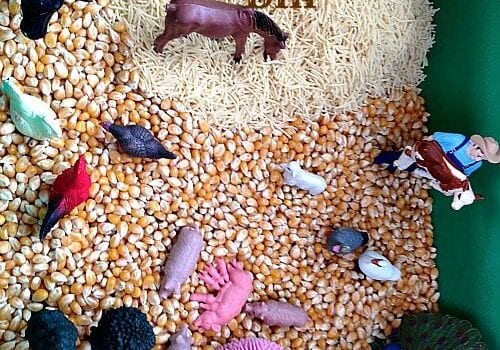
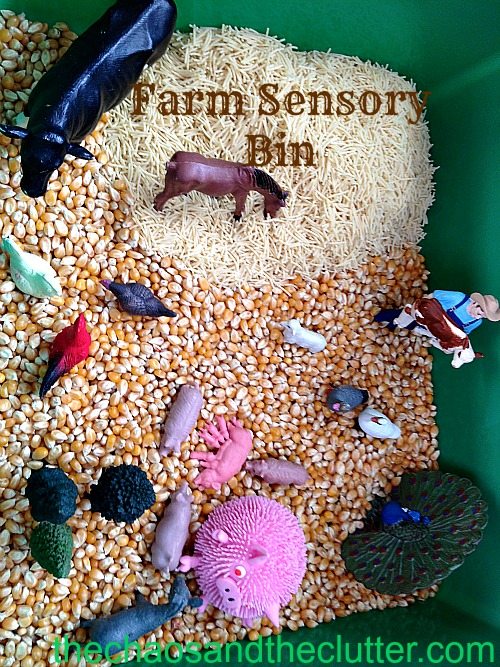
For our farm sensory bin, I used a base of popcorn seeds and also dry noodles I bought in a bulk bin (the kind you would use for chicken noodle soup) that I thought looked a lot like hay. I added some farm animals: cow, horse, rooster, chicken, lamb, pigs, geese, peacock, donkey, as well as three trees and a farmer carrying a cow. I also added a rubber hen and a squishy pig.

Farm Sensory Bin at The Chaos and The ClutterI filled the kids’ workboxes with lots of fun hands-on Farm activities. I included a Barnyard Friends puzzle and a Ravensburger Look & Find Farm puzzle. There were also Farm Lacing Cards, 1-2-3 Farmyard! (Moorific Math Game), Wild Horses game, as well as some printed activities. The Wild Horses game was by far the winner in terms of popularity. It got played with multiple times a day regardless of whose bin it was in that particular day. Everyone took turns playing even in the evenings.
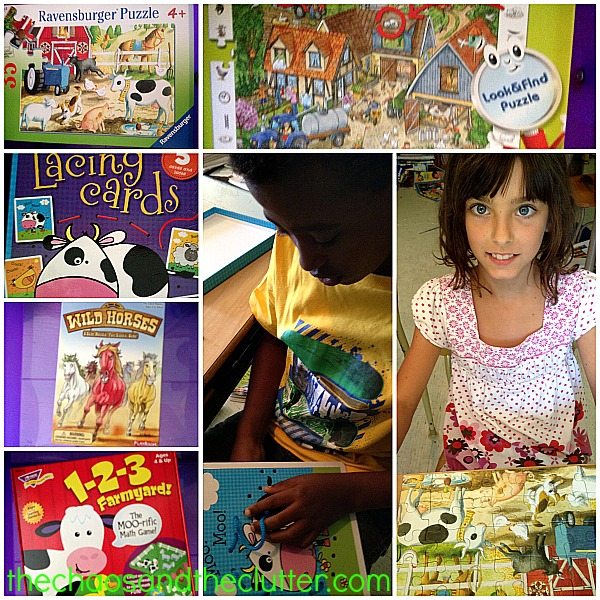
Farm theme workbox activitiesI used worksheets that I printed from several places. My favourites were the Beginning Sounds Match (free printable from Kindergarten Stars) and the farm spelling words from the On the Farm printable pack from 2 Teaching Mommies. I put the spelling sheets with some letters and the kids matched them up.
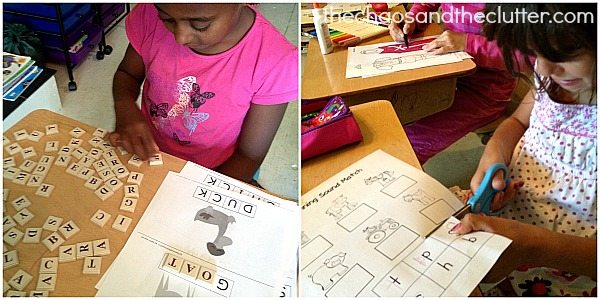
Farm worksheets

Every day during our Farm study, the kids each did one of the Farm Creative Writing Prompt sheets from 123 Homeschool 4 Me. I really liked that the prompts were open-ended and my early writers could just write a short sentence and my more confident writers could add description and write a paragraph.

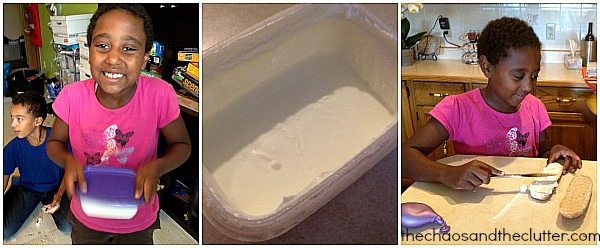
We talked about different farm animals, the different types of farms and what work is like on a farm. We talked about how farming is where most of our food comes from and we made butter by shaking cream in a container until it turned into butter.

making butterWe sang Old MacDonald and Farmer in the Dell. With our reading, I realized that two of our all-time favourite books are farm-related so we read them again and added in a new book as well. Our well worn copy of The Big Red Barn by Margaret Wise Brown was read a few times. By now, I have it memorized which is a very good thing since it is so worn that one of the last pages cannot be made out anymore!

Click, Clack Moo: Cows That Type by Doreen Cronin is still funny after all this time! It’s just such a cute book! We’ve done some activities to correspond with the book in the past including some printables but this time we just read it (well, we may have read it more than once that day since we like it so much!).

We also read Cock-a-Doodle-Doo: Barnyard Hullabaloo! which I had heard about and thought it would go really well with our unit. It is a collection of barnyard poems by Giles Andreae. My kids still enjoy rhythmic rhyming type of prose so they wanted me to read it again and again.
Of course, what Farm unit would be complete without a visit to an actual farm? We were able to go to 2 farms during our unit study. One was a Hutterite colony (more on that in a post of its own) where they grow vegetables for market and raise chickens for one of the large poultry companies and the other was a friends’ farm where they have pigs, cows and buffalo.

farm visit

You can find other ideas for a farm unit study on my Farm Pinterest Board.

Check out my book on Sensory Bins!

Filed Under: Homeschooling, Sensory Bins

How I Teach History to Multiple Ages

By Sharla Kostelyk

How I Teach History to Multiple Ages

I find that the easiest subject to teach to all of the kids at once is history. I use a variety of different things to accomplish this. I made a video to give an overview of what we do in our homeschool with history. I’ve only touched on what we do so feel free to ask clarification questions in the comments.

Here are links to give you more information about some of the products I mentioned:

Story of the World has 4 Volumes. We started with Volume 1 and went through it fairly slowly over about two years and are now about three quarters of the way through Volume 2 which takes you from the Fall of Rome to the Rise of the Renaissance. We use the book, the Activity Book, and Tests and Answer Key.

Nest videos and activity/colouring books…We use these for history and we also have their artist videos and New and Old Testament videos.

Brimwood Press – the products I spoke about specifically were Colour the Western World and Calendar Quest

Sensory bins that we have done to accompany our history learning: Knights & Kings  and Pirates

Catapult made from popsicle sticks and a plastic spoon

Hopefully that gives you a bit of a better idea of how I approach teaching history to such a wide variety of ages and keep the older kids engaged and challenged while still including the younger ones.

Filed Under: Homeschooling

Activities for Today I Feel Silly

By Sharla Kostelyk

Around our house, between having a child on the autism spectrum and having kids with trauma backgrounds who have gone to and some who continue to go to therapy to help them deal with and express their feelings, we have a lot of books about feelings around the house. One of those books is Today I Feel Silly: and Other Moods That Make My Day by Jamie Lee Curtis.

Activities to go with the book Today I Feel Silly

One of the things I like best about this book is how it talks about in a given day, we may feel a whole bunch of different moods, sometimes at different times and sometimes even at the same time. I think that’s a really good thing for kids to be able to understand and identify in themselves.

Last week, we read the book again and I made some super simple activities to reinforce the concepts.

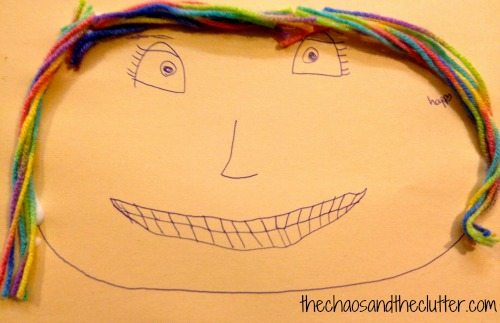
I set out different things on the table like string, yarn, paper shreds in purple, and ribbon and had the kids draw a face on a piece of paper and use what was on the table to make silly hair. I was surprised that the results were not very silly or wild! It did get them talking about the feeling they were trying to express on the face they made and several of them wrote the feeling word onto their craft.

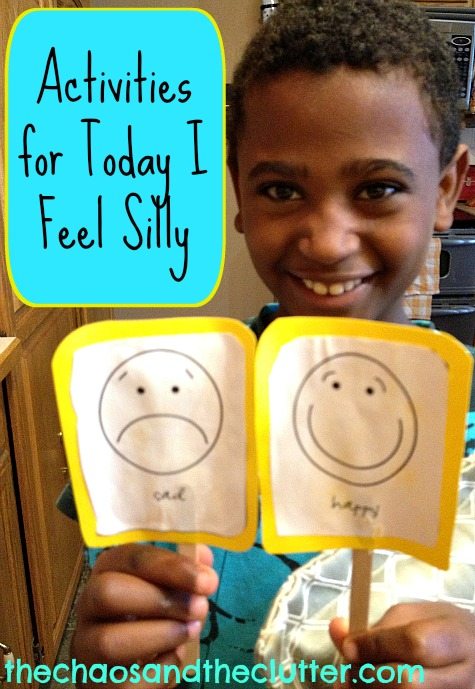
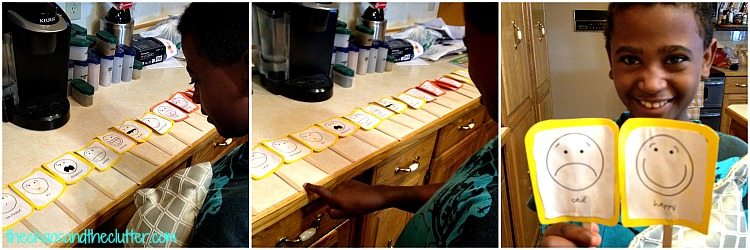
I Feel Silly happy faceI made emotion sticks using emotion cards that I printed from here  (note that the way they are set up, you need to copy and paste them into a word document before printing). I then got the kids to help cut out the different emotions and glue them onto coloured cardstock. Once that was dry, we glued them onto popsicle sticks.

I used these emotion card sticks in two ways. The first was to line them up on the counter and have the kids come in one at a time and go through what each emotion was and then have them pick two that they were feeling at that time. The point of this exercise was to show that it is normal and okay to be feeling more than one thing at once.

using emotion cards to show two different feelings

The next activity we did was to all sit at the kitchen table with the sticks and for me to describe a scenario and for them to hold up the emotion that they think that scenario would make them feel. I think this helped with some of the more obscure ones on the cards such as confused, excited or anxious.

Filed Under: Homeschooling

  • « Go to Previous Page
  • Page 1
  • Interim pages omitted …
  • Page 11
  • Page 12
  • Page 13
  • Page 14
  • Page 15
  • Interim pages omitted …
  • Page 23
  • Go to Next Page »

Primary Sidebar

Categories

We are a participant in the Amazon Services LLC Associates Program, an affiliate advertising program designed to provide a means for us to earn fees by linking to Amazon.com and affiliated sites.

Copyright © 2026 • The Chaos and the Clutter • Site Design by Jeni @ The Blog Maven

Return to top of page

Copyright © 2026 · Chaos and the Clutter 2.0 on Genesis Framework · WordPress · Log in