• Skip to primary navigation
  • Skip to main content
  • Skip to primary sidebar
  • Home
  • About
  • Contact
  • Privacy + Terms
  • Affiliates

The Chaos and the Clutter

  • Facebook
  • Twitter
  • Pinterest
  • Google Plus
  • RSS
  • Email
  • School at Home
  • Sensory
    • Sensory Processing Disorder
    • Awesome Sensory Play Activities
      • Sensory Bins
      • Sensory Bottles
      • Sensory Bags
  • Family Games
    • Minute to Win It Games
  • Special Needs Parenting
    • Childhood Anxiety
    • Reactive Attachment Disorder
    • Sensory Processing Disorder
  • Store
  • Course Login

Parenting in the Chaos

Helping Children Pray by Creating a Prayer Wall

Helping Children Pray (creating a prayer wall in your home or classroom)

By Sharla Kostelyk

Creating a prayer wall in your home or classroom is easy to do. It can be instrumental in your child’s journey of faith. I have previously written about teaching children to pray and in that article, I mentioned our prayer wall and what an incredibly powerful tool it has been for us.

Creating a prayer wall can be as simple as placing names or pictures on your fridge with magnets or writing the prayer requests on a whiteboard. Children can even draw pictures themselves to create a prayer wall.

We used to use our fridge for pictures, but have found that since we start our homeschool days with prayer, it was better for us to make something in our homeschool classroom that we could use as a visual reminder. It is not only a reminder for myself and the kids of who and what to pray for, but also, an amazing visual of answered prayers.

We created our prayer wall by gluing cork to plywood to make a giant cork board. We can then pin pictures to it using pushpins. Some of our prayer wall includes pictures that are highly personal such as birth family members of some of our adopted children, so I have taken pictures that do not show the entire wall but will still give the general idea.
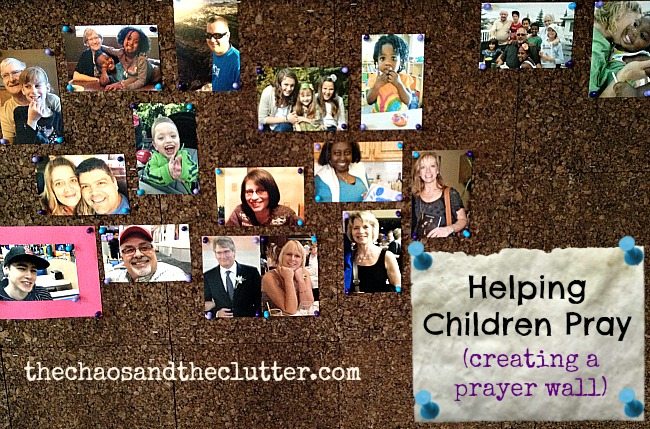
Helping Children Pray (creating a prayer wall in your home or classroom)We have a small stack of other pictures that I keep nearby of family members and loved ones so that I can rotate some of the pictures out from time to time and also in case they are needing extra prayer for something, we can add them to the wall. I have the wall divided into sections which is not the easiest to see in this picture because of the areas I left out of the picture, but an example is the top right corner. That section is reserved for things that are on a bit of a deadline. In this case, my dad and my aunt were both having surgery on the same day, so their pictures were there so that we could be praying for them specifically and daily.

On our prayer wall, we also have a red piece of paper and the picture on that is the person of the month (or day or week or year). The reason that person’s picture is on the red paper is so that it will catch our eye whenever we are walking through the classroom or sitting in the room and we can be reminded to silently (or not so silently) pray for that person.

Our prayer wall includes friends of ours who are battling cancer, children we love who have medical needs, family members who are serving a mission in another country, grandparents, those pursuing adoption, and many other specific people who have prayer needs.

One of the things I love about having these photos up is that the kids really do seem to remember the prayer requests more easily. When I am tucking them in at night and we can no longer see the prayer wall, they often bring up the people whose pictures are currently there in their bedtime prayers.

Another thing I love is when we are able to rejoice together about an answered prayer. One of our friends who they have been praying for for many, many months now is now cancer free and we can now be praising God for that answered prayer and seeing the reminder of that right there on our wall!

Filed Under: Homeschooling, Parenting in the Chaos

And Then My Uterus Fell Out…

By Sharla Kostelyk

When my friend Piper Newton told me about her new book, I was excited to read it because I wanted to learn more about her journey with POP (Pelvic Organ Prolapse). I read the book as a way to support a long time friend and to be able to better understand what her life is like. I thought it would be interesting and provide insight, but I didn’t think any of it would apply to me…after all, I didn’t have Pelvic Organ Prolapse. Except that it turns out that I do.

Pelvic Organ Prolapse...What Women Should Start Talking About

I don’t have severe pelvic organ prolapse like Piper and many other women like her do, but some of the changes in my body that happened after childbirth that I assumed were just normal and inevitable it turns out are prolapse related. Things that I assumed I would just always have to live with, I now have hope that I may be able to change. Hope that perhaps someday, I will be able to jump on the trampoline with the kids, to not have pain, to have some of my old body back. Hope is a pretty incredible thing!

I was honestly shocked to discover that I had prolapse, that some of the things that women joke about and whisper about or don’t talk about at all are actually due to prolapse. The point of this book, the reason that it was even written in the first place was to get women talking about this and I now see even more clearly the importance of that discussion.

Women NEED to read this book. They need to start talking about prolapse and their bodies and what changes are normal after childbirth and what changes are not healthy and need further investigation. I have gone 18 years since the birth of my oldest son just assuming that everyone who gives birth ends up having to live with some of the effects on the body forevermore. Imagine my surprise that that is simply not true.

I am planning to implement some of Piper’s suggestions, to use some of the methods that she found success with in the hopes that I can improve my symptoms. I had a liberating (albeit rather personal) discussion with her yesterday about what her book helped me to learn about myself and she pointed me to a resource page of hers that may help start me on the road to better health.

In reading And Then My Uterus Fell Out, I was so impressed by Piper’s story, her determination to get back her quality of life after the birth of her son left her body mangled and forever changed. It is a story of triumph, of refusing to accept less than a good life, of using her research and writing skills to help not only herself, but others. I encourage you, especially if you have questions about your body and health in the years following childbirth to read this book.

On that note, it is my sincere pleasure to introduce you to my friend Piper Newton and have her share a little bit of her story with you…

——————————————————————

At thirty years old I had my first baby.

And then my uterus fell out.

Eight years later, when I was somewhat recovered from the shock and had developed a full-blown chocolate addiction, I wrote a book about it.

I actually waited all those years for someone, who was like me, to share their story. Contrary to popular belief, pelvic organ prolapse (POP), is not something that affects only women in their senior years. In fact 50% of women will develop POP in their lifetime, and over 10% will require surgery for prolapse at least once in their lifetime. That’s a lot of women! I figured one of them would write a book, eventually, that would help me feel less alone and provide some insight into what was happening to my body.

Over the years I have spoken to hundreds of women that have suffered with prolapse, but it was always shrouded in secrecy. When your uterus, bladder, and/or rectum make a bid for the bright lights through your vagina, it is not exactly a biscuits and coffee conversation. But I don’t know why this is the case. Why do we need to feel so ashamed of something we did not ask for, and did not cause?

The medical community rarely takes prolapse and its sister condition, incontinence, seriously. It is brushed off. Often with a mumbled edict to do more pelvic floor exercises or Kegels. This attitude is not helping women. In fact, it is doing a serious disservice to women.

Over the last eight years something has become very evident to me, the only way these issues are going to be taken seriously, and addressed properly, is if we start talking about them and making our voices heard.

Prolapse affects a woman in so many ways; it is physically uncomfortable and painful, it affects her ability to function to her full capacity and, for many women, it also leads to mental health issues such as depression, anxiety, and trauma disorders.

Prolapse is extremely hard to treat. Natural methods are difficult to navigate and learn, and surgery has high failure rates or creates new problems, often worse than the original prolapse. Prevention and risk assessment are non-existent. In fact, many doctors are knowingly using techniques that radically increase the risk of prolapse and birth trauma without the consent or knowledge of the woman.

Knowledge is so important. And the only way to increase knowledge and awareness of these issues is to start talking. To share our experiences.

Eventually, I tired of waiting and decided to write my story of becoming a mother, experiencing birth trauma, and the resulting prolapse and depression. But my story doesn’t end there, it continues as I adopted my second son from Ethiopia, learned to balance his special needs with mine, and then, found a new way to live in this body and love it despite its broken and wayward bits.

It has been a hard journey. One that felt very lonely at times, but since writing my story I have learned that so many other mothers have walked a similar journey through motherhood. Together we are starting to talk. It is my hope, that by sharing my story, I will encourage other women to come forward and share their stories. No one should ever feel alone with these issues, whether they are struggling with depression, special needs children, adoption, trauma disorders or pelvic dysfunctions.

Through my experiences I was deeply moved by the most traumatic of births that result in fistulas. A common, and extremely debilitating condition that is, sadly, all too common in the developing world. As such, I have chosen to donate a portion of my royalties to the Hamlin Fistula Hospital in Ethiopia. It is my hope, that through this book, I will be able to fund one complete surgery that will give a woman her life back.

An excerpt from, And Then My Uterus Fell Out.

“This experience was my first brush with the fact that I was no longer in control. Someone else had taken charge. I just didn’t realize what was coming or how drastically life would change. Can anyone really know how parenthood will affect their lives… and bodies? It is so different for every woman, every family. I have come to see motherhood like a set of pruning shears, and I am simply the tree that is being pruned and shaped by the sharp edges of motherhood. I may not like some of the cuts, and at times they were so painful, but with time I have grown fuller and more beautiful with each snip.

And then My Uterus Fell Out, is now available in both eBook and print. For more information visit www.prnewton.com

A brutally honest, and at times pee your pants funny, tale about one woman’s journey through motherhood with a condition that affects approximately half of all females, pelvic organ prolapse.

This moving memoir is one woman’s inspirational story about the traumatic birth of her first child and subsequent diagnosis of the chronic condition, pelvic organ prolapse. Wrapped within an engaging account of living with prolapse is an insightful glimpse into what it means to be a mother battling chronic pain, embarrassing side effects and depression in a society that often idealizes motherhood as a time of bliss and joy and dismisses this embarrassing, and often debilitating, condition.

Inspiration for her healing comes from the most unlikely of places, the heart-wrenching struggles of women in the developing world. A startlingly honest, elegant, and often humorous depiction of life with pelvic organ prolapse, And Then My Uterus Fell Out, calls out to all women around the world who suffer in silence with a life-affirming message of dignity, hope and sisterhood.

Piper Newton

P.R. (Piper) Newton was born and raised in Canada. A one-time professional communications and public relations manager, she now spends her time raising her boys and writing stories that capture her heart, begging to be told.

To learn more, visit her at www.prnewton.com.


Filed Under: Parenting in the Chaos

The Kissing Hand Activities

By Sharla Kostelyk

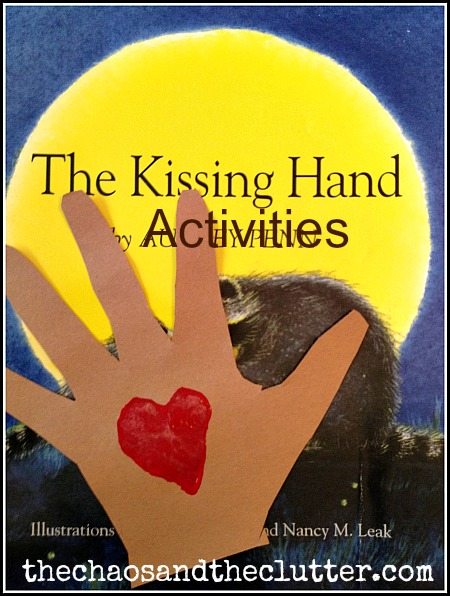
The Kissing Hand book by Audrey Penn has been a book that we have read a fair bit over the years especially in preparing the kids to be away from us for a period of time such as getting them ready for their first sleepover at their grandparent’s house. Recently, we were preparing some of the kids to go to sleep away camp for the first time so I pulled the The Kissing Hand book out again and used it as a starting point for discussion about their feelings about going away and to reassure them that our love would stay with them while they were away.

The Kissing Hand Activities

The Kissing Hand Activities

The Kissing Hand

The Kissing Hand is a book that we used to use with some of our foster kids in conjunction with their biological parents as a way to teach them that they could carry the love of their parents with them even when they weren’t with them.  In the book, a little raccoon is nervous about being away from his mom on his first day of school and she kisses the palm of his hand and tells him that if he is feeling scared or lonely, he can press his palm to his cheek and feel her love with him.

When we used to be foster parents, if we had contact with a child’s biological parents, we would explain about the Kissing Hand book and ask that they kiss the child’s palm when they visited them and that way, we were able to remind that child that their mom or dad’s love stayed with them even at our house.  was helpful for the kids but it also was helpful in reaching out to the biological families and helping them to see that we were both on the same side.

We still occasionally pull the book out with our own kids and with some of our kids going off to camp, we read the book again and talked about how my love would be going along with them. I also talked about how God would be with them at camp too (the book does not mention God).

I used the book as a kick-off for them to talk about their feelings about going away, to talk about other times they may have felt nervous and to brainstorm other ideas for how they could manage their feelings while they were away.

I of course kissed the palm of their hands and had them do the same to mine and we practised pressing them to our cheeks.

The Kissing Hand Crafts

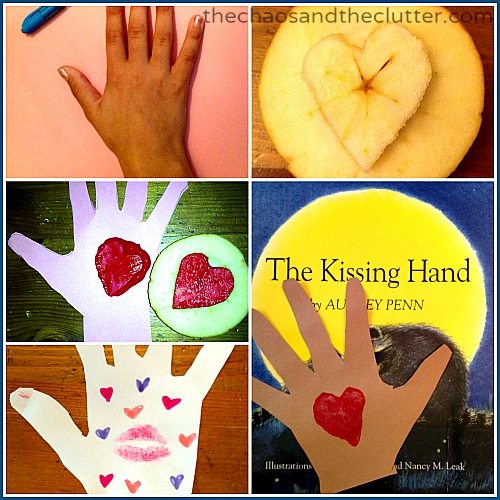
To reinforce the “kissing hand” concept, they traced their hands on coloured paper, cut them out and then pressed a heart onto the palm using red paint and a stamp we made from an apple.

The Kissing Hand craft

I found this Kissing Hand activity idea too late but there is a cute snack idea to go along with The Kissing Hand book that incorporates chocolate kisses on Kidney-Garden.

I’m linking this up with iHomeschool Network’s A Book and a Big Idea. Find all kinds of other activity ideas to correspond with many incredible children’s books…

the kissing hand book and activity for first graders


Looking for a way to help your kids manage those strong emotions?

Click on the link>>> Teaching Emotions Toolkit

I’ve put together an emotional toolkit full of fun printable games and activities for parents to teach their kids about emotions and how to manage them.

Click here for more ways to teach feelings:

Feelings Jenga Game

Children’s Books About Emotions

Feeling Activities For Preschoolers

Free Printable Emotion Faces

How To Teach Kids Emotional Regulation


Filed Under: Parenting in the Chaos

Of Tantrums and Tuck-ins

two girls and a boy dressed in blue

By Sharla Kostelyk

Tonight, I was tucking in one of our eleven year olds, praying with him, talking about what we are going to do tomorrow, telling him something that I noticed about his character today and how much I appreciated that, giving him a hug and a kiss, and leaving him with a smile. After I shut the door, it occurred to me that I’m sure that by the time my oldest boys were eleven, I had stopped tucking them in. They had seemed so old already and besides that, I had many little ones who needed help into their pyjamas and tucking the younger ones in took over.

Eleven is not old. Eleven is an age when they will still open up to you in those one-on-one moments and if you can establish that kind of communication at that age, it will likely continue into their teen years. Tuck-ins build relationships. Tuck-ins are time, a precious commodity in a large family.

I’ve thought a fair bit in the years since I stopped tucking my big boys in (though I didn’t think of it right away of course) that I didn’t even know that the last time I tucked them in would be the last time. I didn’t cherish that last prayer said by their bedside, that last round of “what was the best thing that happened to you today?”. Their responses are not written into my heart the way I wish they were. I made a selfish choice because I wanted the work of my day to end sooner and I saw tucking them in as work.

It never was. It was such a blessing. It was such an honour. Time to get to know these precious, still developing humans in a rare one-on-one opportunity. I squandered it.

Of Tantrums & Tuck-ins...finding joy in the childhood moments

Some days, I still dread doing bedtimes. When The Husband is out of town and it’s the fourth or fifth night in a row that I have to do all five tuck-ins by myself, it feels like a chore, not a privilege. It’s at those times that I think most about my older boys not wanting me to tuck them in anymore and how this time is so fleeting. I also think about those friends of mine who would give anything to be able to tuck their child in each night, but whose children are waiting for them in Heaven.

I have so many regrets from when my older boys were younger. I have regrets about my parenting with my younger ones too, but the regrets are different. Because I have older kids and younger ones, I have had the treasure of learning and doing better because I know better. I have the rare privilege of really understanding how fast the time goes!

I’ve said yes to things I didn’t with my boys. I’ve hugged more and lectured less. I’ve grabbed onto moments and not let them go. I’ve allowed messes. I’ve blown bubbles and walked barefoot in the grass. I’ve listened more and shushed less. I’ve ignored tantrums and praised kindness. I’ve stopped watching the clock and started watching my kids. I’ve begun to “get” that the tuck-ins and even the tantrums will someday be what I will miss.

Filed Under: Parenting in the Chaos

Our Favourite Sentimental Children’s Books

By Sharla Kostelyk

I can admit it. I am a sucker for books that make me cry or tug at the heartstrings. Last year when I was compiling the list of our Top 10 Read-Alouds, I realized just how much I liked these kinds of sentimental books when many of them made that list as well!

You know those books that have you so choked up that it’s hard to keep reading as you try to swallow the lump in your throat? These are some of our all-time favourite sappy kids’ books.

Our Favourite Sentimental Children's Books
Our Favourite Sentimental Kids’ Books:

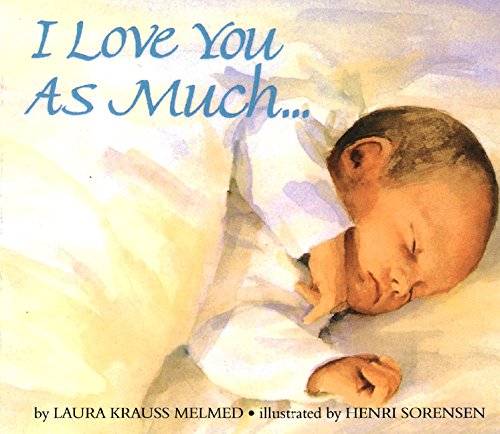
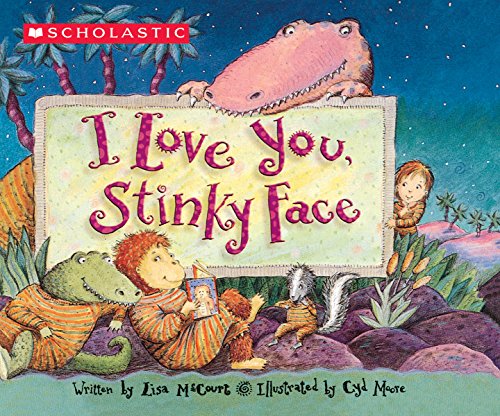
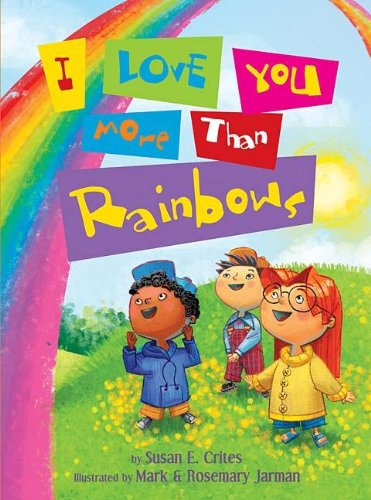
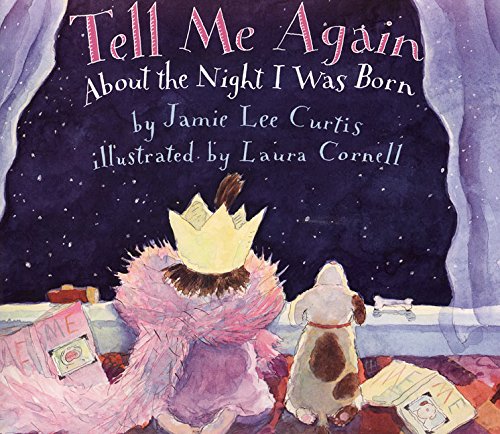
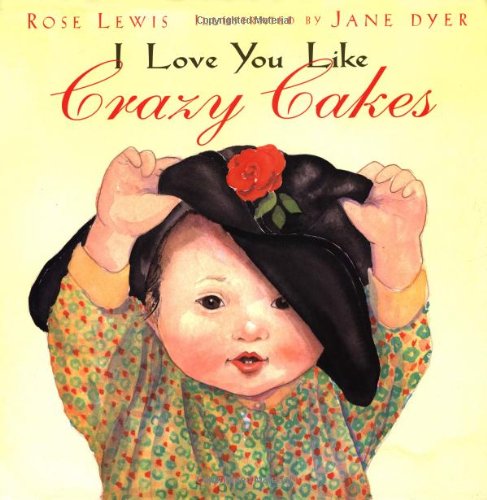
Snuggle Puppy!Snuggle Puppy!Just In Case You Ever WonderJust In Case You Ever WonderJust the Two of UsJust the Two of UsI Promise I'll Find YouI Promise I’ll Find YouI Love You As Much...I Love You As Much…I Love You, Stinky FaceI Love You, Stinky FaceI Love You More Than RainbowsI Love You More Than RainbowsTell Me Again About the Night I Was BornTell Me Again About the Night I Was BornI Love You Like Crazy CakesI Love You Like Crazy CakesOh, the Places You'll Go!Oh, the Places You’ll Go!

Snuggle Puppy by Sandra Boynton – This book had to make the list! It’s part of how our “Snuggle Puppy” got his pseudonym! This book is fun and sweet and what kid doesn’t like a book that can be read or sung and encourages hugs and kisses?!

Just in Case You Ever Wonder by Max Lucado is kind of a less creepy version of Love You Forever. It also presents a tiny introduction to the topic of Heaven. It’s a really nice book to read one on one to your child.

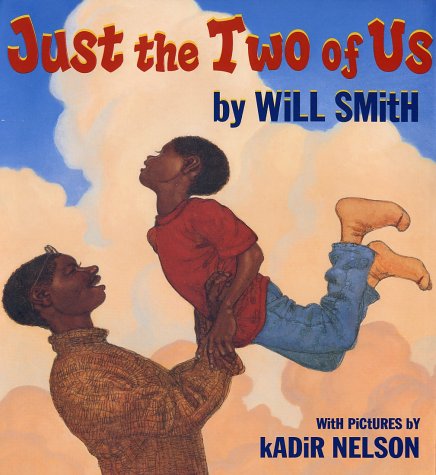
Just the Two of Us by Will Smith is a wonderful book for a father to read to his son. It has great illustrations and the message is heartwarming.

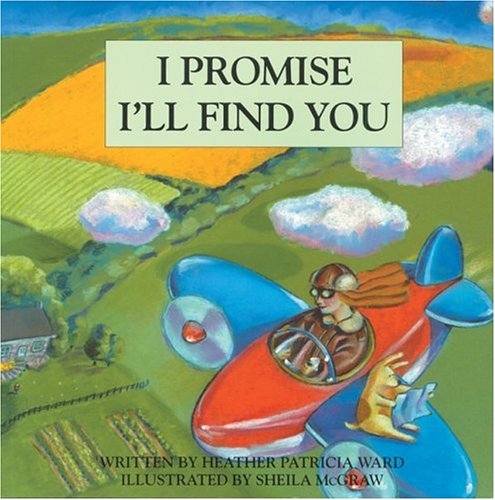
I Promise I’ll Find You by Heather Ward is a book I’ve been reading the kids since my oldest (now 18) was a toddler. Its message is relevant for any child but I think after we began adopting, the words took on a whole new meaning as I read them to children who were looking for safety and security and a feeling of belonging.

I Love You as Much…by Laura Krauss Melmed is just one of those books that you have to read to your baby. It’s simple and sweet and so affirming.

I Love You Stinky Face by Cyd Moore makes the kids giggle and want to be tickled as they are reminded that I love them no matter what!

I Love You More Than Rainbows by Susan Crites has become much more than a book around here. It has become a way that we talk to each other. “I love you more than Slurpees.” “I love you more than chocolate.” “I love you more than my favourite stuffy.”

Tell Me Again About the Night I Was Born by Jamie Lee Curtis and I Love You Like Crazy Cakes by Rose Lewis are just a few examples of the adoption books for kids that we seem to read again and again. I have a growing list of favourite adoption children’s books!

Oh, The Places You’ll Go by Dr. Seuss is a nice everyday read, but it’s especially beautiful for events like your child’s baptism or milestones in their lives such as graduation or their first job.

What are the children’s books that tug at your heart strings?

Filed Under: Homeschooling, Parenting in the Chaos

Parenting a Sick Child: Taking Care of Your Other Kids’ Needs

By Sharla Kostelyk

Having a sibling with a chronic or terminal illness can have a lasting negative impact. Here are some suggestions for helping your other children cope with the illness of a sibling.

Growing up as the sibling of a sick brother or sister is difficult. In addition to much of your parent’s attention being directed toward the child who is ill, there is also a lot of worry and uncertainty in your life.

One of our daughters, Miss Optimism, has a chronic health condition that at times, has kept our family hostage. To believe that her condition has not impacted our other children would be naive. We have had to cancel family vacations when her condition was unstable. Even our daily plans and routine are never guaranteed because of the uncertainty her health involves. There have been periods of our lives, including an eight month block, when my attention needed to be focused on keeping her alive. When that is my focus, it only stands to reason that the other kids miss out on my time and attention. If I am not careful, their resentments will start to build towards me, and towards their sick sister. There are some steps that you can take to preserve your family and protect your other children, even while dealing with the demands of caring for a sick child.  So often, we take care of the most immediate issue, which is the health of that one child, without considering the impact the situation is having on the mental health of the rest of the family members.

Have them help. You do not want your other children to have to slip into the role of caregiver for their sibling, but having them help with small things pertaining to their sibling’s care will help them to feel involved. Helping will also give them some time with you and give them the opportunity to ask questions and learn more about their sibling’s health condition. It also will give them more empathy towards their sibling if they see what type of treatments they go through. I sometimes ask one of my sons or other daughters to carry my daughter’s medication bag to me. I use this opportunity to praise them for their help and also to tell them what the medications are for. Each time that my daughter goes in to the doctor for injections, she chooses one sibling to go with her. She likes to show them how brave she is when she gets her needles and they like to go because they get a lollipop from the nurse afterwards and get to spend some time with me.

Talk openly. This is by far the most important thing. If you take nothing else away from this article, please remember this. Children have very active imaginations and they will imagine things that are far worse than the reality. Thinking that you are shielding them from the truth by not telling them or by only telling them certain things is misguided. Of course, you will need to determine what to share based on the age, maturity and personality of the child. You can ask a doctor or therapist for their advice on this or take cues from your child.

Having a brother or sister who is sick is scary and they are probably already imagining the worst case scenario and living in fear. Be honest with them. By sharing as a family what is really going on, you will also open up the doors so that your child will be able to ask you questions and share their fears with you. Children commonly assume that they will also become ill with whatever condition their sibling has, but do not express this unless you open the door for that conversation to happen. If their sibling is terminally ill, talk about the possibility that their brother or sister could die. Ask them how they feel about that and give them the opportunity to do or say what they need to.

Spend the time. Having a sick child feels like it takes up all of your waking (and non-waking) hours. It also feels like it takes up every ounce of your energy. Sometimes the thought of trying to make extra time for your other kids just feels like too much. But it is imperative that you do. You need to find a way. That could mean that you utilize a babysitter, respite service, or a relative to care for your other children or that you just allow one child to stay up later than the rest on a rotating schedule so that they will have one-on-one time with you. You can also spend time with them while you are caring for your ill child by involving their help or bringing them to appointments with you.

At one point, our daughter was going to see her specialist at least three times a week for months. When I would take her to those appointments, I would be gone for at least four hours. That kind of time away from the rest of the kids takes its toll. By bringing one of them with me to the appointment, I also took some of the mystery away. They no longer had to wonder what I was doing when I was gone to these appointments because they had each been there. Of course, time with the other kids is not always possible such as when our daughter is in the hospital, but them seeing that I am making the effort when I can goes a long way with the kids.

Get professional help. Having a child with a long term illness takes a toll on the whole family. Being aware of the impact that it is having on your other kids is a good first step, but that may only add to your guilt that they are not getting a “normal” childhood. There comes a point when you cannot cope alone. Get your other children in to see a therapist, enrol them in group therapy where they can talk to other kids who also have a sibling who has an illness, or check with your local hospital to see if they have any sibling programs. They often do. Some of the sibling support groups will be very specific, such as ones where all the kids have a sibling who has cancer. The more specific programs are generally better, though any therapy or program specific to siblings is probably better than none.

Books. There are many children’s books available that confront the things that may be scary to your children. There are books on hospital stays, doctor’s appointments, sickness, and even death for children of all ages. Choose books that are age appropriate and remember to also read them to the siblings of the sick child, not just the sick child.  We often remember to read a book on going to the hospital to the child who will be going, but forget that their siblings may have fears as well and would benefit from learning more about it.

Children’s books about going to the hospital:

Going to the Hospital Sticker Book
Franklin Goes to the Hospital
Going to the Hospital (this one has pictures of real people which I like)

Children’s books about going to the doctor:

The Berenstain Bears Go to the Doctor
Going to the Doctor Sticker Book
Say “Ahhh”: Dora Goes to the Doctor

Children’s books for siblings:

When Molly was in the Hospital: A Book for Brothers and Sisters of Hospitalized Children
What About Me?: When Brothers and Sisters Get Sick
When Someone You Love Has Cancer: A Guide to Help Kids Cope

Ask for help. Ask for help from those around you so that you will have more time to devote to all of your children. Many churches have programs where they will deliver meals to families who are dealing with illness or loss. They also may be able to get volunteers to come in and clean your house or sit and read to your ill child while you play with your other children. You cannot do this alone. Ask for help from your community, your neighbours, your friends, your church, and your family.

Filed Under: Parenting in the Chaos, Special Needs Parenting

  • « Go to Previous Page
  • Page 1
  • Interim pages omitted …
  • Page 9
  • Page 10
  • Page 11
  • Page 12
  • Go to Next Page »

Primary Sidebar

Categories

We are a participant in the Amazon Services LLC Associates Program, an affiliate advertising program designed to provide a means for us to earn fees by linking to Amazon.com and affiliated sites.

Copyright © 2026 • The Chaos and the Clutter • Site Design by Jeni @ The Blog Maven

Return to top of page

Copyright © 2026 · Chaos and the Clutter 2.0 on Genesis Framework · WordPress · Log in