• Skip to primary navigation
  • Skip to main content
  • Skip to primary sidebar
  • Home
  • About
  • Contact
  • Privacy + Terms
  • Affiliates

The Chaos and the Clutter

  • Facebook
  • Twitter
  • Pinterest
  • Google Plus
  • RSS
  • Email
  • School at Home
  • Sensory
    • Sensory Processing Disorder
    • Awesome Sensory Play Activities
      • Sensory Bins
      • Sensory Bottles
      • Sensory Bags
  • Family Games
    • Minute to Win It Games
  • Special Needs Parenting
    • Childhood Anxiety
    • Reactive Attachment Disorder
    • Sensory Processing Disorder
  • Store
  • Course Login

Sharla Kostelyk

September Emotions Printables for Kids

By Sharla Kostelyk

Back to school is a time full of emotions. Even for kids who love school, there is a lot of nervous anticipation in light of all the upcoming changes. Will they like their new teacher? Will their best friend be in their homeroom? What is this year going to be like?

And of course for some kids, school or change can cause anxiety. With this year in particular and all the changes, they may be feeling particularly concerned.a collage of printed apple themed emotion pages for kids to fill in. The text reads "September Emotions printables"Whether your child is going to school, homeschooling, or learning online, a new school year can bring with it a flood of emotions. Help your child sort through their feelings and be better able to express them with these helpful free printable packs.
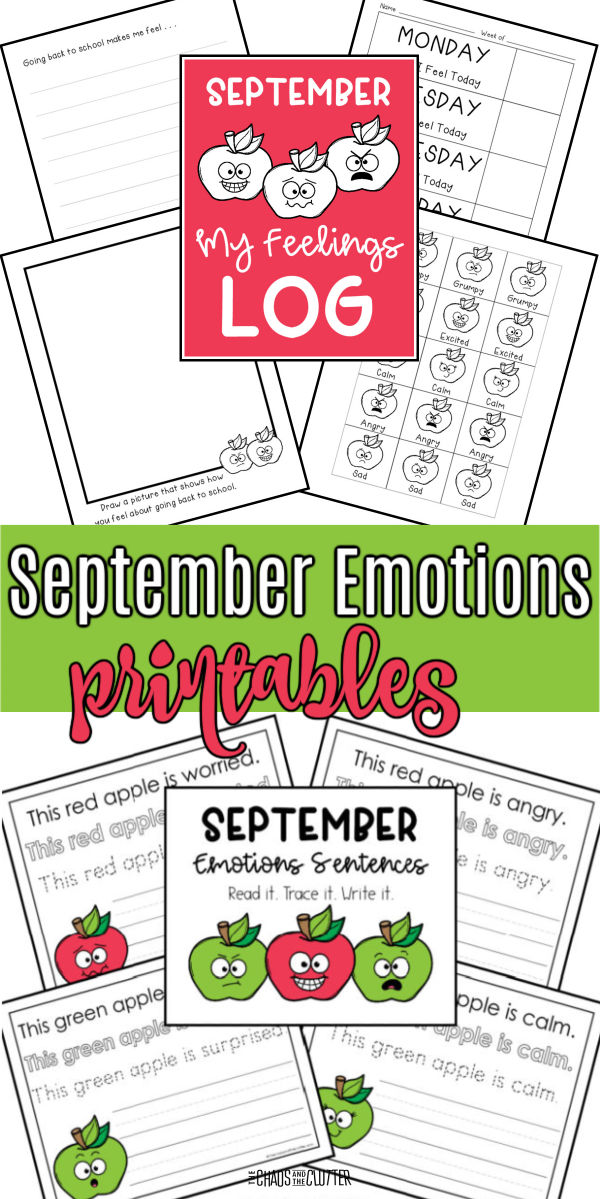
September Printables for Kids about Emotions:

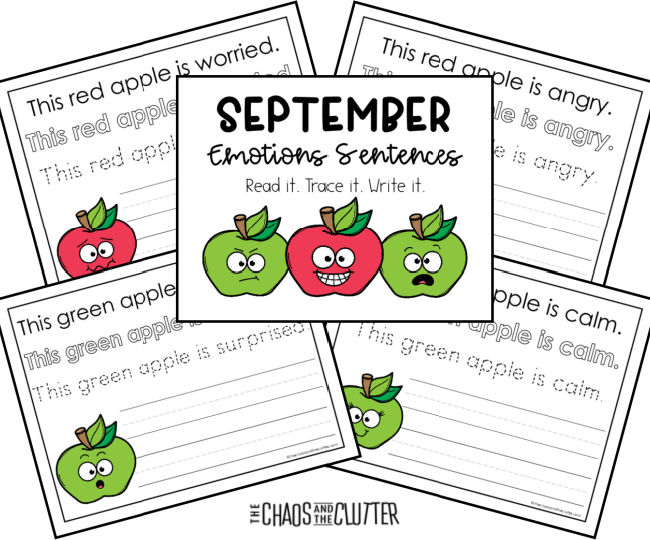
September Copywork Emotions Sentences:

Supplies needed:

  • September Emotions Printable pages (download Emotions pages here)
  • pen or pencil OR
  • plastic sleeve AND dry erase marker

If you want sheets to be reusable, laminate the pages or simply slip them into a plastic page protector. Students can then use a dry erase marker to do the tracing and writing themselves. Or they can write directly on the pages with a pen, pencil, marker, or coloured pencils.
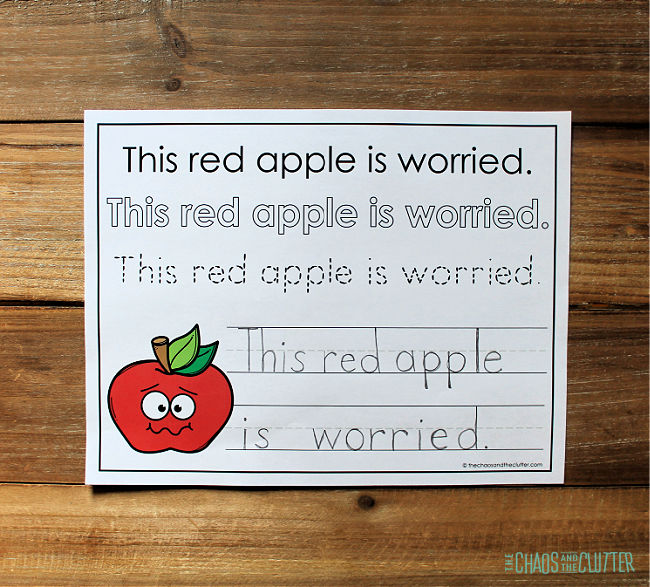
a paper with a sentence to copy "This red apple is worried." and a picture of a red apple.

Copywork Sentences Instructions for the child:

  1. Read the sentence.
  2. Fill in the outline.
  3. Trace the dotted words.
  4. Write the sentence on the lines provided.
  5. Discuss the various emotions.

Copying sentences may not seem like it would be impactful, but these sentences do more than simply give a child practise for their penmanship! Copying out sentences about feelings can be a good launching off place for discussions. They help create a culture in your home or classroom where it’s normal to hear about and talk about feelings.

You can also expand this activity by having your child talk about a particular time or situation in their life where they felt that particular emotion and how that was for them.a collage of copywork pages of emotion sentences for kids
September My Feelings Log:

Supplies needed:

  • printed September Feelings Log (download Emotions pages here)
  • scissors
  • glue stick
  • markers, pencil crayons (coloured pencils), or crayons
  • pen or pencil

My Feelings Log Instructions for the child:

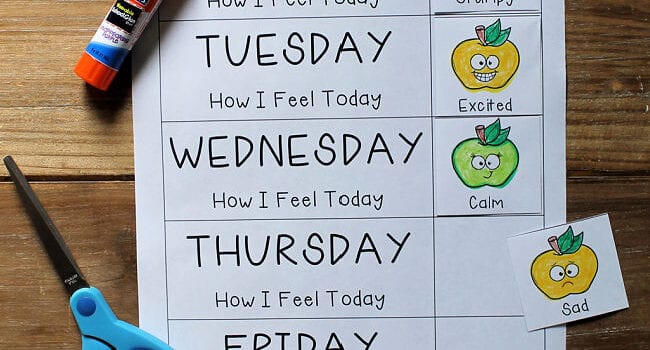
  1. Choose one apple icon each day to colour, cut, and paste into your log to represent how you are feeling at that time.
  2. At the end of the month, you’ll be able to look back and see all the different emotions you felt.
  3. Discuss your feelings with a parent or trusted adult.
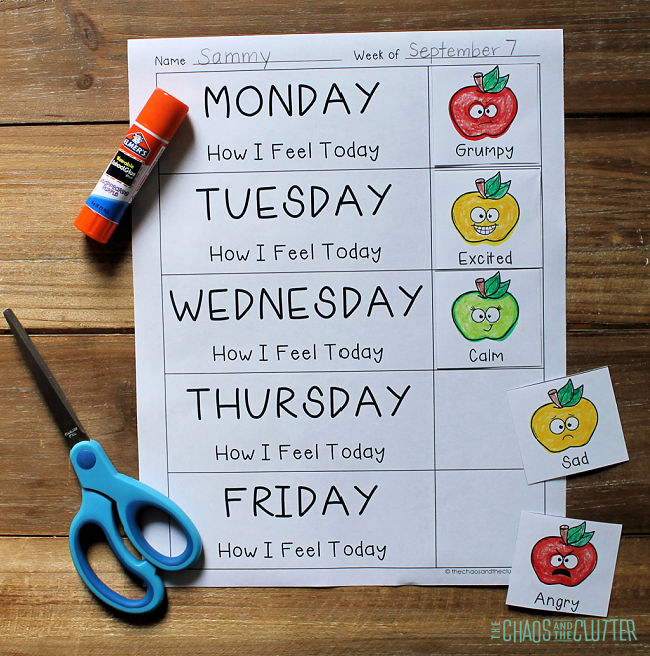
printed page on table with glue stick, scissors, and coloured apple pictures on topThe September Feelings Log explores emotions associated with going back to school. Once your child is better able to identify what their feelings are, you can then work with them on strategies for managing their emotions. 

Plus, the apples are darn cute!
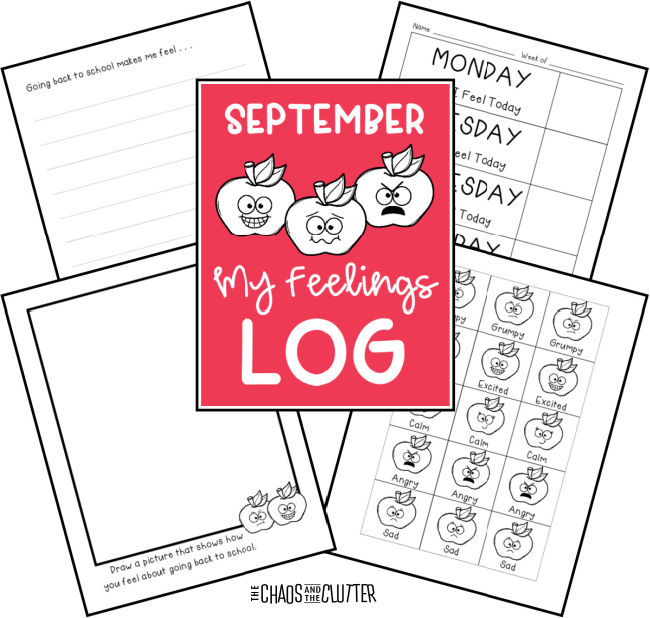
September My Feelings Log collage of printed pagesEnter your email in the box below to download your free September Emotions Printable Worksheets. You can then easily print them off to use at home with your child or with your students. 

You may also be interested in:

  • August Emotion Printables
  • July Emotion Printables
  • June Emotion Printables
  • May Emotion Printables
  • April Emotion Printables

Filed Under: Homeschooling, Printables

Mask Wearing Tips for Kids with Sensory Issues

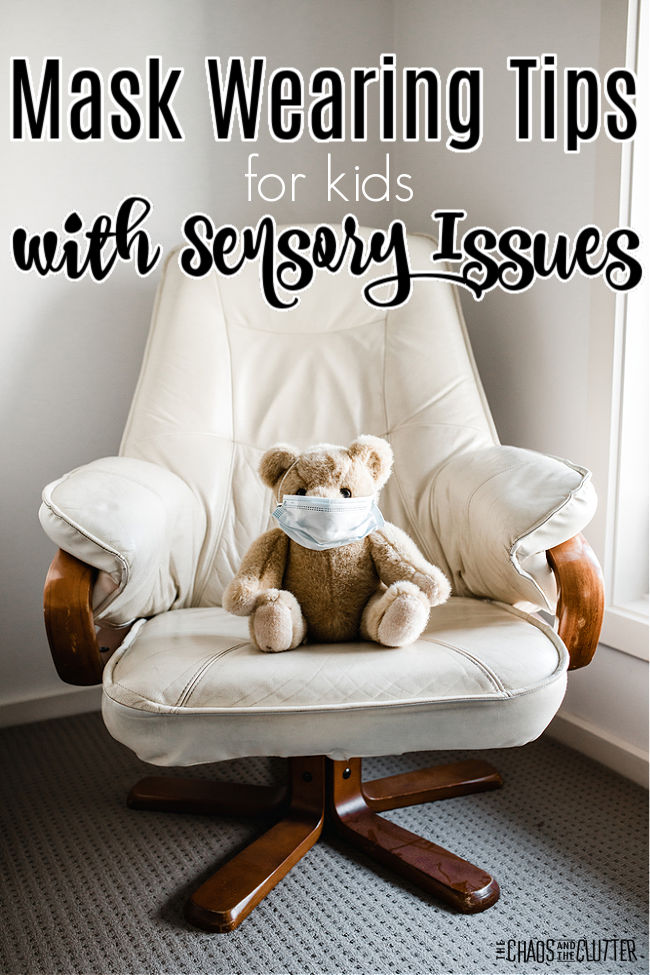
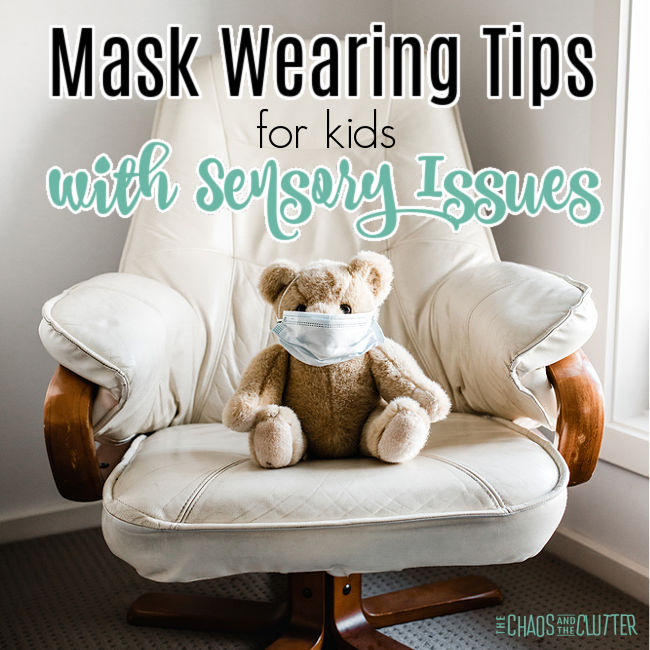
small teddy bear wearing a mask sitting on a large chair

By Sharla Kostelyk

Wearing face masks is becoming mandatory in many public spaces as well as many schools around the world. While for some, this is a minor inconvenience, for those with breathing difficulty, hearing loss, or sensory issues, it is much more of a challenge. Below, you will find a comprehensive guide of mask wearing tips for kids with sensory issues.a teddy bear sits on a white chair wearing a face mask. Text reads "Mask Wearing Tips for kids with Sensory Issues"Important note: I know that there continues to be debate over mask wearing. Regardless of how you personally feel about masks, the fact remains that more and more regulations are being put in place requiring the use of masks. This article is not meant to debate the effectiveness of face masks or whether or not they should be mandated. It is meant to address the practicalities of having children wear masks, particularly children who struggle with sensory issues and may therefore find it more difficult. 
The Challenges of Wearing a Mask for Kids with Sensory Issues:

  • Texture or scratchiness of the fabric
  • Sensation or tightness against the face
  • Smell inside the mask
  • Heat and dampness inside the mask
  • Pulling or tugging on the ears or at the back of the head
  • Breathing out through the mouth can cause more dampness and the smell of recycled air.
  • Breathing in and out through the nose can feel restrictive.
  • Kids who struggle with oral sensitivities may suck on their mask, creating a wet patch. Experts say this renders the mask essentially useless.
  • Difficulty reading facial expressions on others who are wearing masks, particularly for kids who have poor visual perception skills.

You’ll want to play detective by observing and asking questions to determine what specific challenges your child is having with wearing a mask or keeping it on. This information will help you be able to address those issues and find solutions. 

Tips to help kids with face masks:

Be a role model.

Wear a mask yourself and do so without complaining to your child about how much you dislike it. Our kids are watching what we do more than listening to what we say. Regardless of how you feel about mask wearing, if you know it will be required, make the best of it yourself. This will speak volumes to your child. 

Practise, practise, practise.

Before going into a situation such as a public place or school where a mask has to be worn, allow your child to practise at home. Start with short bursts of time and increase the time gradually. 

Practise with the mask when the child has a distraction such as when they are watching a movie or playing on a tablet. Some children also find it easier to practise outside as they feel less restricted and there may be less other sensory stimuli to contend with. 

Plan low risk outings as practise where you can leave if need be and where there is not a lot of other competing stimuli. 

Reduce other sensory stimuli.

Remember that no matter what mask your child wears, it will be more sensory input. Sensory overload will happen more quickly due to mask wearing. Sensory overload may lead to sensory meltdowns. You may also want to read more on preventing sensory meltdowns from sensory overload.

You can cut back on sensory overload by reducing some of the other stimuli in your child’s environment. You may also want to talk to their teacher about reducing some of the distractions in the classroom as well. 

While reducing outside sensory stimuli is helpful, you’ll also want to ensure that your child also receives enough healthy sensory input during the day. Of particular importance is getting proprioceptive input. This helps with calming and self regulation. Using a calm down kit can be beneficial for children.

Ask for their input.

Allow your child to have a say in the fabric, print, and fit of their mask. Choosing a fun print on the fabric can help kids express their unique personality. If your child is old enough, you can even let them help make their own mask. There are many patterns for no-sew masks available online. Being part of the creation can make them feel more a part of this process. 

Be sure to also listen to their feedback about what struggles they may be having with keeping the mask on to give you clues as to how best to help them adjust. You may be surprised by what you learn. This can help tremendously in coming up with solutions.

When kids feel like they have a say in choosing their mask, they are able to feel as if they are at least able to control something in a world that can feel pretty out of control. 

Offer breath mints or gum.

Breath mints, hard candies, or gum help with the smell inside the mask. Gum can also give them oral sensory feedback and proprioceptive feedback which may help prevent them from licking or sucking on the inside of their mask.

Of course, hard candies or mints can be a choking hazard, so only use this tip with older kids and those who don’t have risk factors for choking. small teddy bear wearing a mask sitting on a large chair

Give those ears a rest!

Having a mask looped around the ears can cause discomfort for anyone and that discomfort is multiplied for those with sensory issues. Ear savers allow a mask to be attached behind the head instead of around the ears.

Provide ear savers, a headband with buttons for the mask to loop around, caps with buttons or snaps for the mask to attach to, or a mask that fits around the head rather than around the ears to alleviate the tugging on the ears. 

Clear your nose.

Prior to putting on a mask, have your child clear their nose well. This can be achieved by using a Neti Pot (if they can tolerate it) or steam from the shower. Doing this will help your child feel that they can breathe easier with the mask on. 

Mask brackets for the win! 

Mask brackets are a brace that fits snugly inside your existing mask. They prevent the gagging feeling some people feel when the fabric touches their face. It also helps the nose tickling that many kids complain about. For younger children, be sure to buy a children’s size. 

Play.

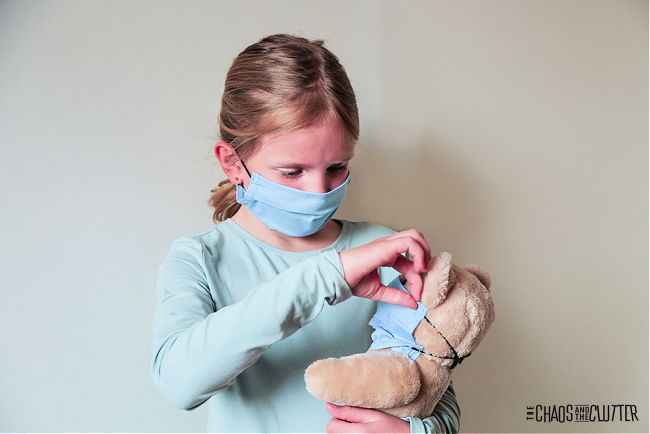
Help kids get used to the idea of face masks through play. Purchase or make a matching mask for your child’s doll or stuffed animal. This can help direct their play and they can even begin to work through some of their emotions as they role play different situations for themselves and their toy in regards to wearing a mask. child wearing a blue face mask putting a matching mask on a teddy bearInvite your child to draw pictures of themselves and their family or friends wearing masks. This can help them express some of the emotions they may have about this “new normal”. 

This poster shows some beloved children’s characters wearing masks. 

Completing a mask colouring book is another hands-on activity that can promote discussion. This free I Can Wear a Mask Easy Reader booklet is another good resource to use.

Keep hands busy.

One way to help kids resist the urge to remove their mask is to give them something else to do with their hands. Provide fidgets to keep their hands busy and to get their sensory needs met.

Explain the reason behind wearing a mask.

There are some resources that can help you talk to your child about why we’re wearing masks. We Wear Masks is a video social story that explains things very simply for younger kids. Note that the video does mention not being in school and that may no longer apply in your area.

This Face Mask Social Story is a really good way to explain things to kids and address some of their related worries.

Listen and empathize.

Even if you do everything in your power to make this easier, this big change will likely cause a mix of emotions. It is going to take a lot of adjustment for kids. Be there for them. 

Be sure they know that they can share their feelings about these new rules. Acknowledge how hard this must be for them. Do not minimize their emotions. While this is something they may have to get used to doing, that doesn’t mean it will be easy and it’s okay for them to express that to you.

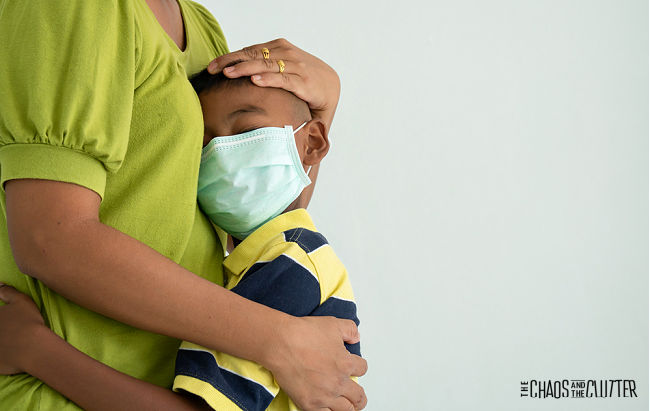
Create a safe place for them to say “this is hard. I feel frustrated.” mom comforting her son while he's wearing a face mask

Choosing a mask:

Invite your child to be part of the decision about the type of mask they are most comfortable with.

Find a fit and fabric that your child can tolerate. Ensuring a comfortable fit will reduce the amount your child fidgets with their mask. It should fit over the mouth and nose and secure under the child’s chin. It should allow your child to breathe easily while worn. 

Mask Types:

Reusable Fabric Masks

Choose a fabric that is most comfortable for your child. Soft cotton may be the most comfortable fabric for most, but some kids may prefer seersucker, satin, or synthetic fabric. Some parents add a softer layer as a liner as this will be what touches the skin.

Allow your child to pick a fun pattern as this can help them get more excited about wearing the mask.

Some fabric masks allow you to add a filter. For one of our daughters, the flap inside for the filter insert was driving her crazy, so we sewed that flap shut. 

Disposable or Surgical Masks

Some people find that the disposable masks allow more air flow while others find them more restrictive than cloth. This is something you will have to experiment with to see what your child prefers. 

I find personally that the 3 ply surgical style masks get less hot inside than the fabric ones. However, in winter, the warmth of a cloth mask may prove quite welcome!

Masks with a Built-in Filter

Masks with a built-in filter tend to be made of a heavier material and be a bit bulkier. They may, therefore cause more distress for kids with sensory issues. If you choose to go this route, be sure your child has rest periods where they can remove the mask for a time. 

Clear Masks

One of our daughters is deaf and relies on lip reading to “hear”. As you can imagine, mask wearing, particularly by her teachers, therapists, and family members has made her life much more difficult, so we have instead used different versions of clear masks. 

Cloth masks can be sewn with a clear window using clear shower curtains or clear page protectors. My neighbour and friend sewed some for me using this clear mask pattern. 

You can also purchase clear masks or the type that are cloth with a clear window.

To keep the clear window from fogging up:

  1. Add some Dawn dish soap or shaving cream.
  2. Spread all over the window.
  3. Allow it to sit for a time.
  4. Rinse off and dry.

Face Shields 

If masks are required at your child’s school, be sure to ask about the allowability of face shields as an alternative. Our school district will only allow face shields if a mask is worn underneath. 

If your school will allow them, face shields are proven to be the easiest for those who are hard of hearing to be able to both hear and lip read and some kids find them much less restrictive than masks. You can purchase face shields in children’s sizes or adult face shields.

Neck Gaiters or Buffs and Bandanas

While many school districts do not allow the use of bandanas or neck gaiters in place of masks, some do. Again, some kids find these easier or at least more familiar to wear while others find them to be worse as they are bothered by the feel of it on their neck. It comes down to your child’s sensory preferences and what works best for them. 

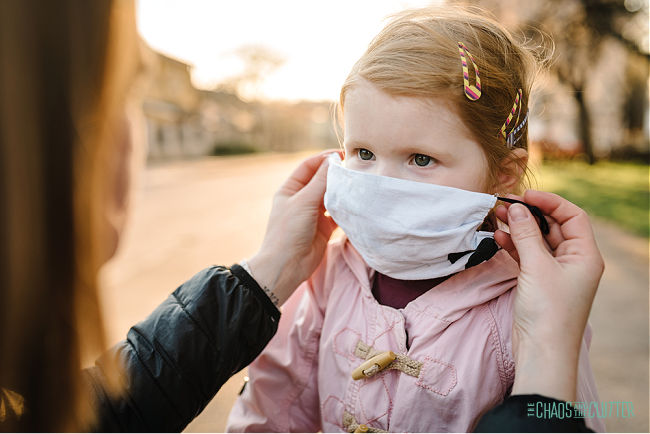
This is a possible alternative option to try if you haven’t been able to find a mask that suits your child’s sensory needs. Mom putting a mask on her young daughter

Mask fit:

The other important consideration is the fit of the mask. Some children prefer a more snug fitting mask, while others like there to be as much space as there can be.

Some masks fit around the ears while others tie or secure behind the head. Ear Savers can make around the ear masks fit more like behind the head masks. 

Mask brackets help eliminate the side gaps and give a better overall fit.  

Safety tips:

Be sure to follow safety guidelines such as not wearing a mask for children under 2, while exercising, while eating or drinking, or when in the water. 

According to the CDC, children under age 2 or anyone who has trouble breathing, is unconscious, incapacitated or otherwise unable to remove the mask without assistance should never use a cloth face covering.

I am not a doctor or medical expert. The tips in this article are designed as suggestions to help you and your child but are not meant to replace medical or expert advise. 

What things have you found helpful when it comes to your child wearing a mask?

Enter your email below to get a free copy of the Pandemic Journal for Kids, printable pages to help them process their emotions and better express themselves. 

You may also be interested in reading:

The Complete Guide to School at Home

Surefire Signs Your Child has Sensory Issues

50 Awesomely Simple Calm Down Strategies

Filed Under: Sensory, Special Needs Parenting Tagged With: parenting through pandemic

Sanity Savers for Busy Moms

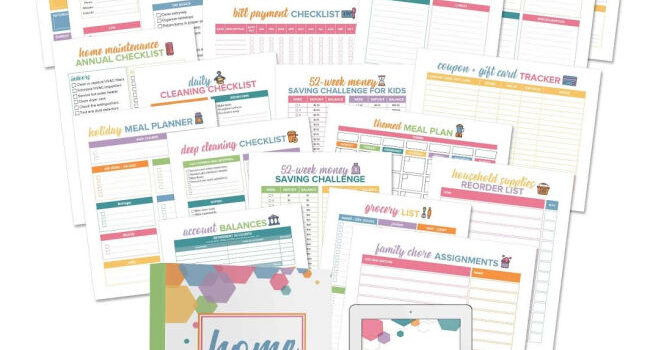
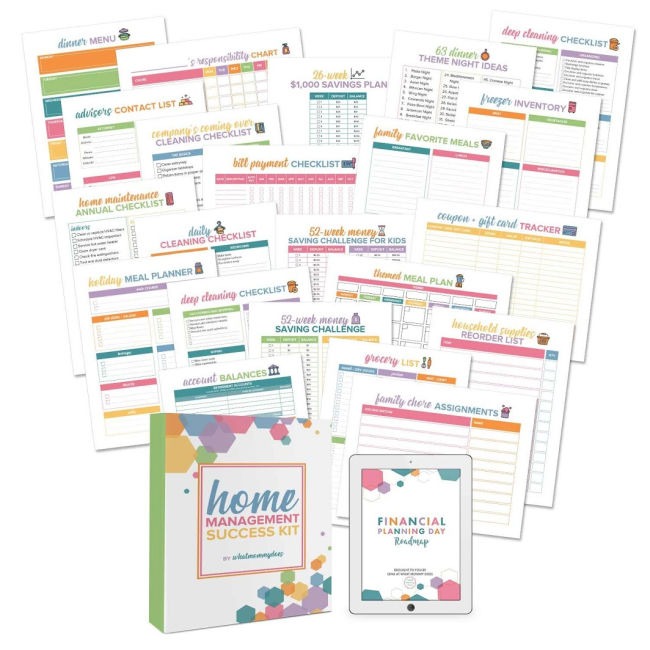
a huge array of printed out pages and checklists and the cover of a binder

By Sharla Kostelyk

As moms, we take on so many roles. We are parent, chef, teacher, caregiver, chauffeur, housecleaner, referee, advocate, counsellor, and more. Let’s face it. It can be exhausting and overwhelming. These sanity savers can help make life just a little easier. 

Home Management Success Kit

The Home Management Success Kit was designed by my friend Lena. She is an entrepreneur, a wife, a mom, and a CPA. That means not only does she understand being a busy mom, she understands finances. 

The printable packs included help you manage your home finances, set up a proper cleaning schedule, and get meal planning done easily.a huge array of printed out pages and checklists and the cover of a binder

This system will help you:

  • easily track your monthly budget
  • prioritize your life goals so that you know exactly how much you need to save
  • keep a complete list of your financial accounts so you have a quick reference
  • keep track of important financial and household documents in case of an emergency
  • set up a simple bill payment system
  • quickly plan school lunches for the week with the mix & match checklist
  • plan family meals by the week or by the month
  • organize your grocery shopping so that you buy what you need
  • save money by making meals with what you already have
  • track your family’s favourite meals
  • set up a simple cleaning schedule for your family to follow
  • help your kids understand their roles and limit arguments about chores with chore charts
  • teach kids how to be responsible for cleaning their own rooms
  • see at a glance what needs to be done each week
  • easily get things done in small chunks of time with the micro cleaning tasks checklist
  • and so much more!

Read more about the Home Management Success Kit.

Filed Under: Parenting in the Chaos

Happy at Home Challenge

woman on bed holding teal mug. Only her hands and socked feet are visible.

By Sharla Kostelyk

There’s nothing quite like being stuck at home to test certain aspects of your character. Whether we’re at home due to a pandemic, an illness, a new baby, or choosing to be there, feeling cooped up can test our patience, resilience, and positivity. That’s where this Happy at Home Challenge comes in.woman's socked feet are visible as her hands hold a teal mug. Text reads "Happy at Home Challenge"Even under difficult circumstances, we can determine our own happiness. Happiness is an attitude, a choice.
It’s obviously easy to choose when life is roses! But when life is more challenging, that’s when it’s even more important to take responsibility for our own happiness and do what we can to improve it. 

The research is clear. There are things that we can do that increase our happiness.

So will you join me in this Happy at Home Challenge? Try it for just two weeks and see if it makes a difference for you. 

Gratitude.

Gratitude is consistently shown to correlate to higher levels of happiness. Simply writing out 3 things each day you’re thankful for will dramatically increase your satisfaction with your life. 

For many years, I had my kids write out 5 things they were thankful for to start out their homeschool day. And when the pandemic lockdown hit last March, it’s a practise we started again right away. It was so good for all of us.

The challenge? Jot down 3 things you’re thankful for each day. Write each one on a Post-it note and stick those around the house in places you’ll see them to get even more reminders of your blessings. 

Kindness.

Serving others provides us with connection to community and triggers feelings of pleasure in our brains. In other words, helping others also helps us. It feels good.

I also find for myself personally that helping others gives me better perspective on my own circumstances as it brings a greater awareness of the needs and pain of others which leads to me realizing that I have much to be thankful for.

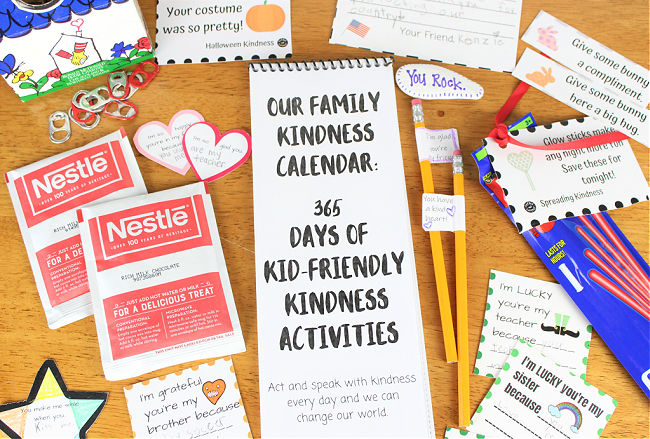
array of scattered papers and pencilsThis Family Kindness Calendar is full of lovely ideas for ways to help others. The kindness suggestions included can be done by school-age children or younger children with the help of an adult. They’re great for getting the whole family working on a common project.

The challenge? Do one small thing for someone else each day. It can be a kind word, an act of service, or even writing a little note on a Post-it and sticking it on their door. If you’re having a hard time thinking of ideas that are safe given the pandemic restrictions, we have a list of ways you can spread kindness without spreading the virus.

Get outside.

Yes, we’re talking about when you’re stuck at home, but the research is clear. Going on a nature walk, spending time in a forest, or even just getting fresh air improve mood and decrease cortisol, the stress hormone. So even if you’re not able to go far, get outside.

The challenge? Get some fresh air every day. If possible, add some movement like going for a walk to get those endorphins going. 

Move more.

Speaking of endorphins…

Endorphins are one of the brain chemicals which are known as neurotransmitters and endorphins trigger positive feelings in your body. They are the “feel-good” chemical and you can release them naturally through exercise.

The challenge? Move more every day. Choose whatever you want and are capable of. Run up and down the stairs, do a YouTube workout, do an exercise video, yoga, or have a dance party with your kids in the kitchen.

Write down your feelings.

Writing out your feelings helps clarify your thoughts, relieve stress, help you identify specific emotions and get at their root causes, and more efficiently solve problems. 

Of course, as adults, most of us can identify our feelings, but kids may not be able to easily identify their emotions or the emotions of others. That’s one of the reasons it’s so important to give your kids an emotional vocabulary. 

The Teaching Emotions Toolkit helps parents or teachers provide kids with a rich emotional vocabulary and better understanding of their feelings.

The challenge? Start a journal to track your emotions.

These things can all contribute towards you feeling more happy at home.

Filed Under: Parenting in the Chaos Tagged With: parenting through pandemic

Special Needs Resources

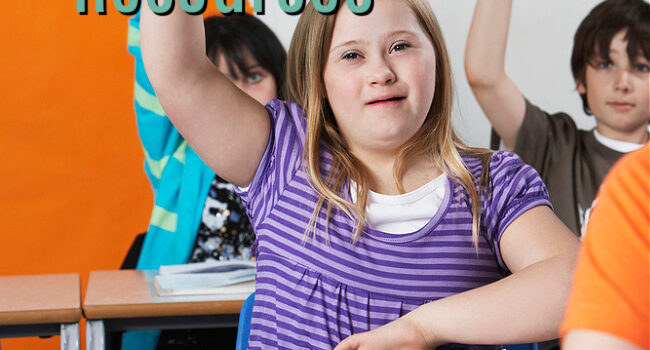
girl in striped purple shirt has her hand raised in class

By Sharla Kostelyk

Parenting or teaching children with special needs comes with challenges and blessings. Having relevant resources can arm you with the information and tools you need to be able to better meet the needs of your child or students.girl in striped purple shirt sitting at her desk in class has her hand raisedThough I’ve found many excellent resources over the years that have taught me so much and helped me better help and advocate for my children, the thing I’ve found that is the best resource of all is actually parents of other children with special needs.
Those parents have pointed me to specialists, listened to me, shared their experiences with me, walked in my shoes and lived to tell the story, laughed with me, cried with me, and given me hope when I felt there was none. They understand in a way that no one else can. 

While no other resource can offer that, today, I’m excited to share with you some special needs resources that will arm you with more tools to help your child or students.

Great Special Needs Resources:

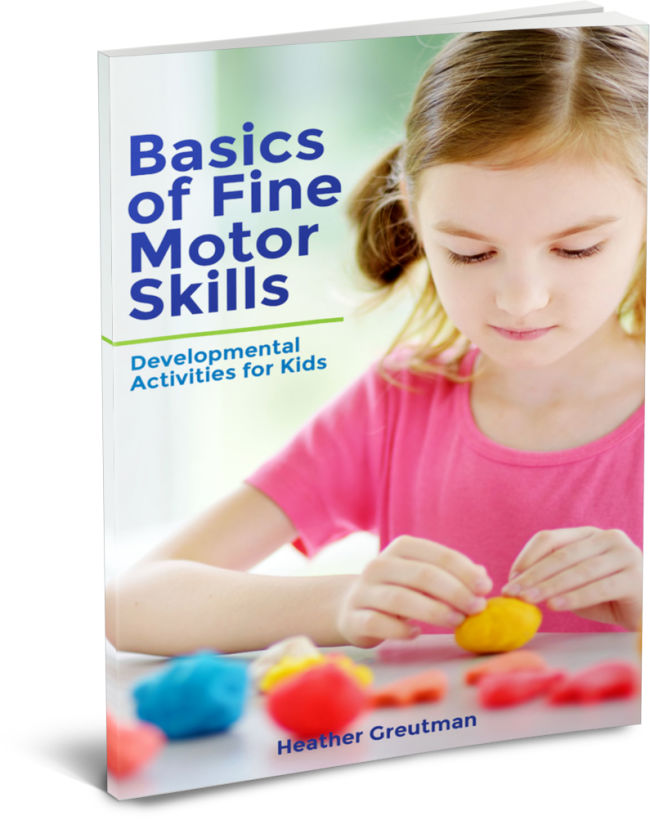
Basics of Fine Motor Skills 

book cover of a girl in pink shirt playing with playdoughFine motor skills are a key developmental skill. This book explores how gross motor, visual motor, and sensory processing skills affect this development. Learn what red flags to watch for and get activity ideas for all types of fine motor development based on your child’s skill and ability levels. 

This book is a wonderful resource for parents, teachers, and therapists.

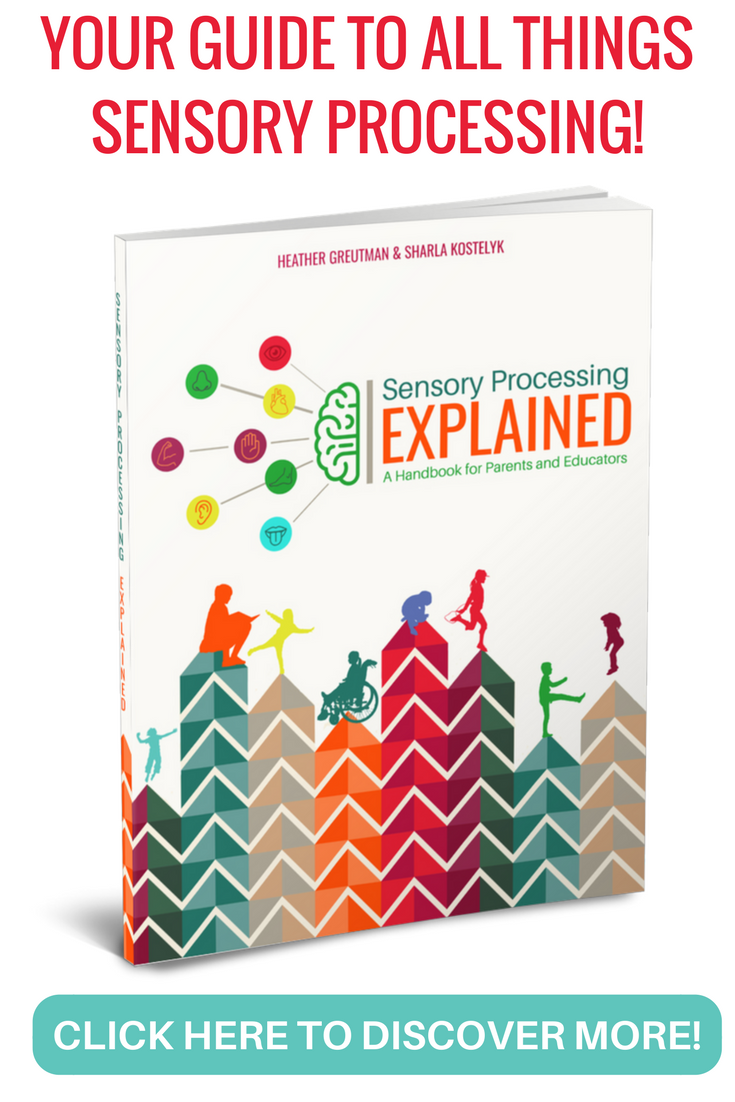
Sensory Processing Explained, A Handbook for Parents and Teachers 

In Sensory Processing Explained, discover…

  • easy to understand sensory information that you can share with parents and educators to help explain a child’s behaviour
  • how to explain sensory processing to those who just don’t get it
  • what calming techniques and strategies can work during a sensory meltdown
  • sensory ideas you can easily replicate at home
  • how teachers can accommodate kids with sensory processing challenges
  • strategies and activities that can be used with an entire classroom
  • information on all eight sensory systems and how they can affect behaviours (plus strategies and activities that can help with regulation)
  • just figuring out where to begin if you feel a child could be struggling with sensory processing

Plus get informational printables that make it easy to share about sensory processing with families, clients, or co-workers.

This book will forever change how you view your child’s sensory responses.

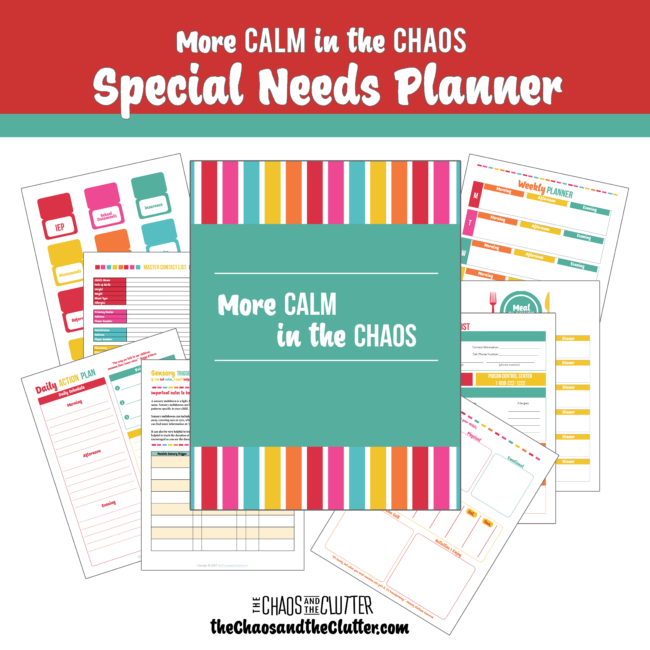
More Calm in the Chaos Special Needs Printable Planner 

This printable planner was designed with moms of special needs kids in mind (by a mom of special needs children). It includes everything a regular planner would but also includes what moms like this need:

  • appointment log
  • appointments at a glance
  • mileage and expense tracker
  • medication and supplement list
  • IEP meeting notes
  • sensory triggers log
  • behaviour tracking log
  • and more!

Integrated Movement Warm-Up Activities 

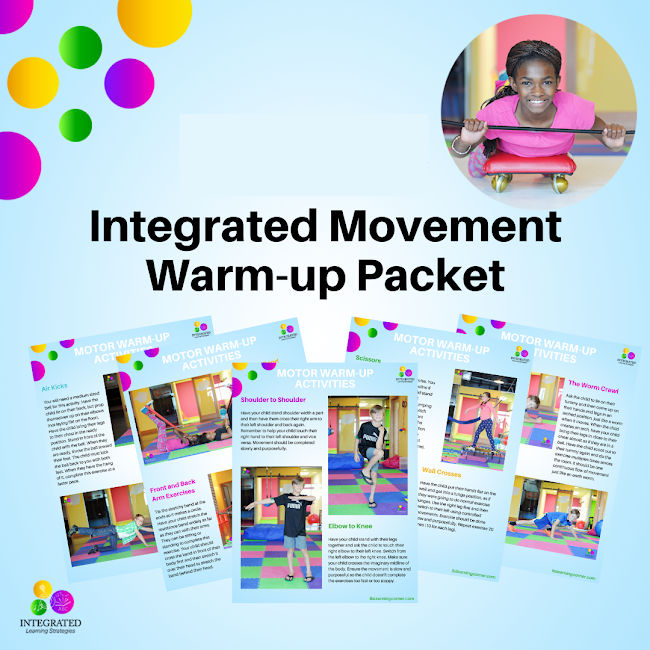
The Integrated Movement Warm Up Activities PDF from Integrated Learning Strategies is an excellent resource for parents, therapists, and teachers. One of the things I especially like is that they include actual photos of the activities in action as well as instructions, making it easy to follow and understand. polka dots in one corner, girl in pink shirt laying on swing, collage of printouts

Creating Connections with Autistic & Hyperlexic Children Using Their Interests and Passions 

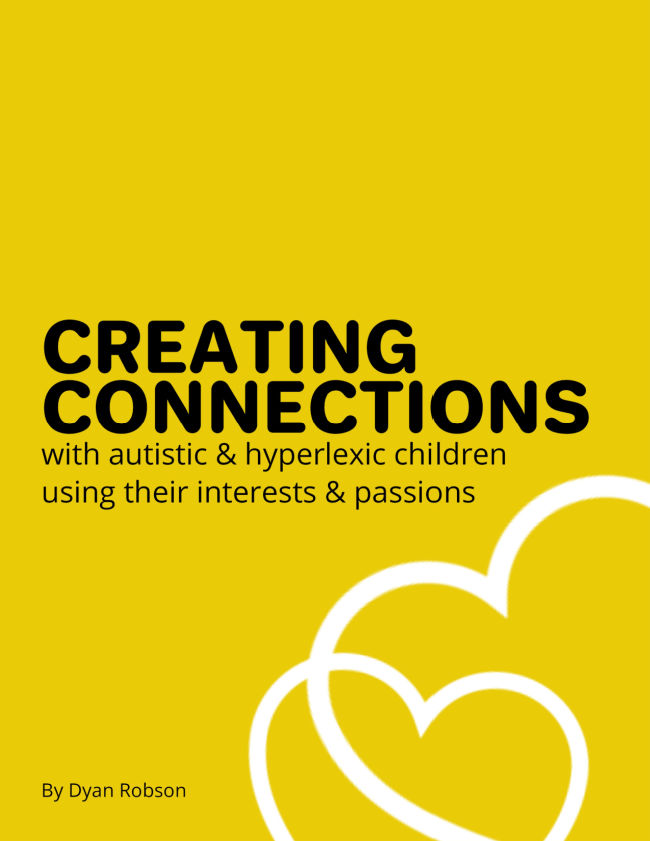
If you are parenting a child with autism or hyperlexia, this ebook will inspire you to use your child’s interests and passions as a way to connect with them and teach them new skills. yellow book cover with two overlapping white hearts in the corner

It includes:

  • worksheets that will help you identify your child’s interests and strengths and target skills
  • prompts to help you come up with the connections you’d like to make with your child
  • suggestions on how to adapt different interests to work on skills such as math, sensory, fine motor, and literacy

Having the right resources can make a big difference.

Filed Under: Special Needs Parenting

Learning Resources

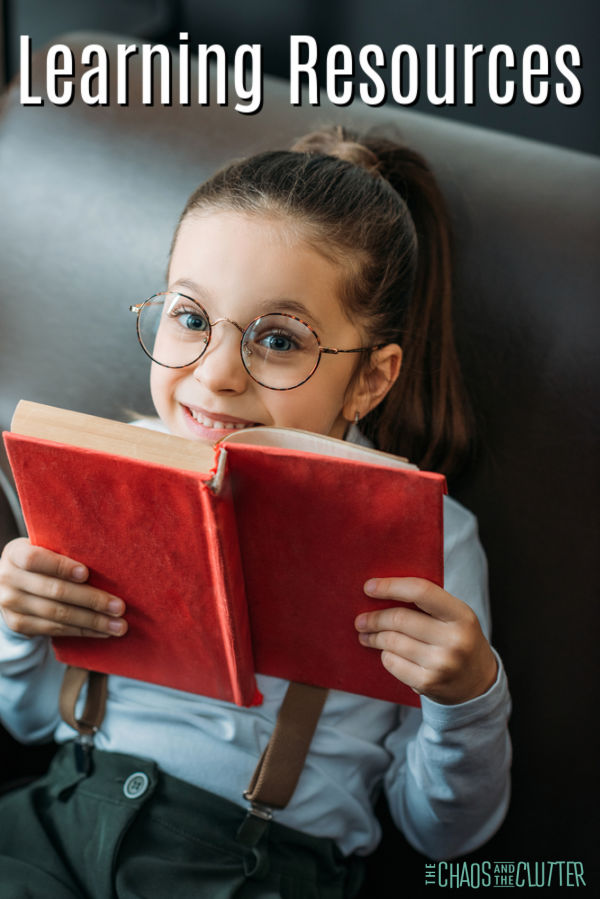
a young girl with glasses sits holding a red book

By Sharla Kostelyk

The past year has thrown a wrench into education. Whether you are a teacher now adapting to online teaching, a teacher having to implement new protocols in your classroom, a parent who finds yourself helping your child with online learning, or a homeschooler, these resources can help.little girl with glasses sitting reading a book with a red coverThese are some amazing resources to help make teaching easier and more fun.
ProSchool Membership

The ProSchool Membership includes:

  • 1000s of notebooking pages on 100s of specific topics
  • access to the exclusive ProSchool page generator which allows you to create customized notebooking pages in less than a minute
  • exclusive members-only resources and printables
  • and more!

ProSchool MembershipNotebooking pages were one of our favourite homeschooling tools. The kids remember what they are learning in a more concrete way when they create their own notebooking pages on the topic. They were always so proud to show them to their grandparents too.  

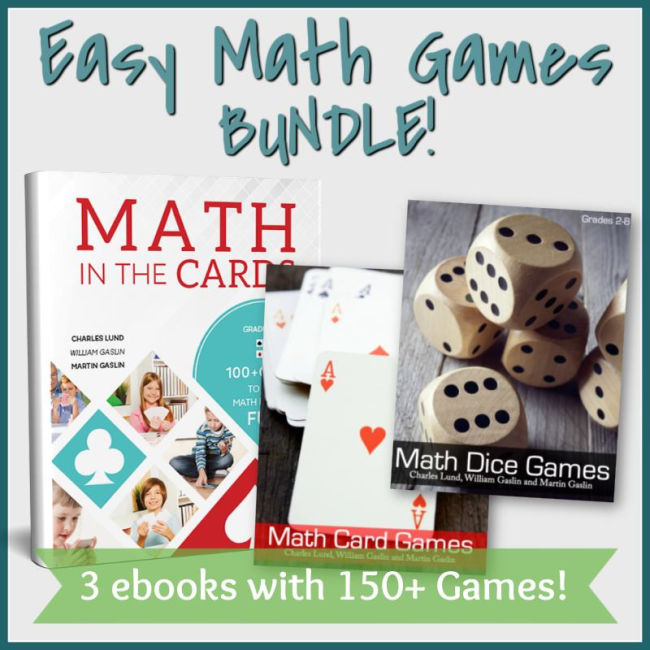
Easy Math Games Bundle

Learning through play is the most effective way and these books are full of ideas for just that. These 3 eBooks offer over 100 card and dice games that work on teaching math skills. 

three book covers of math card and dice gamesMath in the Cards includes over 100 games and puzzles for grades K-8. These go over many math concepts and foundational skills. 

Math Card Games for Kids is geared mainly for kids in grades 3-9. The games encourage critical thinking, problem solving, and logic. They work on a variety of math topics including whole number operations, fractions, decimals and percents, integers, number theory, and place value.

Math Dice Games for Kids includes instructions for 34 games as well as variations. These are designed for math concepts for grades 1-8. The concepts covered include number recognition and counting, addition & subtraction, multiplication, fractions, decimals, percents, and strategy and critical thinking skills.

Songs and Rhymes for Transition Times

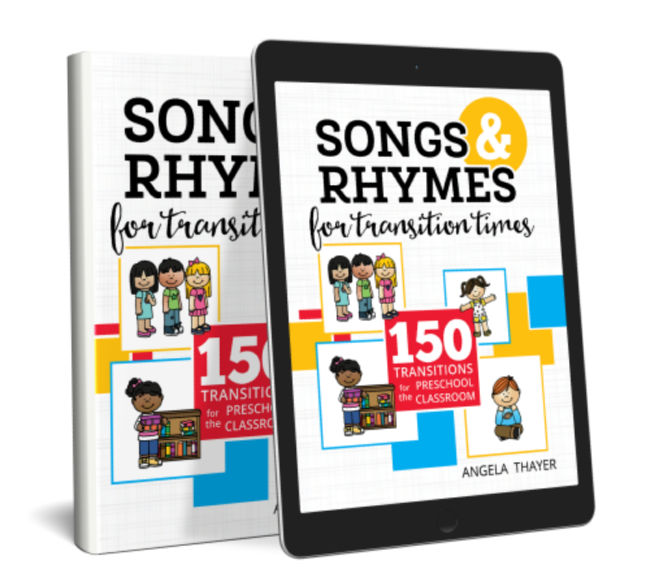
a CD case and Ipad with the words "Songs & Rhymes for Transition Times"Transitions between activities and places can be difficult for kids. Make this time easier and less stressful for them using songs and rhymes. The Songs & Rhymes for Transition Times eBook contains 150 transition ideas. It also includes ideas for brain breaks, crossing the midline, and beginning and end of the school day. 
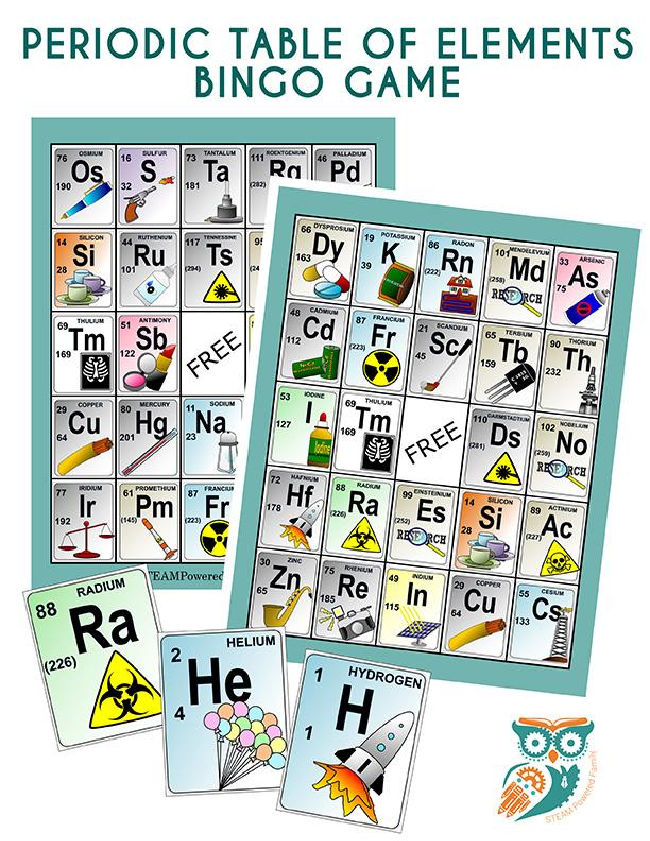
Periodic Table of Elements Bingo Game

This is another example of an opportunity to learn through play. Students can reinforce their memory of the elements through game play with this bingo and corresponding colouring sheets. Please note this is a PDF file. two bingo sheets of the periodic table of the elements displayed

Sensory Science 

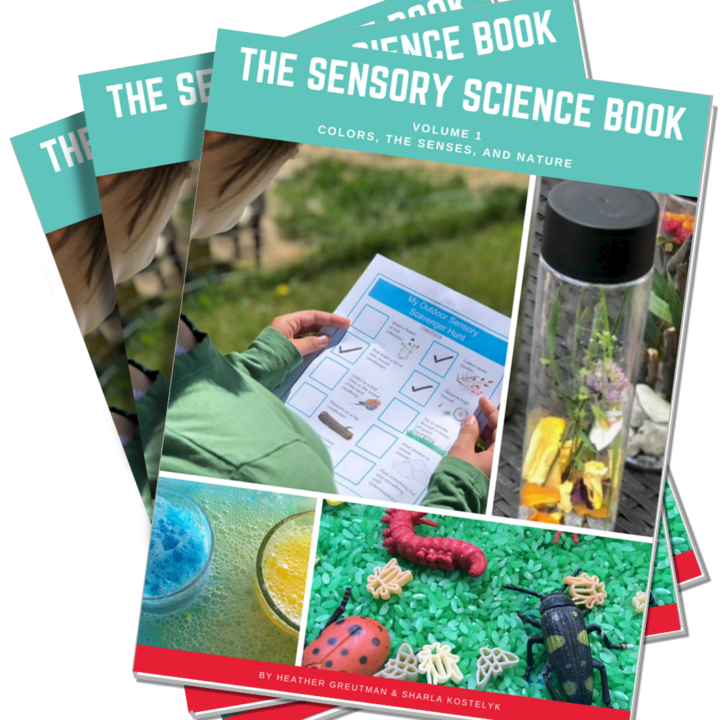
The Sensory Science Volume 1 eBook provides sensory rich science experiments and activities to help kids better retain what they learn. It includes 15 hands-on activities in the themes of Colors, The Senses, and Nature.

This ebook includes a supply list as well as step-by-step directions, activity adaptations and discussion points for each activity. 

I hope these learning resources help you as much as they’ve helped me!

Filed Under: Homeschooling

  • « Go to Previous Page
  • Page 1
  • Interim pages omitted …
  • Page 16
  • Page 17
  • Page 18
  • Page 19
  • Page 20
  • Interim pages omitted …
  • Page 128
  • Go to Next Page »

Primary Sidebar

Categories

We are a participant in the Amazon Services LLC Associates Program, an affiliate advertising program designed to provide a means for us to earn fees by linking to Amazon.com and affiliated sites.

Copyright © 2026 • The Chaos and the Clutter • Site Design by Jeni @ The Blog Maven

Return to top of page

Copyright © 2026 · Chaos and the Clutter 2.0 on Genesis Framework · WordPress · Log in