• Skip to primary navigation
  • Skip to main content
  • Skip to primary sidebar
  • Home
  • About
  • Contact
  • Privacy + Terms
  • Affiliates

The Chaos and the Clutter

  • Facebook
  • Twitter
  • Pinterest
  • Google Plus
  • RSS
  • Email
  • School at Home
  • Sensory
    • Sensory Processing Disorder
    • Awesome Sensory Play Activities
      • Sensory Bins
      • Sensory Bottles
      • Sensory Bags
  • Family Games
    • Minute to Win It Games
  • Special Needs Parenting
    • Childhood Anxiety
    • Reactive Attachment Disorder
    • Sensory Processing Disorder
  • Store
  • Course Login

Sharla Kostelyk

Spring Tea Party for Girls

By Sharla Kostelyk

My girls are forever asking me if they can have a tea party. When they were younger, this meant using play dishes and water that they called tea. Now that they are a bit older, this just means that they will set out some mugs and napkins on the little table and drink tea. Sometimes they make it more elegant by dressing up or by serving cookies. There are always giggles and sometimes I join in. Other times, their dolls or stuffed animals join them!

I wanted to do something special to surprise the girls and create a memory for them so I planned a real tea party. I invited some friends and their daughters to join us for a girls only dress up event.

Tea Party for Girls
I threw the party together somewhat last minute (quite typical of my parties) while the boys were at camp and we had girls-only time to fill. We draped things in pink, brought out some old Princess napkins, plates and cups and set about making some tea party food… because we all know that any party really is about the food, I mean about the guests of course!
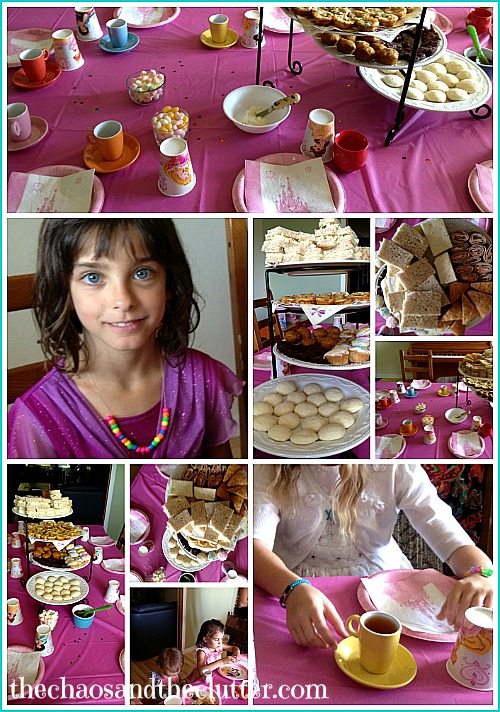
girls tea partyI set out a few bowls of soft coloured jelly beans and mini marshmallows. I made whipped lavender butter and set out a few bowls of jelly to go with the delicious mini homemade scones. I used a tiered tray and served iced cookies, squares, scones, mini pumpkin muffins (my grandma’s famous recipe), mini quiches made by my friend Christie, and tea sandwiches.

A friend brought a set that she had of small tea cups and saucers for the girls to use. Us moms used my regular tea cups.

The trick to making tea sandwiches is to make them look elegant or cute. You can achieve this by something as simple as cutting off the crust or cutting them into different shapes. I made egg salad sandwiches on white and brown (with crusts cut off), cucumber and dill cream cheese on white (crusts removed), ham and cheese spirals on whole wheat tortillas, swiss and sauerkraut with grain mustard on rye, and peanut butter on ciabatta buns cut into triangles. Of course at a ladies tea party, I wouldn’t serve peanut butter sandwiches, but since this was a mother-daughter party, I wanted to be sure to cater to the younger crowd!

If you are planning your own tea party, there is a list of tea party printables, activities and crafts on Homeschool Giveaways that is very useful for planning extra activities or having colouring sheets and the like for kids to do at the party. You may also be interested in following my Party Planning or Tea Time board on Pinterest.
Filed Under: Parenting in the Chaos

Money Saving Sensory Solutions

Money Saving Sensory Solutions

By Sharla Kostelyk

Equipping your home to adapt to a child with sensory needs can be expensive. I was astonished to find just how expensive some of the sensory tools were. Five of our kids have Sensory Processing Disorder so the search for sensory solutions that wouldn’t break the bank is a journey I have been on for many years now. I have managed to come up with a lot of low cost options that work just as well as the items that are sold by specialty stores for a fraction of the cost.

Money Saving Sensory Solutions

Here are some of the items we have adapted or found a lower cost solution for:

Weighted vests, capes or clothing

Many children have a much easier time regulating themselves when they are wearing weighted vests or clothing. Sewing your own may save money. I don’t know how to sew though.

If you are like me and don’t sew, you can buy a vest with pockets such as a fly fishing vest and add weights to the pockets.

Weighted neck rolls can be as effective for some children as weighted capes are and are usually much less money.

For some of my kids, wearing very tight fitting outfits underneath their clothing is as effective, if not more effective than weighted clothing. We accomplish this by buying gymnastics suits that are a few sizes too small and having them wear them under their regular clothes. In this way, they still get the feeling of the extra pressure. Gymnastics leotards that go down to the mid-thigh (biketards) and/or have sleeves are what we’ve found to work the best.

You may be able to find second hand gymnastics outfits online, in consignment stores or from friends whose kids have outgrown them. As with all things sensory, it’s best if you can have your child try it on before buying. Avoid things with itchy fabrics like glitter or sequins.

Fidget toys and chewelry

Actual sensory fidget toys are ridiculously expensive! This may sound like the wackiest thing ever, but pet toys can make excellent fidget toys. They are often rich in texture and durability and they are a fraction of the cost of fidget toys!

Obviously, I am recommending that you buy new toys from the pet store or online for your child, not have them play with your dog’s toy!
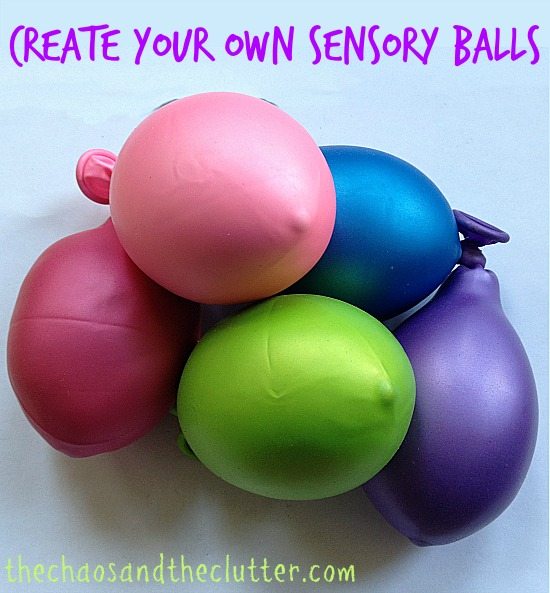
We make our own sensory balls for pennies. I have full instructions for making your own here.

Create Your Own Sensory Balls (for pennies each)Knobby balls are fairly inexpensive and can be used as fidget toys or for sensory activities.

Other low cost things that work for fidget toys include playdough (this recipe for homemade Lavender Scented Playdough is calming as well), silly putty (you can make your own easily), pencil toppers or pencil grips, sponges (from the Dollar store!), ribbons, stones, beads (also from the Dollar store), rubber band balls, and baby toys.

Lanyards can double as chewlery and are much less expensive. My kids also like using those coil keychains that are often given away by companies at Trade Fairs as bracelets that they can chew on.

One of my readers suggested buying teething beads in the baby section and stringing them onto a pretty ribbon to make a necklace (homemade chewlry).

Seat aids

Some of our kids have Movin’ Sit cushions but they are a bit pricey. Another solution is to buy therabands (exercise bands) and put them around the legs of the chair or desk. An even cheaper solution is to do this with scraps of stretchy fabric or old nylons. This will provide your child with sensory feedback when they swing their legs.

Bean bag chairs can be another solution for sitting but they also tend to be a bit pricey.

Textured disks like the kind you can buy at Ikea make good seat disks.

You can fill a large sock with rice to make a weighted lap snake. Those microwaveable heat packs also make good weighted lap pads. These can help with staying seated and feeling more regulated while seated.

Weighted Blankets

Weighted blankets are expensive. There’s really no way to sugar coat it. You can make your own if you know how to sew or you can make a very heavy quilt or blanket. My aunt made some heavy blankets for our kids using old jeans. The denim is very heavy (and free if you collect ripped jeans from people you know).

If you don’t know how to sew (and don’t have an aunt who will make you blankets out of denim!), you can also try buying heavy down comforters when they go on sale.

If you do decide to buy a weighted blanket, be sure to let your child try it out before you spend the money on it as some kids don’t like them. Only two of our kids with Sensory Processing Disorder like them but two ones that do, love them! I was able to purchase our weighted blankets from Innovaid and were allowed to try them first to ensure that the kids would like them.

There is also an excellent tutorial on how to make your own stretchy sensory sheet.

Larger sensory items

You can save so much money by making your own things from items you can buy at hardware stores, fabric stores and Dollar stores. Examples include such things as making your own hammock, platform swing, tire swing, rock climbing wall, ball pit (you can also make a simpler one using a blow up pool or playpen and balls or cut up pool noodles), parachute, and lycra swings. (Click on each of the words to be taken to a tutorial for how to make these yourself.) You can make a crash pad by filling a duvet cover with foam pieces.

There are some things that are almost essential to have when you have a child with sensory needs but that just are expensive. These include such things as trampolines or mini trampolines and the Hop Bouncer. For items such as these, my best suggestion is to check Kijiji, Craigslist, eBay, Freecycle, the local paper, swap and buy and sell groups online, and garage sales. This should make the prices much more affordable and enable you to save for them and pay cash instead of going into debt to buy new ones.

Other sensory solutions

You can make your own sensory tunnel or tube (often called a Sensory Sock) using stretchy fabric for a fraction of the cost of buying it.

Use old couch cushions for compression sandwiches.

Create your own sensory bins, sensory boards and sensory bottles.

Ikea has some great sensory solutions that are quite inexpensive such as a swing and rings that can be hung indoors, their egg swivel chair, tunnels and small tents, a great hanging chair that swings as well as surrounds them like a small hammock (it’s called the EKORRE), and items such as textured cushions, and soft lights.

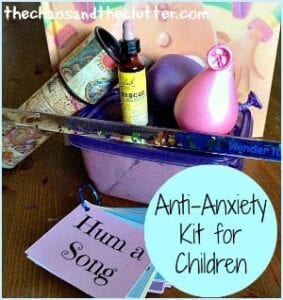
For the anxiety often associated with SPD or ASD, I highly recommend my anti-anxiety kit for kids. It works so well with our kids and can be customized to what works with your own child. You can make yours very inexpensively.

Create an Anti-Anxiety Kit for Your Child including free printable relaxation prompts

Instead of buying expensive noise blocking headphones, try inexpensive ear plugs, cotton or ear muffs.

Drums can be a good outlet for kids with sensory needs but can be made using household items like ice cream pails, pots and pans, and empty coffee tins.

You may also be interested in reading:

Surviving Public Bathrooms with a Child with Sensory Issues

Must Haves for Kids with Sensory Needs

Resources to Teach Kids About Emotions and How to Manage Them

What money saving sensory solutions have you found?

Join me for a free 5 part email series, Little Hearts, Big Worries offering resources and hope for parents.

Filed Under: Sensory, Special Needs Parenting

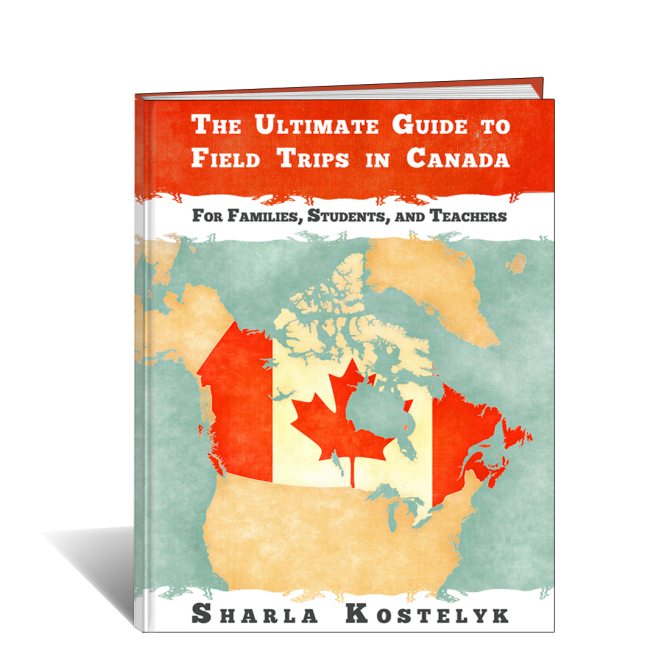
The Ultimate Guide to Field Trips in Canada

By Sharla Kostelyk

Canada is a country rich in diversity, history and culture. There is much to be discovered between her shores. From the famous landmarks to the little known gems, these field trips will give you the opportunity to discover for yourself all that Canada has to offer.

This guide to field trips across Canada can be used to plan a trip to a specific province or a trek across the whole country. It can also be used to plan a Staycation or to explore your own community in a way you hadn’t before.

This 75 page guide can also be used as a virtual field trip as it provides internet links to all locations and many include educational activities and ideas.

Use the guide as a starting point to take you on an exciting virtual field trip all across Canada! From a gopher museum to Anne of Green Gables to the battle at the Plains of Abraham, see what Canada has in store for you.

Discover Canada’s history, culture and natural wonders through hands-on experiences and adventures. A country awaits!

canada buy now $5.99

The Ultimate Guide to Field Trips in Canada

With almost 600 field trips included, this truly is The Ultimate Guide to Field Trips in Canada!

canada buy now75 Pages for only $5.99

Be sure to check out the other Ultimate Guides written by the iHomeschool Network team!

Filed Under: Homeschooling

Spring Sensory Bins

By Sharla Kostelyk

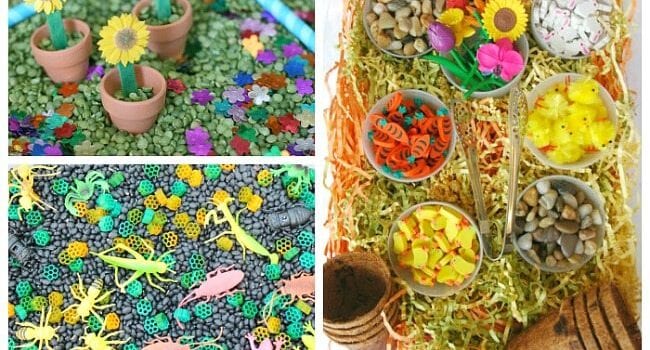
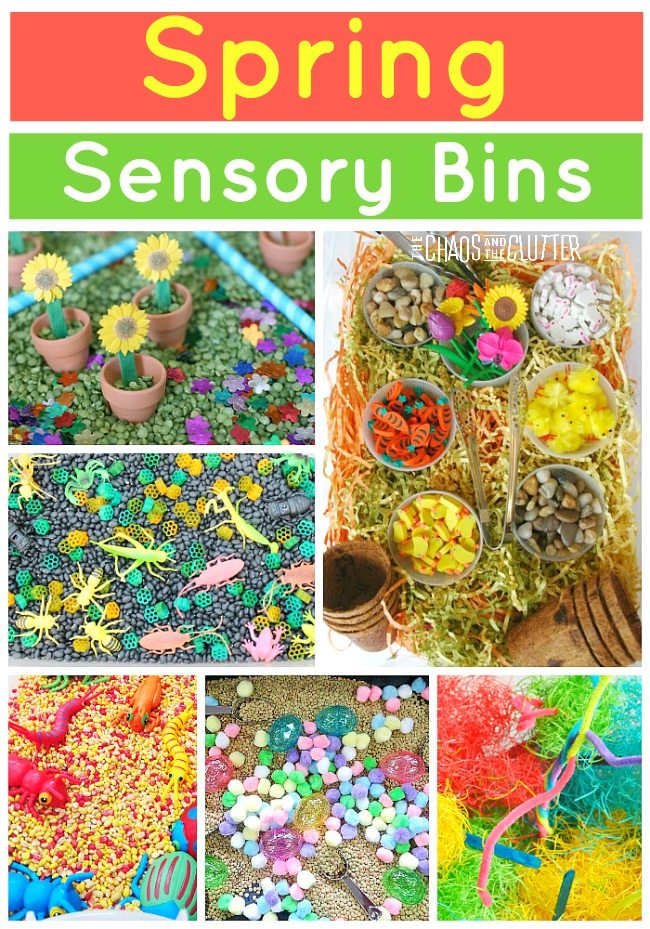
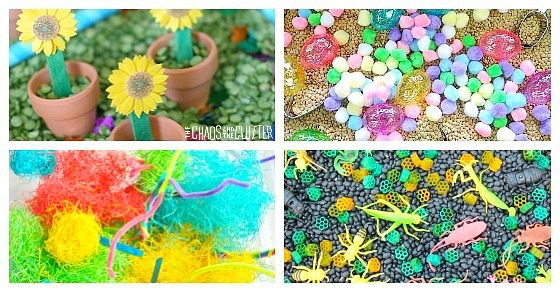
Spring is coming! I know I’ve been saying that every week for about a month now, but one of these weeks, it’s going to be true! It snowed here yesterday but next week, it is supposed to start warming up. These Spring Sensory Bins will help bring Spring into your home even if you don’t yet see it outside. These Spring Sensory Bins will help bring Spring into your home even if you don't yet see it outside.

Spring Sensory Bins

Simple Spring Sensory Bin from here on The Chaos and The Clutter (pictured)

Spring Themed Sensory Bin from Buggy and Buddy (pictured)

G is for Garden Sensory Bin from Simple Fun for Kids

Spring Sensory Bin from Teaching Mama (pictured)

Spring Robin Sensory Bin from Sugar Aunts

Bug Sensory Bin by Living Life and Learning

Easy Easter Sensory Bin from There’s Just One Mommy

Bug Sensory Bin from Learning 2 Walk (pictured)

Garden Sensory Pail from here on The Chaos and The Clutter

Spring Garden Sensory Play from ABC Creative Learning

Colored Hay Sensory Bin from Crayon Box Chronicles (pictured)

Fun with Easter Eggs! {Sensory Play Activity and egg decorating} from Artsy Momma

These Spring Sensory Bins will help bring Spring into your home even if you don't yet see it outside.

Frog Sensory Bin from The Chaos and The Clutter

Goopy Grass Sensory Play from Living Life and Learning

Spring Color Sorting Sensory Bin from Teaching 2 and 3 Year Olds (pictured)

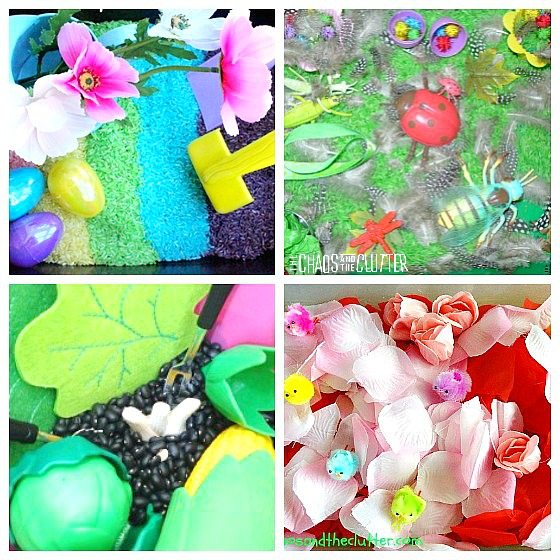
Silk Flowers Sensory Bin from The Chaos and The Clutter (pictured)

Spring Flower Garden from Learning 2 Walk

Full Body Easter Sensory Bin for Babies from Simple Fun for Kids

Flower Sensory Soup from Living Life and Learning

Spring Sensory Bin from Mama Miss (pictured)

These Spring Sensory Bins will help bring Spring into your home even if you don't yet see it outside.

Water, Beads and Flowers Spring Sensory Bin from Where Imagination Grows

Spring Sensory Bin from Cutting Tiny Bites (pictured)

Springtime Easter Sensory Bin from Teach Mama

Easter Sensory Tub from Simple Fun for Kids

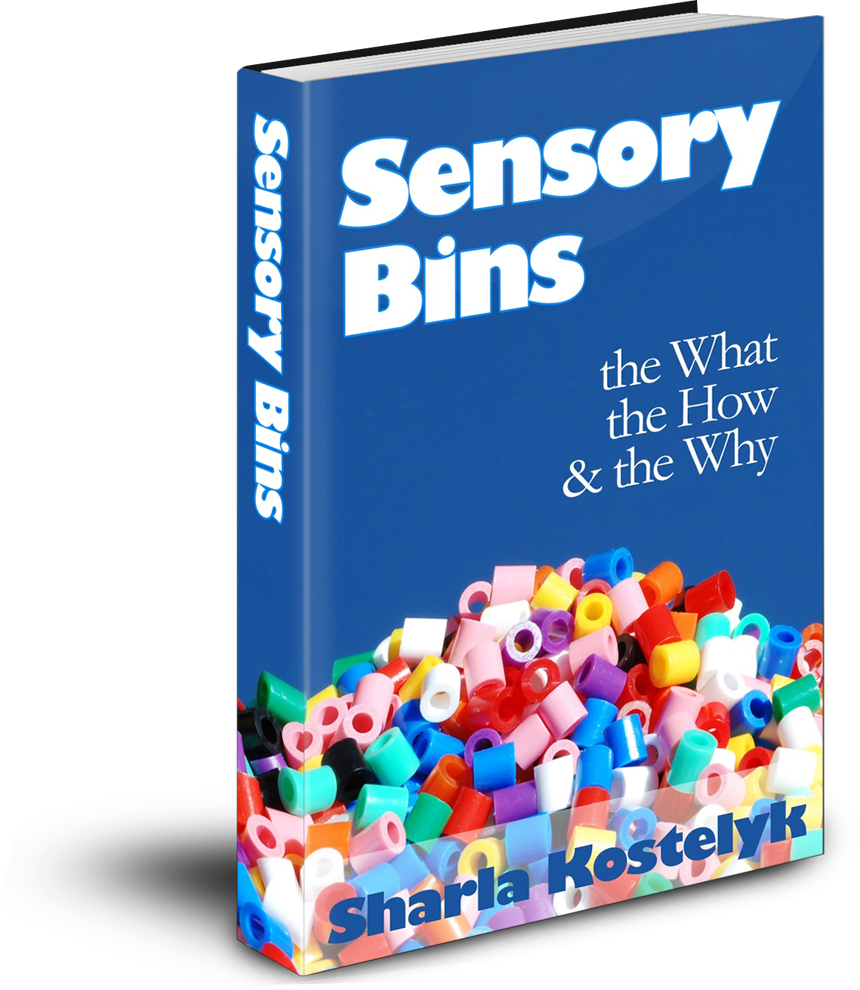
Sensory Bins ebook

Filed Under: Sensory Bins

Easter Sensory Play

By Sharla Kostelyk

Easter is one of my favourite holidays. I love the Spring, so fresh with possibilities and of course, I love what Easter signifies. As we approach that time of year, I thought I would share with you some fun sensory play suggestions that you can incorporate with your kids or students.

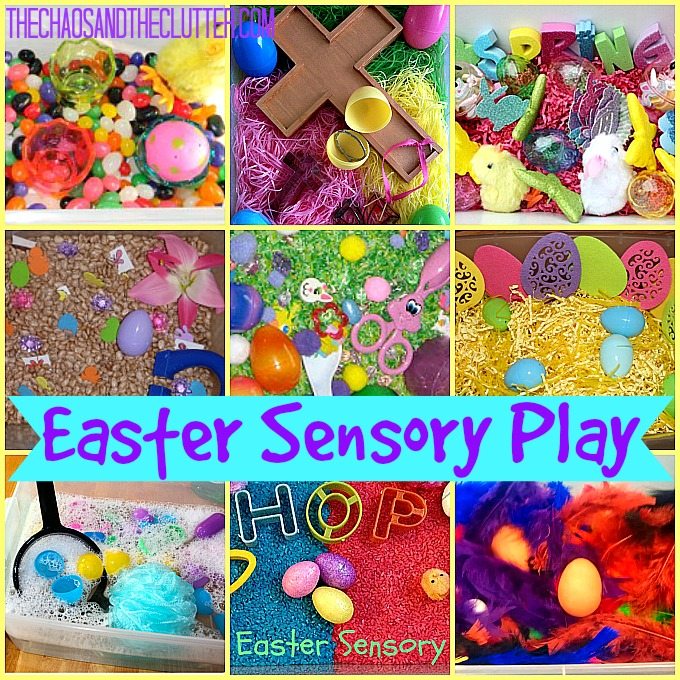
From jelly beans (a taste sensation!) to fuzzy chicks and feathers to all the sound and sight opportunities that the plastic eggs hold in store, there are so many activities, games and bins that you can create this time of year to incorporate sensory play.Easter Sensory Play Ideas

pictured in the collage above:

Jelly Bean Sensory Bin from Stir the Wonder

Christ-Centered Easter Sensory Bin from The Chaos and The Clutter

Easter Sensory Bin and Activities from Fantastic Fun and Learning

Magnetic Easter Sensory Tub from Suzy Homemaker

Easter Sensory Box from Rubber Boots and Elf Shoes

Easter Egg Sensory Tub from Teaching Mama

Easter Egg Wash Sensory Play from Little Bins for Little Hands

“Hoppy” Easter Sensory Bin from The Chaos and The Clutter

Montessori Inspired Easter Shelves from Montessori Nature

Here are some other suggestions from around the web for Easter sensory fun:

Sensory Eggs from TwoDaloo

DIY Easter Sensory Activities from Montessori on a Budget

Easter Sensory Play Table from Learning 4 Kids

Fizzy Eggs Baking Soda Science from Little Bins for Little Hands

Easter Egg Baking Soda ScienceMontessori Inspired Easter Activities from Living Montessori Now

Sight Words Easy Egg Sensory Bin from There’s Just One Mommy

Easter Sensory Sink from Frogs and Snails and Puppy Dog Tail

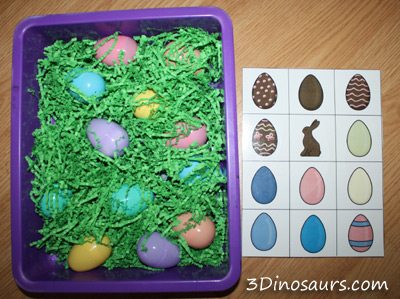
Easter Egg Matching Sensory Bin from 3 Dinosaurs

Easter Egg Matching Sensory BinSensory-tastic ways to Dye Easter Eggs from Sugar Aunts

How We Used our Easter Sensory Bin from Gift of Curiosity

Easter Egg Sensory Bin from And Next Comes L

Easter Sensory Bin from Love, Play Learn

If you are looking for other Easter activities, you may be interested in following my Easter board or my Christ-Centered Easter board on Pinterest.

If you are looking for other sensory activities, join me for a free 5 part email series Sensory Solutions and Activities and get your Sensory System Behaviours Easy Reference Cards.

Filed Under: Crafts and Activities, Sensory

Making the Choice to Medicate Your Child

Making the Choice to Medicate Your Child

By Sharla Kostelyk

This is an article that is heavy for me to write and it is also scary for me to write. I expect that there may be negative comments and I may even lose readers. I’m not happy about those possibilities, but I’m prepared for them. I’m writing this in case there is even one parent out there who either is struggling to make this decision or who already has and is guilt-ridden with their choice. If I help one of those parents in sharing our story, the negative consequences will be worth it.

Making the Choice to Medicate Your Child

If your child has diabetes that needs to be controlled by insulin, that choice is an obvious one. Our oldest daughter has a lung disease. The medication she needs has side effects, but it keeps her alive , so that choice has never been a difficult one.

But what about if the medication your child needs isn’t to save their life? What about if the medication is for behaviour or mental health issues? Then, the decision isn’t as obvious and it can be gut wrenching.

I’m choosing to share parts of our story but I’m also choosing to leave out the worst details, details those of you without children like mine cannot fathom, things you’ve likely never considered. Leaving out those details is a bit of a catch 22. If I shared those details with you, there is little doubt that you would better understand my position and be supportive. But if I shared those details, I would be sharing private things about one or more of my children that could follow them around for the rest of their life because the internet is wide-reaching. I’m choosing a bit of a middle ground…sharing enough that those who do have children like mine will likely be able to read between the lines and feel understood but leaving out enough to protect my kids.

Our story begins many years ago with the birth of our two relatively healthy boys and then ventures down our path to the adoption of five more children, all of whom have special needs. Our oldest boys had no special needs other than one having dyslexia.

At that point, medicating a child wasn’t something I considered except perhaps to silently judge the parents who chose Ritalin and other such “needless” and “overprescribed” medications. It was easy for me to judge because I had never been in those parent’s shoes.

Upon the diagnosis of some of our adopted children and the onset of difficult behaviours related to their diagnoses which included such things as SPD (sensory processing disorder), ADHD, Aspergers, and a neurodevelopmental disorder (FASD), suddenly medicating for behaviours was something we were being asked to consider.

I saw medication as a last resort and even when doctors suggested that we might want to consider it for one of our kids, ultimately, we decided against it, reasoning that we could try other interventions. Thanks to educating ourselves on sensory issues, making changes to their environment and homeschooling, we were able to avoid medication. I felt quite proud that we weren’t one of “those families”.

Fast forward a few years to when our son’s Aspergers traits were becoming more pronounced…he was struggling and so were we. I still saw medication as a last resort and researched other ideas. We chose to try putting him on a gluten free diet and the results have been remarkable! Once again, we were able to avoid medicating.

Another one of our children was beginning to display challenging behaviours that took over our home life. This child was eventually diagnosed with PTSD (post traumatic stress disorder), RAD (reactive attachment disorder) and anxiety disorder. By the time we had a diagnosis and a team of specialists, we were at the end of ourselves and so was she. I couldn’t even recognize the child she had become. She never smiled anymore or got any enjoyment out of anything.

Her anxiety was so high that she was barely able to function in day to day tasks and was completely unable to access her brain for learning. The behaviours were holding our family hostage. We were all suffering. She was suffering. It was a terrible feeling to see one of my kids in so much pain and to be unable to help her. Nothing we tried worked. Therapy made things worse.

I got to the point where I was willing to medicate her. The Husband wasn’t yet in agreement. I resorted to videotaping a 20 minute period of what the days with her were really like to show only to him. Once he saw it, he was on board with doing whatever it took to get her the help she needed. Even once we were both on the same page, it still wasn’t easy to follow through with it.

I second guessed myself a thousand times. We started with just giving her something to help her sleep, hoping that some solid sleep would help. It wasn’t enough. Within a month of that, she was on a total of 3 medications. The first time I went to the pharmacy to pick them up, I felt sick. I was embarrassed. I worried that the pharmacist would judge us for putting a child so young on those types of medications. (As an aside, I have felt judgement from some of the pharmacists at times but I tell myself that they don’t know her story or ours and that helps me.)

I worried about side effects. I worried about her never being able to get off the medications. I worried that by starting when she was so young, we would have to keep increasing the doses. I worried that it was dangerous. I worried that we were doing the wrong thing.

After I gave her her pills for the first time, I went to my room and cried. I felt like I had failed. Failed her. Failed at being a mom.

And then, three days later, I saw her smile. The day after that, I was in the kitchen and I heard an unfamiliar sound in the homeschool room. I rushed around the corner, holding my breath, hoping it was what I thought it was. It was. It was her giggle. It had been eight months since I had heard her laugh. She was back. Our daughter was back!

It’s been a little over a year since we made the decision to medicate our daughter. We haven’t had to increase any of the medications. She has had the side effect of weight gain which I worry will become a self-esteem issue for her.

Our goal is to be able to teach her through education and therapy how to control her anxiety and behaviour issues on her own and eventually come off the medication.

We still do whatever we can using natural means such as the anti-anxiety kit I created for her which includes some natural remedies and by creating sensory outlets for her such as sensory bins. We also took her through a year long treatment program for attachment and trauma and she is in ongoing therapy.

Making the choice to medicate your child for behaviour or mental health issues is not one that should be taken lightly. You will want to ask the doctor questions such as:

  • What are the potential side effects?
  • How soon can we expect to see results? What results should we expect?
  • What is the part of the treatment plan that does not include medication?
  • Is there a goal for weaning off the medication at some point?
  • Is the medication addictive?
  • How often will dosage be reevaluated?
  • Are there other medications or foods that need to be avoided while on this medication?
  • What is the cost and is the medication covered by insurance?

I would also highly advise that you ensure that you and your spouse are on the same page when it comes to making this decision. Have your spouse attend important appointments with you pertaining to your child if possible so that they can get a clearer picture and be able to participate in making an informed decision.

Join me for a free 5 part email series, Little Hearts, Big Worries offering resources and hope for parents.

Filed Under: Parenting in the Chaos, Special Needs Parenting

  • « Go to Previous Page
  • Page 1
  • Interim pages omitted …
  • Page 97
  • Page 98
  • Page 99
  • Page 100
  • Page 101
  • Interim pages omitted …
  • Page 128
  • Go to Next Page »

Primary Sidebar

Categories

We are a participant in the Amazon Services LLC Associates Program, an affiliate advertising program designed to provide a means for us to earn fees by linking to Amazon.com and affiliated sites.

Copyright © 2026 • The Chaos and the Clutter • Site Design by Jeni @ The Blog Maven

Return to top of page

Copyright © 2026 · Chaos and the Clutter 2.0 on Genesis Framework · WordPress · Log in