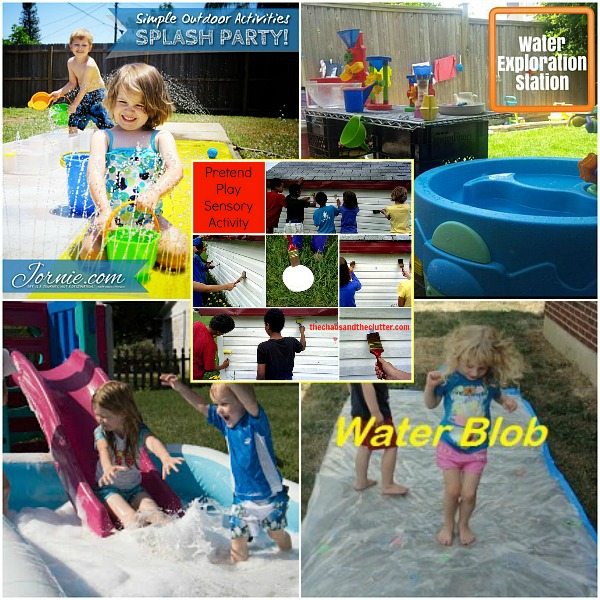
Summer offers a whole new range of sensory options as you can now move many activities outside and have easier cleanup and more room to move. Last year, I ran a series on simple Summer Sensory Activities and I am finding that now that the weather is nice, we are doing more of our sensory “work” outside again.
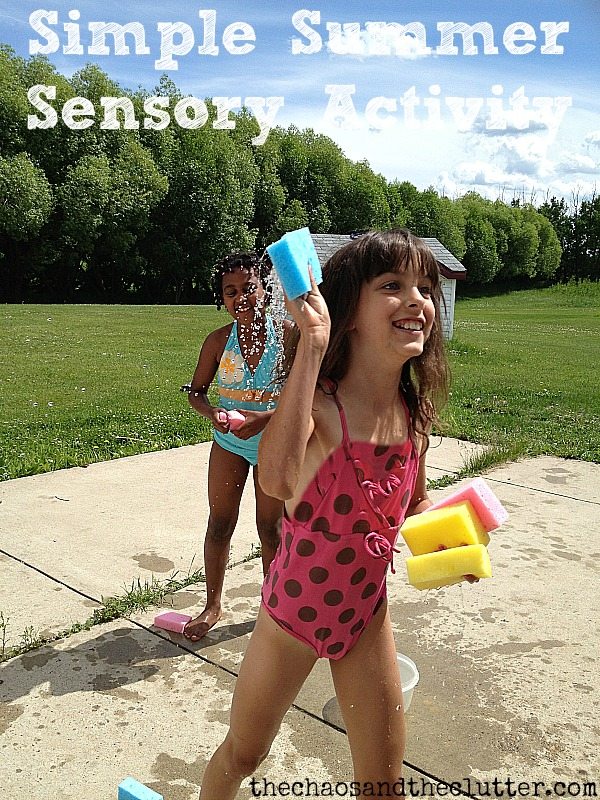 The kids had so much fun with this and they had no idea that they were actually doing really important sensory work! Setting this activity up could not be any simpler. All that is needed is a bucket full of water and some sponges. I bought two packs of six sponges each at the dollar store. For twelve sponges, I spent $2 and I am planning to turn them into two other sensory activities after this, so it was a very cost effective idea. If you already have sponges around the house, this can be a free activity.
Most kids love a good water fight, but there are two problems with a typical water fight at our house. One is that we live in the country and have to have our water trucked in so we can’t waste too much of it. The other is that in a water fight involving hoses or water guns, things tend to deteriorate quickly and an actual fight usually ensues. We had better luck with the sponges and I was clear to lay out the ground rules before they started. One of the ground rules was that mommy was not a target!
The kids not only got the sensory feedback of the water and the sponges, they also got the feedback from wringing out the sponges, particularly overtop of their siblings’ heads!!!
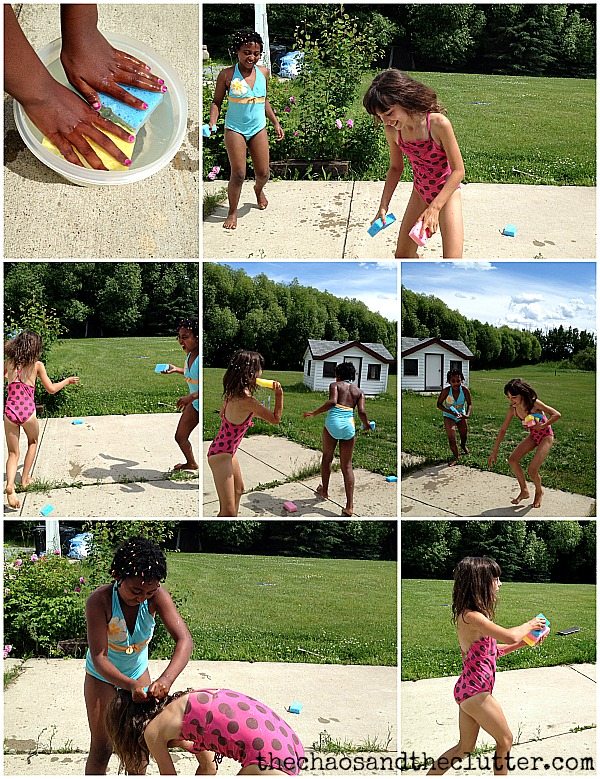 This easy activity can easily be turned into another sensory game using the same bucket of water and sponges. If the water fight disseminates into chaos or if the kids get bored, they can go over and wash your car or the side of the house. You can add soapy bubbles to the water for this if you want (don’t add the bubbles to the water fight portion of the activity lest someone get it in their eyes) and you’ve now created another simple summer sensory activity and possibly, created enough time for yourself to run and throw a load of laundry in the wash or read a few pages in a book!
If you are looking for other easy activities to do with your kids this summer, you may be interested in joining me for a free 5 part email series Sensory Solutions and Activities and get your Sensory System Behaviours Easy Reference Cards.
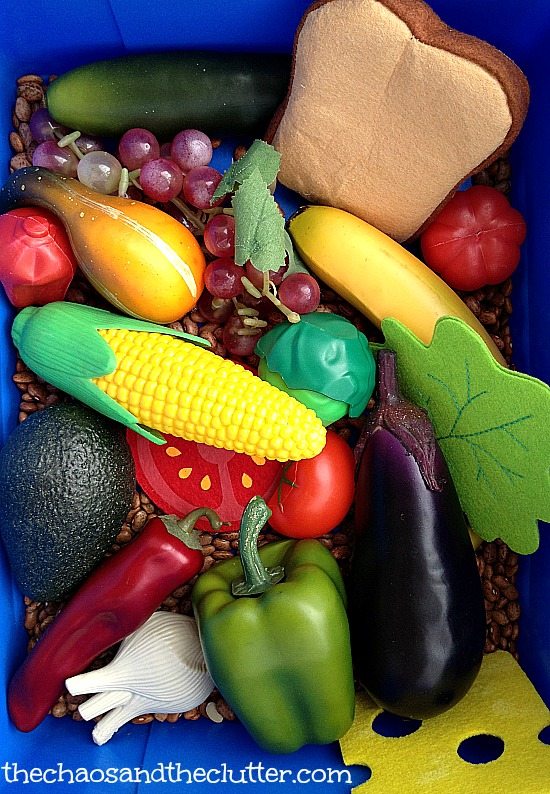 When we were vacationing on Vancouver Island last summer, I picked up a lot of these fruits and vegetables at this cute store that has live goats on the roof! I knew that they would come in handy for play and have been wanting to use them in a sensory bin.
 As the parent of seven kids, five with sensory issues, our
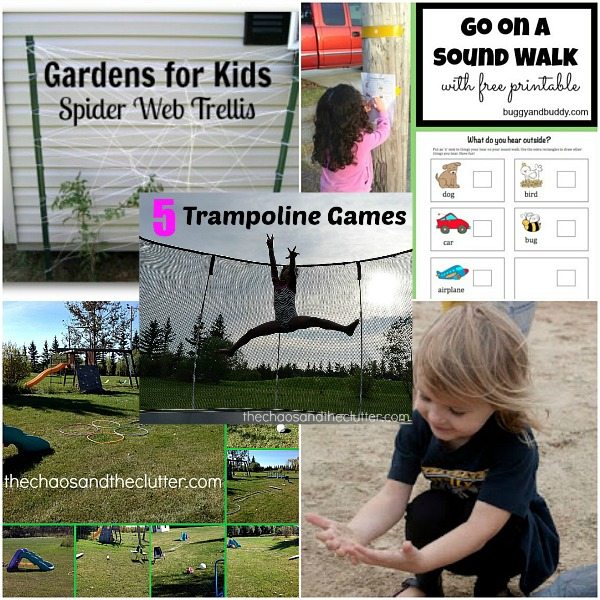
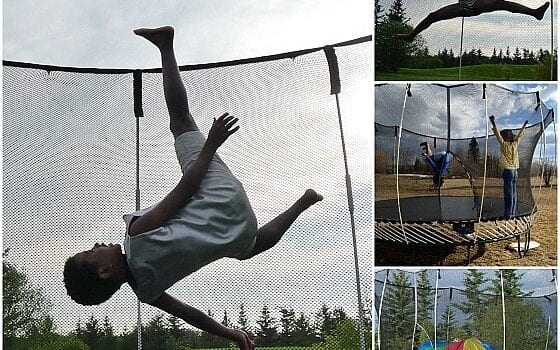
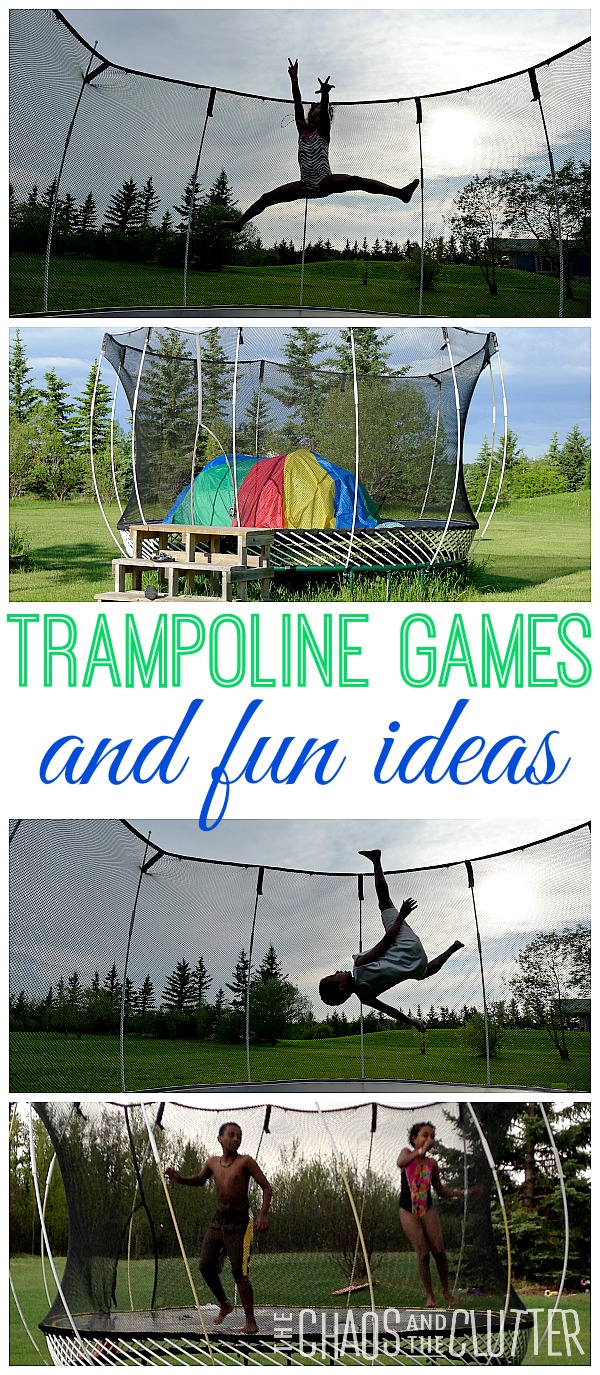
 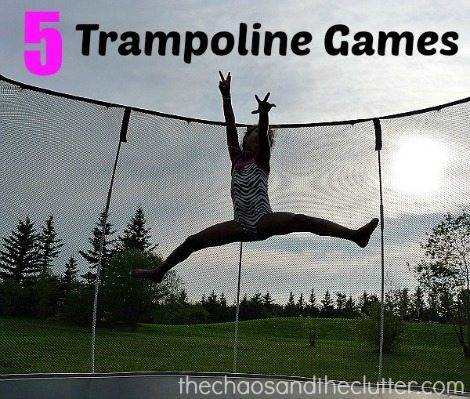 In celebration of our newly functional trampoline, I thought I would share some of the games our kids play. Some are classic trampoline games and some they invented themselves.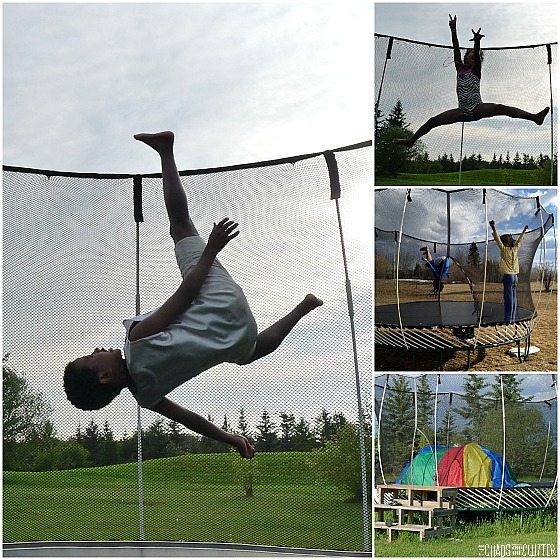
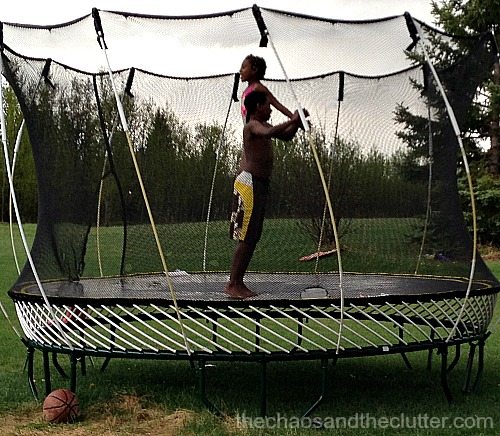 2. Another favourite
 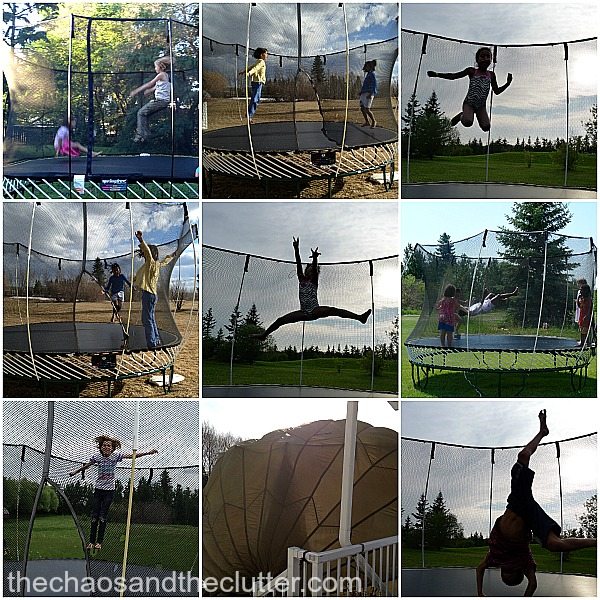 5. Have the kids do tricks like multiple bum drops or flips or jumping as high as they can and try to imitate or beat the one who went before them. Again, trampolines can be dangerous. We are fortunate in that we have not had any major injuries, but please do use caution.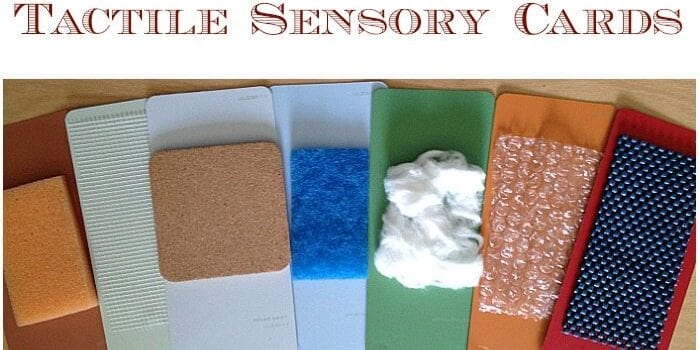
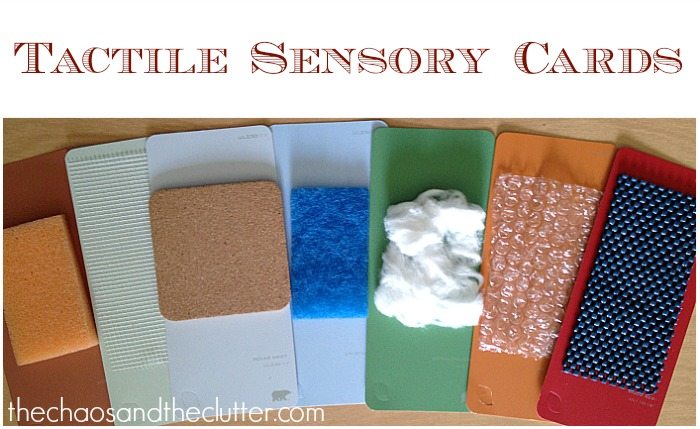 These are very simple to make and allow kids to explore textures and even get used to textures that they made not be as comfortable with. I used paint chips (since I seem to be
 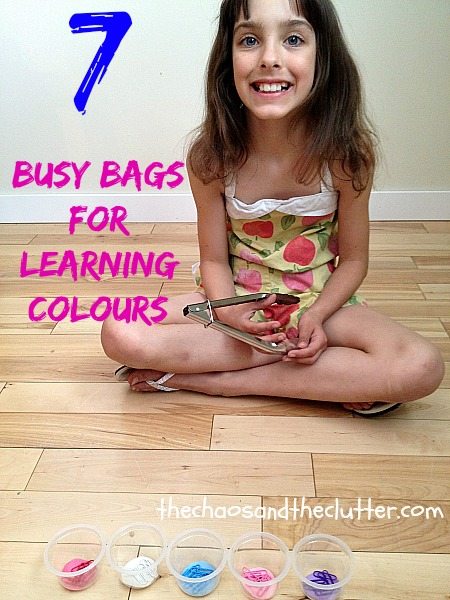 Here are 7 busy bags that help children learn their colours. All of them are simple to assemble and most cost next to nothing to make.
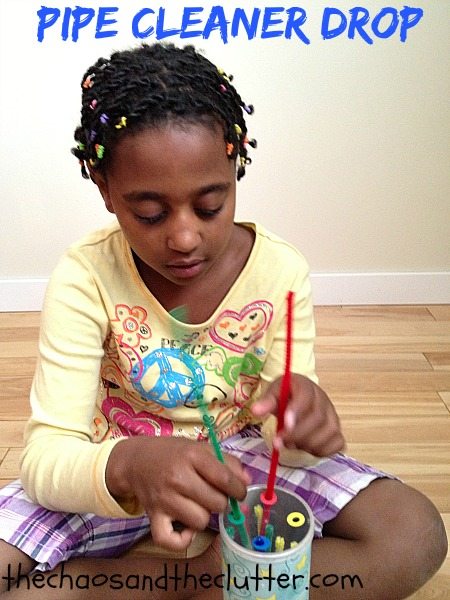 Punch holes in the lid of an empty potato chip can (I used a Pringles can). Add a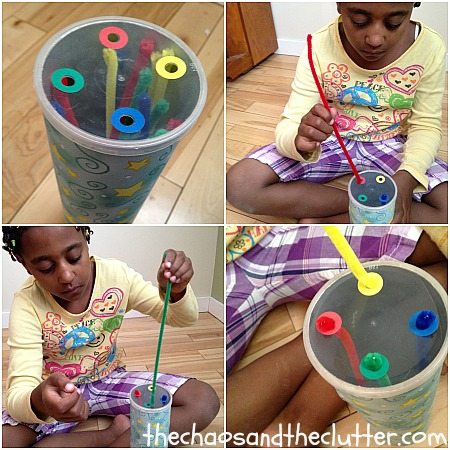
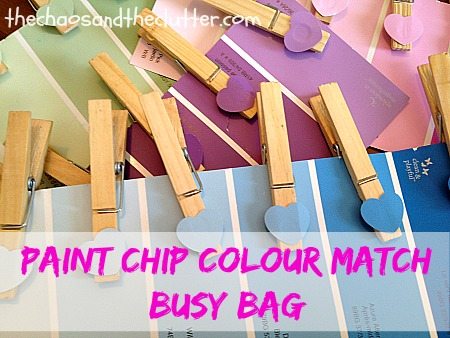
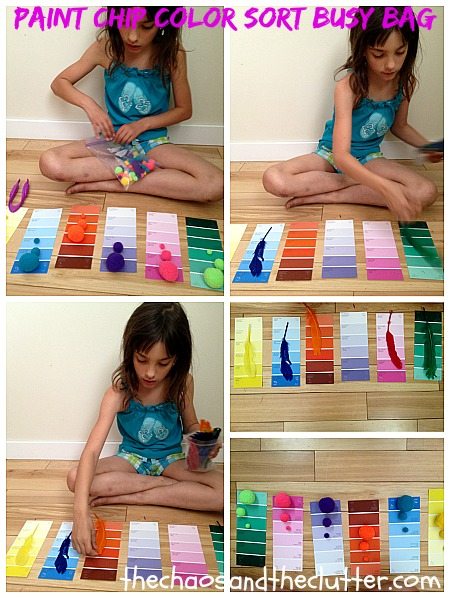 This activity bag is so easy to throw together. Put pompoms and coloured feathers in a bag with paint chips and have your child match the colours. They also can do patterning if you add in different sizes of pompoms or work on fine motor if you add in a pair of tweezers.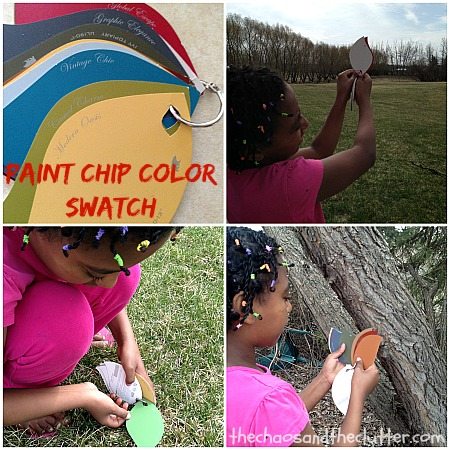
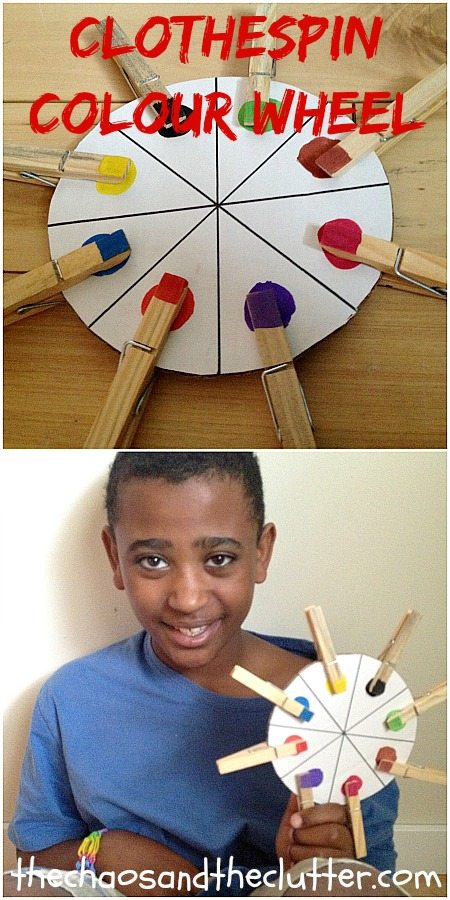 Cut a piece of cardboard into a circle. With a black permanent marker, section it. It may be easiest to use a ruler for this. Add a splash of colour to each section with a permanent marker. Colour the ends of wooden clothespins in the same colours used on the colour wheel. Add the pieces into a resealable bag. Your child can then match the clothespins up to the corresponding colour.
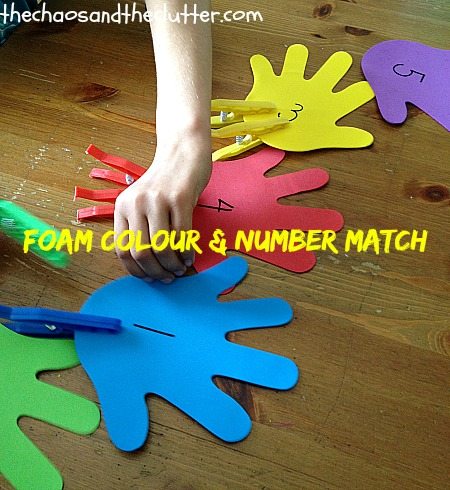 Using a permanent marker, write a number on each foam piece (we used hand shaped ones). Put the foam pieces along with clothespins in corresponding colours into a bag. Your child can either clip the amount of clothespins as the number written or clip the same coloured clothespin as the foam.
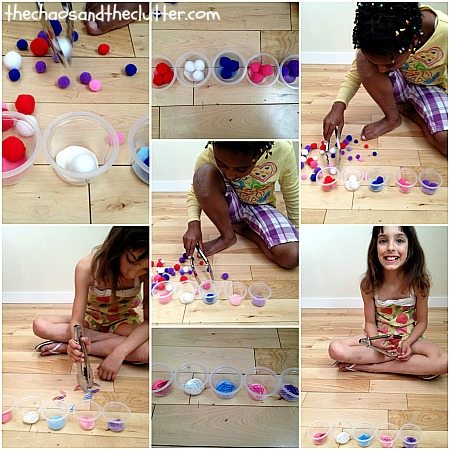
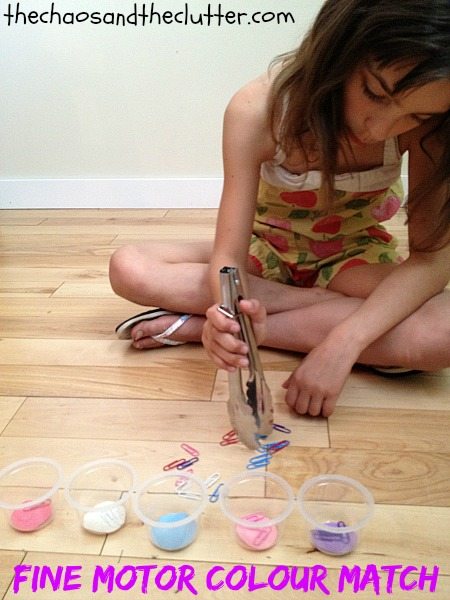 Put a circle of coloured paper in the bottom of empty plastic containers. We used individual applesauce containers. Put them in the bag along with a pair of tongs, coloured paper clips and pompoms. Your child can practise both their fine motor skills and their colour matching as they sort the paper clips and the pompoms.