You never expect when you wake up on a Wednesday morning that part of your night will be spent waiting for your son to get out of surgery. A series of events led to us almost not catching our son’s appendicitis. We narrowly avoided a catastrophe. The surgery was just in time.
The week before, our daughter Granola Girl had gotten a cold and then on the Friday, she ended up with the stomach flu and a lot of vomiting. So when Snuggle Puppy got a cold on the weekend and then on Monday told me that he had a stomachache, I assumed that he, too had the stomach flu. I was anticipating that he would throw up, but he never did.
Tuesday morning, he didn’t say anything about his stomach, but when I asked him if it still hurt, he said “yes”. We homeschool but Snuggle Puppy takes two classes at a local school and Tuesday afternoon, he had Bible and Phys. Ed. class. He convinced me that he was up to going, but I wrote him a note for him to sit out of gym class. He chose not to give the note to his teacher because he really wanted to play basketball and so he played basketball Tuesday afternoon.
Tuesday at supper, he begged us to let him go to his youth group Bible study. We were hesitant because we wanted him to get some rest, but he wasn’t fevered, wasn’t nauseous and even his cold symptoms seemed to be clearing up. He was very convincing in his arguments and so Tuesday evening, Snuggle Puppy went to the Bible study.
Wednesday morning, he woke up, did not complain about his stomach, ate breakfast, and we started doing our homeschooling. He even sat with us at the table and wrote a spelling test. I asked him if his stomach still hurt and he said “yes”. Soon after, I saw him crouched down in the living room and he said “mommy, my tummy really hurts”. Those words were all it took for my husband to take him to the hospital. It may not sound like enough, but we knew that our son is not a complainer and has a high pain threshold. Parents always know their child best.
At the first hospital, they ran blood tests and they all came back perfectly normal. Although he was showing tenderness upon their physical exam, he wasn’t in excruciating pain, so they did not think it was appendicitis. They did an ultrasound to find out if there was another problem that may be causing his pain and saw that his appendix was enlarged. It was so much larger than it should be that they thought maybe it was an error.
They called over to another hospital and spoke to a surgeon and the decision was made for us to take him to the other hospital. The first hospital was a community hospital without surgical facilities.
When we arrived at the Children’s Hospital, they weren’t sure whether or not they should operate because he had almost no signs of appendicitis. The surgical resident initially said they were not going to operate, but then an experienced surgeon came in and had a look at him and told us that his gut was saying it was appendicitis even though most of the tests were showing otherwise. I am so thankful that the surgeon decided to listen to his gut. I think “his gut” was actually God whispering to him.
After the surgery, the doctor came out and told us that the appendix would have burst that night. They said it could have been a matter of minutes. (Keep in mind that this is the same kid who played basketball the afternoon before!)
We are grateful for God’s protection and we are thankful for a doctor who listened to his gut instead of relying solely on test results. Not everyone is as fortunate as we were. I have since heard some stories that did not end as well as ours did. That is why I want to arm other parents with some knowledge about appendicitis.
These are the things you need to know:
There may not be a fever.
Our son had absolutely no fever in the days leading up to his surgery or following.
The symptoms may mimic the stomach flu.
Many of the symptoms of appendicitis can look like the stomach flu and it can be hard to tell them apart. In our case, since the flu had been going through our house just days before, it made it that much more confusing.
The pain may not be excruciating.
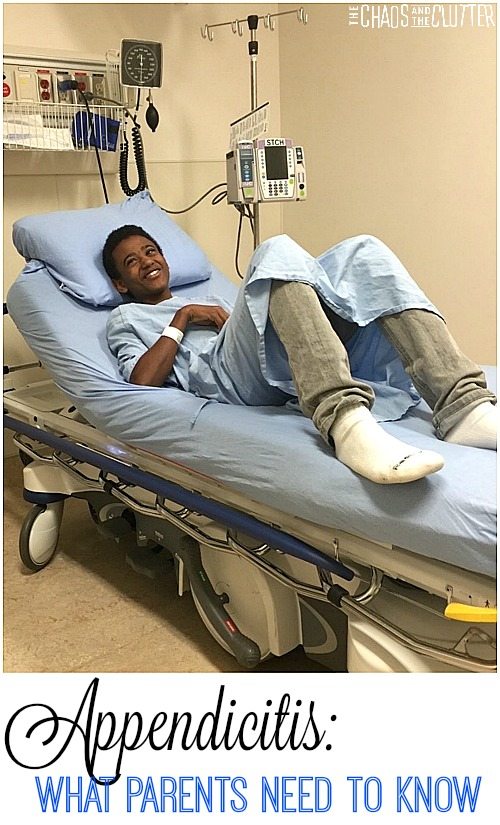
Our son played basketball the afternoon before and was walking and talking normally up until his surgery. He was not doubled over, screaming, crying, or even wincing. The only time his face showed any pain was when they were doing his physical exam and pressing on the site. Even then, he did not cry out. This picture is of him pre-surgery:

Blood work may not be an accurate indicator.
Doctors will check for an elevated white cell count which is an indication of infection. CRP levels are also looked at by some hospitals as being an indicator of possible appendicitis.
In the case of our son, all of his blood work was completely normal. On paper, he showed up as a healthy boy. If the blood results are normal and you feel that it is more serious than a regular stomachache, you can insist on an ultrasound.
You know your child best.
Doctors are skilled and experienced, but they do not know your child. You are the ultimate expert on your child.
In our case, I did explain to the doctors that due to his high cortisol levels, our son has a high pain threshold, but they are used to hearing from many parents that their kids have a high pain tolerance and I don’t think they took me very seriously but I knew my son and I knew that not only does he have a high pain threshold, he also is not a complainer, so for him to be saying that something hurt meant that something hurt. I knew it was his appendix hours before because my momma instinct told me.
Trust your instincts and don’t be afraid to advocate for your child because…
If left untreated, it can be fatal.
Appendicitis can lead to the appendix perforating causing pus to leak into the abdomen and in some cases, leading to a blood infection called septicemia which can be fatal. It can also cause other dangerous infections.
According to WebMd, the classic symptoms of appendicitis include:
- Dull pain near the navel or the upper abdomen that becomes sharp as it moves to the lower right abdomen.
- Loss of appetite
- Nausea and/or vomiting soon after abdominal pain begins
- Abdominal swelling
- Fever of 99-102 degrees Fahrenheit
- Inability to pass gas
Our son had only one of those symptoms (the abdominal pain).
Almost half the time, other symptoms of appendicitis appear, including:
- Dull or sharp pain anywhere in the upper or lower abdomen, back, or rectum
- Painful urination
- Vomiting that precedes the abdominal pain
- Severe cramps
- Constipation or diarrhea with gas
Our son had none of those symptoms.
Please note that I am not a medical doctor and I am not asking you to go in and demand that they remove your child’s appendix at the first sign of every tummy ache. I am only a mom sharing our story in the hopes that it helps another mom out there.

 Image Copyright:
  Image Copyright:
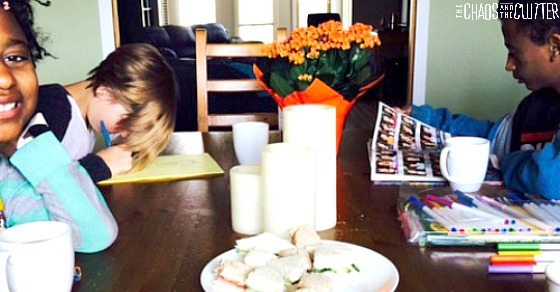
  Last week, I made little tea sandwiches and I read at the table while they ate their sandwiches and sipped tea. I’ve found that the best way to make these read aloud sessions successful is to allow the kids to do other things quietly while I read.
 Bonus tip: Once in awhile, throw in a book that has a movie version or one that will soon be coming to the theatre or even one that a high school in your community is doing a live play version of. Watching the movie or going to see the play after you have finished watching the book is a great treat and it allows for further discussions on ways that the book differed from the movie or performance. We are reading The Jungle Book right now with plans to make a special day of going to see the new Disney movie when it opens in theatres in the Spring.







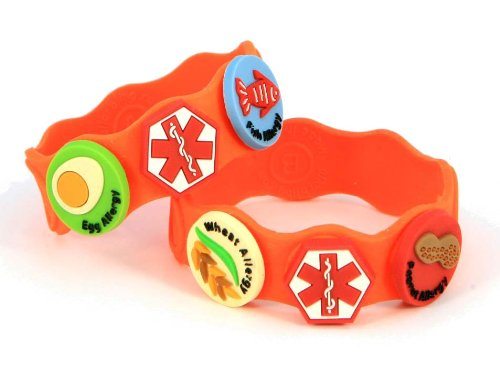
 Learn to let go. You won’t be able to go to college with your child to read labels before they eat. You know your child best so you will know when they are ready to start attending events without you where there could be potential for allergens to be present. It’s hard to let go but take small steps towards it to build up their self-advocacy skills. Start with safer environments where you have already briefed the adults present.
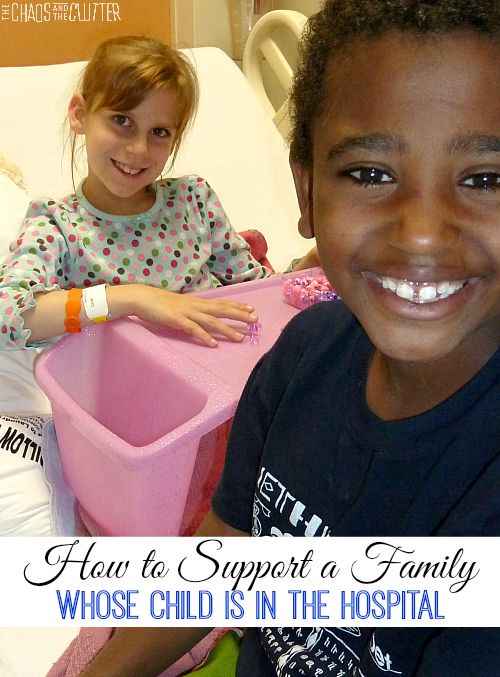 The days of monitoring her every breath, of middle of the night rushes in to Emergency, of surgeries and test results, of night nurses in our home, of our minutes being led by lung function numbers and of wondering if today could be her last are behind us and I am so thankful.
 Other ways to help:
 It’s very simple. A seatbelt can make the difference between living and dying and if my son isn’t going to listen to me on a life and death issue, I’m going to make darn sure that he understands that there are consequences to that.