Busy bags don’t have to be complicated to teach and entertain. This is a great example of a busy bag that is simple to put together but can allow a child to work on a variety of skills.
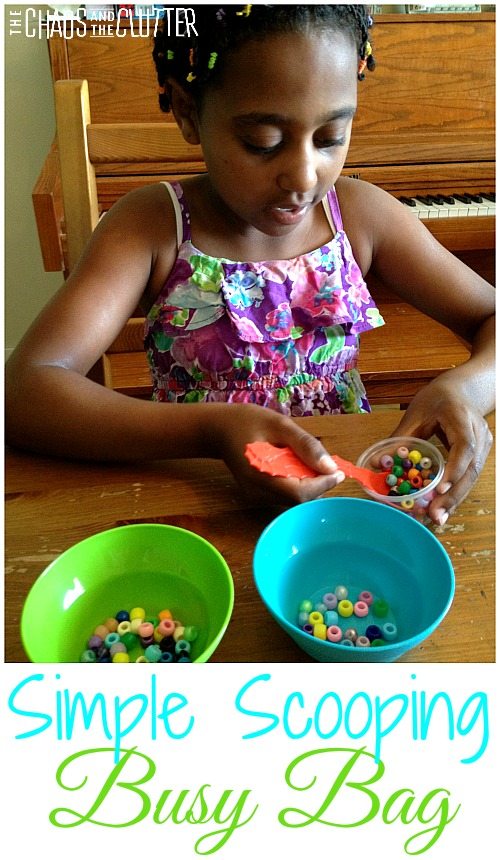 Materials needed:
- two or more plastic bowls
- plastic spoon
- mini plastic container with lid
- beads or buttons
- large resealable bag
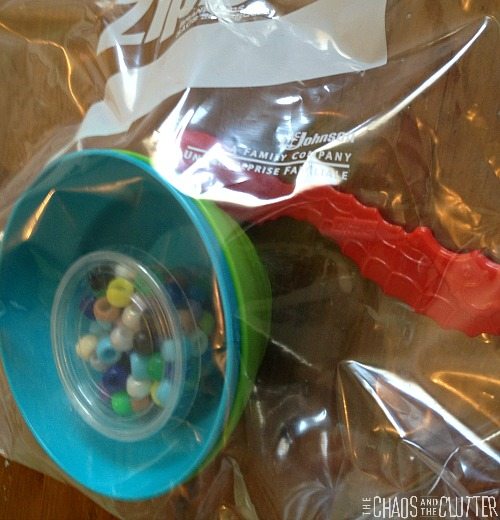 Fill the small plastic container with colourful beads or buttons. Place the lid on the container. Put the container, at least two plastic bowls and a spoon into a resealable bag and your busy bag is ready to go.
This busy bag is great for fine motor practise as your child scoops the beads or buttons from the container into the bowls. Once they have transferred all of them, they can either pour them back into the small container or scoop them back in.
This exercise can be especially helpful for children with special needs or toddlers who are needing extra practise with feeding skills.
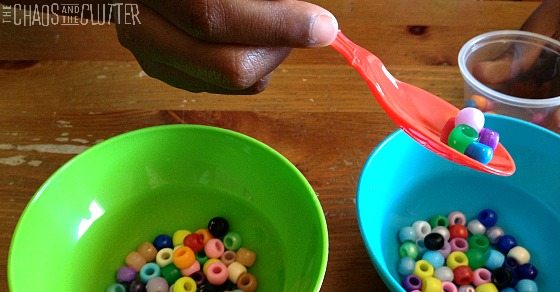 The items in this busy bag can also be used to practise sorting. You could include both buttons and beads and have your child sort them between the bowls or have them sort the different colours.
We store all of our busy bags lined upright in a box so that when I’m needing time to work with the older kids, our youngest can take one out and go work on it by herself. Keeping them all together also allows for me to quickly grab a few if we are going to be heading somewhere that we will be sitting in a waiting room or spending a long time in a vehicle.
If you are looking for more busy bag ideas, you may be interested in following my Activity Bags board on Pinterest.
Follow Sharla Kostelyk’s board Activity Bags on Pinterest.
3 Busy Bags with Popsicle Sticks
5 Busy Bags with Pipe Cleaners
 Image Copyright:
 Materials needed:
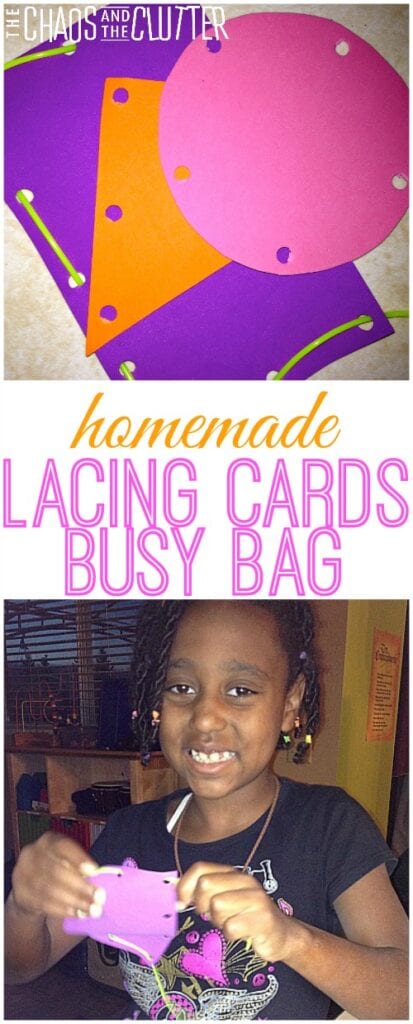
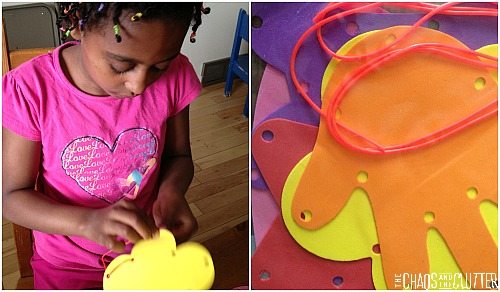 Next, hole punch around the outside of the shape at regular intervals (you may want the holes closer together or further apart depending on the ability level of the child). Place the hole punched shapes and some
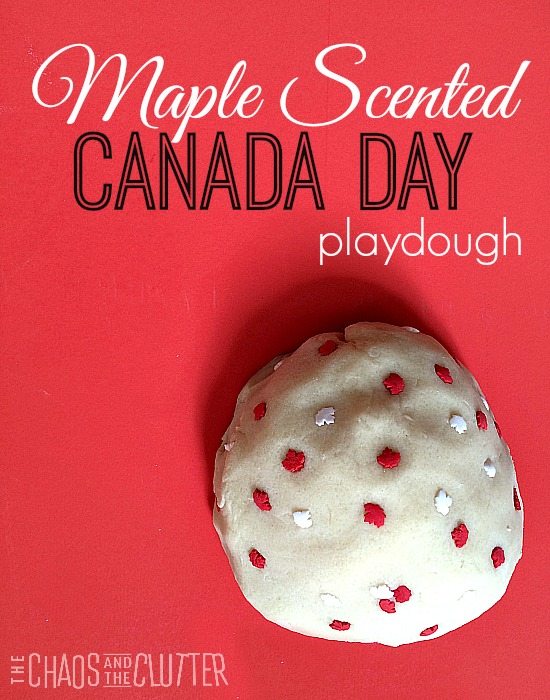 Recipe for Maple Scented Playdough
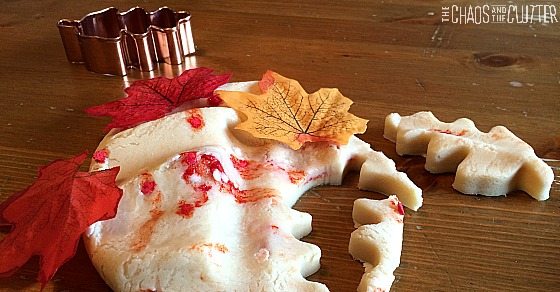 I set the dough out with some play maple leaves and leaf shaped cookie cutters to encourage imaginative play. My kids really like playdough as part of their sensory play.
 To combat this challenge with my kids, many of whom have Sensory Processing Disorder (SPD), I use
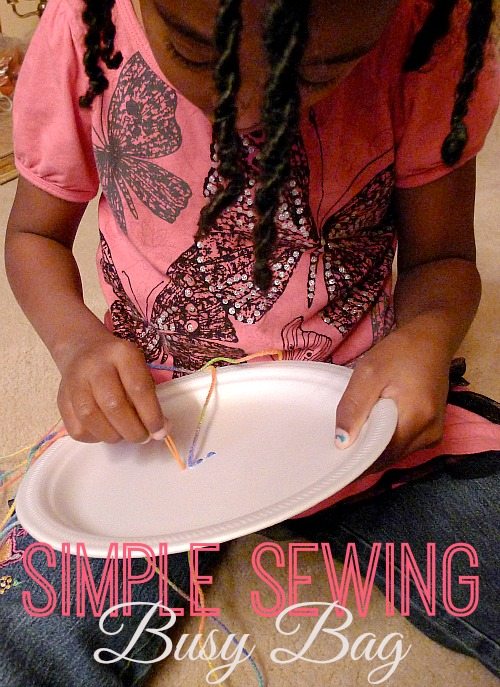
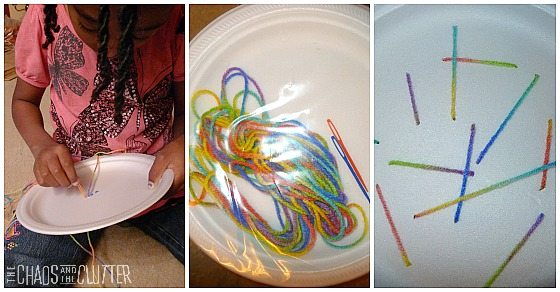 Depending on the age of your child, you may have to help them get started with this activity by demonstrating how to thread the needle and by putting a knot in the end of it (older children can easily do this by themselves). You can then show them how to sew by poking the threaded needle through the back of the plate and coming down through the front of the plate.
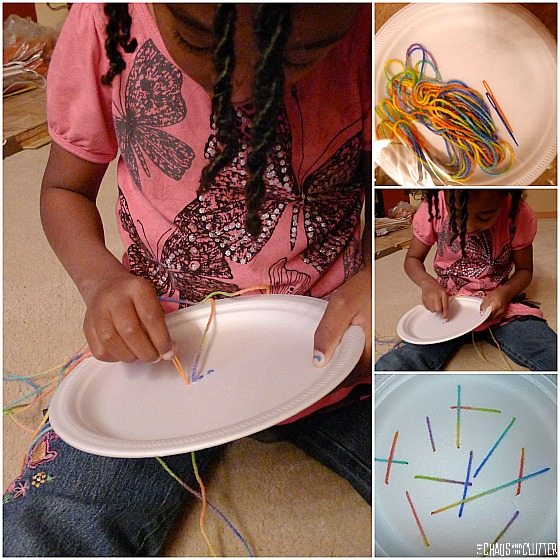 Our daughter Dancing Queen began by sewing large overlapping lines on the first plate but as her confidence grew, she tried smaller stitches next to each other to form lines on later plates. She was really proud of her efforts!