• Skip to primary navigation
  • Skip to main content
  • Skip to primary sidebar
  • Home
  • About
  • Contact
  • Privacy + Terms
  • Affiliates

The Chaos and the Clutter

  • Facebook
  • Twitter
  • Pinterest
  • Google Plus
  • RSS
  • Email
  • School at Home
  • Sensory
    • Sensory Processing Disorder
    • Awesome Sensory Play Activities
      • Sensory Bins
      • Sensory Bottles
      • Sensory Bags
  • Family Games
    • Minute to Win It Games
  • Special Needs Parenting
    • Childhood Anxiety
    • Reactive Attachment Disorder
    • Sensory Processing Disorder
  • Store
  • Course Login

Special Needs Parenting

Christmas Calm Down Kit for Kids

By Sharla Kostelyk

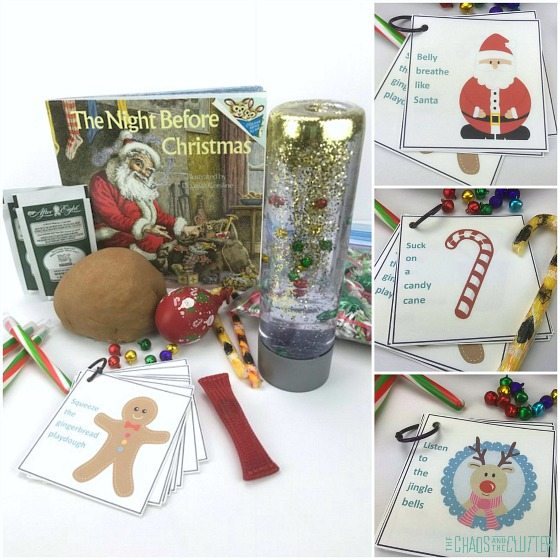
The holidays can be an especially hard time for kids who struggle with anxiety, sensory issues or special needs. As a parent, it can even seem as though your child is sabotaging the holidays. For times when some of our kids struggle with handling big emotions, we have a calm down kit for them to use. It has made such a difference. One of our daughters was beginning to struggle more than usual because of the Christmas season so I decided to make her this Christmas Calm Down Kit.
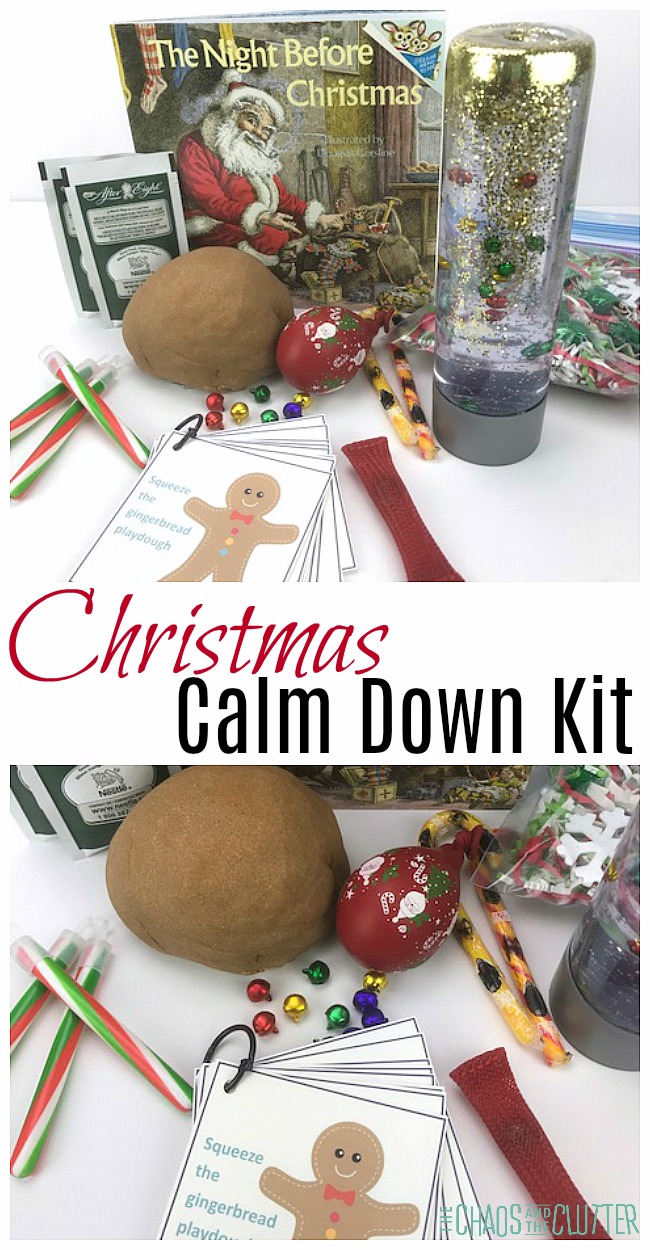
This Christmas Calm Down Kit is full of suggestions and tools to help lower your child's anxiety over the holidays. #parenting #specialneedsparenting #anxietyAnti-anxiety kits help kids feel more in control of their emotions and reactions. I find that it’s best to clarify how the kit works and explain all the tools when your child is already calm. Introduce them to the holiday calm down kit and explain how each item can be used when they start to feel anxious. Reassure them that if one item doesn’t work, they can try another until they find the one that’s right for them at that time.

All of the items and ideas should be practised ahead of time. Offer encouragement and praise, but avoid the temptation to suggest which coping strategy they should use unless you see an escalation in their anxiety or it becomes obvious that they need your direction.

Remember that when your child is in a state of fight, flight or freeze, it becomes harder for them to access the reasoning part of their brain.
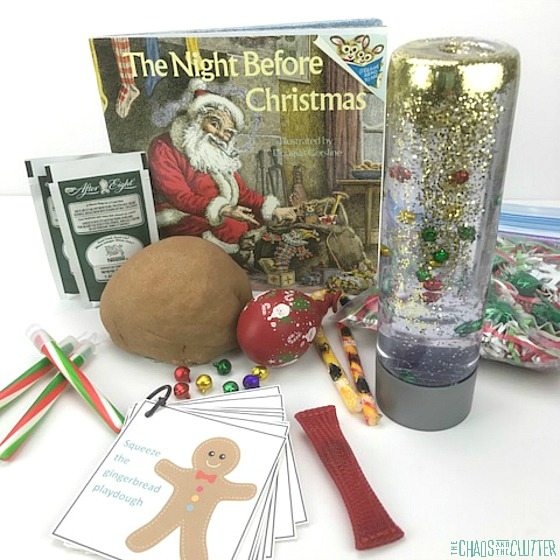
Our Christmas Calm Down Kit:

  • Christmas book
  • red marble fidget
  • homemade sensory ball using a Christmas balloon
  • Christmas glow sticks
  • homemade gingerbread playdough
  • candy canes
  • hot chocolate packets
  • jingle bells
  • Christmas calm down bottle
  • holiday themed sensory bag
  • bubble gum
  • printed Christmas colouring pages and markers

I created printable cards that can serve as reminders of some of her calm down tools. You can print the cards, cut them out, hole punch them and put them on a binder ring. You can also cut some extra and create your own if you have other ideas of calm down strategies that work well for your child.

Get your free printable Christmas Calm Down cards here. 

Most of the calm down cards don’t require much explanation, but to talk to your kids how to “belly breathe like Santa”, have them imagine Santa’s big belly and then breathe in to fill their belly like Santa’s. Have them put their hand on their stomach so that they can feel it fill up with air and then deflate when they exhale.

Other Items for Your Christmas Calm Down Kit:

  • noise cancelling headphones (perfect for loud holiday events)
  • Christmas punch balloons
  • Conair Sound Therapy machine (we have one included in our regular Anti-Anxiety kit and love it)
  • homemade Peppermint Essential Oil Playdough (keep in mind that peppermint is an alerting scent)
  • Rescue Remedy for Kids (natural stress relief drops that seem to really help our daughter if they are given at the beginning of her anxiety episode)
  • Rescue Remedy Gum (full disclosure – some of our kids love it and others hate the taste)
  • palm massager
  • books on expressing feelings (our list is here)
  • Christmas kaleidoscope
  • a fuzzy Christmas blanket
  • special stuffed animal
  • weighted neck roll
  • holiday coloured pinwheel
  • small plastic snowglobe (will act in a similar way to a calm down bottle)
  • Christmas tree shaped chewie

I actually had to help my daughter use her Christmas calm down kit earlier tonight. I found it ironic that I knew I would be writing about this later and was putting it to good use right beforehand. When I write about these kind of things, rest assured that it is coming from first-hand, up-close-and-personal experience!

The calm down strategy that worked especially well for my daughter tonight was humming a Christmas carol. She was having a hard time regulating her breathing and behaviour before that, but her crying stopped, her breathing slowed and she was able to start calming herself after trying that visual prompt idea.

The humming provides a lot of natural calming benefits. Humming regulates breathing which lowers your heart rate. It helps to activate the parasympathetic nervous system which also lowers heart rate. It helps you to feel more peaceful as your thoughts become clearer. Humming also releases endorphins, which makes you feel happier. It makes sense that it helped her get back to a more regulated state.

You may also want to read:

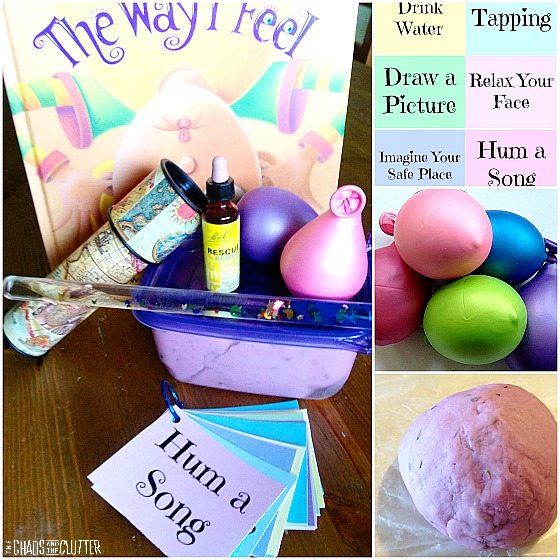
Our regular Calm Down Kit (and printable relaxation prompts)
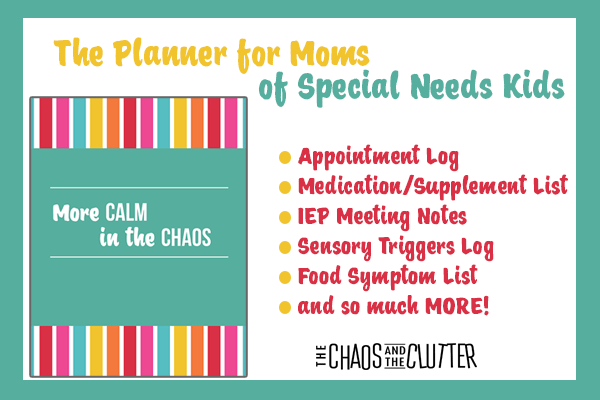
Printable Planner and Tracker for Moms of Special Needs Kids
Parenting a Child Who Sabotages the Holidays

Filed Under: Christmas, Special Needs Parenting

Parenting Kids Who Sabotage the Holidays

By Sharla Kostelyk

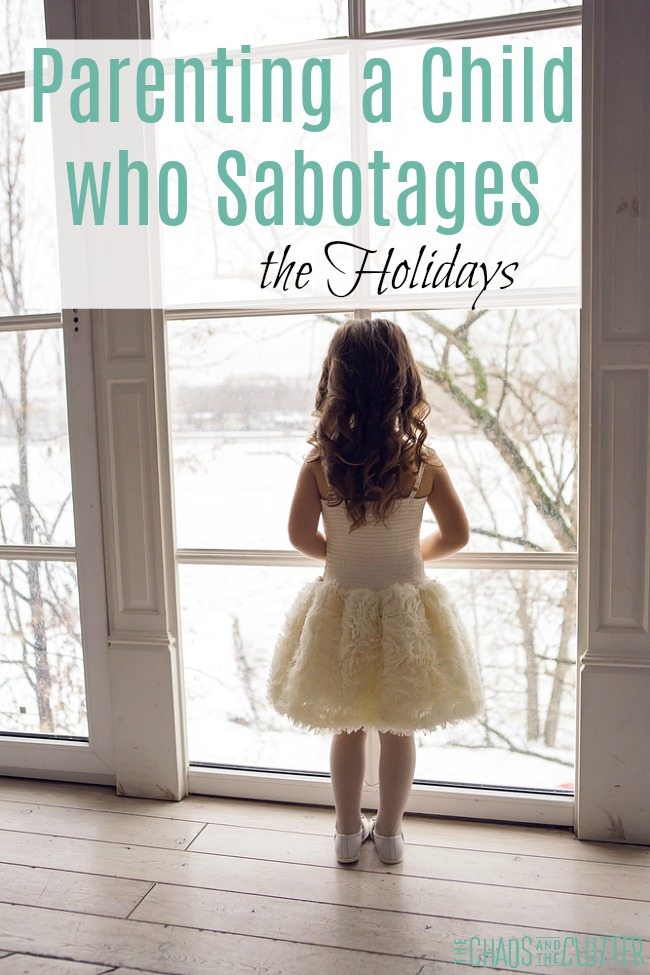
The holidays are a special part of the year that most people look forward to, but for some families, the thought brings fear or even dread. For children who have Reactive Attachment Disorder or have experienced early childhood trauma or for children with ADHD or sensory processing issues, the holidays can be hard. In fact, sometimes children who fall into those categories will sabotage the holidays.

It is not much fun walking around on eggshells knowing that your child is on a hair trigger and may be set off at any second. But holidays are not much fun for those kids either. Big days can be a reminder of all that they have lost or of how their brain works differently than other people’s do or of how far their behaviour is from what they want it to be.

Advice for parenting a child who sabotages the holidays #parenting #parentingadvice #adoptionSome of our kids have at times sabotaged big days including birthdays (other people’s and even their own), Thanksgiving, Easter, Christmas, graduations, anniversaries, family celebrations, vacations, times of accomplishment when others are the center of attention, Father’s Day, and often in particular, Mother’s Day. The root of the sabotaging behaviours is often guilt and shame, but there can be other causes as well. It’s not just adopted kids who sabotage the holidays. There are many reasons a child may do this.
Possible motivations for kids to sabotage the holidays:

  1. Feeling unworthy. Abandonment or the perception of abandonment in children who have been adopted or who have had one parent leave the family can lead to a deep sense of shame. This may make them feel as if they are unworthy of love, unworthy of having good things happen to them, unworthy of gifts or attention. With that entrenched feeling of being unworthy of truly feeling happy, sabotaging behaviours can begin to emerge. They may sabotage so that they can force what they see as inevitable disappointment. If their parent then responds in anger to their sabotaging behaviour, it only further validates their belief that they are unlovable.
  2. Triggers. During the holidays, triggers are everywhere. Smells, sights, sounds, memories of the past… the holidays can be a minefield to navigate. These triggers can cause a fight, flight or freeze response.
  3. Excitement and anxiety feel the same in the body. Read that sentence again. It’s a biggie! Butterflies in the stomach, quickening of breathing rate, a loudly thumping heart, sweating, and trouble sleeping are the same body responses whether you are feeling excited or nervous. When your child feels those body sensations, it can bring memories of times of stress when they felt that way due to anxiety.
  4. Lack of routine during the holidays can make certain children feel a lack of control. They may then attempt to assert control and take charge. The unpredictability and uncertainty can feel unsafe to them. With less of a set schedule, they may also be overtired and be eating poorly which can also affect behaviour and mood.
  5. The holidays often come with sensory overload. This can lead to sensory meltdowns which unintentionally sabotages the holidays
  6. The weight of expectations. When a child believes that he will fall short of the expectations placed on him, he may decide to just quickly blow things up to get it over with. The stress that come with anticipating the disappointment they may cause can be overwhelming.
  7. For children with Reactive Attachment Disorder, Christmas can be a nightmare because during the holiday season, relationships are usually the focus and there is more emphasis put on family togetherness and unity. This feels like a threat to kids who are putting protective walls up when it comes to family relationships.
  8. Unreasonable expectations. Even the most neurotypical, well grounded children tend to have high expectations during the holidays. This is sometimes magnified in kids who have a trauma history or have sensory needs. Some adopted children have a fantasy of what life would be like with their biological parents and nothing in reality can live up to that fantasy.
  9. Grief. Oh my. Consider a simple tradition such as decorating the Christmas tree. Our family’s collection of ornaments includes those Baby’s First Christmas ornaments and handprint ones I made when many of our kids were newborns. How must that feel for our kids who joined our family when they were 4 and 7? I can buy them ornaments to represent their first years and their milestones, but I cannot replace the hardships of their early years. Holidays have so many things that can magnify grief, sadness and loss.
  10. Protection. Attempting to protect their heart from further disappointment, a child who has experienced early trauma will put walls up and push others away. With everything being magnified during the holidays, those walls have a tendency to go higher and that pushing away can turn to an aggressive shove (literally or figuratively).

Parenting kids who sabotage the holidays:

  • Lower your own expectations.
  • Provide a lot of opportunity for sensory input.
  • Create a calm down kit for your child. We have a specific Christmas Calm Down Kit as well.
  • Maintain routines as much as possible.
  • Talk candidly with your child ahead of time. Speak factually about past holidays and their challenges with them. Brainstorm strategies with them to help this year go more smoothly.
  • Less presents! When it comes to kids who struggle with the holidays, less is more.
  • Simplify. Practise saying “no” to some of the invitations so that you do not over schedule.
  • Be willing to let go of things that don’t work for your child. You may need to set aside even treasured holiday traditions for a few years.
  • Some kids do not do well with surprises. Even though you may think that surprises are fun, they may cause additional stress for your child. If your child falls into this category, resist the urge to surprise them.
  • Prepare your child ahead of time what to expect. Tell them where you are going, who will be there, how long you will be staying, what you will be doing there, and what your expectations are of them. Use a calendar to give them as much notice as you can of upcoming events.
  • Make a plan with them for where they can go at an event if it becomes too much for them or a signal they can give you that they have reached their limit.
  • Talk with your family members and close friends ahead of time and explain why the holidays can be rough for your child and what they can do to minimize the difficulty.
  • Manage their expectations. If your child has asked for a gift that is out of budget or not something you want them to have, tell them ahead of time that they won’t be receiving it. Speak about how not everything during the holidays go as planned or as wished for. Come up with strategies for managing disappointment.
  • Include therapeutic and/or sensory breaks on the big day. Whether it be a birthday, Thanksgiving or Christmas, be willing to pause everything to practise some calm-down techniques.
  • Accept that there will be meltdowns (or tantrums or rages), but follow these steps to keep their frequency and intensity as low as possible.
  • Talk to your child about which family traditions are hard for them and ways you can make them easier. Gift exchanges are hard for some kids. I let one of my daughters wrap her gifts with me. She then knows what she will be getting, but it takes the anxiety out of it for her and makes Christmas day run more smoothly for everyone.
  • Make small promises and then follow through on them in order to maintain trust.
  • Talk ahead of time to your child about how excitement and anxiety feel the same in the body and then in the moment, help them distinguish which they are feeling.
  • Never equate gifts with behaviour. For children who have experienced trauma, the whole “naughty or nice list” is a disastrous concept. Do not take away or threaten to take away gifts or threaten that “Santa won’t come if…” with children who are trying to just hold it together each day.
  • Remember: “They aren’t giving you a hard time. They are having a hard time.”

The good news:

When parenting a child with attachment issues or early childhood trauma, it is important for them to hear “yes”. This does not mean buying them everything on their wish list. In fact, that would not be healthy for them, but the holidays do give you more opportunity to say “yes”.

“Yes, I will sit and do the puzzle with you.”

“Yes, I will be at your Christmas concert. I am so proud to be your mom.”

“Yes, you can have a candy cane.”

“Yes, we can drive around and look at Christmas lights. Let’s bring some hot chocolate!”

“Yes, you can help me make the gravy.”

“Yes, you can help me wrap presents.”

“Yes, you can help me plan the dinner.”

“Yes, you can hang some ornaments.”

“Yes, we can decorate cookies.”

To get your free printable sheet of ideas to say “yes” and connect with your child over the holidays, click this link or fill out the form below.

The holidays also allow opportunities for activities to increase eye contact and to promote family togetherness.

No matter how much you prepare and plan, the holidays can still be challenging. To all the parents steeling themselves for the sabotage, grieving the holiday you wish you could have, I see you. You are not alone.

Christmas Calm Down Kit for Kids

Calming a Child’s Fight, Flight or Freeze Response

Filed Under: Adoption, Christmas, Special Needs Parenting

Calming Activities for Kids

By Sharla Kostelyk

Regulating emotional responses, particularly during times of stress or anxiety can be difficult. It is a skill that many adults have yet to master. It is a learned skill and something that requires practise. One of the ways to teach this skill to children is by teaching calm down techniques.

It is important for these activities and strategies to be practised regularly, not just in times of high anxiety. This ensures that they become second nature and can be accessed during times when big emotions come into play.

13 Calm Down Activities for Kids that really work #parenting #parentingtips #specialneeds

Calm Down Activities:

By far the most effective tool in our calm down toolkit has been our anti-anxiety kit. It has helped our daughter tremendously in regulating her big emotions and in teaching her strategies to calm herself. The techniques in the relaxation prompts have been invaluable.

Stress balls are easy to make. One of the nice things about them is that they can be carried in a backpack or purse or vehicle and always be accessible.

Calming bottles work well. Your child can watch them without even realizing that their breathing is slowing and they are becoming more relaxed. When I see one of my kids begin to get worked up, I will shake a calm down bottle and set it down in front of them and continue to talk to them. My child will then start to watch the falling glitter or sequins or beads as they listen to me. There is an almost instant decrease in their anxiety level.

Trampoline time. This idea may sound counter-intuitive since jumping may not exactly seem like a calming activity, but calming down and settling down are different things. Some kids need to get that proprioception sensory input in order to help themselves regulate. Jumping can be a good way to achieve this.

Using relaxation breathing strategies may sound simple, but it is incredibly effective. Find three calm down breathing techniques for kids here.

This calm down mini book provides some concrete strategies that really work. I like how it is small enough to be tucked into a pocket or backpack and used anywhere. If your child uses it often, you may want to laminate it to increase durability.

Blowing bubbles is a great calming strategy. It naturally causes a slow down in the child’s breathing pattern. This lavender scented bubble recipe also has the calming benefit of the soothing lavender.

These calm down yoga poses are specifically designed to help kids manage big emotions. Movement and a focus on breath team up to help your child regulate their emotions and bring them back to calm.

Listen to calming music or soothing sounds. We use a sound therapy machine that has many options for soothing sounds such as tropical forest, white noise, heartbeat, ocean waves, and waterfall.

Knead, press and pull lavender playdough. The kneading, pressing and pulling provides good sensory feedback and the smell of the lavender adds an extra element for relaxation.

Spend some quiet time in a sensory room or sensory space. If you don’t have access to a dedicated sensory space, you can easily create a temporary one by placing a sheet over a table and throwing a few items in there. Things you can include in this temporary calm down area are a soft blanket or weighted blanket depending on your child’s preference, twinkle lights or a lava lamp, a bean bag chair, fidgets, and a stress ball.

Have a warm bath with epsom salts. All children should be supervised in the bath of course. You can make this experience more soothing by using flameless candles in the bathroom or dimming the lights.

Inversion. Inversion is a fancy way of basically saying to get your head below the level of your heart. It has an almost instant calming effect. Inversion can be achieved by bending and touching your toes, doing a headstand or handstand, hang upside down on monkey bars, or hanging with your head off the couch.

Find more calming strategies as well as everything you need to understand and explain sensory in Sensory Processing Explained: a Handbook for Parents and Educators. 

Join me for a free 5 part email series, Little Hearts, Big Worries offering resources and hope for parents.

These calming techniques can work well to keep anxiety at bay, but if your child is already in the middle of a meltdown, then you will want to set aside these strategies for another time and pull out the ones outlined here:

5 Critical Steps to Take When Your Child Has a Meltdown

Filed Under: Sensory, Special Needs Parenting

Calm Down Breathing for Kids

By Sharla Kostelyk

Teaching your child a few simple calm down strategies can make a big difference. The most basic one and perhaps the most important is breathing. Calm down breathing is a skill that is very effective when a child is under stress, struggling with anxiety or having a meltdown.

3 Calm Down Breathing Techniques for kids #parenting #specialneedsDeep breathing has been scientifically proven to combat stress and anxiety. It is used in meditation and yoga. With children, calm down breathing is an essential technique to learn to help with self-regulation.

When a child goes into their fight, flight or freeze response, their heart rate increases and their breathing becomes rapid and shallow. This decreases the oxygen to their cells, which obviously does not improve brain function in the moment. This makes it all the more important to practise good breathing technique and get that oxygen flowing well again.

These three calm down breathing techniques are extremely effective and easy to learn.

3 calm down breathing techniques:

  • Have your child put their hand on their stomach and feel the rise and fall while they breathe.
  • Have them inhale for 4 seconds, trying to fill their “belly balloon” with air, hold the breath for 2 seconds and then exhale.
  • Teach them to breathe slowly in through their nose, out through their mouth. The best way to teach this method is to have them make eye contact with you and do it at the same time as you while you give them the verbal cues of “in through your nose” and “out through your mouth”. I find this one especially helpful during a meltdown.

Teaching breathing techniques should be done while your child is already calm and can concentrate. Ideally, if you practise breathing techniques often enough, they become motor muscle memory and will be easier for your child to access during times of distress.

When they are distressed, you can give them scripts (“in through your nose, out through your mouth”, “fill your belly balloon” or “let’s breathe”) to help them along. These should be short and simple.

Blowing bubbles through a bubble wand or doing bubble painting is another way to practise calming breathing so that that motor muscle memory kicks in when those moments of fight-flight-freeze occur. Blowing softly to spin a pinwheel is another good way to practise calm down breathing.

Join me for a free 5 part email series, Little Hearts, Big Worries offering resources and hope for parents.

You can read about other calm down methods for kids here and get the relaxation prompts which are so helpful once your child learns how to use them.

Filed Under: Special Needs Parenting

5 Critical Steps to Take When Your Child has a Meltdown

By Sharla Kostelyk

Meltdowns, tantrums, rages… no matter what you call them, they can be of the most challenging parts of parenting. We’ve all been there. In the moment when your child has a meltdown, it’s hard to know what to do, particularly if you’re out in public and have to contend with public scrutiny.

5 critical steps to take when your child has a meltdown. This takes a bottom-up approach.While it is always important to determine the underlying cause for a meltdown, such as whether it is a sensory meltdown, a response to a trauma trigger, a fight, flight or freeze reaction, or just a plain old tantrum, during the meltdown, you just need to help your child get calm.
Yes, there are ways to try to prevent meltdowns from happening in the first place. Those are determined largely by the root cause of the meltdown. However, once the meltdown has started, none of those strategies will work.

The critical steps to take when your child has a meltdown:

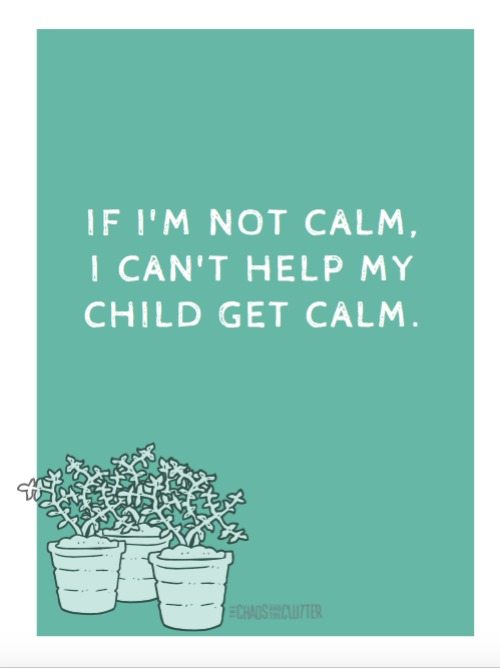
    1. Stay calm. There is no helping your child to stay calm when you are not calm yourself. Breathe.
    2. Water and food. Meeting a child’s most basic needs can help them to go from fight, flight or freeze mode to being able to access more of their cognitive functioning. This will bring the intensity of their meltdown way down. A healthy snack and water are particularly important for children who may have been neglected or gone hungry in the past, even if it was when they were too young to remember.
    3. Sensory. Whether or not a child is experiencing a sensory meltdown, sensory input, particularly proprioception, or heavy work, can snap them right back into a calm state. I particularly like to offer them lavender playdough. They can use it to squeeze and squish and it provides immediate sensory feedback. Squeeze balls, mermaid pillows or pushing a laundry basket filled with books also work well. I always offer a big, chewy bubble gum piece as well. Great sensory feedback there.
    4. Connection. Children need connection. This can be achieved during a meltdown by making eye contact, helping them to breathe in and out slowly while you breathe with them, and providing reassurance. Avoid saying “calm down” and instead choose some of these alternatives.
    5. Self-regulation. The ultimate goal obviously is to promote self-regulation so that a child learns to calm themselves. This usually works best when the other steps on this list have been already taken and those needs have been met. Remind the child of their calm-down strategies. It is best to have practised (and practised and practised) those strategies at times when they were calm. If you have a calm-down kit for your child, this would be the ideal time to pull that out.

Recently, a friend called me for advice while her daughter was raging in the background. She had tried offering water and a snack and both suggestions were rejected (rather pointedly I will add). I asked her if she had any playdough. She was able to find some. I could tell that she was skeptical of my suggestion, but she offered it to her daughter anyway. The response was immediate.

Once that playdough was in her hands, her daughter’s screams stopped and she was able to finally articulate the underlying reasons beneath the rage. It was then that her mom was able to validate her feelings and make that connection with her.

I know that not all of these suggestions will work initially. In fact, you may end up having that glass of water thrown in your direction (be sure to use a plastic cup)! But using these 5 steps will help to de-escalate your child’s big emotions. Once they are calm, you can try to determine what may have caused the meltdown in the first place.


The reason these 5 steps are so critical when your child is having a meltdown is because they address things in the brain from the bottom up. They meet the child’s basic survival needs such as breathing, food and water, and then begin to work their way up from there. If you think about Maslow’s hierarchy of human needs with physical survival needs being at the base, then physical safety needs, then love and belonging needs, these steps begin to make more sense. After love and belonging (met in these steps by CONNECTION), comes self-esteem needs. This is where the self-regulation step comes in.

Determining the root of the meltdown:

Keeping track of behaviours such as meltdowns can help you find the root causes for them by finding patterns and triggers. You can use make notes in a calendar or use the forms such as the sensory triggers log and the behaviour tracker in the More Calm in the Chaos printable planner.

Some common causes of meltdowns:

(click each link for more information)

  • sensory meltdowns
  • early childhood trauma triggers
  • fight, flight or freeze response
  • being overtired
  • being hungry or thirsty
  • overwhelm
  • unable to regulate emotions
  • anxiety

Join me for a free 5 part email series, Little Hearts, Big Worries offering resources and hope for parents.

Create an Anti-Anxiety Kit for Your ChildCalming Your Child’s Fight, Flight or Freeze Response


Filed Under: Adoption, Sensory, Special Needs Parenting

The Best Thing to do When Life is Hard

By Sharla Kostelyk

It’s not a secret that this has been a hard year for our family. Losing my father-in-law and one of my closest friends to cancer within a week of each other, our youngest daughter going deaf, some of our kids struggling with big challenges related to their past or their special needs, having so many teenagers in one house (hormone central over here!), some job changes, unexpected bills including a seventeen thousand dollar dental one, and more have made this a rough year. What I haven’t talked much about is how all of that has affected me personally.

When Life is Hard (the secret trick to get you feeling better) #encouragementLately, I’ve not been in a very positive place. I’ve found myself thinking negatively and feeling discouraged. I have also felt burdened by the overwhelm. There are days when it is just all too much.

I hit a low point this weekend and had to decide to do something to make a change before the overwhelm and sadness swallowed me whole. I thought back to other times in my life when I have felt this way, other hard times when I couldn’t see light at the end of the road and tried to remember how I had gotten out of the funk.

The thing is, I know that there is no changing my situation. There are things over which I have no control. I cannot will my daughter to hear again. I cannot heal my son’s early childhood wounds with hope. I cannot bring people I have lost back to life. I cannot wish my hardships away. But looking back, I realized that there was one thing that had always worked in the past to make me feel better.

Have you ever been in a situation that felt hopeless? Have you ever felt so overwhelmed that you didn’t know how you could possibly overcome?

Maybe right now, life is just hard. Sometimes, it just is. 

The best thing to do when life is hard is counterintuitive. It’s not something that you would naturally think of when you are already overwhelmed and you feel like one more thing on the to-do list will be the straw that breaks the camel’s back.

The best thing to do when life is hard is to do something kind for someone else. I know it may sound like I’m adding another layer of guilt or adding another thing to do when you already have too many.

Think of someone who is struggling. Perhaps there is someone in your community who is battling cancer or is recently widowed or is parenting kids with special needs or is caring for an aging parent. Next, choose one small thing that you can do as an act of kindness to them.

What can I do?

Bring them a meal. I know that if you’re already having a hard time making a meal for your own family, this is daunting, but somehow, if you double the meal you make so that you can give half of it away, the making of it for your own family becomes less of a burden. Perhaps you’ll even feel energized enough to make some freezer meals so that you can have some in your freezer and give some away to help other families.

Send them an encouraging message. It may be a funny gif or joke you text them to brighten their day. It may be a scripture verse you find to uplift them. In the searching for just the right one, you’ll find encouragement too.

  • Send flowers.
  • Smile and wave at a grouchy neighbour.
  • Mail a thank you note to someone who’s made a difference in your life or influenced you.
  • Babysit for an evening for a couple whose marriage has hit a rough patch.
  • Give someone a compliment.
  • Send encouraging words through Cards for Hospitalized Kids.
  • Deliver a coffee to a mom with young kids who didn’t get much sleep last night.
  • Visit a senior’s center.
  • Offer grace.
  • If someone is battling an illness, offer to pick up their groceries or run errands for them.
  • Send a memory to someone who has lost a loved one. Text, call or email to share the memory with them and let them know their loved one is not forgotten.
  • Donate some clothing or household items to a shelter or second hand store.
  • Share your appreciation for good service with a manager.
  • Drop off a large pack of toilet paper at the home of a large family. It will be appreciated!
  • Pay for the coffee of the person behind you in line.
  • Donate to the food bank.
  • Give parking money or gas gift cards to someone who has a loved one in the hospital. (you can read more ways to support a family whose child is in the hospital here)

The secret.

Helping others helps you more than any other single thing you can do. It helps you to take the focus off the negatives in your life. It enables you to see the hurt that others are feeling but gives you a way to bring a small ray of hope to that hurting.

I learned a lot about helping others when your own life is hard from my friend Cathy. During her battle with cancer, she always did what she could to reach out and bless others. She befriended those who were lonely. She baked for teachers and friends. She always made time to listen. She gave thoughtful gifts for no reason other than to encourage. She volunteered. She helped care for other people’s children. She led a children’s choir. She did all of this and so much more in the years, months, weeks, and even days leading up to her death.

Cathy made sure others knew that they were valued, that they were prayed for, that they were worth her time. She took the focus off of her own pain by reaching out and giving to others. She shared with me how much it helped her to help others during the hardest times of her life.

When I realized this weekend that this technique had always worked for me in the past too, it still felt daunting. So I started small. I called someone I knew who was lonely. The call didn’t take long and they seemed to really appreciate it. It was such a simple act of kindness and yet, already, I felt a bit better about my own circumstances.

The next day, I gave one of our sons an extra long tuck-in. This may not sound like an act of kindness. It may just sound like parenting or doing my job. But you know the saying “The kids who need loving the most will ask for it in the most unloving of ways”? That saying describes the weekend well and by Sunday night, I was exhausted and even though I knew in my brain that he needed extra attention and love, I was feeling pretty done for the day. I couldn’t wait to get him tucked in and have some time to myself. I chose (and it was a painful, deep internal conflict kind of choice) to do what I knew he needed. I spent more than an hour with him and his walls started to crumble and he began to let me in. He softened and in the end, I was so thankful I had made that choice, but it was an act of service. It was not an easy thing to do.

Today, I made lavender playdough for a friend whose daughter has been having sensory meltdowns. I doubled the recipe so that I could give half to my youngest daughter since it’s her favourite. Instead of feeling like making the playdough for my daughter was another thing on my never-ending list, I felt good about doing it because it was a small blessing for a friend, a way to remind her that I was thinking of her.

How can I say confidently after only 3 days that I have found the secret to feeling better in a time when life is hard? I know what has worked for me in the past. I know what has worked for others I know. I can already sense the fog lifting and I’m feeling more positive about the future. Tomorrow, I will do one more small thing. And then another and another until I have climbed my way out of this and can see beyond my circumstances to the needs of others and the beauty and blessings that surround me.

I’m not advocating that you put yourself at the bottom of the list and neglect yourself. I am a big proponent of the importance of self-care, but doing small kind things for others can be a way of taking care of yourself. It forces you to see that others have struggles too which makes you feel less alone. Giving of yourself helps you to feel good too.

So if life is hard right now, I encourage you to see if the secret to starting on the road to feeling better works for you too.

Join me for a free 5 part email series, Little Hearts, Big Worries offering resources and hope for parents.

Filed Under: Parenting in the Chaos, Special Needs Parenting

  • « Go to Previous Page
  • Page 1
  • Interim pages omitted …
  • Page 8
  • Page 9
  • Page 10
  • Page 11
  • Page 12
  • Interim pages omitted …
  • Page 19
  • Go to Next Page »

Primary Sidebar

Categories

We are a participant in the Amazon Services LLC Associates Program, an affiliate advertising program designed to provide a means for us to earn fees by linking to Amazon.com and affiliated sites.

Copyright © 2026 • The Chaos and the Clutter • Site Design by Jeni @ The Blog Maven

Return to top of page

Copyright © 2026 · Chaos and the Clutter 2.0 on Genesis Framework · WordPress · Log in