• Skip to primary navigation
  • Skip to main content
  • Skip to primary sidebar
  • Home
  • About
  • Contact
  • Privacy + Terms
  • Affiliates

The Chaos and the Clutter

  • Facebook
  • Twitter
  • Pinterest
  • Google Plus
  • RSS
  • Email
  • School at Home
  • Sensory
    • Sensory Processing Disorder
    • Awesome Sensory Play Activities
      • Sensory Bins
      • Sensory Bottles
      • Sensory Bags
  • Family Games
    • Minute to Win It Games
  • Special Needs Parenting
    • Childhood Anxiety
    • Reactive Attachment Disorder
    • Sensory Processing Disorder
  • Store
  • Course Login

Sharla Kostelyk

At the Beach Nature Sensory Bottle

By Sharla Kostelyk

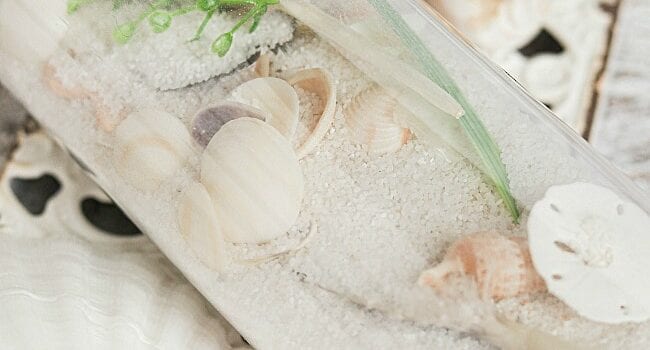
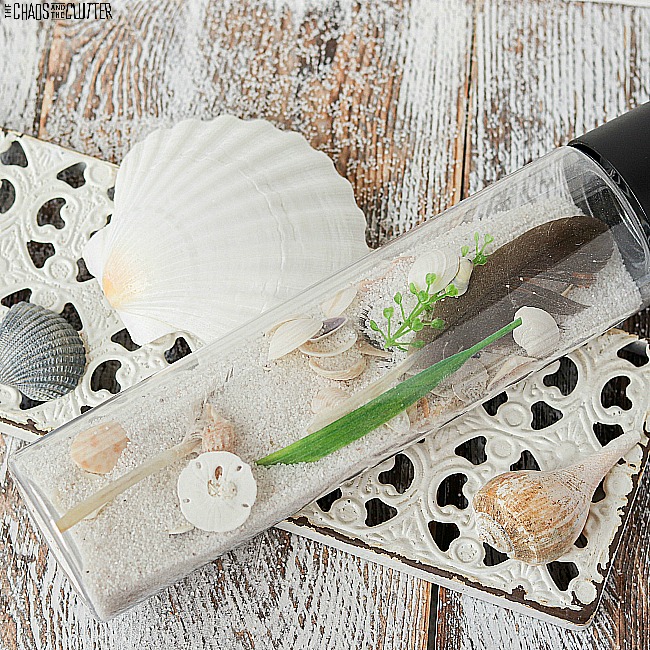
It’s so easy to create this At the Beach Nature Sensory Bottle. It makes a great memento of a tropical or beach vacation too. You can gather the items while on holiday and bring the bottle home with you to remember the trip by. a bottle half filled with white sand, seashells, green seaweed, and a seagull feather sits on a distressed paint table with a few larger seashells. The text reads "At the Beach Nature Sensory Bottle"
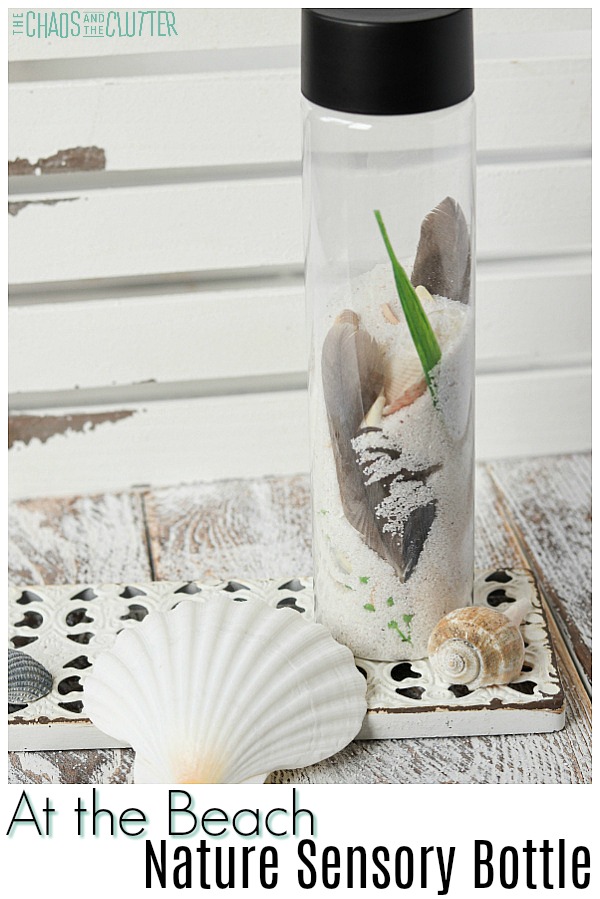
I love that this discovery bottle uses things found in nature. Just like our Seashell Fossils in Playdough activity, this allows kids to explore using their senses and items they found themselves.

At the Beach Nature Sensory Bottle:

Supplies:

  • empty water bottle (I like the look of Voss bottles, but you can also purchase these empty sensory bottles)
  • seashells
  • sand
  • seagull feathers
  • seaweed
  • optional: super glue to seal the bottle cap
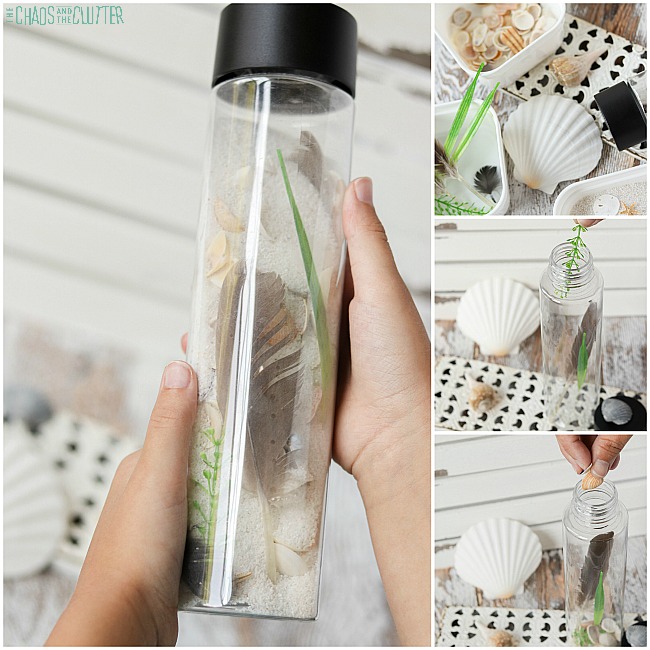
Directions:

  1. Take a walk on the beach to collect the items you want to include in the sensory bottle.
  2. Wash the items (other than the sand) and lay them out on paper towels to dry. Be sure they are fully dry before adding them.
  3. Pour sand into the bottle until it is 1/4 to 1/3 of the way full. You can use a funnel to make this easier.*
  4. Drop in small seashells, small sand dollars, seaweed, and feathers. You could also add small driftwood or rocks found on your walk.

*If you are on vacation and don’t have a funnel with you (because who brings a funnel on vacation?!), you can roll up a piece of paper into a funnel and pour the sand through that.
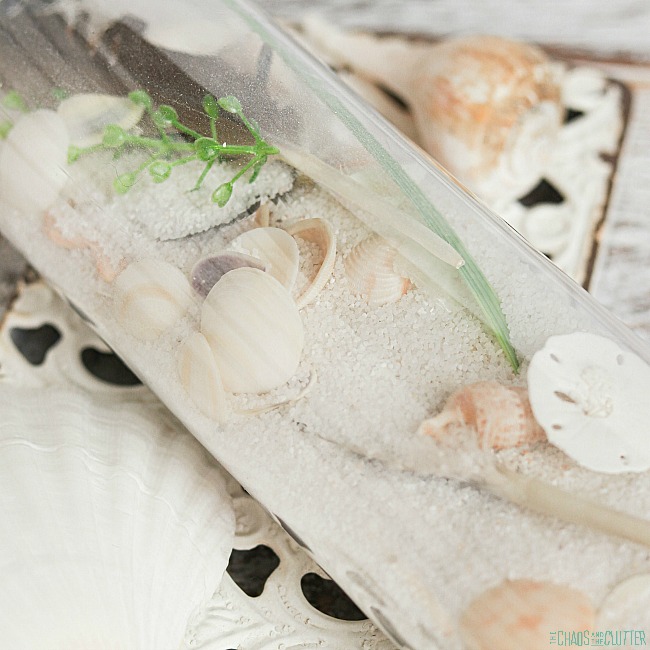
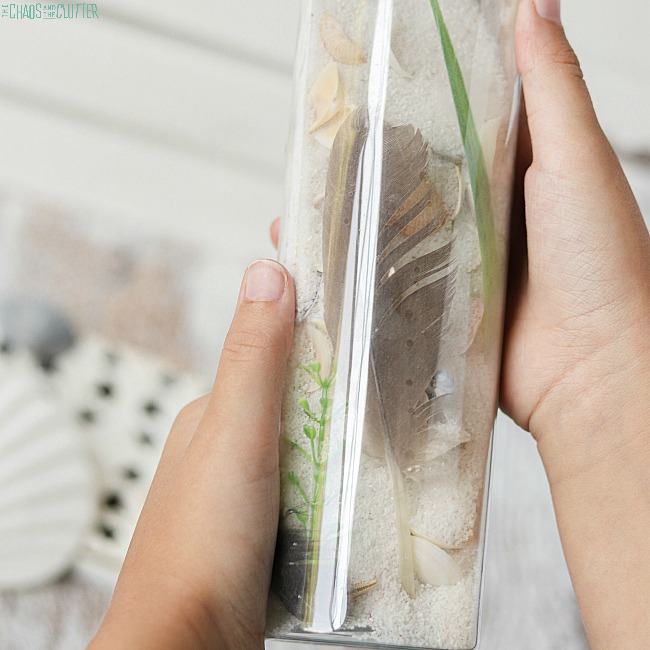
You can keep your creation as a keepsake from your vacation. You can use a permanent marker to write the location and year on the bottle and display it in your home.
Sensory and Learning Opportunities:

Sensory: This sensory play activity begins with the walk along the beach. The feel of the sand under their feet, the wind on their skin, the sound of the waves, the smell of the sea all engage the senses.

The experience continues with adding the collected items to the bottle. This beach sensory bottle involves the visual and tactile sensory systems and during the walk, the olfactory and auditory systems. Science: This activity encourages children to explore the world as they get up close to the beach. You can expand on what they learn by providing books about sea life and seashells so that they can discover what animals lived in the shells at one time.
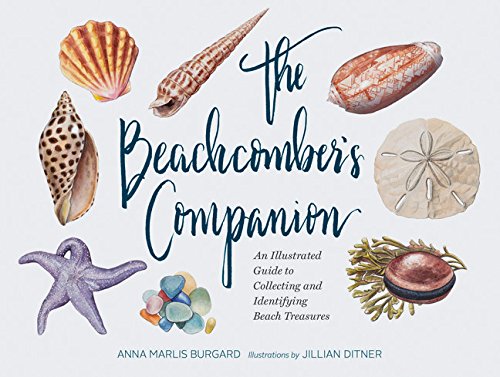
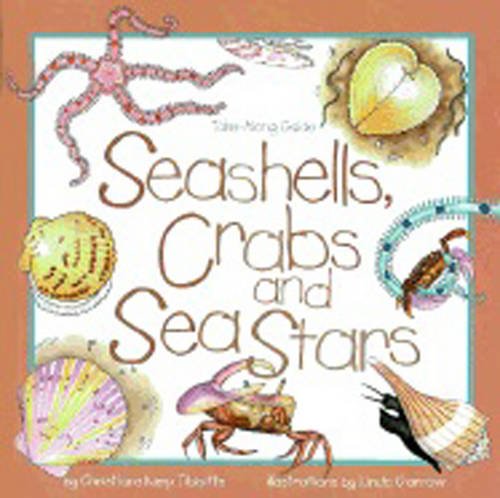
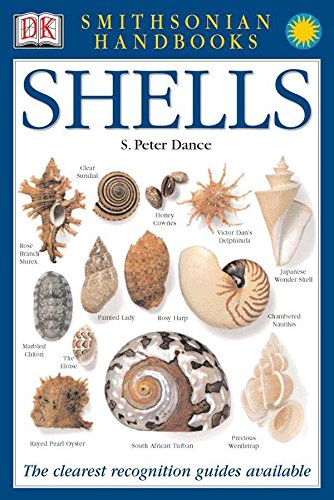
Children can use the books or the internet as a reference for reading about how sand is made, the benefits of eating seaweed, or any other questions they have about the beach or the ocean. Here are some books that would fit well:

The Beachcomber's CompanionThe Beachcomber’s CompanionThe Beachcomber's CompanionSeashells, Crabs and Sea StarsSeashells, Crabs and Sea StarsSeashells, Crabs and Sea StarsShells HandbookShells HandbookShells Handbook

Communication: Kids can expand their vocabulary as they learn about the ocean, sea life, and the beach on their walk. They can further that discussion when filling the bottle and exploring it afterwards. This gives them the opportunity to ask questions and to talk about their discoveries.

Other sensory play ideas using things found in nature:
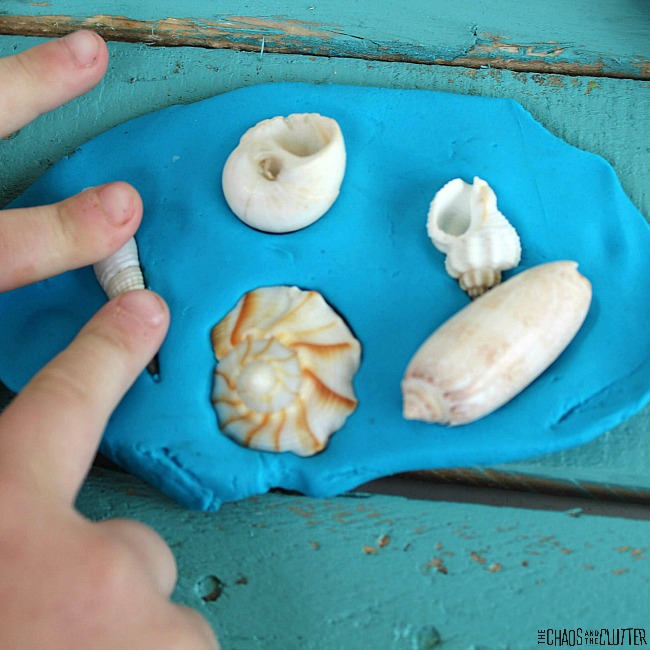
Seashell Fossils in Playdough

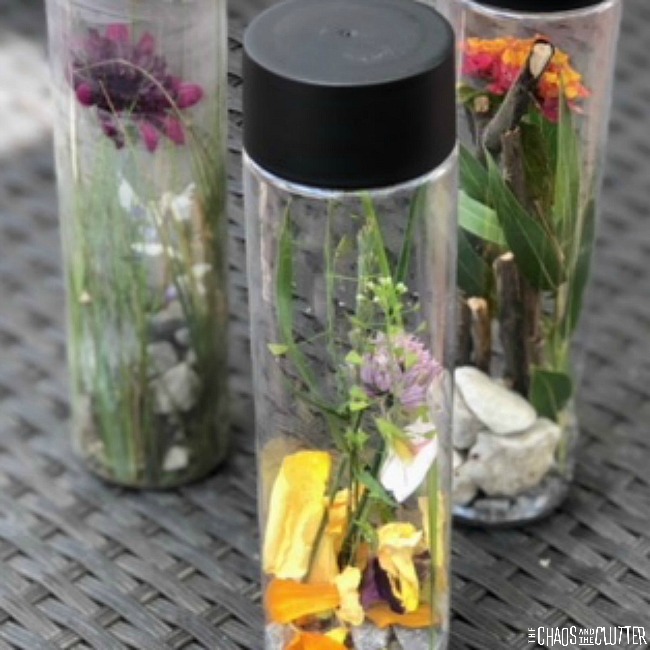
Nature Sensory Bottle

Outdoor Sensory Scavenger Hunt

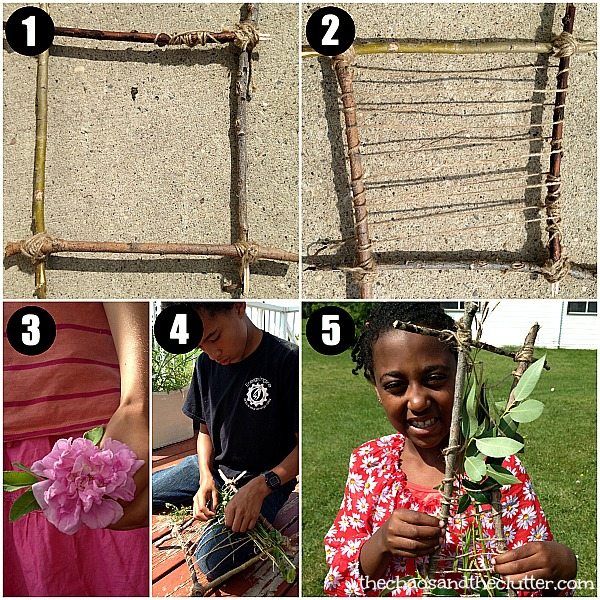
Nature Weavingnature weaving step by step


Filed Under: Sensory Tagged With: sensory bottles, sensory play

Bath Time Sensory Bin with Ice and Gelatin

By Sharla Kostelyk

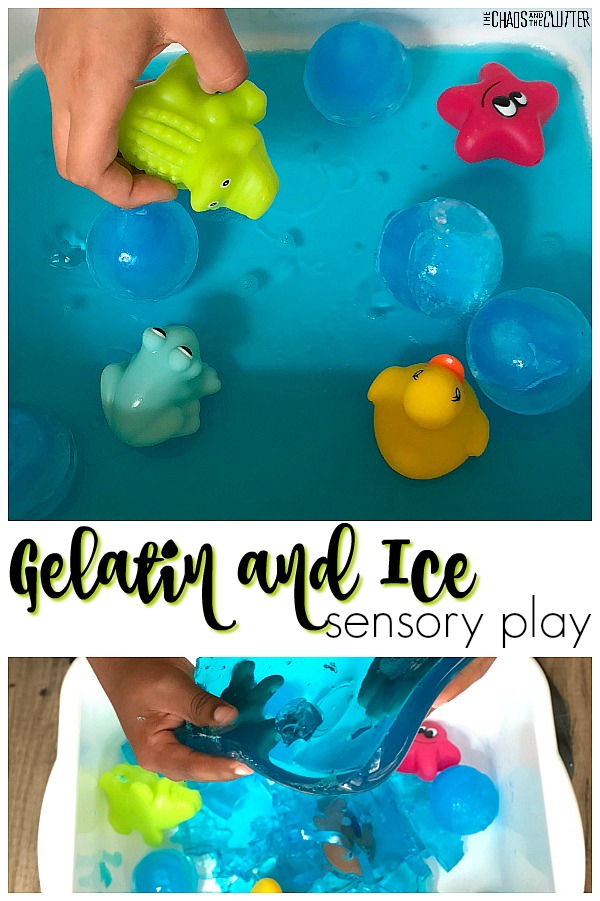
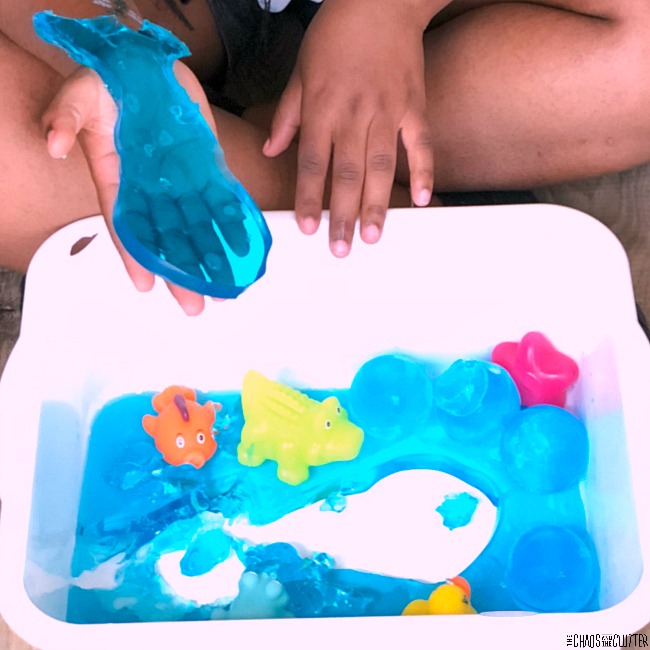
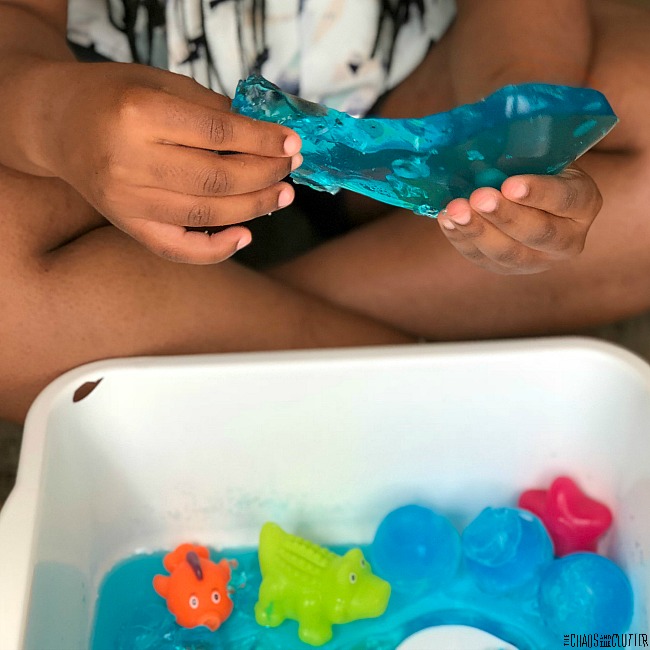
I love how this sensory play activity came together. I was at the Dollar Store (where I find a lot of my sensory inspiration) when I saw the cutest mini bath toys. It gave me an idea for a bath time themed sensory bin. a child's hand holds a small bath toy above a white plastic bin filled with blue gelatin and balls of blue ice with other brightly coloured bath toys sitting on top of the jello. The text reads "Gelatin and Ice sensory play"I made the “water” out of gelatin that I dyed blue. When I added the bath toys, it looked good, but I felt like it was missing something. I wanted to create the look of bubbles in the “water” and I also wanted to add in another sensory dimension.
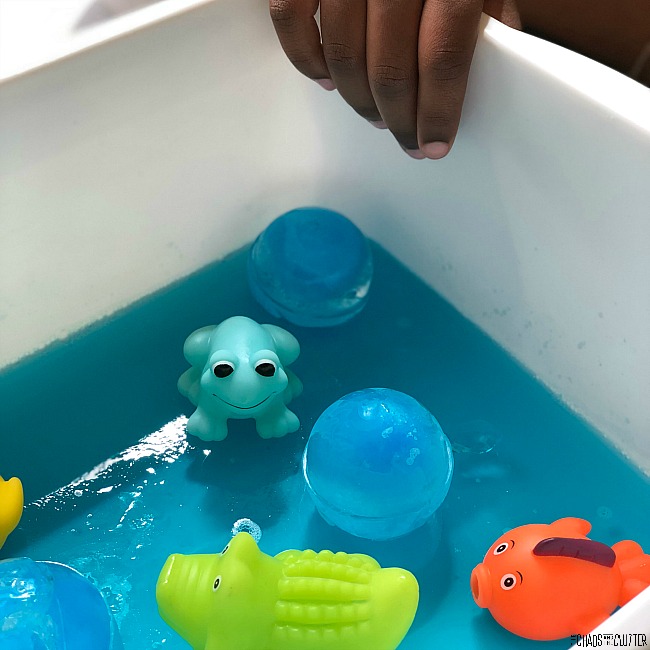
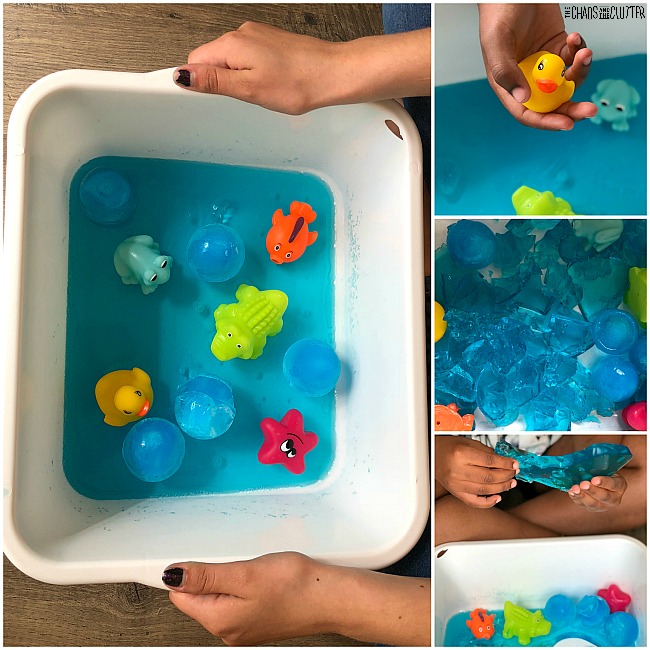
After considering a few ideas such as adding a layer of shaving cream to add another sensory element and to create the look of foam, I came up with a different plan. I decided to make round ice cubes and dye them blue. This would create the look of bubbles in the bath.

It would also add another sensory rich experience by adding cold and by allowing kids to explore different states of matter as the ice melted. I really love the way this sensory bin turned out!

Bath Time Sensory Bin:

Materials needed:

  • plastic bin
  • 4 packs of gelatin
  • blue food colouring
  • water
  • round ice cube holders
  • small bath toys
  • optional: plastic knives, spoons, or scoops

Directions:

  1. Make the gelatin according to the package directions, adding a few drops of blue food colouring to the water. Stir it directly in the bin. Allow to set. I put ours in the fridge to set.
  2. Mix some blue food colouring in a pitcher of water and pour into the round ice cube mould. Freeze.
  3. Add the bath toys to the bin on top of the gelatin once it has set.
  4. After the ice balls are fully frozen, place them in the bin.
  5. Let the play begin!

My kids enjoyed exploring in this bin. One of my daughters wanted to cut the shape of a fish out of the gelatin. She used a plastic knife and was easily able to cut out a jello fish. She later wanted to taste it. Since there’s no harm in that since it’s a taste safe sensory bin, she went ahead and took a bite. I hadn’t added any sugar to the gelatin, so she wasn’t a fan of the taste!
Sensory and Learning Opportunities:

The contrast of the moist, gummy gelatine and the cold, hard ice creates a really awesome sensory experience! This activity engages the visual, tactile, and gustatory (taste) sensory systems.

As kids explore through their senses, they learn about the world around them and about how to engage that world. They improve their communication by talking about what they are seeing, tasting, and feeling and by asking questions. Their vocabulary increases as they learn to describe certain textures, colours, or tastes.

Join thousands of others who have signed up for our Sensory Solutions and Activities email series and get a free sample from our Sensory Play Recipes eBook.

Here are some other toddler sensory activities you may be interested in:

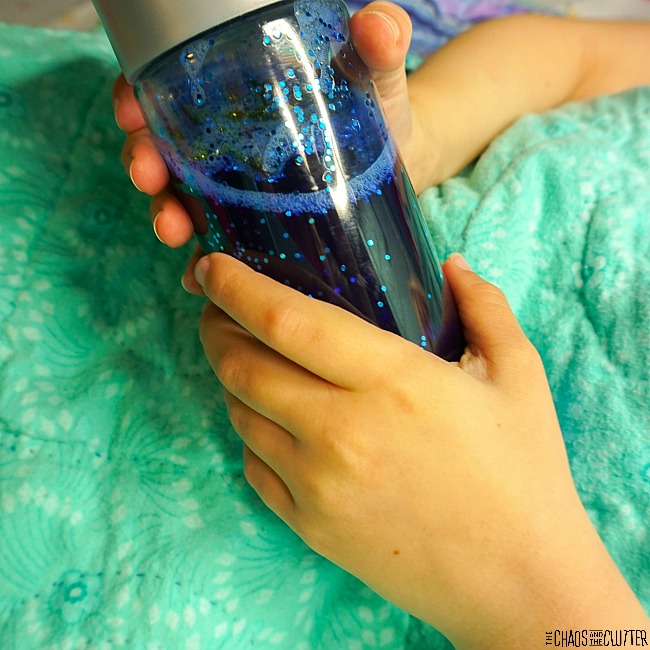
Calming Bedtime Sensory Bottlea child's hands hold a blue calm down bottle. The child's hands are all that is visible as the child is snuggled underneath a green blanket.

Condensed Milk Painting

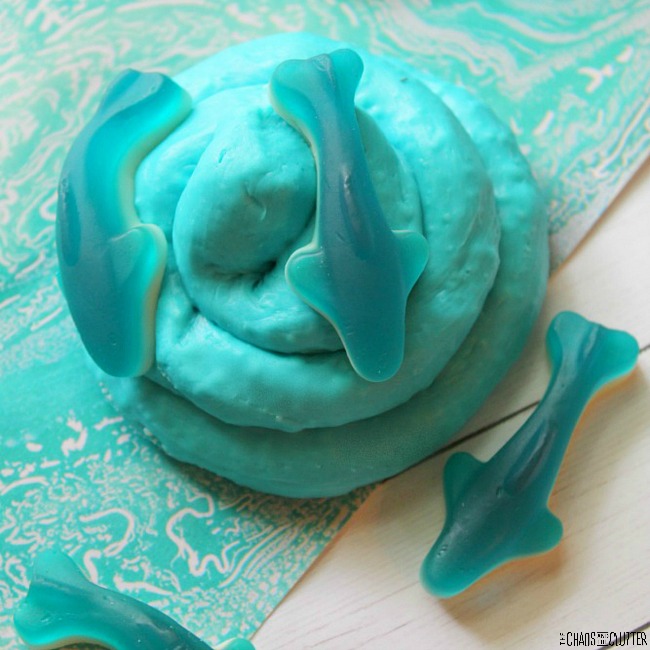
Edible Shark Fluffy Slime

Filed Under: Sensory Bins Tagged With: sensory play

Setting Up an Effective Morning Routine for School

By Sharla Kostelyk

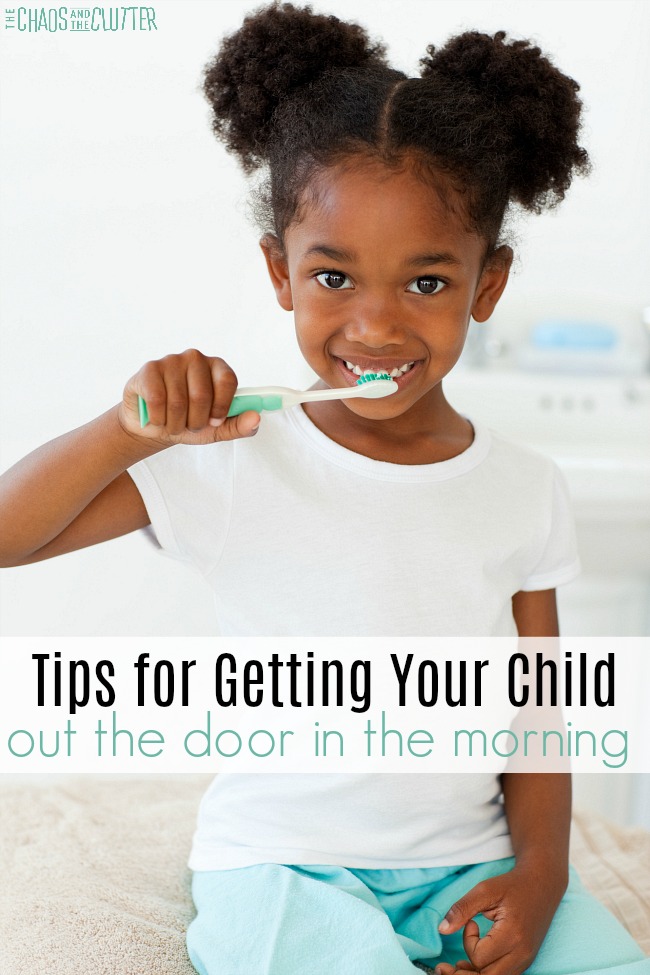
The school year is back in session and many of us are trying to get our children out the door in the morning. I can’t even tell you how hard this is! This can be rough for kids, especially when transitioning back into a morning routine for school.  a cute black girl with her hair in high pigtails wearing a white shirt and teal pants is brushing her teeth. The text reads "tips for getting your child out the door in the morning"They feel exhausted. Some kids have a hard time with the idea of being gone all day. You can help get your child out the door in the morning by following these tips:

Tips for Getting Your Child Out the Door in the Morning

Are you tired of fighting your child in the mornings? Morning routines can come with a lot of drama. However, there are some things you can do to take some of the stress out. You don’t have to be stuck in a rut of screaming and yelling to get your kids to listen to you. Here are some ideas for how you get your child out the door in the morning with less work on your part:

Going to Bed Earlier

According to studies, most kids are not getting enough sleep. Lack of adequate sleep can lead to problems with attention and focus, behavioural issues, drops in academic performance, and serious health issues.

You may feel as though your child can go to bed late and still wake up at a decent time. Pay attention to how your child does based on the amount of sleep they get. Experiment for a month and see if more sleep means easier mornings. 

I know that an earlier bedtime can be a challenge, but on top of the health benefits, it can help them wake up feeling more refreshed in the morning. Note that it takes at least two weeks to establish a new habit, so you may not see changes right away when you implement a new bedtime. Be patient. In time, you may see that getting your kiddos out the door in the morning is easier than ever when they’ve had enough sleep.

Using Timers

Do any of your kids struggle with time management? If this is the case, then including a timer in your morning routine for school is a GREAT idea.

Some kids just need to know how much time they have. This is totally okay because each child has different motivators and using timers may work for your child in the mornings.

Instead of setting a timer for when they have to be out the door, set timers for smaller tasks such as ten minutes until their teeth need to be brushed and their face washed. Set another timer for them to “beat” for getting dressed and then another for breakfast and so on.

Visual Schedule

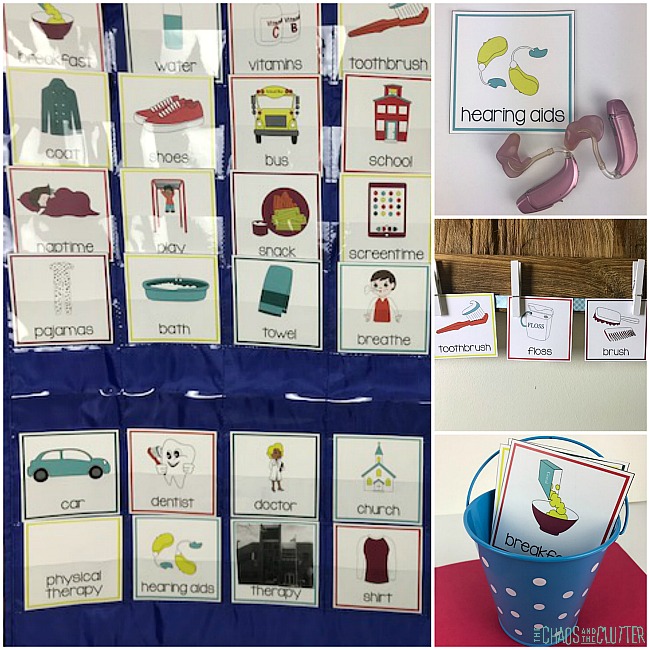
Visual schedules are such a great tool for kids. They allow kids to see what is coming next. They also give clear expectations about what needs to be done.

Having something visual to look at can keep kids on task, which in return can help kids get out the door in the morning.

Visual schedules were a game changer for us when it came to the kids’ morning routine. They were especially effective with our kids with special needs to break things into smaller tasks.

For a lot of kids, it’s easy to forget what they were doing if just told “get dressed”. If that same instruction is broken down into “underwear”, “pants”, “shirt”, “socks”, “shoes”, it is much easier to accomplish. But you’re busy too and don’t want to spend the morning nagging. This is where the visual schedule comes in.

Talk About Something to Look Forward to in the Day

Sometimes mornings are super rushed, which in return can take the fun out of the day. Talk to your child about something they have to look forward to in the day. Maybe you’re going to have a special lunch with them later that day. Perhaps a fun day at school is going to happen.

Giving your child something to look forward to helps them look ahead. Some children just need that excitement or that push to help them get out the door in the morning. You’d be surprised how much smoother a day can go when a child is focused on something that interests them.

Breathing Exercises

Do you have a kiddo that gets overwhelmed easily? Taking a deep breath is a great stress management tool. When your child starts getting overwhelmed or they just need a little help getting through the morning, bring out the breathing exercises.

A simple “in through the nose, out through the mouth” works if they are not yet agitated, but you may need to take a bit more time and walk them through some calm down breathing exercises.

Food

Brains don’t work well without fuel. Kids need food to function. Having them eat first instead of after they get  dressed can make them do the other things on their list faster. It will also improve their mood and behaviour.

With everything happening on busy weekday mornings, it can be hard to come up with healthy breakfasts that are quick to put together or that can even be grabbed on the go in a pinch.

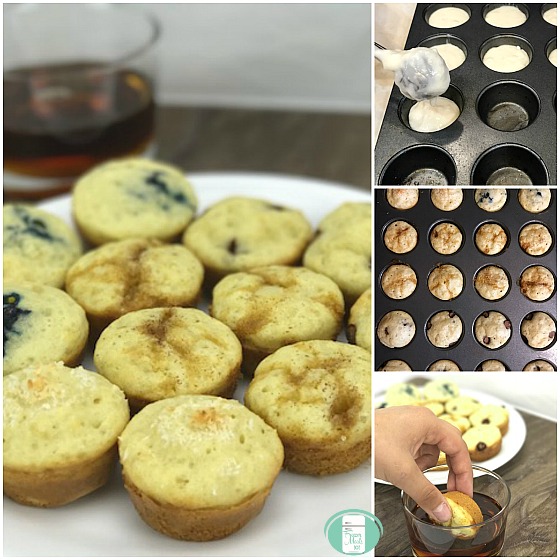
I like to use make ahead breakfasts so that they are in the freezer and ready to go.

Lay Out Clothes the Day Before

Sometimes kids struggle to make decisions in the morning, which can really put them behind schedule. A little trick that I learned in the start of my parenting years is to lay out clothes the day before.

This is so helpful because then the kids know exactly what they are going to wear the next day. Some of my kids even like sleeping in their school clothes the night before. This means they only have to get up, throw on some shoes, and be on their way!

Simplicity is best in some cases. As a parent, you need to know which battles are worth fighting and pyjamas are not a mountain to die on in my opinion.

If also helps to be sure that everything else is ready the night before such as backpacks, important papers, and school lunches. This small tweak in the morning routine for school will pay big dividends.

Thick Smoothies Through a Straw 

This little trick of mine kills two birds with one stone. If you want to solve your kids being hungry and them being dysregulated or moody…Smoothies!

For kids who need a calming resistive sucking motion, thick smoothies through a straw is my go-to. This solves the hunger issue, the time issue, and helps keep your kiddo calm and focused. I make freezer smoothie bags ahead of time so they are fast to whip up.

Sensory Input

When mornings are stressful and you have a child that is struggling with sensory overload, focusing on sensory input can be important. Sensory input can come in a variety of forms. Throughout my years of parenting, I have found some sensory input that works great on the go.

Some of my favourites for my kids are listening to an audiobook on the way out the door. As mentioned before, straws give great oral sensory input. Send your child on a visual letter hunt in a book. This works great for kids who need visual sensory input.

Heavy work activities are a great way to start the day off regulated and calm.

Waking Up Earlier

Some kids just need extra time to get ready. One way to get kids to wake up earlier is to get them to bed earlier. You may find that your kids are easier to get out the door in the morning when they wake up earlier. This isn’t always easy, but it does work for some children.

Leave Plenty of Time

This goes along with the “waking up earlier” tip. Don’t forget to leave plenty of time for getting out the door in the morning. Try not to rush the kids with a short time period of getting ready.

Whether your kids take the bus to school or you drive them, there can be changes in timing. Note if there are reasons such as traffic, construction, or change in schedule that require you to leave the house sooner and adjust the morning routine accordingly.

I would love to hear your tips for getting your child out the door in the morning. What tips do you have to offer?

You may also find these articles helpful:

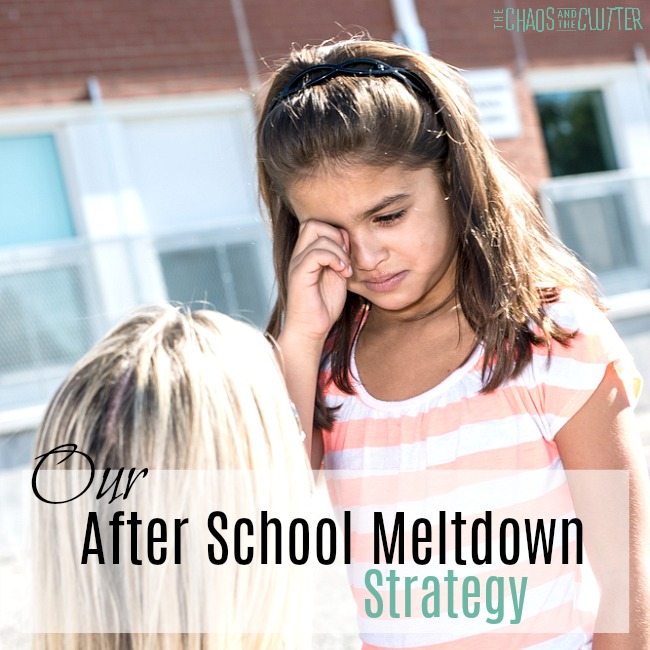
The After School Meltdown Strategy that really works

Calm Down Breathing for Kids

Filed Under: Parenting in the Chaos, Special Needs Parenting

5 Things to Say to Your Anxious Toddler

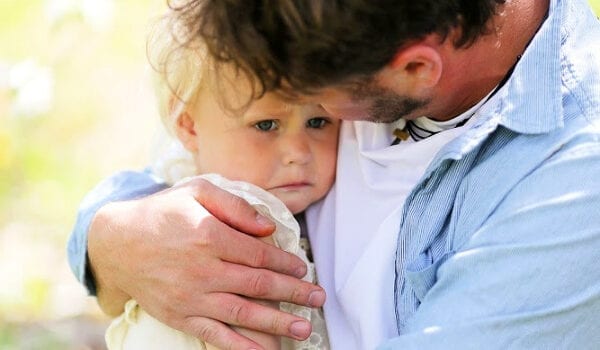
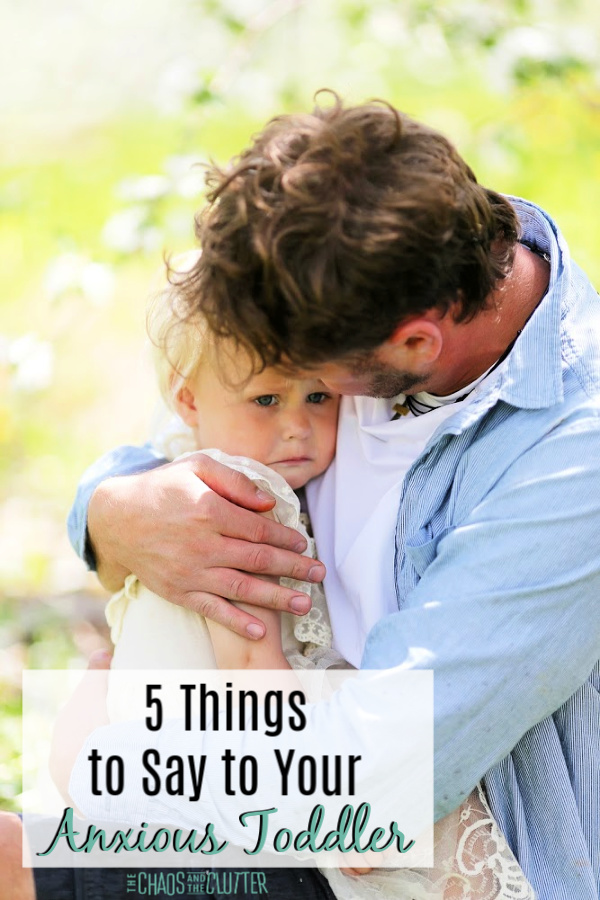
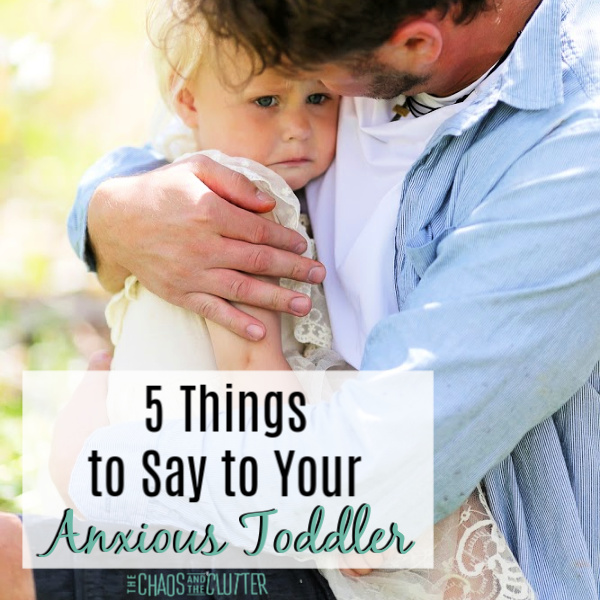
a brown haired father is holding his blond daughter. The text reads "5 Things to Say to Your Anxious Toddler"

By Sharla Kostelyk

Knowing how to help your little one through their feelings is hard. Anxiety is tough as an adult, so you can imagine how difficult it would be for a 2 or 3 year old to outwardly express their anxiety.a brown haired father is holding his blond daughter. The text reads "5 Things to Say to Your Anxious Toddler" If your toddler is struggling with anxiety, there are some helpful things you can say. Anxiety can sometimes be a healthy emotion, as long as it is not experienced in excessiveness.

If anxiety is left unchecked, then it can lead to excessive fear and worry. If you have a toddler who is anxious, you will need some tools in your emotional toolbox to help them out.

What to Say to Your Anxious Toddler

As humans, we say a lot of WRONG things. When it comes to your toddler and their anxiousness, it’s important that you say the RIGHT things. Here is what to say to your anxious toddler:

“I AM HERE TO LISTEN”

I know that you may want to tell your child what to say and think right now, but they may just need to know you are listening.

Whether they are crying tears or speaking gibberish, they may just need you to listen. You can tell your anxious toddler that you’re here to listen!

“LET’S DRAW IT”

What if your toddler cannot put into words how they feel? You can say 3 simple words and those words are “let’s draw it.”

When your toddler has a chance to draw what they’re feeling, amazing things are happening. They are learning to work through their emotions. Also, they may forget about what is making them anxious.

Drawing is such a good tool in helping your anxious toddler work through how they are feeling. Give it a try!

You can also have them shape their emotions out of playdough using something like these Emotions Playdough Mats.

“WHAT IS SOMETHING WE CAN DO TO MAKE YOU FEEL BETTER?”

What if there was one thing you could do to help your toddler not feel as anxious?

One thing you can do is ask a question. That question is “what is something we can do to make you feel better?”

You know your toddler best. What is going to help them feel less anxious?

  • Maybe it’s watching their favourite show
  • Or being held as you sing
  • Maybe it’s holding and snuggling their favourite stuffed animal
  • Or perhaps it’s holding your hand

Let your toddler decide what will make them feel less anxious! Give it a try.

“How Do You Feel?” or “HOW DOES THIS WORRY MAKE YOU FEEL?”

Although, this may seem like a simple question, it’s a big question to an anxious toddler.

Asking your toddler how they feel or how their worry makes them feel is important. This validates that your toddler has a big feeling.

Feeling anxious is not fun. Talking to your toddler and helping them understand how anxiety makes them feel is vital to their development.

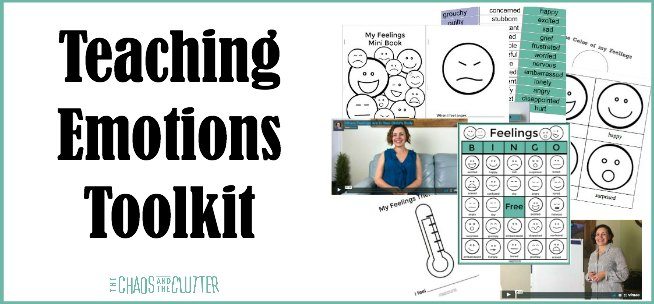
Toddlers may not yet have the vocabulary to express their feelings. It is so important to give them those skills. You can find some hands-on activities and ideas in our Teaching Emotions Toolkit. 

What could possibly make a toddler feel anxious?

  • New routine
  • New setting
  • An activity they don’t like
  • Yelling
  • Stress

Talk to your toddler about their anxiousness and their worry.

“WHAT CAN WE DO TO HELP YOU GET CALM?”

The thing about being an adult is that most adults know how to calm themselves down. Toddlers need a lot of help.

Just like you have to parent toddlers with everything else in their life, you need to help them with this aspect as well.

If your toddler is feeling anxious, then it’s important to give them options to calm down.

Here are some ideas:

  • calm down kit
  • blowing bubbles (our recipe for calming lavender bubbles)
  • calm down breathing

The calming down technique may be custom to your toddler. It may take a while to figure out something that works, but you can do this.

How Do I Know If My Toddler Has Anxiety?

Honestly, if your toddler has anxiety, you might not even be able to recognize it. Anxiety is actually quite complicated. The heart rate can speed up, the stomach may be in knots, a ball in the chest. Anxiety can look different for each person.

If your concerns continue, speak to your child’s paediatrician.

What Can Cause an Anxiety Attack?

So many different things can cause an anxiety attack. When a person feels stress, worry, or fear, it can lead to a lot of anxiety or even an anxiety attack.

There is no age limit for anxiety attacks, so keep this in mind as you deal with your anxious toddler. What looks like a tantrum may in fact be something related to anxiety. Read more about anxiety symptoms in children.

The Best Things to Include in a Calm Down Kit

Calm Down Activities for Kids

Filed Under: Parenting in the Chaos

Minute to Win It Camping Games

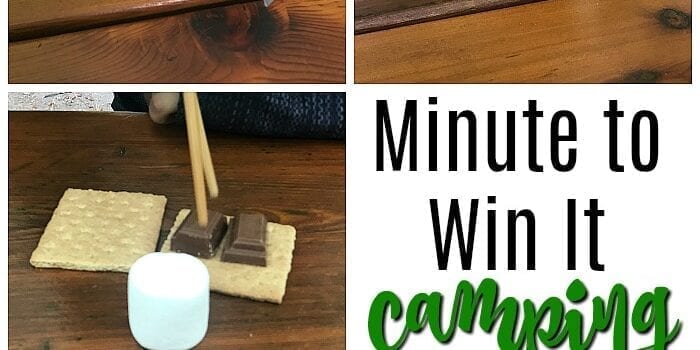
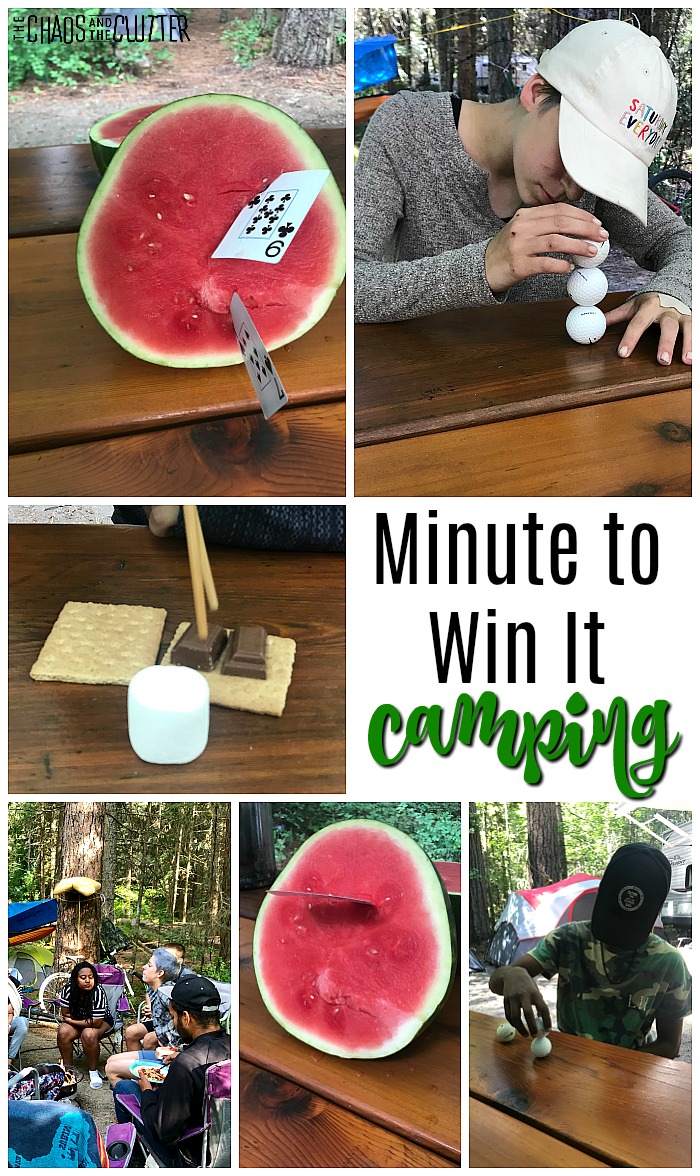
half a watermelon with a playing card sticking into it, a girl in a white hat stacking golf balls, ingredients for a s'more being assembled with chopstick on a picnic table and text that reads "Minute to Win It camping"

By Sharla Kostelyk

Want to make your camping trip even more memorable? Our family loves Minute to Win It games. They are great for large group gatherings, parties, family connection, and laughter. On our recent camp trip, we tried out some Minute to Win It camping games. half a watermelon with a playing card sticking into it, a girl in a white hat stacking golf balls, ingredients for a s'more being assembled with chopstick on a picnic table and text that reads "Minute to Win It camping"

Because I didn’t want to pack a lot of extra supplies, I tried to come up with games that would use what we already had with us or small inexpensive items. These are all easy to set up and easy to play for all ages.

Minute to Win It Camping Games:

If you’d like to create your own Minute to Win It camping challenge, you can use all or some of the games below.

I’ve provided a list of supplies used to play all of the games as well as broken them up per game to make it easier for you to plan. As you can see, there are very few supplies needed to create a lot of fun. As you’ll see from the list, many of these are things that you likely already have with you when camping.

Supplied needed:

  • golf balls
  • watermelon
  • playing cards
  • rubber bands
  • empty cans
  • chopsticks
  • graham crackers
  • chocolate
  • marshmallows
  • balloons

Note that due to the nature of some of the supplies such as the balloons, elastic bands, and marshmallows, adult supervision is required.

Caddy Stack

Supplies needed:

  • 3 golf balls (or 6 if you are playing head to head)

The object of this game is to stack 3 golf balls on top of each other. The balls must remain stacked for 3 seconds to win. You can either play head to head or individually. If playing head to head, the first one to complete their stack and have it stay in place for 3 seconds is the winner.
Card Ninja

Supplies needed:

  • watermelon
  • deck of playing cards

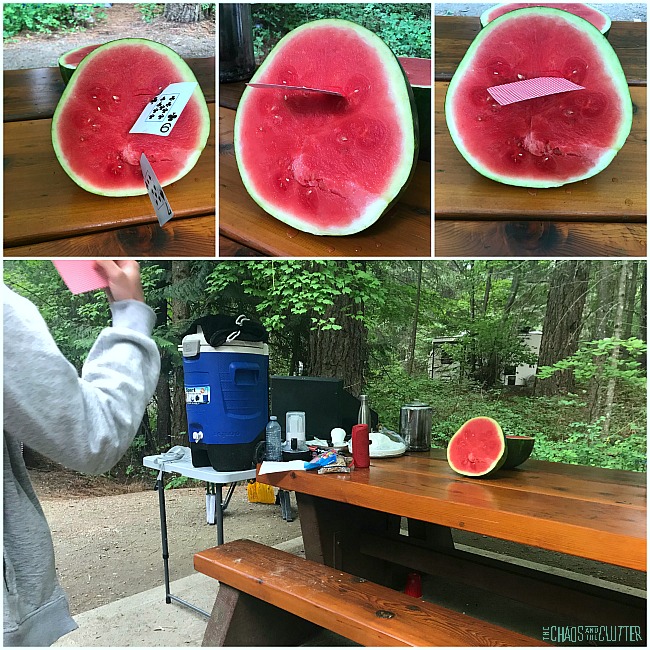
To set up this game, slice a watermelon in half and prop it up on a picnic table or other flat surface. Have each player stand at a distance from the watermelon and throw cards one at a time in an attempt to get a card in the watermelon. The object of the game is to get one of the cards to stick in the watermelon in under a minute.
You can determine the distance away that the players have to stand based on their age. If you’re playing with a large group with many ages, you can allow younger kids to stand closer if you like.

Rapid Fire

Supplies needed:

  • rubber bands
  • 6 empty pop cans (12 if playing head to head)

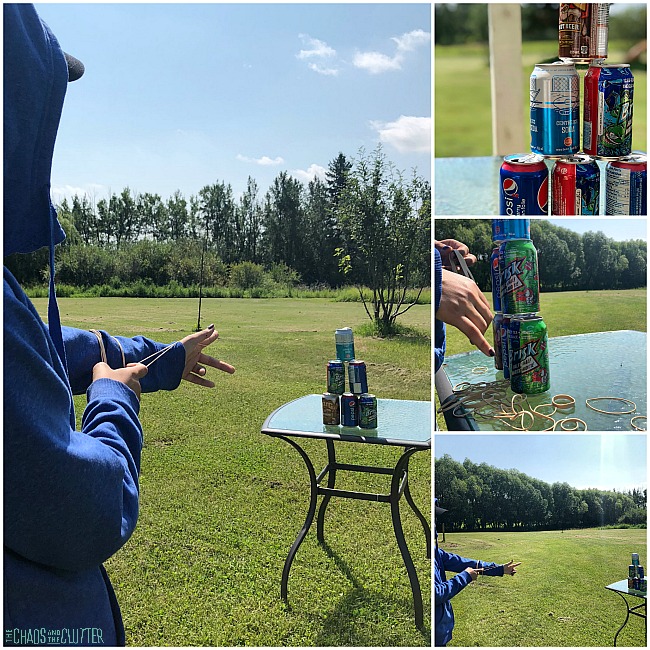
Set the cans up in a pyramid on a flat surface such as a folding table or picnic table. Give each player elastics. The object of this game is to knock over all 6 cans using elastics in under a minute. Again, you can determine how far away players must stand depending on age.
If you want to play this game head to head, set up a second stack of cans a bit of a distance away from the first. In this version, the first player to knock over all the cans is the winner.

S’more Fun

Supplies needed:

  • chopsticks
  • graham wafers
  • chocolate
  • marshmallows

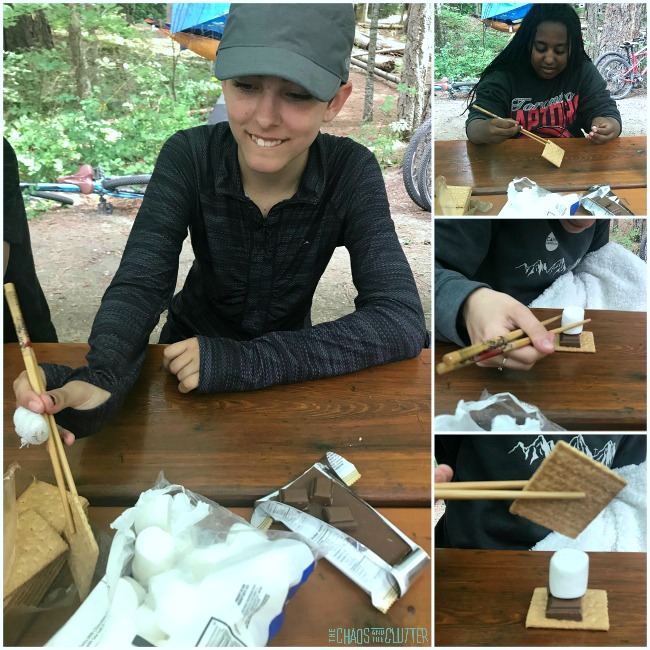
Give each player a set of chopsticks, 2 graham crackers, a marshmallow, and 1 or 2 pieces of chocolate. The object of this game is to assemble a s’more using only the chopsticks in less than a minute.
When the timer starts, begin with one graham cracker, top it with the chocolate piece(s), then a marshmallow, and finish with the last graham cracker.

In the head to head version of this game, players race to be the first one to assemble their s’more using the chopsticks.

Defying Gravity

Supplies needed:

  • balloons

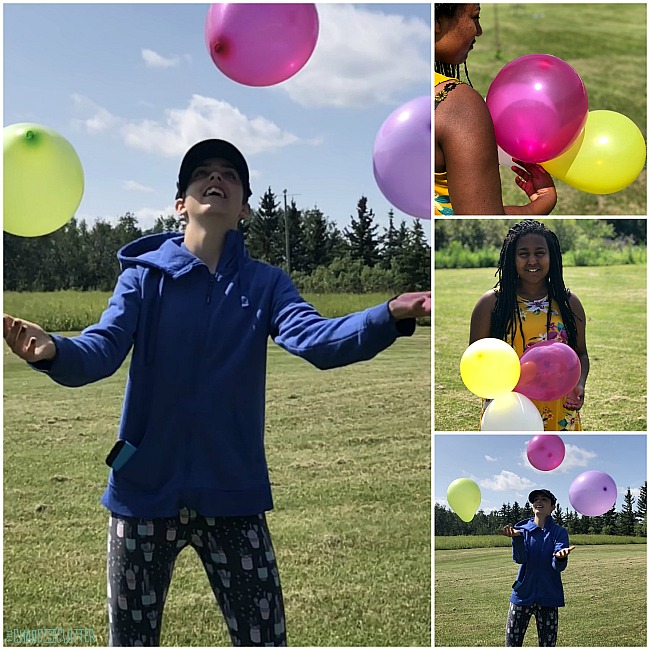
Blow up the balloons. You’ll need 3 if doing this individually or 6 if you’ll have people competing head to head. The goal of this one is to keep all 3 balloons in the air for 60 seconds without having any of them touch the ground.
If two players are competing at the same time, you can either declare the winner the person who keeps all 3 from touching the ground for the longest or give a point to each player if they both complete the challenge in one minute.

You’ll need a bit of space for this one, especially if there are two people playing at the same time. Some campsites may be large enough (ours was quite large) or you may need to complete this in a field or open space.

All of these Minute to Win It camping games work well for large groups such as at a camp, day camp, family reunion, youth group, or party.

Looking for more ideas for super awesome family fun or resources to help you connect with your child? Join our free 5 Days to Better Family Connection email series.

Be sure to check out all our other Minute to Win It games:

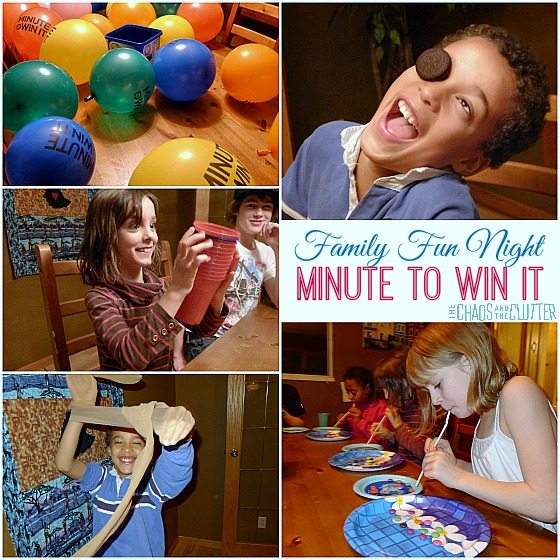
Minute to Win It Family Fun

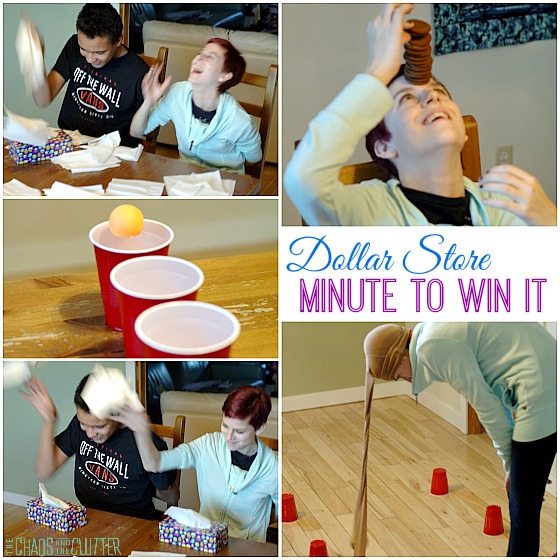
Dollar Store Minute to Win It Dollar Store Minute to Win It party

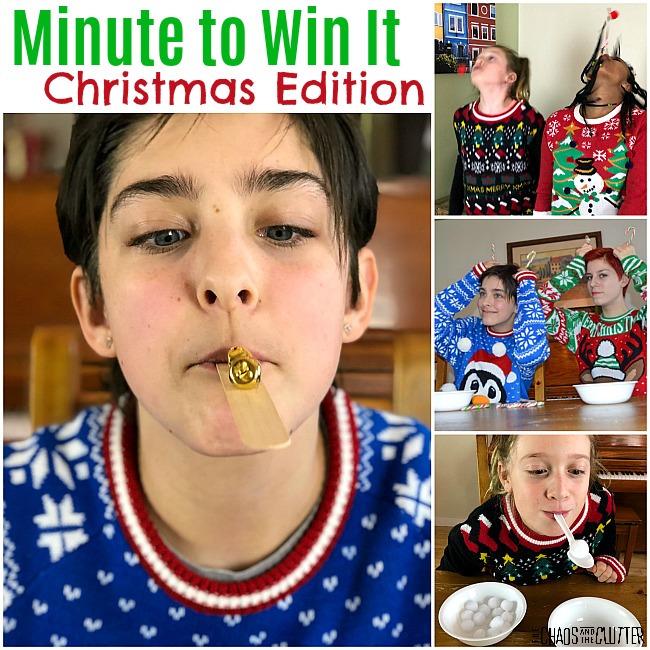
Christmas Minute to Win It Games

Filed Under: Crafts and Activities, Family Games

Shark Week Sensory Bottle

By Sharla Kostelyk

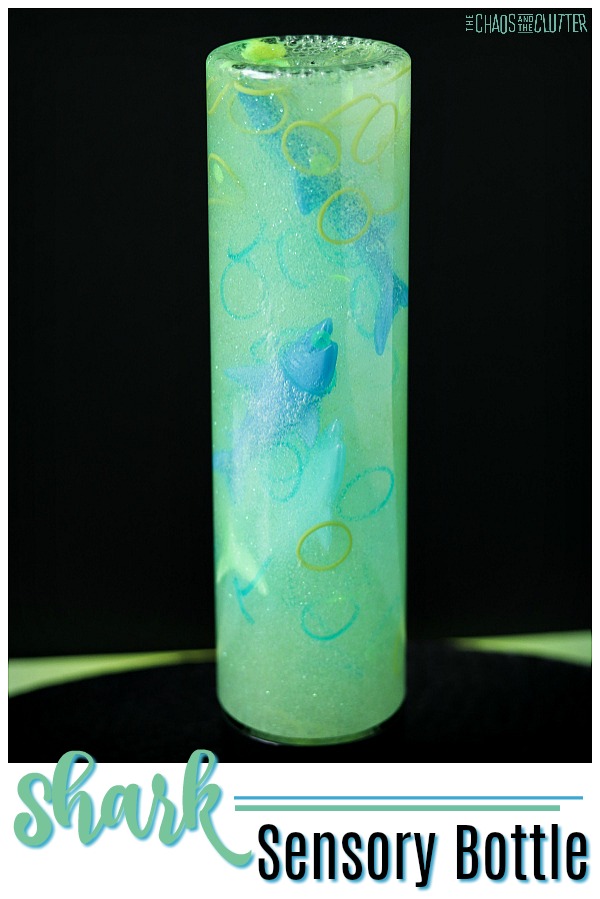
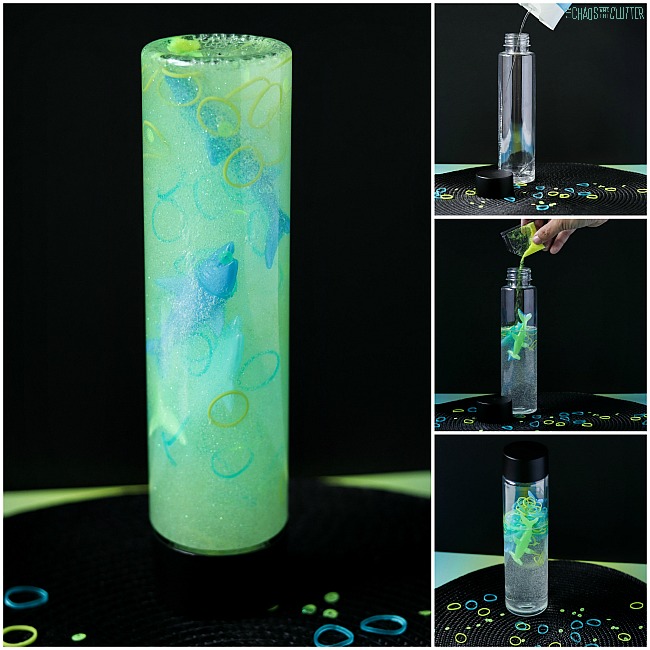
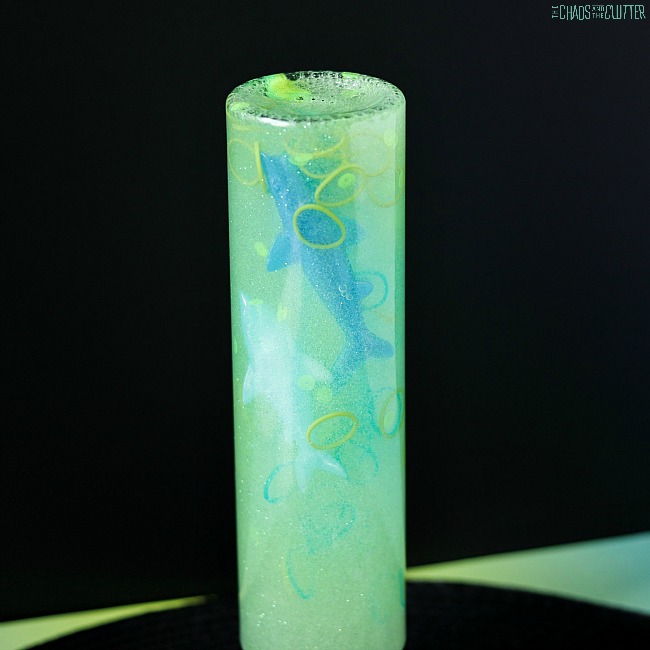
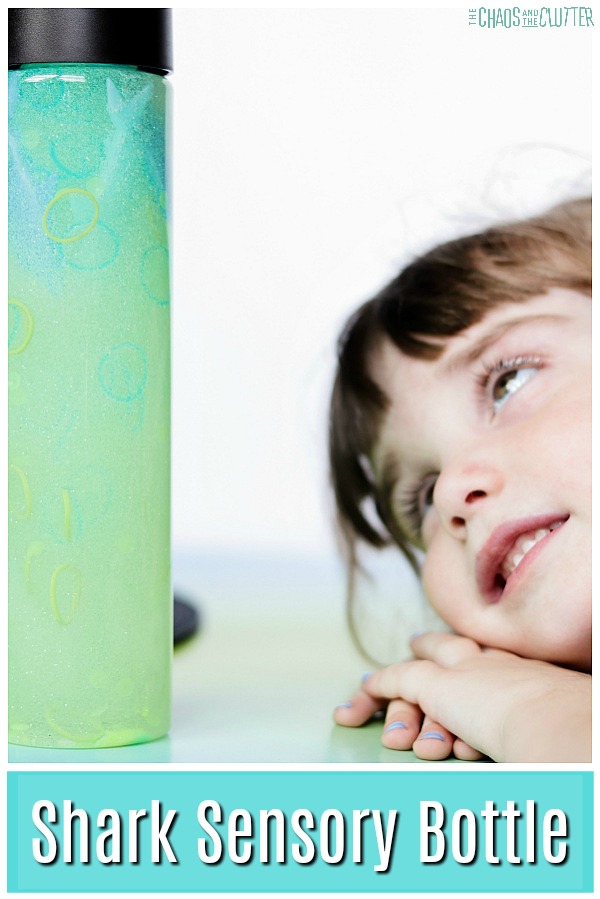
Celebrate Shark Week with this Shark Week Sensory Bottle. Kids are fascinated by sharks. They will enjoy the discovery using this sensory activity.

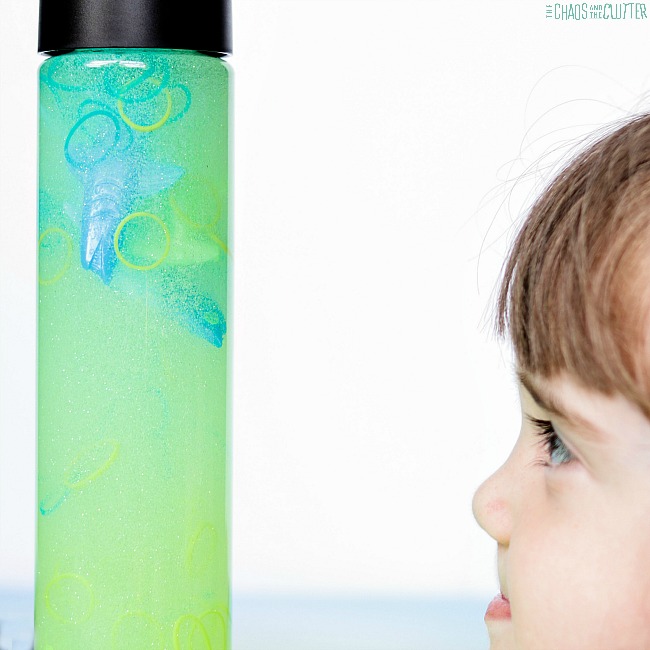
a bottle filled with aqua green liquid, plastic blue sharks, elastics, and glitter is on a black background. The text reads "Shark Sensory Bottle"

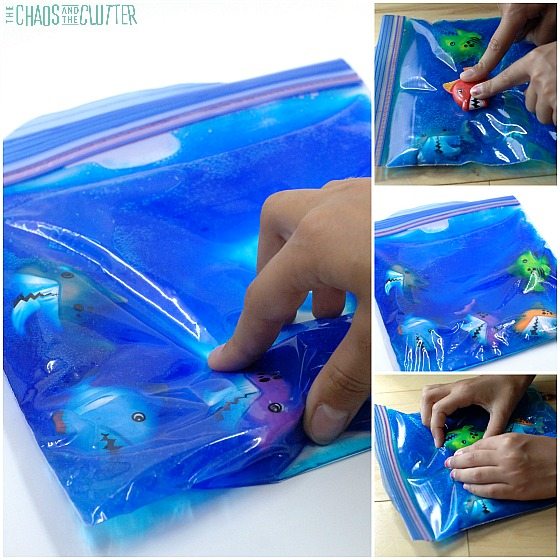
We have made several shark sensory play opportunities over the years including our shark sensory bag and edible shark slime.

What is Shark Week?

Shark Week has become so much more than TV shows on Discovery Channel. It originally began on July 17, 1988 and has grown increasingly in popularity since. It is designed to expand knowledge about sharks and therefore, lead to conservation efforts.

Shark Week is now celebrated through TV specials and activities. It has become so popular in fact that a hospital in Cincinnati began dressing its newborns in Baby Shark onesies in honour of Shark Week!

There are worksheets, crafts, themed camps, parties, recipes, and sensory activities. It seems that many countries have embraced the opportunity to learn about this animal. We decided to get in on this ourselves with this sensory bottle.

When is Shark Week?

Shark Week generally starts on a Sunday and takes place at the end of July or beginning of August. This year, it begins on July 28, 2019.

Shark Week Sensory Bottle:

Supplies:

  • empty water bottle (I like the look of Voss bottles, but you can also purchase these empty sensory bottles)
  • clear dish soap (I prefer Dawn or LemiShine because they are very thick)
  • shark figurines (these ones are from Dollar Tree and are stretchy)
  • green and yellow glitter
  • yellow sequins
  • green and teal small elastics (use those leftover rainbow loom ones!)
  • optional: super glue to seal the bottle cap

Directions:

  1. Pour clear dish soap into the container until it’s about 2/3 full.
  2. Add beads, sequins, glitter, mini elastic bands, and shark figurines.
  3. Fill the remaining space with water.
  4. If you’re going to be using this sensory bottle with small children, I suggest that you secure the lid by using Super Glue and allowing it to dry before allowing a child to play with it.

Small parts are contained in this bottle, so even if you secure the lid with glue, use adult supervision at all times.

Sensory and Learning Opportunities:

This sensory bottle is a great way for kids to become interested in learning more about sharks. They can watch the sharks “swim” and observe the different characteristics that they have.

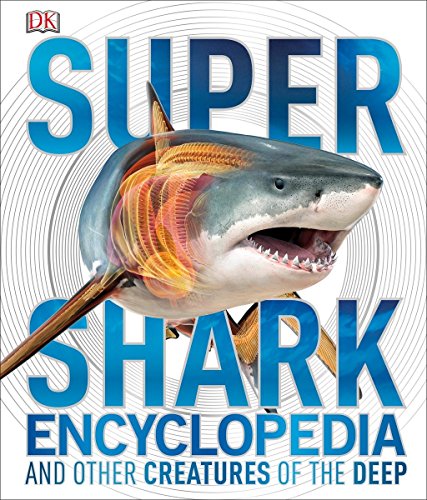
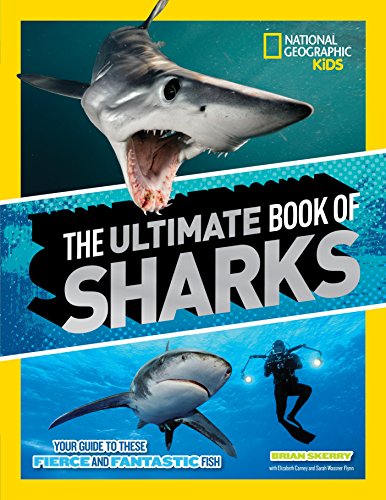
Set out books about sharks for kids to further their interest. This will enable them to learn and ask questions.

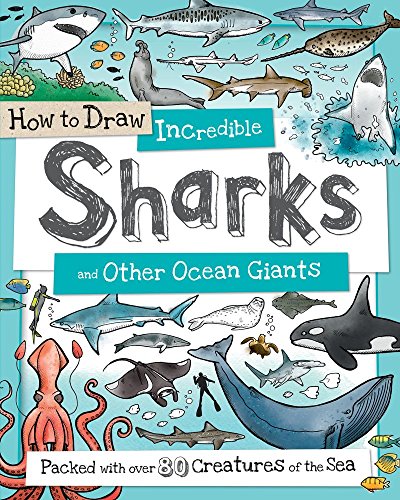
Super Shark Encyclopedia: And Other Creatures of the DeepSuper Shark Encyclopedia: And Other Creatures of the DeepSuper Shark Encyclopedia: And Other Creatures of the DeepThe Ultimate Book of Sharks (National Geographic Kids)The Ultimate Book of Sharks (National Geographic Kids)The Ultimate Book of Sharks (National Geographic Kids)How to Draw Incredible Sharks and Other Ocean GiantsHow to Draw Incredible Sharks and Other Ocean GiantsHow to Draw Incredible Sharks and Other Ocean Giants

This would correspond well with a shark or ocean themed unit in your classroom or homeschool.

Visual sensory input occurs while your child uses their eyes to explore what is in the bottle and the way that it moves. They also engage their tactile sensory system in holding the bottle, shaking it, and tipping it upside down.

Check out these other shark sensory activities!

Squishy Shark Sensory Bag

Taste Safe Shark Fluffy Slime

Filed Under: Sensory Tagged With: sensory bottles, sensory play

  • « Go to Previous Page
  • Page 1
  • Interim pages omitted …
  • Page 34
  • Page 35
  • Page 36
  • Page 37
  • Page 38
  • Interim pages omitted …
  • Page 128
  • Go to Next Page »

Primary Sidebar

Categories

We are a participant in the Amazon Services LLC Associates Program, an affiliate advertising program designed to provide a means for us to earn fees by linking to Amazon.com and affiliated sites.

Copyright © 2026 • The Chaos and the Clutter • Site Design by Jeni @ The Blog Maven

Return to top of page

Copyright © 2026 · Chaos and the Clutter 2.0 on Genesis Framework · WordPress · Log in