• Skip to primary navigation
  • Skip to main content
  • Skip to primary sidebar
  • Home
  • About
  • Contact
  • Privacy + Terms
  • Affiliates

The Chaos and the Clutter

  • Facebook
  • Twitter
  • Pinterest
  • Google Plus
  • RSS
  • Email
  • School at Home
  • Sensory
    • Sensory Processing Disorder
    • Awesome Sensory Play Activities
      • Sensory Bins
      • Sensory Bottles
      • Sensory Bags
  • Family Games
    • Minute to Win It Games
  • Special Needs Parenting
    • Childhood Anxiety
    • Reactive Attachment Disorder
    • Sensory Processing Disorder
  • Store
  • Course Login

sensory bottles

How to Make an Emotions Sensory Bottle

small jars with colored glitter in them, googly eyes, and facial expression

By Sharla Kostelyk

Have you ever noticed how soothing a glitter bottle is? The fascination of the slow sparkling movement mixed with color is somehow mesmerizing. It calms you down and helps you focus within just a few minutes. I can never resist picking up a glitter bottle and playing with it even if just for a few minutes, and I am a grown adult! Our Emotions Sensory Bottle blends glitter, water beads, and googly eyes to make a fun and curious way to work through big emotions. Aren’t these adorable???

Four bottles filled with glitter, water beads, and food coloring, each with Googly eyes and a mouth drawn on, expressing a different emotion. Text reads Emotions Sensory Bottle

If you thought that sensory bottles could only be found in the store, you are in for a treat. Nothing could be simpler to make, and these bottles can and will be enjoyed by all ages. Children can help make the bottles so they are invested in playing with them right from the start. The whole family can get involved playing games and discussing emotions whether you are around the dinner table or on a long car ride. 

How to Make an Emotions Sensory Bottle

Supplies Needed

  • Glitter glue
  • Glitter
  • Food dye 
  • Water
  • Water beads
  • Googly eyes
  • Dry erase marker
  • 4oz jars 
  • Crazy glue 

Close-up of "surprise" emotions glitter bottle with other bottles and crayons nearby, on a white background.

Step-By-Step Instructions

  1. Sort out the color of water beads and put into your jars. 
  2. Then add in a glitter pack to each bottle. 
  3. Squirt a little bit of glitter glue into your bottles. 
  4. Mix the food dye with water until you get your desired colors. Pour the water into the glass jars. 
  5. Glue the lids to the jars so your child will not open it up. 
  6. Add some googly eyes and draw faces to match the colors of emotions. 

Tips and Ideas for Emotions Sensory Jars

  • You can add other items into your jar or use bigger jars if you would like. Emotion Beads would be a fun add! 
  • Make them along your child! Let them draw the faces.
  •  The crazy glue is used to glue the lid to the jars. This prevents mess, and also makes the Emotions Sensory Jars a toddler-safe activity. Please make sure younger children are always supervised!
  • Use permanent marker to draw on the emotions so that the marker doesn’t come off with little hands.
  • Alternatively, use dry erase markers and change the frown to a smile, etc. as you talk about changing emotions.

More Ways to Play with Emotions Sensory Jars

What really makes these jars special is that they give your child so many different ways to talk about emotions, gain emotional literacy, and work through hard emotions through pretend play. 

The bottles instantly become people and your children storytellers — use that to your advantge! Take turns telling stories about the different glitter bottles based on their facial expressions. 

Consider each bottle individually and ask your child leading questions that can’t be answered “yes” or “no”. What emotion is the green bottle feeling today?  Describe a time when you felt _____________. What do you think surprised the green bottle so much?

If you add emotion beads, or letter beads to spell out an emotion, or number beads, you can use those to extend the fun. Try to find each emotion and name it. Try to find each letter in the word (angry, happy, etc.) and put them in order on your paper. Count blessings that made you happy, name the # of things that cheer you up when you are sad, (if you find a #4, name four things that made you sad) or try to find as many different beads as you can.

Red, yellow, and green emotions glitter bottles all in a row on white countertop.

Fun Books About Emotions for Parents and Kids to Enjoy Together

The Feelings Activity Book for Children. Fifty activities to help build emotional literacy. 

Little Actions Big Feelings by Aleks Swan.

In My Heart: A Book of Feelings by Jo Witek.

My Moods My Choices Flip Book 

Grumpy Monkey by Suzanne Lang

Fun Toys and Games to Teach About Emotions

Emotions Stickers are a fun way to talk about and identify emotions and work on fine motor skills at the same time.

An exploratory way to play while learning about emotions, the Big Feelings Pineapple is also fun.

This Feelings Activity Set from Learning Resources is a great way to explore emotions while also counting, sorting, and making up stories about the little people.

A Little Spot of Emotions by Diane Alber is a series of books and we love that this set comes with Emotions Plushies too! 

Act out various emotions with pretend play and tell stories to work through hard days or past trauma with these Emotions Puppets.

Additional Content To Help Children with Big Emotions

Along these same lines, our amazing Emotions Sensory Bin or Emotions Sensory Bags helps have the same conversations in different ways. Every time you can revisit this conversation with your kids you can add or deepen neural pathways and neural connections. 

If you haven’t made one already, I highly recommend making a Calm Down Kit, and the emotions glitter bottles would be a perfect addition! This handy kit can be taken on the go and includes different items and activities, like these homemade emoji  squishies, that can help your child calm down through portable, simple, sensory play. 

How Can I Help My Child Control His Emotions is an excellent tool for parents and caregivers.

Filed Under: Sensory Tagged With: sensory bottles, sensory play

Pumpkin Patch Sensory Bottle

clear bottle with seeds and mini pumpkins in it

By Sharla Kostelyk

I love how easy it is to make this Pumpkin Patch Sensory Bottle with supplies from the Dollar Tree. That means it’s affordable too! Finding time to go to the store is the hardest part to this project. Once the bottle is put together, it offers your toddler, preschool or elementary child with hours of sensory exploration. 

Pumpkin Patch Senosry Bottle with black cap, filled with pumpkin seeds, small pumpkins, brown crinkly paper shreds, and with various supplies scattered on the table around the bottle.

This is such a great activity to do with your child. As long as your kiddos are past the age of choking on small things, you can even have them help put the items in the bottle for extra fun and fine motor skills work! 

Supplies for the Pumpkin Patch Sensory Bottle

  • Shredded paper. We used the brown decorative shred.
  • Mini Pumpkins. You can find these seasonally at craft or dollar stores.
  • Pumpkin Seeds. You can usually find these either in the produce section with nuts, with the baked goods where the nuts are, or with the salad toppings. 
  • Mini Hay Bales. These were from the dollar store.
  • Plastic Bottle. I get mine from Amazon.

How to Put Together the Pumpkin Patch Sensory Bottle

Put layers of the various ingredients in the bottle. Be sure to leave one inch or so of empty space at the top. I recommend using super glue to attach the lid, especially if small children will be playing with the sensory bottle. This prevents messes and spills. 

Four Square Collage Image showing all of the supplies needed for the pumpkin patch sensory bottle and close ups of the bottle from various angles.

What Kids Can Do with a Sensory Bottle

Sensory bottles aren’t just for looking at. They are made for shaking and finding all of the ingredients inside! The sounds of the items shaking in the bottle will actually provide sensory feedback to your child. Looking for different things in the bottle will improve visual perceptual skills and problem solving. (For example: I see an orange thing, how can I shake and move this bottle to get the orange thing to where I can figure out what it is?) You can also encourage conversation ask open ended questions about the bottle to get your child using more descriptive language and practicing conversation skills.

Why a Bottle and Not a Bin? 

I’m glad you asked! We actually do have a very fun Pumpkin Patch Sensory Bin, but the thing about bins is — it’s hard to take them with you. Slip this sensory bottle into your purse, backpack, glove compartment, lunch box, etc. and you will have it with you when you are out and about. When your child needs distracted from arguments, frustrating circumstances, long lines, waits at a doctor’s appointment, or even a long car ride — those are all the perfect time for a sensory bottle or two or three. 

Any time you need to avoid the possibility of a mess, that’s a great time to pull out a sensory bottle at home. 

Close up of the finished bottle with various supplies scattered on the table underneath.

Pumpkin Patch Sensory Bottle Benefits

We touched on some of the benefits earlier, but here is more thorough explanation of why sensory bottle play is a win-win for parents and kids. 

Quiet Play. If you need a moment, these bottles can give you that moment of peace and quiet. 

Visual Perceptual Skill Building. We touched on this before, but what exactly is it? 

Gross Motor Skills. Did you know that before a child can really develop or improve fine motor skills, they need to reach a certain level of large muscle controls or gross motor skill? If your child is having trouble with handwriting or scissor work, start by helping them improve in things like hopping, jumping, skipping, running, crawling, and doing simple exercises like jumping jacks. Shaking a bottle is a large muscle movement that can help with motor development. 

Verbal Development. The use of descriptive language is a skill children develop as they listen to the people around them and listen to books read out loud. You can model descriptive language to your child as you talk about sensory bottles, (or anything else in life) by using vivid adjectives, including lots of detail, and asking great questions. Reading aloud is also an important way to improve your child’s understanding of language and vocabulary development. 

Sensory Feedback. If your child craves sensory input or gets overstimulated easily when you are out and about, the noise made by that bottle might be the only thing keeping them grounded emotionally. Sensory feedback provides a solid footing for these kids in social situations. (Shout out for fidget toys too!)

More Ways to Bring the Pumpkin Patch Theme into your Day

If you want to keep that pumpkin focus, we have lots of ideas! Our PSL Sensory Bin is so much fun! We’ve also got a pumpkin slime you can make together. A Pumpkin Puffy Paint project the Fall vibes going. And then there’s this Taste Safe Pumpkin Pie Sensory Bin and our Pumpkin Pie Scented Moon Dough for even more seasonal activities your kids will love. Finish up the week by reading How Big Could Your Pumpkin Grow by Wendell Minor.

Filed Under: Sensory Tagged With: sensory bottles, sensory play

Harvest Sensory Bottle

A very close-up picture of the harvest sensory bottle with one of the sunflowers at the front.

By Sharla Kostelyk

Do you have toddlers to teens at home and find yourself needing a handy way to calm someone down, keep a little someone occupied in a quiet setting, or fight boredom on a long trip? You are not alone! Our Harvest Sensory Bottle is the perfect tool to have on hand this Fall when the need for distraction arises. Your children will be enthralled. 

A plastic bottle filled with various items including mixed dry beans and sunflowers to represent the harvest or fall.

If you haven’t read about sensory strewing before, be sure to check out that article to learn how valuable it is to just leave things like sensory bottles laying around, waiting to be discovered. Implementing this concept in your home can be life changing! That’s why I do what I do.

How to Make a Harvest Sensory Bottle

Supplies

  • Sticks. Gather these from outside.
  • Acorns. Gather these from outside as well. 
  • Resin Pumpkins and Leaves. Found in the Halloween section at Dollar Tree or other dollar store
  • Sunflowers. Found in the fall section
  • Mini Fall Florals. Look for the tan spiky pieces.
  • Multi-Colored Beans. 
  • Plastic Bottle. I get mine from Amazon.

Supplies for Harvest Sensory Bottle: flowers, beans, bottle, stems.

Steps to Make Sensory Bottles

  1. Wash the jar with hot soapy water and dry it.
  2. Layer the beans with the other supplies on the list. 
  3. Depending on the child, you may want to super glue the lid in place. On the other hand you might want to re-use the bottle so it is up to you.

Large image of the harvest sensory bottle with smaller close-ups of different sections of the jar.

Tips to Make Your Harvest Sensory Bottle the Best It Can Be

Do not overfill the bottle. Ideally you want the items in the sensory jar or sensory bottle to be able to move around, make noise, disappear and reappear, etc.

Even young children can enjoy sensory bottles with small objects as long as the bottles are glued shut and the activity is supervised. But the cool thing is, big kids and adults enjoy them as well! 

Can’t find everything on our list? Other small items found at the Dollar store while you are there can be equally delightful. Small erasers, beads, flowers, or toys that fit with the harvest theme can be substituted! 

Clean it off first. As you gather sticks, acorns, or other small items from the outdoors, be sure to tap the sticks on the ground to shake off any loose bark or dirt that might make a mess in the bottle and rinse any dirt off of the acorns. Give everything time to dry before you make the bottle so you don’t invite moisture to the party either.

You will probably have enough supplies to make two bottles. Sharing the expense with another mom is a great idea!

How to Use a Sensory Bottle

This calming activity can quiet an over stimulated child, help someone regain focus and concentration, end tantrums or boredom, and inspire hours of quiet exploration. Here are just some of the ways one of these bottles can provide a valuable experience for your child.

Visual Perception Skill Building.

This refers to the ability to make visual connections between to options and develop an understanding of depth, spatial relationships, and positional concepts like above, below, under, and behind. 

Problem Solving

“I’m sure I just found a purple bean. I want to find it again. Let me see how to make that reappear.” These are the kinds of thoughts that come out of sensory bottle play. 

Auditory Sensory Feedback

The sound of the beans in the bottle can have a calming or stabilizing effect. It also helps exercise those auditory discrimination skills. 

Large Muscle Movement

The smaller the child, the more of a large muscle workout a sensory bottle will be, and as they shake it, move it, turn it and bang it around they will be getting all kinds of kinesthetic feedback to the central nervous system. Just remember you cannot allow free play with a sensory bottle unless you are present to supervise. Even a glued on lid can come undone. Ask me how I know! 

Harvest Sensory Bottle Expansion Activities

  • Read books about Fall. Some suggestions include Leaf Man by Louis Ehlert and Fall Mixed Up.
  • Rake and jump in leaves together. 
  • Go on a hike in the woods to look for items in the sensory bottle. 
  • Find and draw or name each different kind of item in the sensory bottle. 
  • Visit a field of sunflowers.
  • Talk about the four seasons.

A very close-up picture of the harvest sensory bottle with one of the sunflowers at the front.

More Fantastic Sensory Bottles to Make

We love this Thanksgiving Sensory Bottle and its the perfect time of year to buy the supplies for both this and the Harvest one at the same time. For some extra fun, make this I Spy Birds Sensory Bottle. The I Spy bottles are perfect for taking on long car rides or events that will get tedious for little ones. We have so many different sensory bottle ideas, but one more I want to specifically call out that I think you will love is the Van Gogh Inspired Starry Night Sensory bottle.  

Filed Under: Sensory Tagged With: sensory bottles, sensory play

5 Little Ducks Activities for Preschool

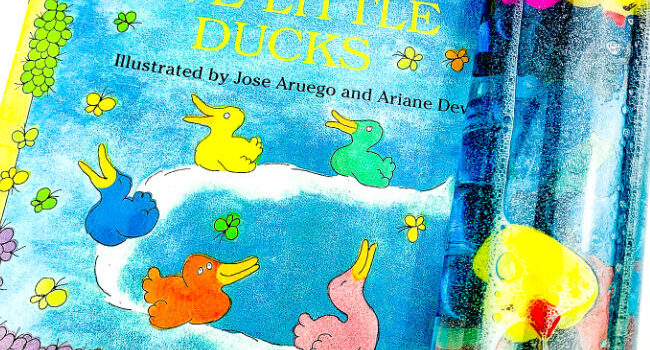
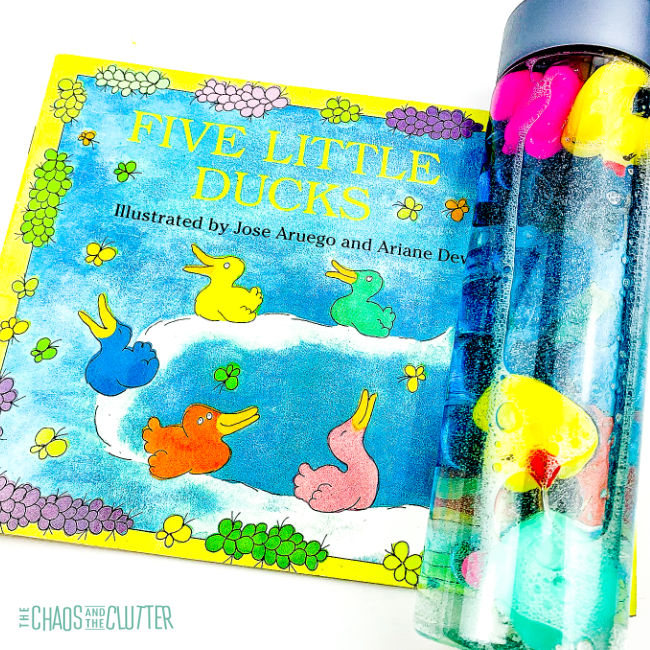
sensory bottle laying on the book 5 Little Ducks

By Sharla Kostelyk

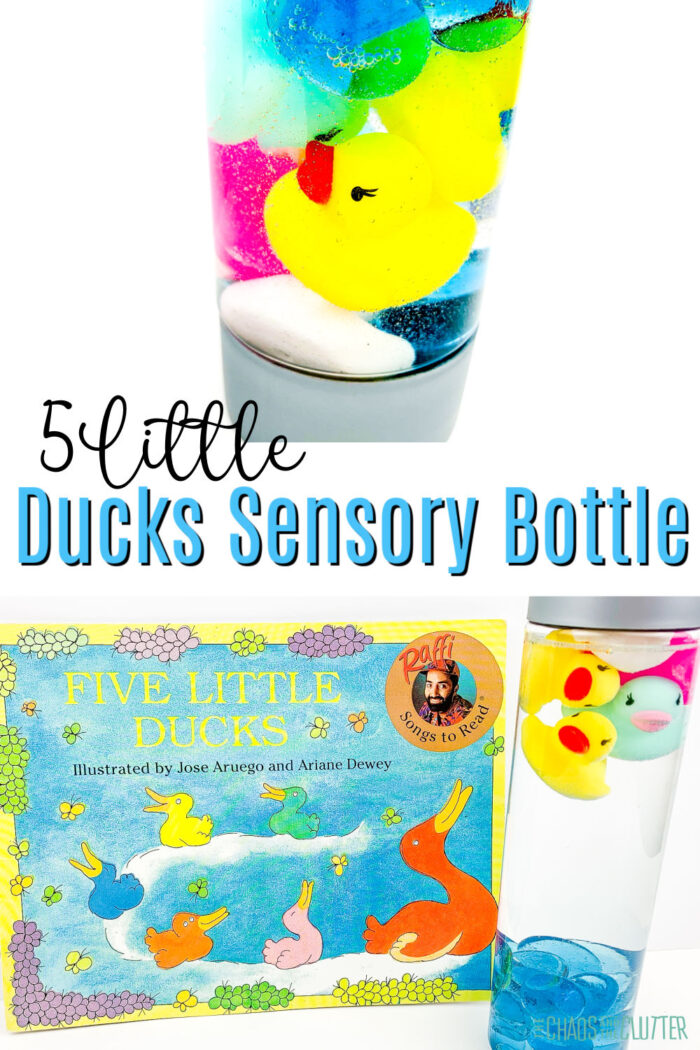
Give your little one a chance to have some fun as they learn with these cute 5 Little Ducts activities. Make your own duck-filled sensory bottle for your kids to play with as they enjoy the book. They’ll have fun using their different senses to play along as you read a sweet nursery rhyme book.sensory bottle with a rubber duck and blue beads in it next to a children's book

5 Little Ducks Sensory Bottle:

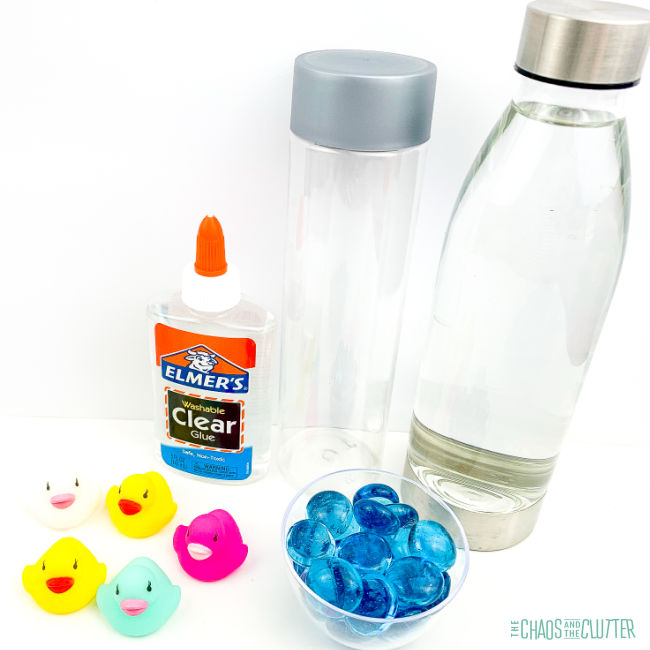
Supplies needed:

  • 16 ounce sensory bottle
  • 5 ounce bottle of Elmer’s Clear Glue
  • 5 small rubber duck toys
  • Blue glass stones/gems
  • Water

glue, two empty bottles, 5 small rubber duck toys, and blue beads

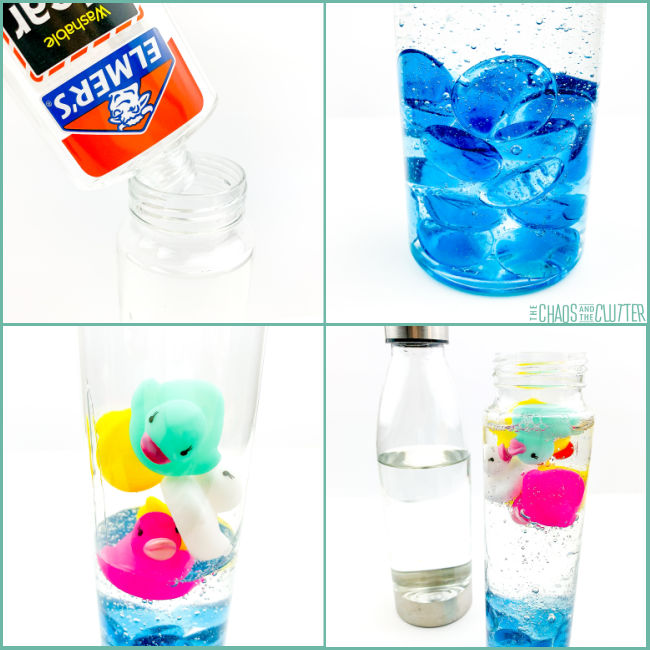
Instructions:

  1. Open the sensory bottle. Pour the whole bottle of glue into the bottle.
  2. Add the glass stones and gems to the bottom of the bottle, then place the ducks inside.
  3. Fill the bottle with water, leaving a little room at the top empty.
  4. Close the lid. Secure the lid with tape or glue, if desired, to ensure the bottle doesn’t leak.
  5. Shake the contents of the bottle until all the glue, gems, and ducks move around freely.

Note: You may have bubbles appear shaking the bottle for the first time. Allow the bubbles to settle and disappear after shaking.

glue, blue beads, small rubber duck toys, and clear bottles

5 Little Ducks Preschool Activities

This cute duck craft is the perfect way to have some fun as you read! That’s because this sensory bottle goes along with the story in the popular children’s book, 5 Little Ducks.sensory bottle laying on the book 5 Little Ducks

In the book, a mother duck patiently awaits Spring, when her five baby ducks – all grown up – return with their new families. Throughout the story, your preschooler will have the chance to practice counting and color recognition, making it a great way to reinforce the concepts they’re learning in school.

Read the book aloud to your kids or watch this YouTube read-along. 

And after you finish reading the story, you can continue the learning process as your little ones make and play with their own sensory bottle. Once the bottle is put together, they can:

  • Count the ducks in the bottle as they are reading, moving the bottle around.
  • Match the colors in the bottle to the colors in the book.
  • Watch the gems sink to the bottom while the ducks float to the top.

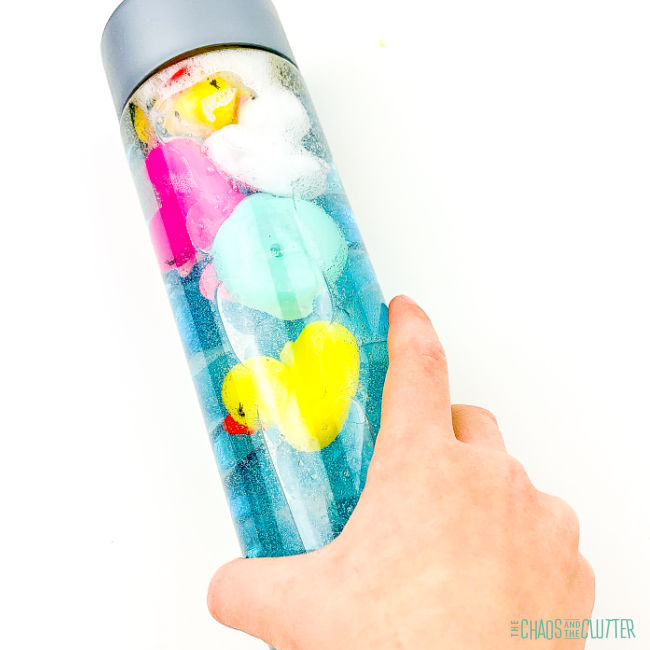
small hand holding a sensory bottle with blue water and rubber ducks in it

Other Activities to Correspond with the 5 Little Ducks Book and Song:

  • 5 Little Ducks Storytelling Sensory Tub
  • 5 Little Ducks Math Activities
  • Printable Preschool Number Line for 5 Little Ducks 
  • 5 Little Ducks Printable Pack
  • 5 Little Ducks Activities for Kindergarten
  • Felt Board for 5 Little Ducks Learning and Play
  • 5 Little Ducks Fingerplay
  • Count and Circle 5 Little Ducks Craft
  • Hands on Fun with the 5 Little Ducklings
  • 5 Little Ducks Nursery Rhyme Rocks
  • Printable Duck Puppets and Song

You may be interested in these other book related kids activities:

  • A Bad Case of Stripes Activities
  • Boom Chicka Boom Boom Activities
  • Click Clack Moo Cows That Type Activities

Filed Under: Crafts and Activities Tagged With: sensory bottles, sensory play

Easter Sensory Bottle

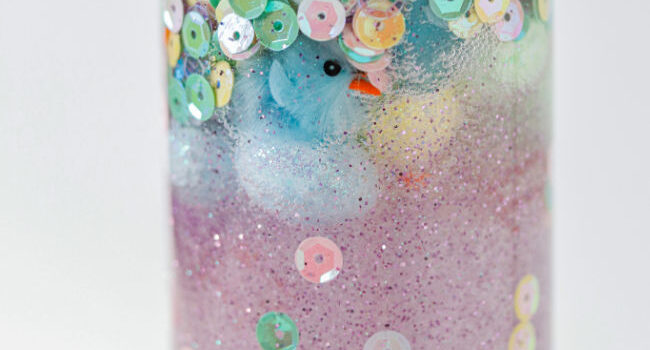
blue plush mini chick and pastel sequins in a bottle with clear liquid and glitter

By Sharla Kostelyk

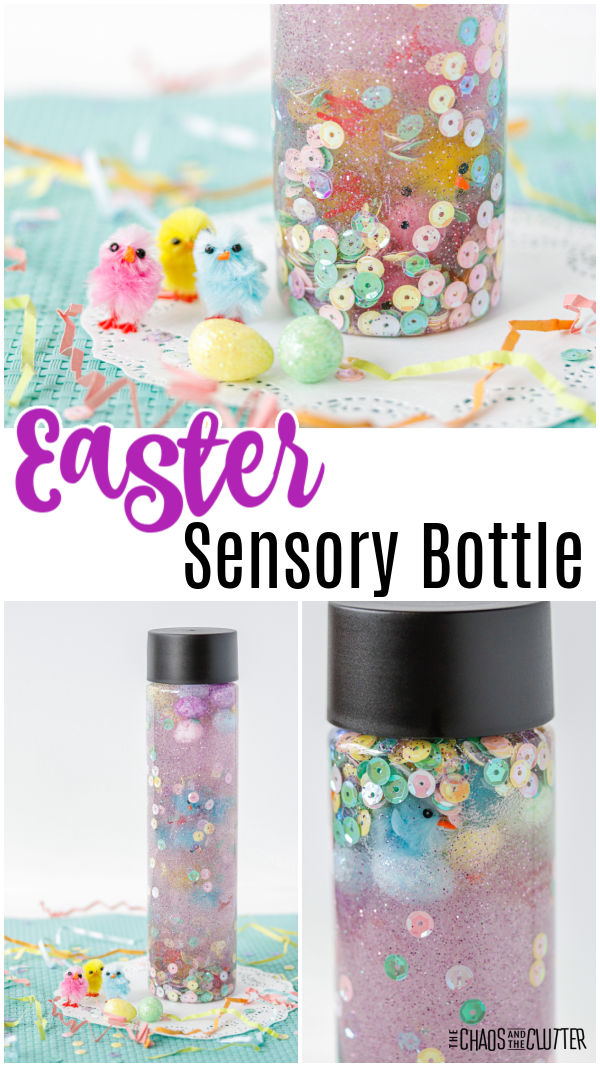
One of the simplest forms of sensory play for young children is a sensory bottle. And when you add holiday elements to your bottles, you have the perfect way to celebrate an occasion. This simple Easter sensory bottle features classic holiday elements, allowing your child to celebrate Easter and have a little bit of educational fun at the same time. clear bottle with sequins and glitter and eggs and chicks. Text reads "Easter sensory bottle"

Easter Sensory Bottle:

Supplies needed:

  • plastic water bottle (Voss bottles or craft store sensory bottle)
  • purple glitter
  • pastel baby chicks
  • mini coloured foam eggs
  • pastel sequins
  • clear dish soap (Dawn or LemiShine soap are good options because they have a thick consistency)
  • optional: Superglue or hot glue to seal the bottle cap 

Instructions:

  1. Pour the clear soap into the sensory bottle until it’s around 2/3 of the way full.
  2. Add the glitter, baby chicks, foam eggs, and pastel sequins to the bottle.
  3. Fill the rest of the container with water.
  4. If you plan on gluing the lid to keep the bottle from reopening, add hot or Superglue glue to the inside of the lid, then replace the lid on the bottle. Otherwise, you can simply put the lid back on.

Easter Sensory Bottle Play and Learning Activities

This sensory bottle is perfect for encouraging interactive play with young children. But keep in mind that your child should always be supervised by an adult as they play. Even if the lid is glued to the top of the bottle, it could come off. And since the pieces inside could be a choking hazard, it’s important to keep an eye on your child as they’re playing with their bottle.

Try these play activities to give your kids a chance to use their visual, tactile, and proprioceptive sensory systems as they learn:

  • Seek and find. Shake up the Easter sensory bottle and let your child search through the items as they float to find different elements inside. Ask your child what they see and let them point out the different pieces inside the bottle.
  • Count the eggs and chicks. As the eggs and chicks float around the bottle, let your child count each item to see how many eggs and chicks are inside.
  • Calm a busy mind. The Easter holiday can often cause sensory overload for young kids. Creating this Easter sensory bottle is the perfect way to calm your child when they’re feeling overwhelmed. Simply shake the bottle to mix up the elements inside, then let your child watch the pieces as they float around inside.

Some other Easter sensory activities:

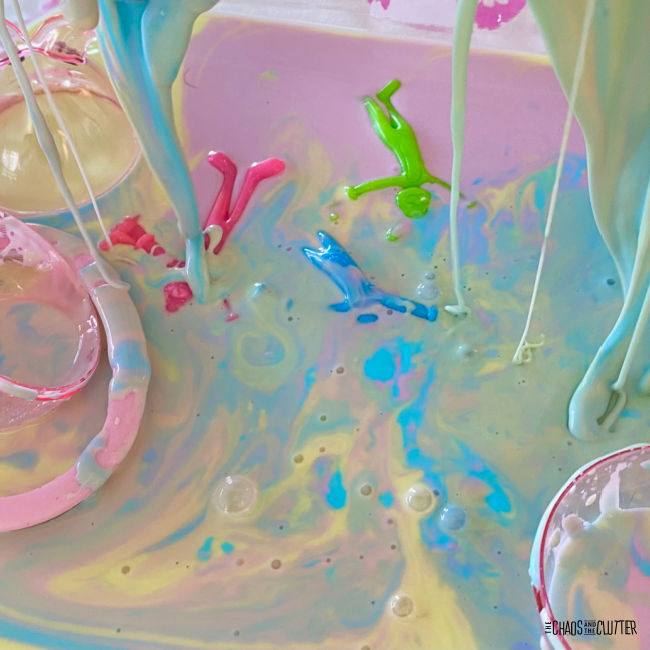
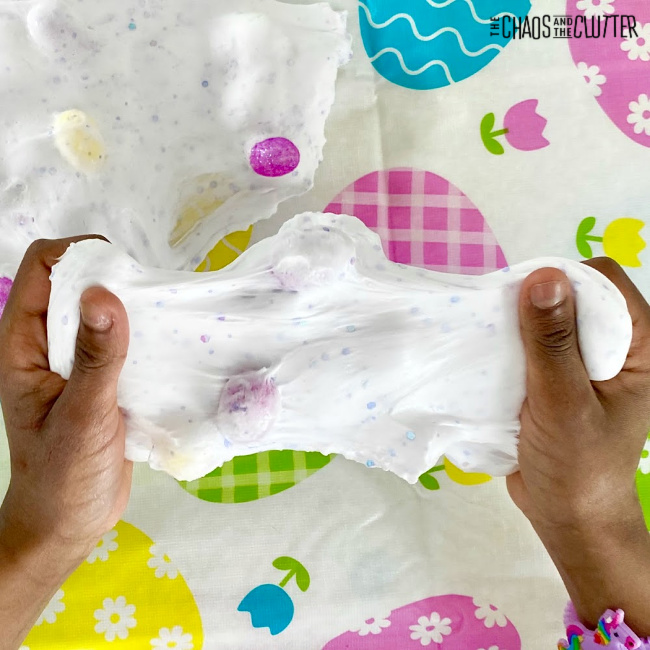
Easter Oobleckdrips of pastel colours of goo coming down into a sensory bin of oobleckEaster Fluffy Slime

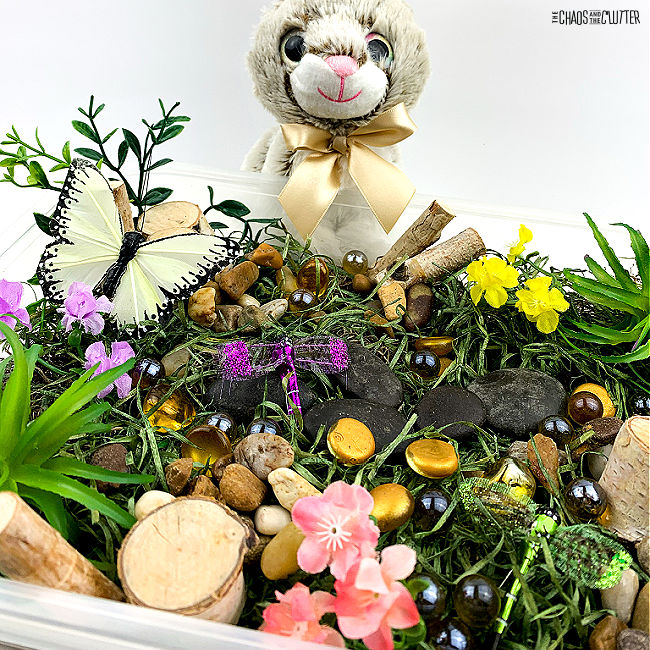
Nature Inspired Easter Sensory Binplush bunny sits by a sensory bin filled with moss, grass, and toy butterflies

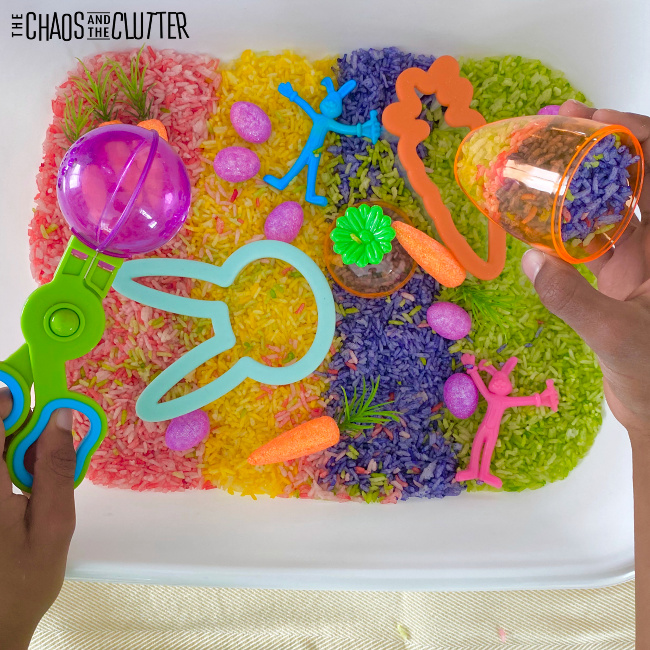
Eggs and Carrots Sensory Bin

Filed Under: Crafts and Activities Tagged With: sensory bottles, sensory play

I Spy Birds Sensory Bottle

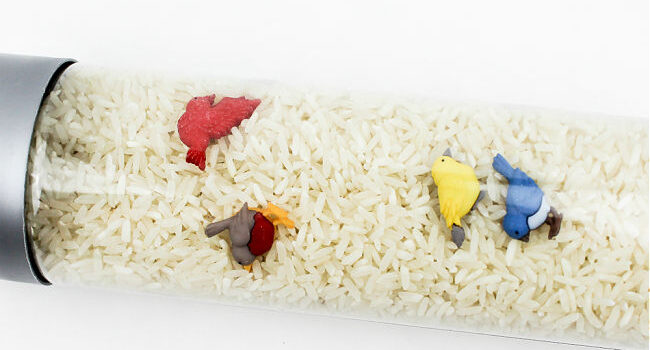
clear bottle on its side filled with dry rice and colourful bird buttons

By Sharla Kostelyk

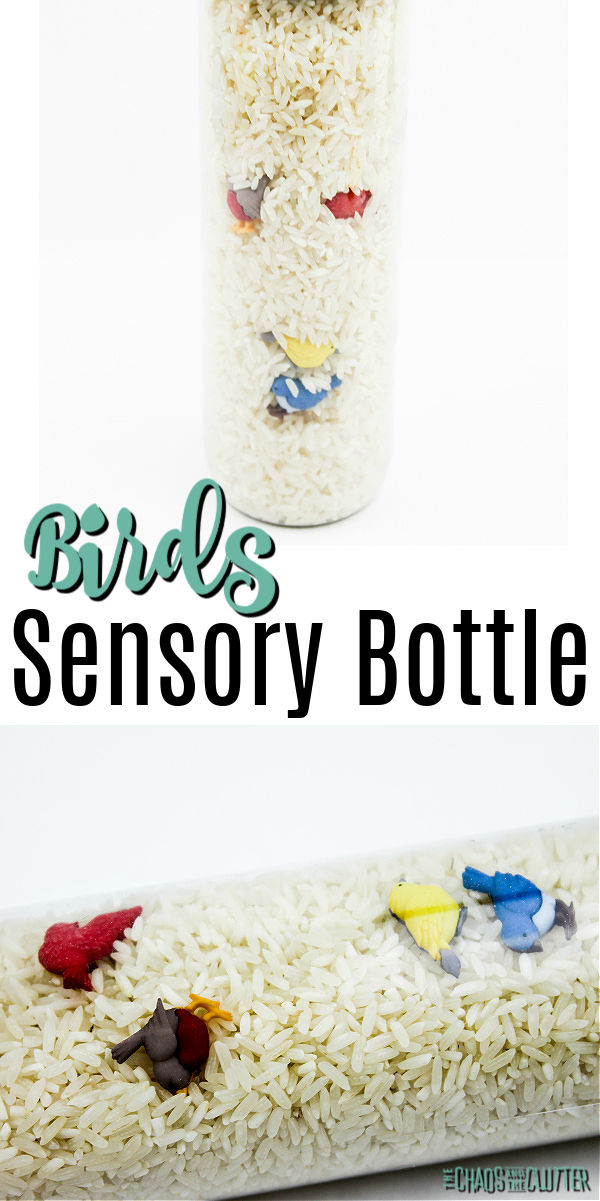
Kids can work on their visual perception while playing with this I Spy Birds Sensory Bottle. It is simple to create at home or for the classroom. clear plastic bottle filled with dry white rice and tiny toy birdsThis sensory bottle creates opportunity for kids to use their tactile, visual, and proprioceptive sensory systems. Sensory input is an important part of child development and emotional regulation. 
I Spy Birds Sensory Bottle:

Supplies needed:

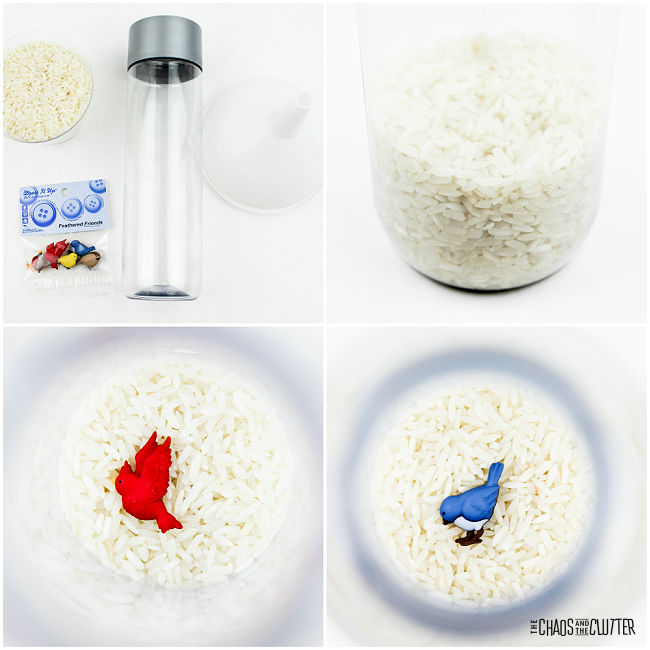
    • 16.9 oz. bottle (you can use a sensory bottle or Voss type water bottle)
    • white rice
    • funnel
    • bird buttons 
    • optional: hot glue

Directions:

  1. Using a funnel, add a small amount of rice to the bottom of the bottle.
  2. Place a bird button inside the bottle.
  3. Repeat the above steps until all the birds are placed inside the bottle. By layering the rice and birds, you can ensure they won’t all be in the same place. 
  4. Fill the remainder of the bottle with rice, but leave some space for the rice to move around. You can empty out rice if you feel the rice doesn’t move enough to allow the animals to be seen.
  5. Replace the lid on the bottle.
  6. If you want to secure the bottle, you can secure the lid with a hot glue gun.
  7. Give the sensory bottle to your child or students to explore.
  8. If you want, you can write a list of the birds for them to find.

collage of photos of making a sensory bottle with white rice and bird buttonsAllow the child to move and shake the rice around until they find all of the birds. They can even expand the activity by researching what type of birds they are.
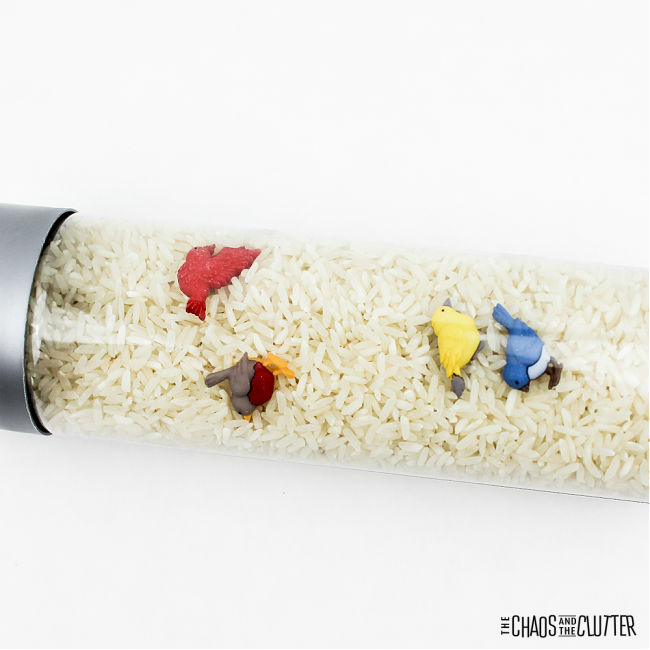
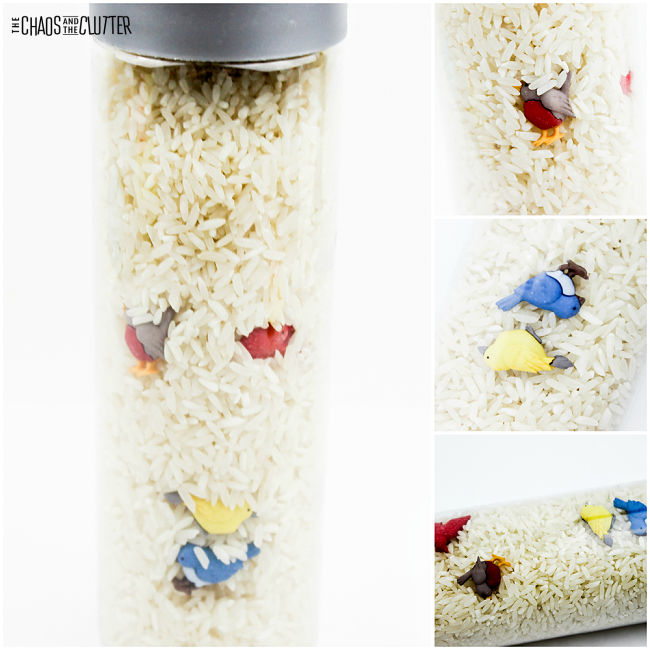
This activity would go well with a unit study on birds.clear bottle on its side filled with dry rice and colourful bird buttons

Expanding your study on birds:

  • Go for a nature walk to observe birds and listen to their songs.
  • Create bird notebooking pages.
  • Set out books on birds. 
  • Make a bird feeder and watch as birds come to eat.
  • Complete some bird worksheets.
  • Play the Birds of North America game.

a collage of four photos of a clear bottle filled with white rice and colourful bird buttonsAs with all sensory play activities, adult supervision should be used at all times. Even if you have secured the lid with glue, it is still possible to get it open and the bottle contains small parts which are choking hazards for children.
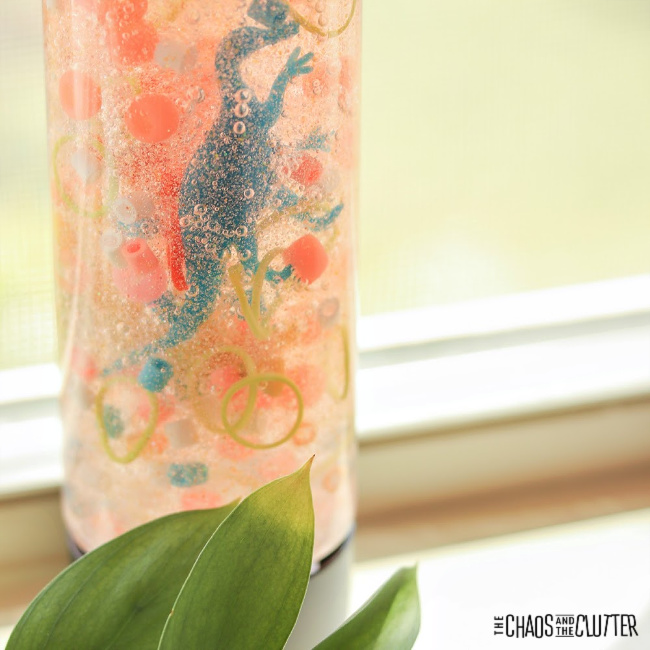
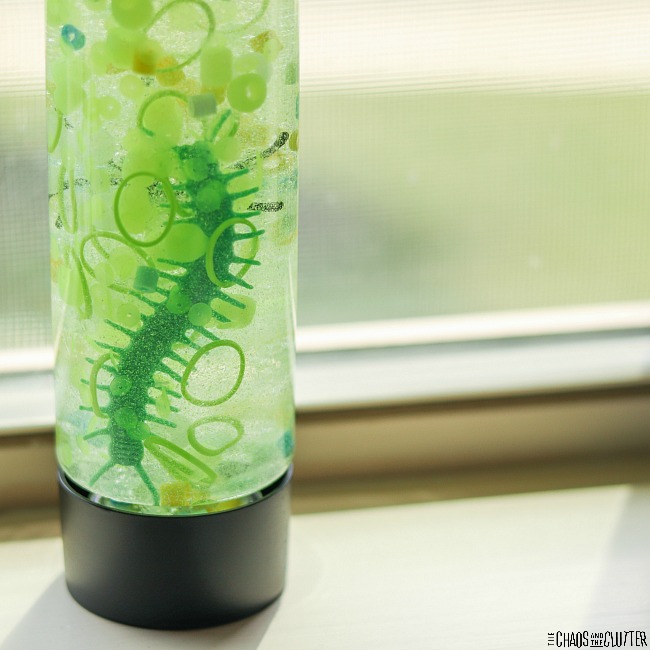
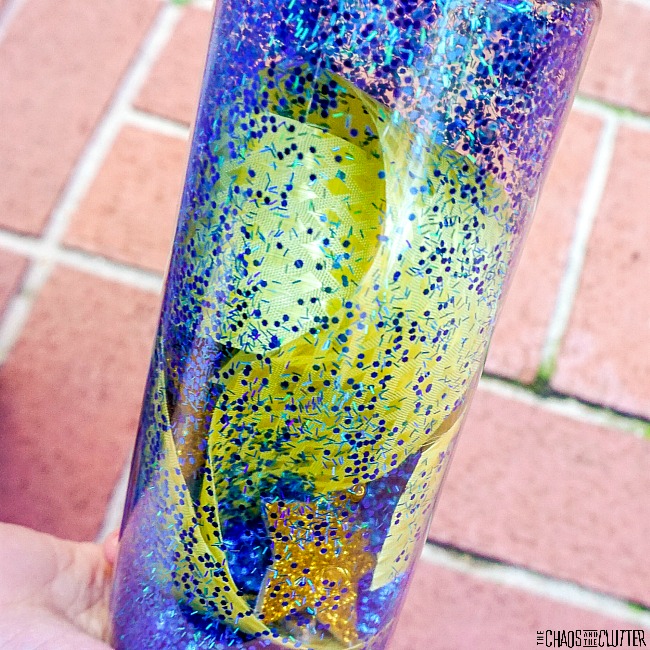
Are you looking for more easy sensory play ideas to make for your child or students? Join us for a five day email series on Sensory Activities and Solutions and get a free sample of our Sensory Play Recipes eBook.

Check out some of our other sensory bottles:

Dinosaur Sensory Bottle

Bugs Sensory Bottle

Van Gogh Starry Night Inspired Sensory Bottle

Filed Under: Crafts and Activities Tagged With: sensory bottles, sensory play

  • Page 1
  • Page 2
  • Page 3
  • Interim pages omitted …
  • Page 10
  • Go to Next Page »

Primary Sidebar

Categories

We are a participant in the Amazon Services LLC Associates Program, an affiliate advertising program designed to provide a means for us to earn fees by linking to Amazon.com and affiliated sites.

Copyright © 2026 • The Chaos and the Clutter • Site Design by Jeni @ The Blog Maven

Return to top of page

Copyright © 2026 · Chaos and the Clutter 2.0 on Genesis Framework · WordPress · Log in