• Skip to primary navigation
  • Skip to main content
  • Skip to primary sidebar
  • Home
  • About
  • Contact
  • Privacy + Terms
  • Affiliates

The Chaos and the Clutter

  • Facebook
  • Twitter
  • Pinterest
  • Google Plus
  • RSS
  • Email
  • School at Home
  • Sensory
    • Sensory Processing Disorder
    • Awesome Sensory Play Activities
      • Sensory Bins
      • Sensory Bottles
      • Sensory Bags
  • Family Games
    • Minute to Win It Games
  • Special Needs Parenting
    • Childhood Anxiety
    • Reactive Attachment Disorder
    • Sensory Processing Disorder
  • Store
  • Course Login

Sharla Kostelyk

7 Things No One Tells You About International Adoption

By Sharla Kostelyk

Before we adopted internationally, we had adopted three times. We had already experienced transracial adoption and special needs adoption and to some extent, we thought we knew what we were doing. We didn’t expect there to be too many surprises. Were we ever in for a shock!
7 Things No One Tells You About International AdoptionImage Copyright: / 123RF Stock Photo

I am aware that every situation is different and there may be things on this list that do not apply to your circumstances. I know that some of these could also apply to other types of adoption. I have compiled this list through a combination of my own experiences and the conversations I’ve had with many other adoptive moms.

In no particular order, here are the things that no one tells you about international adoption:

1. It might be just as hard (or harder) for you to attach to your child than it is for them to attach to you.

There are countless books and articles on promoting attachment with your newly adopted child but the majority of those focus on how to get the child to attach to you. Attachment is of paramount importance in adoption but what few people talk about is that attachment may not come naturally for you, particularly when adopting an older child.

You may even find yourself resenting this child that you have waited for and longed for and prayed for. You may find yourself wishing for the life you had before the adoption. You may find yourself having a hard time even liking this little person who has taken over your home and may be displaying difficult behaviours. This then can lead to guilt and helplessness.

Did you know that there is such a thing as Post Adoption Depression and that not only is it real, but it is as common as Postpartum Depression? Post Adoption Depression can make attachment to your adopted child even more difficult.

I hope that just by identifying these things, I can help others who feel them know that they are not alone and that having these feelings does not make them a bad parent.

For me, attachment came instantly with the children who were placed with us as babies and it even came instantly with one of our internationally adopted children even though they were considerably older, but it took more time with the other. It was something I wrestled with and spent far too much time feeling guilty about. I wish someone had told me that it was perfectly normal and didn’t make me a bad person.

2. Your kids will not be grateful.

Your child may well have needed a family. They may have had a very bleak future had you not adopted them, but this does not mean that they will be thankful or express gratitude. In fact, they may express the exact opposite. They may hate or resent you for taking them from their home, their culture, their language, and everything that was familiar.

They may (or may not) initially appreciate things like clean drinking water, abundant food options and safety, but the novelty will wear off quickly and you will likely soon find that they are complaining about the food just like any other child their age in our society would.

Do not expect gratitude from your child about being adopted. They did not ask for the life they have. If given the choice, they would most likely choose to not have had the circumstances that brought about the necessity of their adoption in the first place.

3. People will judge you.

I know that people judge others for all kinds of things, but for some reason, international adoption seems to bring out the naysayers.

During our adoption, our case was in the media spotlight and we were accused of all kinds of not-so-kind things, but even after the media attention died down, there were strangers, acquaintances and even some friends and family who felt the need to have their objections and opinions heard.

Among the most common was being angry that we wouldn’t just adopt the kids in our own country that need homes (we had done that three times already, but even if we hadn’t, the kids in other countries who need families are no less deserving of having a family than the children here). Other common comments were in regards to adopting trans-racially, spending money on the paperwork for the adoption when we could have given that money instead to the country our children were born in, and just adopting because it was trendy (that one is laughable and counter to all the statistics available!).

While I could write an entire article on each of the objections we heard and my response to those, the point of this article is to inform those considering adoption that they are likely to have this happen to them as well. We lost friends. It hurt.

And of course, then there are the hilarious questions we hear from strangers when we go out in public!

4. You will sometimes question if you did the right thing.

Since completing our international adoption more than five years ago, we have continued to educate ourselves about ethics in adoption and more specifically, the adoption ethics in the country we adopted from and this has sometimes caused us to wonder if we did the right thing.

Also, our entire family, including our other five kids, have been forever changed due to some of the challenges that have come into our home due to our internationally adopted children’s attachment and trauma issues. It has not been easy and sometimes we have questioned if we did the right thing by our other kids by taking this on. That’s a pretty hard thing to admit to.

I do, however know from other moms who have opened up to me that those feelings are not uncommon. It’s okay to question if you did the right thing.

Most days, I look at our kids and the tremendous progress they’ve made and all the potential they have and the opportunities ahead of them and I am thankful.
Things No One Tells You About International AdoptionImage Copyright: / 123RF Stock Photo

5. International adoptions are not necessarily closed adoptions.

People express to me often that one of the reasons they are considering international adoption as opposed to domestic adoption is that they do not want ongoing contact with birth family. It is a myth that international adoption means that it is a closed adoption. While some international adoptions are closed on paper, many of the adoptive families I know have some form of contact with the birth families or orphanages in their child’s home country.

While there are certainly circumstances where any amount of openness in the adoption would be harmful for the child, in many cases, having ongoing contact with birth family can be a positive.

I don’t want to share much of our story in regards to this because the story belongs more to my children than to me, so I will speak in generalities. I can say that I’ve been surprised at the number of families that have found a way to have contact with their child’s birth family even in international adoption.

In international adoption, the children adopted tend to be older, therefore, some have memories of time spent with birth family. Like all children, they love their birth family and once they are far away in another country, that love does not end. This can cause them to worry. Contact through letters or pictures or even e-mail or phone calls when possible can ease some of that worry. Contact with birth family can answer questions your child has and can help them to feel connected rather than having that tie completely severed.

6. RAD, PTSD, FASD, and SPD could be a reality for you regardless of where you adopt from, how old your child is at the time of the adoption, and what background information you are given.

Another thing that is often expressed to me by those who are interested in pursuing international adoption is that they are trying to avoid the likelihood of their child having FASD. (FASD is fetal alcohol spectrum disorder and occurs when a mother consumes alcohol during her pregnancy.) While there are countries where the likelihood of FASD is lower than in North America, the effects of malnutrition or early trauma on the developing brain can be just as devastating. There are also countries where the risk of FASD is even higher than it is here.

RAD is Reactive Attachment Disorder and although many are aware of the potential for this in adoption, they are sometimes told things like that it does not happen with children from a particular country (I fell for that one!) or with children who are below a certain age (others I know have fallen for that one). RAD is a very serious illness that affects an entire family and is not always “curable”.

PTSD stands for Post Traumatic Stress Disorder. Until we were parenting two children with it, I had no idea that children could have this.

SPD stands for Sensory Processing Disorder and is extremely common in all adoptions for a variety of reasons.

Just like when someone has a biological child, there are no guarantees in adoption that your child will be healthy. Even in cases where the paperwork says your child was not prenatally exposed to drugs or alcohol or was not abused or was not neglected and has no special needs, this may not be the case. In international adoption, even the age that the paperwork says your child is may not be accurate.

It is best to research common adoption issues prior to any adoption and go into it with your eyes wide open.

7. You will question your sanity and your ability regularly.

Parenting a child that comes from another country, another culture, who may have a trauma history (beyond the obvious trauma of losing their birth family and being taken to another country where everything is unfamiliar) is not for the faint of heart. There will be days when you question your sanity. There will certainly be days where you question if you are the right person for this job.

I question my qualifications for this daily. I know that God put them here for a reason and that He thinks that I am the right mom for them, even if I sometimes often doubt my abilities.

While these are the hard things that no one tells you about international adoption, there are also the 7 things that no words can truly express:

  • how much you will grow as a person
  • that you will find strength you didn’t even know you possessed
  • how in fighting for your child, you will also find yourself admiring them for all they have gone through
  • how in your abilities being stretched, your heart will be stretched also
  • how one day you will wake up and accept that your new normal is okay too
  • that children are more resilient than we ever dreamed possible
  • how you will realize that helping this child to heal is part of your purpose here on Earth.

Join me for a free 5 part email series, Little Hearts, Big Worries offering resources and hope for parents.

Helping a Child Through Trauma

Recognizing the Signs of Reactive Attachment Disorder

What I Wish You Knew About Parenting a Child with RAD
10 Strangest Adoption Questions We’ve Been Asked

What Does Behaviour Have to do with Sensory Systems?

Filed Under: Adoption, Special Needs Parenting

Ghost Hands Campfire Fun

By Sharla Kostelyk

I’m not sure if moms and dads out there are going to hate me or thank me for introducing them to ghost hands! I’m not sure if I should thank my friend Christie for introducing it to my kids but I’m paying it forward by introducing it to the world!

Ghost Hands - the most fun you can have around a campfire!I warn you now. It’s messy. Sticky and messy. And yuck. But fun. So much fun!
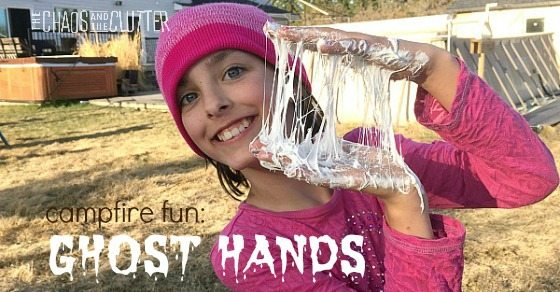
We were over at our friends’ (and neighbours) house. It was the first warm Sunday afternoon of the Spring and we were enjoying a visit by the campfire after an outdoor spaghetti dinner. The sounds of approaching summer could be heard over the sound of the dirt bikes and quads the kids took turns riding. Later, the kids made s’mores while the adults visited.

Christie asked my kids if they had ever heard of “ghost hands”. They had not and she kindly decided to teach them. I wasn’t too thrilled with that at first since it’s so messy but it turned into the most fun our family has had in a long while.

The kids weren’t the only ones who were laughing! If you can get past the messy factor, you’re going to love this one! I know there will never be another campfire where my kids don’t ask to do ghost hands!

ghost hands…the most fun that can be had around a campfire!Ghost hands are about as cheap and easy as family entertainment gets!
You only need one item, marshmallows. You could of course do it anywhere but I would HIGHLY recommend you only do this outside!

This doesn’t have to be a campfire activity, but it does make sense to have it be because then everyone is already outside, having fun, and there are often marshmallows on hand to roast over the fire or to make s’mores with.

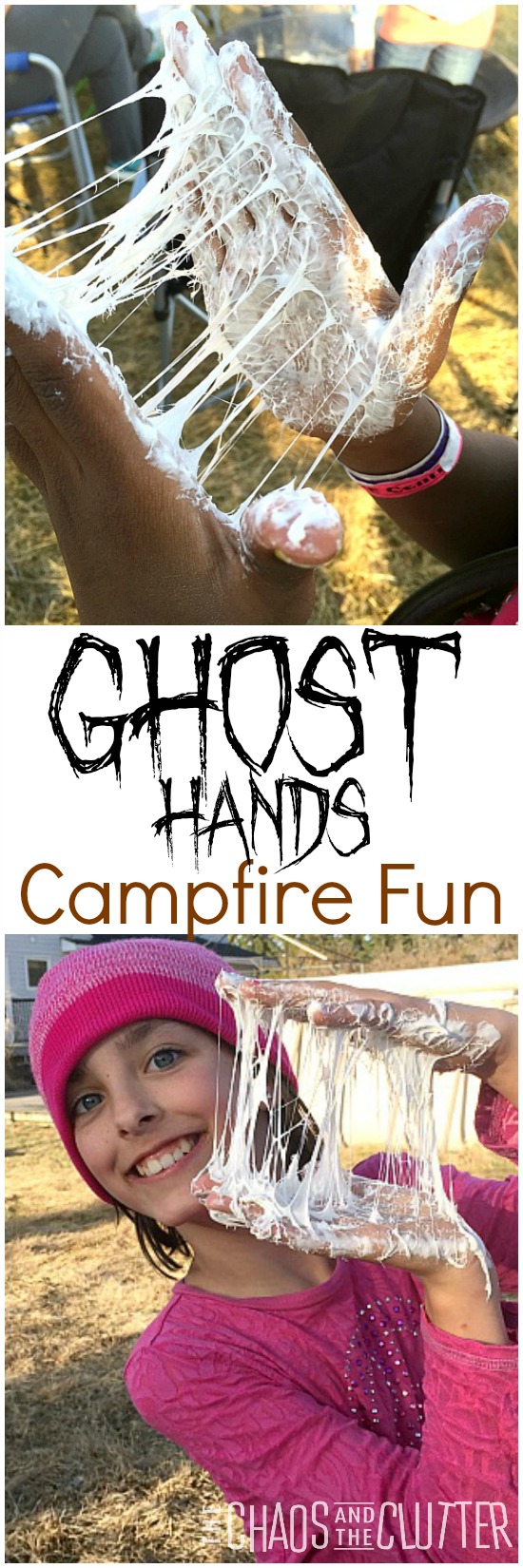
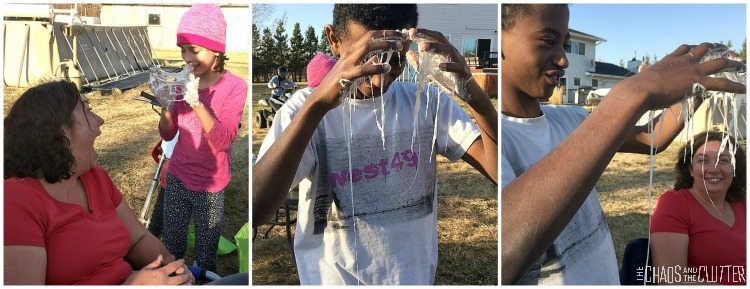
The ghost hands process is very straightforward. Take one large marshmallow and start to work it between your hands. Work it until it is squishy and just keep smooshing it. It will eventually get to a point where when you pull your hands apart, strings of ooey-gooey marshmallow mush will connect the hands. That’s when you know you have achieved Ghost Hands!

Now it’s up to you what you do with your ghost hands. You can play with the mess you’ve created and enjoy the sensory experience or you can chase your parents, siblings and friends around the yard, pretending that you are going to touch their hair with your ghost hands if you catch them!

You can put your hands down on the grass and the grass will stick to them, creating a sea creature hands type of effect. You can try to catch mosquitos in the white web you’ve created. There’s no end to the fun that can be had with just that one marshmallow! If you want to, you can even lick your hands (eww)!

Ghost Hands FunThese pictures were taken before the kids got the idea to chase the adults around the yard, gooey hands outstretched, reaching for our hair! You can see Christie’s delight though in having taught my kids something that will surely be creating messes for me for years to come!
Note to parents:

This washes off easily. Just bring out a basin of warm, soapy water and your kids will lose their ghost hands and you won’t have to worry about them making sticky handprints in the house!

I wasn’t sure how this one would go over with some of our SPD (sensory processing disorder) kids but they loved it and there were no issues.

Join our free 5 part email series Sensory Solutions and Activities and get our Sensory System Behaviours Easy Reference Cards.
Minute to Win It Family Fun Night

Trampoline Games and Other Fun Trampoline Ideas

Waiting Rooms: a Parent’s Survival Guide

Filed Under: Crafts and Activities, Sensory Tagged With: sensory play

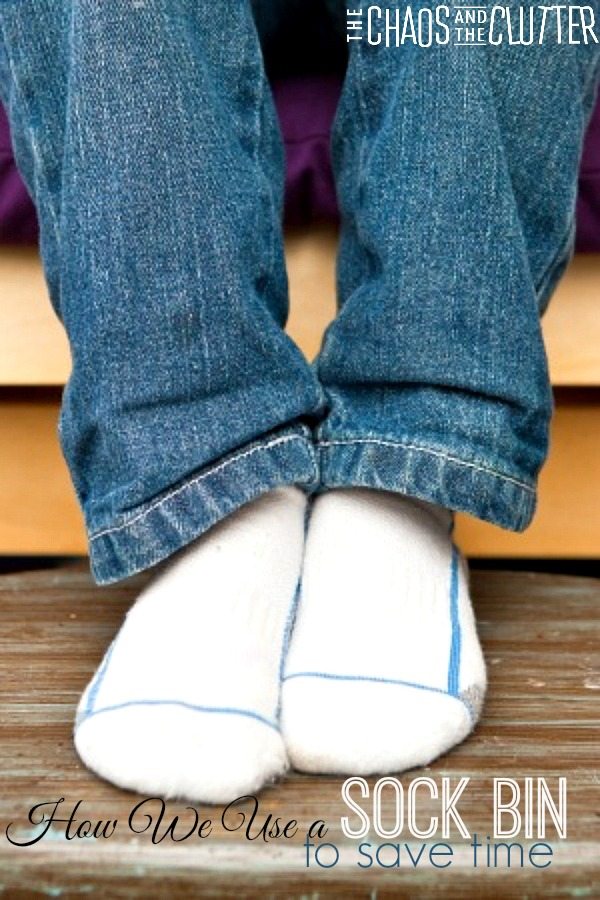
How We Use a Sock Bin to Save Time

By Sharla Kostelyk

Have you ever had those times when you are trying to get out the door for an appointment that you are late for and one of the kids says they need to go to their room and get their socks? Frustrating, isn’t it?!

This simple parenting trick has saved time and stress in our house. It’s one of those life hacks that makes me wonder why I didn’t start it sooner!Image Copyright: / 123RF Stock Photo

I had many of those times over the years and finally came up with a solution that solves that problem as well as another problem we were having. The other issue was that no matter what I did, I had some kids who seemed to have an abundance of socks in their drawer while others were often complaining that they had no clean socks.

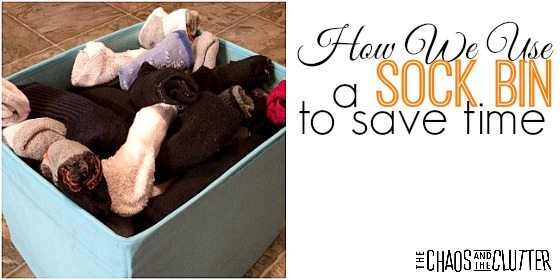
Enter the sock bin. The sock bin is just what it sounds like. It’s a bin that I keep by the back door because that’s where the kids’ shoes are and that’s the door we usually go out of and it is filled with socks.

How the sock bin saves time:

  • When putting away socks, I don’t have to put socks into kids’ drawers. All the socks go into one place. No more figuring out which socks belong to which child. No more going up and down the stairs to put them into kids’ rooms.
  • No running to rooms to find socks. The socks are located right by the shoes near the door that we go out. They can sit down right there and put the socks on their feet before slipping their shoes or boots on.
  • I can see at a glance if we are running low on socks. There is also not an issue anymore with one child not having socks and another having extras. All the socks in the sock bin are communal socks, so there is no arguing over whose are whose.

It is really easy to set up your own sock bin. You can use a large Rubbermaid container, a wicker or fabric bin that slides into an organizer unit, a toy box, a plastic or metal trash bin, hidden inside a bench seat, or any other holder that will suit the space available. Be sure to place it near the door where you most commonly exit your home. Next, gather up all the clean socks, dump them in and you are ready to explain the new sock system to your kids!

How We Use a Sock Bin to Save Time

This simple parenting trick has saved time and stress in our house. It’s one of those life hacks that makes me wonder why I didn’t start it sooner!

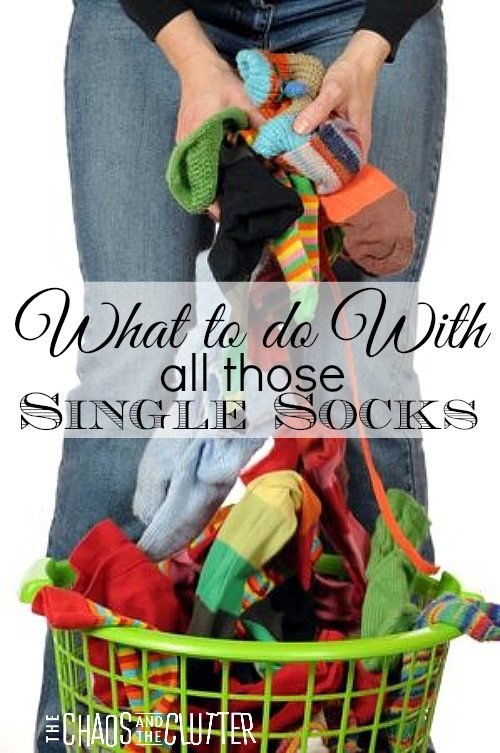
And what about those socks that despite my best efforts still lose their pair or end up with holes in them? Here are some of the things we do with all those single socks.

If you are looking for more time-saving and helpful tips, you may be interested in saving my Parenting board on Pinterest.

Follow Sharla Kostelyk’s board Parenting on Pinterest.

What to Do with All Those Single Socks

Bedtime Tips for Kids of All Ages from Experienced Moms

Time Saving Cooking Solutions for Busy Moms

Does Your Washing Machine Stink? Get Rid of the Smell in 3 Easy Steps

Filed Under: Parenting in the Chaos

Paint Chip Sight Word Busy Bag

By Sharla Kostelyk

Busy bags do not have to only be enjoyed by pre-schoolers. They are a great tool for elementary aged students for reenforcing learning concepts and creating a quiet activity for them to do on their own.

Sight Words Busy Bag

Busy bags are one of the things I always bring with me in my little waiting room survival kit. They are also a good tool for the times when I need to work one-on-one with one of the kids and need something to occupy the other ones.

This particular busy bag is not only great for reenforcing the current sight words or spelling words that are being learned, it also costs nothing to make.

Materials needed:

  • paint chips (or card stock cut into rectangles)
  • permanent marker
  • large hole punch
  • medium or large resealable bag

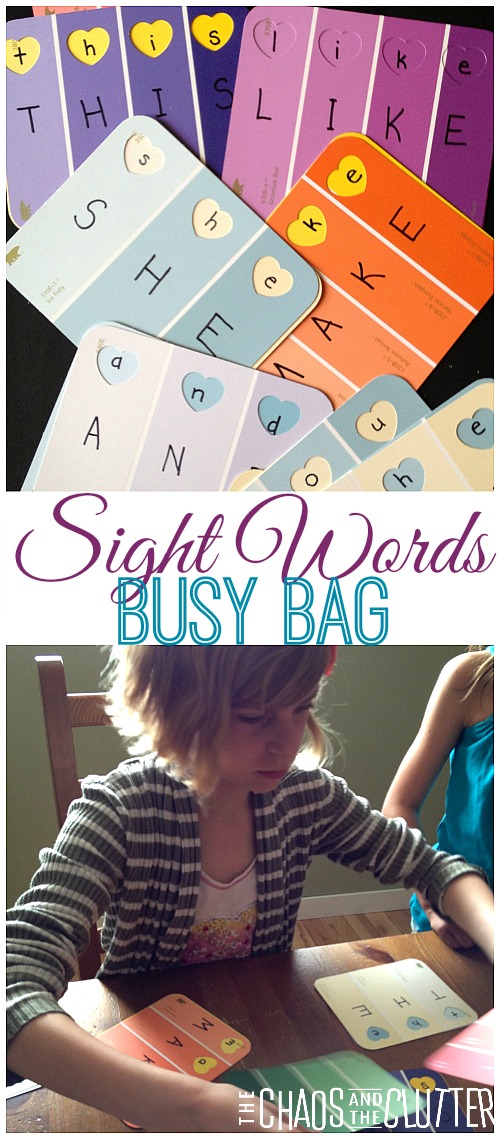
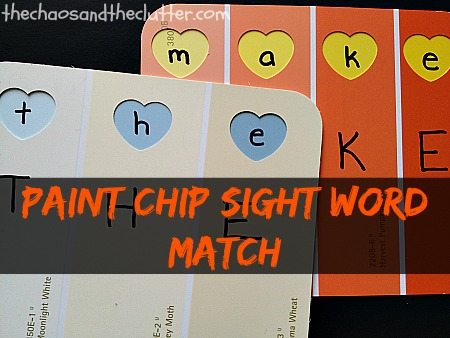
In order to create these sight word cards, you will need two paint chips per word. Punch large holes in one of them. I used a heart shaped punch, but regular squares or circles would work just as well.

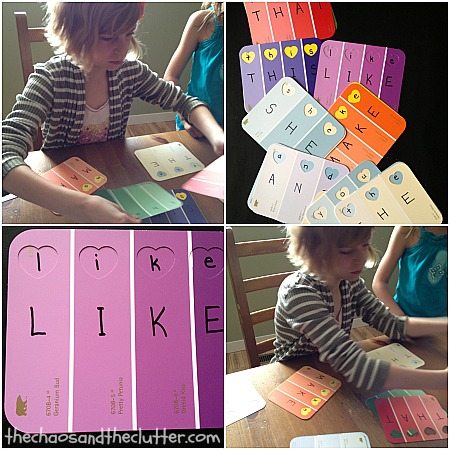
Next, lay the card with the holes punched in it on top of the other card so that you will be able to line up the words properly. Write lowercase letters on one card, through the holes made, and uppercase letters of the same word on the other. Place them all into a resealable bag for easy storage. This also makes them easy to transport.

Paint Chip Sight Word Match

The activity is much more challenging if you use different colours of paint chips for the two parts of the word so that the kids have to match them up based on the letters and not based on colour.

It’s a good idea to make some blank cards while you have the supplies out so that you are able to add more words as your child begins to expand their sight word repertoire.

Paint Chip Sight Word ActivityBusy Bags with Paint Chips

Waiting Rooms: a Parent’s Survival Guide

Teaching Strong Sentence Writing

If you are looking for more busy bag ideas, you may be interested in following my Activity Bags board on Pinterest.
Follow Sharla Kostelyk’s board Activity Bags on Pinterest.

Filed Under: Busy Bags, Crafts and Activities, Homeschooling

What to do With Old Socks

By Sharla Kostelyk

Do you have a pile of single socks because their pairs were eaten by the dryer or got lost or got a hole in them? I certainly do!

I pay the kids 10 cents a pair to find matches for them. They are surprisingly motivated by this so sometimes, the level goes down, but inevitably, the pile grows again and the basket I keep them in threatens to spill over. I used to go through them and find the ones that I haven’t seen the matches for in the longest time and throw them out. It always made me feel like I was wasting perfectly good socks to do that though, so I’ve come up with some other uses for them and now, none go to waste!

Do you have piles of unmatched socks? These household helps, crafts, games and activities are great ways for them not to go to waste!Image Copyright: / 123RF Stock Photo

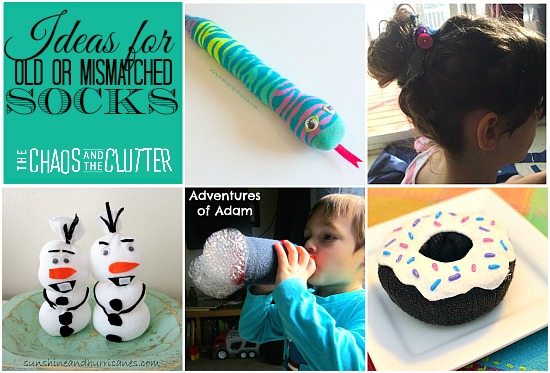
What To Do With Old Socks:

-use them for rags.

-slip a sock onto the bottom of bottles of oil so that they don’t leave rings in your pantry.

-fill with rice and tie to make a homemade stress ball.

-use an elastic to secure a sock onto a yardstick or broom handle and use it to dust hard to reach places like ceiling fans and high ledges.

-put ice or ice packs in them.

-stop drafts by filling socks with other socks, rice or a filler and use them under doorways.

-wear them mismatched since that’s the style anyway!

-use them to make sock buns.

-turn it into an aromatherapy pillow.

-make an adorable no sew snake sock stuffie.

-make play donuts using men’s socks.

-do a fun math activity and play Socks in the Box.

-sew a sock monkey. Or take it up a notch and make a superhero sock monkey.

-make a hobby horse worthy of giving as a gift.

-make a bubble snake. These are really fun for the summer months!

Ideas for Old or Mismatched Socks

-sew an animal baby rattle.

-make puppets. Here’s a few examples: fox puppet, Olaf puppet, adorable and simple horse puppet, sock monsters, and silly sock puppets.

-make an Olaf snowman.

-make them into sock animals. The fuzzy owl is so cute!

-put on some music and do some sock mopping with your kids.

-make a sock pumpkin craft in the fall.

-play sock snowballs just for fun.

-make sock stuffed toys.

–craft with socks.

What about you? What do you do with your old or mismatched socks?

Filed Under: Crafts and Activities

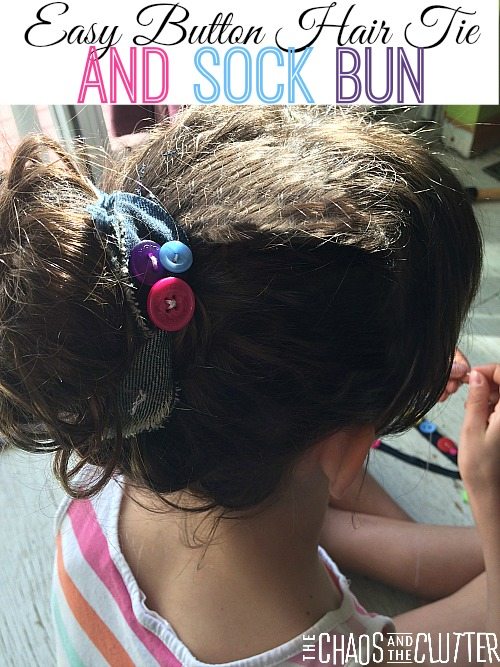
Easy Button Hair Tie and Sock Bun

button hair ties

By Sharla Kostelyk

Have you ever wondered how to make a sock bun? This is the easiest way to do a sock bun. I’ll even walk you through it with a video.

Easy Button Hair Tie and Sock Bun (includes a video on how to make a sock bun)

My girls, particularly the older two are obsessed with sewing and designing. Miss Optimism, who is the oldest, can take a tablecloth and turn it into a pleated skirt in less than an hour!

Granola Girl is just starting to express an interest and only hand sews at this point, but she is the one who came up with this cute idea for a fabric hair tie. No jeans in the house were safe at that point as she wanted to make them for all of her friends!

For sock buns, you can use socks that have holes in the toes or a sock that’s lost its mate. This is perfect for reusing what would otherwise have been thrown out.

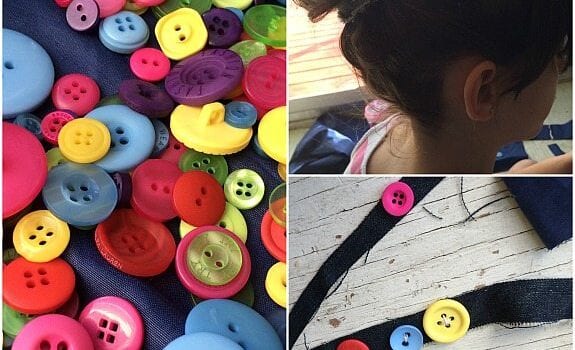
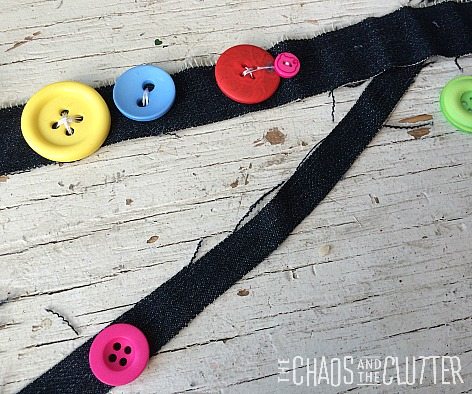
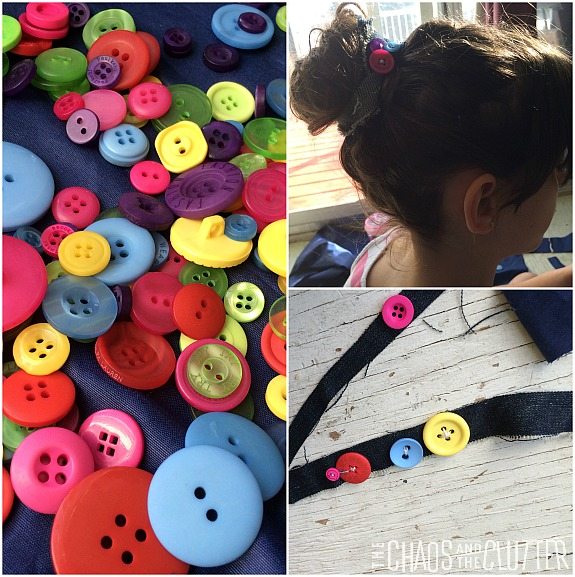
This button hair tie couldn’t be easier to make. All that is needed is an old pair of jeans, some thread and a few buttons.

Cut off a strip of fabric from the jeans and sew three (or more) brightly coloured buttons onto it. That’s it. You now have a cute hair tie.

easy button hair tieThis is also great practise for sewing buttons!
The sock bun is a bit more complicated to explain, so I enlisted the help of Granola Girl and Miss Optimism to make a short video demonstrating exactly how to make a sock bun.

How to make a sock bun:

  1. Cut the toe end of the sock off and roll it up from the other side to create the sock bun.
  2. Make a high ponytail in the hair.
  3. Slip the sock bun onto the base of the ponytail.
  4. Spread the hair overtop and secure with another hair elastic.
  5. Gather the remaining hair and wrap around, securing with bobby pins.

All that is left at this point is to wrap the button hair tie around the sock bun to cover the stray pieces and give it a finished look. You can tuck the ends underneath or leave them out.

Since this project uses old jeans and old socks, preferably ones that are ripped or stained that might otherwise end up in the trash and old socks, the only cost is the buttons and thread, so this is a very frugal activity as well as a small lesson in re-using.

button hair tiesMy girls have been proudly wearing them everywhere. Granola Girl says she feels like Rapunzel because when her hair is in the sock bun, it looks like she has so much hair!
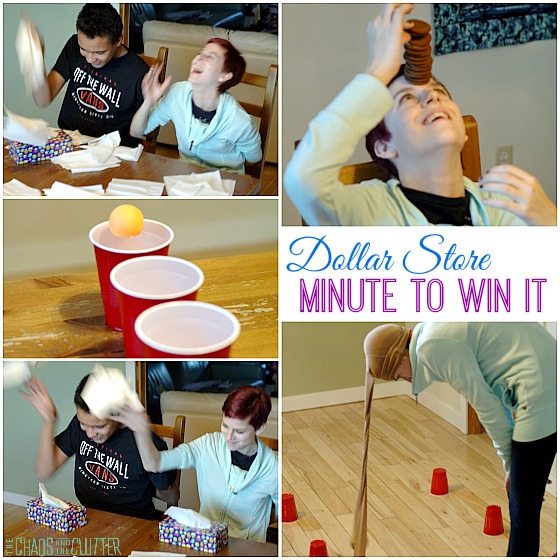
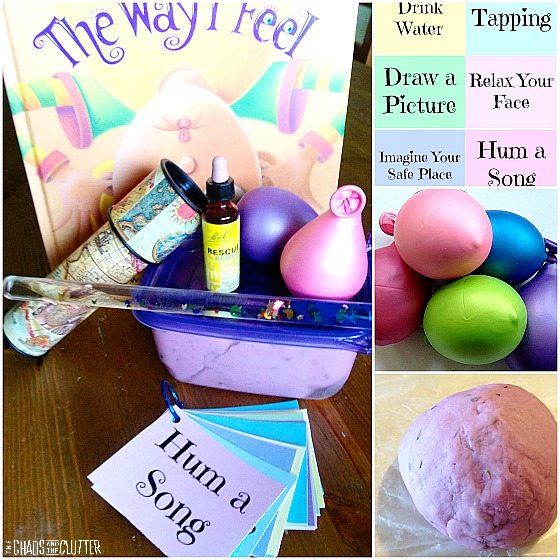
Check out these other great ideas:

Dollar Store Minute to Win It Games Dollar Store Minute to Win It party

Create a Calm Down Kit for Your Child 

Filed Under: Crafts and Activities

  • « Go to Previous Page
  • Page 1
  • Interim pages omitted …
  • Page 86
  • Page 87
  • Page 88
  • Page 89
  • Page 90
  • Interim pages omitted …
  • Page 128
  • Go to Next Page »

Primary Sidebar

Categories

We are a participant in the Amazon Services LLC Associates Program, an affiliate advertising program designed to provide a means for us to earn fees by linking to Amazon.com and affiliated sites.

Copyright © 2026 • The Chaos and the Clutter • Site Design by Jeni @ The Blog Maven

Return to top of page

Copyright © 2026 · Chaos and the Clutter 2.0 on Genesis Framework · WordPress · Log in