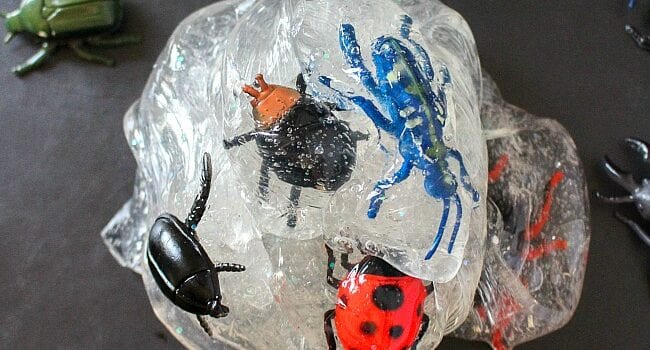
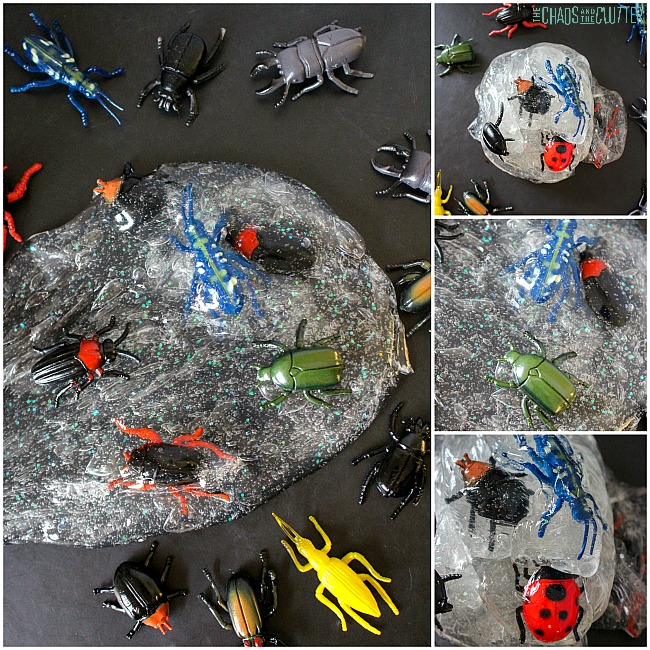
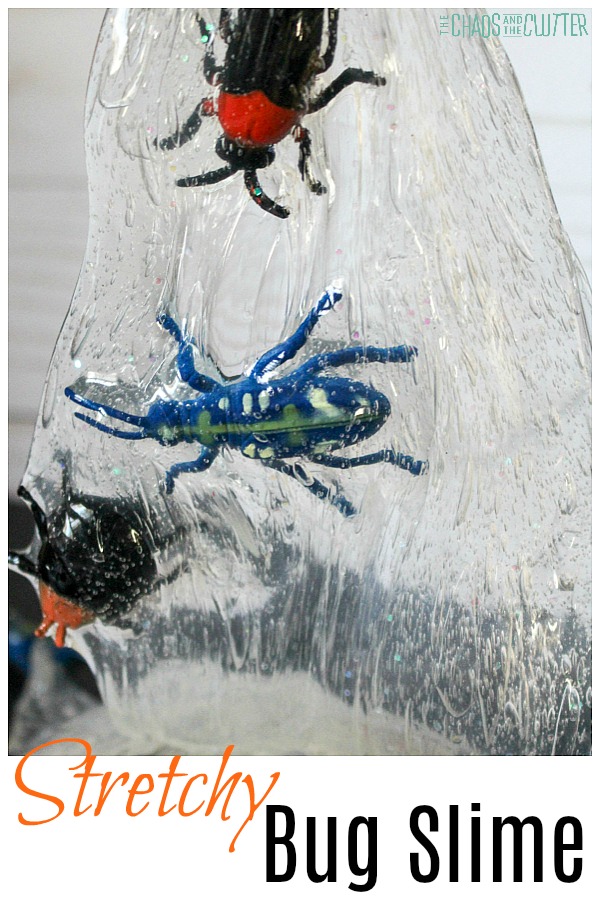
This bug slime without borax would go well with an insect theme unit. It also is a nice one for Spring or Summer. It’s a way for kids to play with bugs without them being real bugs! 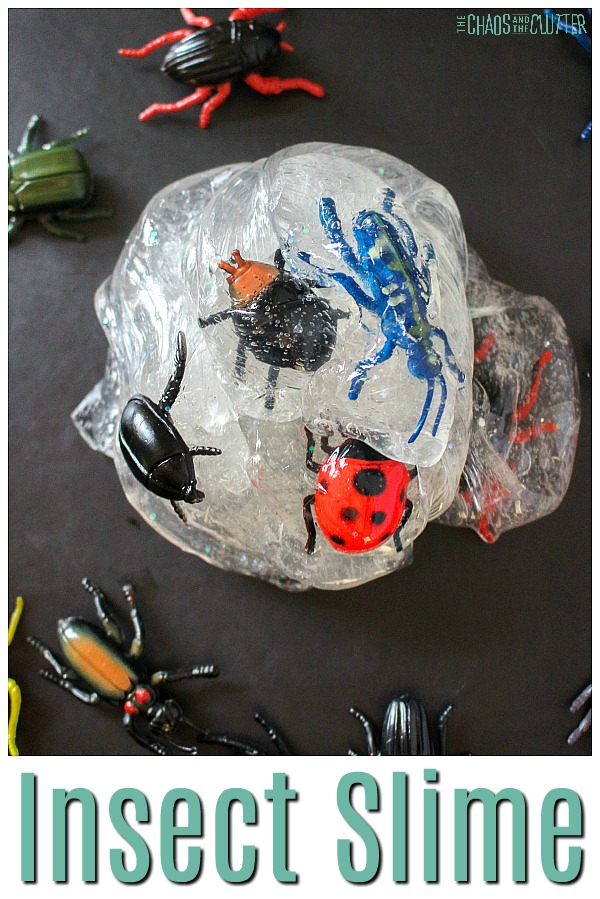 My kids love slime that is super stretchy. That is one of the things we really like about this particular recipe. It has a good amount of stretch to it.
Incorporating the insects into the slime allows for this to be used in your school or homeschool in a science unit. The clear slime allows kids to examine each of the insects and make observations about their characteristics.
Bug Slime without Borax Recipe:
- 5 oz. Elmers clear school glue
- 1/2 cup water
- 1/2 tsp baking soda
- 1 Tbsp. contact solution (be sure to use contact solution that includes both boric acid and sodium borate in the ingredient list or it won’t work)
- a variety of plastic bugs
Instructions:
- In a bowl, pour 5 oz clear glue.
- Add 1/2 cup water. Mix until the glue has broken up and is incorporated into the water.
- Mix 1/2 cup baking soda in. Baking soda will help determine your slime thickness.
- Add 1 Tbsp. of contact solution. Mix immediately. The slime will be ready to knead when it begins to pull away from the sides of the bowl.
- Knead the slime. It will be sticky at first, but keep kneading it. This should make it less sticky. If you find that it is still too sticky, you can add a little bit more contact solution, a little at a time.
- Once your slime has formed, you can add your bugs and knead them inside.
- Store in an airtight container.
Slime makes an excellent sensory play material. It incorporates the visual, tactile, and proprioceptive sensory systems. Kids can pull, knead, stretch, and squish the slime.
Check out some of our other slime recipes:
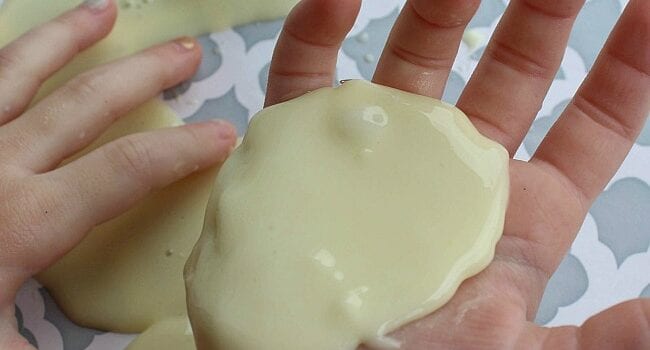
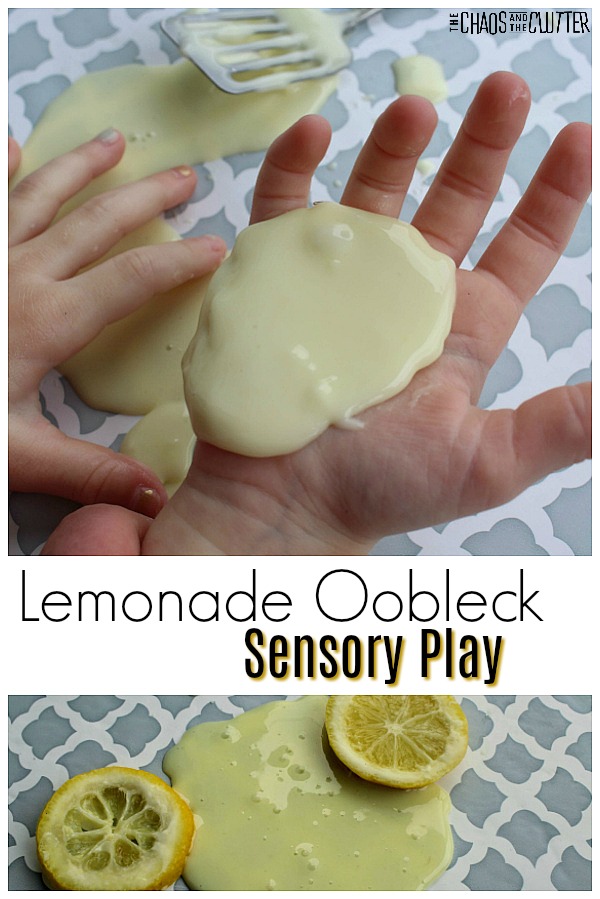 This scented sensory play recipe is so simple. Only 3 ingredients are needed. Kids can easily make this oobleck slime themselves. Younger ones that need mom or dad’s help can help to measure and pour by stirring.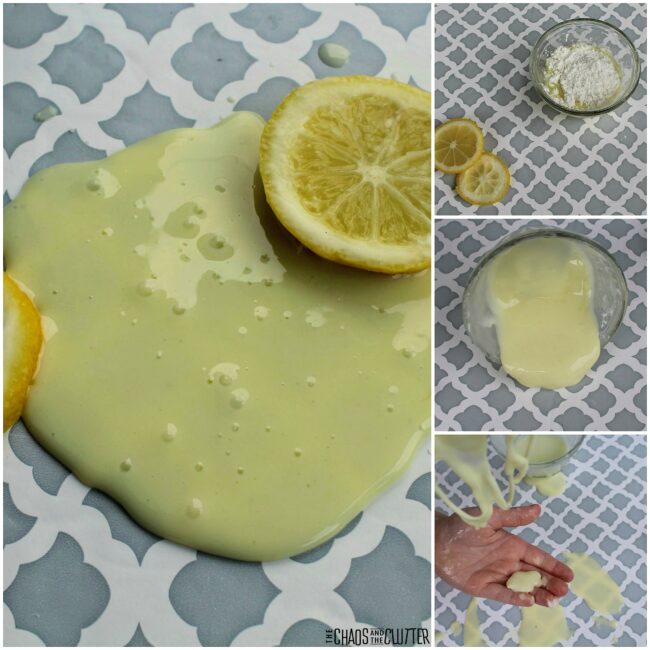
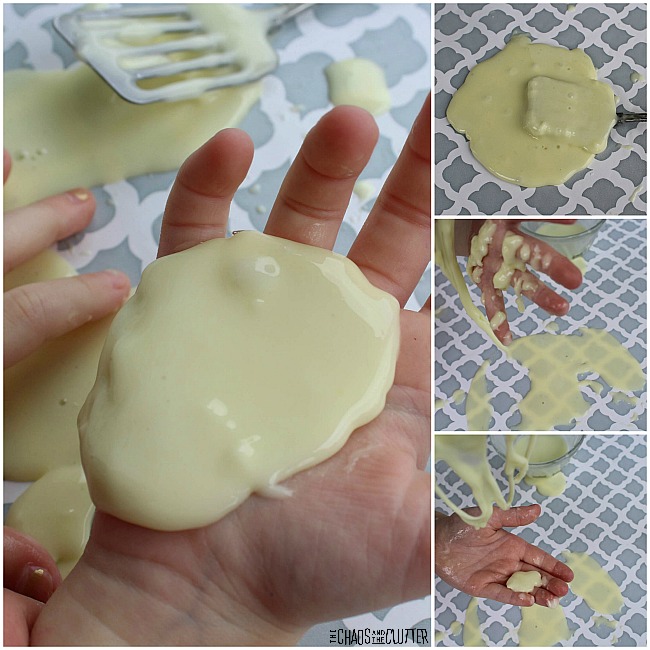 Sensory – Lemonade oobleck provides visual, tactile, proprioception, and olfactory sensory input. Children can see (visual) the colour and explore shape as it changes from liquid to solid. They can touch (tactile) and feel the texture of the state of matter change.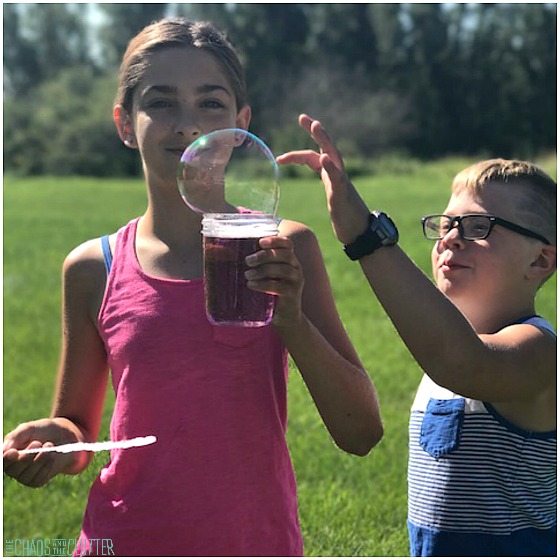
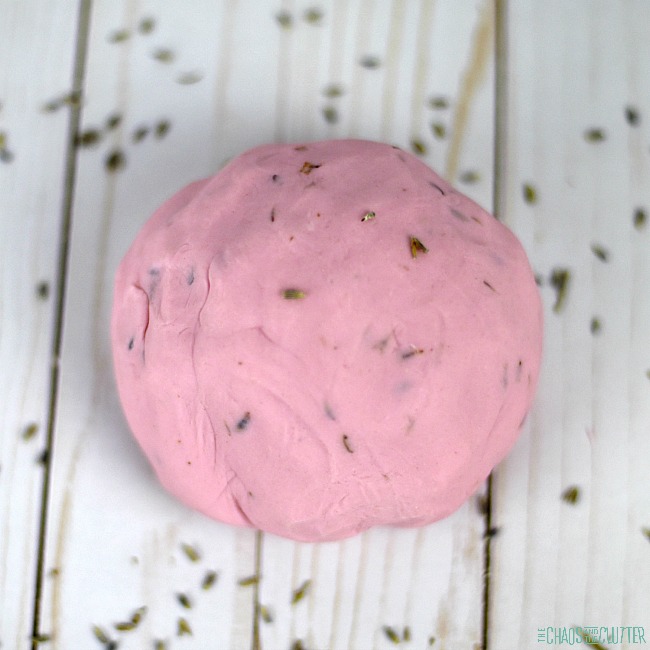
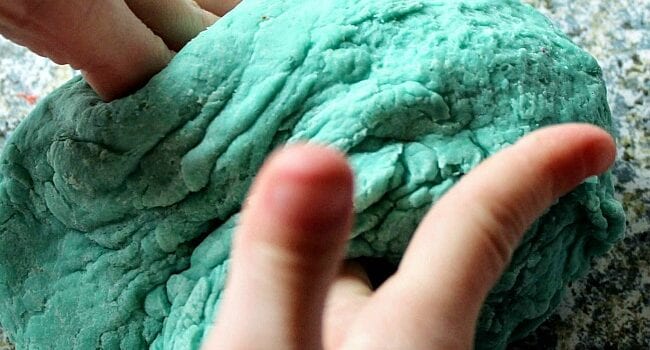
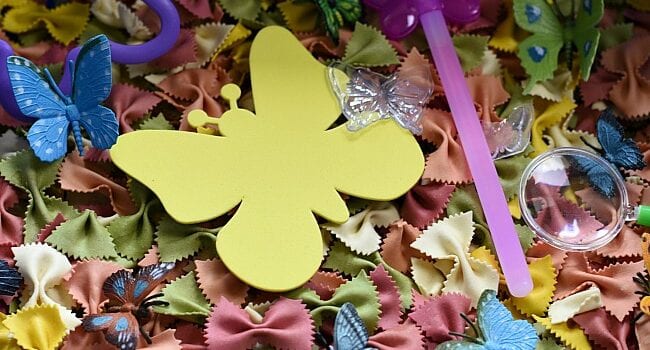
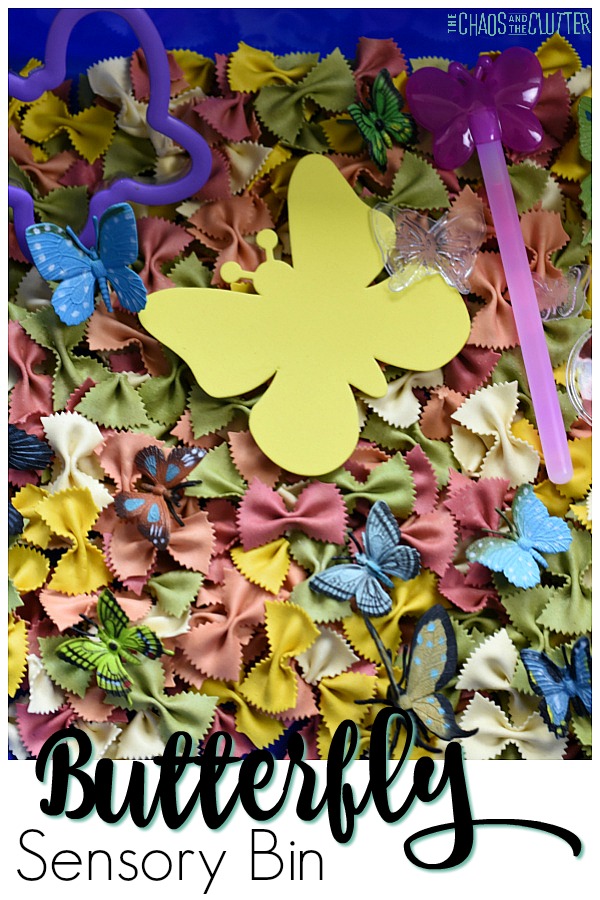 The pasta looks so much like little butterflies that the other butterflies in this sensory bin blend in with it. The kids enjoyed exploring with this activity.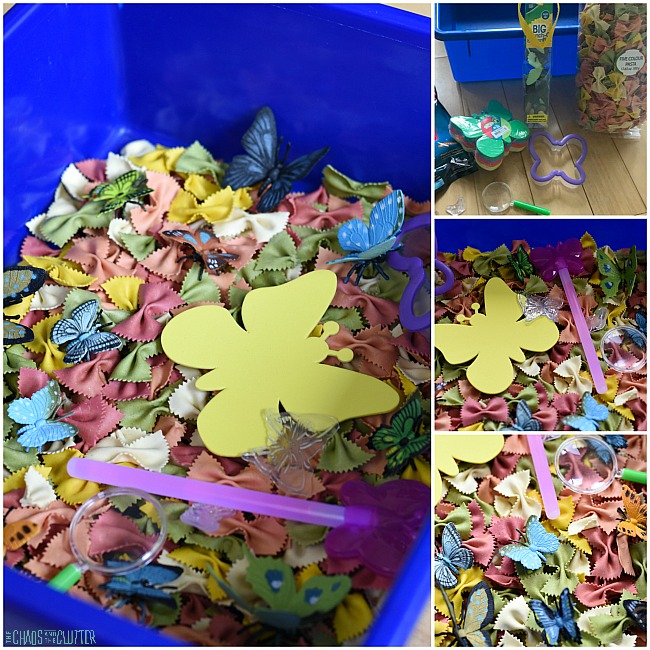
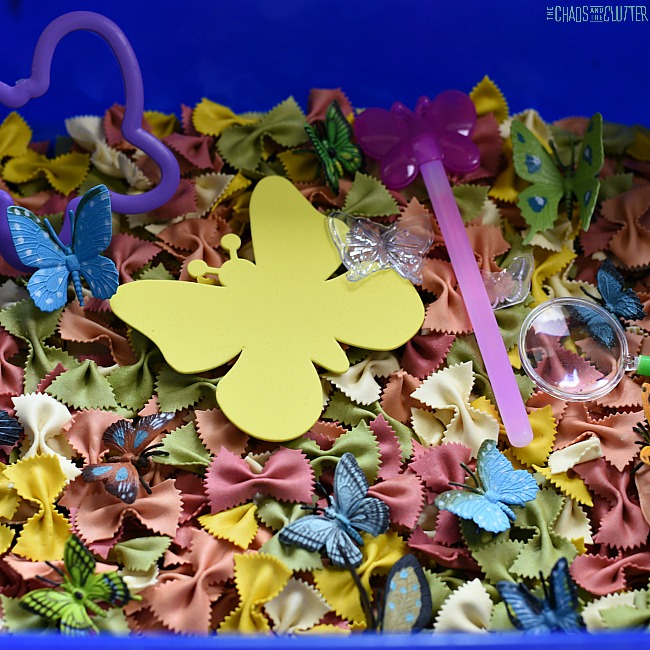 One of our daughters took her time examining the butterflies with the magnifying glass while commenting on their features. She also enjoyed squishing the silicone stamps and foam piece.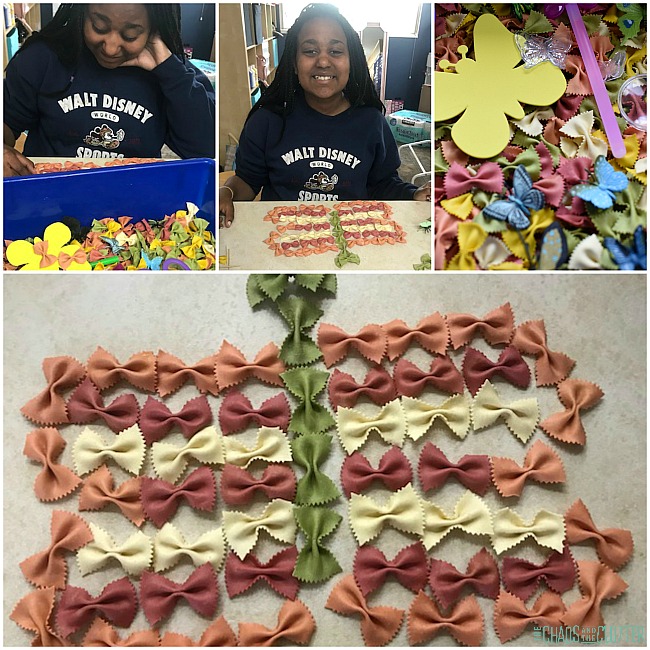
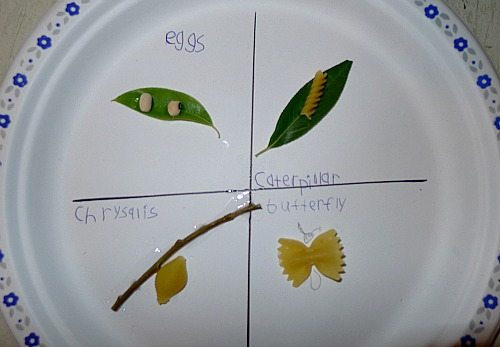 Raise your own butterflies. We did this one summer and the kids were absolutely fascinated. You can purchase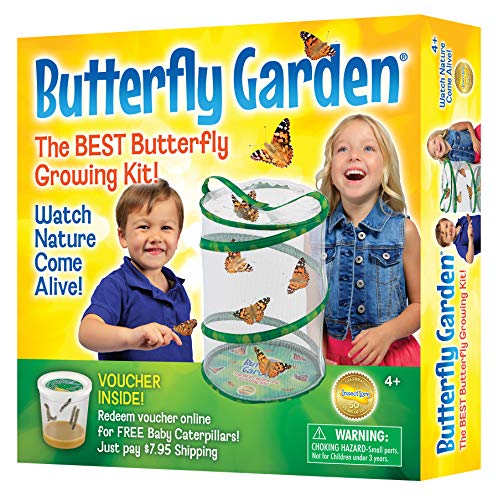


 Get 175 sensory activity ideas in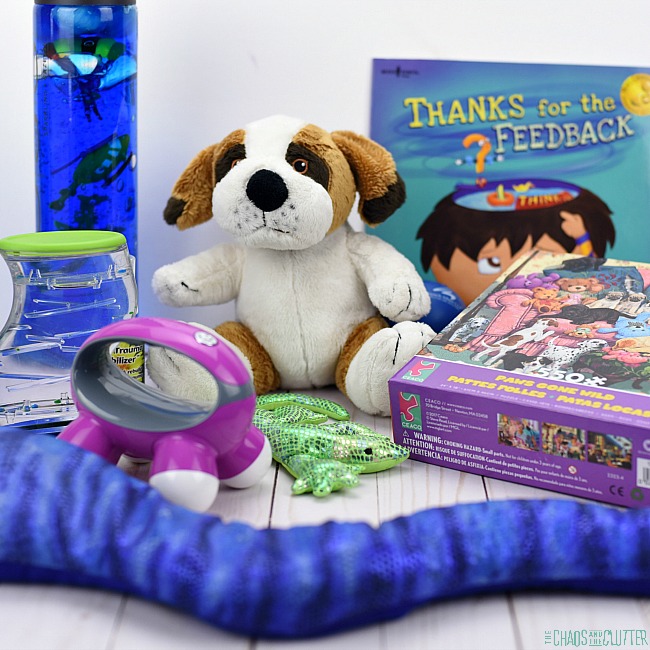
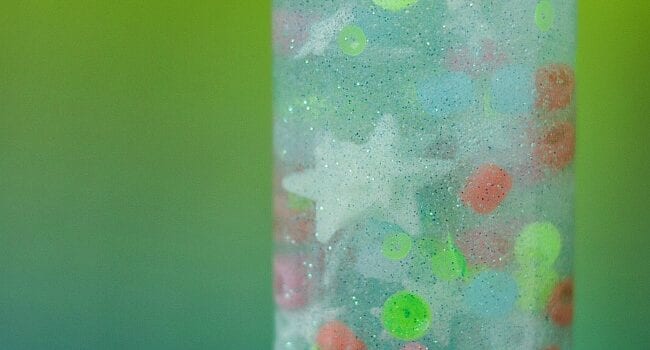
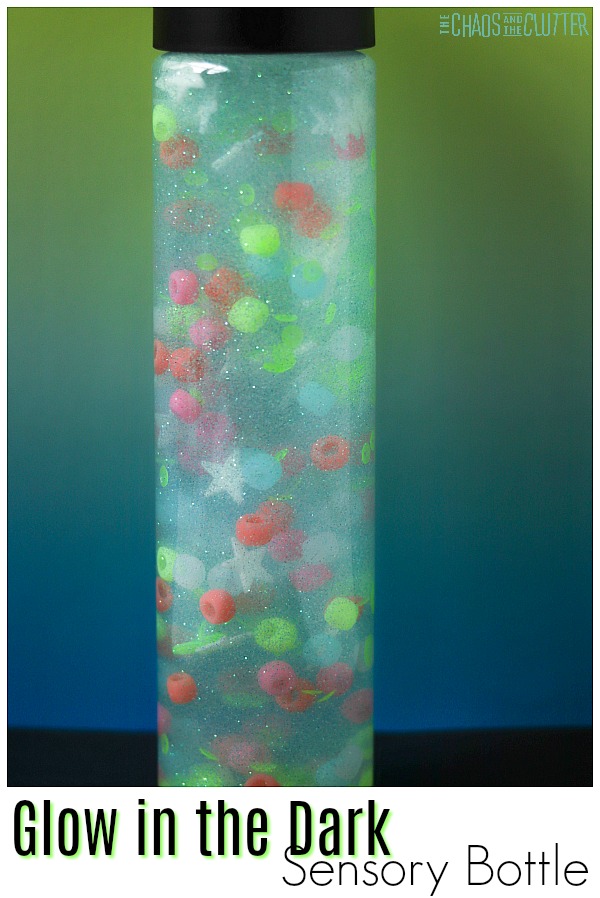
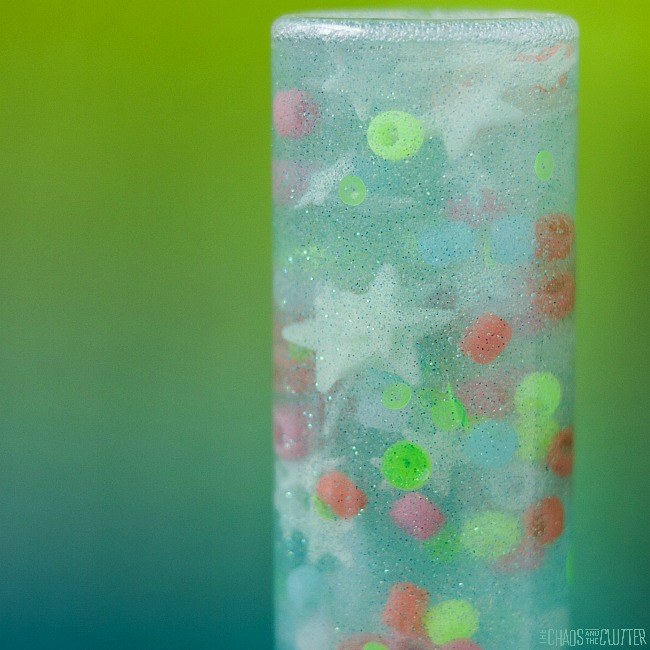
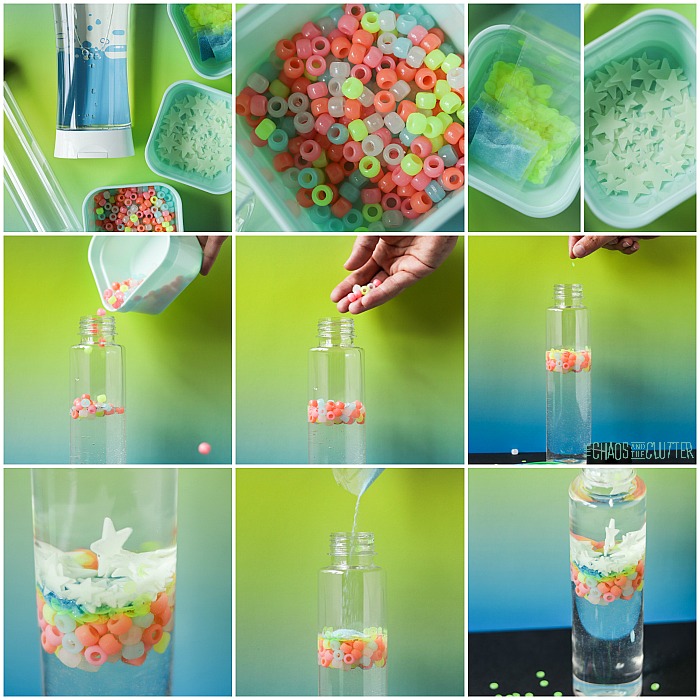
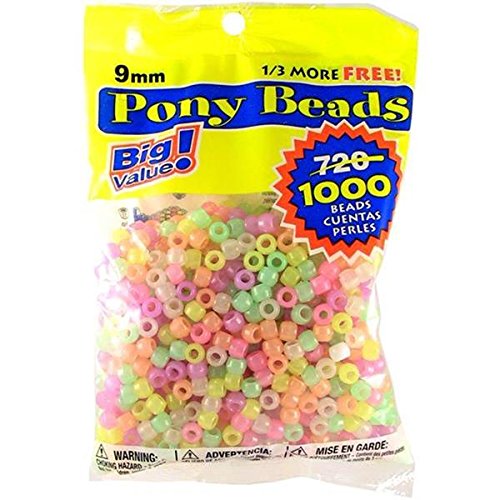
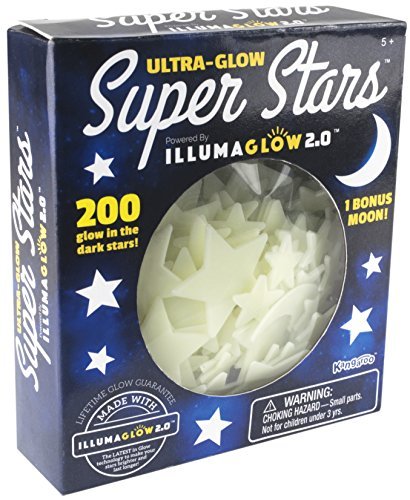
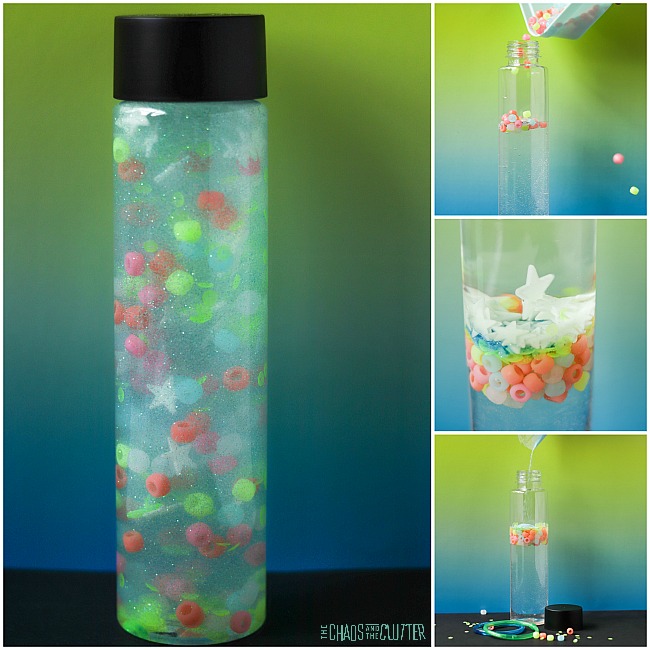 Parental supervision should be used for this or any other sensory play activity. Even if the lid is secure with glue, it is possible that your child could get it open and there are small objects inside that could be choking hazards.
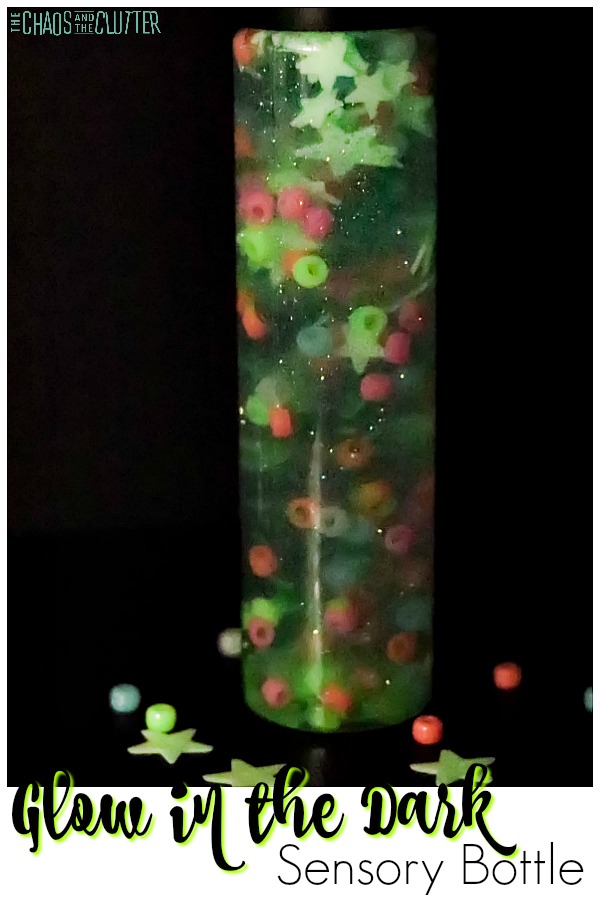 This sensory play activity offers visual sensory input as well as a bit of tactile (holding the bottle) and proprioceptive (carrying and flipping over the bottle) input.