• Skip to primary navigation
  • Skip to main content
  • Skip to primary sidebar
  • Home
  • About
  • Contact
  • Privacy + Terms
  • Affiliates

The Chaos and the Clutter

  • Facebook
  • Twitter
  • Pinterest
  • Google Plus
  • RSS
  • Email
  • School at Home
  • Sensory
    • Sensory Processing Disorder
    • Awesome Sensory Play Activities
      • Sensory Bins
      • Sensory Bottles
      • Sensory Bags
  • Family Games
    • Minute to Win It Games
  • Special Needs Parenting
    • Childhood Anxiety
    • Reactive Attachment Disorder
    • Sensory Processing Disorder
  • Store
  • Course Login

sensory play

Timon Inspired Lion King Slime

By Sharla Kostelyk

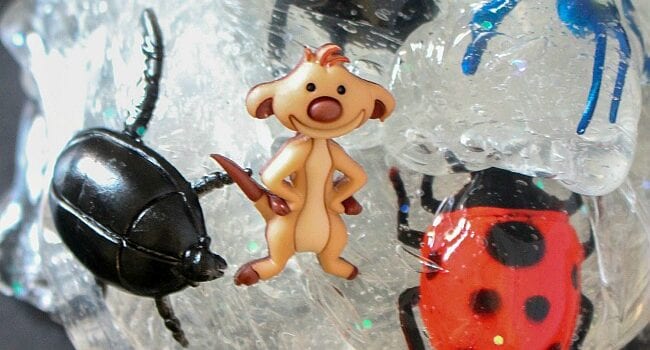
Timon is a meerkat from the Lion King movie. Timon is known for his love of bugs and most especially, grubs. This Timon inspired Lion King Slime will quickly be a favourite for kids who are a fan of the movie. Lion King Slime with Timon the Meerkat #slime #slimerecipes #sensoryplay #lionkingThis beloved character is pretty cute, even if he does eat bugs!
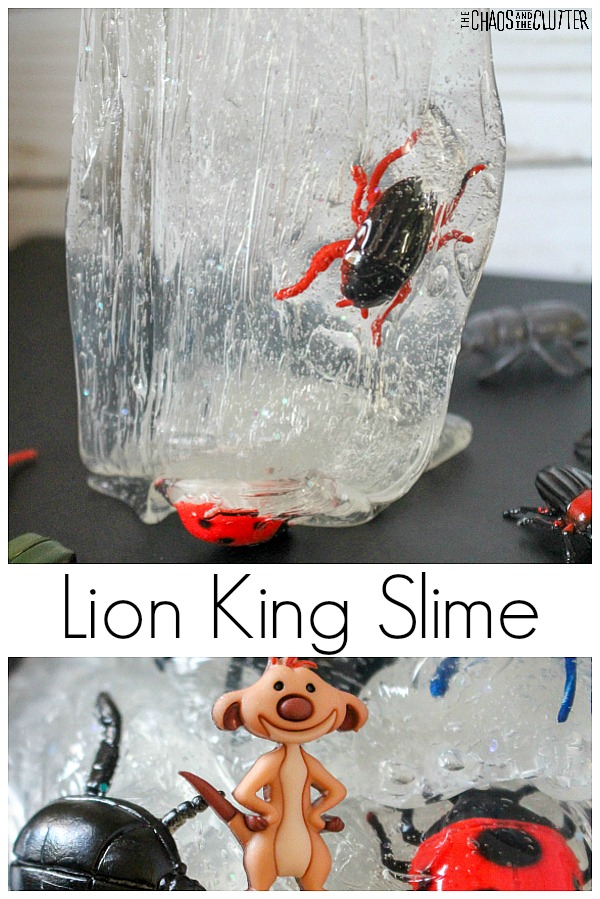
Timon Inspired Lion King Slime Recipe:

  • 5 oz. clear glue*
  • 1/2 cup water
  • 1/2 tsp baking soda
  • 1 Tbsp. contact solution (use a buffered contact lens saline solution)
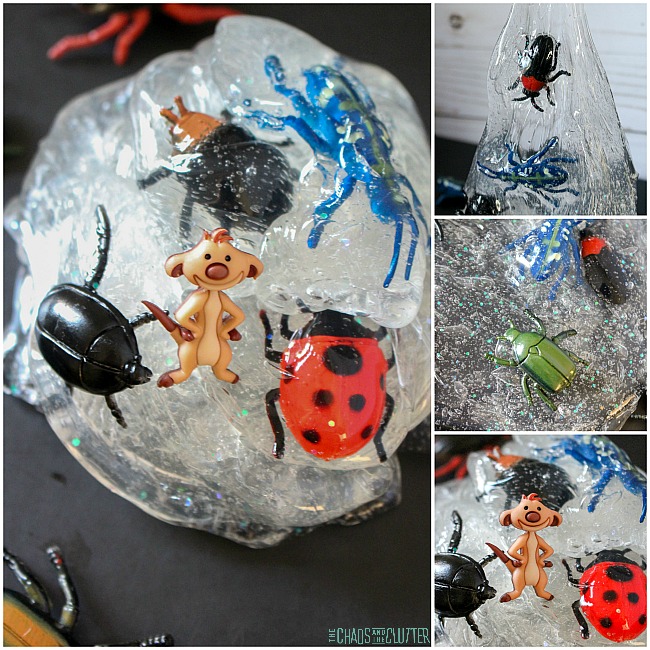
  • plastic bugs
  • Timon mini figurine or cake pick

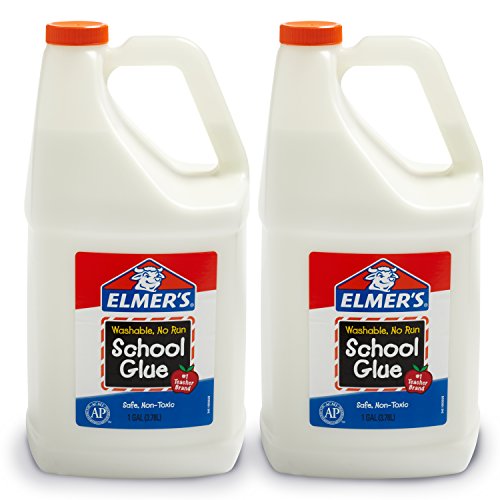
*A note about the glue: I find that when making slime, Elmers school glue works best. I’ve tried other glues and the results haven’t been as predictable as they are when I use Elmers for my slime. Instructions:
  1. In a bowl, pour 5 oz. of clear glue.
  2. Add 1/2 cup of water. Mix until the glue has broken up and is incorporated well in the water.
  3. Mix 1/2 cup baking soda in. Baking soda will help determine your slime’s thickness.
  4. Add 1 Tbsp. of contact solution. Mix. The slime will be ready to knead when the slime pulls away from the sides of the bowl. Contact solution is what makes the stickiness of the slime.
  5. Knead the slime. It will be too sticky at first. Just keep kneading it! If you have to, you can add a drop or two more of the contact solution, but be careful not to over-activate.
  6. Once your slime has formed, you can add your bugs and knead them inside.  
  7. Place the Timon figure in or on the slime.
  8. Store the slime in an airtight container when not playing with it.
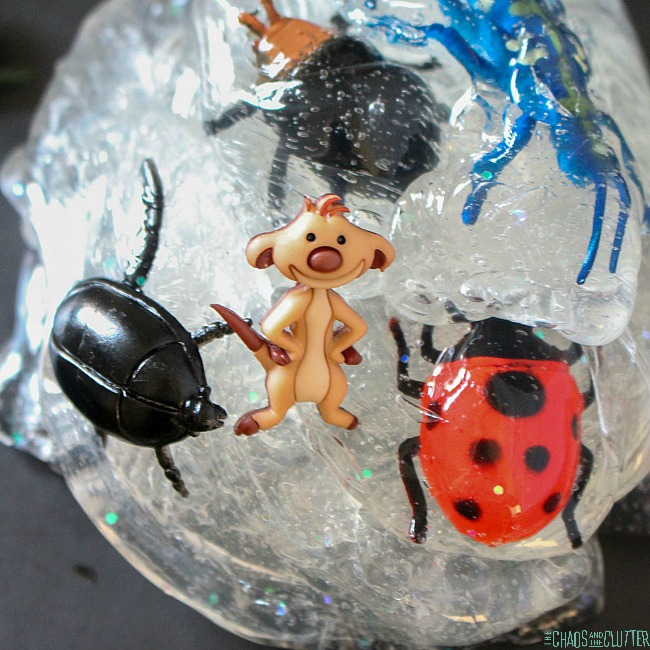
Slime is a great sensory play material. It allows for visual, tactile, and proprioceptive feedback. It can be an effective calming tool when used for proprioception. Ideas for doing this include:

  • stretching
  • pulling
  • kneading
  • pressing, pushing
  • squishing

Check out these other fun slime recipes:
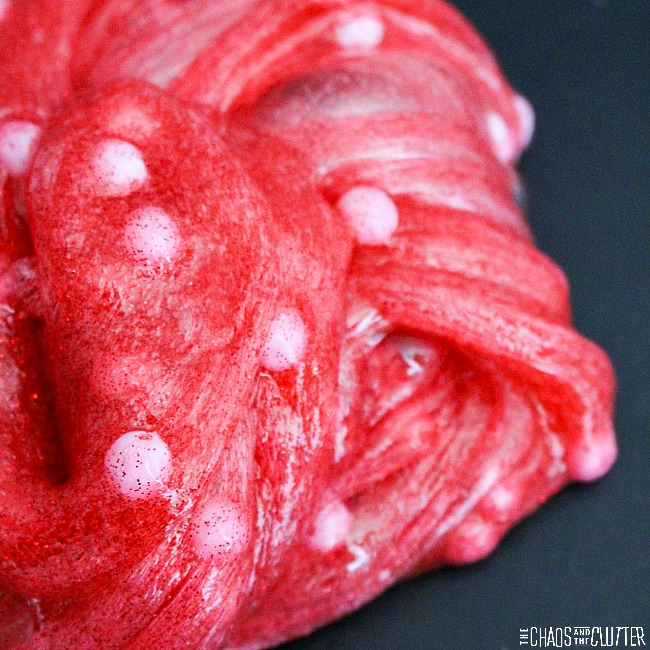
Minnie Mouse Slime

Unicorn Fluffy Slime 

Rainbow Confetti Party Slime 

Filed Under: Sensory Tagged With: sensory play, slime

Insect Sensory Bin with Pasta

By Sharla Kostelyk

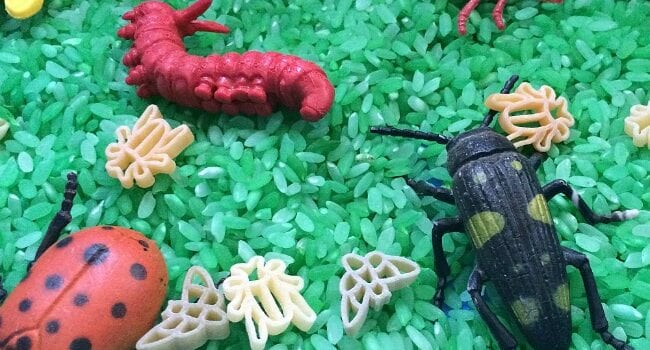
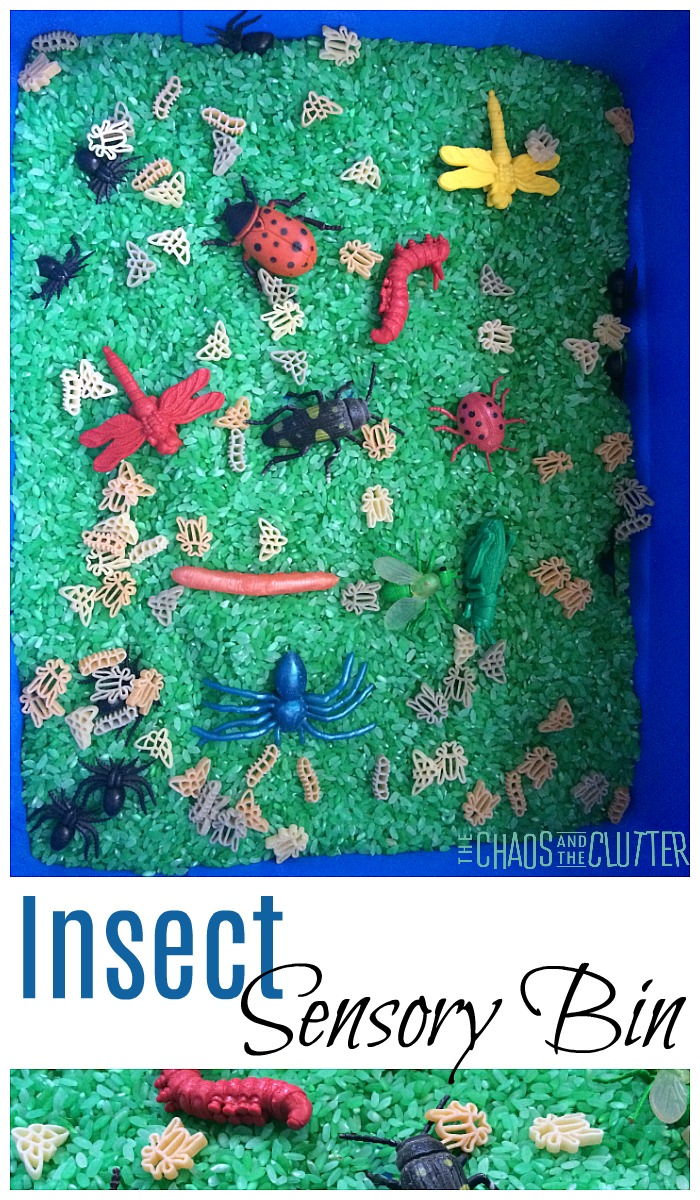
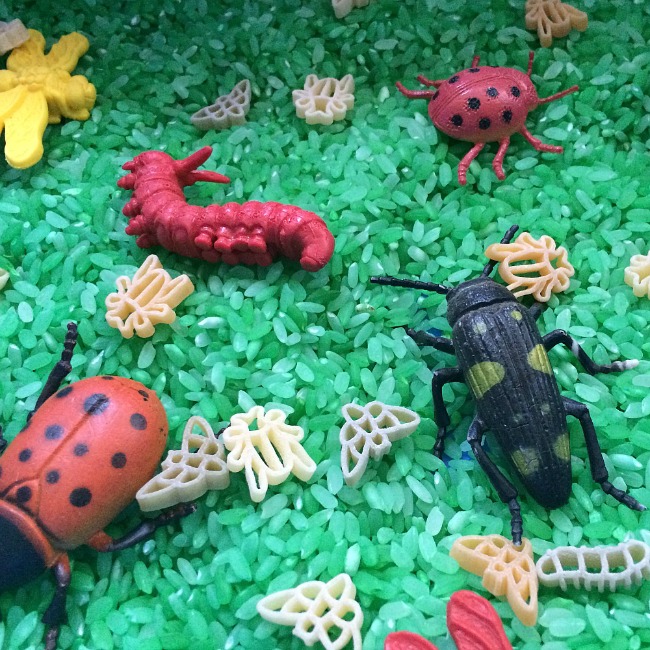
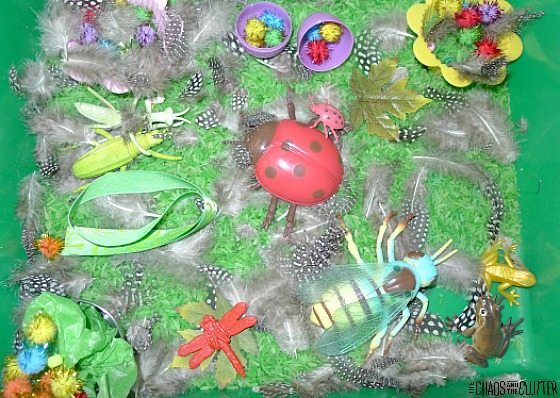
This Insect Sensory Bin is a great addition to a preschool unit on insects or Spring. It has a variety of textures and colours. This adds to both the visual and tactile sensory experiences.

Insect Sensory Bin #sensory #sensoryplay #sensorybins #sensoryscienceWe used this sensory bin while studying insects in our homeschool. The kids enjoyed playing in it. The green rice looks like grass and made us look forward to Spring.
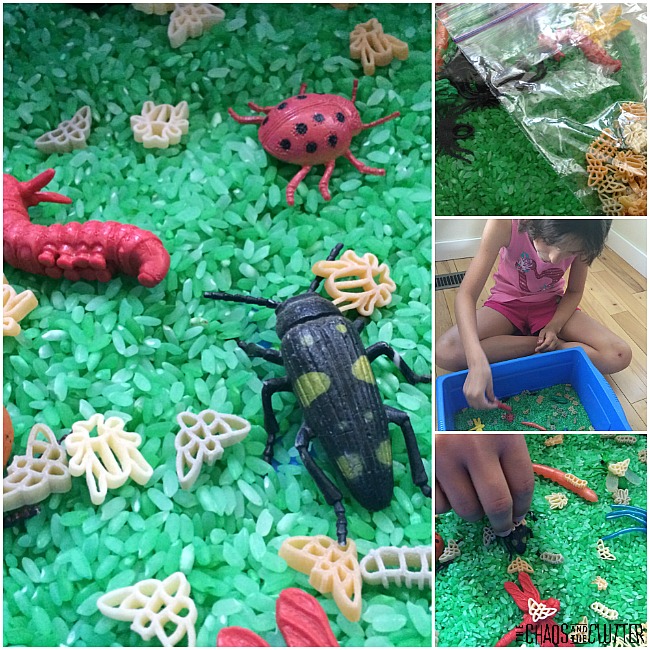
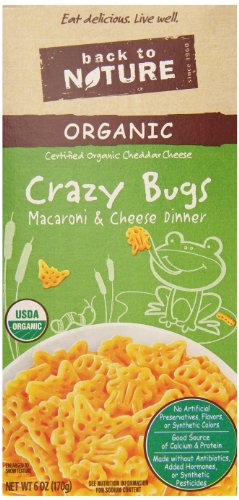
My kids were quite surprised that there was a pasta shaped like insects! We used some of the pasta for the sensory bin and cooked the rest for lunch. This created a gustatory (taste) sensory experience for them as well.This particular sensory bin was one of the ones we had made in our sensory bin swap. That meant that when the kids and I got to the insect unit in our science, I could easily just dump the contents of the bag into a bin and voila!
Insect Sensory Bin:

  • rice dyed green*
  • insect shaped dry pasta
  • toy bugs
  • stretchy insects
  • spiders (see note below on spiders)

*you can find a tutorial on how to dye rice for sensory play here.

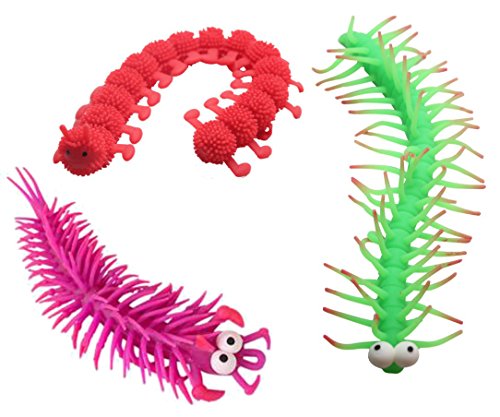
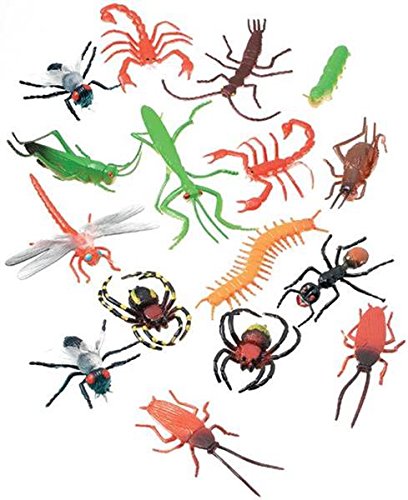
Bug Shaped PastaBug Shaped PastaBug Shaped PastaStretchy BugsStretchy BugsStretchy BugsPlastic Bugs and ArachnidsPlastic Bugs and ArachnidsPlastic Bugs and Arachnids

A note about the dyed rice:

When you’re finished using this sensory bin, you can store the green rice in a resealable plastic bag. The green rice makes a nice sensory bin base for a lot of different themes because it looks like grass. You can also use it inside sensory bottles or bags.

Spiders are not insects:

Yes, I know that spiders are not an insect. The kids wanted to add them and we actually used it as a compare and contrast science lesson on why they are not an insect. If you prefer to have this be an authentic insect sensory bin, simply leave the spiders out!

Ideas to expand the learning:

  • Add magnifying glasses to the sensory bin.
  • Set out books about insects and let the kids try to match them up.
  • Add scoops, small cups, and tweezers for fine motor skill practise.

You may also be interested in checking out these sensory bins:

Frog Sensory Bin Frog Sensory Bin Play

Spring Sensory Bin 

Filed Under: Sensory, Sensory Bins Tagged With: sensory bin, sensory play

Sensory Sound Eggs

By Sharla Kostelyk

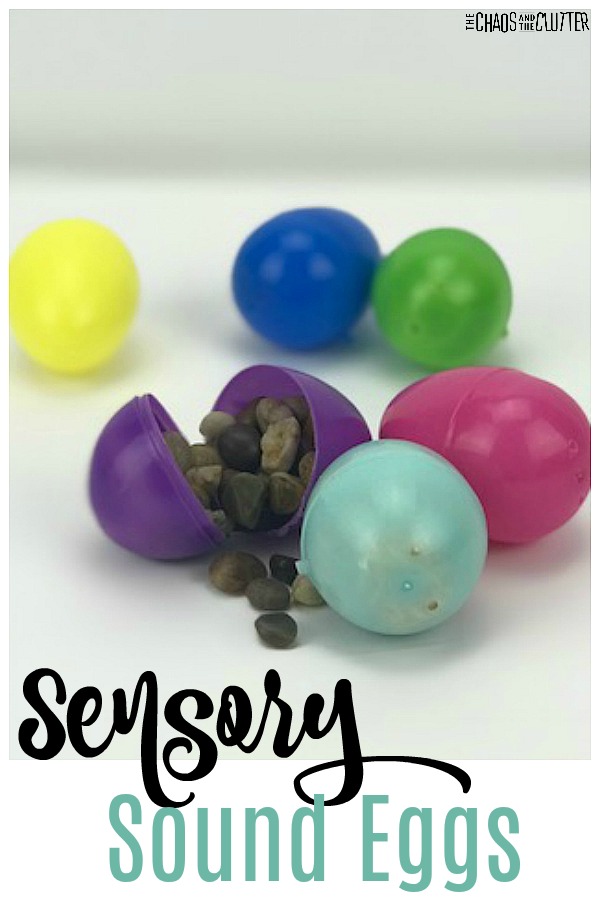
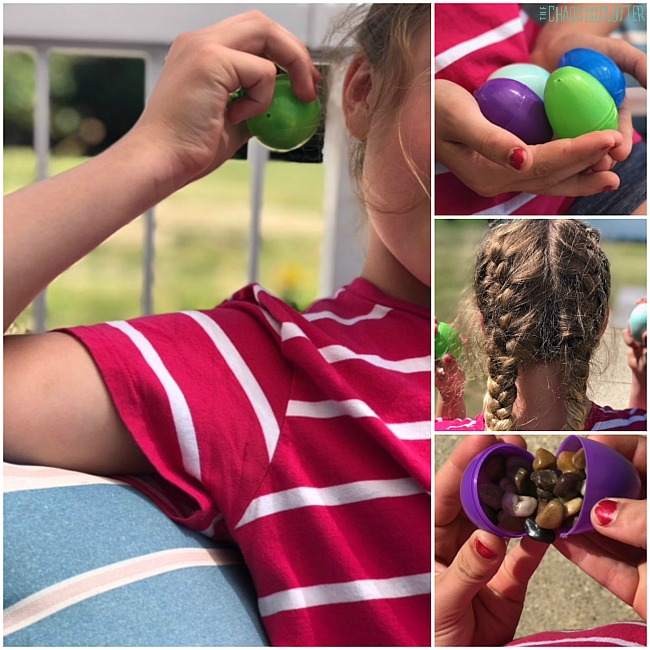
This activity is a great auditory sensory activity. It is simple to set up and very engaging for kids. These sensory sound eggs are easy to use in the home or as a classroom activity.

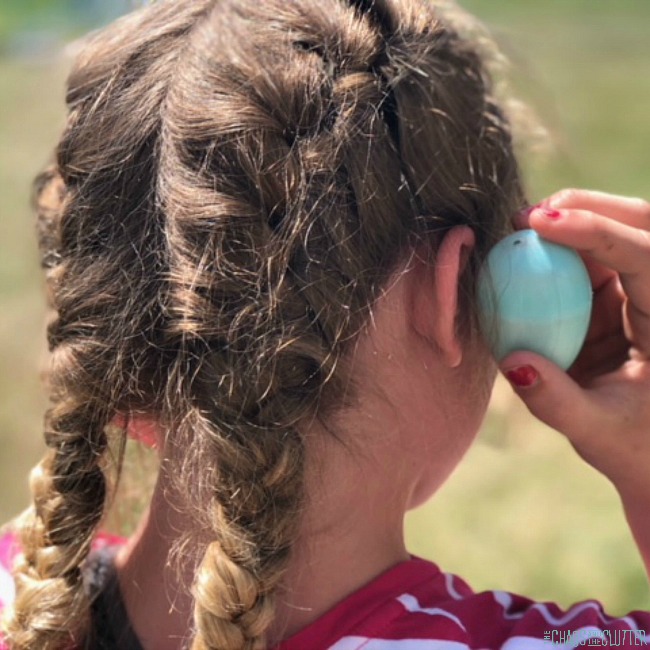
Sensory Sound Eggs #sensoryplay #easteractivity #auditorysystem #sensory #spdSensory sound eggs are great at helping children with early auditory discrimination skills. As they use their sense of sound and other clues such as weight to determine what item is in each egg, they are developing important skills.
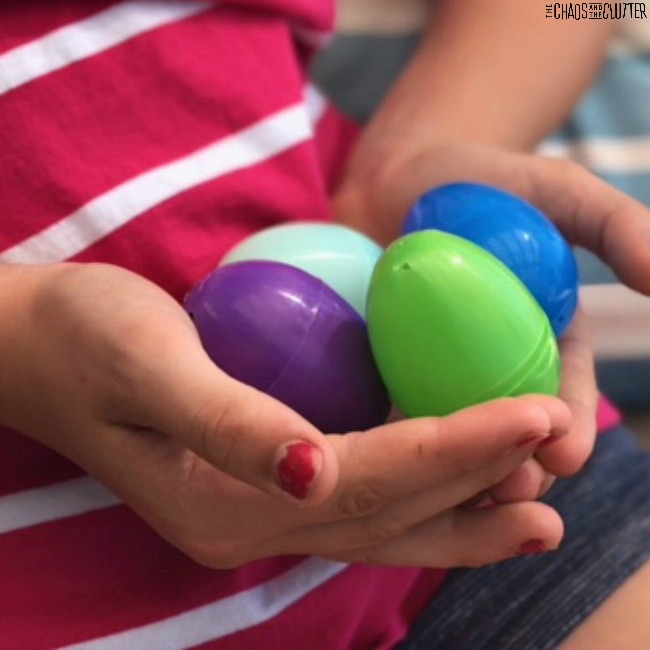
Sometimes, the simplest activities are the best ones. For me, that is actually always true because if an activity is too complex, it just doesn’t happen! This is very inexpensive to do. If you buy plastic eggs right after Easter, you can get them on sale for ridiculously cheap!
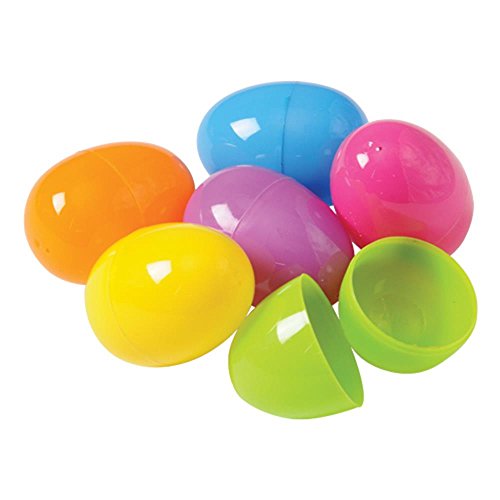
And you can fill them with things you already have around the house making this something you can do on the spur of the moment.

How to Make Sensory Sound Eggs:

Supplies needed:

  • plastic Easter eggs
  • jingle bells
  • popcorn seeds
  • dry rice
  • rocks
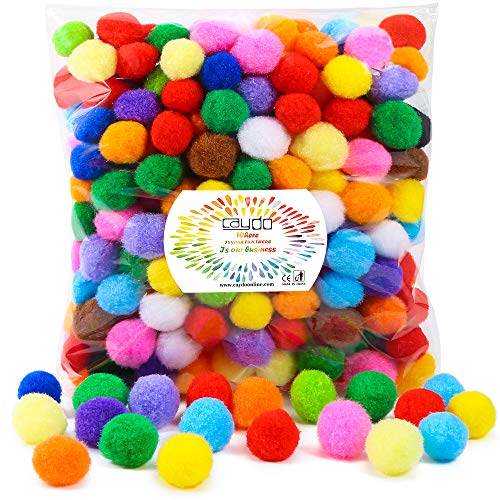
  • pompoms or cotton balls
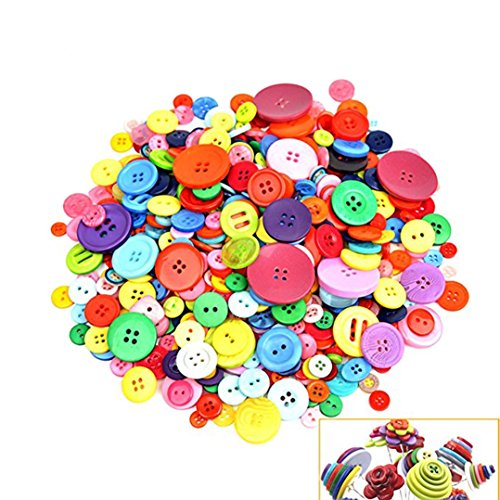
  • buttons

Plastic Easter EggsPlastic Easter EggsPlastic Easter EggsMixed Colour ButtonsMixed Colour ButtonsMixed Colour Buttons1 Inch Pompoms1 Inch Pompoms1 Inch Pompoms

Directions:

  1. Fill each empty egg with some of one of the items.
  2. Close the eggs. Place tape around the middle of the eggs to ensure they won’t open when using with younger children. Some of the items could be a choking hazard, so adult supervision is needed with this and any other sensory activity.
  3. Have the child guess what item is in each egg based on the sound it makes when shaken.

Ways to Adapt this Sensory Activity:
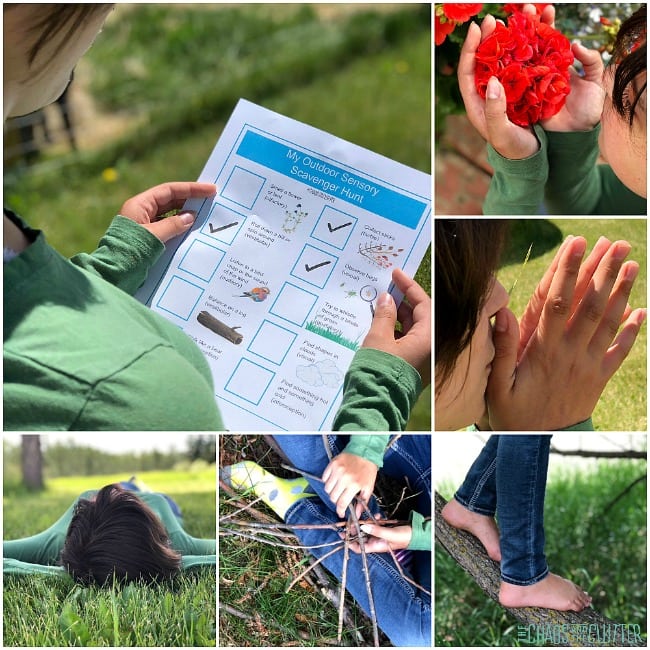
Try this activity using other fillers in the eggs such as coffee beans or coffee grounds, beads, water, salt, or whatever else your imagination can come up with.

Have your child think of ideas for fillers and create their own sound eggs. You can then take a turn at guessing what’s in them.

Auditory Match Up

One game you can play is to make two eggs with each filler and have kids try to match the eggs that are the sound matches. 

Discussion Points:

Talk about why the items make different sounds (weight, shape, size).

This simple idea is included in our eBook The Sensory Science Book Volume 1 in the Senses chapter. The book includes easy to put together sensory activities that correspond with science units for school or home. Other activities you may be interested in:

Colour Mixing Sensory Bottle Sensory Scavenger Hunt 

Filed Under: Sensory Tagged With: sensory play

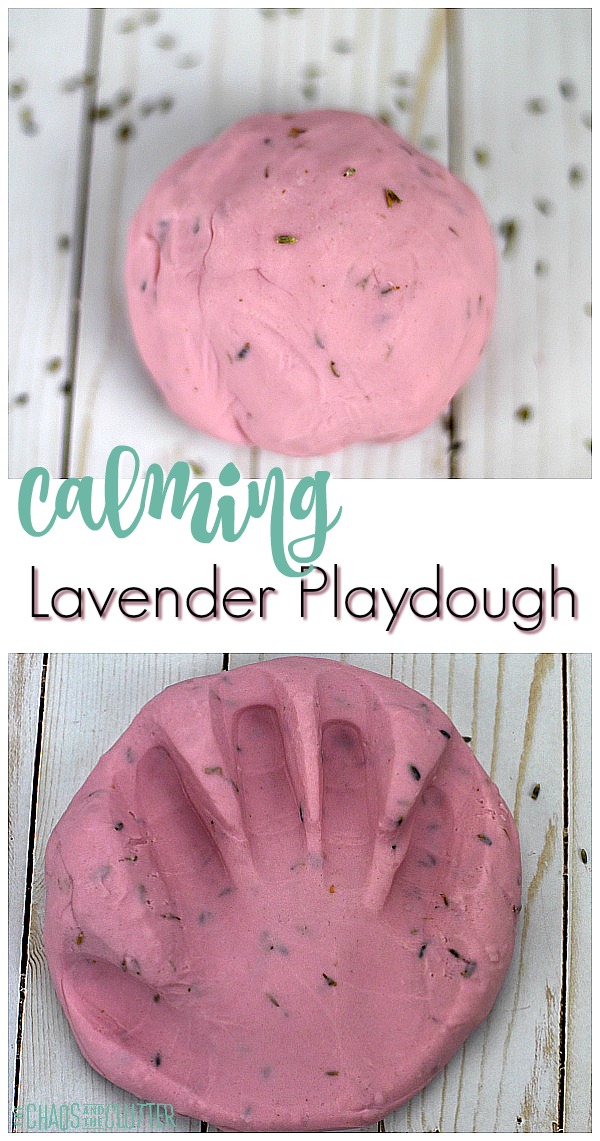
Calming Lavender Scented Playdough

By Sharla Kostelyk

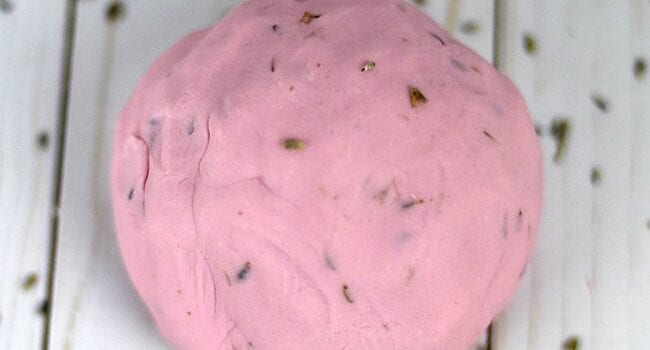
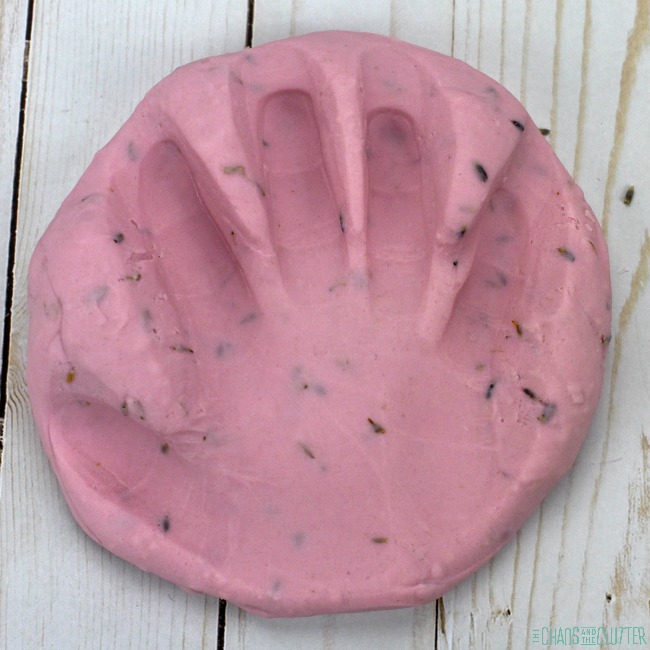
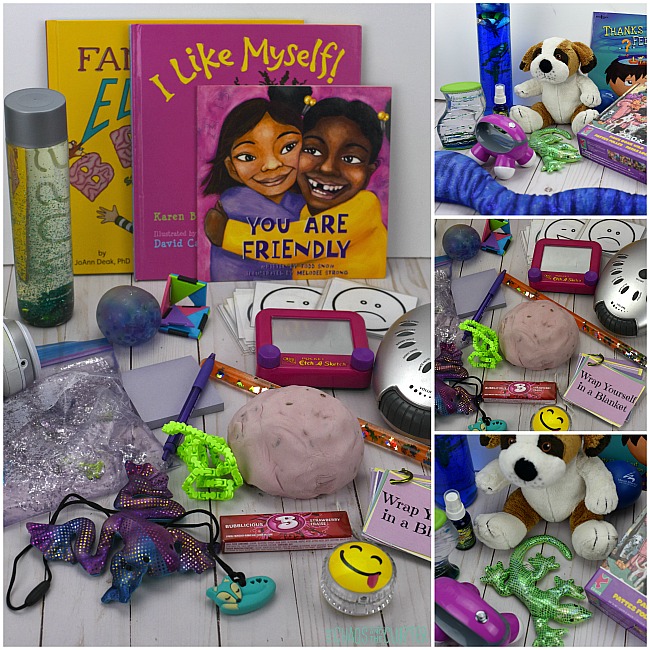
I made a calm down kit for my youngest daughter for her anxiety and I wanted to include some lavender scented playdough. The playdough makes a good sensory outlet for her and lavender is a soothing scent. I chose purple because purple is supposed to be the most calming colour and it also happens to be her favourite. It turned out really well. Calming Lavender Scented Playdough for sensory play #sensoryplay #playdough #lavender #specialneedsparentingI have since made this recipe several times. I have made it on the stovetop or in the KitchenAid. The reason that I prefer that method is because it is easier on my arms. Either method works though.
Lavender Scented Playdough Recipe:

  • 2 cups flour
  • 1/2 cup salt
  • 3 Tbsp. cream of tartar
  • 1 Tbsp. lavender or 3 drops lavender essential oil
  • 2 Tbsp. vegetable oil
  • 2 cups water (boiling if using the KitchenAid method)
  • purple food colouring
  • glitter (optional – I used purple)

Stovetop instructions:

  1. Mix the dry ingredients including the lavender together in a pot and stir in the oil, water and food colouring.
  2. Cook over medium heat, stirring constantly, being sure to scrape the sides and bottom.
  3. Cook until dough forms a ball.
  4. Remove from heat.
  5. Place it on a piece of wax paper.
  6. Knead.
  7. If you are adding glitter, add it in at this point.
  8. Let cool. Store in an airtight container or in a resealable bag.

KitchenAid instructions:

If you’re not a fan of getting a sore arm from stirring the playdough, you can instead make it in a KitchenAid mixer. To use this method (which I highly recommend!):

  1. Place the dry ingredients into the mixer.
  2. Add the oil and food colouring and begin mixing with the flat beater (the one for making dough).
  3. Add 2 cups of boiling water and continue to mix until a playdough texture is achieved.
  4. Next, take the dough out of the mixer and knead for one minute. If you’re adding glitter, add it at this stage and knead to combine it throughout the dough.
  5. Allow to cool. Store in an airtight plastic container or in a resealable bag.

Playdough handprintOnce the playdough is made, it can be played with just like regular playdough.
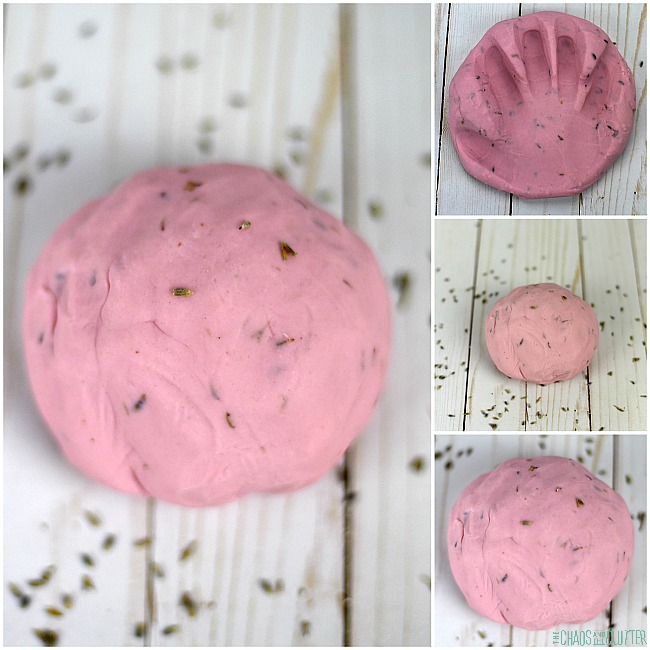
As kids knead and pull and shape the dough, the lavender scent and the proprioceptive sensory feedback will provide a calming effect.

You can include a container of lavender playdough in your child’s calm down kit.

Ideas for Sensory Play with Playdough:

  • squish
  • knead
  • pull
  • smash
  • cut with plastic scissors (great for fine motor)
  • twist
  • roll
  • use a rolling pin
  • press cookie cutters in
  • stretch
  • stamp
  • play
  • shape onto a playdough mat
  • press buttons, beads, pipe cleaners, pompoms, dry pasta, shells, small toys, rocks, sticks, pine cones, googly eyes, leaves, keychains, or gems in

For kids who are sensory avoiding, you can put the playdough into a medium sized resealable bag and seal. The child can then squish and squeeze to their heart’s content without the texture of the dough actually touching their hands. They can also trace shapes or letters into the dough through the bag. This playdough engages the tactile, olfactory, visual, and proprioceptive senses.
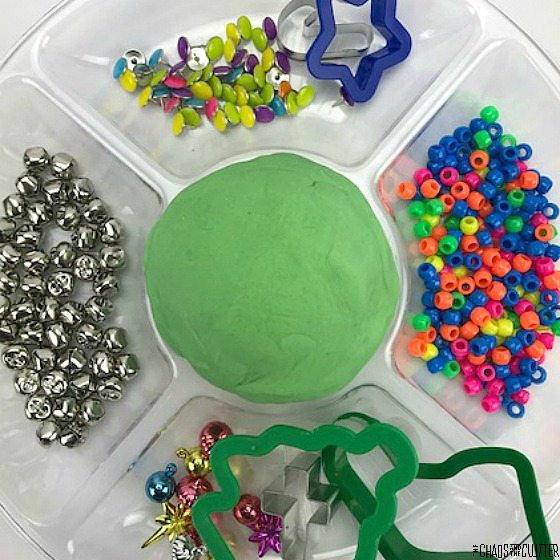
Looking for more great sensory play recipes? Join for a five day email series on Sensory Activities and Solutions and get a free sample of our Sensory Play Recipes eBook.

Some of our other popular playdough ideas:

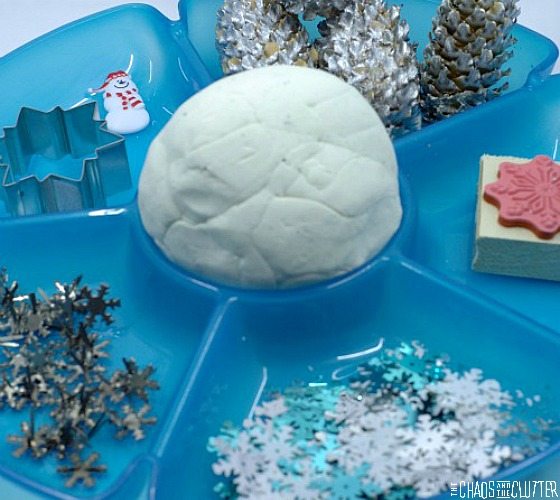
Peppermint Scented PlaydoughSnow Playdough Snow Playdough and invitation to play

Filed Under: Sensory Tagged With: playdough stations, sensory play

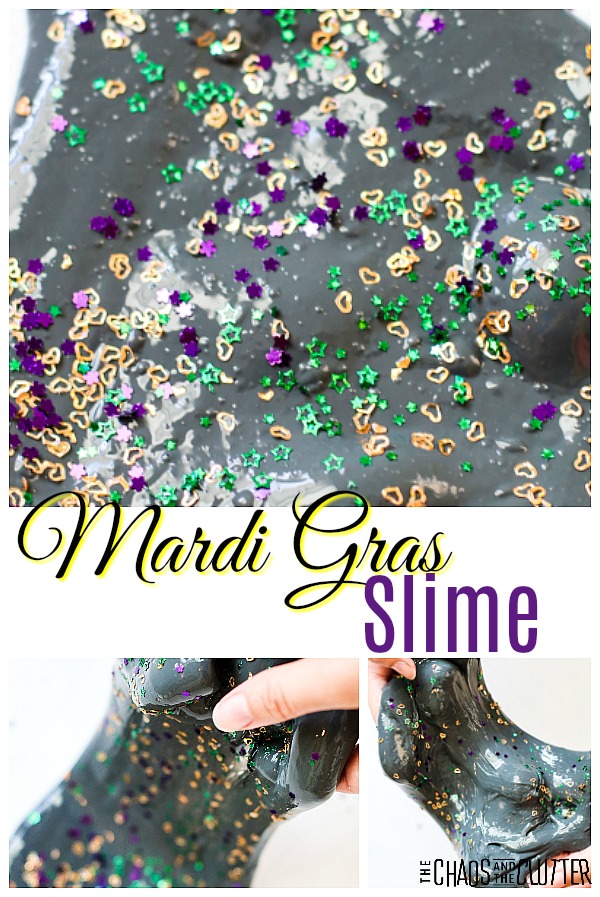
Mardi Gras Slime

By Sharla Kostelyk

I should probably admit that I’ve never actually been to New Orleans, so Mardi Gras isn’t something I’ve personally experienced, but that’s no reason I can’t bring the party to my house. This Mardi Gras Slime brings the party to sensory play.

Mardi Gras Slime #slimerecipes #slime #sensoryplay #sensoryactivitiesMardi Gras Slime Recipe:

  • 5 oz. bottle of Elmer’s clear school glue
  • ½ cup water
  • ½ tsp baking soda
  • 1 Tbsp. contact solution
  • grey acrylic paint
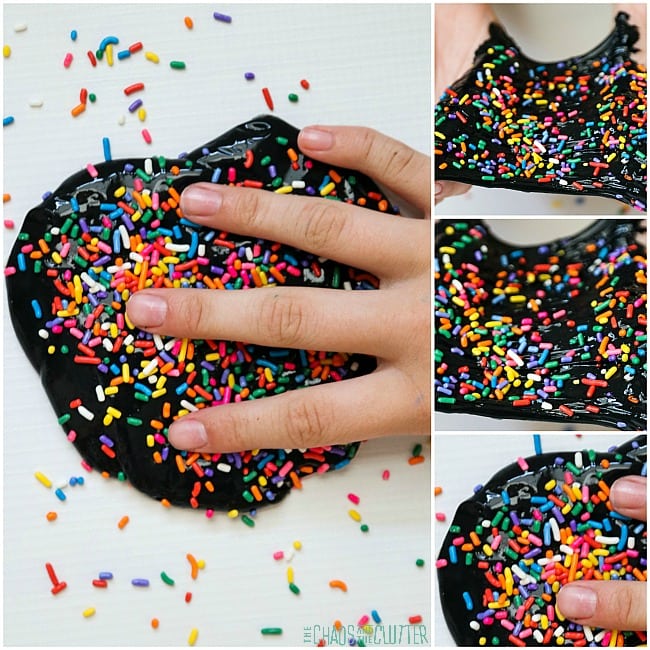
  • purple, green, and gold confetti
  • optional: Mardi Gras beads for playing

Instructions:

  1. Pour the whole 5 oz. bottle of clear glue into a small mixing bowl.
  2. Add in ½ cup of warm water and stir.
  3. Mix in the baking soda.
  4. Drop in a few drops of grey acrylic paint. Stir. If desired colour isn’t achieved, you can add in another drop or two.
  5. Add 1 Tbsp. contact solution to the mixture. It will begin to form instantly. At this point, it will be quite sticky. Don’t worry! Continue to mix the contact solution in the bowl until it starts to pull away from the sides and form.
  6. Knead the slime until it is no longer sticky.
  7. Add the confetti and mix in.
  8. Store the Mardi Gras slime in an airtight container.

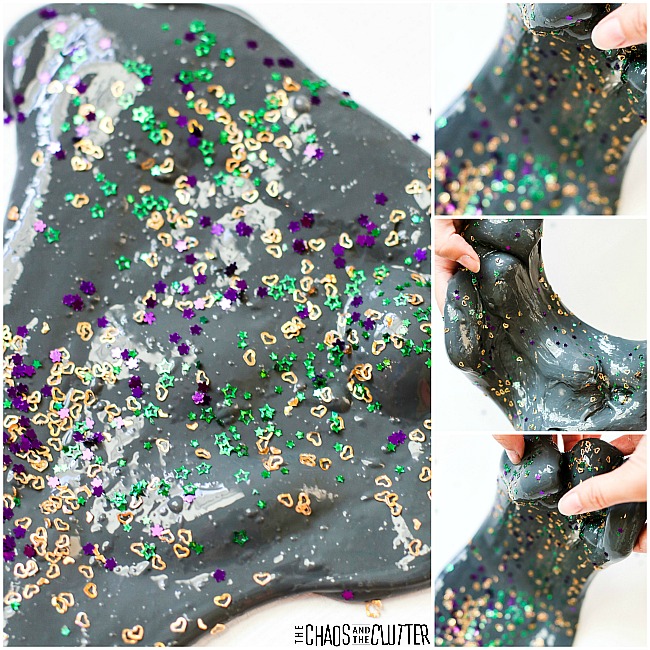
You can set this slime out with Mardi Gras beads. This will provide another element for sensory input in the play. The stretchy slime will contrast against the hard beads, offering a great tactile experience.
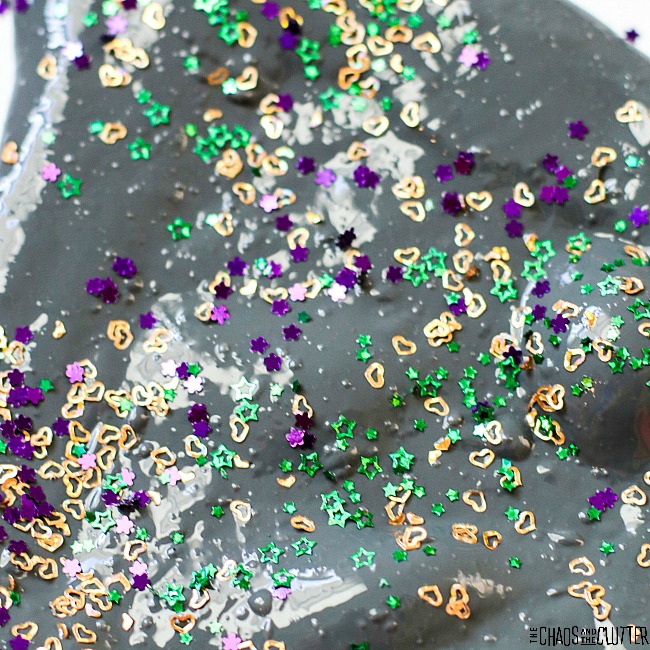

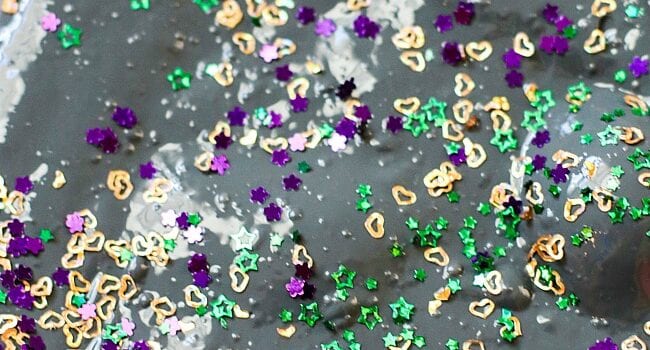
Kids will enjoy playing with this and watching the confetti mix in. The contrast of colours is really quite striking!

Slime can be part of a sensory diet. It offers visual, tactile, and proprioceptive sensory input. 

Find other sensory play recipes including slimes by grabbing a free sample of our Sensory Play Recipes eBook. Simple enter your email below and you’ll be set!

Check out some of our other slime recipes:

Rainbow Confetti Party Slime Minnie Mouse Slime 

Filed Under: Sensory Tagged With: sensory play, slime

Unicorn Fluffy Slime

By Sharla Kostelyk

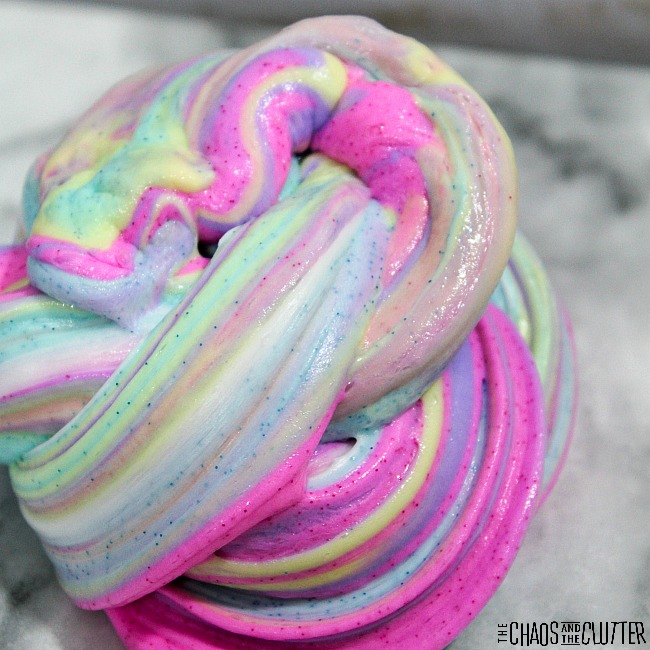
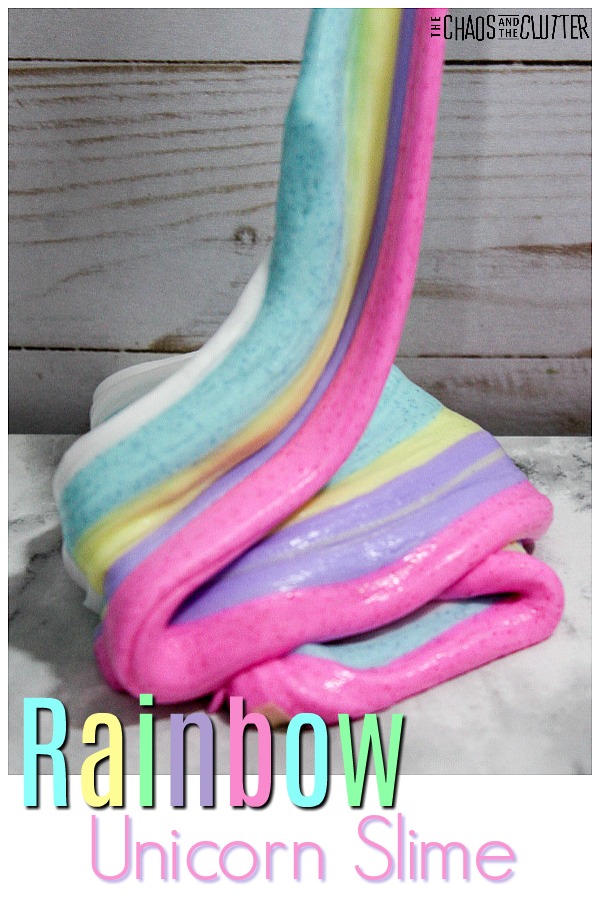
When I was in the 5th grade, I was obsessed with unicorns. Most of the girls in my class were. So when unicorns made a comeback a few years ago (I mean really, how can unicorns ever go out of style?!), I wasn’t surprised. This unicorn fluffy slime is like a gift to my grade 5 self. Rainbow Unicorn Slime #unicorn #slimerecipes #sensoryplay #slime #unicornslimeMy girls love unicorns too. So a unicorn slime was in order. We decided on a rainbow unicorn fluffy slime. Of course, we used pretty colours and lots of glitter!
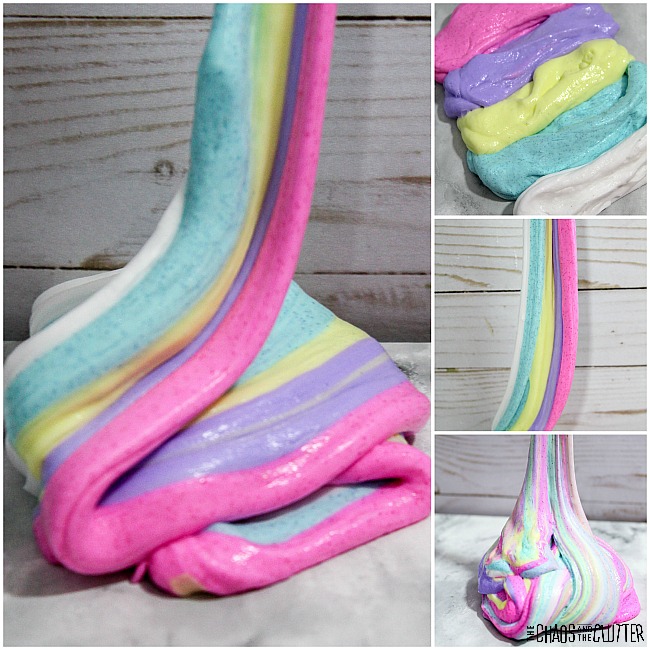
Unicorn Slime

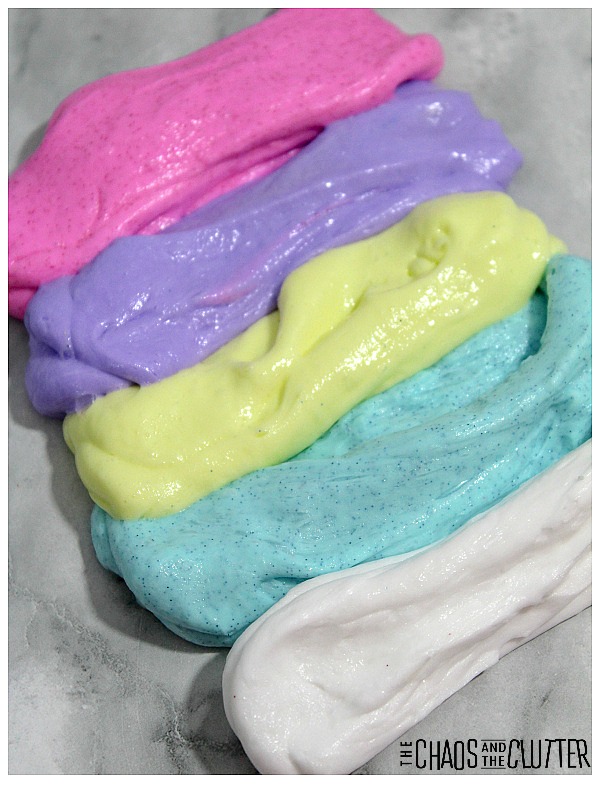
To make this unicorn slime, you need to like making slime because you’re going to need to make 5 colours. You’ll make each colour separately.

For those wanting a sensory activity for your kids that promotes proprioceptive input (heavy work), there will be a lot of kneading, pulling, and stretching to make these 5 colours. This is a great way to get in that heavy work which helps kids with self-regulation.

Unicorn Fluffy Slime Recipe

Slime Ingredients:

  • 4 oz. (1/2 cup) Elmer’s white school glue
  • 1/2 cup shaving cream
  • 1/2 cup foaming hand wash
  • 1/2 tsp. corn starch
  • 1/2 tsp. body lotion
  • 1/2 tsp. baking soda
  • 3/4 Tbsp. contact solution
  • candy colour or food colouring (yellow, pink, purple, and teal)
  • glitter (yellow, pink, purple, teal, and iridescent)

unicorn fluffy slime

How To Make Unicorn Slime:

  1. Pour 1/2 cup of white glue into a bowl.
  2. Add 1/2 cup of shaving cream. I like my slime a bit on the fluffier side, so I add a bit more than 1/2 a cup. Mix.
  3. Stir in 1/2 cup of foaming hand wash and mix well. The mixture will be very foamy at this point.
  4. Add 1/2 tsp of baking soda and 1/2 tsp. of body lotion.
  5. Put in a few drops of food colouring or candy colour. You’re going for pastel colours, so you won’t need to add much. Always best to add less at first. You can always add more later.
  6. Now is the time to add the glitter! Add the colour that corresponds with the colour of slime you’re working on. Use the iridescent for the white.
  7. Add in 1/2 tsp. of baking soda. You may need to add a bit more (see troubleshooting notes below).
  8. Put in 3/4 Tbsp. contact solution. Again, you may need slightly more (troubleshooting notes below). You have the right amount when the slime starts to pull away from the side of the bowl when mixing.
  9. Knead the slime.
  10. Repeat the same steps for each of the other colours, omitting step #5 when you make the white slime. You will have a total of 5 types of slime. One white, one yellow, one teal, one purple, one pink.
  11. Swirl all the slime together.
  12. Store your slime in an airtight container.

homemade unicorn slime process

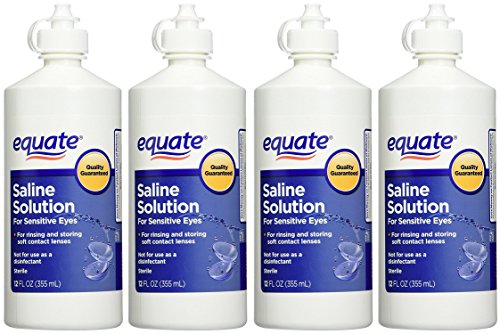
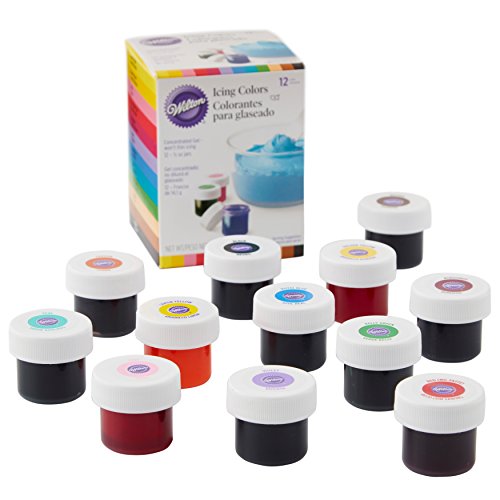
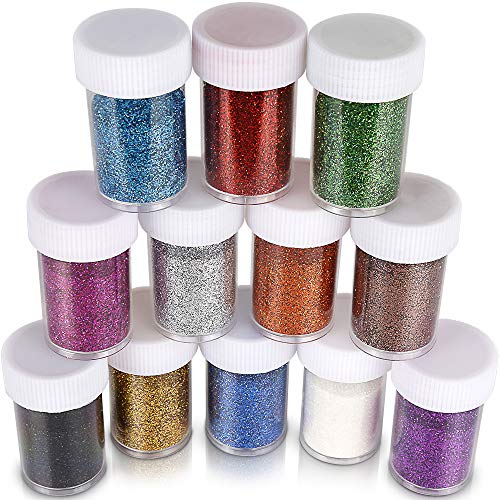
Elmer's White School GlueElmer’s White School GlueElmer's White School GlueSaline SolutionSaline SolutionSaline SolutionWilton ColorsWilton ColorsWilton ColorsFine GlitterFine GlitterFine Glitter

Slime Troubleshooting:

I suggest always using Elmer’s school glue. Using less expensive glues hasn’t given me good results in the past, so I’ve learned to stick with the tried and true.

If you’re wondering how to fix slime that’s too runny, I’ve got you covered. Baking soda will thicken the slime, but you’ll only want to add a tiny bit at a time and make adjustments as you stir.

Or maybe you’re wishing you knew how to fix slime that’s too sticky. Add more saline solution one drop at a time to make your slime less sticky.

To ensure that you get stretchy slime, you need to read the ingredients on your saline solution and be sure that it contains sodium borate and boric acid. unicorn slime


Sign up for our Sensory Solutions and Activities email series and get a free sample of our Sensory Play Recipes eBook so that you can create more sensory fun.

More Fun Slime Recipes:

Unique Types Of Slime

Crunchy Slime With Mardi Gras Beads

Cool Slime Ideas 

How To Make Stretchy Slime

Glow In The Dark Slime With Glitter

Minnie Mouse Slime Rainbow Confetti Party Slime 

Filed Under: Sensory Tagged With: sensory play, slime

  • « Go to Previous Page
  • Page 1
  • Interim pages omitted …
  • Page 21
  • Page 22
  • Page 23
  • Page 24
  • Page 25
  • Interim pages omitted …
  • Page 45
  • Go to Next Page »

Primary Sidebar

Categories

We are a participant in the Amazon Services LLC Associates Program, an affiliate advertising program designed to provide a means for us to earn fees by linking to Amazon.com and affiliated sites.

Copyright © 2026 • The Chaos and the Clutter • Site Design by Jeni @ The Blog Maven

Return to top of page

Copyright © 2026 · Chaos and the Clutter 2.0 on Genesis Framework · WordPress · Log in