• Skip to primary navigation
  • Skip to main content
  • Skip to primary sidebar
  • Home
  • About
  • Contact
  • Privacy + Terms
  • Affiliates

The Chaos and the Clutter

  • Facebook
  • Twitter
  • Pinterest
  • Google Plus
  • RSS
  • Email
  • School at Home
  • Sensory
    • Sensory Processing Disorder
    • Awesome Sensory Play Activities
      • Sensory Bins
      • Sensory Bottles
      • Sensory Bags
  • Family Games
    • Minute to Win It Games
  • Special Needs Parenting
    • Childhood Anxiety
    • Reactive Attachment Disorder
    • Sensory Processing Disorder
  • Store
  • Course Login

Sharla Kostelyk

6 Things I Learned When My Child Was Kidnapped

By Sharla Kostelyk

I know that if you are a regular reader, you’re used to hearing from only me. I don’t usually allow guest posts on The Chaos and The Clutter, but when my friend Jennifer approached me about her story, I knew I had to make an exception. I think that most of us have the view of kidnapping as being stranger abductions and I know that I certainly think of it as something that isn’t likely to ever happen to my kids, but believe me, if it can happen to her, it can happen to me and it could happen to you.

That’s why I felt that sharing her story was so important. Knowledge is power. I was shocked reading the statistics. If this helps one family not to have to go through this or helps a family who does go through it to have a positive outcome, then her coming forward to share her story will have been worth it.

With that, I’m turning this over to Jennifer as she shares with you in her own words her personal experience with something she never thought could happen to her.


We’ve all seen played up kidnappings on TV – a late night home invasion, followed by a ransom note, and a frantic family gathered around their coffee table with FBI officers and high-tech equipment.
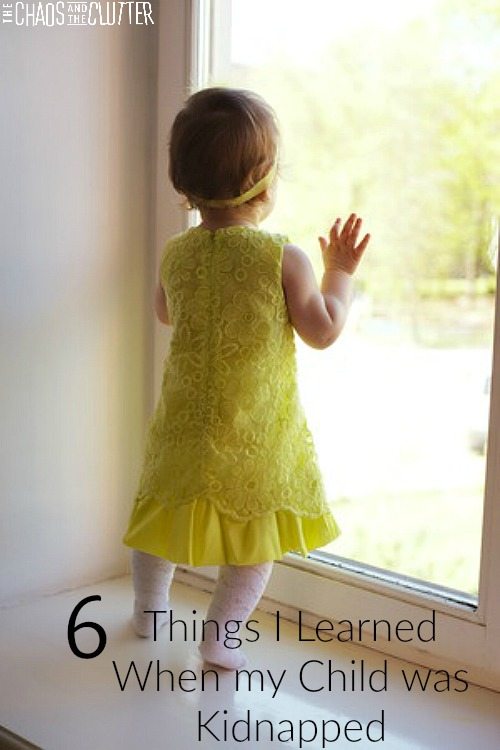
6 Things I Learned When my Child was Kidnapped that you need to know too. Reading this could help protect your family.Image Copyright: ababaka / 123RF Stock Photo

While kidnapping is one of the biggest modern fears that plagues parents, at the center of the debate against free-range parenting and receiving constant buzz on social media, as a society, we have a really inaccurate idea of what kidnapping actually looks like.

I’m scared to share my kidnapping story.

Correction. My daughter’s kidnapping story.

I’m scared for a few reasons, but mostly I’m scared of receiving judgment or of bringing judgment upon my child. Being a single parent family, we already encounter some surprising judgment, so do I really want this additional label attached to our family? Do I want other families to avoid us and label us as “too much drama” for having had this happen to us?

But our story needs to come out, because there is so much that isn’t said about kidnapping. So much that I didn’t know until after I lived it, and if I can make one more person sympathetic to the experience, or allow another parent to know that they are not alone in living out one of the worst experiences a parent could face, then, hopefully it was worth it.

1. It typically isn’t a stranger.

Most kidnappers are actually family members. Family members who object to a custody arrangement, or who are trying to exercise some imaginary control over one’s family.

Any taking or moving of a child without the permission of the custodial parent is a kidnapping.

American statistics can be found here and Canadian statistics can be found here.

2. Kidnappers Don’t Always Know They Are Kidnapping.

As an extension of the previous point, kidnappers who are simply “taking their child not on their assigned day” or “taking the grandkids for a weekend at the cottage despite their silly mother trying to ruin the fun” often won’t recognize that they are kidnapping. They sometimes think they are within their rights (even if the courts don’t agree) or they justify their actions in some other way.

To this day, if you were to ask my family member if they kidnapped my daughter, the most they would probably admit to is “overstepping boundaries.”

3. Police aren’t always notified.

Those who have never experienced a kidnapping are incredulous at this. They blame the parent for being stupid or even possibly being an accessory to the kidnapping if they didn’t notify police, but many kidnappings go unreported.

Why? Because people want to solve the issues within the family, or they are afraid to escalate the situation.

For me, I didn’t want my daughter to experience police intervention. The kidnapper was a close family member who my daughter loved and it would have been traumatized her to watch the family member be arrested or to experience being taken away in a police car away from the family member. I knew that the family member who had my daughter was not traumatizing or abusing my daughter.

Further, unless there are advantages to having a record of police intervention, parents might want to avoid the involvement of the secondary agencies that will become involved after the police are called – Child Services, school authorities, etc.

For my daughter’s return, I negotiated through other family members for a peaceful resolution. On day three of the kidnapping, we agreed to a return date, but I still had little idea where my child was located, and I was unable to speak with her. Involving the police could have led to a much longer negotiation and less willingness to cooperate.
6 Things You Need to Know About KidnappingImage Copyright: backyardproduction / 123RF Stock Photo

4. Bonding with your child after reunification is tough.

My daughter wasn’t aware of what had really happened. She was happy to see me when she returned, but she was also conflicted because we had never been apart for that length of time before and she resented my absence.

For me, I was overjoyed to have her home, but I also knew that I had failed her. I had experienced the loss of my child, and even though she was back in my arms, there would always be a part of me that had lost her. That week of her life will always be etched on my heart, and I don’t know that I will ever feel completely whole again as a parent.

Coming home was the end of the worst, but the beginning of our rebuilding our relationship post-kidnapping.

5. You’re not allowed to grieve.

The kidnapping wasn’t over once my daughter was home. I was jumpy and experienced a bit of depression, and then felt guilty for spending my daughter’s precious time back home being disorganized, scatterbrained, and allowing our home to get messy and cluttered. I felt inadequate and unworthy of being her mom.

Because I was so stressed out and anxious about the incident, I did overreact at a few of my daughter’s outbursts (likely caused by her own stress from the incident).

I could only handle one thing at a time, and was easily overwhelmed.

For the most part, people didn’t know about the incident. That was my choice in protecting my family’s privacy. But the flip side was, people were confused and annoyed by my disorganization and inability to cope with normal deadlines and tasks. Honestly, if I had not been self-employed at the time, I would likely have been fired.

Of the 20 or so people who knew what happened, very few of them gave me grace once my daughter was home. They were understanding when she was kidnapped, but once she was home, I was expected to be back to normal.

6. You’re not alone.

Perhaps you’ve been there. If not, I pray that you’ll never be there.

Because this is such a lonely experience, and one that many of us hide, we often go through it alone.

We feel misunderstood. We feel like others will judge our situation – or will judge us for being in the situation.

I’m afraid to tell people. I’m afraid that they will avoid us because our family seems like too much drama, and I wouldn’t even blame them. I’m afraid people will associate my daughter with something that happened to her, rather than the wonderful person that she is – that they will see a pawn in a sick grown-up power game rather than a sweet, loving girl who is going to move mountains one day.

As alone as I felt, the statistics show that I am not alone.

I’m sharing my story today because what we picture as kidnapping needs to change, and hopefully, if you ever witness someone going through this horrific experience you can extend a bit of grace and understanding.

~Jennifer
 

Filed Under: Parenting in the Chaos

7 Tips for Reading to Older Children

By Sharla Kostelyk

One of the things I’m enjoying most about homeschooling right now is the time the kids and I spend together reading. Sometimes we relax on the couches in the living room while I read to them and other times it’s at the kitchen table or while they are in their desks in the homeschool room.

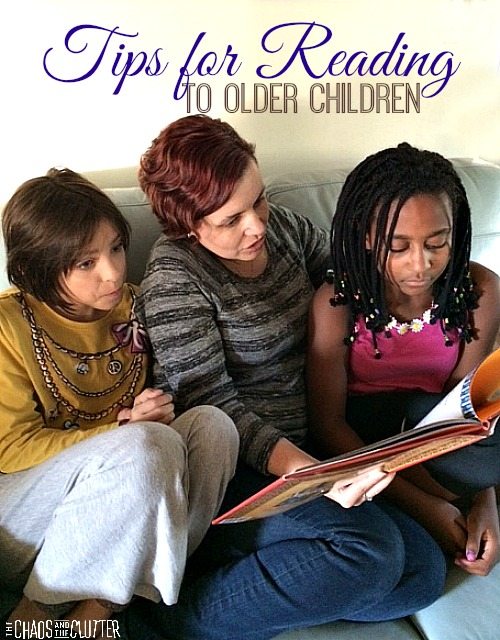
Reading to your kids doesn't have to end when they are old enough to read on their own. Reading to older kids strengthens bonds, increases curiosity, improves communication, and creates a lifelong love of learning.Last week, I made little tea sandwiches and I read at the table while they ate their sandwiches and sipped tea. I’ve found that the best way to make these read aloud sessions successful is to allow the kids to do other things quietly while I read.
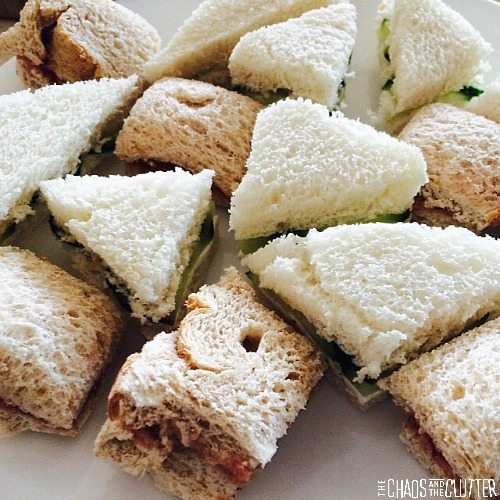
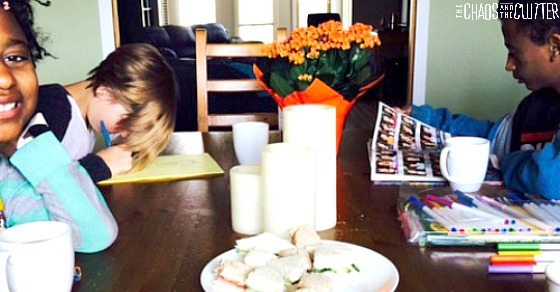
tea sandwiches

My girls often knit, crochet or colour while I read and the boys usually colour or play with Lego. These quiet activities allow them to still listen to the story without getting restless.

Some people believe that reading aloud to their kids ends when their child starts reading on their own, but reading to my older kids has been a wonderful way to learn together, spend time together, facilitate discussions, and introduce them to some of my favourite childhood books. Reading to older children strengthens bonds, increases curiosity, improves communication, and creates a lifelong love of learning.

Tips for reading to older children:

  1. Let them have some say in the books you read. You may have an agenda for what books you want read in a month or a year, but allowing your child to have some input as to the order you read them in or to choose an additional book to add to the list will help them to feel involved and be more attentive.
  2. Use the books as conversation starters. Reading aloud is a wonderful way to bridge discussions on topics that you may not know how to bring up. As kids get older, you can choose material that leads into conversations about relationships, choices, religion, intimacy, addictions, abuse, and other relevant subjects.
  3. Allow the books to lead to other learning. If my kids have questions about something in a book we are reading, I will often set the book down and we will go to the computer and research the answer together. This helps bring alive what we are reading. Two recent examples: In Secrets in the Woods, we were immersed in a chapter about kingfishers, but the kids had never seen one and wondered what they looked like. Once we had seen several pictures of the birds online, they were much more engaged in the story. In The Saturdays, there was a reference to a painting done in the 1800s. We were not able to find such a painting or the artist, but it led to a lively debate about whether the painting was fictitious or not.
  4. Ensure that the reading time is a positive one. If you are demanding that your child sit up straight, pay perfect attention, not ask questions, and do long reports on each book read, your child is not likely to look forward to your reading time. If you are relaxed and the experience is positive, it will only further your child’s interest in books. Though we often read chapter books, we also read a few short picture books every week
  5. Create a relaxing environment. Sit under a tree on a blanket on a warm day, cuddle up in bed under the covers, pile on the couch, sip tea and eat scones, let your kids play quietly. When the weather is nice, we often read on the trampoline outside. I let them bring blankets and we all pile on and relax while we read. They also like sitting on the bean bag chair in the homeschool room while I read. I often let the kids quietly flip through picture books, draw, colour, or play with Lego while I read to them. This helps them to relax further.
  6. Use audio books some of the time. Audio books are a nice change. Once your kids are used to listening, they will enjoy the odd audio book and you will enjoy the break for your vocal cords! When you find a well done audio book, the listener is truly transported into the story. If they get used to being read to aloud, they will have more of an attention span for audiobooks which comes in especially handy on long road trips. We’ve listened to many good ones. The Ramona Quimby audio collection is great. So is The Silver Chair, the BBC version of the Wind in the Willows and so many others.
  7. Let them see your enthusiasm! Choose books that you love. Talk about the magic of being swept away to a distant land or time in history. Let your love of books shine through. It’s contagious!

reading tea partyBonus tip: Once in awhile, throw in a book that has a movie version or one that will soon be coming to the theatre or even one that a high school in your community is doing a live play version of. Watching the movie or going to see the play after you have finished watching the book is a great treat and it allows for further discussions on ways that the book differed from the movie or performance. We are reading The Jungle Book right now with plans to make a special day of going to see the new Disney movie when it opens in theatres in the Spring.

I also often plan an entire unit around a book including crafts, food, activities and sometimes, even a field trip. Here are some of the book activities that we have done:

The Secret Garden

The Black Book of Colours

Have You Filled a Bucket Today?

The Kissing Hand

Charlie and the Chocolate Factory

Today, I Feel Silly

Jump!

A Bad Case of Stripes

Fancy Nancy

Click, Clack Moo. Cows That Type

The read-alouds we’ve used lately:

Wonder
Prayers That Changed History
Sarah, Plain and Tall
The Jungle Book
The Saturdays
King Arthur and His Knights at the Round Table
Secrets of the Woods
InLinkz.com


If you are looking for fun or interesting activities to accompany your books, you may want to follow my Book Activities board on Pinterest.

Filed Under: Homeschooling, Parenting in the Chaos

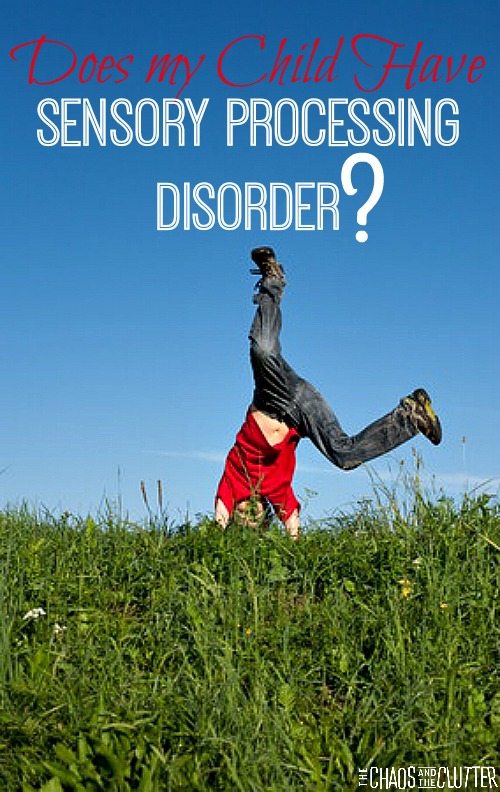
Does My Child Have Sensory Processing Disorder?

Does my Child Have Sensory Processing Disorder? If you are wondering whether or not your child has Sensory Processing Disorder, this list of information and resources will be a starting place for you to find help.

By Sharla Kostelyk

Sensory Processing Disorder is a term that ten years ago when my daughter was first diagnosed was not commonly spoken of and there was very little information about it. Thankfully, since then, there is increasing awareness of sensory issues and it is much easier to find information and support as a parent. We now have four kids who have SPD (sensory processing disorder) and one who just has sensory issues and two who are sensory typical.

Does my Child Have Sensory Processing Disorder? If you are wondering whether or not your child has Sensory Processing Disorder, this list of information and resources will be a starting place for you to find help.Image Copyright: gbh007 / 123RF Stock Photo

For a moment, let’s imagine that you are at the playground watching your child play and observing the other children at the park as well. The playground has sensory input of all types (did you know there are 8 types?! – we’ll get to that a bit later) and the kids that are there are all responding in their own way to receiving that input. Some of the children are running and laughing. One is sitting on the ground, crying, while another throws sand at them. One is walking on the concrete perimeter, seemingly unwilling to set foot in the sand. Some are swinging and sliding and shouting and one is crouched under the slide with his hands over his ears. A little girl is spinning wildly in circles, flapping her arms and before racing across to the swings where she swings higher than what seems safe. Two girls sit across from each other on the bench playing a rhyming clapping game. A toddler clings to his momma’s leg. Your child wants to go around and around and around on the merry-go-round until you are sure that they are going to be sick and still wants to keep going, but is also whining about the amount of noise at the playground and scratching the back of their neck where the tag on their shirt is bugging them.

What if I told you that more than four of the children described in the above playground scenario may be at risk for having SPD?

Some people assume that all kids with SPD are sensory avoidant, staying away from all sensory input. Or that people with SPD are sensory seeking, trying to create more of a sensory experience in every environment. The truth is that it is often a combination of both. You may find that there is a child with SPD who avoids all things auditory (hypersensitive to sound) while they are seeking vestibular input (under-sensitive to balance and spatial orientation). Such a child may want to swing with abandon and yet cover their ears at the slightest noise.

If you are wondering whether or not your child has Sensory Processing Disorder, this list of information and resources will be a starting place for you to find help.

If you are wondering if your child has Sensory Processing Disorder...Image Copyright: petro / 123RF Stock Photo

Sensory Processing Disorder (SPD) is also sometimes referred to as Sensory Integration Disorder (SID). To confuse things further, there are actually more sensory input systems than you may be aware of.

Sensory input systems:

  • visual
  • auditory
  • tactile
  • olfactory
  • proprioceptive
  • vestibular
  • gustatory
  • interoceptive

The sensory systems are complicated, but here is a very basic overview of them to give you a better understanding.

Vestibular: This is the sense of balance and motion. It helps give us a sense of where we are in space. This sense is located in the middle ear.

Proprioception: This system of body awareness is triggered when we exert force such as pushing or pulling on objects or even in jumping (push and pull of joints).

Tactile: This is the sense of touch, allowing us to know both that we have touched something and to determine what we have touched through receptors in our skin and mouth.

Visual: Our sense of sight, allowing us to discriminate objects and people based on visual cues.

Auditory: In a person without SPD, the auditory system allows us to not only hear, but also to filter out the noises that we do not need.

Olfactory: Our sense of smell also influences our sense of taste and is tied directly to emotional memories in the brain.

Gustatory: The sense of taste allows us to distinguish different foods.

Interoceptive: The feeling of things such as hunger, thirst, itch, pain, and body temperature.

Sensory Processing Disorder Risk Factors:

There are a number of other conditions and situations that predispose a child to having SPD. Some of these include:

  • premature birth
  • early hospitalization
  • prenatal exposure to drugs or alcohol
  • autism, Aspergers, PDD
  • time spent in an institution such as an orphanage
  • siblings or parent with SPD
  • tube fed for extended periods of time
  • early neglect
  • exposed to environmental toxins (such as lead paint in an orphanage)
  • ADD/ADHD
  • certain developmental delays and neurological disorders such as Fragile X Syndrome, Down Syndrome, FASD, and others

Do any of the following describe your child?

  • avoids having hair brushed
  • complains of tags in clothes or seams in socks
  • wants to go barefoot
  • spinning, swinging, rolling, enjoys the feeling of being dizzy
  • has higher than “average” pain tolerance
  • has lower than “average” pain tolerance
  • seems overly sensitive to light or noise or smells
  • listens to music louder than “normal”
  • has meltdowns, especially in busy places or new environments
  • trouble sleeping
  • bothered by textures
  • doesn’t seem to realize their own strength (e.g. a touch is almost a push)
  • avoids certain food textures
  • trouble recognizing if they are in motion
  • licks, sucks and chews on things, likes to often have something in their mouth
  • interrupts
  • can’t concentrate when there is background noise
  • covers ears for noises such as sirens
  • trouble recognizing objects by their shape
  • upset by transitions
  • breaks items accidentally
  • developmental delays, particularly as a baby or toddler
  • difficulty following directions, particularly multi-step instructions
  • seems to not notice being hot, cold or hungry
  • easily tired
  • difficulty crossing the midline of their body
  • appears lazy and/or disorganized
  • crashes into things, jumps, wrestles, always seems to be looking for large sensory input
  • constantly touching things and people
  • takes physical risks in play
  • cannot sit still
  • smells or licks non-food items
  • trips or bumps into things
  • struggle with personal care and hygiene tasks

Remember that SPD looks different for different people, so your child will not display all the symptoms above. You will notice that many of the things on the list contradict each other. That is because one child can be sensory seeking in a certain area of input while another can be sensory avoidant in that same area.

Sensory Processing Disorder is by no means a devastating diagnosis. But knowing can help you better understand your child and help them to better navigate the world around them, increasing their chances of success. It can also help you advocate for your child to enable them to have access to the services that will best help them.

Above all else, trust your instincts as a parent. If you suspect that there are sensory issues, keep searching until you find a professional who will listen to you. Start with a phone call to your paediatrician or an occupational therapist.

Here is a list you might find useful:

Sensory Processing Disorder Checklist

Some of my favourite blogs for information, resources and activities for SPD:

Growing Hands-On Kids
And Next Comes L (some great money-saving DIY sensory solutions here!)
Lemon Lime Adventures
The Sensory Spectrum
Sensory Mom Secrets
The Inspired Treehouse
Mama OT
B-Inpired Mama

You can also find simple sensory activities as well as help on such things as surviving a public bathroom with a child with sensory issues or  the sensory mystery of tight fitting clothing or learn about our sensory stations and much more right here on The Chaos and The Clutter.

Please note: I am not a medical professional. I am just a mom who has a lot of experience with SPD because so many of my children happen to have this diagnosis. I have done a lot of reading on the subject, attended a few seminars, spoken with and worked with professionals, and applied what I have learned with my own children. If you suspect that your child has SPD, please consult a professional in your area to confirm this.

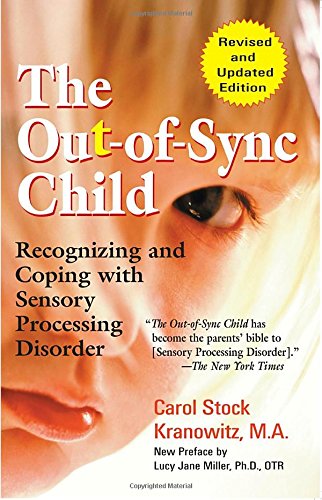
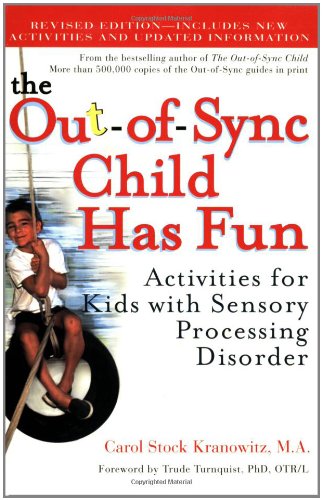
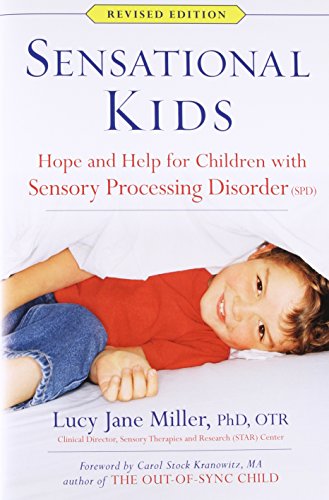
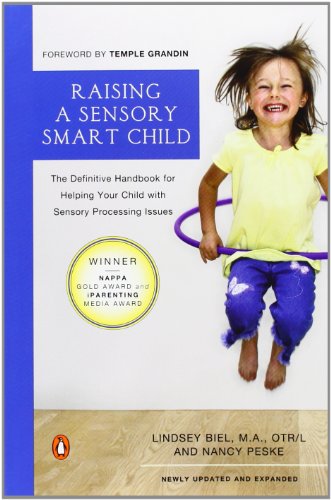
The Best Books on Sensory Processing Disorder:

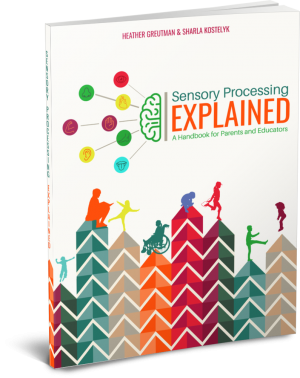
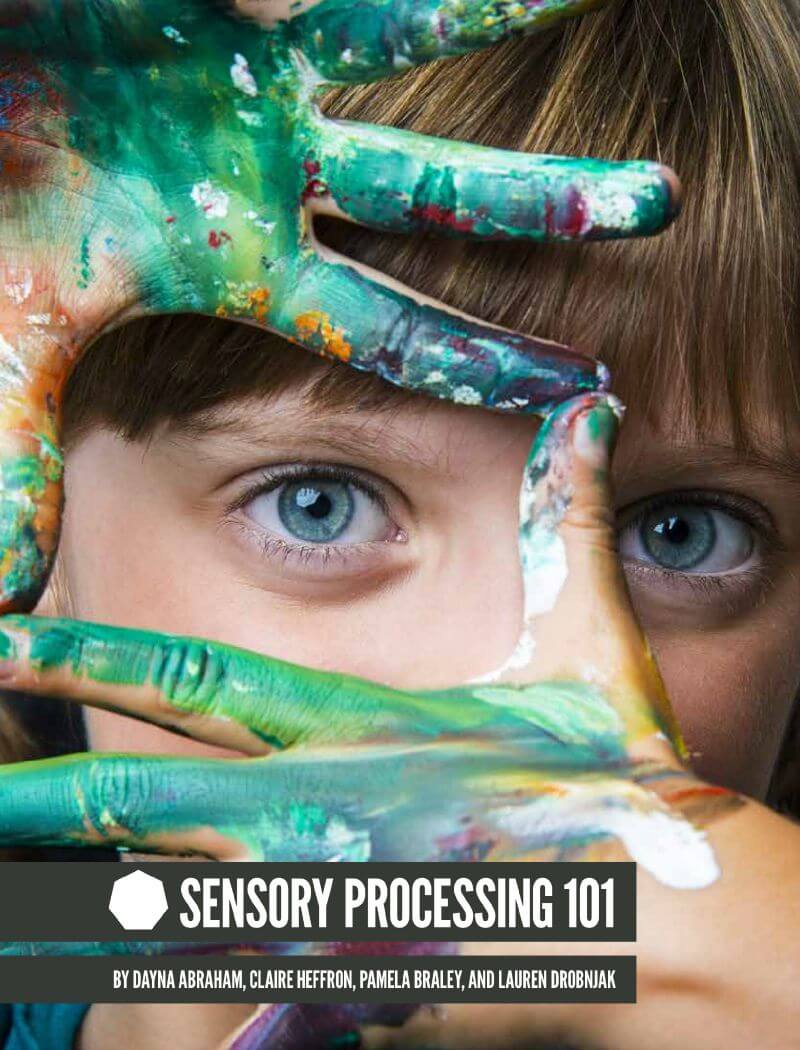
Sensory Processing Explained: A Handbook for Parents and EducatorsSensory Processing Explained: A Handbook for Parents and EducatorsBuy NowSensory Processing 101Sensory Processing 101The Out-of-Sync Child: Recognizing and Coping with Sensory Processing Disorder (The Out-of-Sync Child Series)The Out-of-Sync Child: Recognizing and Coping with Sensory Processing Disorder (The Out-of-Sync Child Series)The Out-of-Sync Child Has Fun, Revised Edition: Activities for Kids with Sensory Processing Disorder (The Out-of-Sync Child Series)The Out-of-Sync Child Has Fun, Revised Edition: Activities for Kids with Sensory Processing Disorder (The Out-of-Sync Child Series)Sensational Kids: Hope and Help for Children with Sensory Processing Disorder (SPD)Sensational Kids: Hope and Help for Children with Sensory Processing Disorder (SPD)Raising a Sensory Smart Child: The Definitive Handbook for Helping Your Child with Sensory Processing Issues, Revised EditionRaising a Sensory Smart Child: The Definitive Handbook for Helping Your Child with Sensory Processing Issues, Revised Edition

Join our free 5 part email series Sensory Solutions and Activities and get our Sensory System Behaviours Easy Reference Cards.

Sensory Meltdowns: Causes, Prevention and Strategies

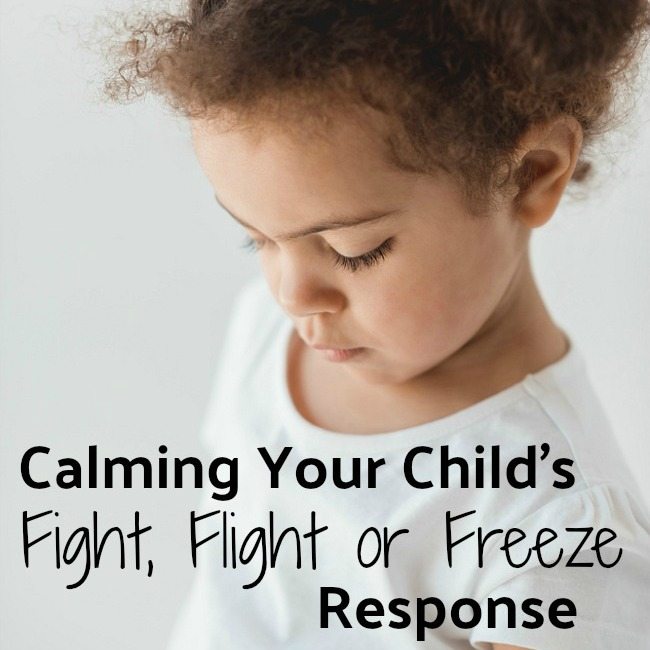
Calming the Fight, Flight or Freeze Response in Your Child

Filed Under: Sensory, Special Needs Parenting

Zombie Party

By Sharla Kostelyk

I bet at this point, some of you are checking to see if you accidentally came to the wrong blog! Zombies don’t really seem like they’d be my thing, right?! Don’t worry…you’re in the right place. For one of our son’s recent birthdays, we threw him an epic zombie party and even I couldn’t help but think it was fun!

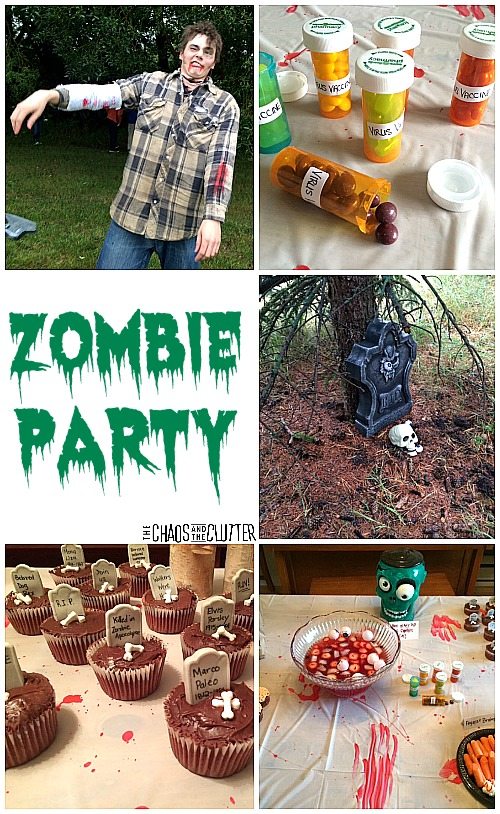
Zombie Party Ideas...decorations, games, food, and everything else you'll need to create the most epic Hallowe'en or birthday party ever!Finally after 4 sons and many, many birthday party themes that I thought I would impress them: army, sports, Mickey Mouse, pirates, dinosaurs, fireman, hockey, I found a theme that knocked it out of the park!
Moms, if you are looking for a party theme that will make you the “cool mom” with your tweens and teens, then zombies it is! When planning a zombie party, the only thing you need to remember is “the grosser the better”.

Planning this party was a lot of fun. The kids and I laughed about me saying things like, “There isn’t enough blood on this paper. We need more blood.” and calling my friend to ask, “Do zombies only eat brains or can they eat other body parts too?”

Zombie Party Decorations:

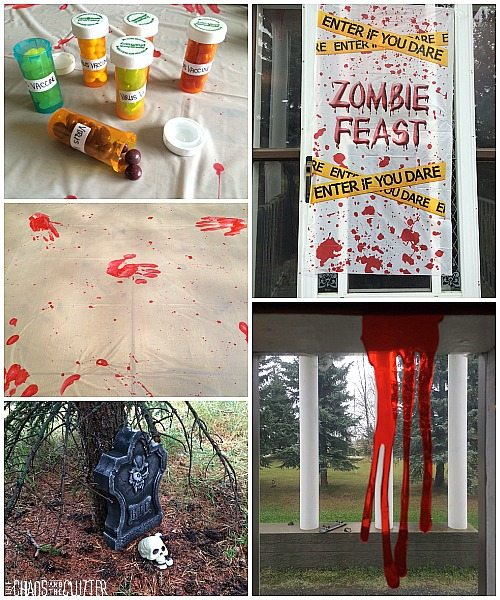
I hit up a local dollar store for most of the decorations. We hung a banner on the front door and placed some gel ‘blood’ on the front window to set the stage for the guests when they first arrived.

Zombie Party DecorationsWe made a themed tablecloth by using a white plastic tablecloth and adding handprints, streaks and splatters with red paint.
I washed out some old pill bottles and filled some with Skittles and some with Mike and Ikes and added labels with the words “Virus Vaccine” on them. I placed these on the table.

Many of the decorations were put up outside for the scavenger hunt/wide game. We borrowed some of them from our neighbour’s Hallowe’en decoration stash. We made one area outside into a little graveyard and the items for the scavenger hunt/game served as many of the decorations in our little forest.

Zombie Party Activities:

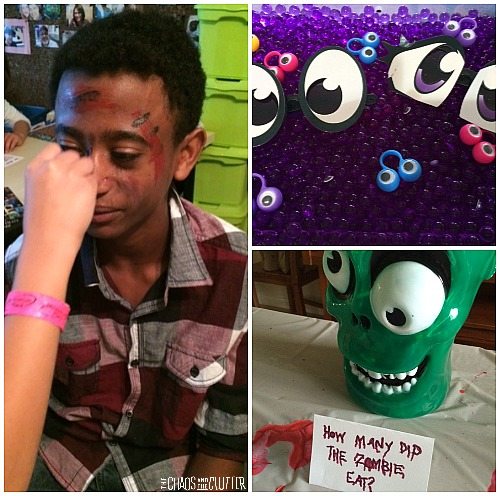
When party guests first arrived, they had the option of having their faces painted like zombies. My girls were the face painters using little kits that included gel ‘blood’ to finish off the looks.

Another simple activity was having the party guests guess how many lollipops were in the scary head. Whoever guessed the closest without guessing over won the whole thing to take home.

We also happened to have an eyeball sensory bin made and left it out for the party. I wasn’t expecting teen and preteen boys to be too interested in a sensory bin, but it got played in A LOT during the party! Some boys spent over 20 minutes playing with it.

Zombie Party ActivitiesThe big activity was an outdoor zombie scavenger hunt/wide game. One of our older sons had hidden items outside in our yard in the trees. I wrote out a list of items that the boys had to retrieve and explained the game to them. The items needed to be brought one at a time to the safe area (the playhouse) without the person being tagged by a zombie. My three girls had dressed like zombies and were set to chase after the boys trying to get their items to the safe area.

What the boys didn’t know (including the birthday boy!) was that our oldest son had come over earlier in the day to surprise his brother. He had hidden upstairs getting zombified and then had hidden in the trees to be discovered during the game. Once they found him, he was another zombie who could tag them while they were in the open grass area.

The list of what the party guests had to find in the trees:

  • 1 brain
  • 1 heart
  • 8 fingers
  • 2 thumbs
  • 1 severed hand
  • 1 severed leg
  • 12 eyeballs
  • 1 white rat

Zombie Food:

Creating the food for this party was a lot of fun.

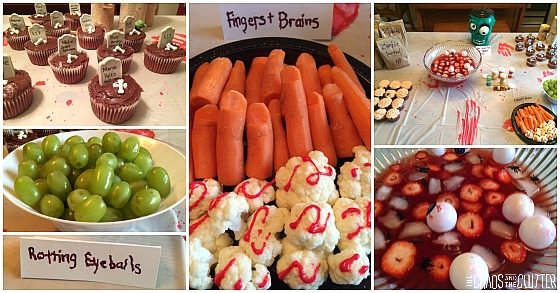
Zombie Party FoodTo make the punch, I mixed frozen red fruit punch with 7-Up and then added plastic eyeballs, sliced strawberries, and ice cubes I had made with plastic flies frozen in them. (Where there are zombies, there will be flies!)

Miss Optimism cut carrots to look like fingers and we drizzled red food gel onto cauliflower to look like brains. We set out a bowl of green grapes with a tag of “rotting eyeballs”. During the party, I served “bloody fingers” which were just barbequed hot dogs with ketchup.

Instead of cake, we served two types of cupcakes. We had vanilla cupcakes with chocolate icing decorated with little gravestones and bones. I used an edible marker to write on the tombstones. I added gummy zombies to a few of them as well. The other cupcakes were chocolate with vanilla icing decorated to look like brains. Miss Optimism decorated those entirely herself. It is wonderful having a daughter who likes to help!

Zombie Party Cupcakes

Extras:

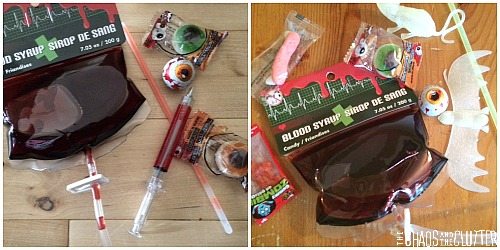
For treat bags (otherwise known as loot bags), I used brown paper bags. We titled them “Zombie Survival Kits” and added some blood drips in permanent marker. My girls were a big help with these details.

Inside the favour bags, I included IV bags with strawberry syrup, syringe pens, gummy eyeballs, chocolate eyeballs, glow bracelets, gummy teeth, gummy zombies, glow-in-the-dark rats, and glow-in-the-dark bats.

Favour bags for zombie partyThis Zombie party would be great for not only a birthday but for a Hallowe’en or Night of the Living Dead or Fear the Walking Dead kickoff or finale party.
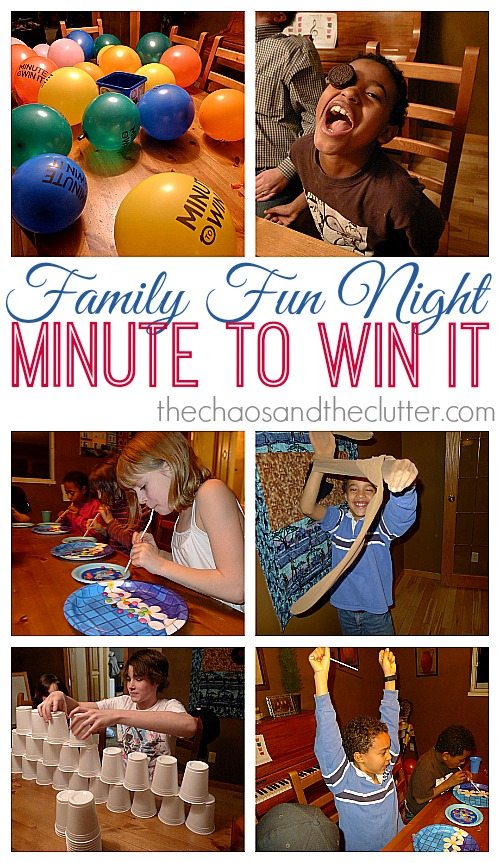
If you are looking for other fun party ideas, be sure to check out our popular Minute to Win It party.

Minute to Win It Family Fun Night

Filed Under: Crafts and Activities

Eyeball Sensory Bin

By Sharla Kostelyk

This sensory bin was most popular with my older kids. In fact, I happened to have it on the counter during a zombie theme party we had for our son and the preteen and teenage guests at the party loved it! Some of those boys spent more than twenty minutes playing in it. Don’t believe anyone who tries to tell you that sensory bins are only for little ones!

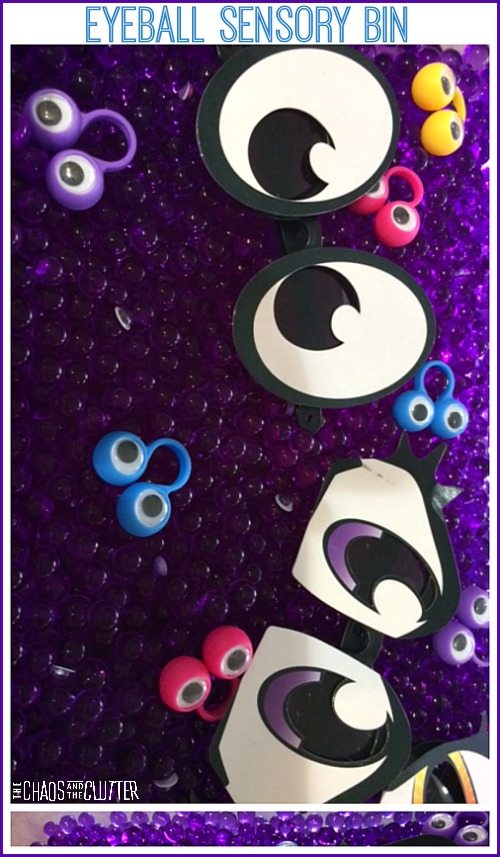
Eyeball Sensory Bin...even popular with older kids.To make this eyeball sensory bin, I used purple water beads, water, googly eye stickers, bright coloured eyeball finger puppet rings, and cartoon eye glasses. I began by filling a clear plastic bin with water and the purple water beads to allow them to soak up the water. When the water had been absorbed, I added the other items.
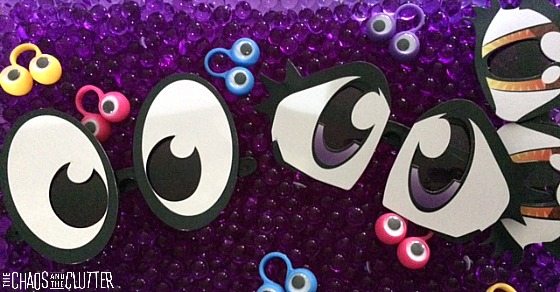
One of the ways the kids played with this bin was to play seek-and-find with the eyeball stickers that were here and there and everywhere.

Eyeball sensory bin with purple water beadsThe cardboard on the cartoon glasses got wet from the water beads after a few days so we ended up having to take those out, but they were a fun element while they lasted. The kids enjoyed trying them on and laughing at each other! They also liked playing with the ring finger puppets.

This would be a good sensory bin to go along with a Monsters theme unit or for Hallowe’en.

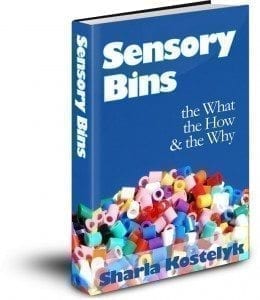
If you are looking for information on making sensory bins, you may be interested in my book. The Ultimate Guide to Sensory Bins

Join our free 5 part email series Sensory Solutions and Activities and get our Sensory System Behaviours Easy Reference Cards.

Filed Under: Sensory, Sensory Bins Tagged With: sensory bin, sensory play

Fall Sensory Bins

By Sharla Kostelyk

Fall is here. We’ve been phasing out some of our summer activities as the weather cools. I love the colours in the Fall so that helps me make the mental transition in adapting to the crisper weather.

Last week, we made our first autumn sensory bin of the season. Actually, it was a bin-in-a-bag I got from a friend so all I had to do was dump it into a bin and let the kids start playing!

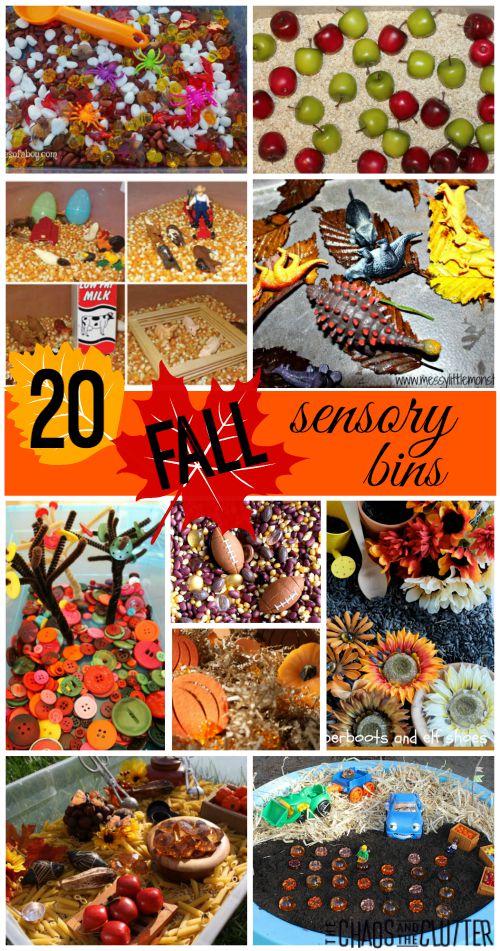
Fall Sensory Bins:
20 Fall Sensory Bins

  1. Fall Button Tree Quiet Bin for Preschoolers from Hands On as We Grow (pictured)
  2. Thanksgiving Sensory Bin from here on The Chaos and Clutter
  3. Fall Sensory Basket Ideas for Babies from Growing Hands-On Kids
  4. Apple Sensory Bin {With Free Printable} from Teaching Mama (pictured)
  5. How to Create A Fall Colored Rice Sensory Bin from Little Miss Kate & Co.
  6. Fall Sensory Play for Toddlers from Fun at Home with Kids
  7. Autumn Sensory Bin with Birdseed and Cinnamon from here at The Chaos and The Clutter
  8. Fall Sensory Bin (With Homemade Pumpkin Play Dough) from Wildflower Ramblings
  9. Fall Farm Sensory Bin from The Jenny Evolution
  10. The Best Part of Harvest: Playing in the Corn Sensory Bin from The Resourceful Mama
  11. Pumpkin Patch Sensory Bin: Practicing Matching With Preschoolers from Life Over C’s (practised)
  12. Sunflower Sensory Bin from Rubber Boots and Elf Shoes (pictured)
  13. Camouflaged Dinosaurs in Autumn Leaves from Messy Little Monster (pictured)
  14. Football Sensory Bin from Fantastic Fun and Learning (pictured)
  15. Spooky Spider Sensory Bin from The Eyes of a Boy (pictured)
  16. Fall on the Farm Sensory Bin from Gift of Curiosity (pictured)
  17. Fall Sensory Bin from Happy Hooligans (pictured)
  18. Seek-N-Find Fall Sensory Bin from Mama Miss
  19. Pumpkin Patch Small World Sensory Play from Buggy and Buddy (pictured)
  20. Fall Harvest Sensory Bin Play Fine Motor from Learning through Playing

These fall sensory bins are sure to give you creative ideas for making your very own. If you’ve never made a sensory bin before and aren’t sure if your kids would enjoy playing in one, try one just once. I think you’ll be surprised how much time they spend using it and the type of imaginative play it inspires.

fall sensory bins

For hundreds of other sensory bin ideas, you can also follow my Sensory Bins board on Pinterest.

Follow Sharla Kostelyk’s board Sensory Bins on Pinterest.

If you are looking for information on making sensory bins, you may be interested in my book. The Ultimate Guide to Sensory Bins

Filed Under: Crafts and Activities, Sensory Bins

  • « Go to Previous Page
  • Page 1
  • Interim pages omitted …
  • Page 79
  • Page 80
  • Page 81
  • Page 82
  • Page 83
  • Interim pages omitted …
  • Page 128
  • Go to Next Page »

Primary Sidebar

Categories

We are a participant in the Amazon Services LLC Associates Program, an affiliate advertising program designed to provide a means for us to earn fees by linking to Amazon.com and affiliated sites.

Copyright © 2026 • The Chaos and the Clutter • Site Design by Jeni @ The Blog Maven

Return to top of page

Copyright © 2026 · Chaos and the Clutter 2.0 on Genesis Framework · WordPress · Log in