• Skip to primary navigation
  • Skip to main content
  • Skip to primary sidebar
  • Home
  • About
  • Contact
  • Privacy + Terms
  • Affiliates

The Chaos and the Clutter

  • Facebook
  • Twitter
  • Pinterest
  • Google Plus
  • RSS
  • Email
  • School at Home
  • Sensory
    • Sensory Processing Disorder
    • Awesome Sensory Play Activities
      • Sensory Bins
      • Sensory Bottles
      • Sensory Bags
  • Family Games
    • Minute to Win It Games
  • Special Needs Parenting
    • Childhood Anxiety
    • Reactive Attachment Disorder
    • Sensory Processing Disorder
  • Store
  • Course Login

Sharla Kostelyk

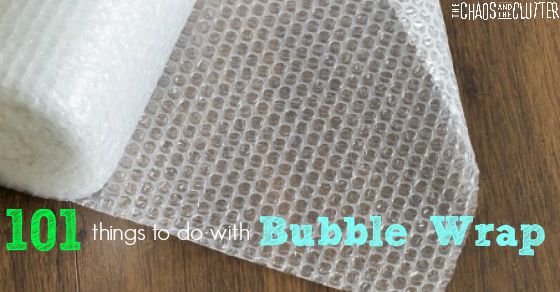
101 Things to do with Bubble Wrap

By Sharla Kostelyk

Bubble wrap is fun for kids and adults alike. It’s great for stress relief and fantastic for sensory. The uses of bubble wrap go far beyond packing and popping. It can be bought at post offices and supply centers or online but can often be found at dollar stores.
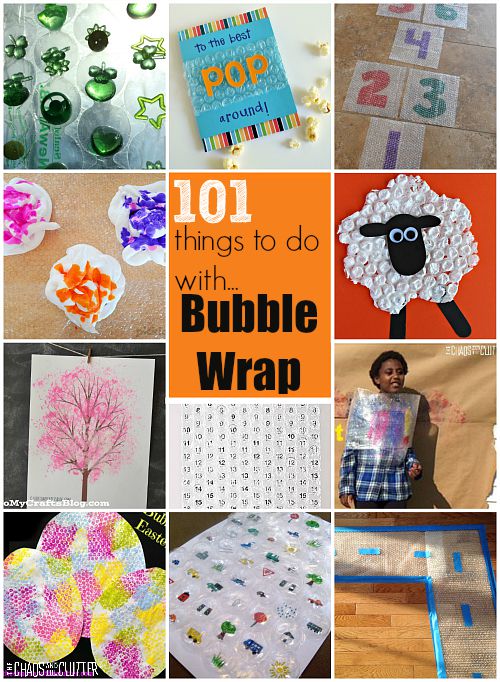
101 things to do with bubble wrap. These ideas are so fun...and not just for the kids!It is one of the most versatile items out there (right up there with duct tape!). Did you know you can even buy coloured bubble wrap?

101 Things to do with Bubble Wrap:

  1. Giant Easter Eggs from here on The Chaos and The Clutter
  2. Stomp painting from Mess for Less
  3. Bubble Wrap Runway from Hands on As we Grow
  4. Sheep Craft from Crafty Morning
  5. Bubble Calendar (so much fun!)
  6. bubble wrap calendarIndoor Hopscotch from Craftophile
  7. DIY Tablecloth from Design Mom
  8. Sumo Wrestling from Life with Four Ladies and One Little Man (AWESOME!)
  9. Unique Father’s Day Card and Gift from See Vanessa Craft
  10. Bubbly Wrap Road from Sunny Day Family
  11. Shaving Cream and Bubble Wrap Sensory Activity from Picklebums
  12. Bubble Wrap Boots from Teaching Mama
  13. Road for Toy Trucks from Hands on as we Grow
  14. shipping things in!
  15. Window Insulation
  16. Crazy Crocs from Positively Splendid (these are so cute!)
  17. Watercolour Cardboard Tube Tree from Crafty Morning
  18. Bubble Wrap Learning from Meaningful Mama
  19. Electronic Bubble Wrap Popper Keychain
  20. Bubble Wrap Print Cherry Blossom Tree from Glued to My Crafts Blog (has free printable tree)
  21. As an April Fools Day joke for an accident-prone friend, bubble wrap their room or their vehicle!
  22. Bubbly Wrap Body Slam Painting from here on The Chaos and The Clutter
  23. Rolling Pin Art Tools from Teaching 2 and 3 Year Olds
  24. Beautiful Necklace from Makezine (you’ll never believe it was made with bubble wrap!)
  25. Artwork from Robin Urton (gorgeous!)
  26. Magnet Maze from Lalymom
  27. make clothes out of it (great for going out in the rain!)
  28. Inject Individual “bubbles” with Paint to Create a Sign
  29. Math Maze from Sugar Aunts
  30. Advent Tree from The Moody Fashionista
  31. Christmas Card from Learn with Play at Home
  32. Printed Shamrock from Hands on as we Grow
  33. Greeting Cards
  34. “crack” knuckles (hide under table and pretend to crack your knuckles with the sound coming from popping the bubble wrap)
  35. Travel Game from Apartment Therapy
  36. Colourful Prints from Mess for Less
  37. Bubble Wrap an actual tree and paint it from Two-Daloo
  38. Printed Rainbows from I Heart Crafty Things
  39. Printing with Bubble Mitts from Teaching Preschool
  40. Bubble Wrap Mosaic from Creative Play Central
  41. Elephant Stomp Gross Motor Game from Frogs and Snails and Puppy Dog Tail
  42. place on the trampoline for a loud jumping experience
  43. Exploring Forces from Science Sparks
  44. Rain Cloud from Red Ted Art
  45. Notebook Printing from Art Projects for Kids
  46. Fish Mobile from The Imagination Tree
  47. Window Pockets from Lalymom
  48. Letter Matching from Kids Play Box
  49. pop it
  50. Salt Dough Heart Decorations from Red Ted Art
  51. Gift Wrap from Teach Me Mommy
  52. Mandala from Sparkling Buds
  53. put it on your bike wheel
  54. Painting on Black Bubble Wrap from Mess for Less
  55. Colour Pop from Play at Home Mom
  56. Bathtub Sensory Art from Bath Activities for Kids
  57. Paper Plate Snake from Crafty Morning
  58. wrap breakable gifts
  59. Finger Twister from Sugar Aunts
  60. Snow Print from Hand Made Kids Art
  61. Christmas Ornament from Lalymom
  62. Christmas Craft from Toddler Approved
  63. Corn Sun Catchers from Sow Sprout Play
  64. A Bunch of Grapes from No Time for Flash Cards
  65. wrap breakable items for a move
  66. Create 3D Critters
  67. Bubble Wrap Printed Turkey from Crafty Morning
  68. Beehive from Crafty Morning
  69. Indian Corn from Crafts for All Seasons
  70. Flower Art from Royal Baloo
  71. bubble wrap a tree and throw darts at it (adult supervision required of course)
  72. Leaf Collage from Hands on as we Grow
  73. Rainbow Printing from Sow Sprout Play
  74. Gross Motor Games from Mosswood Connections
  75. Starfish Craft from No Time for Flash Cards
  76. Sight Word Pop from Still Playing School
  77. fingerpaint on bubble wrap
  78. Carrots in the Garden Craft from Crafty Morning
  79. make a countdown calendar to a vacation, birthday or Christmas where kids can “pop” one each day
  80. Letter/Number Pop from Play at Home Mom
  81. Yarn Art (Reggio) from Art Projects for Kids
  82. Drawing and Printing with Highlighters with Learn with Play at Home
  83. Bubble Wrap Stamps from Kids Play Box
  84. Shapes Painting from Crayon Box Chronicles
  85. Lunch Bag from Tinkerlab
  86. Bubble Wrap Print Painting from First Palette
  87. tape bubble wrap to a wall and body slam into it
  88. Apple Trees from Preschool Powel Packets
  89. Pumpkin Patch from I Heart Crafty Things
  90. Dinosaur D from I Can Teach My Child
  91. Butterfly from SheKnows
  92. Hopscotch to Mail from Giver’s Log (what a fun idea to send grandkids or nieces and nephews!)
  93. make a bubble wrap tie
  94. Printed Photo Frames from Pufferbellies
  95. Decorate a Pie
  96. Earth Day Art from Mermaid’s Makings
  97. Sensory Slide from Growing a Jeweled Rose
  98. Bubble Wrap City Artwork from Mom Trusted
  99. Paper Plate Octopus from Artsy Craftsy Mom
  100. Fly’s Eyes from Danielle’s Place
  101. Big Blue Squid from Kids Soup

101 Things to do with Bubble WrapWhat is your favourite use for bubble wrap?

If you’re looking for more fun ideas, follow my Kids’ Activities board on Pinterest and sign up for email updates.

Follow Sharla Kostelyk’s board Kids’ Activities on Pinterest.
Filed Under: Crafts and Activities

Parenting a Child with Food Allergies

Parenting a Child with Food Allergies: what you need to know plus tips and encouragement

By Sharla Kostelyk

When you parent a child whose life literally depends on not being exposed to a certain food, the seemingly benign term “food allergies” becomes a terrifying one.

Growing up, my brother had an allergy to pork, something my mom discovered when he was 3 years old. As a baby, he cried a lot and used to scratch his skin to the point of bleeding. He also had a hard time sleeping. My mom knew something wasn’t right but it wasn’t until a particularly bad episode after she watched him eat a lot of sausage at a family gathering that she pieced things together. His reactions became more severe over the years and eventually, we didn’t have any pork in the house.

I also have food allergies myself to strange things (celery, broccoli, bananas, and processed cheese), but they are not life threatening.

Parenting a Child with Food Allergies: what you need to know plus tips and encouragementWhen I was a teenager, a second or third cousin of mine (whom I had never met), died of a peanut allergy while on a trip to Europe with her school. Hearing the story was shocking and the first time that I ever considered how serious allergies could be. I later heard the story again when a high school teacher of mine recounted it to the class because she had been one of the chaperones on that fateful school trip.

My first two sons have no allergies other than skin reactions to medical tape. Our daughter Miss Optimism began showing signs of being prone to allergies as a baby. We just didn’t realize it at the time.

She had cradle cap, which many babies get. Our oldest son had had a mild case of it himself. But hers was not a mild case and nothing we tried seemed to help. We eventually had to use a prescription because it was so severe that it made her head bleed. We learned from the doctor that severe cradle cap is sometimes tied to eczema, a skin condition our daughter developed while still a baby.

Sometime before she turned one, Miss Optimism developed a severe ear infection and was put on antibiotics. We gave her one dose of penicillin and immediately, her torso was covered in huge, red hives. She also seemed to be having a harder time breathing. We called the pharmacist and doctor and of course discontinued the penicillin and gave her an antihistamine. She was then labelled as having an allergy to penicillin and we were talked to about the possibility that she may have the triad of eczema, allergies and asthma. The asthma appeared less than 2 weeks after her third birthday.

I don’t remember the first time Miss Optimism had a reaction to tree nuts. I don’t even remember which nut it was she had a reaction to. I do remember the first time I had to call an ambulance.

That day , we had had a Valentine’s party here. We had invited a bunch of kids over, done crafts, played games, eaten fun food, and said good-bye to the last of the guests. Some of the kids who had come had brought Valentines cards and treats with them. I was too busy with all the hubbub to take much notice of what treats came in.

Miss Optimism was five at the time, but because of some of the medication she was on for her lungs was very tiny for her age. She was the light of our life and in an instant, it seemed that that light could be extinguished.

I was in the kitchen cleaning up from the party when one of the other kids called out “mom“. I knew, just knew. I heard something in their voice, knew in that one word. As I ran to the next room, I grabbed the phone on the way, knowing I would need to call for help. I saw her struggling for air and called 9-1-1 before my brain fully registered what was happening. There was a candy wrapper on the floor and I was able to piece it together. The chocolate was a popular brand and it did not contain a “may contain nuts” warning anywhere on the packaging, but it was manufactured in a factory where hazelnuts are used.

I gave her an antihistamine, held her and prayed while we waited for the ambulance to arrive. We had known before that day that her allergy was serious, known even that it could kill her, but knowing and KNOWING are too different things. That day changed everything.

After that day, I became obsessive about reading labels, not letting her go to birthday parties without me, asking questions of other parents, worrying whenever she wasn’t in my sight.

Miss Optimism is 13 now and still lights up our world. She has become her own allergy advocate and even her sweet tooth doesn’t get in the way of her making sure something is “safe” before she eats it. I no longer worry when she isn’t with me that she may accidentally eat something she shouldn’t. She carries an epi-pen and has been trained on how to use it. She smells food before she puts it in her mouth, even if she has asked about nuts and been told there aren’t any. Her tongue and throat will get itchy from the smell if it does contain nuts so she uses that as an extra precaution.

Our life is affected by allergies, but not defined by them. Our son Einstein is on a gluten free diet for his Aspergers (it has made a huge difference) and another of our sons is lactose intolerant, so I have had to adjust the way I cook and the way I shop, but it is possible to live a fairly normal life even if your child has food allergies or intolerances.

Tips to parenting a child with food allergies:

It is never too early to start training your child to be their own advocate. As soon as they are old enough to talk, teach them to ask about food before they eat it.

Teach them to ask 3 questions:

“I am allergic to __________. Is this food safe for me to eat?”

“Are you sure?”

“Did you make it yourself?”

Be their advocate. Educate friends and family about the importance of being food-aware and the many ways allergens can be hidden in foods.

Read labels. Ask questions.

Don’t take chances. It goes without saying not to take chances in exposing them to what they are allergic to, but also don’t take chances when it comes to a reaction. When in doubt, call an ambulance. Reactions should always be taken seriously.

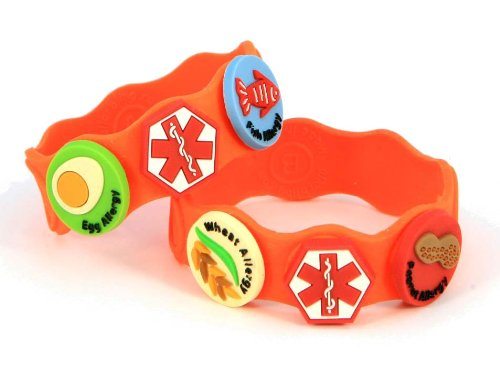
Get your child a medic alert bracelet. If ever a reaction causes them to lose consciousness, this will alert those on the scene to what is going on and help paramedics and medical personal to treat your child. For our daughter, we have an Allerbling bracelet. You can buy them with different “charms”. She has had it for years and we love it. It is made of silicone, so it’s great for those with allergies to metal or latex and it is the only type our daughter will keep on because of her sensory issues.

kid friendly Medic alert bracelet for food allergies

When your child is old enough, have them help with cooking and baking. This will give them a better understanding of how there can be hidden ingredients in food items.

Train the people in your child’s life how to use an epi-pen. The one we use now actually literally talks a person through the process. (yes, a talking epi-pen!) Be sure that instructors, care givers, teachers, friends’ parents, grandparents, anyone who will have contact with your child knows how to use an epi-pen and is willing to do so.

Be prepared. An epi-pen can save your child’s life. Carry an extra. They are expensive, but not having one with you could cost a lot more than you want to consider. Also carry an antihistamine. I have antihistamine in my vehicle, in my purse and at home. My daughter is now old enough to also have one in her bag.

Educate yourself. Know the signs of an allergic reaction in your child and other possible signs that could occur. Their reactions and even their allergies can change over time.

If your child has an anaphylactic allergy, do not allow that food in your home. No exceptions. You may even choose to hang a sign on your door.

If they have an intolerance, you can choose whether to adjust meals for the whole family or just for that particular child. For our son with the gluten intolerance, I sometimes cook gluten free for all of us and other times, just adapt his meal.

Parenting a Child with Food Allergies - what you need to knowLearn to let go. You won’t be able to go to college with your child to read labels before they eat. You know your child best so you will know when they are ready to start attending events without you where there could be potential for allergens to be present. It’s hard to let go but take small steps towards it to build up their self-advocacy skills. Start with safer environments where you have already briefed the adults present.

Once precautions are taken, they can lead a normal life. It takes time to adapt for the whole family to adapt, in particular if there are several food allergies, but life can return to normal.

Extra reading for food allergy parents:

Some of this reading is for you, while some is to help you educate those around you so that they can help you through this journey with your child.

4 Easy Ways to Help a Food Allergy Mom

Everything You Need to Know About Food Allergies and Food Sensitivities

What Parents of Kids With Food Allergies Want You to Know (but are afraid to say)

Special Dietary Needs: A Beginner’s Guide for Parents

5 Ways to Prepare Your Allergic Child to be Safe at School

Join me for a free 5 part email series, Little Hearts, Big Worries offering resources and hope for parents.

Filed Under: Parenting in the Chaos, Special Needs Parenting

Tater Tot Casserole with Ground Sausage

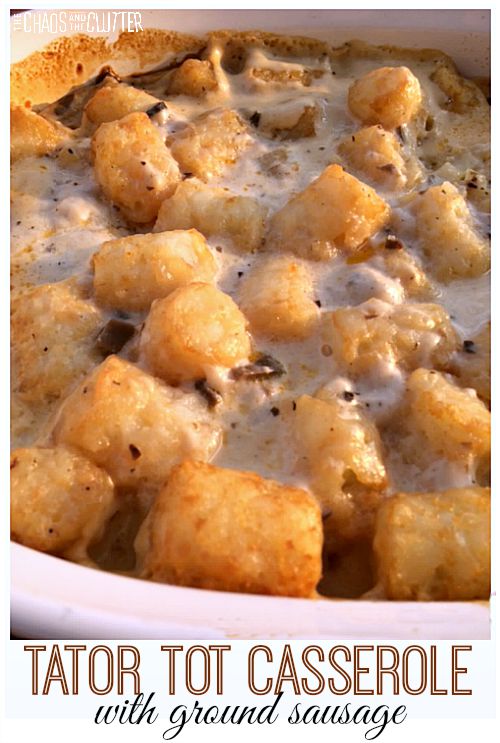
Tator Tot Casserole with ground sausage

By Sharla Kostelyk

I’ll be the first to admit that this tater tot casserole may not be the healthiest of our recipes, but it is by far the kids’ favorite. In fact, when I make it, I have to make two at a time and they both get eaten clean! It is one of the most requested meals for the kids’ birthday suppers and there are cries of joy whenever I announce that I am making it!

Even though it’s not the healthiest or well-balanced meal, it’s good to have some kid-pleaser recipes mixed into your menu plan.

Tater Tot Casserole with ground sausageOther than being a kid-pleaser, this recipe is also fool-proof. I’ve changed it up, substituted ingredients, cooked it for too long, cooked it for not long enough, and it’s never failed me.
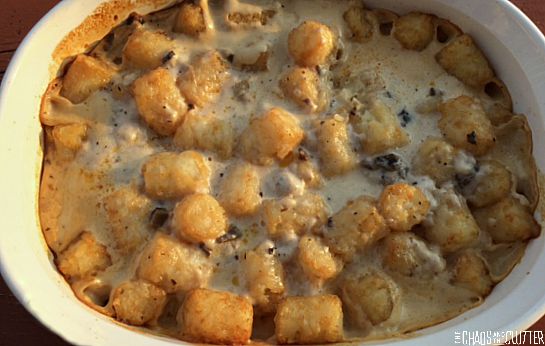
Tator Tot Casserole Recipe:

  • 150-200 g ground Italian sausage meat (I use the spicy variety to give it some kick)
  • 1 kg bag of frozen tater tots
  • 10.5 oz. can of cream of mushroom soup*
  • 370 mL can of evaporated milk
  • dash of paprika
  • salt and pepper to taste

*If you are wanting to make this gluten-free, you will need to use gluten-free cream of mushroom soup and ensure that the tater tots are gluten-free (most brands are).

Brown the sausage meat and drain and pat with a paper towel to remove the grease. Place the ground sausage on the bottom of a 9×13 casserole dish.

Place the frozen tater tots on top of the meat. In a bowl, mix the mushroom soup and evaporated milk and add the seasonings. Pour over top of the tater tots.

Bake at 350° for one hour.

Kid Favourite Mea: Tator Tot CasseroleTo double this recipe, simply cook twice as much ground sausage and double to the rest of the ingredients but assemble them in two casserole dishes.

Tater Tot Casserole Freezer Meal Instructions:

I make this as a freezer meal so that I can make four or six at a time to always have it on hand for the kids. To make the tater tot casserole ahead, brown the sausage and place it in a medium-sized resealable bag. Mix the mushroom soup, condensed milk, and seasonings together in a bowl.

Place the frozen tater tots into a large resealable freezer bag. Pour the sauce over top. Take out as much air as you can and seal. Staple the bag of cooked ground sausage into the large bag and freeze.

On the day of cooking, thaw. Place the ground sausage at the bottom of a casserole dish. Top with the contents of the larger bag. Bake in a preheated 350° oven for one hour.

Looking for more make-ahead family-friendly meals? Check out our Chicken and Beef Dump Recipes.

beef and chicken dump recipes

Tator Tot Casserole with ground sausage
Print
Tater Tot Casserole Recipe
Other than being a kid-pleaser, this recipe is also fool-proof. I've changed it up, substituted ingredients, cooked it for too long, cooked it for not long enough, and it's never failed me.
Course: Main Course
Keyword: casserole, tater tot
Servings: 6
: 652 kcal
Ingredients
  • 150-200 g ground Italian sausage meat I use the spicy variety to give it some kick
  • 1 kg bag of frozen tater tots
  • 10.5 oz. can of cream of mushroom soup* *If you are wanting to make this gluten-free, you will need to use gluten-free cream of mushroom soup and ensure that the tater tots are gluten-free (most brands are).
  • 370 mL can of evaporated milk
  • dash of paprika
  • salt and pepper to taste
Instructions
  1. Brown the sausage meat and drain and pat with a paper towel to remove the grease. Place the ground sausage on the bottom of a 9x13 casserole dish.

  2. Place the frozen tater tots on top of the meat. In a bowl, mix the mushroom soup and evaporated milk and add the seasonings. Pour over top of the tater tots.

  3. Bake at 350° for one hour.

  4. To double this recipe, simply cook twice as much ground sausage and double the rest of the ingredients but assemble them in two casserole dishes.

Tater Tot Casserole Freezer Meal Instructions:
  1. I make this as a freezer meal so that I can make four or six at a time to always have it on hand for the kids. To make the tater tot casserole ahead, brown the sausage and place it in a medium-sized resealable bag. Mix the mushroom soup, condensed milk, and seasonings together in a bowl.

  2. Place the frozen tater tots into a large resealable freezer bag. Pour the sauce over top. Take out as much air as you can and seal. Staple the bag of cooked ground sausage into the large bag and freeze.

  3. On the day of cooking, thaw. Place the ground sausage at the bottom of a casserole dish. Top with the contents of the larger bag. Bake in a preheated 350° oven for one hour.

Filed Under: Cooking in the Chaos

Autumn Sensory Bin with Birdseed and Cinnamon

By Sharla Kostelyk

When it comes to sensory bins, I usually make a new one every week and have an easy time coming up with ideas. I have a storage cart that houses sensory supplies so in a pinch, I search through there for inspiration and it only takes me a few minutes to put together a new bin.

This summer was the busiest we have ever had (four different camps between VBS, day camp, horse camp, and mountain bike camp for five of the kids, extended family camping trip, my trip to Virginia to speak at a blogging conference, family road trip to Vancouver Island, out of town wedding in the mountains where my husband was the best man, and various day trips) and trying to get back into the swing of homeschooling this Fall has not gone as smoothly as planned.

Even something as simple as coming up with a new sensory bin can add to the general feeling of overwhelm. That’s where great friends come in! My friend Michelle gifted me this sensory bin in a bag. She was one of the moms that did the sensory bin swap with me last year and since then, we have given each other a few bins-in-a-bag.

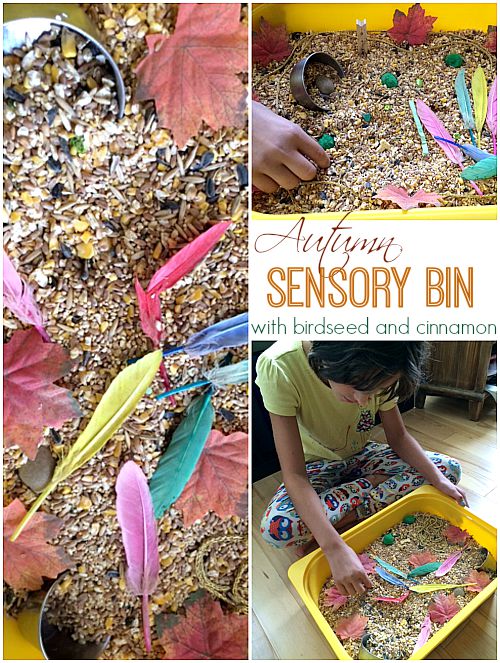
Autumn Sensory Bin with birdseed and cinnamonMaking a bin-in-a-bag couldn’t be simpler. You take your latest sensory bin and dump the contents into a resealable bag and then pass it along to someone so that their kids can enjoy a new sensory bin experience.
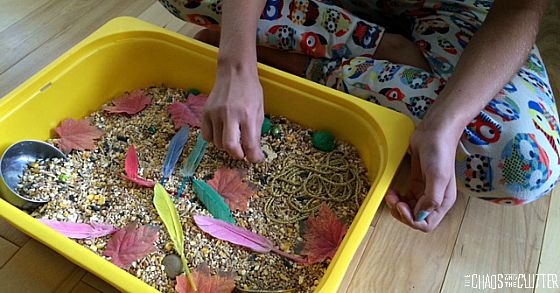
Michelle’s Autumn Sensory Bin contained:

  • birdseed
  • cinnamon
  • bright coloured feathers
  • fall leaves (plastic)
  • thin gold rope
  • two scoops
  • green pompoms
  • a rock
  • a clothespin

Granola Girl said that this bin reminder her of an I-Spy sensory bin. She enjoyed playing with the different textures and she liked the cinnamon scent (though Michelle’s daughter was not a fan of it apparently!). Between the colours and the smell, this sensory experience was a great way to welcome Fall!

Autumn Sensory BinI’m thankful that I have friends who share their sensory bins with me when I’m in a bit of a creative funk! (Michelle did give me permission to post pictures of her lovely creation).

If you are looking for information on making sensory bins, you may be interested in my book. The Ultimate Guide to Sensory Bins

Join our free 5 part email series Sensory Solutions and Activities and get our Sensory System Behaviours Easy Reference Cards.

Filed Under: Sensory, Sensory Bins Tagged With: sensory bin, sensory play

Bubble Wrap Body Slam Painting

Bubble Paint Body Slam

By Sharla Kostelyk

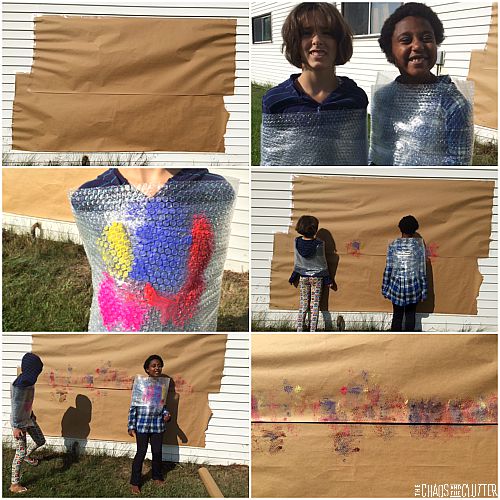
My kids are not the most sedentary kids…in fact, they are always moving. They enjoy art activities but they like them best when they combine movement with art. This is a GREAT proprioception activity!

I had some packing materials and came up with an idea to re-use the bubble wrap and get the kids moving while they created. Bubble Paint Body Slam - My kids would love this! Gross motor meets sensory equals art.Materials needed:

  • butcher paper (also called packing paper or kraft paper)
  • bubble wrap
  • paint
  • paint brushes (I used foam brushes)
  • paper plate
  • packing tape

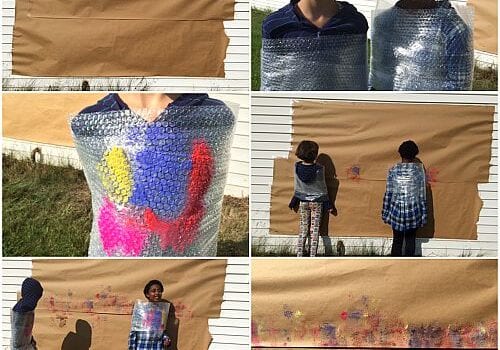
To create this fun activity, tape the butcher paper to a wall. I strongly suggest that you do this activity outside. If you do try this indoors, be sure to cover the floor in scrap paper or plastic to catch paint splatters.

I wasn’t sure how high up my kids would be able to jump so I taped two sheets of paper, one on top of the other on a wall outside our house.

Next, wrap your kids in bubble wrap and secure the bubble wrap with a piece of packing tape. I only had enough bubble wrap to do their torsos. Paint the bubble wrap using paintbrushes, sponges or foam brushes. It works best if you put the paint on a paper plate or paint tray first.

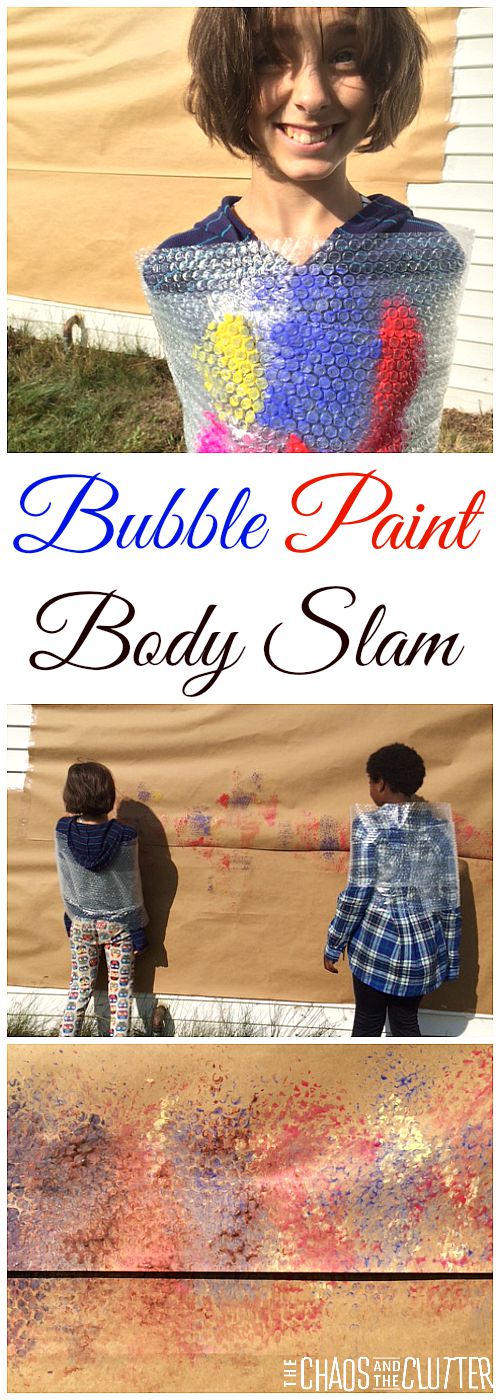
I globbed several colours onto each of my girls and then let them loose on the wall. They body slammed themselves into the wall, laughing. They tried different techniques like jumping up to hit a higher place on the paper and different smear methods.

They were laughing through most of the activity, so I think it’s safe to say this was an active art project they very much enjoyed!

I also painted their backs (well, the bubble wrap on their backs!) afterwards and they gave that a try. One of them actually found it easier that way.

Bubble Paint Body SlamI would suggest that you used your child’s height to eyeball what level to tape up the paper. Our finished results would have looked better had they been on one paper instead of two but regardless of how the final artwork turned out, the kids had a great time and got in some good exercise!
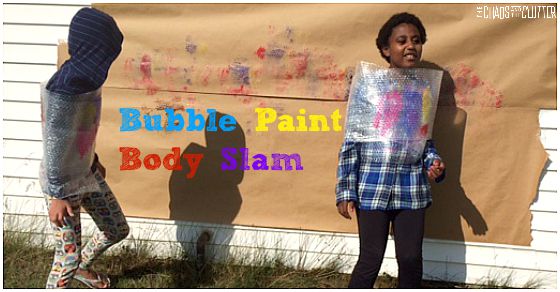
Bubble Paint Body Slam Art and Gross Motor Activity for KidsThis kids’ activity is great for sensory work, but Granola Girl did need to have her bubble wrap put lower down because having it up near her face was not something that she could handle with her type of sensory needs. Thankfully, my kids are all really good at expressing what their sensory needs are so it wasn’t an issue. She also wanted to be wrapped up tightly and loved the feeling of that.
This bubble paint body slam art is still hanging outside with the girls being quite proud of their work!

Bubble wrap body slam painting incorporates the tactile, visual, and proprioceptive sensory systems. 

Looking for other unique sensory play ideas? Join us for a free five day email series on Sensory Activities and Solutions and get a free sample of our Sensory Play Recipes eBook.
 

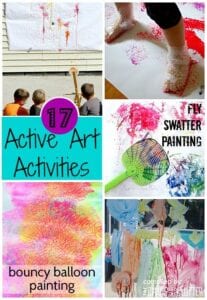
If you can't get your child to hold still long enough to complete an art project, these fun, active ideas are for you!

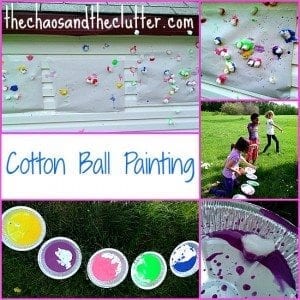
Cotton Ball Throw Painting

Filed Under: Crafts and Activities Tagged With: sensory play

Supporting a Family Whose Child is in the Hospital

By Sharla Kostelyk

For four years, our daughter, Miss Optimism, battled a lung disease. For four years, she was in and out of the hospital. For four years, we worried that we would lose our precious little girl.

It was one of the hardest seasons we’ve walked through in our lives. Miraculously, we were able to find a medication that turned things around for her. We take her every two weeks to get two injections and other than that, her life has been pretty normal for a number of years now, but we are always aware how blessed we are to have her here with us and to have her healthy.

Ways to support a family whose child is in the hospital or has a chronic illness. This is a really great list.The days of monitoring her every breath, of middle of the night rushes in to Emergency, of surgeries and test results, of night nurses in our home, of our minutes being led by lung function numbers and of wondering if today could be her last are behind us and I am so thankful.
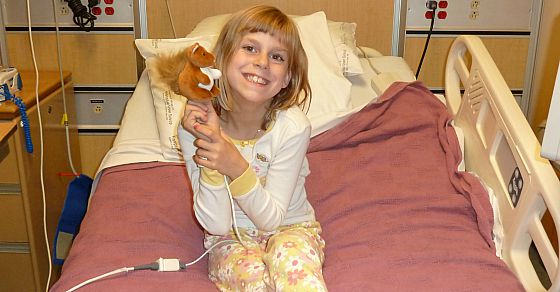
Those years spent in worry and with the stress of trying to juggle her health crisis with raising our other kids and managing day to day life are still easy to bring to memory so I thought I would use our experience to help other families who are living through a similar time now.

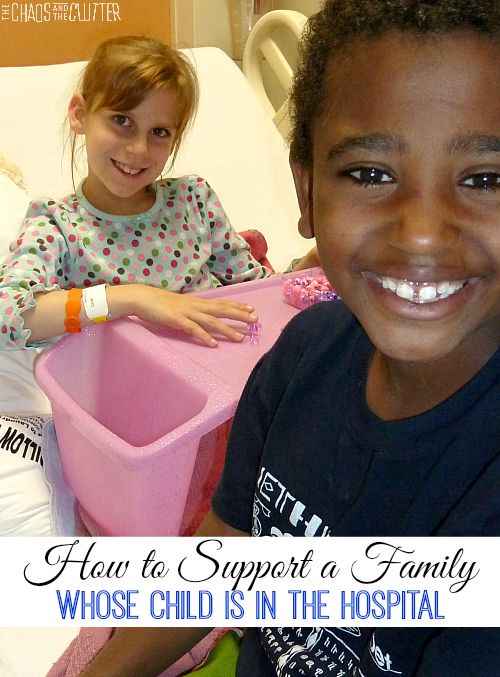
I have compiled this list of ways of supporting a family whose child is in the hospital or suffering a chronic or terminal illness to help family and friends best support them. I wish there had been a list like this when we were in our crisis so that I could have pointed others to it when they asked what they could do to help.

I created this list with the help of my friends Shannon and Lindsay. Shannon’s beautiful daughter spent her first 6 months in hospital after being born at 25 weeks gestation and has undergone many surgeries and long hospital stays since then. Lindsay’s little guy bravely battled cancer as a young preschooler and won. I’m honoured to know these amazing women and I’m glad that they were willing to share their insight to help others.

Ideas for supporting a family whose child is in the hospital:

Reassure them that they are good parents.

When they have to hold their child down for a painful medical procedure or make difficult decisions in which no one answer seems like the right one, they will be questioning their worth as a parent. They need reassurance.

Offer to watch the other kids.

I cannot emphasize this one enough. It is impossible to be in two places at one time and as the parent of a sick child, your heart is at the hospital. Not being able to be there with your child because you have to watch your other kids is torturous. Mind you, when you’re at the hospital, you’re also battling guilt for not being with your other kids. Offering to help with child care lightens the load for the family.

Take the other kids to do something fun.

The siblings of a sick child are also affected by things that at a young age, they should not be thinking about such as worrying about their parents and worrying about their brother or sister. They are also wrestling with mixed feelings because they may feel selfish for wanting more of their parents’ attention when they know why the sibling is getting it.

The parents are also feeling a tremendous amount of guilt for what their other kids are going through and what they are missing out on. Taking the other children to do something fun, even just going to a playground for a few hours will not only take their minds off things for awhile, it will take some of the burden of guilt off the parents.

Bring meals.

Going grocery shopping and cooking are low on the priority list for the family at this point. Bring a dinner or drop off some freezer meals. You can even get together with others who know the family and organize making a lot of freezer meals for them. (You can make ten beef dump or chicken dump recipes in one hour.)beef and chicken dump recipes

If cooking isn’t your thing, bring a pizza gift card or a grocery gift card. Drop off a jug of milk and loaf of bread.

Give money.

Until you’ve been there, you don’t realize how expensive it is to have a child in the hospital. The cost of parking alone is enough to cripple a budget. Then there are expenses like gas to drive to and from the hospital, meals, lost wages, and child care for the other kids. Since we are Canadian, the only addition medical expenses we incurred were prescriptions (and that was hundreds of dollars a month), but in most countries, there is also the cost of medical bills from the hospital stay.

A family whose child is battling illness has enough to worry about without the added stress of finances. Give what you can or pay for a hospital parking pass or gift card for food nearby or gas station gift card. If the family doesn’t have insurance, a larger fundraiser may be needed.

Offer to be the contact person.

It is so helpful for the family if there is one person who can field phone calls, pass on information, update facebook pages, pass along prayer needs, manage Carepages, organize meal needs, pick up donations, etc.

It can become exhausting for the family to have to repeat the same updates over and over, particularly if the news is not positive.

Be a shoulder.

Be there to listen. Simple as that. You don’t need to have the answers or to have been there yourself to just listen.

Don’t shut them out.

Be a friend by still talking to them about what’s going on in your life. You may feel like your trials are trivial compared to theirs and therefore not want to share, but they need distractions and they need to feel as normal as possible. Shutting them out of your life will not protect them. It will only add more hurt.

Bring the fun to them.

While they may not be able to attend dinners out or events, go to their home or the hospital just to hang out with them. It gets lonely there. I used to long for adult company. Bring a laptop with a funny movie or come armed with jokes! Distraction can be a good thing.

Offer to bring food.

If you are going to the hospital to visit (much appreciated by the way), ask if you can stop and bring them some food. When our daughter was at her sickest, I didn’t want to leave her side so I could only eat when visitors would bring me food. Sometimes even just a tea from a familiar coffee shop brought a sense of normalcy and comfort.

Bring something for the child who is sick.

This does not need to be extravagant. This can be as simple as a homemade card or sign with their name on it. It will show their parents and the child that you are thinking of them. It doesn’t hurt to bring something for the other kids too. They are feeling pretty left out as it is.

One year when Miss Optimism had been in and out of the hospital a lot and was not allowed to go outside for many months, a blog reader of mine sent a huge box of books, crafts and activities to keep her busy and cheer her up. She included a board game that all the kids could play, a few treats for the other kids and even some hot chocolate mix for me. It was such a blessing and an encouragement!

Tell the family you are praying for them.

And then actually pray. It’s been my experience that even families who are not faith-based appreciate all the prayers they can get when they are in this type of crisis. You can’t really go wrong with this one.

Ask questions.

Don’t be afraid to ask questions. The family want people close to them to be informed and able to help in any way they can. Do be sensitive though.

One day when we had gotten some hard news about our daughter, a friend texted and asked me what her life expectancy was and whether or not she would be able to have children. Those were not questions I felt were appropriate to ask via text message and was paralyzed by the thought of typing an answer.

Sit with their child.

If you come to visit, offer to stay for a bit with the child so that the parent can go to the bathroom, have a shower, go for a walk, go get something to eat, make a phone call in private, or get some fresh air. Those are things most people take for granted but they are hard to come by during a hospital stay.

Ask what you can do.

Maybe they need you to tackle their laundry pile. The family still needs to wear clothes and chances are, that pile is rising by the day and just another source of stress for them. Maybe there are errands that need to be run or things that need to be fixed around the house.

Team up with others.

Of there is a group of you, sit down and figure out who would like to do what and come up with a schedule. That way, the family’s needs can be met and in a more organized way (though disorganized help is still appreciated!).

Be there on big days.

On big days like test results or surgeries, offer to go and sit with the family during the wait. And then, just be there. Hold their hand.

Treat the child who is sick normally.

The child battling illness is still a child. They need to have as much normalcy as possible and that starts with the way others treat them. Talk to them. If hospital policy allows it and the parents agree that it would be a good idea, bring your children to visit them too. Hospitals can be lonely places.

Help their marriage.

Offer to watch the other kids or stay at the hospital with the child who is sick so that the parents can have a date night. Divorce rates are higher among families who have children with a chronic or terminal illness and helping them to protect their marriage is important. Acknowledge the need for them to still be a married couple in the midst of everything they are going through.

Be places they can’t be.

Chauffeuring their other children to lessons or appointments or events, videoing performances and recitals for the parents to watch later. These things are invaluable.

Help with paperwork or note taking.

Often especially early on after a diagnosis, it can be hard for family members to process and remember what doctors are saying. Having someone there to take notes during meetings with the medical team can be very helpful. Also, having someone write a list of questions they want to ask the doctors during the next meeting is a help as well.

Along with a hospital stay comes paperwork. Helping the family fill that out can also lighten the load.

Sitting with one of the parents and helping them come up with a to-do list and then helping them decide how to delegate those tasks is a blessing.

Comprehensive list of ways to help a family whose child is in the hospitalOther ways to help:

  • clean their vehicle. It can become a dumping ground with all the trips to and from the hospital.
  • buy groceries/stock their pantry (healthy food options help reduce parent’s guilt)
  • summer: water grass, maintain their garden, mow the lawn
  • winter: shovel snow
  • vehicle maintenance including oil changes and gassing up
  • lend an iPad or eReader if they don’t have one
  • go to the Nurse’s station with the parent’s questions if they don’t want to leave their child’s side
  • make and deliver healthy lunches to the school where the other kids go or organize some make ahead school lunches. This daily chore can be overwhelming for parents who are hardly ever home.
  • when visiting the hospital, recognize if the parents are needing rest and keep visits short
  • on hospital visits, keep the noise level down, be respectful of other patients in shared rooms, be kind to hospital staff as your treatment of them reflects on the family
  • make them a playlist of uplifting music
  • double check to see if they have a phone charger and bring one if they don’t. In emergency situations, there isn’t time to grab a charger on your way out and it is so needed in the hospital.
  • give treats to parents – iTunes gift card, lotions, chocolate, snacks, family movie passes

Join me for a free 5 part email series, Little Hearts, Big Worries offering resources and hope for parents.

Filed Under: Parenting in the Chaos, Special Needs Parenting

  • « Go to Previous Page
  • Page 1
  • Interim pages omitted …
  • Page 80
  • Page 81
  • Page 82
  • Page 83
  • Page 84
  • Interim pages omitted …
  • Page 128
  • Go to Next Page »

Primary Sidebar

Categories

We are a participant in the Amazon Services LLC Associates Program, an affiliate advertising program designed to provide a means for us to earn fees by linking to Amazon.com and affiliated sites.

Copyright © 2026 • The Chaos and the Clutter • Site Design by Jeni @ The Blog Maven

Return to top of page

Copyright © 2026 · Chaos and the Clutter 2.0 on Genesis Framework · WordPress · Log in