• Skip to primary navigation
  • Skip to main content
  • Skip to primary sidebar
  • Home
  • About
  • Contact
  • Privacy + Terms
  • Affiliates

The Chaos and the Clutter

  • Facebook
  • Twitter
  • Pinterest
  • Google Plus
  • RSS
  • Email
  • School at Home
  • Sensory
    • Sensory Processing Disorder
    • Awesome Sensory Play Activities
      • Sensory Bins
      • Sensory Bottles
      • Sensory Bags
  • Family Games
    • Minute to Win It Games
  • Special Needs Parenting
    • Childhood Anxiety
    • Reactive Attachment Disorder
    • Sensory Processing Disorder
  • Store
  • Course Login

Sharla Kostelyk

Colour Mixing Sensory Bottle

By Sharla Kostelyk

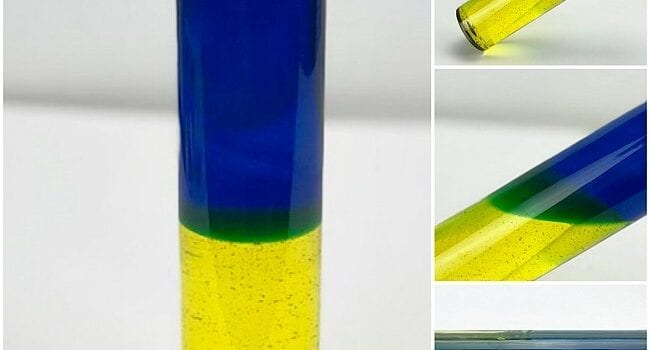
I love when you can combine learning and fun! This colour mixing sensory bottle does just that. It brings science and the wonder of discovery to sensory play.
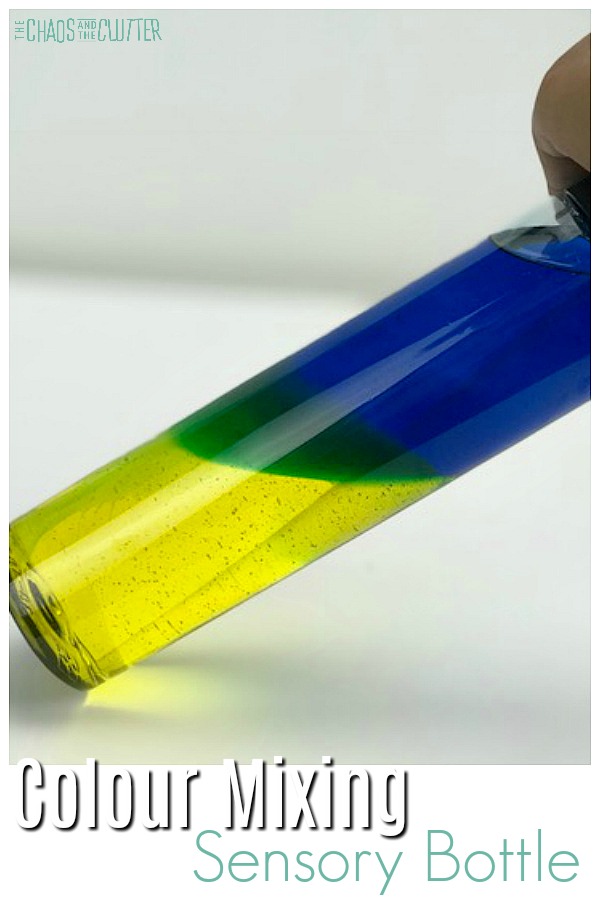
Colour Mixing Sensory Bottle #sensoryscience #sensorybottles #sensoryplay #homeschool #scienceThis activity is effective for teaching the science concepts of colour (for younger children) and density (for older children. By using different densities, the two colours are able to mix to form a new colour and then separate again.

When held up to the light or sunlight, the colours created in this colour mixing sensory bottle are beautiful.

Even I was surprised at how cool this simple science activity was. I wasn’t sure if it would work and was delighted when it did. My kids were even more delighted!

Due to the weight of the corn syrup, these sensory bottles are on the heavy side, making this a wonderful activity for proprioceptive sensory input. These also of course involve the visual sensory system as children use their eyes to explore the colours changing.

How to Make Colour Mixing Sensory Bottles:

Materials needed:

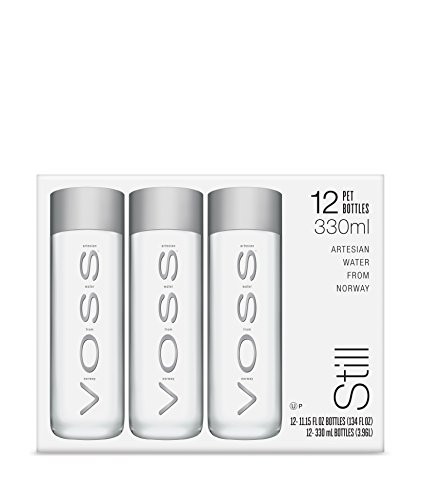
  • empty plastic water bottle (330 mL/11 oz. size)
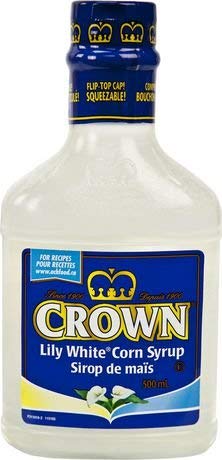
  • clear corn syrup
  • mineral oil
  • food colouring
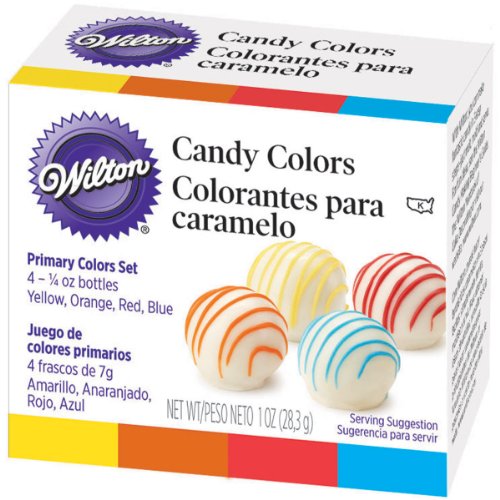
  • Wilton oil-based candy colour in primary colours*
  • funnels or measuring cups with a spout
  • plastic or glass containers of similar size
  • spatula

White Corn SyrupWhite Corn SyrupWhite Corn SyrupWilton Oil Based Primary Colors SetWilton Oil Based Primary Colors SetWilton Oil Based Primary Colors SetVOSS Plastic BottlesVOSS Plastic BottlesVOSS Plastic BottlesMineral OilMineral OilMineral Oil

Directions:

  1. In a glass or clear plastic container that is similar in size to the empty water bottle, add clear corn syrup and a few drops of yellow food colouring. Mix well.
  2. In another glass or clear plastic container that is similar in size to the empty water bottle, add mineral oil and a small bit of blue food colouring paste*. Mix well. Add a very small amount of the dye as you can always add more once you see the colour. You don’t want the blue to be too dark.
  3. Pour the yellow corn syrup mixture into the empty water bottle to about the halfway point. You may need to use a spatula to get it all transferred.
  4. Next, pour the blue mineral oil to nearly the top.
  5. Top with the lid. If you want to secure the lid, you can do so using a hot glue gun.

*It is important that you use an oil based food colouring in this step. Water based dyes will not work.
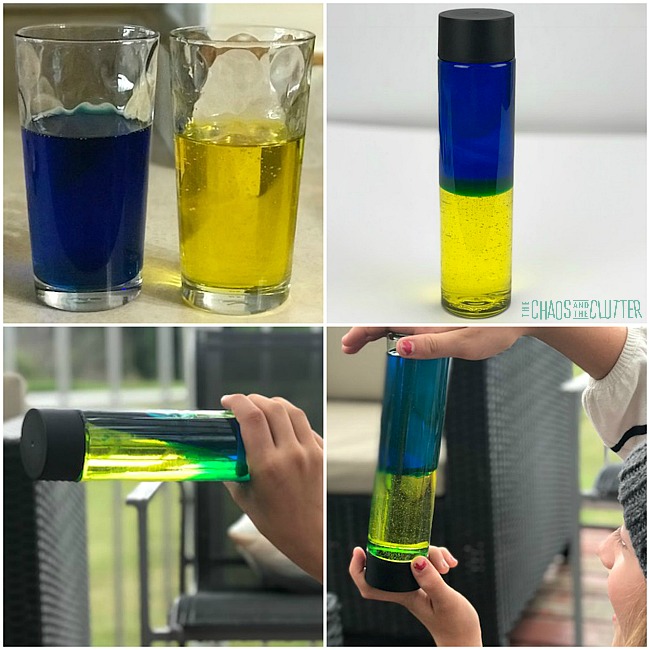
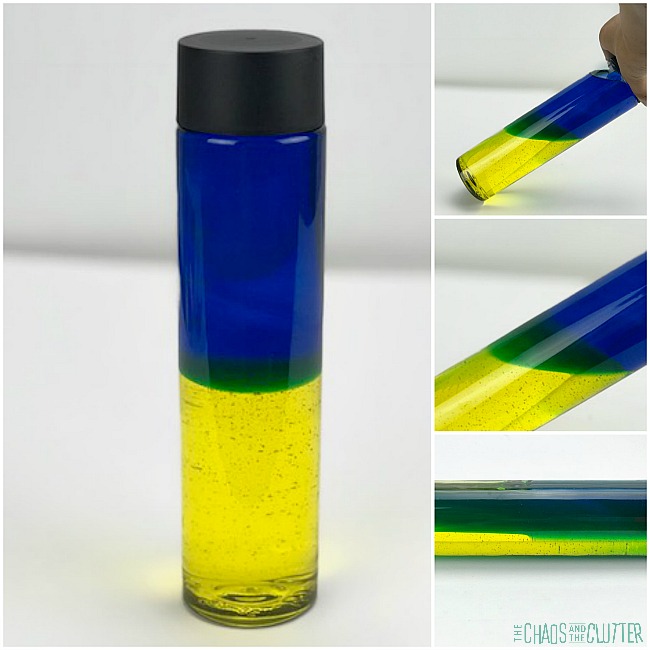
The yellow and blue should stay separated when the bottle is upright. If you tilt the bottle, you will begin the see the colours combine to form green.

You can create other colour mixing sensory bottles by adding yellow and red which when combined will make orange and blue and red which will form purple when mixed.

Note: It works best to have the lighter colour be the one that is mixed with the corn syrup.

What makes the colours separate?

The difference in densities between the corn syrup and mineral oil is what keeps the colours separate. They sit on top of each other unless tipped. The colours will then mix to form a new colour, but when brought upright again, the colours will separate because of the density of the liquid they are in. For younger children, give a simple explanation on density, but focus most of the science lesson on the colour mixing.
For older children, use this science experiment as a way to introduce density. Follow up with this video that helps further explain density. You can then expand the discussion from there.

More sensory science:

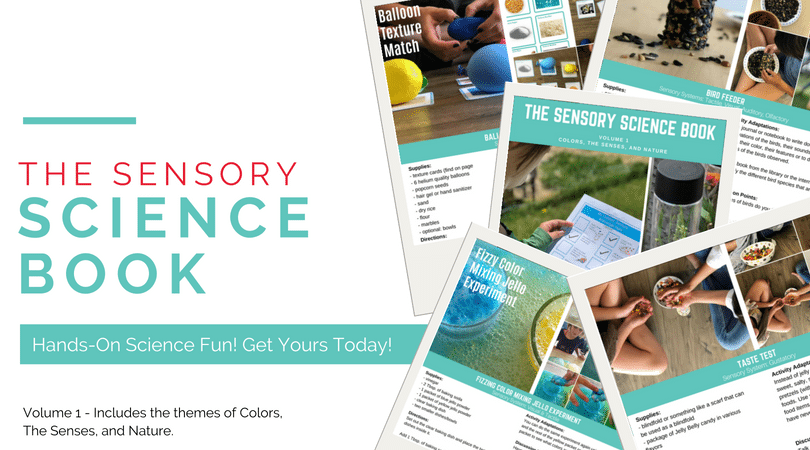
This activity appears in the Colours section of The Sensory Science Book Volume 1. In it, you can find other incredible activities to help children discover the world around them. 
Experiment with other colour mixing examples.
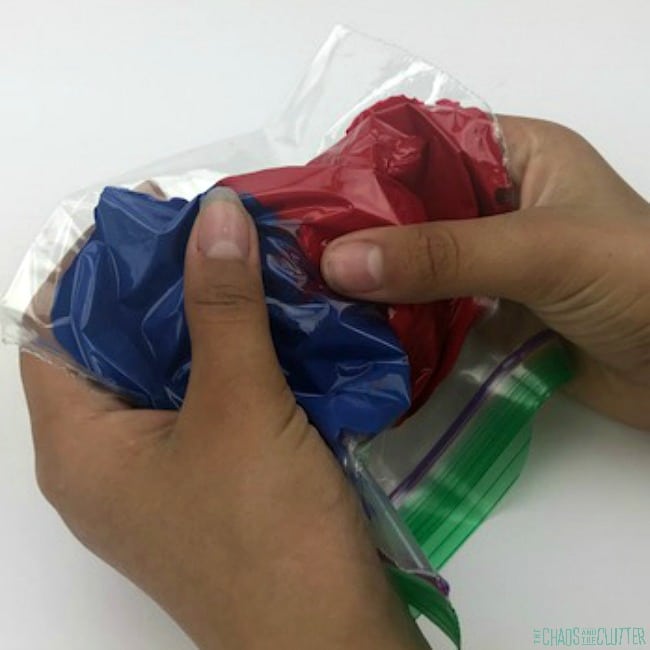
Colour Mixing Sensory Bags 

Colour Mixing Jello Experiment10 Jello Science Experiments

If you’re looking for more fun ideas for your child, get a free sample of our Sensory Play Recipes eBook.
Filed Under: Homeschooling, Sensory, Simple Science Tagged With: sensory bottles, sensory play

The Best of the Best Books on Sensory Processing for Parents

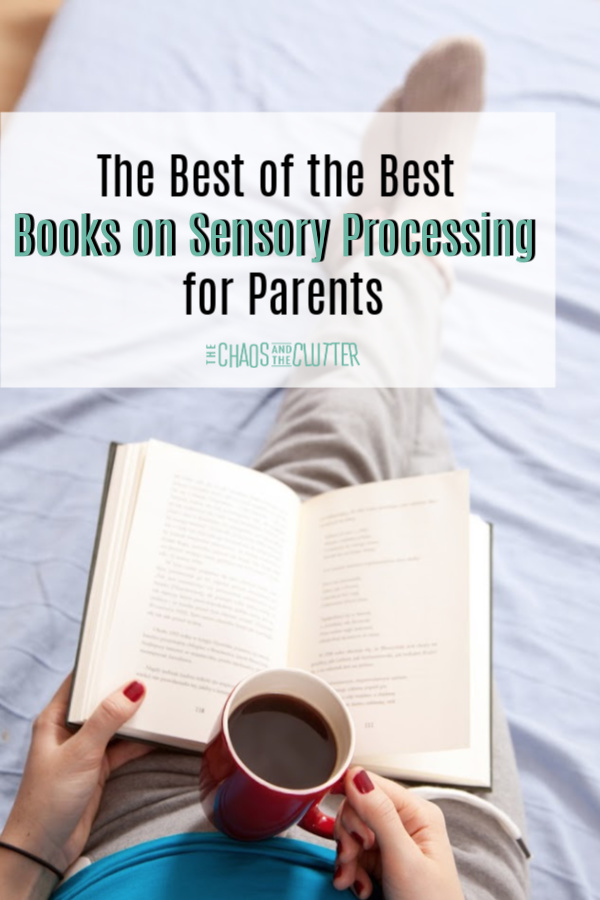
a woman sits on a bed with her legs outstretched in front of her. In one hand, she holds an open book and in the other hand, a red mug filled with coffee. Her face and upper body are not visible. She is wearing a blue shirt and tan pants and has on red nail polish. The words "The Best of the Best Books on Sensory Processing for Parents" are overlaid on the image.

By Sharla Kostelyk

When our daughter was a preschooler, I had never heard of sensory processing disorder. In fact, even the term “sensory processing” was foreign to me. This was the early days of the internet. But after watching our precious girl struggle every day, I was on the hunt for answers. I was able to get my hands on a few books on sensory processing for parents.

The Best of the Best Books on Sensory Processing for Parents #sensoryprocessing #spd #sensoryprocessingdisorder #specialneedsparenting #parentingbooksI devoured everything I could get my hands on. Unfortunately, a lot of the books I could find at that time were geared towards Occupational Therapists and other professionals. Sometimes, I felt like I needed a dictionary beside me to understand what I was reading.
But one of those books had a checklist in it. That checklist was like hitting gold! Going through it made it abundantly clear that sensory processing issues were at the root of many of our daughter’s struggles.

That was the day that I called and got a referral for our daughter to start seeing an Occupational Therapist. During the next few months, the OT came into our home weekly and taught me so much. I was able to adapt her environment and learn new ways of approaching things to better meet her needs.

Our daughter was diagnosed with Sensory Processing Disorder. With that diagnosis came a new understanding for all of us.

Over time, I learned how to meet her sensory needs and slowly, her challenging behaviours stopped. She became happier, calmer, and more in control of her body and her emotions. I was sold!

I wanted to do everything I could to help her. So I read more, attended seminars, asked questions. It’s a good thing that I did, because that knowledge would come in handy. Over the course of the next ten years, four more of our kids would also be diagnosed with sensory processing disorder.

Of course in most families, five kids with sensory issues would be unusual, but as SPD is often a secondary diagnosis to other things and we had adopted children with special needs, it turns out not to be that unusual in our case.

Sensory Processing Explained:

Years after making these discoveries with our daughter, I thought back on those early days. So many of the books I had read had used language I wasn’t familiar with. It was difficult to understand what I was reading and I had no idea how to apply what I was learning to our everyday life.

It was that experience that led me to begin writing about sensory issues here. That led to receiving dozens of emails from parents expressing their gratitude that I put things in a way that was easy for them to understand and actually use with their kids.

So last year, I teamed up with my good friend Heather who is an OTA. We dreamed of writing a book that was easy for parents and teachers to understand and that would make a difference in the lives of kids. We paired her OT knowledge with my experience of parenting kids with sensory needs and created a book that I’m so proud of.

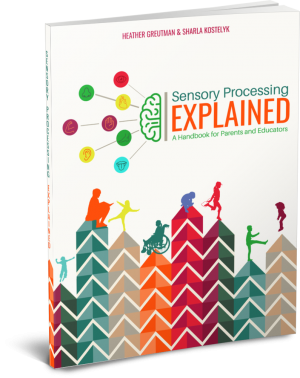
Sensory Processing Explained walks readers through sensory processing. It begins with the 8 sensory systems and details some of the basics. Once that foundation is established, it goes into practical tips and tools for everyday life scenarios. We took the struggles that our readers were telling us about and gave them solutions.

The book also includes a section for parents and another for educators with tips for both. There are also applicable printable resources.

Heather and I wanted to help kids by helping their teachers and parents better understand them and therefore better be able to meet their needs.

The Best Sensory Processing Books for Parents:

If you have a child that you suspect may have Sensory Processing Disorder, the first step I suggest you take is to speak to their Paediatrician or a qualified Occupational Therapist to have an assessment ordered. The second step is to get your hands on some good books on sensory processing.

When a parent or caregiver can understand sensory processing, they can better recognize their child’s sensory triggers. They can also learn to make accommodations to their home and lifestyle to better meet their child’s needs.

I highly recommend that you start with these books:

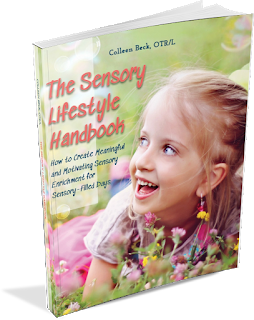
Sensory Processing Explained: A Handbook for Parents and EducatorsSensory Processing Explained: A Handbook for Parents and EducatorsBuy NowThe Sensory Lifestyle Handbook by Colleen BeckThe Sensory Lifestyle Handbook by Colleen BeckBuy NowThe Out-of-Sync Child: Recognizing and Coping with Sensory Processing DisorderThe Out-of-Sync Child: Recognizing and Coping with Sensory Processing DisorderThe Out-of-Sync Child: Recognizing and Coping with Sensory Processing Disorder

I will admit to being completely biased in recommending our book, Sensory Processing Explained, but I feel confident in suggesting it because of the incredible feedback we’ve received from parents, teachers, and therapists.

The Sensory Lifestyle Handbook is a deep dive into sensory diets. That term may not be familiar to you now, but the book will help you come up with a sensory diet strategy that fits your child.

The Out-of-Sync Child is an “oldie but a goodie”. This book helped me quite a bit way back when we were first starting out on our sensory journey (back in the day when SPD was still called Sensory Integration Disorder). The author is very well respected.

Once you’ve read these books, you should have a solid foundation of sensory processing and be well on your way towards better helping your child.

To learn more about sensory processing, join me for a free 5 part email series Sensory Solutions and Activities and get your Sensory System Behaviours Easy Reference Cards.

Filed Under: Sensory, Special Needs Parenting

Parenting Myth: You’re Only as Happy as Your Saddest Child

By Sharla Kostelyk

We were sitting in my kitchen. Mid-conversation, my friend said something that grabbed me. “You’re only as happy as your saddest child.” I nodded. The statement seemed like it must be true. What mother could be happy if her child wasn’t?

Parenting Myth: You're Only as Happy as Your Saddest Child #parenting #specialneeds #parentingtips #kbnThe conversation continued on to other things, but that statement stuck with me. I played it over and over in my head after she left.
Was I destined to always only be as happy as my saddest child? Would my happiness never again be in my control?

What she said had seemed logical at the time. What kind of mother would I be if I could find joy when my child was suffering?

But something about it gnawed at me. It didn’t sit right. At first, I couldn’t quite put my finger on why.

I’m the mom of 7. My kids all have different personalities. Some of them are optimistic and cheerful. Others are moody and see the glass as half empty even on the best of days.

Each of my kids have their own unique gifts and challenges. 5 of my precious kiddos have special needs, which give them additional obstacles to overcome.

Life can be hard enough without losing your hearing at 12 (one of our daughters), losing your first family and moving to a new country with strangers (2 of our kids), losing your hair as a 16 year old girl (another of our daughters) and on and on.

For days after that kitchen conversation, my friend’s words replayed over and over.

At the time, one of our children was especially struggling, so I wondered if I should be as unhappy as he was.

One evening, my husband and I were watching a comedy. I laughed out loud and then felt guilt creeping in. How could I be feeling carefree when one of my kids was in pain?

It took me weeks to sort through all of my thoughts and feelings. And I came to the conclusion that “you’re only as happy as your saddest child” is hogwash!

My happiness is my responsibility. It is not dependent on those around me or even on my circumstances. Of course, it’s easier to feel happy when life is going well.

If all my kids were themselves happy, if they were all making good choices, loving life, surrounded by good friends, not facing hardships that seem unfair and overwhelming, skipping merrily through valleys of unicorns and rainbows, I would feel less worried.

Being less worried would make it easier for me to be happy, but it wouldn’t necessarily guarantee it.

One thought I kept coming back to when I was contemplating this was that if my kids always see an unhappy mom, that will only make them less happy.

One of my jobs as  parent is to model positive traits for my children. If I want to teach them that they are responsible for their own happiness, that is something I have to show them.

If I want my kids to be able to find joy in the small blessings despite their circumstances, they are going to need to see a mom who was able to do just that. 

Choosing to be unhappy in solidarity with my “saddest child” won’t take their sadness away. In fact, it may compound it. And it places the burden of my happiness onto my child which is too heavy a burden for anyone to carry.

So mama, you are not destined to only be as happy as your saddest child. You are destined to be as happy as you choose to be.

I know that watching your child suffer is painful. It is gut-wrenching. Sometimes the unfairness of it can almost overtake you. But that does not have to rob you of your joy.

When your child sees you finding delight in just being with them, in counting the freckles on their nose, in watching the snow fall together, in snuggling on the couch, in playing a card game, even in the blessing of being able to cry together, they learn to find a bit more joy too.

Your smile is more powerful than your words.   

Some days, I get it right. I see the opportunities to infuse joy into my life. I take those and make the best of them.

Other days, I let my circumstances define my mood. I feel held hostage by things out of my control and pity takes up residence in my mind.

I haven’t got this thing all figured out, but I did some math. When considering the amount of kids I have and the challenges they currently face, I also thought about their personalities. Then I factored in future things such as spouses, careers, finances, in-laws, and their own children.

I pretty quickly came to the truth. If I were only as happy as my saddest child, I was never going to be happy again! And that’s not something to strive for.

So mamas, take that burden off. Unpack it, unbuckle it, unzip it, leave it at the door. From now on, choose to be “only as happy as you want to be”.

If you’re looking for strategies and encouragement on the parenting journey, join me for a free 5 part email series, Little Hearts, Big Worries offering resources and hope for parents. 

Filed Under: Parenting in the Chaos, Special Needs Parenting

Minnie Mouse Slime

By Sharla Kostelyk

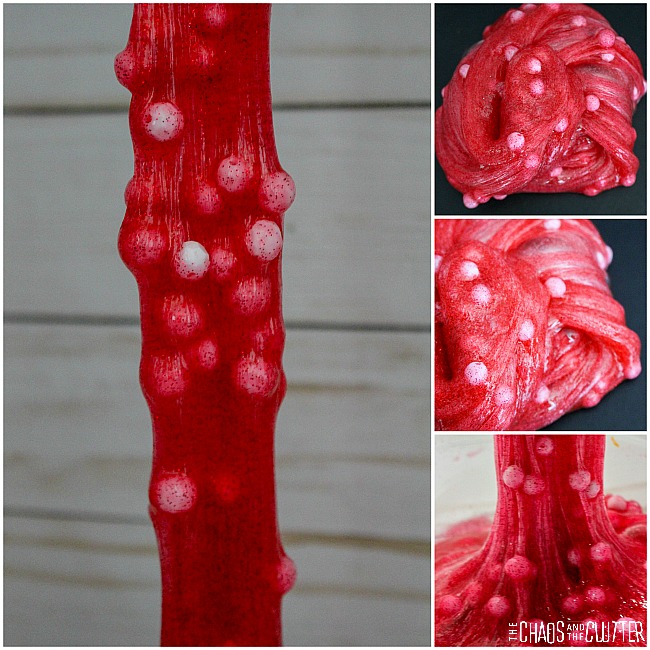
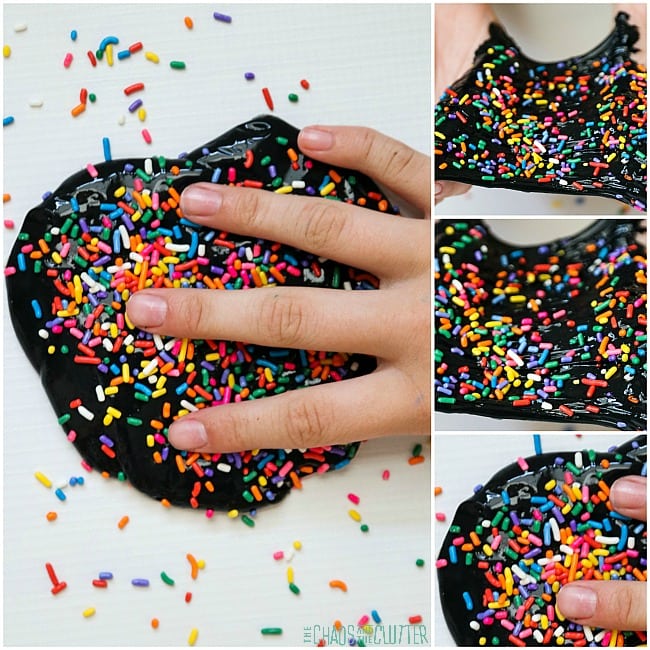
I love Minnie Mouse! I know that’s not the most grown-up thing to admit, but I seriously do. My purse and wallet are even Minnie Mouse themed and I have a hoodie inspired by her. This Hallowe’en, I even dressed as Minnie Mouse to hand out candy. So, making a Minnie Mouse slime wasn’t much of a stretch.

Well, the slime does stretch, but you get what I mean!If you're a Disney fan, you'll love this Minnie Mouse slime. #sensoryplay #sensoryactivitiesforkids #slime #slimerecipes

Minnie Mouse Slime Supplies:

  • 5 oz. bottle of Elmer’s clear school glue
  • ½ cup water
  • ½ tsp baking soda
  • 1 Tbsp. contact solution
  • red food colouring
  • red fine glitter
  • small white beads

How to make Minnie Mouse Slime:

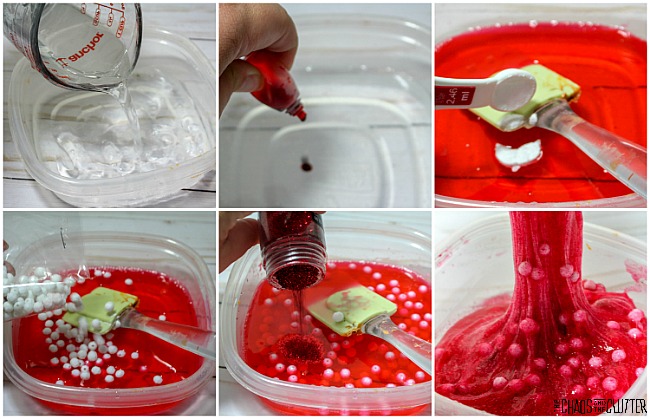
  1. In a small mixing bowl, pour the entire 5 oz. bottle of clear glue.
  2. Add in ½ cup of warm water and stir.
  3. Mix in the baking soda.
  4. Drop in a few drops of red food colouring. Stir.
  5. Pour in a generous amount of fine red glitter.
  6. Add the white beads.
  7. Add 1 Tbsp. contact solution to the mixture. It will begin to form instantly. At this point, it will be very sticky!  Don’t panic! Continue to mix the solution in the bowl until it starts to form.
  8. Knead the slime until it is no longer sticky.
  9. Store the Minnie Mouse slime in an airtight container.

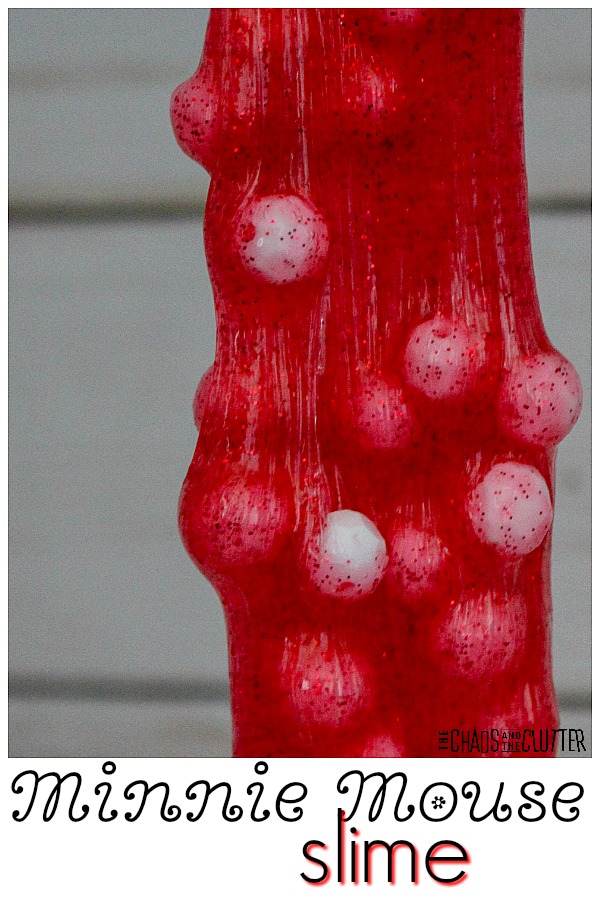
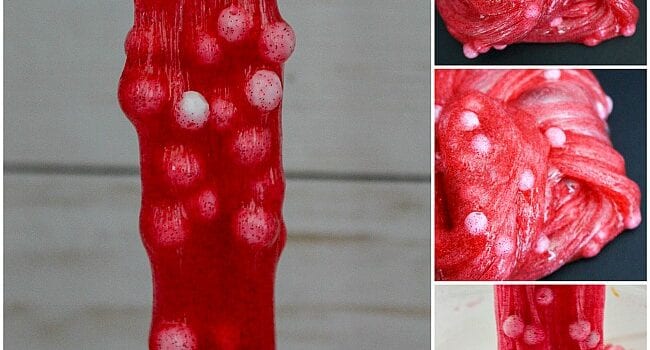
Creating a Minnie Mouse inspired slime was so simple. By adding the red colouring, red glitter, and the white beads, the finished slime is reminiscent of my favourite cartoon character. The beads become the polka dots.

I’m not sure where my love of Minnie began. For me, Disneyland really does feel like the happiest place on Earth. It is perhaps that love of Disneyland that led me to be her fan as well.

Besides the obvious appeal of this particular slime for me, I also like the sensory input it provides. All slime is good for proprioceptive input. When kids knead, pull, stretch, and squish, they are getting much needed proprioceptive input. This can help in emotional regulation and mood.
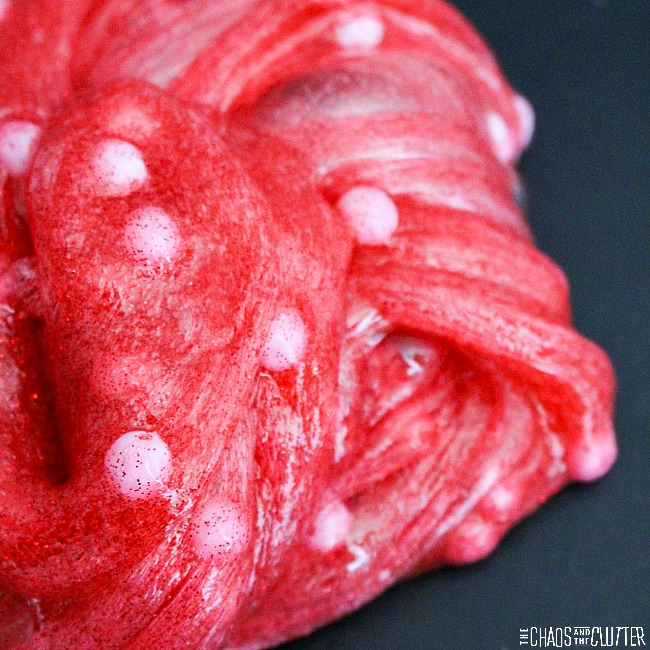
The beads in this Minnie Mouse slime provide an extra texture element. This is excellent for tactile sensory input. Find other sensory play recipes by grabbing a free sample of our Sensory Play Recipes eBook. Simple enter your email below and you’ll be on your way!
Looking for more slime inspiration?

Crunchy Slime With Mardi Gras Beads

Rainbow Confetti Party Slime Glow in the Dark Slime with Glitter

Filed Under: Sensory Tagged With: sensory play, slime

Snowflake Sensory Bin

By Sharla Kostelyk

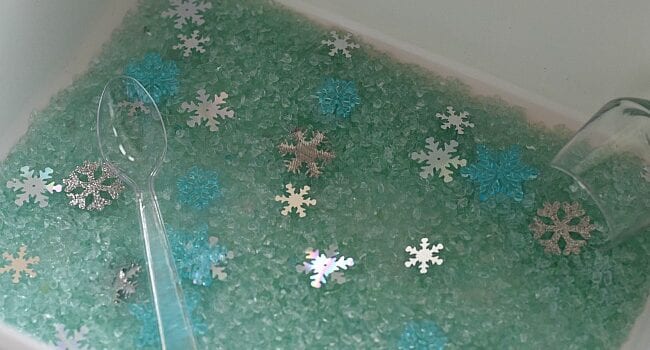
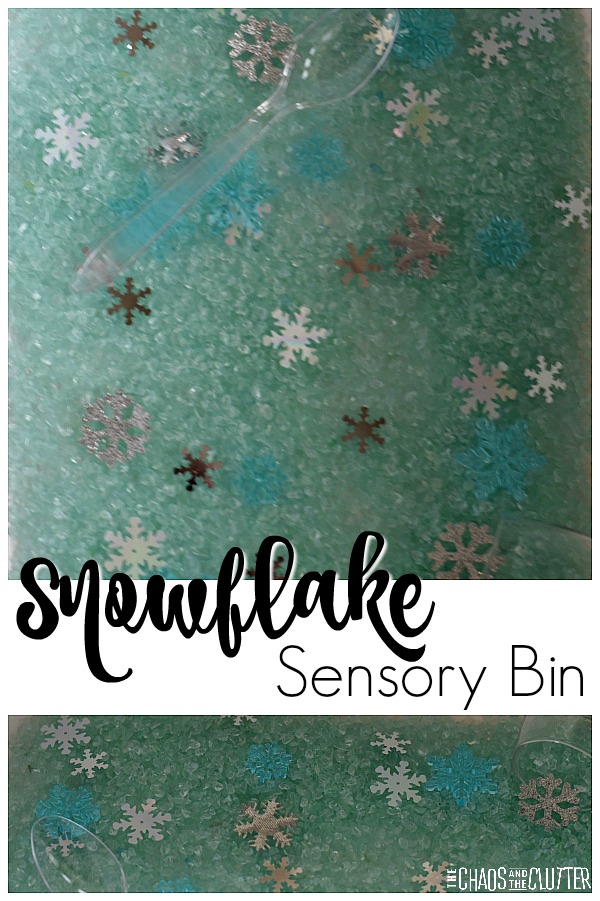
This snowflake sensory bin is very simple. It has a clean look to it. It is a very inviting sensory play activity for kids. And it’s so pretty!Snowflake Sensory Bin #sensoryplay #sensorybins #winter #sensoryYou can use this in a preschool classroom or at home. It encourages scooping and pouring and hands-on discovery.
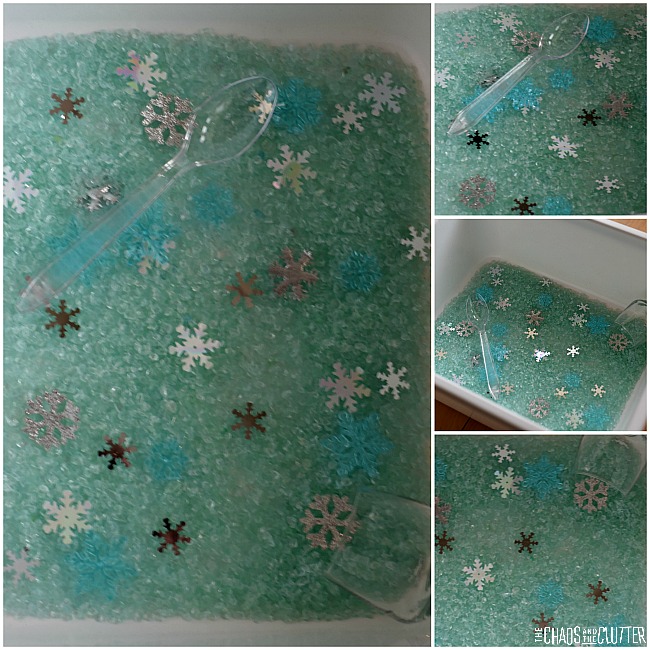
Materials needed:

  • plastic tub
  • light blue or light green glitter gravel*
  • snowflake confetti
  • plastic snowflakes
  • silver fabric snowflakes
  • clear plastic spoon
  • small clear container

*I buy my glitter gravel at the Dollar Store. I like it as a sensory play material. It provides a different texture and you can purchase it in a variety of colours. And it’s extremely cheap!

This bin is a cute way to bring a bit of winter indoors.
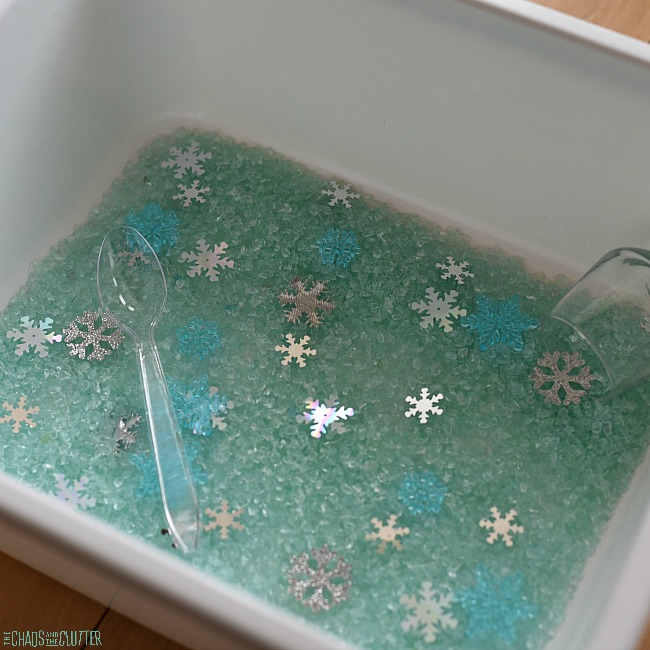
You can also use this activity as a way to talk about snowflakes and how they are all unique. Kids can research how snowflake are formed as a science project and use this hands-on activity as a way to reinforce their learning.

The snowflake sensory bin gives tactile, visual, auditory, and proprioceptive feedback. The spoon and the scoop provide opportunities for fine motor practise. My kids really liked the sound the glitter gravel made when they scooped it. They also loved the soothing colours.
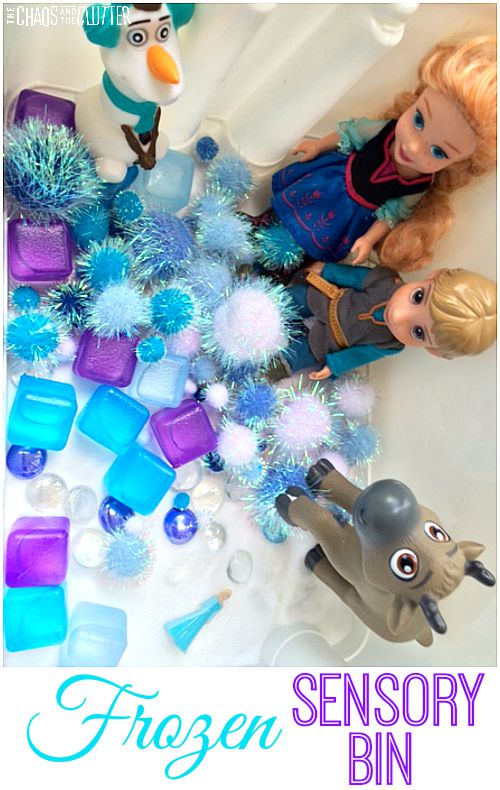
Please note that this sensory tub contains small pieces that are a choking hazard. Adult supervision should be used with this or any other sensory play activity.

Other great winter themed sensory bins:

Frozen Sensory Bin Frozen inspired sensory bin

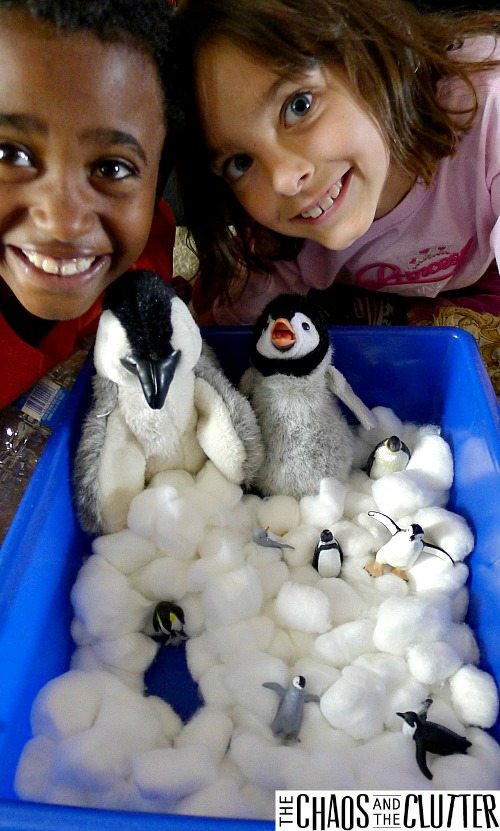
Penguin Sensory Bin (my kids REALLY loved that one!)

Penguin Sensory Bin

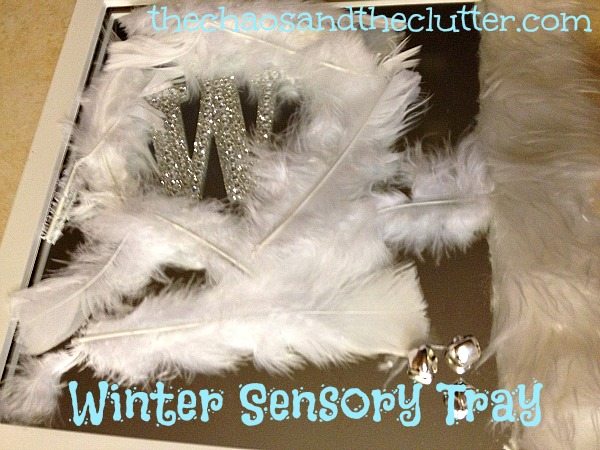
Winter Sensory Tray Winter Sensory Tray on a mirror

Filed Under: Sensory, Sensory Bins

The Mega List of Sensory Bin Fillers and Tools

collage of bright coloured sensory bins

By Sharla Kostelyk

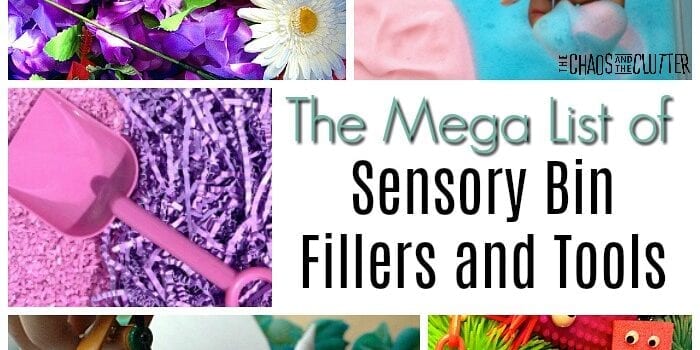
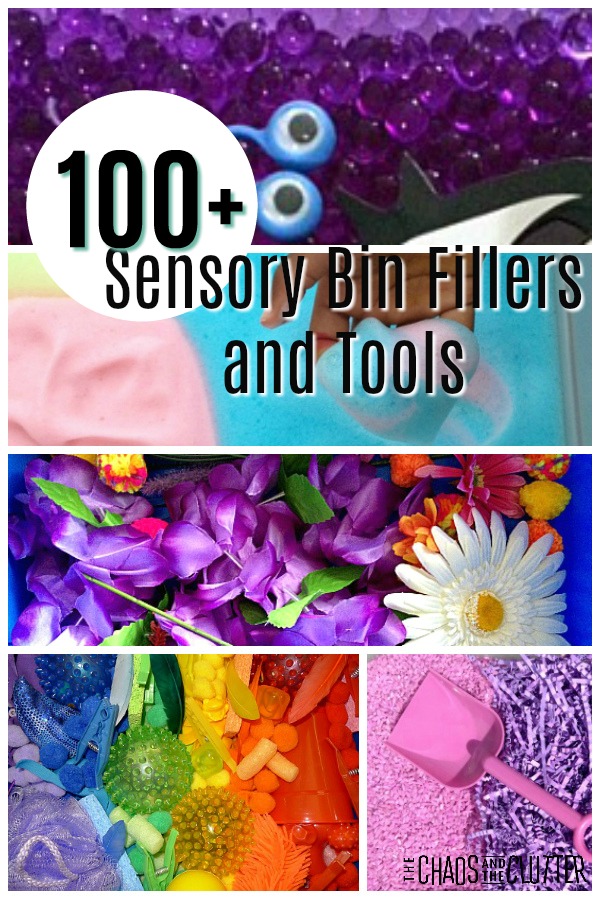
Sensory bins are so easy to make and don’t have to cost anything. In fact, there are sensory bin fillers already in you home just waiting to be used. More than 100 Sensory Bin Fillers and Tools - so many ideas here! #sensoryplay #sensorybins #preschool #kidsactivities #sensoryactivitiesSensory bins are kind of my go-to sensory activity. They allow kids to really explore through their senses and discover the world around them. Kids from toddlers to teens can benefit from this method of exploration.
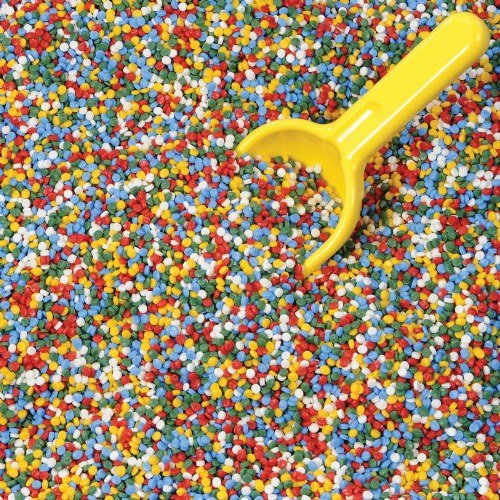
Sensory tables or bins are also great for use in the classroom. They can be centered around an educational unit or theme, can have a planned purpose such as the intention to improve fine motor skills, or they can just be for free play. Incidentally, all of these types are beneficial.

Whether you are creating sensory bins for your child to play in at home or needing sensory bin filler ideas for preschool, these lists will hopefully give you a place to start.

Sensory Bin Fillers:

I have linked to examples of sensory bins that include the fillers below to provide some additional inspiration.

  • rice (plain or coloured)
  • dry pasta noodles (plain or coloured)
  • cooked pasta (plain or coloured)
  • water
  • soapy water or soap foam
  • ice
  • snow
  • sand
  • dirt
  • mud
  • rocks
  • kinetic sand
  • sticks
  • grass
  • leaves (real or plastic)
  • cotton balls
  • shredded paper
  • feathers
  • foam or foam pieces
  • pompoms
  • beads
  • corks
  • sponges
  • Epsom salts (plain or coloured)
  • confetti
  • buttons
  • packing peanuts
  • Kidfetti
  • soap shavings
  • shaving cream
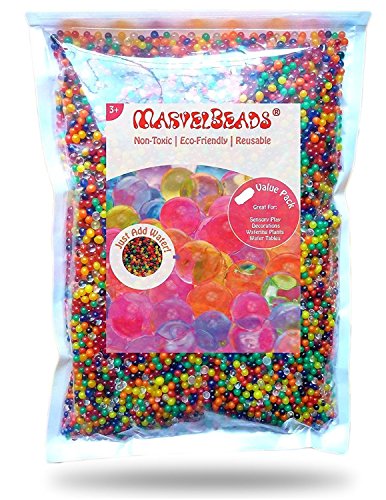
  • water beads
  • glass beads
  • seashells
  • beans (plain or coloured)
  • ribbon curls
  • Easter grass
  • lotion or gel
  • baby oil
  • building blocks (wooden, foam, or plastic)
  • fabric scraps
  • costume jewelry
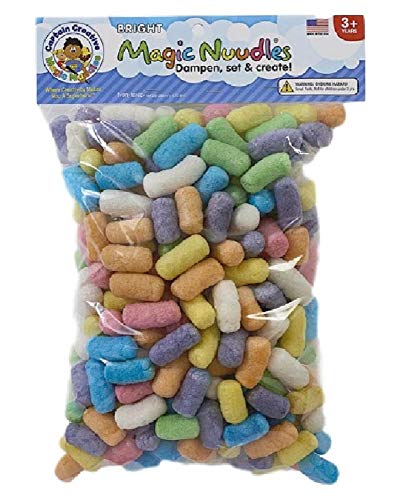
  • play puffs
  • tinsel
  • silk or plastic flowers
  • silk or plastic flower petals
  • streamers
  • dry beans (plain or coloured)
  • corn silk
  • play coins
  • toys (especially things like small animals and vehicles)

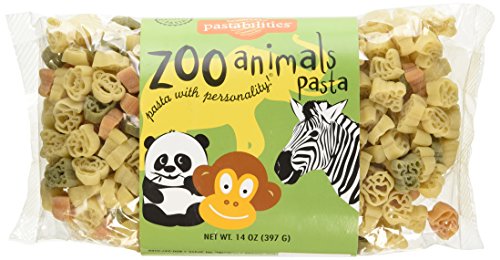
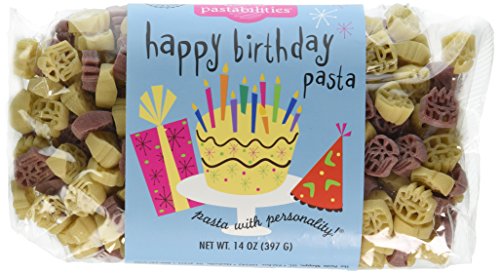
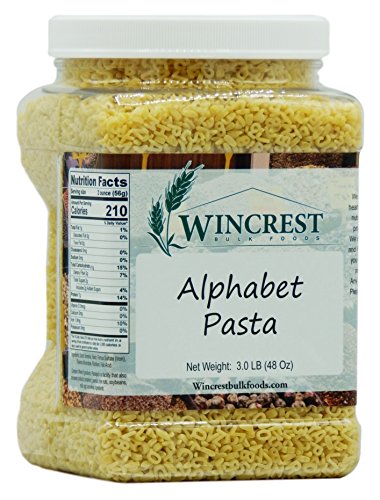
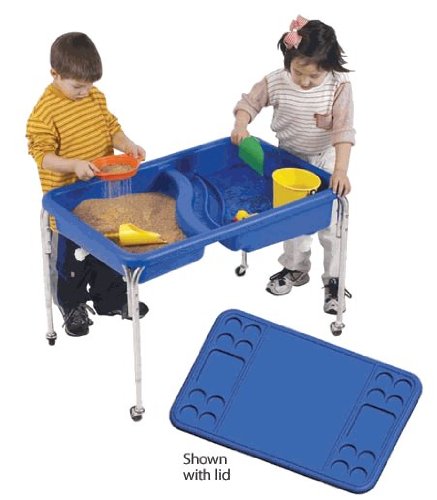
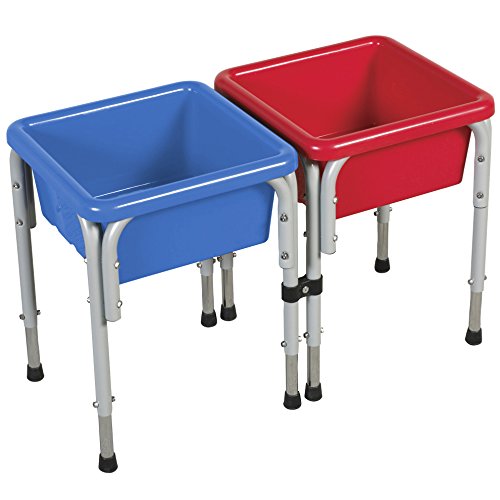
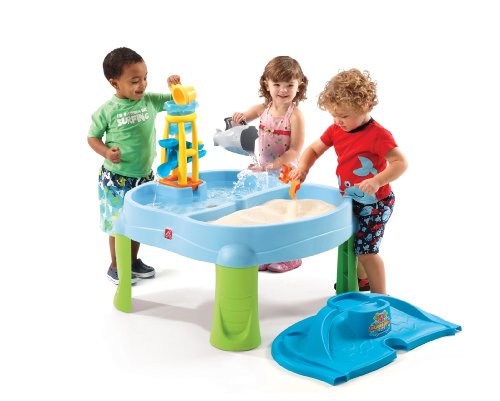
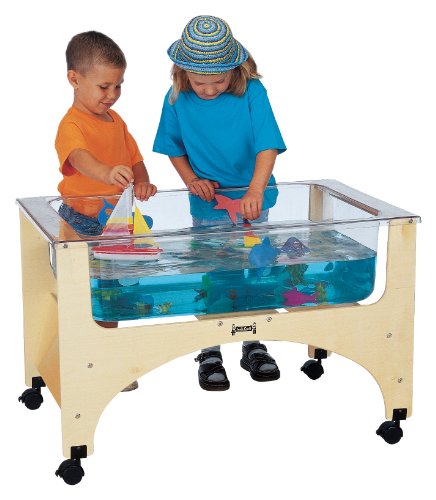
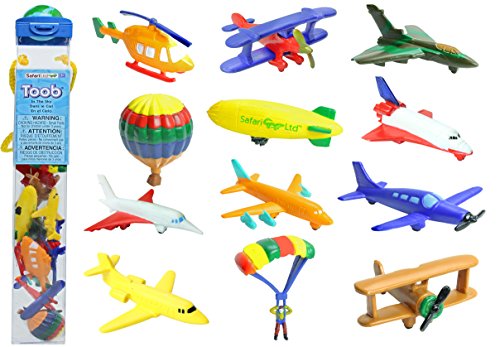
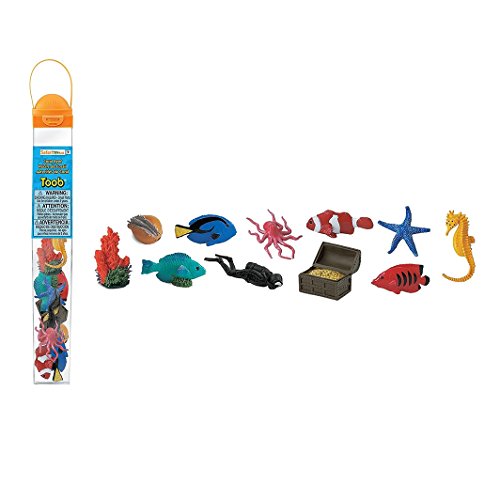
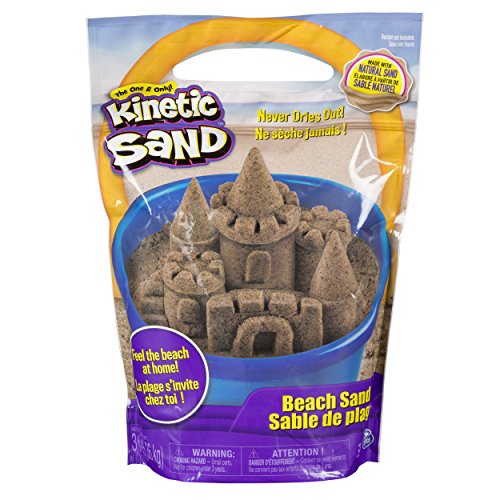
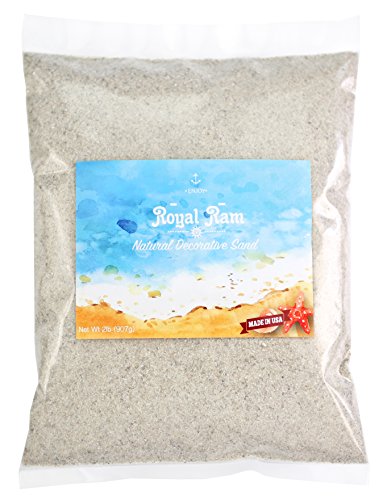
Water Beads Rainbow MixWater Beads Rainbow MixWater Beads Rainbow MixPlay PuffsPlay PuffsPlay PuffsKidfetti Play PelletsKidfetti Play PelletsKidfetti Play PelletsDinosaur PastaDinosaur PastaDinosaur PastaZoo Animals PastaZoo Animals PastaZoo Animals PastaHappy Birthday PastaHappy Birthday PastaHappy Birthday PastaAlphabet PastaAlphabet PastaAlphabet PastaNeptune Table and Lid SetNeptune Table and Lid SetNeptune Table and Lid SetSand and Water Activity Play TableSand and Water Activity Play TableSand and Water Activity Play TableSplash N Scoop Bay Sand and Water TableSplash N Scoop Bay Sand and Water TableSplash N Scoop Bay Sand and Water TableSee-Thru Sensory TableSee-Thru Sensory TableSee-Thru Sensory TableSafari Ltd In The Sky TOOBSafari Ltd In The Sky TOOBSafari Ltd In The Sky TOOBSafari Ltd Coral Reef TOOB SetSafari Ltd Coral Reef TOOB SetSafari Ltd Coral Reef TOOB SetKinetic SandKinetic SandKinetic SandNatural Decorative Real SandNatural Decorative Real SandNatural Decorative Real Sand

More Sensory Bin Fillers:

  • aquarium rocks
  • moss
  • shavings
  • cotton batting
  • playdough
  • slime
  • jello
  • straws (whole or cut into pieces)
  • flour
  • cornmeal
  • dry oatmeal (plain or coloured)
  • popcorn kernels (plain or coloured)
  • seeds
  • birdseed
  • pine cones
  • dry chickpeas (plain or coloured)
  • lentils (plain or coloured)
  • marbles
  • magnets
  • number shapes
  • letter shapes
  • paper clips
  • bottle caps
  • cut up pool noodles
  • lids
  • dry cereal
  • egg shells
  • puzzle pieces
  • salt (plain or coloured)
  • coffee beans or coffee grinds
  • fruits or vegetables (real or plastic)
  • glitter gravel
  • styrofoam balls
  • bubble wrap
  • pudding
  • edible water beads
  • oobleck

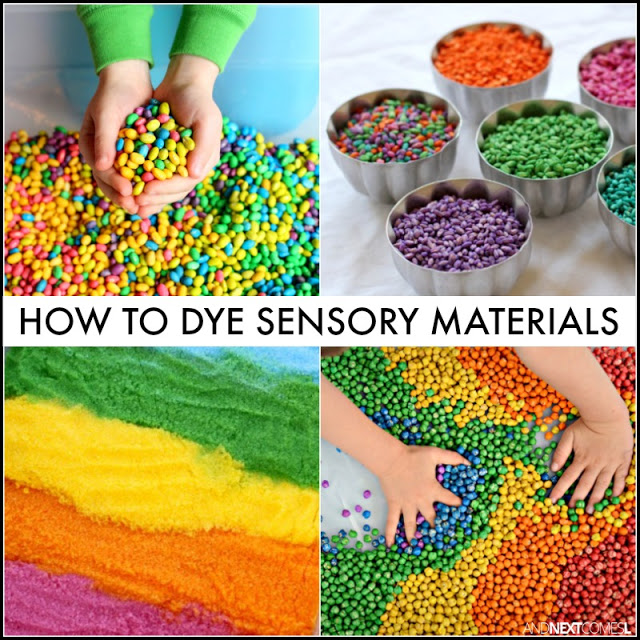
Many sensory bin fillers can be coloured. You can find detailed instructions for how to colour each of these items in this helpful guide on how to dye sensory materials. Scents can also be added to some of them by adding a few drops of essential oil. Be sure to know whether the scent you are using is one that is calming or alerting and use accordingly. You wouldn’t want to have a child playing in a lemon scented bin just before bedtime as that is an alerting smell, but that would be a great sensory bin to use in the mornings!

When looking for materials for sensory bins, you want to consider factors such as the age of the children who will be using it, safety, the shelf life of the items, and if the bin will be played with inside or outside.

You wouldn’t want to put water in a sensory bin that was going to be used outside in below freezing temperatures because it would freeze and expand, possibly causing the plastic bin to break. You also wouldn’t want to use perishable food items in a bin that was being used in a warm temperature climate prone to bugs or you’ll get creepy crawlies in your home or classroom. 

Sensory Bin Tools:

Sensory bin tools are additions to the sensory bins that are designed to further the experience for the child. Many of these tools provide an educational element or are designed to enhance fine motor skills.

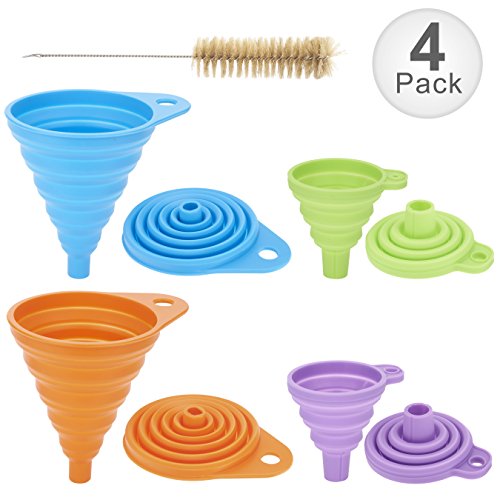
  • funnels
  • tubes
  • empty toilet paper or paper towel rolls
  • scoops
  • containers
  • spoons
  • cups
  • bowls
  • tweezers
  • spatulas
  • tongs
  • sand shovels
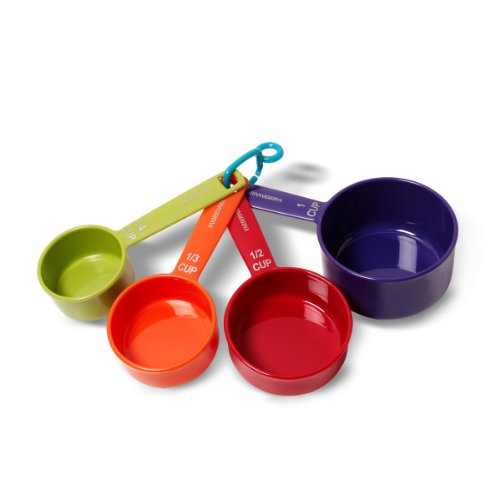
  • measuring cups
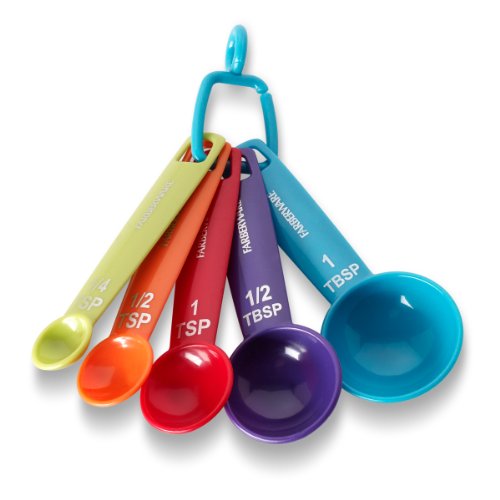
  • measuring spoons
  • scissors
  • chop sticks
  • strainer
  • sifter
  • whisk
  • forks
  • cookie cutters
  • rolling pins
  • potato mashers
  • garlic press
  • ladle
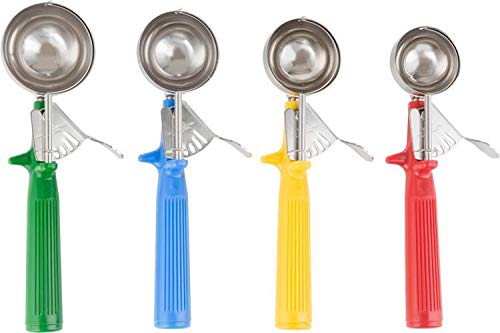
  • ice cream scoop or cookie dough scoop
  • scale
  • baster
  • squirt bottle
  • cupcake liners
  • ice cube trays or silicone moulds
  • sponges
  • watering can

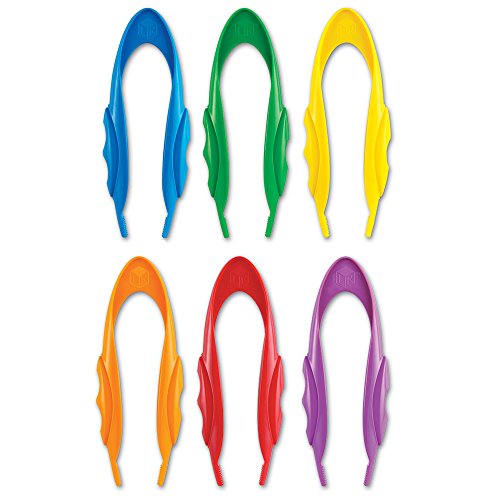
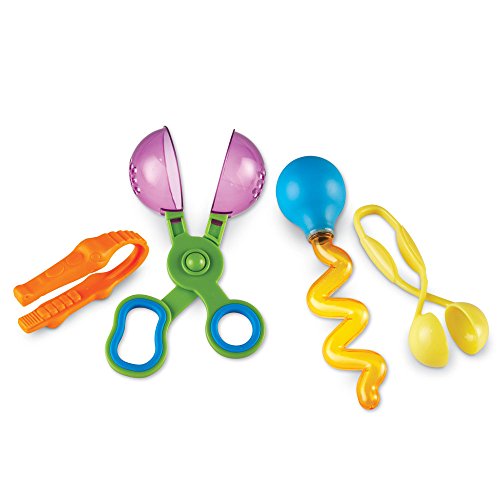
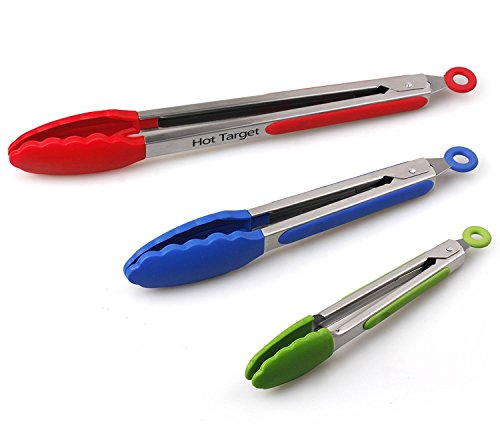
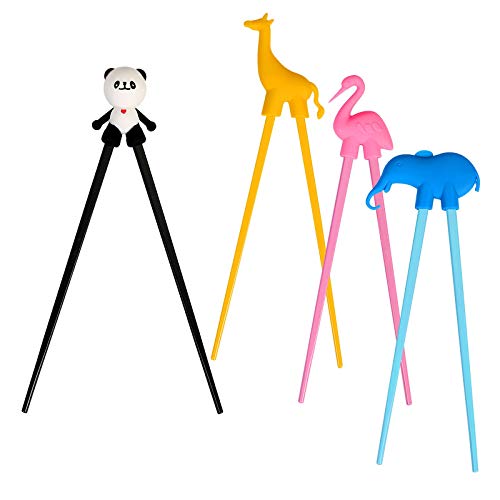
TweezersTweezersTweezersHelping Hands Fine Motor Tool SetHelping Hands Fine Motor Tool SetHelping Hands Fine Motor Tool SetTongsTongsTongsTraining ChopsticksTraining ChopsticksTraining ChopsticksIce Cream ScoopsIce Cream ScoopsIce Cream ScoopsMini Wood ScoopsMini Wood ScoopsMini Wood ScoopsCollapsible FunnelsCollapsible FunnelsCollapsible FunnelsMeasuring SpoonsMeasuring SpoonsMeasuring SpoonsMeasuring CupsMeasuring CupsMeasuring Cups

Of course, as with all sensory play, adult supervision should always be used. Some of these fillers and tools are more appropriate for older children.

You know your child best, so if it’s a younger child who tends to put things in their mouth, be sure not to choose sensory bin fillers or tools that may pose a choking hazard.

How to Use Sensory Bins:

If your child is new to sensory bins, you’ll want to help them in the beginning. Model some ways to play by scooping, dumping, pouring, feeling, kneading, filling, measuring, and using your imagination. Talk about the textures and sensations you’re feeling to give them the vocabulary to speak to you about their experience.

There is no one “right” way to play with sensory bins. Allow kids the freedom to explore, create, imagine, and play.

With younger kids, you’ll want to remind them to try to keep the sensory bin contents inside the container. Some kids are better at this than others.

One of the common complaints that parents have about sensory bins is the cleanup. I’m not going to lie… they can get messy! But here are some tips that can help contain the mess and make cleanup easier.

Grab a free sample of our Sensory Play Recipes eBook full of great ideas. It includes recipes that can be used in sensory bins. Simply input your email below.

Filed Under: Sensory

  • « Go to Previous Page
  • Page 1
  • Interim pages omitted …
  • Page 44
  • Page 45
  • Page 46
  • Page 47
  • Page 48
  • Interim pages omitted …
  • Page 128
  • Go to Next Page »

Primary Sidebar

Categories

We are a participant in the Amazon Services LLC Associates Program, an affiliate advertising program designed to provide a means for us to earn fees by linking to Amazon.com and affiliated sites.

Copyright © 2026 • The Chaos and the Clutter • Site Design by Jeni @ The Blog Maven

Return to top of page

Copyright © 2026 · Chaos and the Clutter 2.0 on Genesis Framework · WordPress · Log in