• Skip to primary navigation
  • Skip to main content
  • Skip to primary sidebar
  • Home
  • About
  • Contact
  • Privacy + Terms
  • Affiliates

The Chaos and the Clutter

  • Facebook
  • Twitter
  • Pinterest
  • Google Plus
  • RSS
  • Email
  • School at Home
  • Sensory
    • Sensory Processing Disorder
    • Awesome Sensory Play Activities
      • Sensory Bins
      • Sensory Bottles
      • Sensory Bags
  • Family Games
    • Minute to Win It Games
  • Special Needs Parenting
    • Childhood Anxiety
    • Reactive Attachment Disorder
    • Sensory Processing Disorder
  • Store
  • Course Login

Sharla Kostelyk

Supporting Someone Through Adoption Loss

By Sharla Kostelyk

The loss of a long term foster child…the loss of a foster-to-adopt baby that the family had dreams and plans and expectations of adopting…the loss of a potential child when an adoption falls through…having to make the agonizing decision not to complete an adoption…coming home from the hospital to an empty crib when a potential birth mom has decided to parent the baby you thought would be yours…there are no Hallmark cards for these occasions. Supporting Someone Through Adoption Loss or Foster Care Transition #adoption #fostercareThese losses are profound. They are like a death, yet there is very little acknowledgement of the loss or opportunity for closure which can make it even more difficult.
For the sake of clarity, I will refer to these types of losses as adoption loss with an understanding that it encompasses similar losses such as that of a long-term or beloved foster child.

For family and friends of a family experiencing adoption loss, it can be difficult to know what to say or do and can even be difficult to understand the extent of the grieving.

Many years ago, we lost our daughter (of our hearts) Amera when she was 20 months old. We had had her since she was just three days old and had expected that she would be our daughter forever. We loved her as a daughter, had dreams for her, envisioned our lives and future and family with her in them.

Technically, we were missing only one thing for her to be our daughter in the eyes of the law…an adoption order. Technically, she was still our foster daughter the day she left without us getting a chance to say good-bye, never to return. Technically did not matter one bit to my heart.

From that experience and from watching some of those close to us suffer similar losses, I write this in the hopes that it will help future friends, family members, even churches and organizations to come alongside these mourning families and hold them up when they most need it.

How others can support someone through adoption loss:

  • Have No Expectations – From day to day, hour to hour, minute to minute, they will be dealing with fresh and unexpected emotions. They may be fine in the morning and fall apart in the afternoon because they found a sock from the child they lost in the laundry pile or because they ran into someone at the supermarket who asked them how their kids were. Even someone asking how many kids they have can trigger an outpouring of anguish. Give them grace. Do not expect that they should get over this in a set amount of time. Do not expect that they should grieve this less than they would a death. Do not expect that they should be getting “back to normal” or able to function the way they could before. Grace. Love.
  • Offer No Judgement – Do not judge the way they are handling the situation, how or when they are choosing to tell their other kids, when it is the appropriate (in your opinion) time for them to get back on the waiting list or to take another placement. Do not offer advice unless asked. Do not judge. Grace. Love.
  • Give Practical Help – Note that I did not say to offer practical help. Often people in such an intense state of grieving won’t know how to ask for help or even take it if offered. So just do it. You could say “I am going to stop by around 11 if you will be home. Would you rather I did a load of laundry or stopped on the way to pick up your groceries?” Obviously, being that direct will depend on the level of the friendship, but dropping off muffins or cookies or a few casseroles for their freezer is appropriate even for acquaintances to do. You could also organize a meal schedule with a group of friends to ensure that the family is getting meals at least a few times a week. If they have other children, offer to have them over to play for an afternoon to give the mom a break and time to cry without worrying about her kids being upset by it. Or offer to babysit at night so that the couple can go out on a date. Adoption loss can be very hard on a marriage. Love in action.
  • A Listening Ear – When they are ready to talk, be there to listen. Let them know that though you may not understand what they are going through, you do know that they are in pain and you want to be there for them. It’s okay to say that you don’t know what to say. Listen without offering advice or judgement and above all, never say that they put themselves in the situation of potentially being hurt by trying to adopt or signing up to foster in the first place. Just love.
  • Help Them Keep Busy – After our daughter left, one of the things that saved my sanity was keeping busy. I had friends who would call me up and invite the kids and I to go to the park or the beach or come over for a playdate. In the beginning when I was just numb, one friend would call me up and tell me what we were going to do that day. She would cheerily say “pack a lunch for your kids and some sunscreen and we’re going to go berry picking” and I would go along. Staying busy helped so much and was also great for my other kids and for the guilt I wrestled with about what they may have otherwise missed out on that summer with their mom such a wreck. Even just inviting them out to a movie (a comedy or action, not drama) or out for tea in the evening gives a few moments of welcome distraction. Love in action.
  • Offer to Pray for them – Ask what they would like prayer for. They may find comfort in knowing that there are others praying for the child they lost and praying for their family. Love.
  • Acknowledge the Loss – Probably because people don’t know what the correct etiquette in this situation is or because they don’t quite know what to say, often they say nothing. This can hurt the family further as they feel isolated and feel as if their loss has been discounted. Acknowledge the loss the family has experienced. On our daughter’s second birthday, it was heart-wrenching not to be able to celebrate with her or even know if she was ok. Some of our friends came over and had cake with us and we talked about her and acknowledged the day of her birth. They brought their kids who were her little friends and seeing them play on her special day was bittersweet, but it was healing too. It meant so much not to have to get through that day alone or pretend like she didn’t exist. Cry with them. Love.
  • Talk about the child – You may think that you are being more sensitive not to talk about the child they lost, but it is actually more painful when people avoid the subject and act as if the loss didn’t happen. Reminisce about memories that you have of the child they lost, give them copies of any pictures you may have, ask them questions about the child (when it seems appropriate to do so). If the loss is of a child they never knew like in the case of the loss of a potential adoption, they had dreams and plans and a love that was real even if they never held that child in their arms. Allow them to talk about those things. They will never stop loving that child. Love them by loving that child also.
  • Just be there – Even if you don’t know what to say or don’t know what to do, just be there. Love.

Since the loss of our oldest daughter, we have gone on to adopt five more children. One of them is actually her biological brother. People may think that the other adoptions lessen our loss, but for me, in some ways, they only served as a reminder.

When people make comments about the big age gap between our oldest two and our youngest five, I know that there was not supposed to be an age gap. She should be there.

When our son cries because everyone else in our home has a biological sibling living with them except him, I know that it shouldn’t have been that way. She (his biological sister) should be there.

When I see our three girls struggle because of that “third wheel” syndrome, I imagine that if she were here, everyone would have someone to play with. There will always be an Amera-shaped hole in my heart that only she can fill. It gets easier in some ways over the years, but in some ways, it gets more difficult.

I can get through her birthdays now, where in the early years, I couldn’t face that day. I can look through her scrapbook albums and think about the privilege I had in being her mom if only for too short a time.

But I think about all the years I have lost that can never be made up, years that she has not gotten to have a family, years that we have missed out on firsts and lasts and the big events that we will never get to be present for.

So even all these years later, I appreciate when friends ask how old she is now or share a memory they have of her. I want to know that my baby girl touched their lives too. In my heart, I’ll always be her mom, so when others acknowledge my “momhood”, it takes some of the sting out of my loss.

By supporting someone through their adoption loss, you allow them to know that they are not alone.

You might also be interested in reading:

Self-Care for Foster and Adoptive Families 

If the Friends Answered Common Adoption QuestionsWhat would happen if the Friends responded to common adoption questions? a story told in gifs!

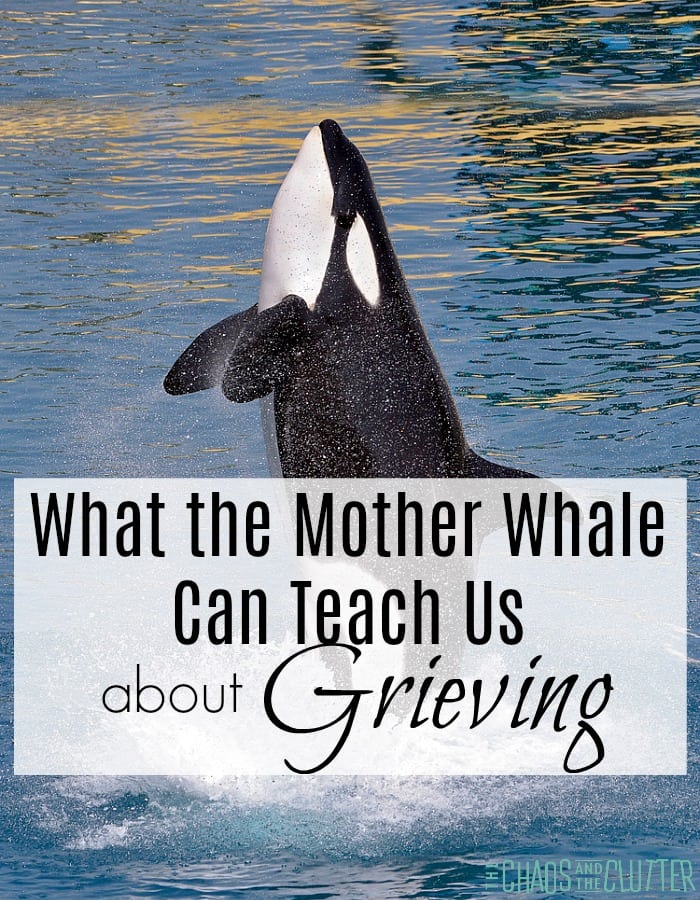
What We Can Learn About Grieving from the Mother Whale 

Filed Under: Adoption

How To Make Squishies

By Sharla Kostelyk

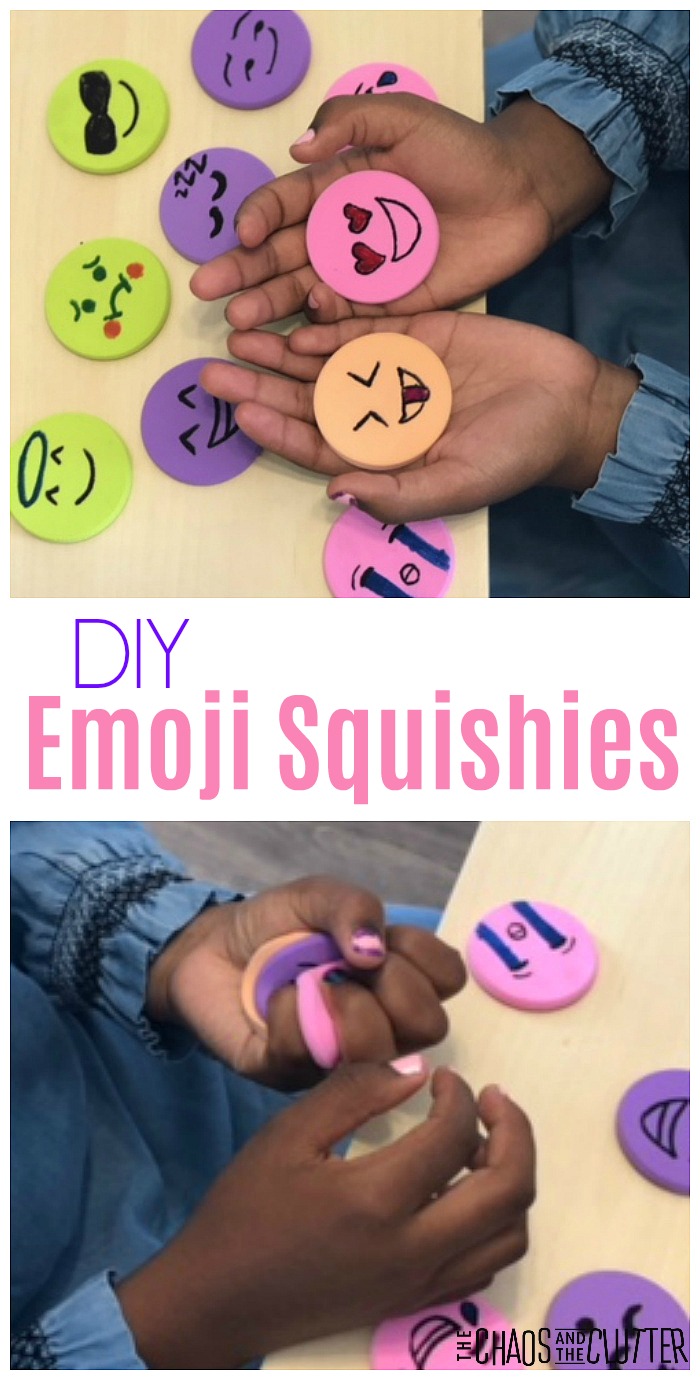
My kids love squishies. They are a great sensory tool. I came up with the idea to make a DIY squishy for them. I had a hard time figuring out how to make them myself until I stumbled upon something. That’s how these DIY Emoji Squishies were born. DIY Emoji Squishies #sensorytoys #sensoryplay #emoji #DIYkidsI found that the size of these was perfect for my kids to squeeze. They fit easily into their hands. So satisfying to squish!
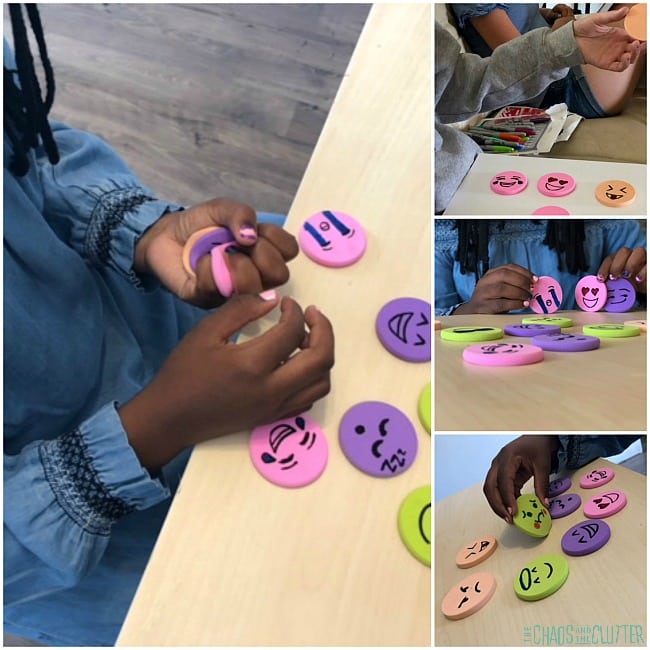
Squishy toys help you release intense emotions, relieve stress, and get that happy chemical (dopamine) going, leading to those feel good feelings. They can also help boost focus, memory, and attention. Read more about the benefits of squishy toys. 

Materials to make Homemade Emoji Squishies:

  • round makeup sponges (we found these colourful ones at the dollar store)
  • permanent markers in a variety of colours (you’ll need black and red at minimum)

How to make Homemade Emoji Squishies:

Draw an emoji face onto each round makeup sponge with permanent markers.

Set them aside overnight to dry. It is important that you resist the urge to squish them until they are fully dry or the faces will smear. We made that mistake initially. And sad little smudged faces are not cute!Once they have sat overnight, squish them, play with them, share them.
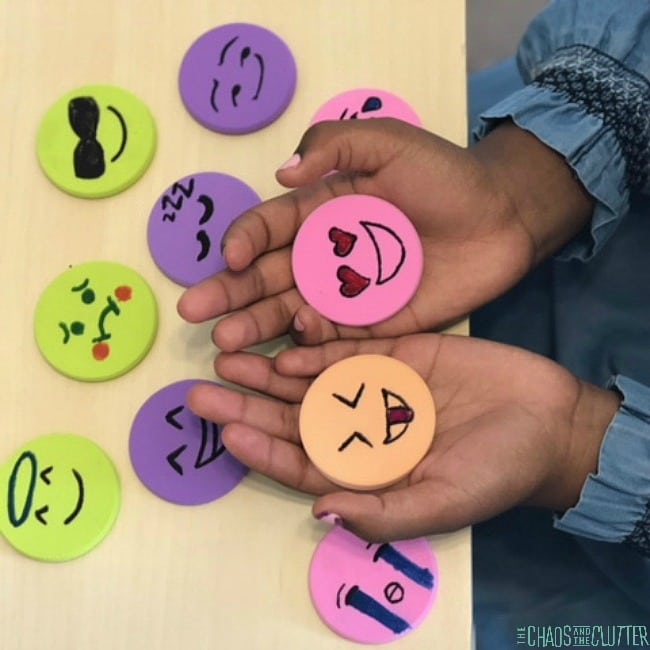
Toss some into backpacks or purses for on-the-go fidgets.

I love how these emoji squishies are not only a sensory tool, but a great way to help kids talk about their emotions too. You know I’m all about helping kids to develop an emotional vocabulary and making it fun and natural for them to talk about their feelings. I encouraged the kids to tell stories using the emoji faces. I thought this would be a great way for them to practise their emotional vocabulary.
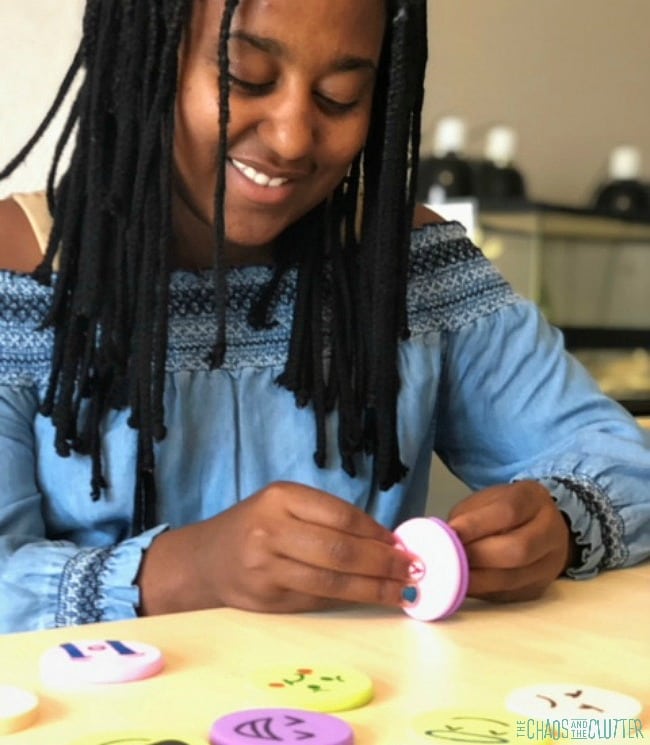
My plan may have backfired a bit when little miss here decided to create a love story between two of the emoji faces. Her little drama ended in them kissing! Silly girl!If you’re able to find your makeup sponges at the dollar store, then these are so inexpensive to make. Ours came in a pack of 6, making these less than 25 cents each to make! They would be cute to give as party favours or to make with a group.

They are a nice change up for kids to use instead of a stress ball as they have a similar effect. These are also a great fidget toy to have in the classroom as they don’t make any noise.

Join me for a free 5 part email series, Little Hearts, Big Worries offering resources and hope for parents.

You will also love:

DIY Mermaid Stress Balls

Shark Week Sensory Bottle

Unicorn Fluffy Slime

Filed Under: Crafts and Activities, Sensory Tagged With: sensory play

Transition Strategies for Kids

By Sharla Kostelyk

Change is hard for kids. Whether it’s big changes like moving to another town or small ones like moving from one activity to the next, transitions are hard. Transition strategies can help prevent meltdowns and lower anxiety in children. Transition Strategies for Kids #specialneedsparenting #parentingtips #transitionsFor some kids, such as children with autism, ADHD, Sensory Processing Disorder, PTSD, or other special needs, transitions are even more difficult. This can lead to challenging behaviours.
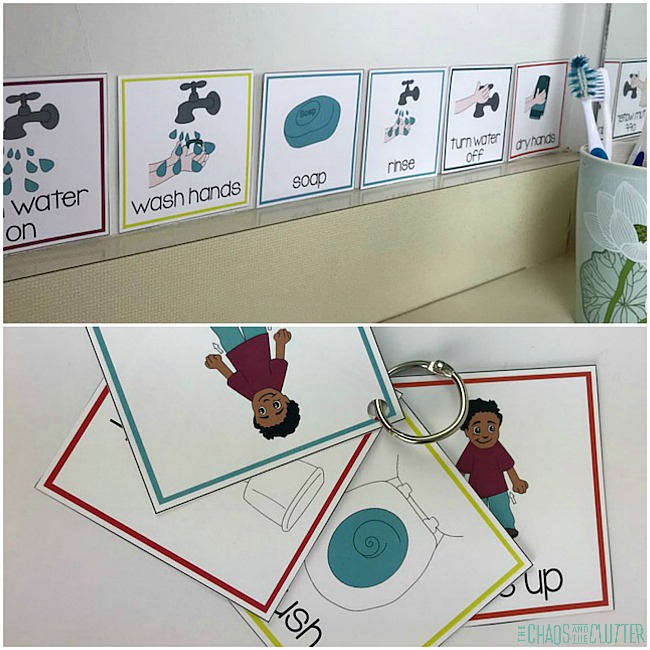

All children, and particularly those with special needs need a sense of predictability. Being prepared with transition strategies is key. These may take place before, during, or after the transition.

Transition Strategies for Kids:

  1. Prepare them. Give kids advance warning for how long an activity will last. Help them know what to expect in a day.
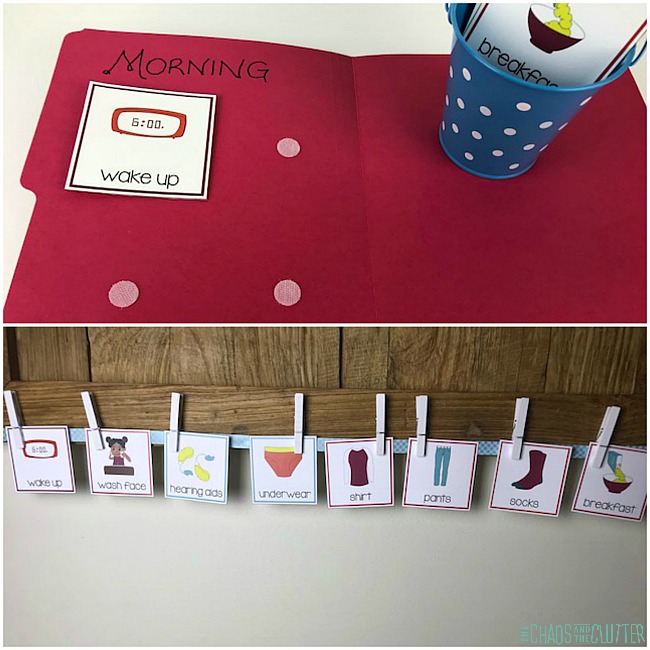
  2. Use a visual schedule. This makes it clear what a child can expect and what is coming up next. It can be helpful to put the activities that are most challenging for the child closer to the beginning of the day when they are less tired.
  3. Use a visual timer or a visual countdown system.
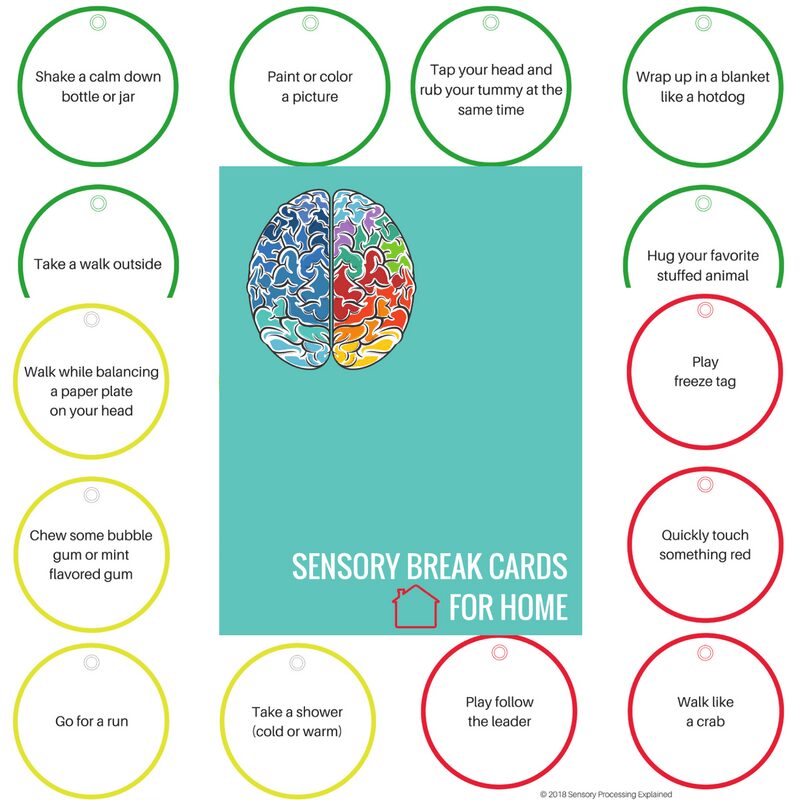
  4. Offer sensory breaks. Sensory activities make great transition bridges. Check out these sensory break cards for home or these sensory break cards for the classroom.
  5. Use a transition object. For some children, having their special blanket, doll, or stuffed animal with them can smooth transitions. This is especially true in the case of a child transitioning from one location to another such as from home to school or from home to preschool. Bringing a small photo album or laminated picture of mom or dad can also be helpful.
  6. Teach transition songs. Transition songs are a great way to help kids move from one activity to the next. Kids love music. These songs are light hearted. They help kids pay attention. They help them mentally prepare for the next activity or time of the day. You can make up your own to the tune of any familiar tune or you can find transition songs here.
  7. Choose transition activities. These would be things that could be done in between two other things such as skipping over to the car or counting to ten before moving on to the next thing.
  8. Allow for extra time. If you’re rushing, your child will pick up on your energy and become even more agitated. By not leaving things until the last minute, you will give your child extra time to adjust. You will also be calmer, which will help them stay calm.
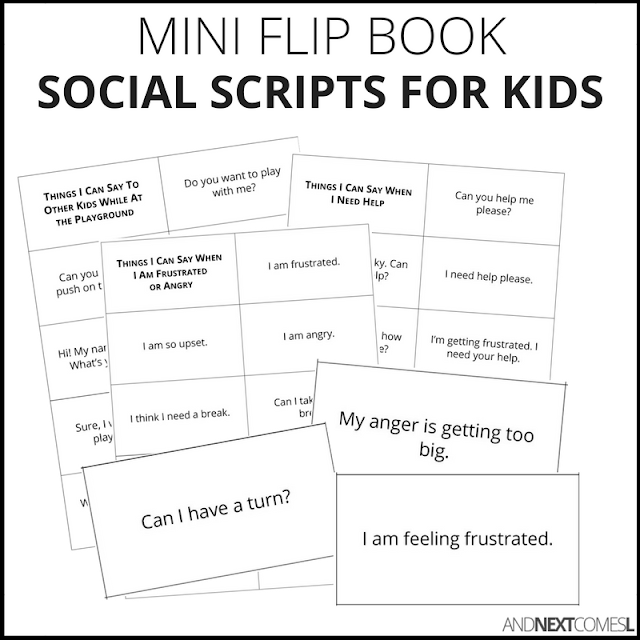
  9. Use social stories. For children who have a particularly hard time with transitions, preparing them with relevant social stories ahead of time can be beneficial.
  10. Maintain consistency. As much as possible, try to stick with the schedule and routines that you have laid out.


Printable Visual SchedulePrintable Visual ScheduleBuy NowTransition Songs and RhymesTransition Songs and RhymesBuy NowSocial Scripts for KidsSocial Scripts for KidsBuy Now

Why transitions are challenging for kids:

You know that moment when you know that it’s time to leave the playground but it’s gotten crowded since you arrived and you dread the scene that you know is going to unfold as soon as you tell your child it’s time to leave? We’ve all been there.

When your child is engrossed in an activity that they are enjoying, it’s hard for them to get their brain to switch tracks.

Even as an adult, it’s sometimes hard to want to leave something that we are enjoying to move on to something we perceive as less enjoyable.

Kids have less control of their lives. They don’t make the timetable or choose where they are going or what they are doing (most of the time). This makes it more frustrating for them to have to quit something they are enjoying.

Transitions and special needs:

Children with autism and kids with ADHD tend to hyperfocus on what they are interested in or what they are doing. Disruptions are unwelcome and can result in a meltdown. Attention shifts require flexible thinking and this is challenging for most kids who have autism.

Kids who have autism also have trouble with nonverbal cues, so they may not pick up on things that other children in the classroom do to prepare them for transitions. That’s why it’s especially important that things are spelled out clearly for them and that they get visual cues as well as verbal ones.

Children with sensory needs can also struggle with transitions more than other kids. This is due to their bodies needing to adapt to new sensory stimuli with each new location or activity.

As an example, in a classroom setting when a child is engrossed in a math activity, sitting at a desk and the time comes to put that away and eat lunch.

Where they were likely not getting enough sensory stimuli at their desk, moving to a cafeteria or into the busy hallway to retrieve their lunch may offer too much stimuli with the increased noise, physical activity, and taste sensations. Going to such extremes rapidly is difficult and can lead to meltdowns.

Transitioning from home to school and back home:

One of the most difficult transition of the day for kids can be the one from home to school/preschool or the one from school back home. If this is a particularly challenging issue for your child, it’s best to work together with the teachers to come up with a game plan.

A transition object can be useful. This is usually something familiar from home that brings the child comfort.

Have something the child does every day right before leaving the classroom. This should be simple and easy to maintain such as placing their notebook on the teacher’s desk or placing an X on their student planner.

Although you want the teacher to be aware of this routine, you don’t want to involve them in it. If for example the child’s post-school ritual was to high-five the teacher every day, imagine the meltdown the child could have if the teacher were absent one day.

Coming back home after school is particularly difficult for many children. The reintegration into the house after holding in their emotions all day and being in a very different environment can cause big meltdowns.

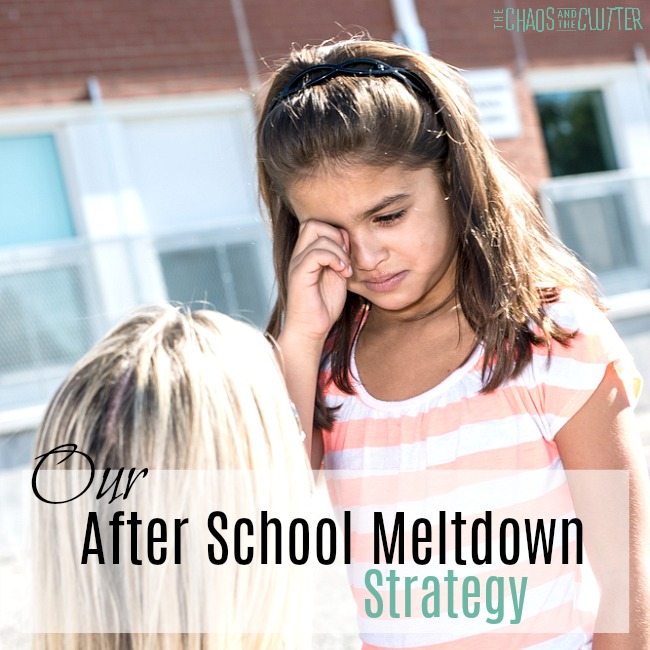
We have discovered an After School Meltdown Strategy that actually works. It has made the after school transition much smoother in our home. Other parents have also found it works for their child.

Remember that communication between you and your child as well as between you and the school are critical in helping your child make these changeovers as seamless as possible.

Resources for assisting kids in transitions:

The After School Meltdown Strategy that really works 

Printable Visual Schedule for Kids with Special Needs

Sensory Break Cards 

Filed Under: Sensory, Special Needs Parenting

What We Can Learn About Grieving from the Mother Whale

By Sharla Kostelyk

Were you captivated by the story of the mother whale who carried her dead calf for 17 days before finally letting go? I was moved. As a mother, I can only imagine what it is like to lose a child. But I know other types of grief and I could relate to some of what she must be going through.

I know it may sound a bit ridiculous to shed tears over an orca’s love for her baby, but once you’re a parent, you understand a depth of love that is indescribable. What the Mother Whale can teach us about Grieving #griefandloss #parenting #grieving

While the world followed her story, there were those who were concerned that the mother wasn’t eating enough. There were those who speculated that perhaps she had a certain spot in mind to leave her calf. I pondered something different.

Just as we carry our own children through the hard times in their lives (especially true for those of us parenting children with special needs), this mother carries her baby on her back for seventeen days through the ocean.

There is much that we could learn about grieving from this majestic animal. In North America, we tend to grieve in private. We put time restrictions on grief. We worry if we perceive that a person is grieving for “too long”.

The fact that there was so much concern and speculation about a whale’s period of grieving provides evidence of just how uncomfortable we are talking openly about grief and loss.

This mother whale didn’t care that other killer whales usually carry their dead calves for a shorter period of time. She wasn’t concerned with appearances or a timetable put in place by others.

She allowed herself to process the death of her baby and mourn in the way that came naturally to her.

Orcas are known to have strong familial connections. Tahlequah (the name given to this whale) had relatives who occasionally took turns carrying the body of her calf for her during her journey. They did not rush her to let her baby go. They helped her carry the load. Literally.

The pod watched her closely and understood her need to mourn her loss. They helped in feeding her and giving her breaks from carrying the weight of her calf.

She carried her calf’s body for 1,000 miles, sacrificing as only a parent can to be able to say goodbye in the way she wanted to.

Now that her time of mourning is over, she is frolicking with other whales and eating normally. She is able to do this because she allowed herself to grieve in the way she needed to for as long as she needed to.

What we can learn about grieving from this mother whale:

  • grief is different for everyone
  • showing our grief outwardly allows others in
  • the only timeline to worry about is your own
  • grieve in the way you need to
  • keep the person’s memory alive in ways that are meaningful to you
  • don’t worry about how your grief is being perceived or judged
  • don’t grieve alone
  • be there for those who are grieving
  • don’t rush their mourning
  • help carry their load
  • feed them and give them breaks
  • love on them until they are able to swim on their own

In our society, we often try to wrap grief up in a pretty bow. We expect that between the death and the funeral, there will be deep mourning. Yet somehow, we think that after the funeral, life moves on.

The reality is that the time between the loss and the funeral is usually gone through in shock. Add to that the busyness of planning and decision making and often, the reality doesn’t set in until well after the funeral is over and others have gone home. It is then that those grieving need their “pod” the most.

Talking to kids about grief:

  • use age appropriate language, but do not shield them from the truth
  • share your own grief with them so that they see that it is okay to share feelings and even to cry
  • tell them that each person grieves differently
  • give them an emotions vocabulary and the ability to express their feelings
  • take seriously their grief over the loss of a pet or friend who moves away or a parent’s divorce
  • teach them the stages of grief and how they don’t necessarily happen in a particular order
  • let them express their feelings through play and art
  • allow them to be a part of commemorative rituals such as the funeral or memorial service
  • give them opportunities to share their favourite memories of the loved one
  • get professional help for them if you see that they are not coping in healthy ways

When my father-in-law passed away over a year ago, we involved our kids and allowed them to grieve. As soon as he received his terminal cancer diagnosis, we told the kids. We also told them that we wouldn’t be keeping secrets from them. We expressed that any of their questions would be answered honestly.

As his condition worsened, we involved them in the process, allowing them to begin saying good-bye. We brought them to the Hospice, explaining ahead of time what they would see and what they could expect. They each got to say goodbye in their own way.

The morning that he passed away, we came home and told the kids immediately. Some of them cried. Others ate their pancakes. Others wanted some time alone. One hardly left my side for days. Each of them processed it in their own way.

Before his memorial service, some of the kids wrote letters or drew pictures. They placed these in the casket with him. They were also able to write or draw things directly on the casket if they chose to. We hid nothing from them.

One of our sons had a hard time going back to school afterwards, so we kept him home until he felt ready. At times, he would go for a half day and then call me to pick him up. His grieving took longer than some of his siblings because it triggered some prior losses he had had in his life.

It’s so important to know and convey that it is okay for everyone to grieve in the way that they need to. There is no right or wrong length of time for grieving.

You may also be interested in reading:

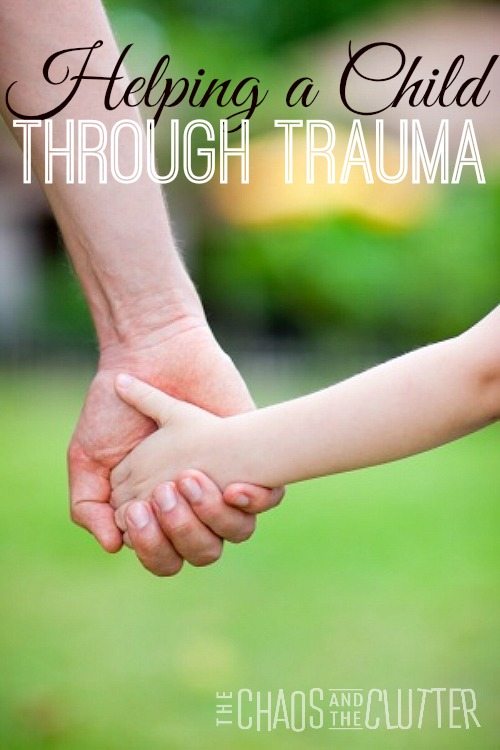
Helping a Child Through TraumaHelping a Child Through Trauma

Symptoms of Anxiety in Children

Teaching Emotions Toolkit

Filed Under: Special Needs Parenting

Talking to Kids About Adoption (10 Great Tips)

By Sharla Kostelyk

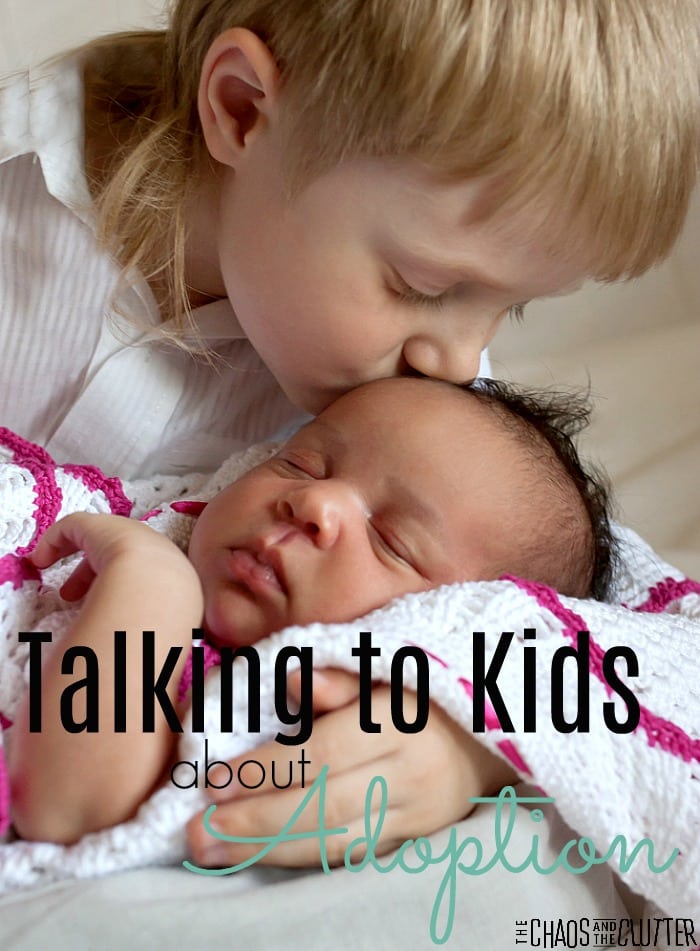
No two adoption stories are alike. Therefore, there is not a one-size-fits-all answer when it comes to talking to kids about adoption. Many years ago, I was doing dishes in the kitchen and overheard my girls playing with dolls in the next room.Talking to Kids about Adoption #adoption #adoptioneducation #adoptionrocks“I’ll be the tummy mommy and you be the other mommy.” I smiled at the sink. I was glad to know that the girls felt so comfortable talking about adoption that the theme showed up even in their playtime.


I also recall a moment of listening to one of my daughters correct a friend of hers who repeatedly questioned her about her “real” mom. Her replies made me laugh a little.

My daughter: “My real mom is in the kitchen.”

Her friend: “No, I mean your REAL mom.”

My daughter: “My real mom is in the kitchen. She takes care of me every day. It doesn’t get more real than her. I think you’re trying to ask about my birth mom.”

That little interaction is exactly why this first point is so important:

1. All children should be told about adoption…not just those children who are adopted! Educating kids about adoption including common adoption terminology ensures that there will be more understanding and compassion and less chance of kids saying ignorant things to other kids on the playground. Adoptive parents and their children need you to educate your child so that they don’t have to!

Take the time to learn respectful adoption terms. This will ensure that you will choose sensitive language when having the conversation with your child. Here’s a short rundown:

  • Never say “real” or “your own” when referring to an adoptive parent’s biological children. If you feel the need to differentiate, “biological” and “adopted” are the terms you can use.
  • Some people prefer the terminology of “first family” instead of “birth family”.
  • “First moms” (or “birth moms”) “place their child for adoption” or “make an adoption plan”. They do not “give their child away”.
  • Children are not “bought”. There are sometimes fees associated with paperwork, orphanage care, lawyers, travel, and medical expenses in an adoption, but the children themselves are not bought. They are priceless.
  • Every adoption is unique and so are the circumstances.
  • Stay away from asking adoptees and adoptive parents questions like these.

2. Talking about adoption should not wait until your child reaches a certain age. Adoption is a topic that should be introduced from birth or from the time your child is in your home. Waiting until they are older to first introduce adoption can lead to feelings of betrayal. Many of my adult friends remember well the day they learned their adoption “secret”. Because it was kept from them until a certain point, they felt that it must be something to be ashamed of.

3. Use age appropriate language and give age appropriate information. There are many cute books that can help introduce the topic of adoption to young children. As children get older, it becomes appropriate to share more specific details about their adoption story. When our oldest daughter was younger, her favourite bedtime story was the one where we would tell her about the night she first came to us. She loved to hear about how excited we were! As she got older, more details were added to the story and we began talking about some of the harder aspects of her history. An important factor to keep in mind is that emotional maturity is more critical to consider than a child’s actual calendar age when deciding what should be shared when.

4. Tell the truth. You obviously don’t want to share every difficult detail with a three year old, but continue to provide factual answers to your child’s questions so that by the time they are an adult, they are the owners of their whole story. This also includes providing them with any paper documentation you may have when they are at an age that they are ready to have it.

Telling the truth is easy if your child has a relatively easy story to tell or at least what is considered to be a typical adoption story, but telling the truth may seem impossible if your child’s history is sad or awful or complicated. It is still better to have them hear it from you, the person who loves them and whom they trust most than to find out some other way in the future and feel betrayed by you or feel that you were ashamed of their story.

5. Acknowledge the loss. Adoption is beautiful or at least, it can be beautiful, but adoption is also full of loss even in the best of circumstances. Acknowledge those losses with your child and let them know that it is okay to grieve them.

6. Talk about birth family/first family reunion. When you feel that your child is ready, broach the subject of how you would feel if they were to seek out their first family someday. Children feel a fierce sense of loyalty to both sets of parents and don’t want to upset you, so they may not be willing to bring up their desire or thoughts in regards to someday searching for their first family. If you let them know that you do not feel threatened by this, they will feel more free to include you in this part of their journey. If you do not think that them seeking out their first family would be best, share with them what your reasons are.

7. Let your child know that it is okay to ask you questions. Answer them in an age appropriate, yet truthful way.

8. Follow your child’s lead. When you create an environment where talking about adoption is as natural as asking someone to pass the peanut butter, you open the doors to allowing your child control over this part of their history. Some children want to talk often about it and others would rather not think about it very much. There are also stages of development that naturally bring about more questions about identity and belonging. Adoption may take on more of a focus during those times. 

9. Practise their public story with them. Adoption is one of those things that seems to invite a lot of questions. When their friends begin to find out that they are adopted (for trans-racially adopted kids, this happens immediately), your child will face questions. Practising with them what they are comfortable sharing and what is appropriate for them to share with close friends, acquaintances and strangers (having three sets of scripts – one for each of these groups) will allow your child to avoid the discomfort and anxiety that comes with the questions.

10. Don’t be afraid to call on a professional. If your child seems to be stuck in their grieving or having a lot of issues surrounding their adoption that seem to go beyond what you are comfortable with, it is very appropriate to seek the help of a counsellor. It is best to find one who has experience with working with clients who are adopted.

I hope these tips help you in talking to kids about adoption and in realizing the importance of such discussions.

You may also be interested in reading:

Your Child’s First Day Home (Adoption or Foster Care)

What I Wish You Knew About Parenting a Child with Reactive Attachment DisorderWhat I Wish You Knew About being a parent to a child who has RAD (Reactive Attachment Disorder)

Filed Under: Adoption

Rainbow Confetti Party Slime

By Sharla Kostelyk

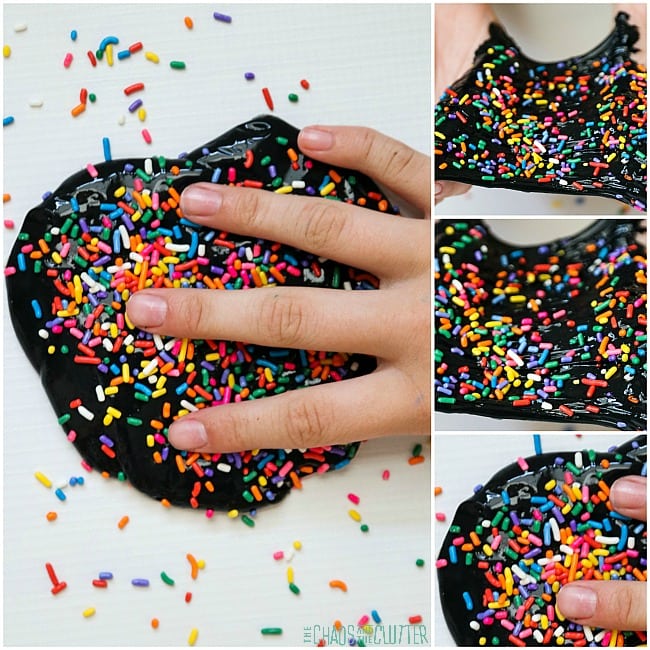
Whether you are new to the slime craze train or barreling full speed ahead down the tracks, you’ll love this simple rainbow confetti party slime. Rainbow Confetti Party Slime #slime #sensoryplay #slimerecipe #kidsactivities

My kids are fully on board the slime train, so we have had the chance to make many types. By adding a small twist to each type, they never seem to get bored of it.

As with all slime recipes, supervise younger children, wash hands and surfaces that come into contact with the slime after playing, and avoid contact with clothing and hair.

Trust me on this one: slime and hair are a nasty combination!

Although I experiment with different types of slime, I prefer glue based slimes as they seem to have the best success rates. The type of glue you use matters, so rather than experiment, I suggest you use Elmer’s Washable School Glue. It’s tried and true.

There are many times when I suggest buying items from the dollar store or using a no-name brand, but this is not one of those times. If your kids are fully hooked on making slime, I suggest buying it by the gallon!

Rainbow Confetti Party Slime Recipe:

  • 1/2 cup Elmer’s white glue
  • 1/2 cup water
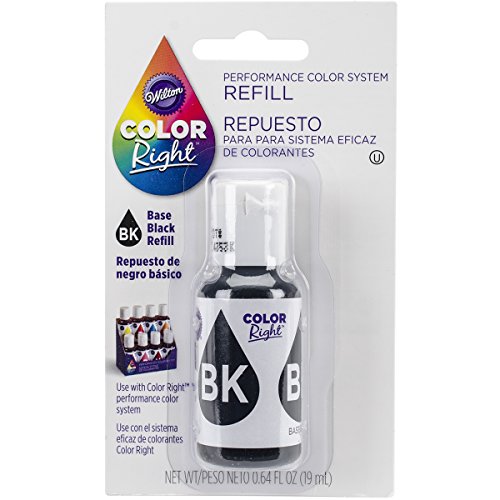
  • Wilton Color Right liquid (black)
  • 1/4 cup liquid starch
  • rainbow sprinkles

Adult supervision is recommended for making the slime as it does involve a chemical reaction. I like to use the wide popsicle sticks (also called craft sticks) for mixing because I can throw them away afterwards. Spoons work as well of course, but I find the glue a bit finicky to get off after.

  1. In a bowl, mix 1/2 cup of water with 1/2 cup of glue.
  2. Mix in the liquid color.*
  3. Pour in the liquid starch.
  4. Stir. Keep stirring until the liquid is gone and a glob of slime forms.
  5. Knead the slime. It will be stringy and goopy in the beginning, but will quickly become more and more the consistency of slime.
  6. Set the slime down and allow it to flatten out.
  7. Sprinkle with the confetti sprinkles and let it sit 20 seconds or so.
  8. Pick the slime up from underneath.

Elmer's Liquid School Glue, Washable, 1 GallonElmer’s Liquid School Glue, Washable, 1 GallonRainbow SprinklesRainbow SprinklesWilton Color Right Food Color BlackWilton Color Right Food Color BlackSta-Flo Liquid StarchSta-Flo Liquid Starch

*Gel based food dyes are hard to mix into slimes and even harder to create a uniform colour with. I use a liquid based food dye for this reason.

Note that as the slime is played with, the sprinkles will mix in and lose their coloring, but that’s all part of the fun. Once they are dissolved, it will look like a completely new slime! Slime is great for sensory play. This particular one would be fun to make at a birthday party. Each of the kids could take home their slime in a small plastic container as a party favour.
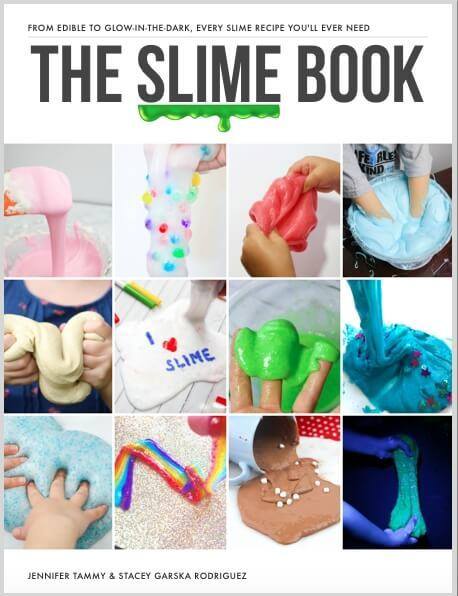
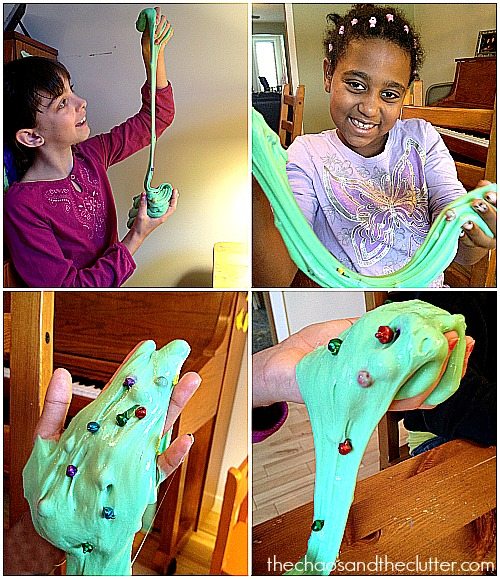
For awesome slime recipes at your fingertips, check out The Slime Book – From Edible Slime to Glow-in-the-Dark Slime – it’s got it all! 

Check out these other slime recipes: 

Crunchy Slime With Mardi Gras Beads

Holiday Jingle Bell SlimeHoliday Jingle Bell Slime

Filed Under: Crafts and Activities, Sensory Tagged With: sensory play, slime

  • « Go to Previous Page
  • Page 1
  • Interim pages omitted …
  • Page 50
  • Page 51
  • Page 52
  • Page 53
  • Page 54
  • Interim pages omitted …
  • Page 128
  • Go to Next Page »

Primary Sidebar

Categories

We are a participant in the Amazon Services LLC Associates Program, an affiliate advertising program designed to provide a means for us to earn fees by linking to Amazon.com and affiliated sites.

Copyright © 2026 • The Chaos and the Clutter • Site Design by Jeni @ The Blog Maven

Return to top of page

Copyright © 2026 · Chaos and the Clutter 2.0 on Genesis Framework · WordPress · Log in