• Skip to primary navigation
  • Skip to main content
  • Skip to primary sidebar
  • Home
  • About
  • Contact
  • Privacy + Terms
  • Affiliates

The Chaos and the Clutter

  • Facebook
  • Twitter
  • Pinterest
  • Google Plus
  • RSS
  • Email
  • School at Home
  • Sensory
    • Sensory Processing Disorder
    • Awesome Sensory Play Activities
      • Sensory Bins
      • Sensory Bottles
      • Sensory Bags
  • Family Games
    • Minute to Win It Games
  • Special Needs Parenting
    • Childhood Anxiety
    • Reactive Attachment Disorder
    • Sensory Processing Disorder
  • Store
  • Course Login

Sharla Kostelyk

Sensory Smell Bottles

By Sharla Kostelyk

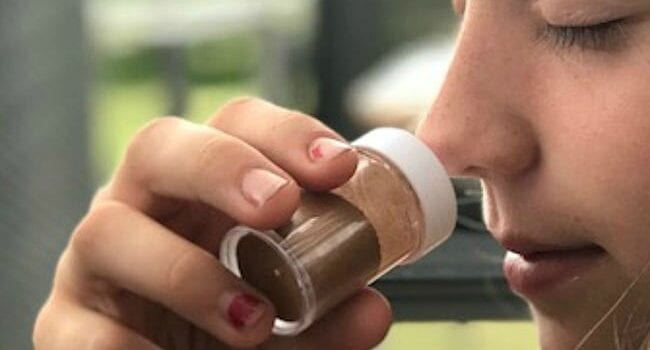
I’ve been wanting to make smell bottles for a long time. I first learned of them as a Montessori activity. They are also an amazing sensory activity for teaching about olfactory and providing sensory input. Sensory Science Smell Bottles #sensoryscience #smellbottles #sensoryplayMy kids really enjoyed this activity. Of course, boys being boys, I got to hear what other smells we could have bottled!!! How is it that boys can always find a way to find the gross factor?!

If you’re doing a unit on the Senses, this is a good way to introduce the sense of smell.

This is an inexpensive activity as you will likely have most of the supplies at home already. I found the travel spice bottles we used at the dollar store. You could also use leftover empty spice bottles if you have any.

How to Make Sensory Smell Bottles:

Supplies needed:

  • travel spice bottles
  • cotton balls
  • coffee beans or coffee grounds
  • cinnamon
  • peppermint extract or peppermint essential oil
  • lavender essential oil or lavender
  • coconut
  • lemon essential oil or lemon juice

Instructions:

  1. Put the coffee grounds or beans in one bottle, some cinnamon in another, some coconut in another.
  2. Put some peppermint extract or essential oil on a cotton ball, lavender essential oil on another, and lemon juice or lemon essential oil on another cotton ball. Place each cotton ball into a container.
  3. Have the child guess what each smell is. With younger kids, allow them to use their visual sense as well. They can look for clues such as colour and pair that with the smell to help them figure out what it is.
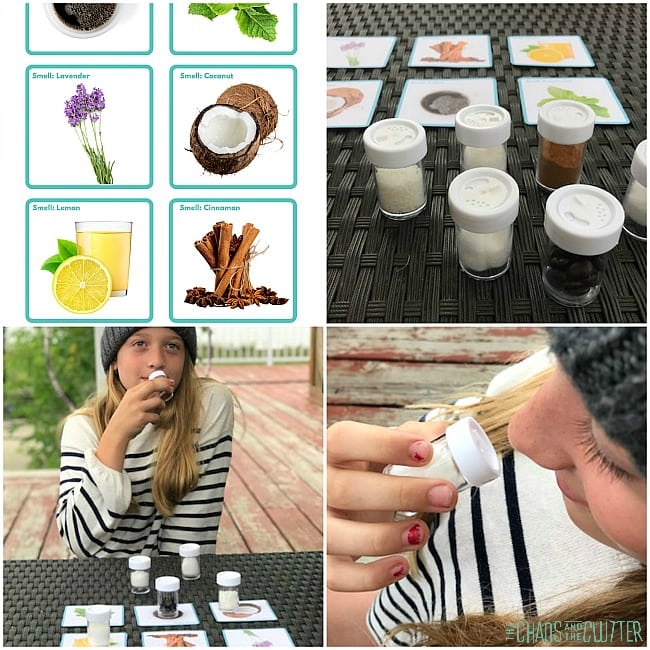
Help your child play “Sensory Detective”. If you print out the corresponding Smell Bottle Cards (available in the Sensory Science Book Volume 1), lay them out for your child to match the scents to.

With older kids, have the child try the activity blindfolded so that they are only using their sense of smell.

Try filling the bottles with more challenging scents to identify such as a flower, dirt, honey, pepper, salt, or orange.

Talk about what the smells are and how our sense of smell also affects what things taste like. You can find an explanation about smell and taste to share with kids here.

Note that just like all senses, some kids will be more sensitive. They may find some (or all) of the smells too strong or even offensive.

Allow them to go at their own pace. Let them hold the bottle further away or even smell through the lid. Some kids’ sense of smell is so strong that they will be able to smell it through the closed lid.

Find this sensory science activity and many more in The Sensory Science Book, full of engaging hands-on learning ideas.

Check out these other sensory science activities: 

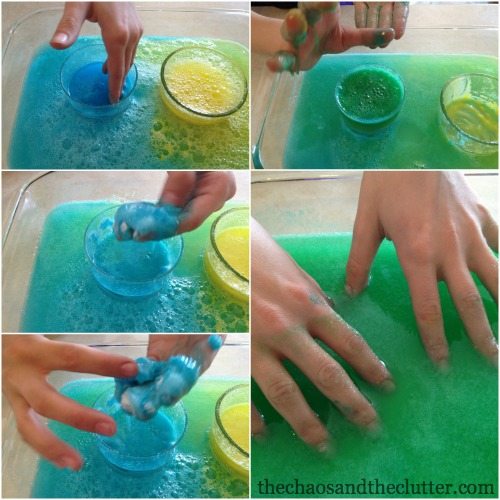
Jello Colour Mixing Experiment jello colour mixing experiment
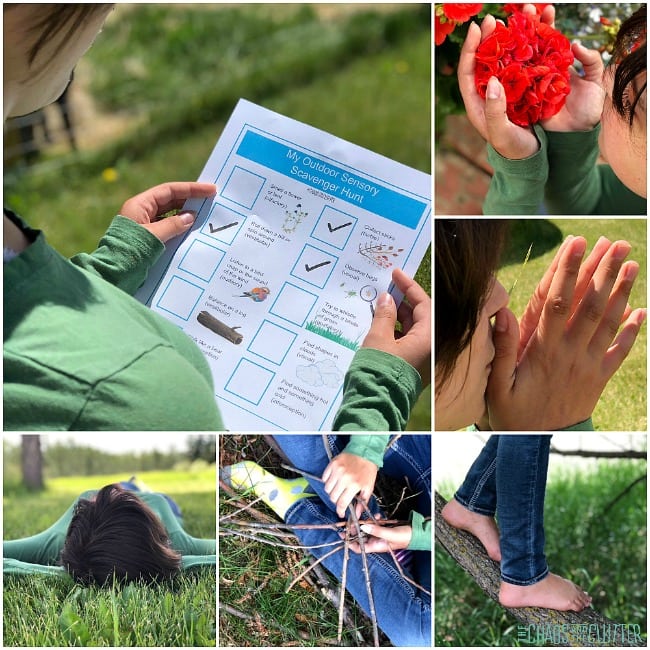
Outdoor Sensory Scavenger Hunt 
Join me for a free 5 part email series Sensory Solutions and Activities (just pop your email into the box below) and get a printable list of 175 Great Sensory Ideas.

Filed Under: Sensory, Simple Science Tagged With: sensory bottles, sensory play

What is Positive Parenting?

By Sharla Kostelyk

When our older two boys were young, I had basically no idea what I was doing as a parent. I had gone to a Barbara Coloroso seminar while I was pregnant with my oldest and that gave me a few new tools to use as well as some new philosophies to think about. What is positive parenting? #positiveparenting #parentingtips #parentingThis statement she made impacted me immediately:
“Encouraging a child means that one or more of the following critical life messages are coming through, either by word or by action: I believe in you, I trust you, I know you can handle this, you are listened to, you are cared for, you are very important to me.” ~Barbara Coloroso

I wanted to raise my children in such a way that they would feel that they were important and valued, that they were capable and loved. I just wasn’t sure how to go about doing that.

Over the next years, I struggled to find a parenting style. I’ve swung from overly permissive to overly rigid and back again. I tried different discipline methods, read so many parenting books, attended parenting seminars, only to feel like I was failing as a mom.

It was actually after we became foster parents and were taking mandatory training for that when I began to stumble upon some truths that sat well with me.

The idea of positive parenting or connected parenting brought me back to what had struck home for me about that Barbara Coloroso quote from so many years before. I wanted to raise my kids in such a way that they would feel like that.

Since changing my parenting to follow the models of positive parenting or connected parenting set for me by such incredible experts as Dr. Karyn Purvis, I have been able to feel more confident about my responses as a parent.

That’s not to say that I have it all together. Most days I still struggle and there are still plenty of moments when I need a “do-over” for my own reactions, but the trajectory is at least going in the right direction.

I know that my kids have more positive interactions with me than negative ones. My kids are learning how to effectively express their emotions. I’m learning to stay calm even in the heated moments. Our home is becoming more peaceful. It’s still loud, as you can imagine with so many kids under one roof, but I’m becoming more skilled at handling the conflicts that arise.

I know that when people hear the term “positive parenting”, they can sometimes assume that means a parenting style that has the kids walking all over the parents, but that isn’t what positive parenting is about.

What is positive parenting?

Positive parenting is a school of thought that allows children to be treated with respect. It emphasizes relationship and communication and its goal is to teach children, not to punish. Positive parenting is about nurturing the relationship between parent and child.

Positive parenting solutions:

  • emphasis on attachment and relationship
  • connection before correction
  • clearly defined rules so that children know what to expect
  • validating child’s feelings
  • getting down on the child’s level and making eye contact
  • offering choices which allows the child to feel that they have a voice and allows them to have a sense of control
  • saying “yes” when you can
  • not using any physical punishment
  • focusing on connection
  • using discipline methods such as natural consequences, time-ins, redirection, and the art of the compromise
  • offering meaningful, thoughtful praise
  • seeing negative behaviour as a method of communication

Is positive parenting effective for children with special needs?

Traditional parenting methods are not effective with most children with special needs. Traditional parenting methods may include things such as long lectures, time outs, grounding, and corporal punishment (spanking).

While positive parenting is wonderful for all children, it is particularly effective with children who have special needs.

In particular, children with attachment issues or Reactive Attachment Disorder, sensory processing disorder, early childhood trauma, autism, and chromosomal disorders respond best to positive parenting.

Is positive parenting easy to do?

I’m not going to lie to you. It can be very challenging to use positive parenting methods if you were raised with other parenting methods yourself. Your default will usually be to react in a similar way to how your own parents reacted.

It takes time, a lot of intentionality and learning, and practise, practise, practise before these things start to feel more natural. Even then, during times of extreme stress or when you are overtired or overwhelmed, it can be easy to slip back into your default parenting style.

When that happens, give yourself grace. Apologize to your child (which provides a great opportunity to model taking accountability for our actions!) and try again.

Give yourself credit for the efforts you’re making and the baby steps you’re taking towards being the kind of parent you ultimately want to be.

Read about how positive parenting skills can forever change your family.

Join me for a free 5 part email series, Little Hearts, Big Worries offering resources and hope for parents.

Check out some other parenting help: 

Connection Activities for Parents and Their Kids Connection Activities for parents to do with their kids #parenting #connection #attachmentBooks for Connected Parenting 

Filed Under: Parenting in the Chaos, Special Needs Parenting

Adopting Older Children Internationally – What I Wish I Had Known

By Sharla Kostelyk

Lately, I have been doing a lot of thinking about our time in Ethiopia when we went to pick up our son, who was 7 at the time, and our daughter, who was 4 at the time. Adopting Older Children Internationally (what I wish I had known) #adoption #internationaladoption #olderchildadoption #childadoptionIn a lot of ways, things did not go very well. Do you see the truth behind the picture above? Look closely into our overtired, overwhelmed faces.

Our adoption agency had gone bankrupt, so we were traveling four months sooner than we had planned and were not prepared emotionally, financially, or in a practical sense.

Due to the circumstances, my husband Mark was there for a week before I arrived and he had a really hard time communicating with the kids, leaving all three of them feeling frustrated.

I was able to pick up Amharic (the language they spoke) much easier than Mark was. Although that did help, I still did not know enough of the language to be able to really put the kids’ fears at ease.

The kids were, in general, traumatized and terrified. Our time in Ethiopia was, in all honesty, a bit of a nightmare. Reflecting on it now that things are settled and I am not in an emotional or exhausted state of mind, I am able to see what I wish we had done differently or had known at the time that would have helped us.

I hope that by sharing what I wish I had known when we adopted older children, others can have an easier transition than we did.

1. It gets better! The road has not been an easy one. There have been a lot of ups and downs. It took a lot of work, but it also just took time. I wish I would have been able to know with certainty that things were going to get better because I lost sleep, tears, and worry at the time, wondering if life was always now going to be hard.It took a long time for things to get better for us. I hope I don’t scare you by saying that they got a lot worse before they got better. (see #5!) Healing is possible.

2. Their initial behaviour is not a reflection of your parenting. This one may seem obvious to others. Of course if you have only met the child the day before for the first time, their behaviour has nothing to do with you or your parenting skills, but at the time, I felt like I must be the worst parent in the world.

When we would go out in public and they would tantrum, I would feel like people were judging me. When we were alone in the hotel room and they were having tantrums, I was judging me!

In retrospect, they were two scared little kids who did not speak the same language as me and were going through a traumatic time. I was a complete stranger and their behaviour or sadness had nothing to do with my parenting skills or lack thereof.  I wish I had been able to relax and not take it so personally.

3. Take Time to Breathe. We were so sleep deprived before even arriving in Ethiopia. Add to that the time change and the stress, and our brains just were not working at their full capacity! Looking back now, I am able to see simple solutions for things that at the time, seemed like major problems.

As an example, our kids usually only wanted to eat doro wat (which is like a chicken stew). Traditionally, it is served with a hard boiled egg. Our kids would fight and tantrum over who got the one egg. They didn’t want us to cut it in half. They didn’t want to take turns. They would not share it. Every time, this egg was a huge issue.

Now that I can think clearly, I realize that we should have ordered it with an extra egg – such an obvious solution, but one that did not occur to us the entire time!

Of course, eventually you want your kids to learn about turn taking and sharing, but the most tumultuous time in their lives is probably not the time to start insisting on that! My suggestion would be to take a step back and take a deep breath and consider simple solutions. I can think of about ten other examples of this same type of thing during those weeks where we were so stressed out that we were not thinking clearly.

4. Don’t count on anything. Many families travel to pick up older children and find that their children are easy and they are able to tour the country and spend time with other adoptive families. This is often the case because most children will have a honeymoon period initially. But there are exceptions and in our case, our kids did not have a honeymoon period while we were in country.

It soon became apparent that our plans to travel around Ethiopia were not going to work out. If you have strong expectations for what your kids are going to be like or for travel or sightseeing that you plan to do when you are there, you will likely be disappointed.

I wish we had gone into it with less expectations and been more easy-going about it. When we finally resigned ourselves to the fact that our kids did better if we just stayed in the room and ate our food in the room and did not go out, things improved dramatically.

5. Reactive Attachment Disorder and/or Post Traumatic Stress Disorder are real. Research Reactive Attachment Disorder, Developmental Trauma Disorder and Post Traumatic Stress Disorder prior to your adoption. Nothing you read could ever prepare you for the reality of living it.

I suggest that at minimum, research by reading and take the time to speak candidly to families who have lived it. Even this will not adequately prepare you, but it may help arm you with a toolbox of skills in case you need them.

Preparing ahead could help you recognize the signs earlier as well. If you are able, attend conferences while you wait for the adoption. The conference I would recommend as the best would be the Empowered to Connect Conference.

These books are a good place to start in preparing for adopting an older child.

6. You’ll have to parent differently. Parenting an older internationally adopted child the same way you would a biological child who has been with you since birth won’t work.

You’ll need to use connective parenting strategies. You’ll have to be sensory aware. You’ll have to practise extreme self-care. Incorporate connection activities. Give them an emotional vocabulary. Learn about anxiety in kids. Be trauma aware. Learn calm down tools.

You may become an expert in fight, flight, or freeze. This is not going to be your average parenting rodeo!

7. Let it go!  I had this foolish notion that while we were in Ethiopia, we should have rules for them and consequences so that they could begin to adjust to our house rules (our family isn’t overly strict, but we do have some basic rules). I was convinced that if we were pushovers in Ethiopia, they would walk all over us once we got home.

When I think about that now, about how I gave them time-outs (they were probably completely bewildered because they couldn’t even understand most of what I was saying), my heart just breaks for them. I wish I could go back and just hold them more, play with them more, and let everything else go.

Who would it have killed if she had worn his flip flops instead of her shoes every day?

So what if they had not brushed their teeth for those two weeks (they ended up having over $4,000 in dental work that needed to be done, so I’m sure that an extra two weeks of not brushing after years of not brushing wouldn’t have made a difference!).

My advice to others would be just to relax and get used to each other slowly during the trip. The rules can be introduced once you are home.

8. Try not to predict their personalities. This is a really tough one for people. All we have of our kids are these pictures and so we have spent hours analyzing the pictures and poring over every detail, including their facial expressions. From that, we naturally make assumptions about their personalities and then when we meet them, if they do not match what we expected, it can be a difficult shift.

In our daughter’s referral and update pictures, we thought she looked so sad, heartbroken actually. Now that we know her, one of those looks is kind of a sad look, but more of an “I didn’t get my way” kind of sad, and the other, a mischievous look!

From our son’s pictures, we pegged him as being outgoing and fun and happy. It turns out that though he is friendly and very likeable, there was a lot of sadness hiding behind that smile and underneath those bright eyes, was a traumatized boy who needed help to work through his feelings and his past.

9. You cannot do it alone.The first weeks home are much harder than anyone can prepare you for. Even if your child is in a honeymoon phase or just an easy child, it is a huge transition for the whole family.

You will have jetlag and even possibly be ill. If you have other children at home, they will need extra time and attention when you get back, not only to reassure them that they have not been replaced, but they will have missed you while you were away.

Many mothers experience post adoption depression, from mild to severe. The language barrier alone is exhausting.

The extra laundry, extra cooking, extra thinking, extra emotion, extra stress, and the extra appointments as you sort through parasites, fungus, and perhaps even therapy for your child create a life much busier than the one you had before.

ASK FOR HELP! Better yet, set it up before you leave, while you are still able to think straight enough, while you have time to make the phone calls. Arrange for people to bring meals, do laundry, clean your house, or take your other kids out for outings.

10. Attachment and bonding are possible. With our previous adoptions, we had gotten our kids as newborns or babies, so I did not expect that I would be able to attach as much to older children. I knew that over time, they would feel like my kids, but I thought that it would take a long time.

Secretly, I worried that maybe I would never be able to love them with the fierceness and passion that I love my other kids.

I wish I had known then what I know now…that sometimes just thinking about or talking about these two can bring me to tears, that the first time I went away without them, I missed them with a hollowness that is difficult to describe, that they are a part of me.

I wish I had known that even with kids who were seven and four the first time I held their hands in mine, I would be forever changed by their love.

Join me for a free 5 part email series, Little Hearts, Big Worries offering resources and hope for parents.

Is there Hope for Reactive Attachment Disorder? Is there hope for children with Reactive Attachment Disorder? #adoption #parenting #RAD #reactiveattachmentdisorder

Books for Those Adopting an Older Child 

Filed Under: Adoption

Simple Hallowe’en Slime

By Sharla Kostelyk

Any excuse is a good excuse to make slime (according to my girls anyway!). With the leaves changing, I guess it’s time for Hallowe’en Slime! Easy Hallowe'en Slime #slimerecipes #glitterslime #halloweenslime #sensoryplayThe thing that makes this particular slime so simple is the glitter glue. You don’t have to mess with food colouring or paint or glitter because the glitter and colours are already in the glue. Super easy!
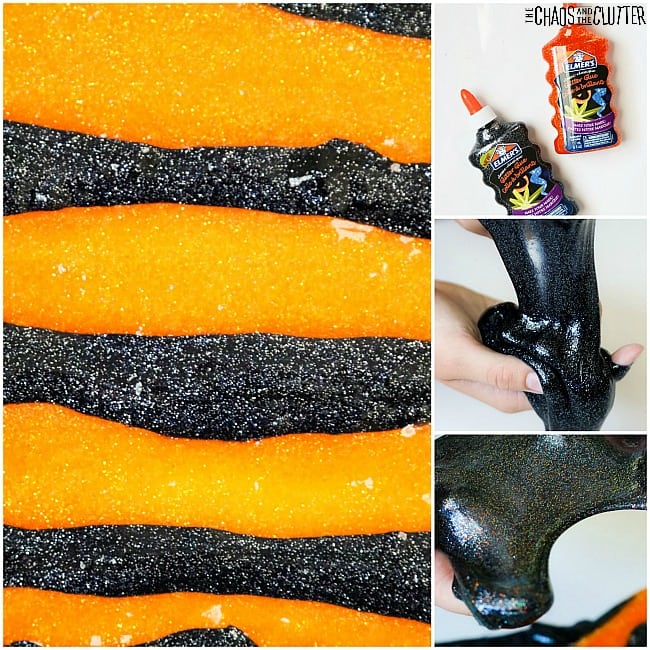
Simple Hallowe’en Slime Recipe:

  • 6 oz. bottle of Elmer’s black glitter glue
  • 6 oz. bottle of Elmer’s orange glitter glue
  • about 3/4 cup liquid starch

In one bowl, slowly mix the black glitter glue with about half of the liquid starch. Add 1 Tbsp. at a time and continue to mix. You’ll know you have the right amount of liquid starch when the mixture starts to pull away from the sides of the bowl and form a clump. Take out the mixture and knead by hand about five minutes, pulling, stretching, and pushing it until slime consistency is formed and it’s no longer sticking to your hands.

In another bowl, repeat the exact same process using the orange glitter glue.

Once both mixtures are slime-like, you can make alternate strips of each colour to create a really cool look.

Please be aware that once you start to play with the colours together, they will mix and a black slime with orange and black glitter will form.

This slime will also look like it fits in with the season as the orange will still be visible in the glitter.

Homemade slime tip: When I make slime, I like to use wide craft sticks rather than spoons when I stir. That way, I don’t have to wash glue off the spoons later!

This Hallowe’en slime recipe is fun to play with and would make such cute favours to hand out at a party or at the door to little Trick or Treaters. You can buy small plastic containers with lids to hand this slime out in.

If you’re using it for play at home or at school, store it in an airtight plastic or glass container or resealable plastic bag.

Check out some of our other Hallowe’en slime ideas:

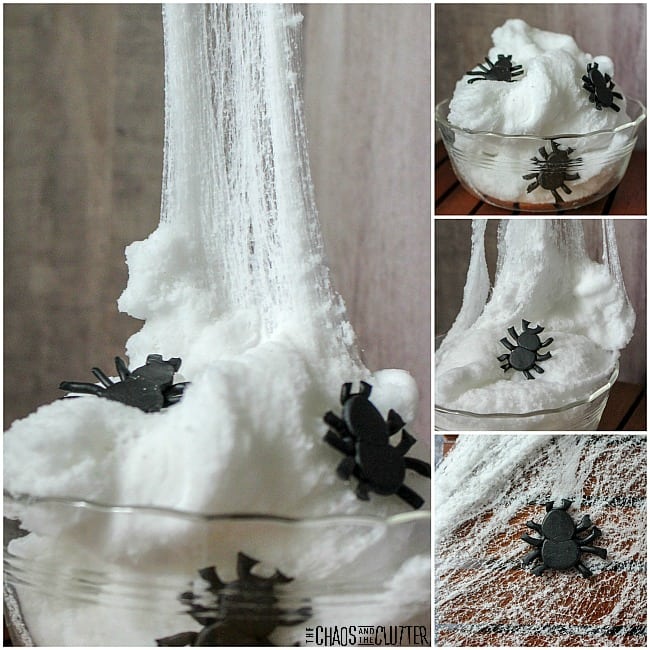
Creepy Spider Web Slime Hallowe’en Sensory Game with Slime

Filed Under: Crafts and Activities, Sensory Tagged With: sensory play, slime

Hallowe’en Sensory Game

By Sharla Kostelyk

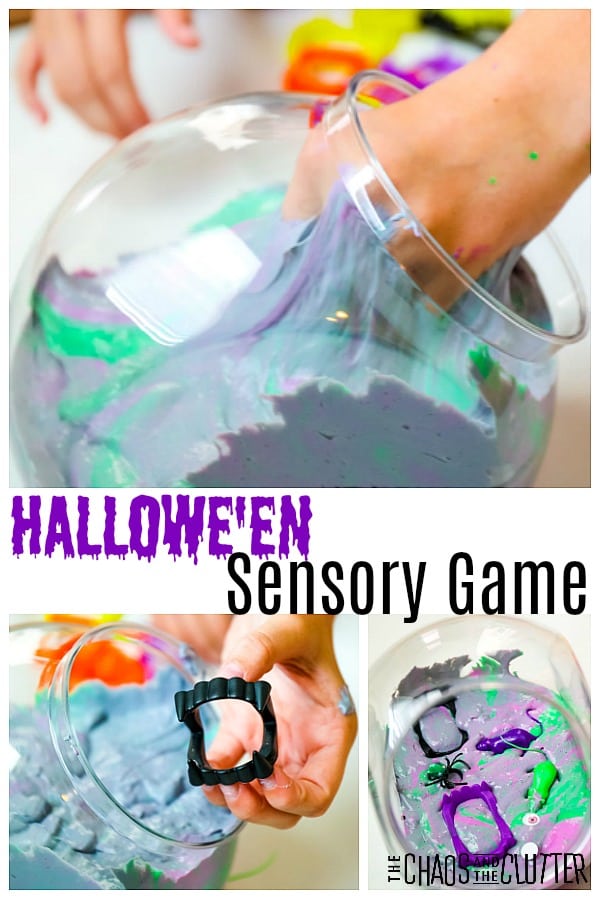
This Hallowe’en sensory game is so much fun! It combines a very popular sensory material with learning and fun. This game engages the visual, tactile, and proprioceptive sensory systems. Hallowe'en Sensory Game #sensoryplay #halloween #forkids #slimeactivities

I remember when I was about eight years old. The neighbourhood moms put together a Hallowe’en party for all the kids. One of the activities was us having to reach our hands into things and guess what was inside.

It was things like cooked spaghetti (brains) or jello (guts). I still remember the feeling of the squishy spaghetti noodles slipping between my fingers. Yuck!

This sensory game is a bit of a play on that idea. It uses one of the most popular sensory materials out there, slime.

How to Play the Hallowe’en Sensory Game:

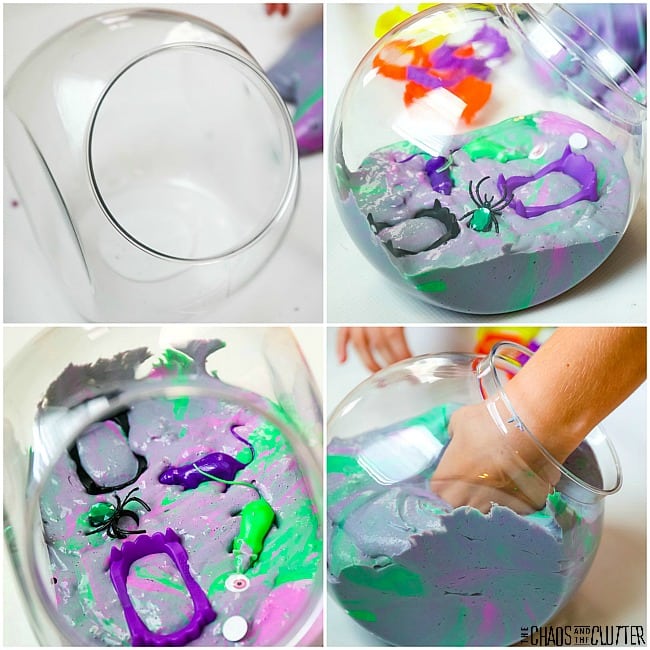
In order to set this game up, you’ll need to first make one or several recipes of fluffy slime. There is a recipe listed below. The reason that you want to use fluffy slime for this is that it sticks to hands less than other slime does.

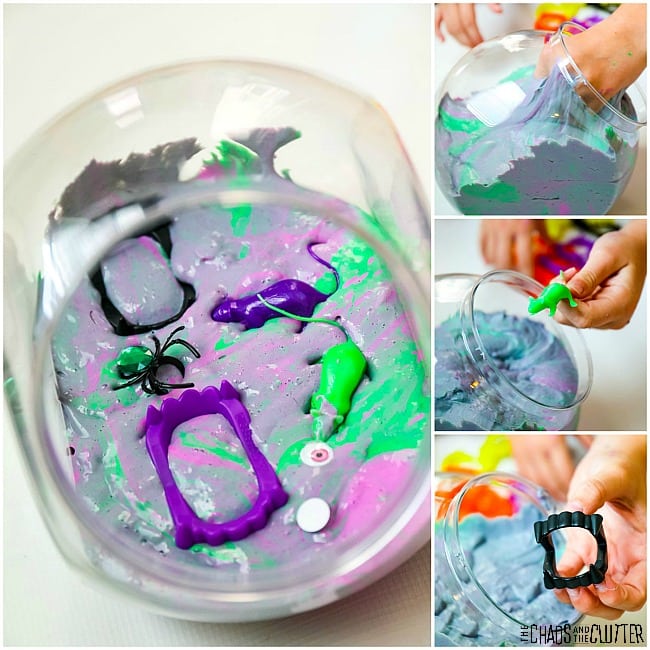
Take a medium sized bowl or plastic container and put a layer of slime inside. Add in some small Hallowe’en trinkets and toys. Put another layer of slime and another layer of small toys. Top with more slime to cover the toys. setting up Hallowe'en sensory gameIdeas of toys to use:

  • plastic fangs
  • plastic googly eye rings
  • toy mice
  • stretchy frogs or snakes
  • plastic spiders
  • Zombie fingers
  • stretchy nose, ear, etc.
  • Hallowe’en erasers
  • eyeball bouncy balls
  • glow in the dark plastic bugs

For older kids, you can pick gory type toys like the Zombie fingers in a black slime for maximum fun factor. For younger kids, brighter coloured slime and cute little toys are best.

There are two ways to play. Of course, if you can’t decide which to try, you can always play both versions!

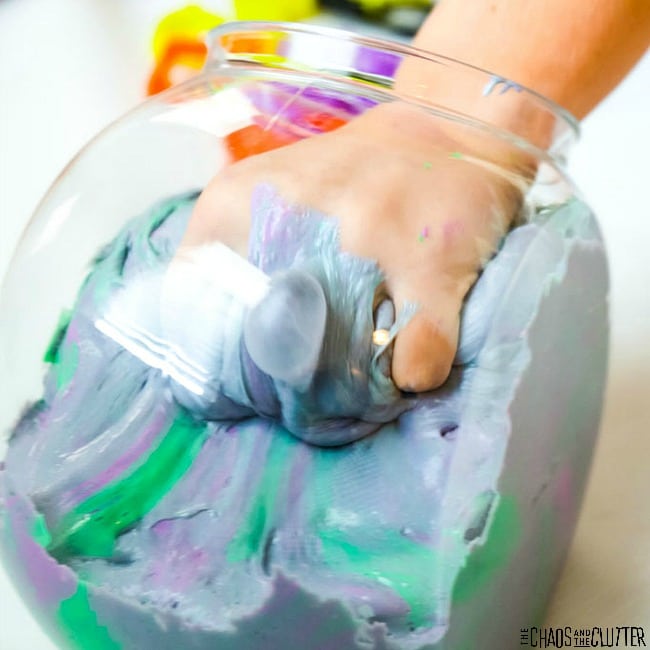
  1. Have each child reach in and retrieve an item. You can let them keep their item as a prize.
  2. Have each child reach into the container and try to guess (without looking at the item) what the item is only using their sense of touch (tactile).

Fluffy Slime Recipe:

  • 16 oz. Elmer’s washable white school glue
  • 3 cups of shaving cream
  • food colouring or acrylic paint
  • 1 cup liquid starch

In a large bowl, mix together the glue and shaving cream. Add some food colouring or paint in the colour you want to create. With fluffy slime, because of the shaving cream, you’ll have to use more colouring than you do with regular slime to get the same colours.

Once the glue, shaving cream, and colour are well mixed, slowly begin to add in the liquid starch. Continue to stir and add the starch in until the mixture begins to pull away from the sides of the bowl and form a clump.

At this point, remove it from the bowl with your hands. Knead it until it has reached the consistency of slime. It is now ready to be used to set up the Hallowe’en game.

You can use all one colour of slime or make several colours and combine them or layer them. You can use Hallowe’en colours like black and orange or green and purple. Any colour will work though. It just looks more Hallowe’en-y if the colours fit. I hope you enjoy our little Hallowe’en sensory game. It would be fun for the classroom, home, or for a Hallowe’en party.
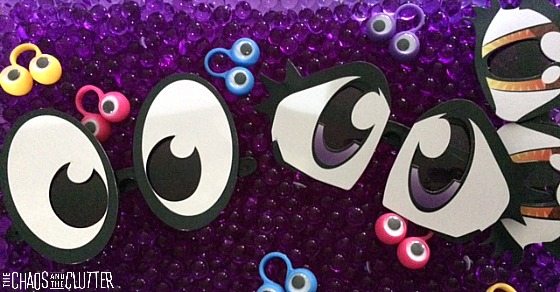

Check out these other Hallowe’en Sensory Activities:

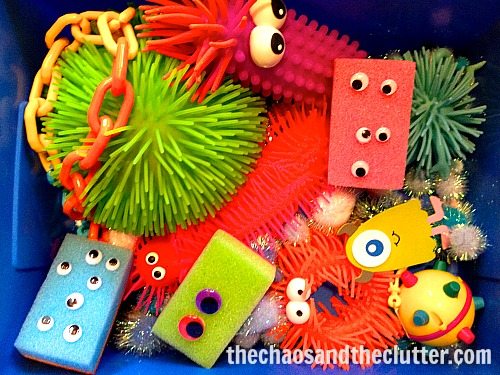
Eyeball Sensory Bin Eyeball sensory bin with purple water beads

Monsters Sensory Bin

Filed Under: Crafts and Activities, Sensory Tagged With: sensory play, slime

12 Activities to Promote Eye Contact

By Sharla Kostelyk

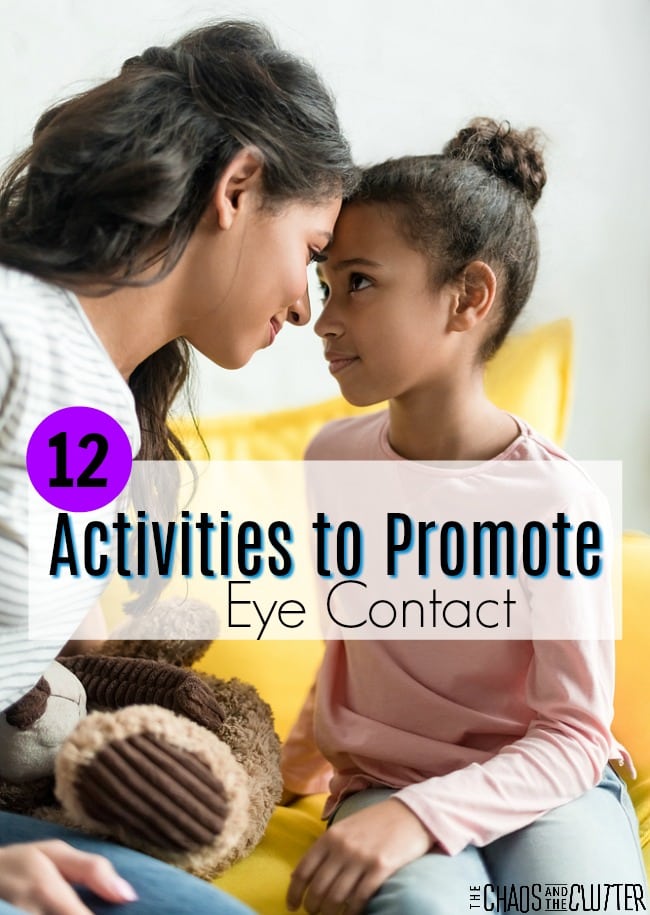
For many kids, making eye contact comes fairly naturally. For kids who are on the autism spectrum or for kids who lacked nurturing in the early years or have experienced early childhood trauma, eye contact is far from natural. Some kids find it uncomfortable while others can find it downright painful. If your child struggles with eye contact due to RAD, autism, SPD, or FASD, there are some simple activities you can do that help promote eye contact in a non-threatening way.

I want to share one comment before I get started with the activity ideas. It’s important not to say “look me in the eye” during these activities. You are looking to foster natural connection and get your child comfortable with eye contact.

You are wanting to get your child used to eye contact and build up their tolerance for it. It is important not to increase their anxiety or make them feel like they are in trouble for not complying.

I remember well the days when making eye contact was painful for one of our sons. It was hard to watch. It’s so much easier for him now, but it will likely never be as easy as it is for most people.

But there has been tremendous process. I really believe that much of that progress was due to us repetitively doing many of these activities.

Activities to promote eye contact:

Face painting – This is my favourite one. It is so subtle. While painting your child’s face, you will create natural proximity and be looking into each other’s faces. Try having them paint yours (that takes courage, but mama, I believe in you)! Be sure to use washable face paint.

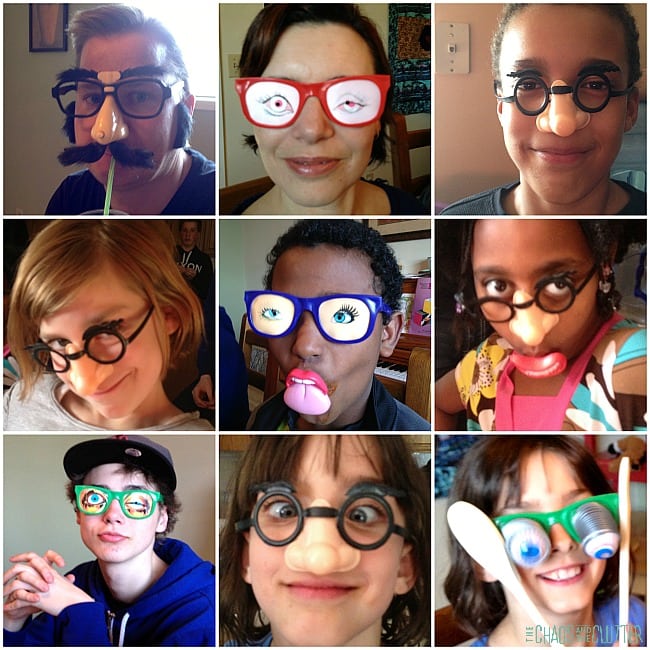
Silliness – Make funny faces or use silly getups such as clown noses, glasses with funny noses attached, or stick-on moustaches. silly glasses collageThose pictures above are from a Family Fun Night we had. You better believe there was a lot of eye contact practise happening that night even if the kids had no idea there was a purpose beyond laughter! 

Stickers – Put stickers or googly eyes on your face. Gradually put them closer to your eyes.

Peek-a-boo – Even with older kids, this game works. With older kids, you’ll have to infuse more silliness to get them to play along. Another way is to teach them to play peek-a-boo with a baby. Ask them to entertain a baby this way and they will be rewarded by smiles and squeals from the baby.

Push them on a swing – Stand in front of them while pushing them on a swing. This encourages eye contact and is great vestibular sensory input.

Secret handshake – Inventing a secret handshake with your child fosters connection and family identity. It also encourages eye contact. Major bonus points if your secret handshake ends with your foreheads touching!

Butterfly kisses and Smurf kisses – Butterfly kisses are when you touch your eyelashes together and blink quickly like butterfly wings flapping. Smurf kisses are when you rub noses. These will obviously be too vulnerable for kids who are at heightened stages of their attachment journey (?).

Board games – Connect 4 is the best one for this if you sit on opposite sides of the board. Because of the level of the board, accidental eye contact is inevitable!

Bubble gum – This is a trick I learned from the late great Karyn Purvis. Bubble gum is good sensory feedback both for proprioception and gustatory (taste). Keep hoards of bubble gum in your child’s favourite flavour. To get a piece of gum, all they have to do is ask “may I please have some gum?” with some degree of eye contact and the answer is always “yes”.

Count freckles – If your child has freckles on their face, count them and assign names to them. Or have them count and name yours. There’s bound to be some eye contact here and there.

Have a staring contest – For kids who are older or further along in their eye contact progress, a staring contest can increase their tolerance for it in a fun way. Don’t attempt with kids who are

Play an eye signal game – Have your child stand a few feet in front of you (or closer if they’ll allow). Signal to them with only your eyes to move to the side (by looking to that side), the other side, stepping back (eyes up), or taking a step forward (one blink).

Join me for a free 5 part email series, Little Hearts, Big Worries offering resources and hope for parents.

Filed Under: Adoption, Special Needs Parenting

  • « Go to Previous Page
  • Page 1
  • Interim pages omitted …
  • Page 49
  • Page 50
  • Page 51
  • Page 52
  • Page 53
  • Interim pages omitted …
  • Page 128
  • Go to Next Page »

Primary Sidebar

Categories

We are a participant in the Amazon Services LLC Associates Program, an affiliate advertising program designed to provide a means for us to earn fees by linking to Amazon.com and affiliated sites.

Copyright © 2026 • The Chaos and the Clutter • Site Design by Jeni @ The Blog Maven

Return to top of page

Copyright © 2026 · Chaos and the Clutter 2.0 on Genesis Framework · WordPress · Log in