• Skip to primary navigation
  • Skip to main content
  • Skip to primary sidebar
  • Home
  • About
  • Contact
  • Privacy + Terms
  • Affiliates

The Chaos and the Clutter

  • Facebook
  • Twitter
  • Pinterest
  • Google Plus
  • RSS
  • Email
  • School at Home
  • Sensory
    • Sensory Processing Disorder
    • Awesome Sensory Play Activities
      • Sensory Bins
      • Sensory Bottles
      • Sensory Bags
  • Family Games
    • Minute to Win It Games
  • Special Needs Parenting
    • Childhood Anxiety
    • Reactive Attachment Disorder
    • Sensory Processing Disorder
  • Store
  • Course Login

Sharla Kostelyk

The Bag Game

By Sharla Kostelyk

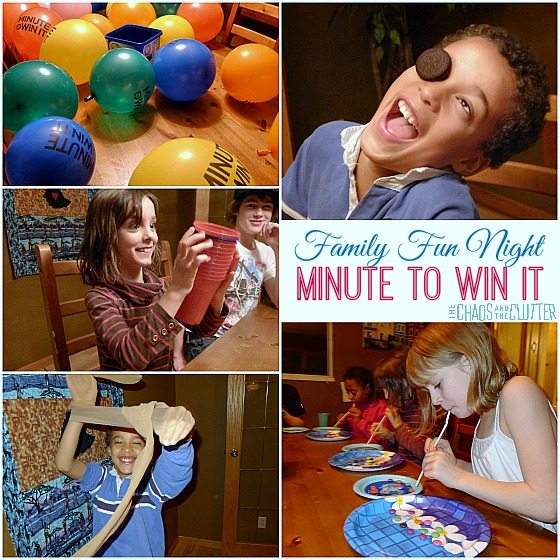
Our neighbour Christie introduced our family to the Bag Game years ago and it is always a hit on family game night.  This easy game requires exactly one item and can be played anywhere. It can be played with large groups or small groups and with people of all ages.  It seriously does not get simpler or better than The Bag Game!The Bag Game - fun for family fun nights, youth group events and parties
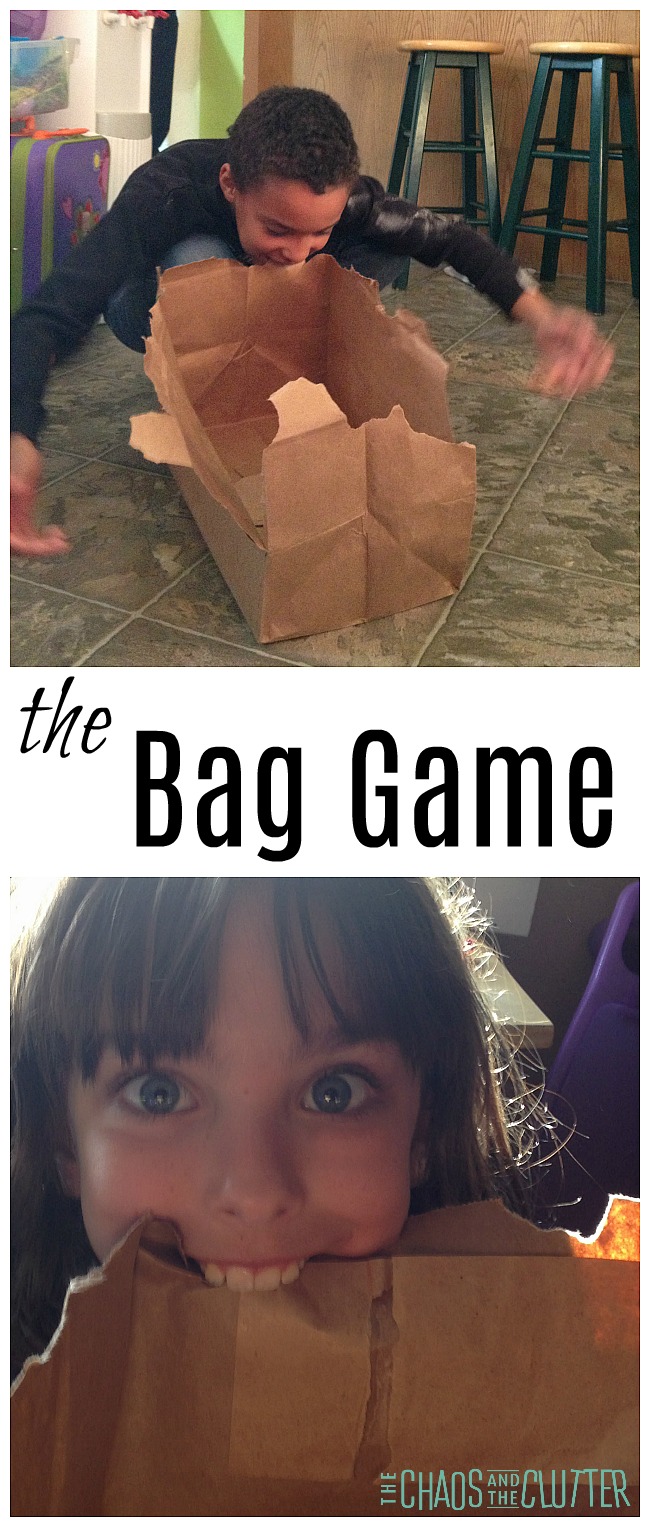
We have played the Bag Game both outside and inside. We once played it with an empty cereal box because we didn’t have a paper bag to use. It is a great boredom buster on a snow day and an even better ice breaker at group events or a game for youth.

As long as you have a paper bag, this game costs nothing and couldn’t be simpler to set up. We always save paper bags now from stores or take-out at restaurants just for this purpose.

Our family loves this activity. There is always much hilarity that ensues as everyone stands around watching the person whose turn it is. There is laughter and cheering. Sometimes, there are some attempts to distract the person, especially when it comes to siblings!

How to Play The Paper Bag Game

Materials needed:

  • paper bag or cereal box

Instructions:

  1. Place an empty paper bag on the floor.
  2. Standing on one foot, each player must take a turn to retrieve the bag using only their mouth.
  3. Once the bag is successfully retrieved, that player tears off the piece of the bag that their mouth touched.
  4. In this way, the bag slowly gets lower and lower to the ground.
  5. Once a player’s raised foot touches the ground or one of their hands touches the ground, they are eliminated from the game.
  6. The last person remaining in the game is the winner.
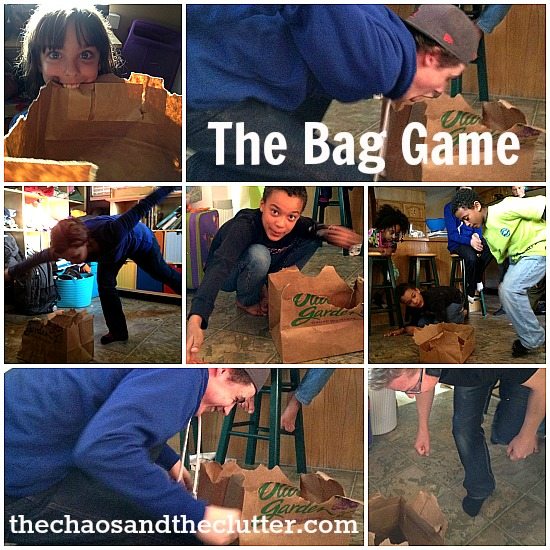
the bag game: minute to win it challenges

You will want to play this in a fairly large area so that everyone has room to manoeuvre. We have found that everyone develops a bit of their own style in this game. Some put their other leg way up high and use it as a counterbalance. Some crouch low to the ground with their whole body while others bend their upper half down. One of our sons places one foot on top of the other before crouching down.
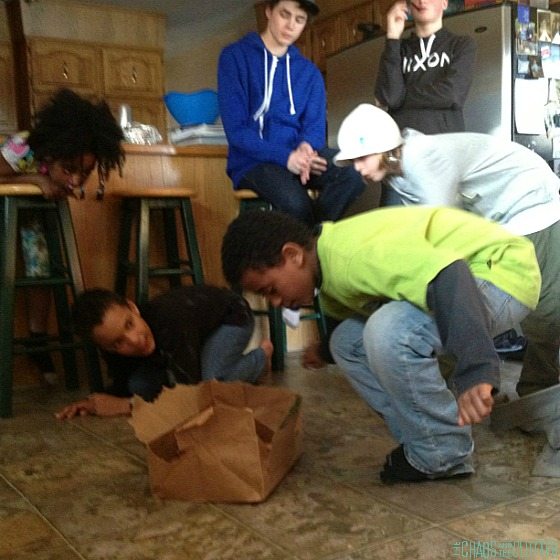
The Bag Game Variations

For younger children or those with mobility issues, you can play the game exactly the same way but allow both feet to be touching the ground.

You can choose to have some players be allowed this exception while others play with the traditional rules of the game.

Another variation is to allow each player three strikes per turn or per game wherein their raised foot or one of their hands can touch the ground twice without that player being eliminated.
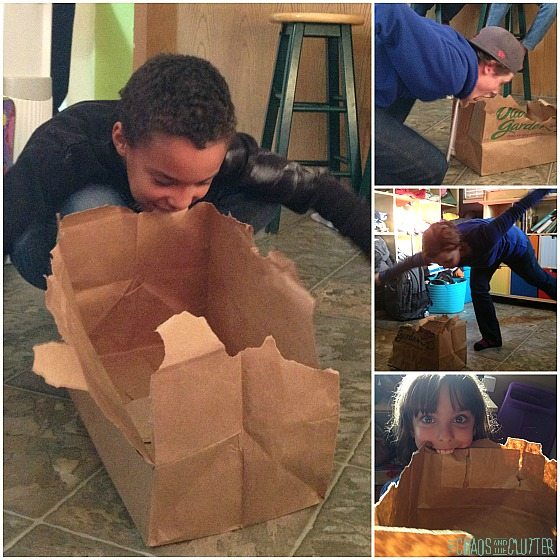
the bag game: minute to win it challenges

We have a large family and we enjoy finding family games that we can all do together.  This one has quickly become a favourite.

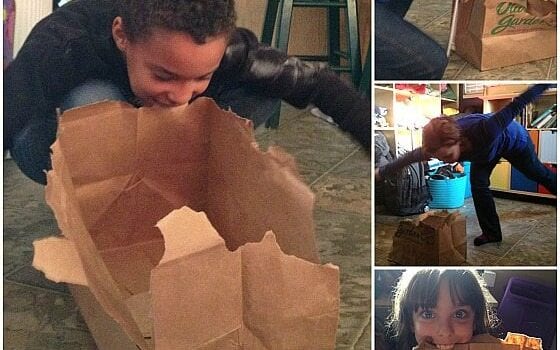
You’ll notice from the blurry pictures that this is an active game with a lot of movement. There can be some pretty funny contortions, particularly when the bag gets down really low. There have been times in our competitive family when all that was left of the bag was a single piece of paper laying flat on the ground and our son managed to retrieve it!

The Bag Game is an easy activity for large groups with a variety of ages and abilities. It can be played at youth groups, camp, family reunions, Christmas parties, birthday parties, retirement celebrations, or in a classroom.

Looking for more super cool ideas for family fun or resources to help you connect with your child? Join our free 5 Days to Better Family Connection email series.
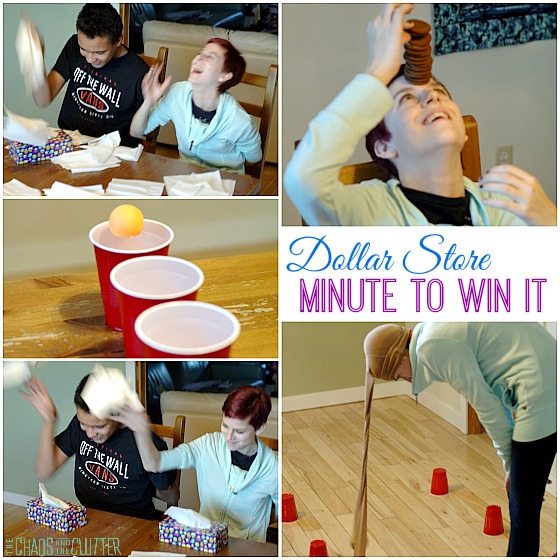
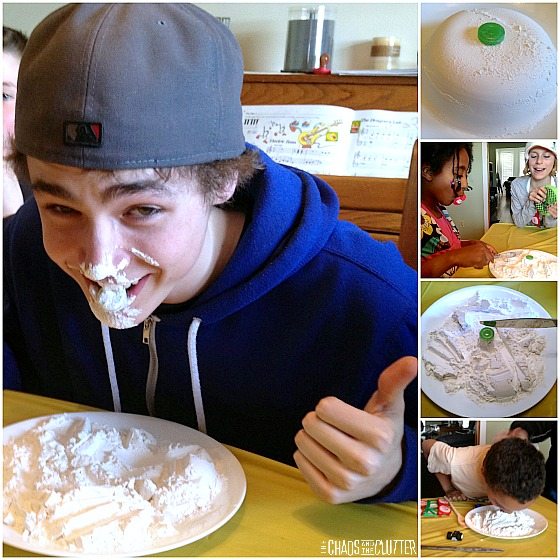
Click here for more fun family games:

Dollar Store Minute to Win It GamesDollar Store Minute to Win It party

The Flour Game

Minute to Win It Games

Filed Under: Crafts and Activities, Family Games

O Holy Night Nativity Sensory Bin

By Sharla Kostelyk

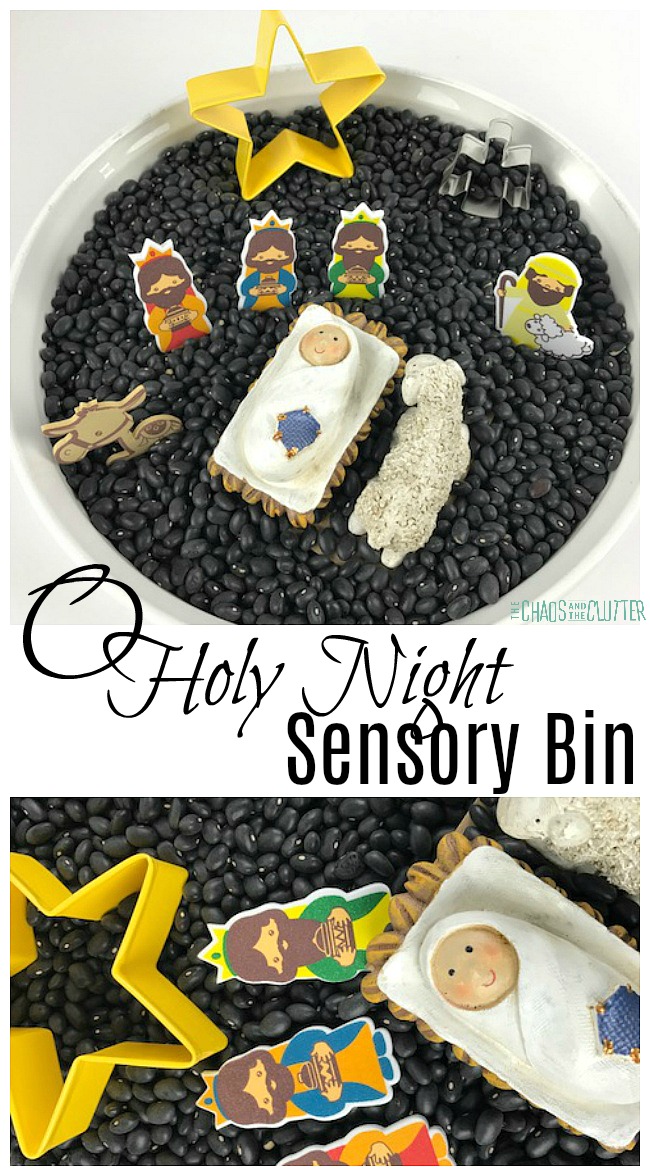
One of my daughters and I were walking through the hardware store when we saw a bright yellow star shaped cookie cutter. I’m not sure why it was at the hardware store, but immediately, I thought that it would make a great nativity star in a sensory bin. It was a bit harder to find the rest of the items for this O Holy Night Nativity Sensory Bin, but it all came together once I had the star to plan it around.

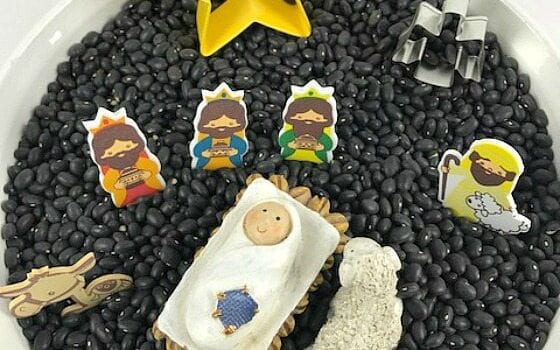
O Holy Night Nativity Sensory Bin #sensoryplay #sensorybin #sensoryI’m really happy with how this turned out. I used dry black beans as the base to represent the darkness of the night when Jesus was born. I wanted to use a round container this time to make the sensory bin just as a change from the rectangular ones that I usually use.
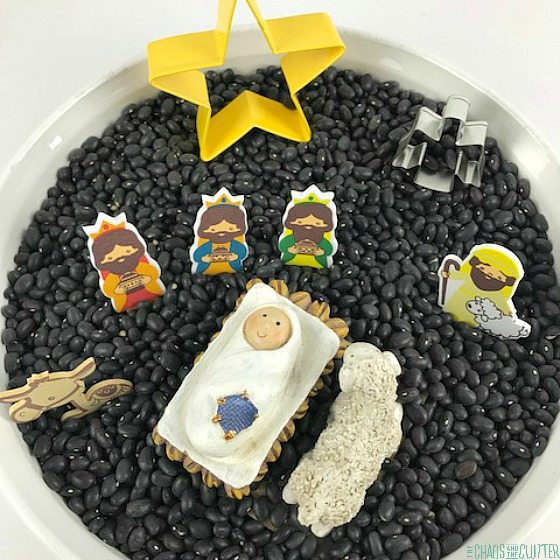
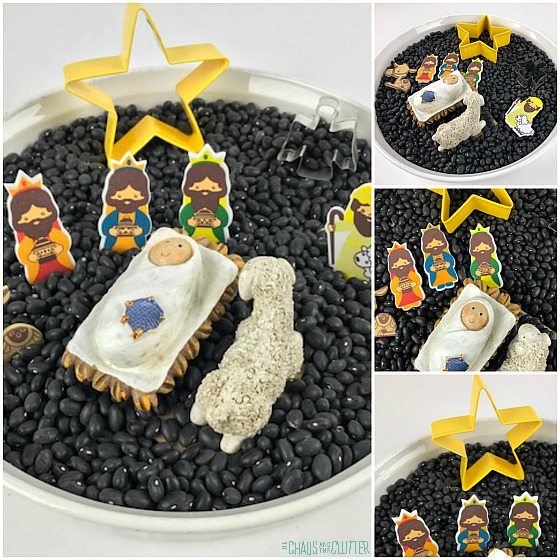
O Holy Night Nativity Sensory Bin:

Materials needed:

  • dry black beans
  • foam wise men, shepherd and camel
  • ceramic baby Jesus and sheep (I got mine at the dollar store)
  • small angel shaped metallic cookie cutter
  • yellow star shaped cookie cutter
  • container

To put together this nativity sensory bin, fill a container with black beans and place the other items on top. You could add a Mary and Joseph of course as well. You can also add other animals or pieces of hay. If you already have a children’s nativity set or manger at home, you could add that into the bin instead of purchasing new items.

The nice thing about using black beans as a base is that you can easily stand up the foam pieces and cookie cutters within the bin. This allows kids to move things around within the sensory bin and set up the scene the way they want to.

This O Holy Night Nativity Sensory Bin is an effective way to reinforce the Christmas story with your kids. It pairs well with many children’s books that tell of Jesus’ birth.

Join me for a free 5 part email series Sensory Solutions and Activities and get your Sensory System Behaviours Easy Reference Cards.

Check out some of our other Christ-Centered Christmas Activities:

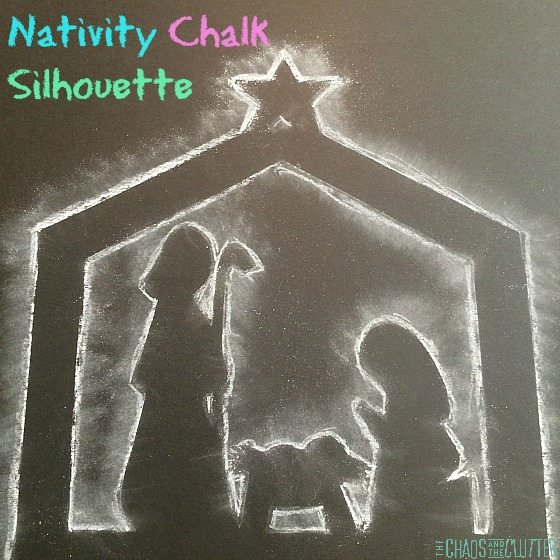
Nativity Chalk Silhouette

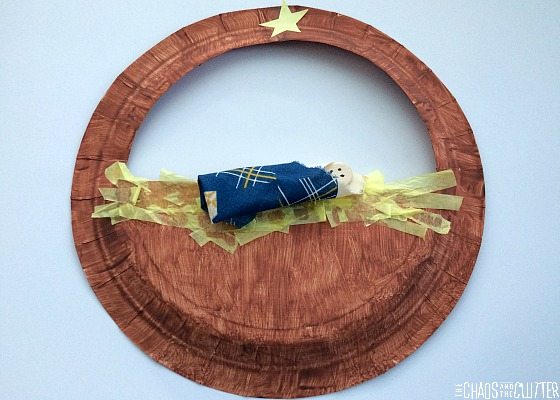
Paper Plate Manger Craft

Filed Under: Christmas, Sensory, Sensory Bins Tagged With: sensory bin, sensory play

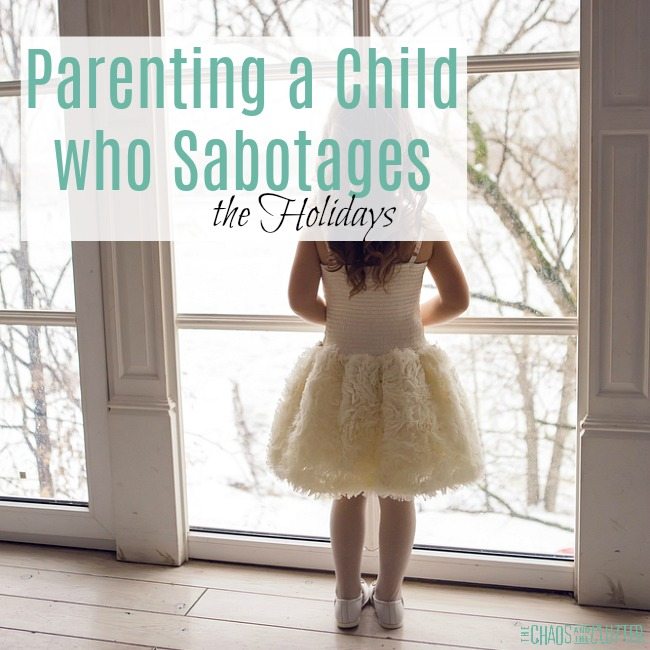
Parenting Kids Who Sabotage the Holidays

By Sharla Kostelyk

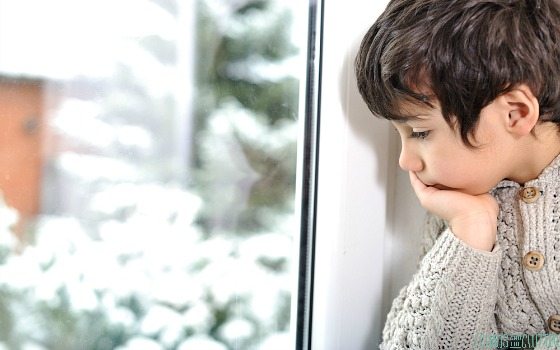
The holidays are a special part of the year that most people look forward to, but for some families, the thought brings fear or even dread. For children who have Reactive Attachment Disorder or have experienced early childhood trauma or for children with ADHD or sensory processing issues, the holidays can be hard. In fact, sometimes children who fall into those categories will sabotage the holidays.

It is not much fun walking around on eggshells knowing that your child is on a hair trigger and may be set off at any second. But holidays are not much fun for those kids either. Big days can be a reminder of all that they have lost or of how their brain works differently than other people’s do or of how far their behaviour is from what they want it to be.

Advice for parenting a child who sabotages the holidays #parenting #parentingadvice #adoptionSome of our kids have at times sabotaged big days including birthdays (other people’s and even their own), Thanksgiving, Easter, Christmas, graduations, anniversaries, family celebrations, vacations, times of accomplishment when others are the center of attention, Father’s Day, and often in particular, Mother’s Day. The root of the sabotaging behaviours is often guilt and shame, but there can be other causes as well. It’s not just adopted kids who sabotage the holidays. There are many reasons a child may do this.
Possible motivations for kids to sabotage the holidays:

  1. Feeling unworthy. Abandonment or the perception of abandonment in children who have been adopted or who have had one parent leave the family can lead to a deep sense of shame. This may make them feel as if they are unworthy of love, unworthy of having good things happen to them, unworthy of gifts or attention. With that entrenched feeling of being unworthy of truly feeling happy, sabotaging behaviours can begin to emerge. They may sabotage so that they can force what they see as inevitable disappointment. If their parent then responds in anger to their sabotaging behaviour, it only further validates their belief that they are unlovable.
  2. Triggers. During the holidays, triggers are everywhere. Smells, sights, sounds, memories of the past… the holidays can be a minefield to navigate. These triggers can cause a fight, flight or freeze response.
  3. Excitement and anxiety feel the same in the body. Read that sentence again. It’s a biggie! Butterflies in the stomach, quickening of breathing rate, a loudly thumping heart, sweating, and trouble sleeping are the same body responses whether you are feeling excited or nervous. When your child feels those body sensations, it can bring memories of times of stress when they felt that way due to anxiety.
  4. Lack of routine during the holidays can make certain children feel a lack of control. They may then attempt to assert control and take charge. The unpredictability and uncertainty can feel unsafe to them. With less of a set schedule, they may also be overtired and be eating poorly which can also affect behaviour and mood.
  5. The holidays often come with sensory overload. This can lead to sensory meltdowns which unintentionally sabotages the holidays
  6. The weight of expectations. When a child believes that he will fall short of the expectations placed on him, he may decide to just quickly blow things up to get it over with. The stress that come with anticipating the disappointment they may cause can be overwhelming.
  7. For children with Reactive Attachment Disorder, Christmas can be a nightmare because during the holiday season, relationships are usually the focus and there is more emphasis put on family togetherness and unity. This feels like a threat to kids who are putting protective walls up when it comes to family relationships.
  8. Unreasonable expectations. Even the most neurotypical, well grounded children tend to have high expectations during the holidays. This is sometimes magnified in kids who have a trauma history or have sensory needs. Some adopted children have a fantasy of what life would be like with their biological parents and nothing in reality can live up to that fantasy.
  9. Grief. Oh my. Consider a simple tradition such as decorating the Christmas tree. Our family’s collection of ornaments includes those Baby’s First Christmas ornaments and handprint ones I made when many of our kids were newborns. How must that feel for our kids who joined our family when they were 4 and 7? I can buy them ornaments to represent their first years and their milestones, but I cannot replace the hardships of their early years. Holidays have so many things that can magnify grief, sadness and loss.
  10. Protection. Attempting to protect their heart from further disappointment, a child who has experienced early trauma will put walls up and push others away. With everything being magnified during the holidays, those walls have a tendency to go higher and that pushing away can turn to an aggressive shove (literally or figuratively).

Parenting kids who sabotage the holidays:

  • Lower your own expectations.
  • Provide a lot of opportunity for sensory input.
  • Create a calm down kit for your child. We have a specific Christmas Calm Down Kit as well.
  • Maintain routines as much as possible.
  • Talk candidly with your child ahead of time. Speak factually about past holidays and their challenges with them. Brainstorm strategies with them to help this year go more smoothly.
  • Less presents! When it comes to kids who struggle with the holidays, less is more.
  • Simplify. Practise saying “no” to some of the invitations so that you do not over schedule.
  • Be willing to let go of things that don’t work for your child. You may need to set aside even treasured holiday traditions for a few years.
  • Some kids do not do well with surprises. Even though you may think that surprises are fun, they may cause additional stress for your child. If your child falls into this category, resist the urge to surprise them.
  • Prepare your child ahead of time what to expect. Tell them where you are going, who will be there, how long you will be staying, what you will be doing there, and what your expectations are of them. Use a calendar to give them as much notice as you can of upcoming events.
  • Make a plan with them for where they can go at an event if it becomes too much for them or a signal they can give you that they have reached their limit.
  • Talk with your family members and close friends ahead of time and explain why the holidays can be rough for your child and what they can do to minimize the difficulty.
  • Manage their expectations. If your child has asked for a gift that is out of budget or not something you want them to have, tell them ahead of time that they won’t be receiving it. Speak about how not everything during the holidays go as planned or as wished for. Come up with strategies for managing disappointment.
  • Include therapeutic and/or sensory breaks on the big day. Whether it be a birthday, Thanksgiving or Christmas, be willing to pause everything to practise some calm-down techniques.
  • Accept that there will be meltdowns (or tantrums or rages), but follow these steps to keep their frequency and intensity as low as possible.
  • Talk to your child about which family traditions are hard for them and ways you can make them easier. Gift exchanges are hard for some kids. I let one of my daughters wrap her gifts with me. She then knows what she will be getting, but it takes the anxiety out of it for her and makes Christmas day run more smoothly for everyone.
  • Make small promises and then follow through on them in order to maintain trust.
  • Talk ahead of time to your child about how excitement and anxiety feel the same in the body and then in the moment, help them distinguish which they are feeling.
  • Never equate gifts with behaviour. For children who have experienced trauma, the whole “naughty or nice list” is a disastrous concept. Do not take away or threaten to take away gifts or threaten that “Santa won’t come if…” with children who are trying to just hold it together each day.
  • Remember: “They aren’t giving you a hard time. They are having a hard time.”

The good news:

When parenting a child with attachment issues or early childhood trauma, it is important for them to hear “yes”. This does not mean buying them everything on their wish list. In fact, that would not be healthy for them, but the holidays do give you more opportunity to say “yes”.

“Yes, I will sit and do the puzzle with you.”

“Yes, I will be at your Christmas concert. I am so proud to be your mom.”

“Yes, you can have a candy cane.”

“Yes, we can drive around and look at Christmas lights. Let’s bring some hot chocolate!”

“Yes, you can help me make the gravy.”

“Yes, you can help me wrap presents.”

“Yes, you can help me plan the dinner.”

“Yes, you can hang some ornaments.”

“Yes, we can decorate cookies.”

To get your free printable sheet of ideas to say “yes” and connect with your child over the holidays, click this link or fill out the form below.

The holidays also allow opportunities for activities to increase eye contact and to promote family togetherness.

No matter how much you prepare and plan, the holidays can still be challenging. To all the parents steeling themselves for the sabotage, grieving the holiday you wish you could have, I see you. You are not alone.

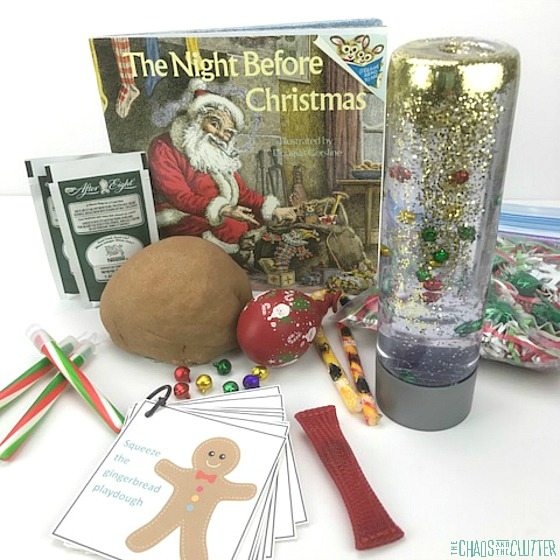
Christmas Calm Down Kit for Kids

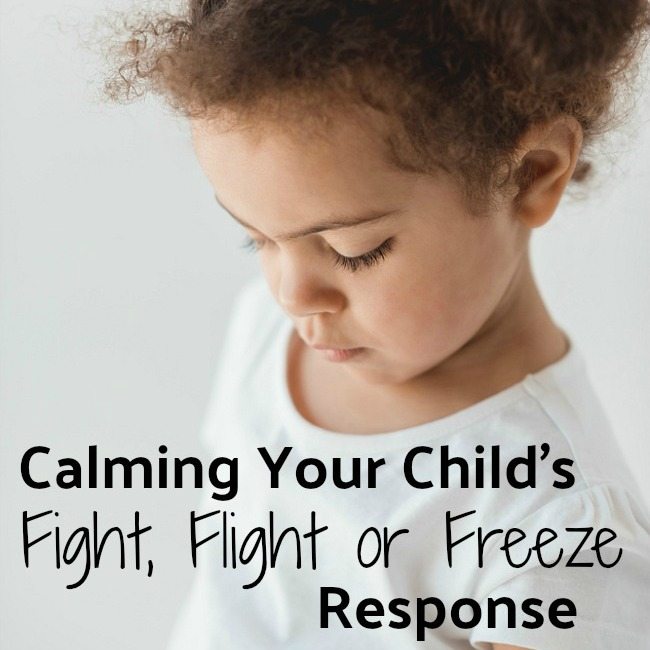
Calming a Child’s Fight, Flight or Freeze Response

Filed Under: Adoption, Christmas, Special Needs Parenting

DIY Sensory Gift Basket

By Sharla Kostelyk

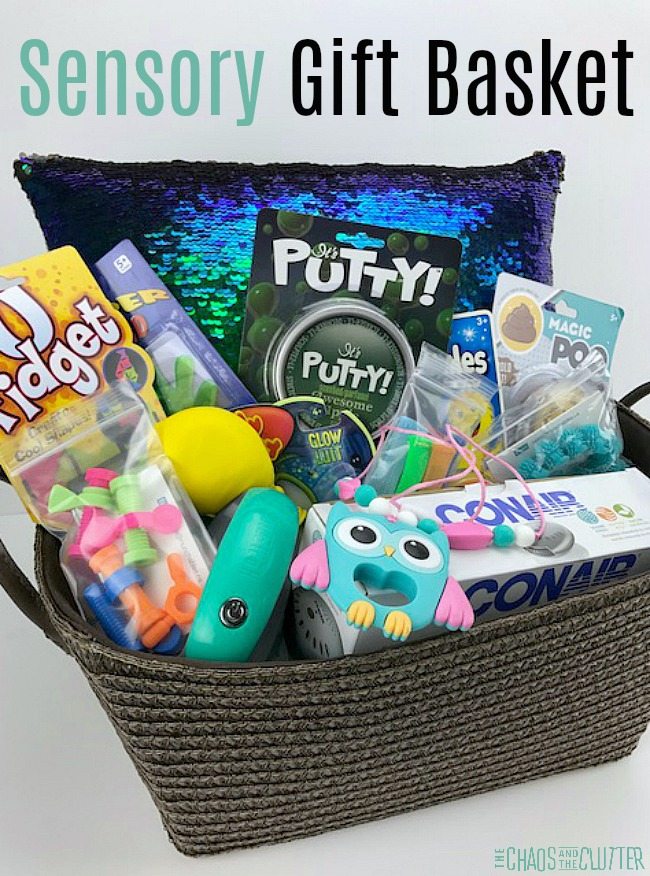
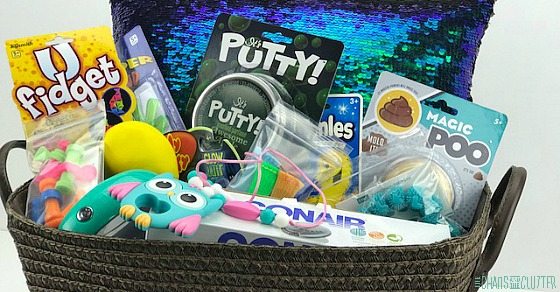
Wondering what to get the sensory seekers in your life? Create your own sensory gift basket and personalize it by tailoring it to meet their sensory needs. While the recipient that comes to mind immediately for such a gift may be a child, you can also make this to suit an adult as well.

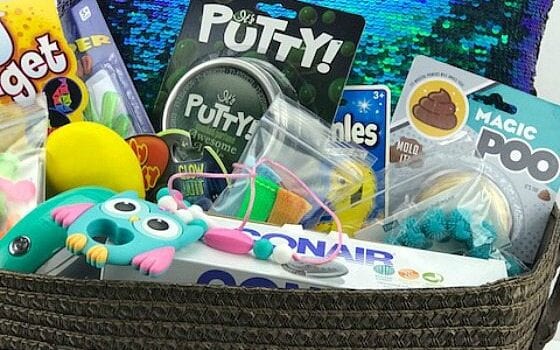
Sensory Gift Basket for the sensory seekers in your life #giftbasket #sensory #giftideasI love trying to come up with unique gift ideas that will really make the recipient feel like they are cared about. By customizing this gift basket, you can show the person you are gifting it to how well you know them and their sensory preferences.
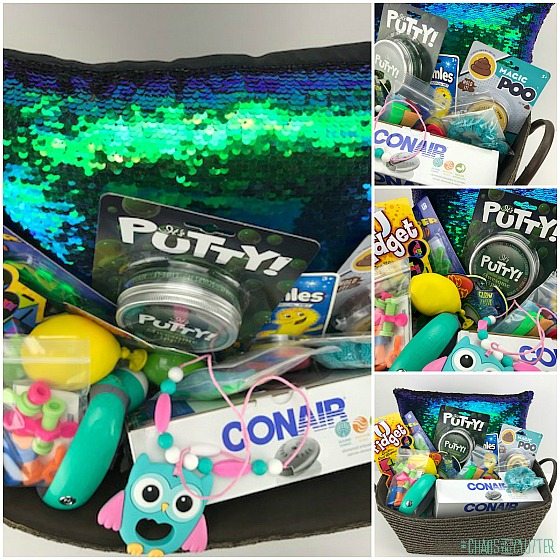
What I included in my sensory gift basket:

  • Sensory Processing Explained
  • Mermaid Pillow
  • Conair Sound Therapy Machine
  • Palm Massager
  • Sensory Ball
  • Owl Chewelry Necklace
  • Fidget Pencil Toppers
  • Mesh Marble Fidgets
  • Sticky Hand
  • Glow in the Dark Silly Putty
  • Homemade Playdough
  • Squishy Caterpillar Fidget
  • U Fidget
  • Squirmles Magic Worm
  • Putty in a tin
  • Magic Poo (because kids with sensory needs still have a sense of humour!)

You will want to choose your items based on what you know of their sensory preferences and their personality. I created my gift for one of my kids to help them with their sensory processing. I know that they are going to be thrilled with it, especially once they see the mermaid pillow and owl chewable necklace. I think they will have a lot of fun with the squirmy worm and the magic poo, but that within a few days, the sound therapy machine and the palm massager will win over their affection because of how their sensory needs are met with them.
Ideas to Personalize Your Sensory Gift Basket:

  • If you know a family whose child has been recently diagnosed with Sensory Processing Disorder, you could put together a Sensory Survival Kit type of gift basket and as well as including some sensory basics, you could include a copy of the book Sensory Processing Explained.
  • You can build the basket around one sensory system such as creating an entire basket around the Tactile system by including putty and Sensory Stepperz or center it around the Vestibular system and include an indoor pod swing.
  • Another idea is to create the gift with one larger ticket item such as a sensory blanket or mini trampoline and then include a few other items to complete the gift.
  • Make a mini sensory gift bag with some small fidgets and a sensory brush or pencil topper.
  • Create a sensory gift basket for a senior with dementia or Alzheimer’s. Sensory stimulation therapy has been shown to be effective for triggering emotion and memories and increasing engagement in patients with Alzheimer’s or dementia.
  • Fill a basket with items for a sensory room. A large item idea would be to include a bean bag chair, a weighted blanket or indoor rings to hang from, but you could also include smaller items such as lighting or knobby balls.

Other Ideas for Your Sensory Gift Basket:

  • Noise Cancelling Headphones
  • essential oil diffuser (I like this particular one because when it is on, it glows a calming purple)
  • lavender essential oil
  • Lava Lamp
  • a homemade sensory bottle
  • a homemade sensory bag
  • Calming Sensory Light Projector
  • Tangle Fidget
  • Spinner Ring
  • Fidget Cube
  • Water or Sand Table
  • Fidget Spinner
  • Mermaid Wristband
  • Sensory Stepperz
  • Cocoon Swing
  • Body Sock
  • Weighted Blanket
  • Weighted Lap Pads or Neck Roll
  • Weighted Stuffed Animals
  • Dog Tags Chewable Pendant
  • Nubby Balls
  • Theraband
  • Exercise Ball
  • Supplies to make a Sensory Bin
  • Water Beads
  • Liquid Motion Timer
  • Movin’ Sit Cushion
  • Spiky Sensory Ring
  • Sensory Brushes
  • Soothing Pad
  • Pressure Foam Roller
  • Sensory Bead Squish Ball
  • Gel Maze (I hear that this is being used successfully with seniors and dementia patients)
  • Kinetic Sand
  • Unicorn Chewie

Putting together a sensory gift basket doesn’t need to be expensive. You can make the sensory balls and playdough yourself at home and find many great sensory items at the dollar store. You can also add an even more personal touch by adding a themed sensory bag or sensory bottle that you made yourself. You could also include tactile sensory cards made with things you already have around the house.

The past few years, gift baskets have been my absolute favourite way to give presents. I find that you can make them so personal. They are such a unique gift that they stand out in this world of the more impersonal gift cards and cash.

Click to see some of our past gift baskets:

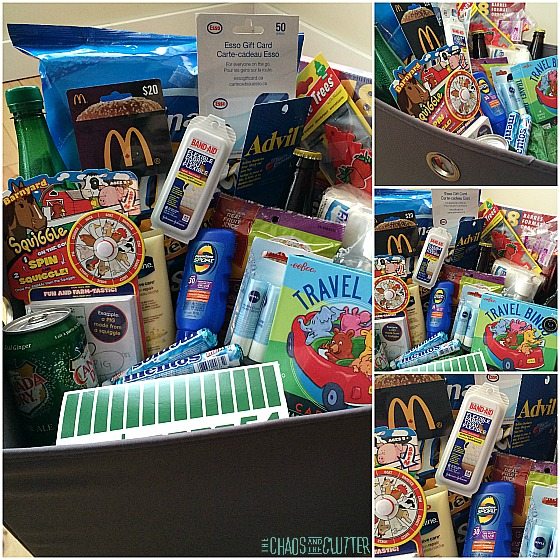
Road Trip Gift Basket

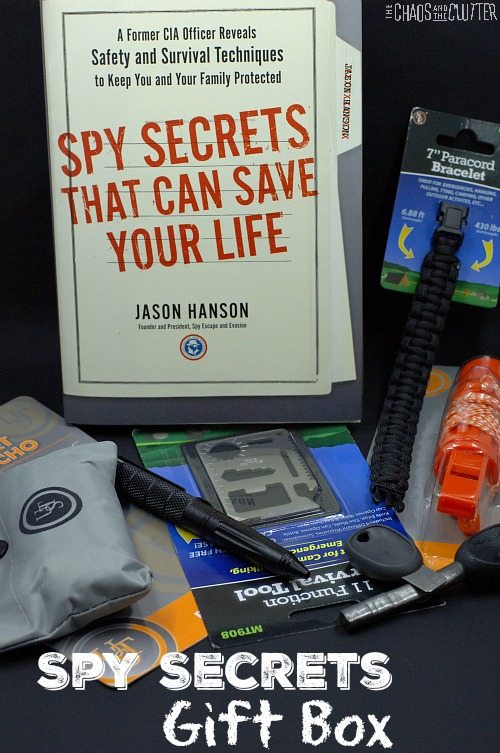
Spy Secrets Gift BasketThis Spy Secrets gift box is perfect to make for the hard to buy for man (or woman) in your life!

Filed Under: Christmas, Sensory

Christmas Gifts Sensory Bin

By Sharla Kostelyk

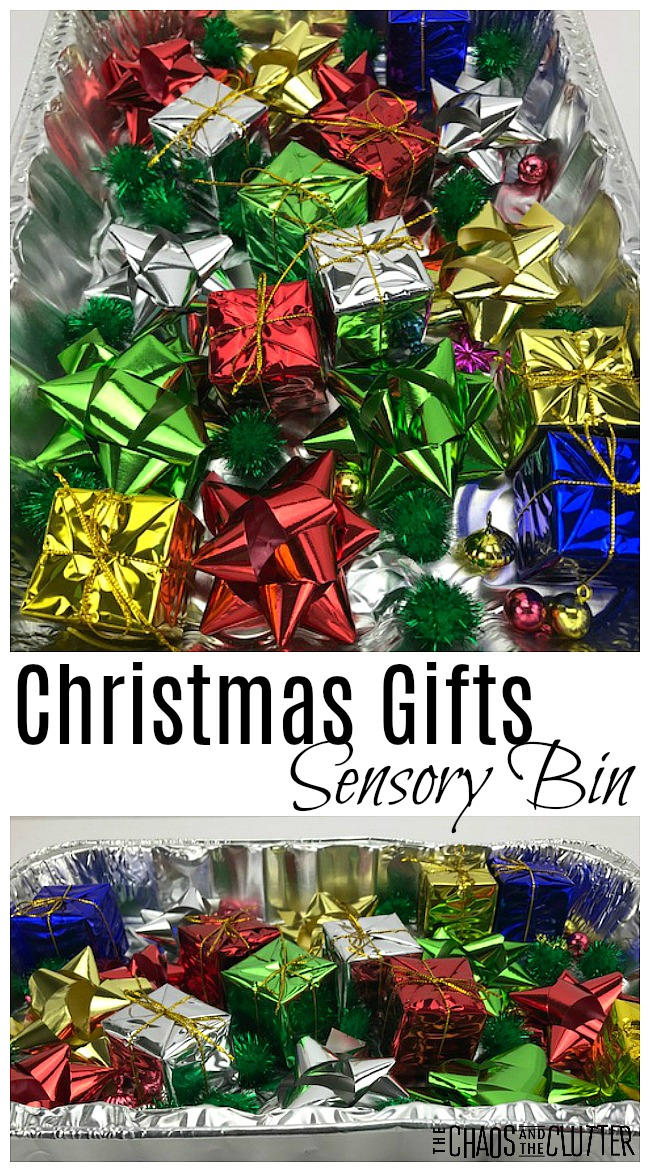
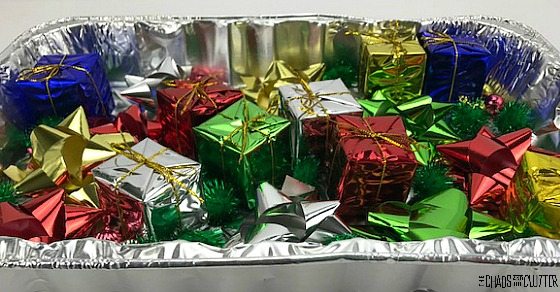
‘Tis the season of giving and when I saw that package of Christmas bows waiting to be put on packages, I knew they were destined for another purpose in this house! Pretty much any item that comes through the door into our home becomes used for sensory play in one way or another. Using those decorative bows and some other sparkly festive items, I put together this Christmas Gifts Sensory Bin for the kids.

Christmas Gifts Sensory Bin #Christmas #sensorybin #sensoryplay #ChristmassensoryA few years ago, when I put together our Winter Wonderland Sensory Bin, I used a foil tray instead of a plastic bin. I like to change up the containers to keep it interesting and also to provide additional sensory input. The foil tray has ridges that provide that extra sensory feedback and it’s shiny so it provides a different visual component than a matte plastic container would.
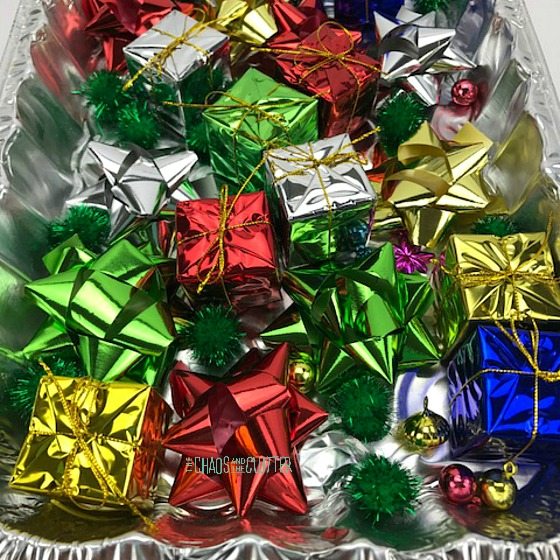
When I saw how shiny the bows were, I decided that the foil tray would be the perfect container for this sensory bin. I looked around the house and in our sensory drawers and found some other items to complete this sensory play experience.

Christmas Gifts Sensory Bin:

Materials needed:

  • foil tray
  • Christmas gift bows
  • small decorative Christmas gifts (I found mine at the Dollar Store)
  • green shiny pompoms
  • mini Christmas ornaments

Place all the items into the foil tray. You can use a plastic bin if you don’t have a foil tray. You could also add ribbon curls or strips of holiday wrapping paper. The beauty of this sensory bin is that it uses items that you may already have. You could in fact create it after Christmas by reusing your gift wrap, bows and ribbons.

For dozens of other sensory bin ideas, check out all of our past Sensory Bins.

If you are looking for information on making sensory bins, you may be interested in my book all about it. The Ultimate Guide to Sensory Bins

Join our free 5 part email series Sensory Solutions and Activities and get our Sensory System Behaviours Easy Reference Cards.

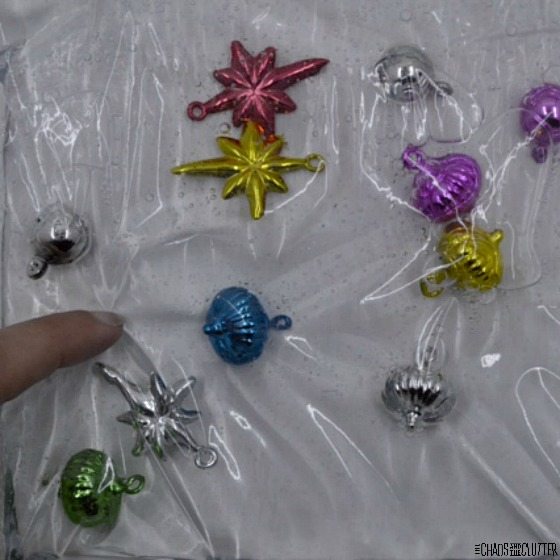
Christmas Ornament Sensory Bag

Filed Under: Christmas, Sensory, Sensory Bins Tagged With: sensory bin, sensory play

Trolls Sensory Bag

By Sharla Kostelyk

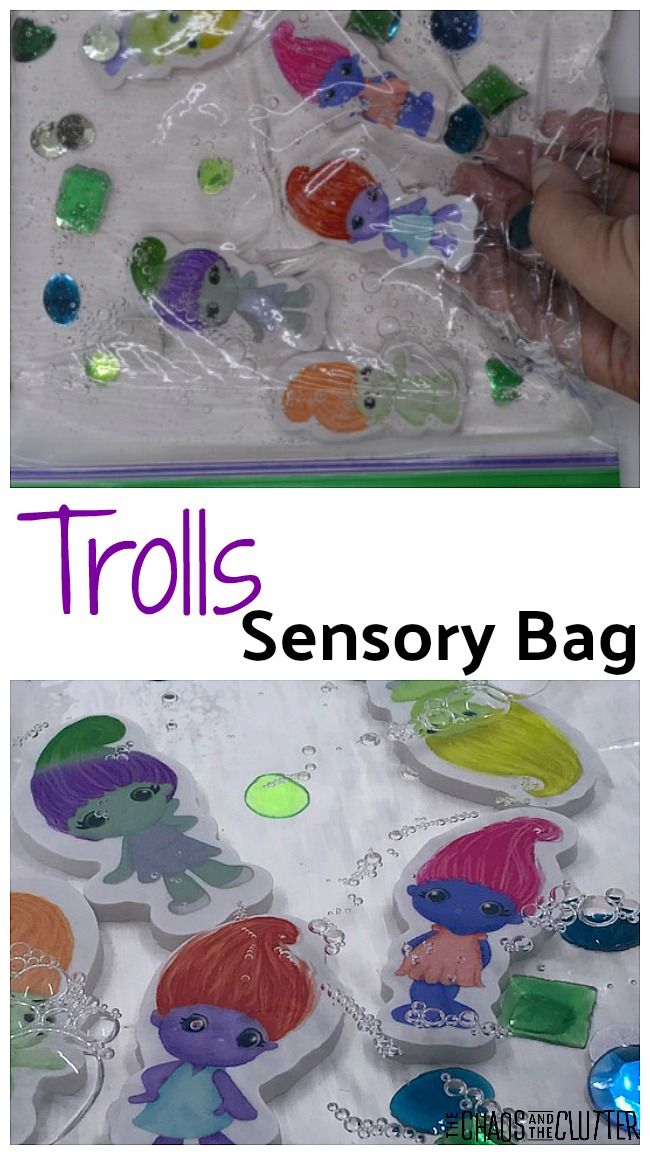
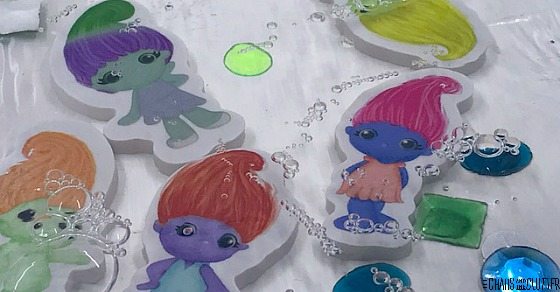
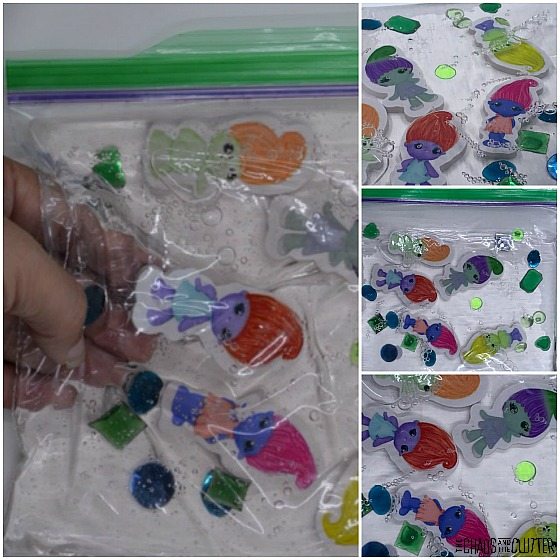
When I was younger, I had a collection of Troll dolls. My collection stemmed from a single troll doll my mom had kept from when she was a little girl. It had long grey hair, about twice the length of the small doll’s body. The hair wasn’t fluffy or fuzzy like the trolls that came later. I kept my troll doll collection until I was in College.  Trolls sensory bag - easy to makeIt was amusing for me when the Trolls fad came around again now that I’m raising my own kids. When they made the Trolls movie, it brought back memories of my troll doll collection. I wish I had held onto some of those dolls for my kids. Though I may not still have my troll dolls to pass down to my daughters, I was able to make them this simple Trolls Sensory Bag for them to play with.
Trolls Sensory Bag

Materials needed:

  • resealable plastic bag
  • liquid hand soap
  • trolls erasers
  • blue and green gems
  • optional: duct tape

To make this simple sensory bag, fill a resealable plastic bag approximately half full with liquid hand soap. Add in the erasers and the gems. Take out the extra air and seal the bag well.

If you want, you can fully seal the bag using this Trolls duct tape on all sides of the bag. This will prevent leakage and also prevent younger children from opening the bag up and making a mess with the contents!

As with all sensory play activities, adult supervision is required. When you are finished with this sensory bag, the erasers can simply be washed off and used as erasers.
For other simple sensory ideas, join me for a free 5 part email series Sensory Solutions and Activities and get your Sensory System Behaviours Easy Reference Cards.

Unicorn Sensory Bag

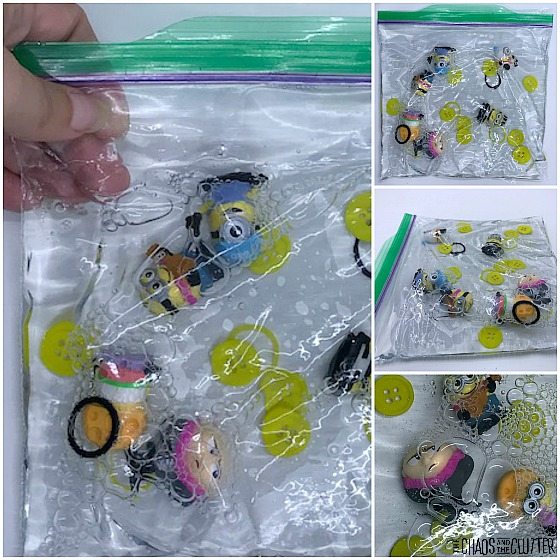
Despicable Me Minions Sensory Bag

Filed Under: Sensory Tagged With: sensory bags, sensory play

  • « Go to Previous Page
  • Page 1
  • Interim pages omitted …
  • Page 55
  • Page 56
  • Page 57
  • Page 58
  • Page 59
  • Interim pages omitted …
  • Page 128
  • Go to Next Page »

Primary Sidebar

Categories

We are a participant in the Amazon Services LLC Associates Program, an affiliate advertising program designed to provide a means for us to earn fees by linking to Amazon.com and affiliated sites.

Copyright © 2026 • The Chaos and the Clutter • Site Design by Jeni @ The Blog Maven

Return to top of page

Copyright © 2026 · Chaos and the Clutter 2.0 on Genesis Framework · WordPress · Log in