• Skip to primary navigation
  • Skip to main content
  • Skip to primary sidebar
  • Home
  • About
  • Contact
  • Privacy + Terms
  • Affiliates

The Chaos and the Clutter

  • Facebook
  • Twitter
  • Pinterest
  • Google Plus
  • RSS
  • Email
  • School at Home
  • Sensory
    • Sensory Processing Disorder
    • Awesome Sensory Play Activities
      • Sensory Bins
      • Sensory Bottles
      • Sensory Bags
  • Family Games
    • Minute to Win It Games
  • Special Needs Parenting
    • Childhood Anxiety
    • Reactive Attachment Disorder
    • Sensory Processing Disorder
  • Store
  • Course Login

Sharla Kostelyk

Space Sensory Activities

By Sharla Kostelyk

Learning about outer space is fascinating for kids (and adults) of all ages. These space sensory activities are a great way to supplement a unit on the solar system or just to inspire individual discovery while engaging all the senses.These space sensory activities are a great way to supplement a unit on the solar system or just to inspire individual discovery while engaging all the senses.
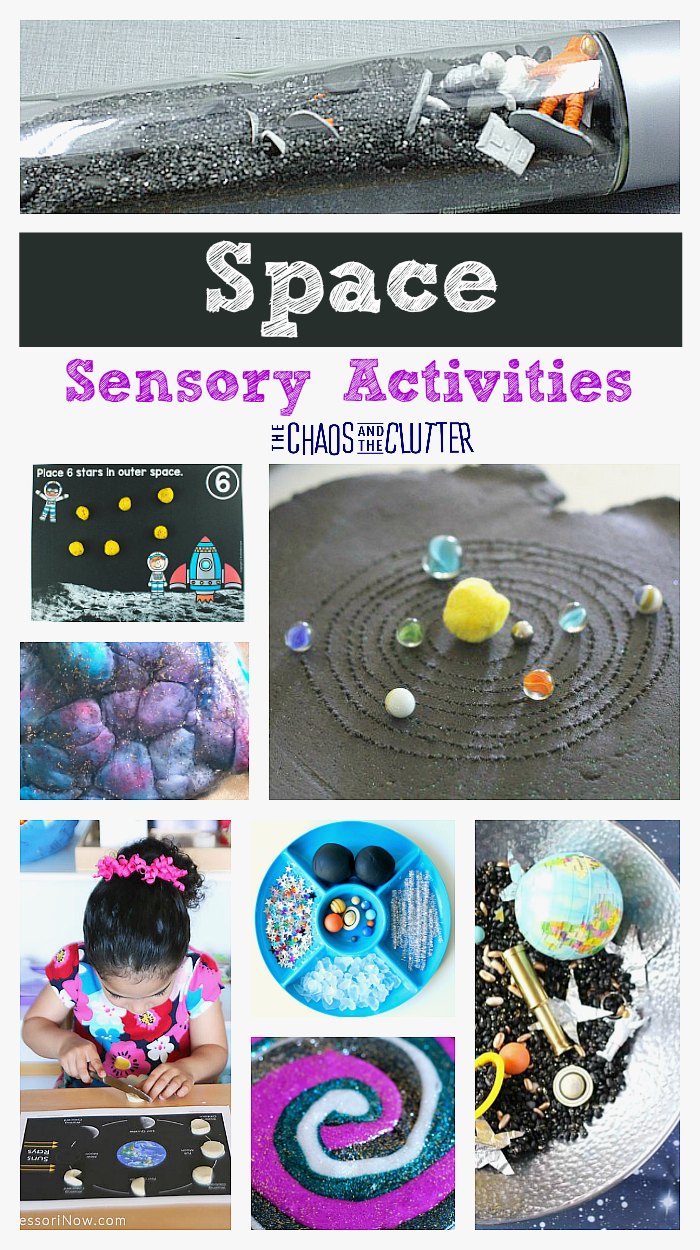
Space Sensory Activities

Weighted Space Sensory Bottle from here on The Chaos and The Clutter

Glow-in-the-Dark Solar System Sensory Bin from here on The Chaos and The Clutter

Space Sensory Bin from Sugar, Spice and Glitter

Solar System Activities for Kids – Hands-on Planet Fun! from The Natural Homeschool

Galaxy Sensory Bag from Views from a Stepstool

Space Playdough Mats over at PreKinders

Space Themed Sensory Tray from Learning and Exploring Through Play

Phases of the Moon Playdough Tray at Living Montessori Now

Galaxy Calm Down Bottle from Preschool Inspirations
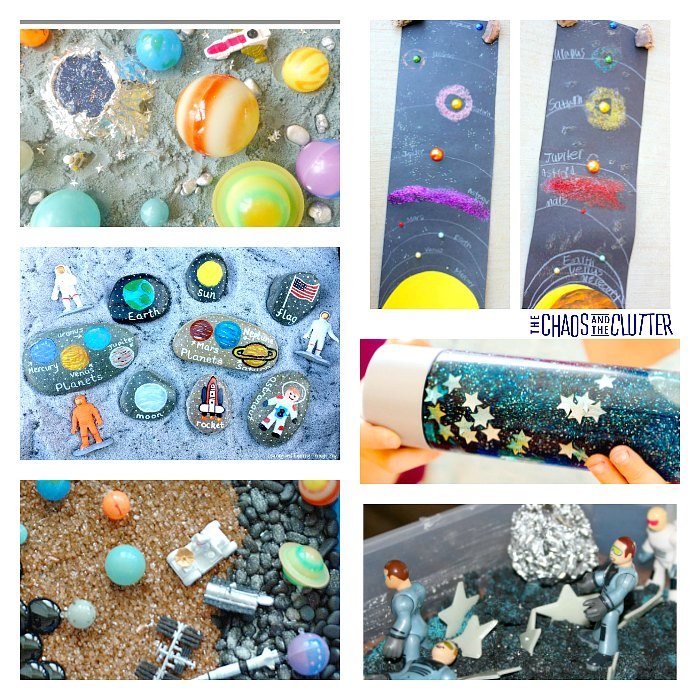
These space sensory activities are a great way to supplement a unit on the solar system or just to inspire individual discovery while engaging all the senses.

Outer Space Facts and Fun Activities! from The Natural Homeschool

Outer Space Playdough at I Can Teach My Child

Moon Sand Space Sensory Play Recipe from Little Bins for Little Hands

Outer Space Playdough Invitation from Fantastic Fun and Learning

Galaxy Slime from Two-Daloo

Outer Space Discover Bin from Craftulate

Space Theme Sensory Bin from Pre-K Pages (not pictured)

Our Space Explorer Adventure from The Natural Homeschool

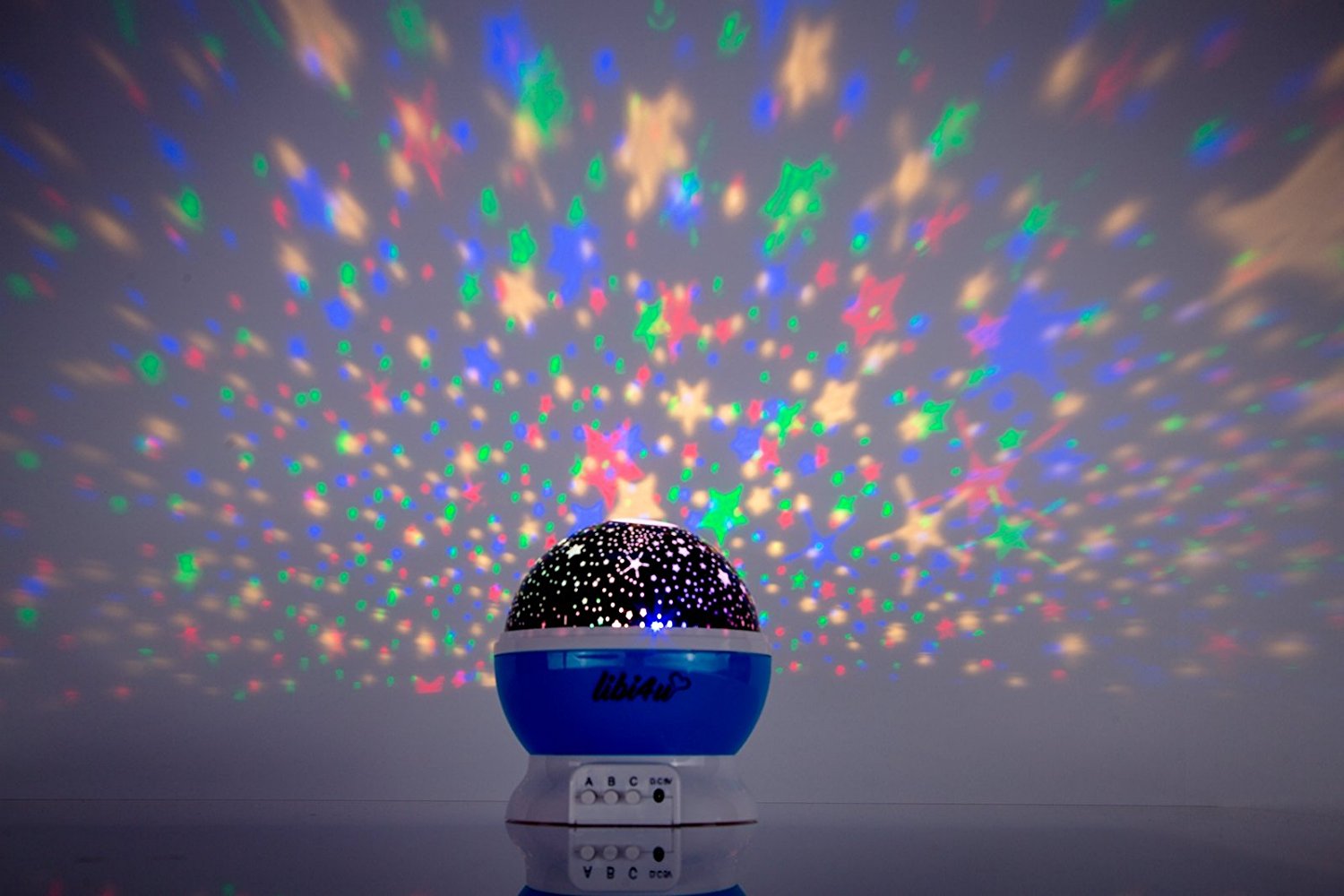
This space light adds a fantastic sensory element to any room and would be perfect for a calm down area or sensory room.

For more hands-on sensory activity ideas, join me for a free 5 part email series Sensory Solutions and Activities and get your Sensory System Behaviours Easy Reference Cards.

Filed Under: Sensory

Tips and Tales from a Reformed Anti-Labeller

By Sharla Kostelyk

Let me paint a picture for you. It was the year we put our “twins” in preschool. They were three and a half years old and we had a new baby so I decided to have them go to preschool a few afternoons a week to give me some extra time to homeschool our older kids. It all seemed like such a smart plan until the phone call from the preschool teacher.

But before I get to that, there’s something you should know about me. I was that mom, you may know the one. Not only was I determined not to put a label on my child, I was also not going to have her officially diagnosed. No one was going to put my daughter in a box!

We knew that given our daughter’s prenatal history, she likely had FASD (Fetal Alcohol Spectrum Disorder) and we strongly suspected that she also had ADHD, but I had no intention of having her assessed. I didn’t want her to go through her life being judged because of her label. I wanted people to get to know my precious girl for who she was, not by a series of letters set out to define her.

The day the preschool teacher called was the first crack in my preconception about labels and diagnoses. She was a kind and experienced educator who had been teaching preschool for over 30 years. She began by telling me what a delight Einstein was to have in the class and how he was settling well into the routines there.

She then asked if there was anything about Miss Optimism that she should be aware of. I paused, unsure of what to say. She went on to explain that Miss Optimism was having many challenges in class and it was quite disruptive. She said that in her years of experience, she felt that there was likely something going on beyond just her being an active child.

I explained that it was possible that there were reasons behind her behaviour but that I had decided against pursuing a diagnosis and was strongly against labelling her. She patiently explained to me some of the positives that she had seen in her career of having a child diagnosed and invited me to come in the next day to observe the class.

The next afternoon, I stood outside the glass walls of the preschool. I knew my daughter well and expected to see her being more active than most of the kids in the class, but was surprised by how extreme it was. I observed dozens of children following the routine, hanging their backpacks and coats up and heading to sit on their chairs.

My daughter spinning and spinning, throwing her backpack in circles, accidentally hitting another child with it in the process. My daughter rolling around on the floor while the rest of the students sat in their chairs. My daughter lying under the table at snack time licking the floor while the other kids sat around the table eating quietly. My daughter repeatedly getting up during story time, an aide gently tapping her shoulder cuing her to sit down again until finally, my daughter rolled away from the aide’s reach and ran off to one of the play stations.

My daughter licking other kids. My daughter chowing down on glitter. My daughter climbing up on everything in sight. My daughter making a beeline for the exit. During circle time, my daughter jumping inside the circle and busting a move while all the other kids did what they were supposed to be doing. My daughter disrupting the class. My daughter being disregulated. My daughter struggling.

Watching that scene broke my heart.

Afterwards, the teacher suggested that I fill out the papers to have my daughter assessed. She explained that if we had a diagnosis, instead of being angry and frustrated with my daughter, others would be compassionate towards her and be able to know what strategies would be effective for her. We began the road towards getting a diagnosis for her.

We got the diagnoses we expected, but we also got an additional diagnosis. Miss Optimism was also diagnosed with Sensory Processing Disorder, something we had never heard of before. That started us down a path of being able to find real solutions for her that worked. Her life improved dramatically. Our home became more peaceful.

If you are resistant to having your child diagnosed or labelled, I want to share with you some important things to consider.

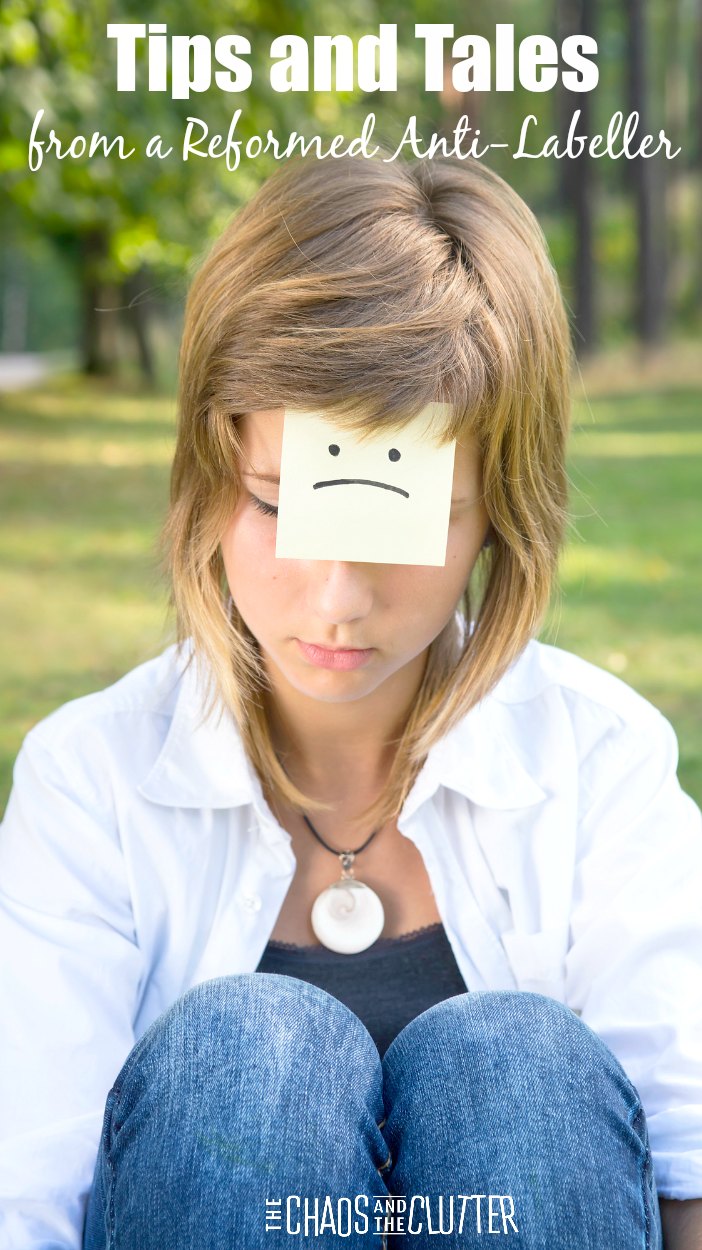
Your child doesn’t wear the label on their forehead.

After your child receives a diagnosis, that is held in confidence between the person who did the assessment whether it be a doctor or psychiatrist or other professional and yourself. You choose who has access to this information. They may encourage you to share this information with your child’s school, but ultimately, it is your decision who knows and who doesn’t.

While I share my children’s diagnosis with some people that I deem appropriate such as therapists, certain people in the school and their main doctor, I don’t necessarily share the diagnosis with other doctors, coaches and teachers.

An example would be that if I take my one child in to get stitches, the emergency room doctor does not need to know that they have ADHD but if I take another one of my kids in to get stitches and they are completely hysterical, it is relevant and pertinent information for that emergency room physician to be told about their PTSD and sensory needs.

I decide who to tell and how much to tell on a case-by-case, child-by-child situation. Since five of my kids have a variety of special needs and diagnoses, I’ve had a lot of practise in this area and I think I do a pretty good job of navigating it well most of the time.

Another important thing to note here is that as your child gets older, they can and should be part of the decision as to who and how much to tell regarding their diagnosis.

Labelling opens door.

Once you have a label for your child, there are avenues available to you that otherwise wouldn’t be. There may be support groups (for you or your child), respite programs, research studies, trainings, effective medications, and relevant programs that are suddenly available for you and your child to access.

Labelling can lead to funding.

Depending on where you live and the type of insurance you have, having a firm diagnosis can mean funding for your child or even for your family. Many school districts require a diagnosis before you can access services such as an aide and assistive technology.

Our youngest daughter has a full time aide in school as well as access to assistive technology for her hearing loss. She also gets sensory breaks, is being seen by speech language pathology through the school and has a team of professionals such as an educational audiologist advocating for her and working with her.

Where we live, families of children with certain disabilities are able to access funding for respite, sibling care during appointments, travel costs associated with appointments, and even in some circumstances, medication. There can also be tax breaks depending on your country and the level of your child’s disability.

Labelling can lead to answers.

Once you have a definitive diagnosis for your child, you can begin to research solutions, therapies and treatments. You can find the right professionals to work with your child.

I like having answers. I always research as much as I can after one of our kids receives a new diagnosis. I feel better knowing as much as I can so that I can find ways to help them reach their fullest possible potential despite the obstacles in their way.

Labelling can lead to support.

While finding an accurate diagnosis can help your child to find the support and programs that they need, it can also help you find the support that you need. You can seek out other parents who are walking the same road as you are. There is nothing in the world that is better for the parent of a child with special needs than to find that “me too” moment.

To label or not to label?

Your child cannot be defined by a single diagnosis. Their diagnosis is only a small part of who they are, but it is a piece of who they are. While there continues to be stigma with some diagnoses, especially those pertaining to mental health, you as the parent have ultimate control over who you tell and how much you tell them.

When I share my child’s diagnosis with someone, I usually also include some tidbits about who they are as a person. I like them to get a more well-rounded picture of who my child is. I recently filled out an IEP form for my youngest daughter and under the question “Is there anything else you feel that it is important for us to know?”, I wrote “she loves to dance”!

While ultimately, the decision to search out a diagnosis for your child is a very personal one, I chose to share my experience with it in the hopes that I can make the road easier for another family. I wish I had sought out assessments for all of my children who had challenges years sooner than I actually did.

Some other articles that you may find helpful on this topic:

A Label by Any Other Name: One Teacher’s View of Diagnosing a Child

6 Reasons to Celebrate an Autism Diagnosis

Labels Don’t Define: They Enable

Join me for a free 5 part email series, Little Hearts, Big Worries offering resources and hope for parents.

Filed Under: Special Needs Parenting

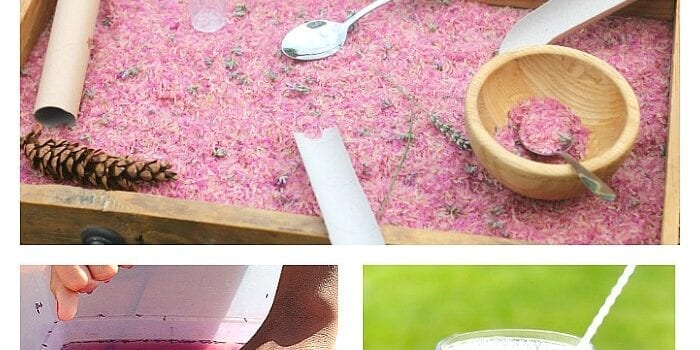
16 Calming Sensory Activities With Lavender

By Sharla Kostelyk

Sensory activities don’t always mean high-energy, fast-faced or messy activities. Some sensory activities help to calm children and bring about peace and calm to their little hearts. Lavender is a calming scent and can provide more grounding to a child who is struggling with anxiety or who is having a hard time self-regulating.In this post, we share some wonderful  Calming Lavender Sensory Activities that are sure to hit the spot!

Calming Sensory Activities With Lavender

Calming Lavender Scented Bubble Recipe from here at The Chaos and The Clutter

Calming Lavender Playdough from here at The Chaos and The Clutter (not pictured)

Lavender Scented Beans for Sensory Play from And Next Comes L

Calming Lavender Sensory Bin from here at The Chaos and The Clutter

Natural Lavender Scented Rice from The Imagination Tree

Lavender Scented Slime from And Next Comes L

Natural Lavender Play Dough Recipe from Natural Beach Living

In this post, we share some wonderful  Calming Lavender Sensory Activities that are sure to hit the spot!

More Calming Sensory Activities

Lavender Scented Sensory Paint at The Preschool Toolbox

Lavender Soap Foam from And Next Comes L

Calming Lavender Water Bin for Sensory Play from Frogs, Snails and Puppy Dog Tail (not pictured)

Lavender and Glitter Sensory Salt at The Imagination Tree

Lavender Waterbead Sensory Bin from The OT Toolbox (not pictured)

Soothing Lavender Playdough Recipe at B-Inspired Mama (not pictured)

Lavender Epsom Salt Writing Tray from And Next Comes L

Lavender Scented Cloud Dough Recipe from The Imagination Tree

Calming Lavender Bath for Kids at Frogs, Snails and Puppy Dog Tail (not pictured)

My favourite lavender to use for calming is this essential oil.

If you’re looking for more calming sensory activities, join me for a free 5 part email series Sensory Solutions and Activities and get your Sensory System Behaviours Easy Reference Cards.
Filed Under: Sensory Tagged With: sensory play

Is My Child Having a Sensory Meltdown?

By Sharla Kostelyk

Maybe you’ve been there. When it comes to sensory meltdowns, I’ve been present for my fair share. I’m taken back to one particular episode my son was having. All the kids and I were at the convenience store waiting in line to pay for our gas fill-up and the Slurpees we had in our hands and he was having what appeared to everyone around us to be a tantrum. He was on the floor of the store, kicking and screaming and I wasn’t sure what to do with the Slurpees we were holding. I knew I had to get him out of that crowded store, but there were people ahead of us and people behind us and then, it happened…

“Isn’t your son too old to be having a tantrum? I never would have let my kids get away with that at his age.”

A lady who was a few people behind us in line piped up loudly to no one in particular. I wished the floor would open beneath me and swallow me up. I wish I could tell you that I turned to her assertively and told her that my ten year old was most certainly not having a tantrum and that his response was neither a reflection on him or on my parenting or that I had calmly handed her a Sensory Meltdown Awareness card, but my response was to turn beet red and stare straight ahead while I prayed for the line to move more quickly. After we paid, I got my son and other kids out of there as fast as I possibly could.

Sensory Meltdowns: Causes, Prevention, Signs, and Strategies. If you're parenting a child who has meltdowns, you have to read this!I wish that back then I had had the language and confidence to be able to turn to that lady and tell her that my son was not having a tantrum. That he was having a neurological response that caused a fight or flight reaction in his brain. That he needed compassion and help instead of judgment and condemnation.

Learn everything you need to know about preventing sensory overload, preventing sensory meltdowns, managing meltdowns once they happen, talking to your child about them while still maintaining a connection, and handling difficult situations like biting, screaming, hitting, kicking, and public meltdowns in our digital course, Overcoming Sensory Meltdowns.

What is a sensory meltdown?

A sensory meltdown is a fight, flight or freeze response to sensory overload. It is often mistaken for a tantrum or misbehaviour.

The main way to be able to tell the difference between a tantrum and a sensory meltdown is that tantrums have a purpose. They are designed to elicit a certain response or outcome.

Sensory meltdowns are a reaction to stimuli or something in the environment and are usually beyond the child’s control. A child will stop a tantrum when they get the desired response or outcome, but a sensory meltdown will not stop just by “giving in” to the child.

Another difference between tantrums and sensory meltdowns is that tantrums are often for attention whereas the last thing a child having a sensory meltdown wants is more attention.

Common causes of sensory meltdowns:

  • sensory overload
  • sensory underload (not really a word!), meaning seeking sensory stimuli
  • being in a new or challenging situation
  • change in routine
  • difficulty with transitions
  • inability to accurately communicate
  • lack of sleep
  • hunger or poor nutrition
  • thirst
  • dysregulation

How to respond to a sensory meltdown:

Control your own response – remember that your child is having a neurological response. You cannot help your child calm down if you are not calm yourself.

Talk as little as possible. Once your child is having a fight, flight, freeze response, their ability to access the part of the brain that processed language is essentially shut down. What works best is to say something repetitively in a very calm, soft voice such as “let’s breathe”.

Remove the child from the environment to a place with very little sensory stimuli.

If possible, provide a sensory area for your child to go to with calming music, a soft or weighted blanket, noise cancelling headphones, chewelry, fidgets, a vibrating palm massager, and low lighting.

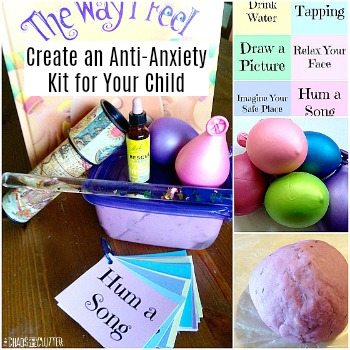
Use a calm down kit. Be sure to have practised while your child is calm so that the items and techniques will be familiar.

Help them focus on regulating their breathing. Blowing bubbles, blowing a pinwheel or placing their hand on their stomach to feel it rise and fall are good techniques to try.

What does a sensory meltdown look like?

Each child is different and no two meltdowns will look exactly the same even from the same child. Much of the sensory meltdown is due to a fight, flight or freeze response so that will determine some of what you see. Here are some of the things you might see in a sensory meltdown:

  • running away
  • whining
  • hiding
  • avoiding eye contact
  • curling up in the fetal position
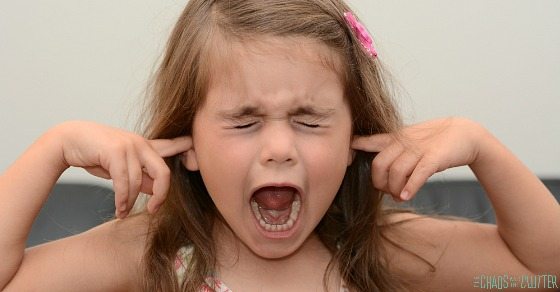
  • covering their eyes or ears
  • screaming
  • crying
  • hitting
  • punching
  • pushing
  • biting
  • spitting
  • yawning
  • shutting down, not speaking, not moving

Preventing sensory meltdowns before they start:

While certainly not all sensory meltdowns can be prevented, there are things you can do to reduce the intensity and frequency of them.

Ensure that your child is always well hydrated by keeping your child’s water bottle filled and reminding them to drink from it often.

Provide healthy snacks often throughout the day.

Identify and avoid your child’s sensory triggers. As an example, if you know that your child is triggered by loud noises, use noise cancelling headphones for places that might be an issue or avoid times or locations where it may be too noisy or where sudden, loud sounds may occur. Keeping a sensory triggers log is crucial and can provide you with so much information. There is a Sensory Triggers Log included in the More Calm in the Chaos printable planner.

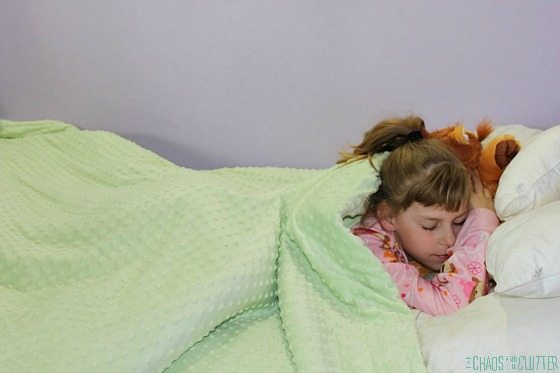
Be sure that your child is getting sufficient sleep. Being overtired contributes to meltdowns. If they are having a hard time falling asleep or staying asleep, you may want to try these sensory sleep solutions.

Teach your child techniques for calming and for self-regulation. I find that having an anti-anxety kit made specifically for your child and helping them practise with it is very effective for this.

Work on giving them an emotional vocabulary so that they can express their feelings more easily.

Ensure that your child is regularly accessing sensory activities that give them sensory input for all sensory systems. Heavy work activities are especially important.

Carry a small sensory toolkit with you with items such as sensory balls (you can easily make your own) and small fidgets.

Teach calming breathing techniques.

Use social stories.

Be sure to include some routines each day that your child can count on.

Give lots of lead-up and warning before transition times. Transition times are particularly difficult and are often the source of meltdowns if not properly handled.

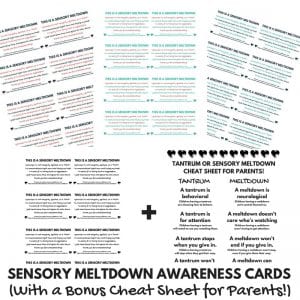
These Sensory Meltdown Awareness Cards are perfect for handing out to increase understanding and cut back on judgment in public.

Looking for more help in parenting a child with sensory processing disorder? Join me for a free 5 part email series Sensory Solutions and Activities and get your Sensory System Behaviours Easy Reference Cards.
weighted blanket for sleepSleep Solutions for Children with Sensory Needs

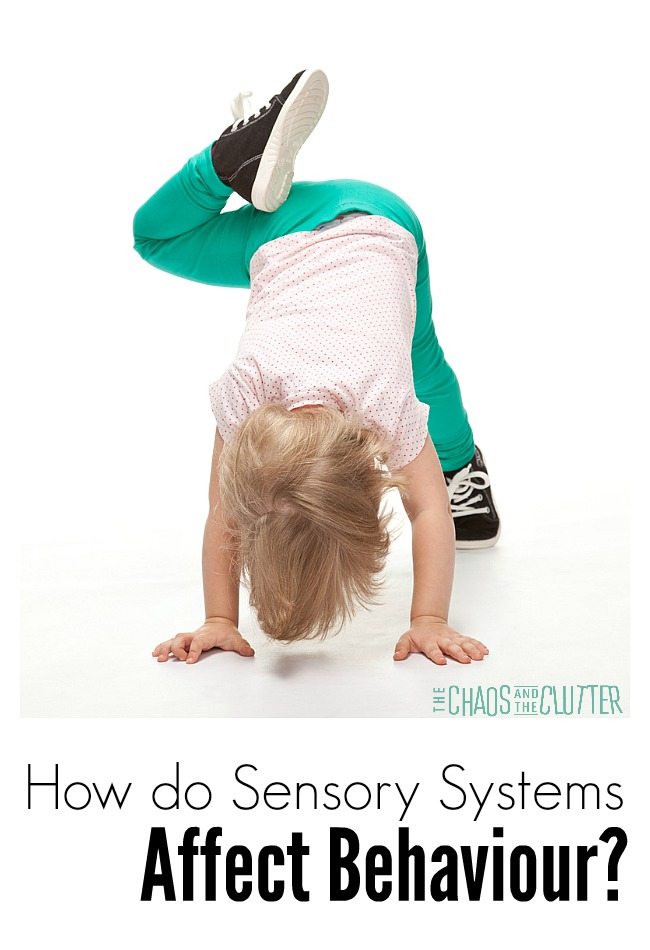
How is behaviour affected by your child's sensory systems?What Does Behaviour Have to do with Sensory Systems?


Filed Under: Sensory, Special Needs Parenting

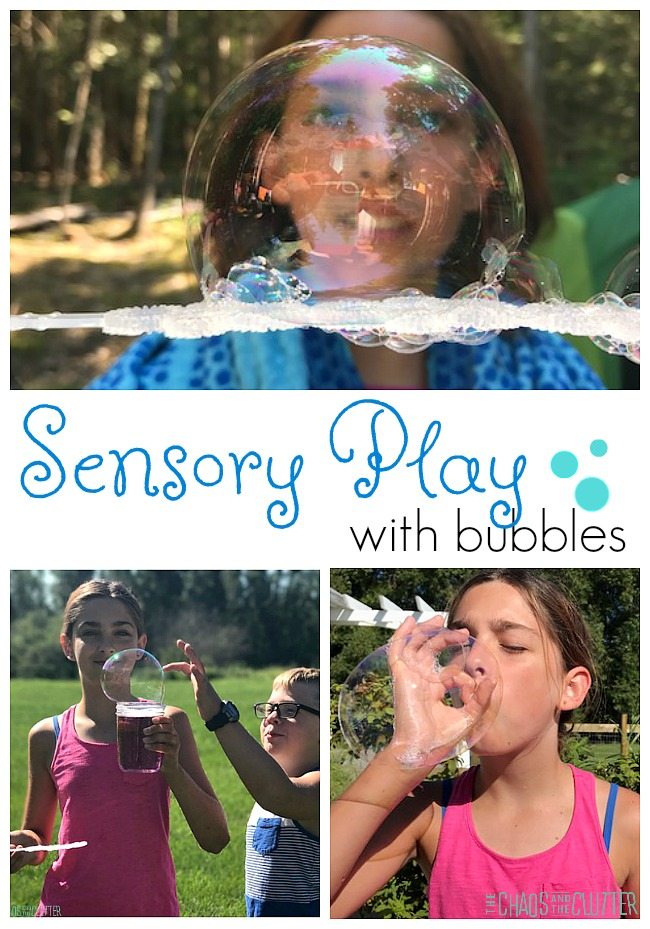
Sensory Play with Bubbles

By Sharla Kostelyk

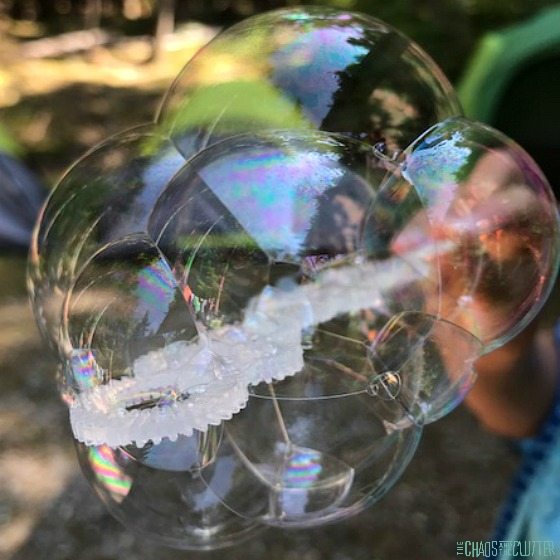
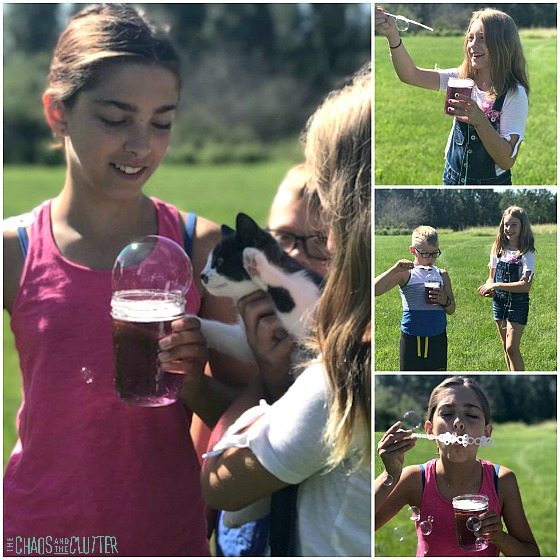
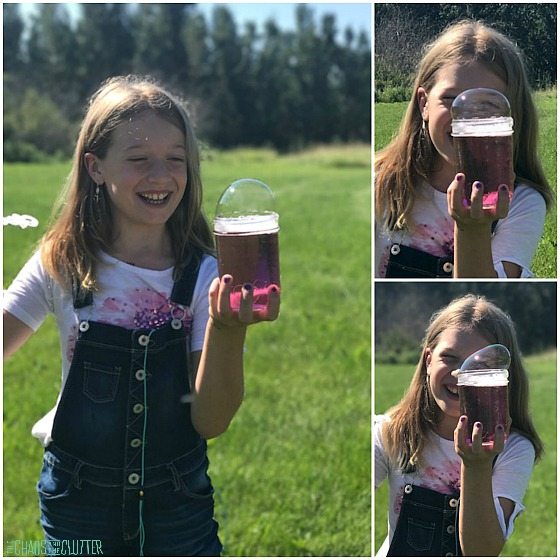
Blowing bubbles is a calming activity for children. As well as being calming, there are many other benefits to blowing bubbles. Sensory play with bubbles can involve all the sensory systems.

Sensory Play with bubbles including ideas for sensory input for vestibular, proprioception, auditory, visual, oral, olfactory, and tactile sensory systems.These suggestions give ideas on how to use bubbles to involve many of your child’s sensory systems:

Visual Sensory System Bubble Play

Make observations together. Ask your child questions such as “do you see the rainbow inside?”, “what colours do you see?”, “which one is the biggest?”, “how many bubbles can you count?”

Blow one bubble and watch together to see where it goes. Track it as it flies through the sky and see where it lands or when it pops.

Vestibular Sensory System Bubble Play

The vestibular system can be engaged through bubble play by running after the bubbles, making giant bubbles with large movements such as large circles and figure 8s. Here’s a recipe for making giant bubbles.

You can create a lot of bubbles at one time for kids to chase by using a bubble machine.

You can also blow bubbles along the ground or point a bubble machine towards the ground and have your child stomp them out.

Oral Sensory System Bubble Play

Make art and stimulate the oral sensory system at the same time by doing bubble painting.

Develop those oral muscles by blowing bubbles using different tools. Experiment with seeing how the impact of blowing softer or harder has on the size of the bubbles.

Practise gaining oral control by trying to stack bubbles on top of each other and create a bubble tower.

Another good way to increase oral sensory input is by using a bubble snake to blow the bubbles through.

Tactile Sensory System Bubble Play

Put the bubble mixture in a large tub and have kids explore with their hands, sponges, kitchen utensils, and scoops.

Catching bubbles is a good tactile sensory play activity. 

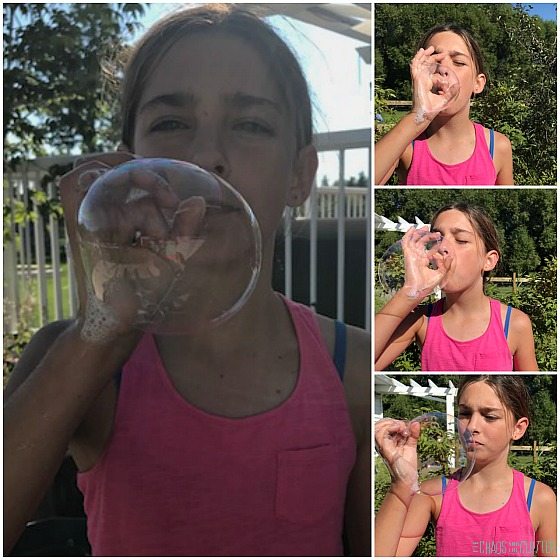
Blowing bubbles using your own hand as the bubble wand is also great for tactile input. Kids can do this by dipping their hand in the bubble mixture and either blowing through their fist or by making a circle with their thumb and index finger and blowing through that.

Olfactory Sensory System Bubble Play

Use scented bubbles such as these calming lavender scented bubbles to engage the olfactory sensory system. You can purchase scented bubbles or make your own.

Proprioception Sensory System Bubble Play

Blowing bubbles is a good activity for stimulating proprioception. Give your kids different tools for blowing the bubbles with. Some ideas:

  • socks (blow bubbles through the sock)
  • mesh tubing
  • spaghetti strainer
  • wire whisk
  • pipe cleaners bent into different shapes
  • seven straws taped together in a circle
  • hula hoop for giant bubbles
  • fly swatter
  • empty toilet paper or paper towel roll
  • bubble wands
  • drinking straw

Another way to use bubble play for proprioception is to have your child imitate being a bubble themselves. Have them “fill their body up” with air, shape themselves into a bubble, then pretend to float away.

Auditory System Bubble Play

Have your child try popping the bubbles with different techniques such as clapping the bubble between their hands, poking the bubble, stomping on the bubble, or slapping the bubble to see what each sounds like.

If you are looking for other sensory activities for kids, join me for a free 5 part email series Sensory Solutions and Activities and get your Sensory System Behaviours Easy Reference Cards. Calming Lavender Scented Bubble Recipe
Filed Under: Sensory Tagged With: sensory play

Money Sensory Bottle for Math Unit

By Sharla Kostelyk

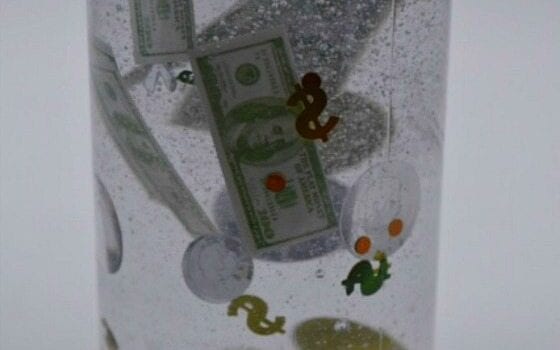
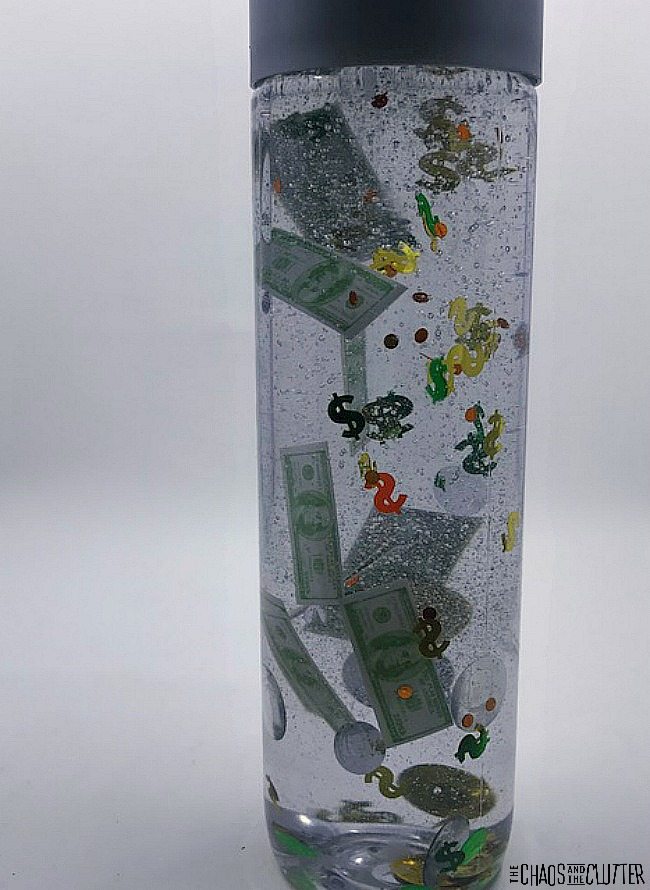
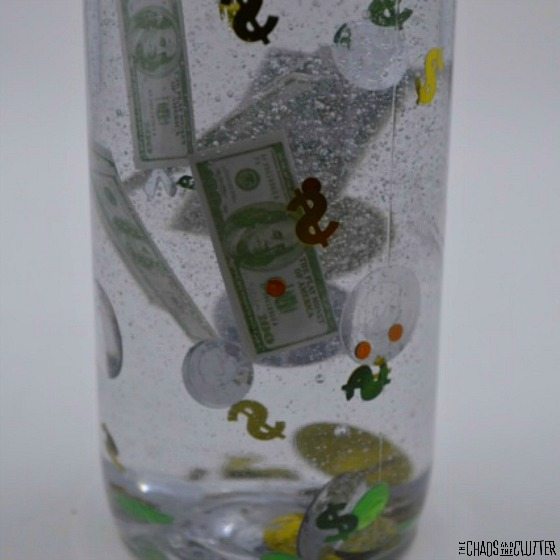
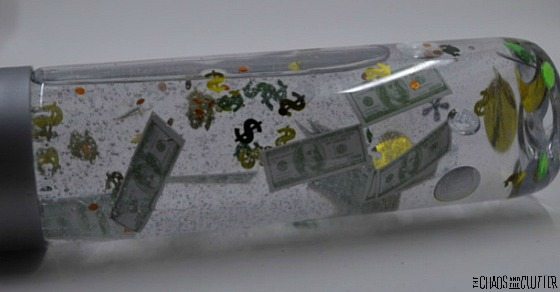
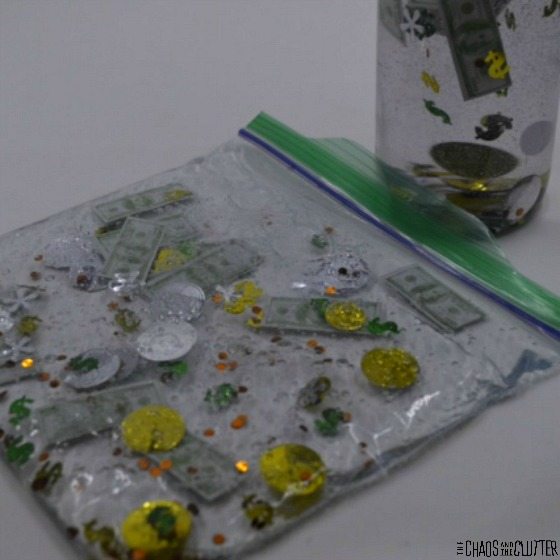
Make a math unit on learning about money more fun with this Money Sensory Bottle. You can also add a Money Sensory Bag for more sensory exploration. Money Sensory Bottle - great for using in unit studies #math #sensory

Money Sensory Bottle

Materials needed:

  • water bottle (I used a Voss bottle)
  • money confetti
  • liquid hand soap
  • optional: hot glue

To create this money sensory bottle, empty the water out of the water bottle and fill most of the way to the top with the clear liquid hand soap. Add the money confetti. Put the lid back on the bottle and give it a good shake.

The liquid hand soap creates an effect where the confetti falls slowly creating a calm down bottle effect. This makes it ideal for use in the home or classroom.

If you are using this sensory bottle with younger children, you can secure the lid using hot glue.

Using more of the same money confetti, you can easily make a Money Sensory Bag and use both for a math unit.

Join me for a free 5 part email series Sensory Solutions and Activities and get your Sensory System Behaviours Easy Reference Cards.

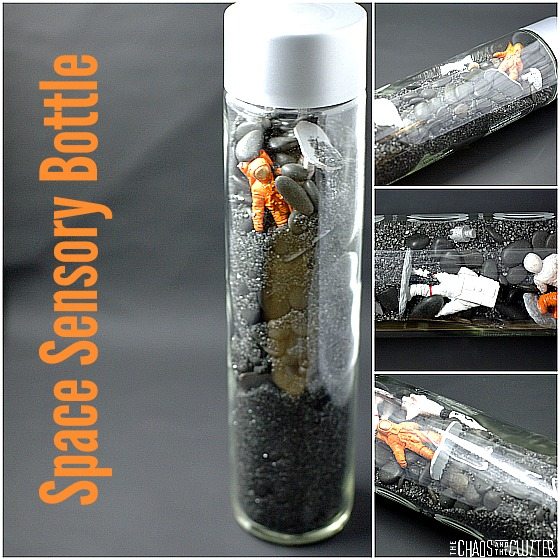
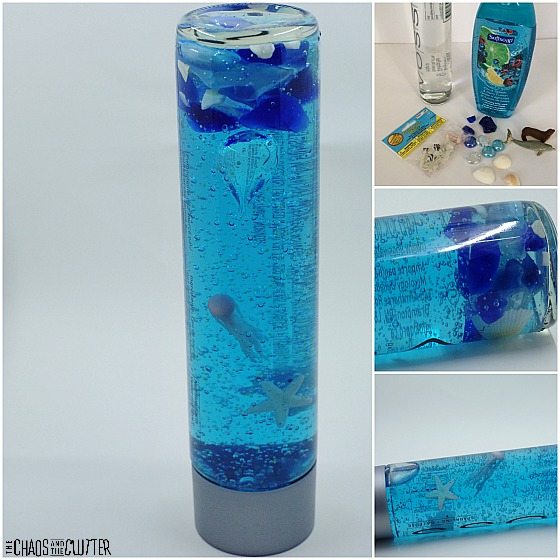
This Space sensory bottle is naturally weighted. Kids can also use it as an I-Spy activity.Space Sensory BottleOcean Discovery Bottle

Filed Under: Sensory Tagged With: sensory bottles, sensory play

  • « Go to Previous Page
  • Page 1
  • Interim pages omitted …
  • Page 60
  • Page 61
  • Page 62
  • Page 63
  • Page 64
  • Interim pages omitted …
  • Page 128
  • Go to Next Page »

Primary Sidebar

Categories

We are a participant in the Amazon Services LLC Associates Program, an affiliate advertising program designed to provide a means for us to earn fees by linking to Amazon.com and affiliated sites.

Copyright © 2026 • The Chaos and the Clutter • Site Design by Jeni @ The Blog Maven

Return to top of page

Copyright © 2026 · Chaos and the Clutter 2.0 on Genesis Framework · WordPress · Log in