• Skip to primary navigation
  • Skip to main content
  • Skip to primary sidebar
  • Home
  • About
  • Contact
  • Privacy + Terms
  • Affiliates

The Chaos and the Clutter

  • Facebook
  • Twitter
  • Pinterest
  • Google Plus
  • RSS
  • Email
  • School at Home
  • Sensory
    • Sensory Processing Disorder
    • Awesome Sensory Play Activities
      • Sensory Bins
      • Sensory Bottles
      • Sensory Bags
  • Family Games
    • Minute to Win It Games
  • Special Needs Parenting
    • Childhood Anxiety
    • Reactive Attachment Disorder
    • Sensory Processing Disorder
  • Store
  • Course Login

Sharla Kostelyk

What Is Triggering the Fight, Flight or Freeze Response in My Child?

By Sharla Kostelyk

There has been a tremendous response to my article about Calming Your Child’s Fight, Flight or Freeze Response and a lot of questions. I wanted to follow up with some additional information to help you identify what may be triggering the fight, flight or freeze response in your child.
Determining what is triggering the fight, flight or freeze response in your child is an important step towards creating healing and lasting change.

As a bit of a recap, the fight, flight or freeze response is our brain’s built-in alarm system designed to help us in times of imminent danger. The problem occurs when that response system is misfiring due to increased cortisol levels from prenatal stress or early childhood trauma or from external factors such as sensory triggers.

In the other article, I went over some of the signs of fight and flight and freeze. I also discussed ways to talk to your kids about recognizing their responses and shared my favourite video for kids on the amygdala and losing control of their emotions. I shared strategies for calming your child once they are in fight, flight or freeze mode and a few tips on preventing them from “flipping their lid” in the first place. You can read all of that here.

A common frustration for parents whose children are losing control of their emotions is not understanding what the cause is. The thing is, it’s complicated, but there are some commonalities that can help you play detective and determine what your child’s triggers may be.

For children who have experienced early childhood trauma or prenatal stressors, reminders of that trauma are usually a root of their triggers. If a child witnessed domestic violence or loud fighting, yelling or loud noises may be a trigger for them. For a child who was neglected or abandoned, feeling left out or alone can send the alarm bells sounding.

Children who were abused may associate change or unpredictability with their trauma and just a change in routine or sense of chaos can trigger that alarm. A child who spent time in the hospital, even as a baby in the NICU, can be triggered by the sound of beeping that mimics the sounds they would have heard in the hospital.

Triggers can be subtle and even a smell or passing by a sound or visual that reminds them of their past trauma can be enough to send a child into full blown fight, flight or freeze mode. For parents, it can be like living in a minefield. You can feel like you don’t know where or when the next thing that will set them off will be.

Keeping a record of your child’s fight, flight or freeze responses along with notes on possible triggers can help you to see patterns emerging. This is an effective tool for parents. You can create your own or you can use the sensory triggers log or behaviour tracker found in the More Calm in the Chaos printable planner.

Common triggers for fight, flight or freeze:

  • transition from one activity or place to another
  • hunger
  • thirst
  • sudden change
  • sensory overload
  • unpredictability/feeling lack of control
  • chaos
  • feelings of vulnerability or rejection
  • loss
  • loneliness
  • lack of attention
  • confrontation or “getting in trouble”
  • authority including parents, teachers, police, social workers depending on past history
  • praise
  • attention
  • calm
  • routine/structure

I know that both “attention” and “lack of attention” are on the list. That is because for some children, for instance those who have been neglected, lack of attention may be a trigger, while for others, such as those who have experienced sexual abuse, attention may be viewed as a threat and therefore, a trigger.

Likewise, both chaos and calm can be a trigger. For children who had an early childhood plagued by chaos or abuse, calm or routine and structure can feel unsettling and unfamiliar. Depending on the particular child, they may be triggered by peace in the home or they may be triggered by chaos or unpredictability.

One big signal to parents that a child is being triggered is when their response to something seems disproportionate to the situation. It is important to get to the root of your child’s triggers so that they can continue on their healing journey and begin to calm their responses to those triggers.

Join me for a free 5 part email series, Little Hearts, Big Worries offering resources and hope for parents.


 

Filed Under: Adoption, Sensory, Special Needs Parenting

Special Needs Mama, You are Amazing!

By Sharla Kostelyk

Some mornings, you have that momentary feeling of dread at the sound of the alarm. There is so much to do today, too much to do. All moms have that feeling at one time or another, but when you’re parenting a child with special needs, there are never enough hours in the day.

It’s not just the actual things to do, it’s the brain stuff, the emotional labour, the thinking about therapies and forms to fill out and appointments to make, and it’s the worrying about the future. The worrying that can keep you awake at night, even as you chide yourself that worrying does no good.

Encouragement for all the brave moms raising a child with special needs and fighting the good fight every day

I am here to tell you today that you are amazing. I know that you don’t always get it right. You might go to bed every night feeling like you failed. But you get back up every morning and keep going.

All that advocating you’ve been doing? You know…when you shout from the rooftops even when it seems like no one is listening? It’s not for nothing. Even when the changes don’t get made, there are little ears that hear you standing up for them, pushing for change. Your words fall just where they needed to. Your child knows that he is loved, that his mama would go to the ends of the Earth to pave the way for him.

The other night when you read your child a story even though you just were so done that you wanted to skip the story time and go straight to the tuck-in? You won’t be getting any awards for that. There won’t be a parade in your honour. But that little one of yours? They felt loved. And for that, you deserve to be celebrated.

That day on the playground when the other moms ignored you because your child doesn’t fit into a box? I saw you. I saw your pain.

I see you today, getting back up every time there’s a setback, not giving in when another obstacle comes up. I see you getting stronger minute by minute, hour by hour, not because you want to, but because there is no other choice.

The rewards are few, but they come in those moments where something for your child clicks, when there is a breakthrough, or when you see them accepting your love.

This club we all belong to, the one where the price of admission is watching your child struggle with that which others take for granted…it’s a hard club to be in. The membership dues are tears and sleepless nights and weariness.

But the membership results are big too. You become fierce like a lion, a mama bear practised and ready to go to battle for her young. You champion other mothers. You cheer on the marginalized. You see the beauty that others cannot. You grow a compassion so strong that it reaches far beyond just your own child. You are amazing.

Join me for a free 5 part email series, Little Hearts, Big Worries offering resources and hope for parents.
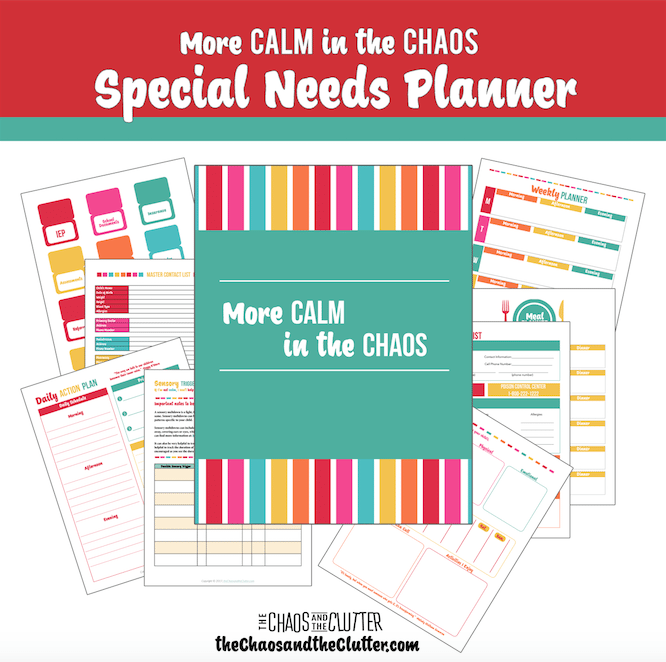
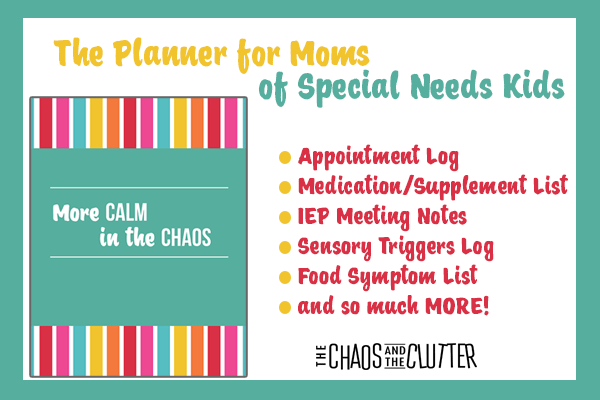
The More Calm in the Chaos Printable Planner was designed especially for moms parenting a child with special needs. Get it now by clicking this link or clicking the image below:

Filed Under: Special Needs Parenting

Calming Your Child’s Fight, Flight or Freeze Response

By Sharla Kostelyk

The body’s alarm system is located in the brain. The amygdala, part of the limbic system, is designed to recognize danger and prepare our body to react to it. When it’s working properly, it should send signals only when there is real danger present. For some kids, the system is faulty and transmits false alarms, sending them into full blown fight, flight or freeze mode weekly, daily or even multiple times a day. Often, this faulty alarm system is due to increased cortisol levels due to prenatal stress or early childhood trauma. It can also be due to conditions such as SPD (sensory processing disorder), where sensory triggers cause alarm sensors to sound when no real danger is present.

Calming Your Child's Fight, Flight or Freeze ResponseTo make matters even more complicated, your brain sees higher functioning tasks such as logic and planning as nonessential in a crisis. so it effectively shuts down that part of your brain once the fight, flight, freeze response is triggered. This is good if you’re in mortal danger and need all your energy to run away, but bad if your amygdala is triggered by everyday occurrences such as loud noises or the smell of vanilla.

Fight can look like:

  • kicking
  • screaming
  • spitting
  • pushing
  • throwing anything he can get his hands on
  • his hands clasped in fists, ready to punch
  • glaring
  • clawing at the air
  • gasping for breath

Flight can look like:

  • darting eyes
  • restlessness
  • excessive fidgeting
  • doing anything to get away
  • running without concern for his own safety

Freeze can look like:

  • holding his breath
  • heart pounding and/or decreased heart rate
  • shutting down
  • feeling unable to move
  • escaping into his own mind
  • feeling numb
  • whining
  • daydreaming

Did you do a double-take when you read “whining” on the list of flight and freeze responses? When I first learned that whining can be a flight or freeze response, I was surprised too. When I thought more about it though, I realized that whining could be an effective stalling tactic, therefore could be a learned freeze response or could be used to escape from something unpleasant.

Having your body going into fight, flight or freeze response often and unnecessarily can be debilitating. It is no wonder that some of our kiddos struggle with regulation!

There are ways that you can help your child to recognize when their brain starts to respond this way. The first step in helping them out of fight, flight, freeze response is to recognize the signs as quickly as possible and help your child learn to identify them.

There are a few easy ways to explain brain concepts to your kids. I like to use “upstairs brain/downstairs brain” and “flipping the lid” (thanks to Dan Siegel – a very useful video of his explanation here), but you can also use the lizard brain explanation (video about that here).

Explain the amygdala to your child. Empower them with knowledge to enable them to talk about their responses and better understand themselves. This also gives them a scientific reason for why they respond the way they do instead of just feeling like they are “bad” or out of control. I particularly like this video for kids.

Talk about the things they notice in their bodies right before the fight, flight or freeze response like their breathing speeding up, a funny feeling in their tummy, tightness in their chest, or their face getting hot. Then arm them with calm down skills that they can use the next time they notice those same feelings creeping up.

It is beneficial to track the patterns of these fight, fright, freeze responses in your child. They are likely not aware of what their triggers are, but by tracking their behaviours and the preceding events and possible sensory triggers, you will be able to pinpoint patterns that emerge over time. This will help you not only avoid those triggers, but anticipate them and be able to help your child navigate through those situations because they will be prepared for them.

The More Calm in the Chaos planner is perfect for helping you track these patterns in your child. It includes tracking logs for sensory triggers and behaviour. It is designed to help you see patterns and get to the bottom of what is triggering your child.


While your child is in fight, flight or freeze mode, help them to focus on their breathing. Regulating their breathing can help bring their “upstairs brain” back on board.

Avoid using the words “calm down”. Instead, use “let’s breathe” or “in through the nose, out through the mouth” or “you’re okay, just breathe”. Keep your words simple. Remember that they are only accessing their base brain right now, so lecturing or trying to reason with them is pointless.

Having them do crossing the midline exercises can also help re-set their brain, as it encourages the right and left hemispheres of the brain to talk to each other which can help stimulate the “”upstairs” brain to get engaged.

Once their breathing is regulated, you can try other calming techniques. Squeezing a stress ball, spending time in a sensory room or calm down area, blowing bubbles, colouring, yoga poses, chewing bubble gum, doing sensory activities (particularly heavy work ones), and calm down bottles are all good strategies to use. Some will work better for your child than others, which is something else to keep track of for future purposes.

After the incident has passed completely and they are no longer triggered, you can start a discussion about what factors may have contributed to the fight, flight, freeze response, what they felt in their body just before it happened, and what techniques worked for calming them quickly.

Are you confused about what is triggering your child and causing them to go into fight, flight or freeze mode? You can read about common triggers here.

Join me for a free 5 part email series, Little Hearts, Big Worries offering resources and hope for parents.
Filed Under: Adoption, Sensory, Special Needs Parenting

American Girls Sensory Bottle

American Girls sensory bottle square

By Sharla Kostelyk

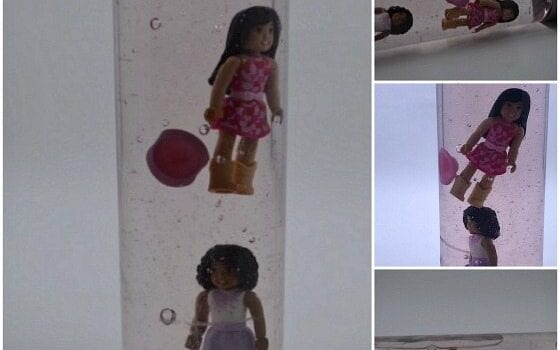
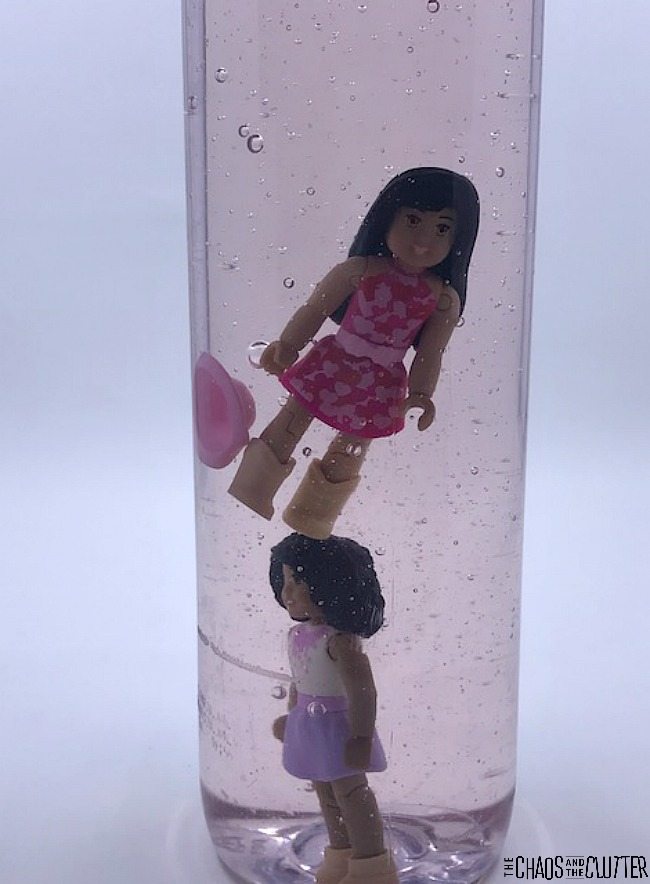
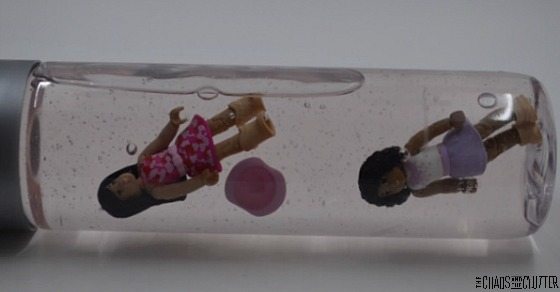
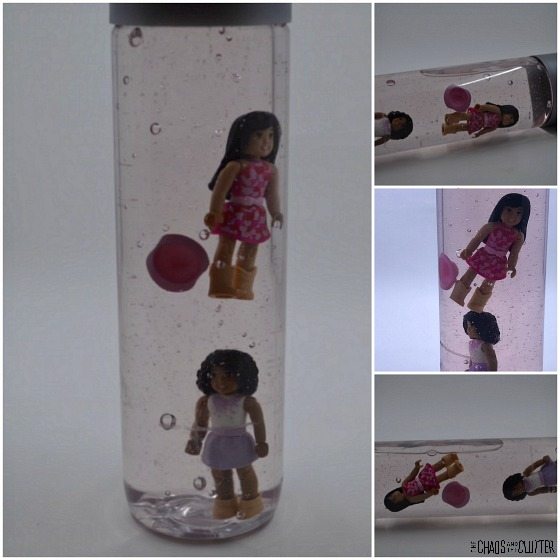
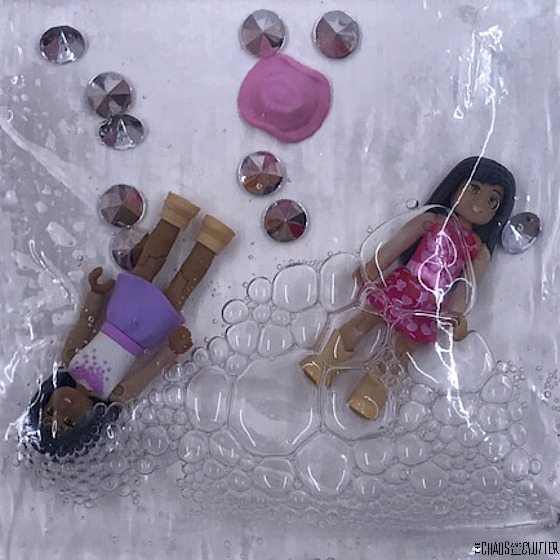
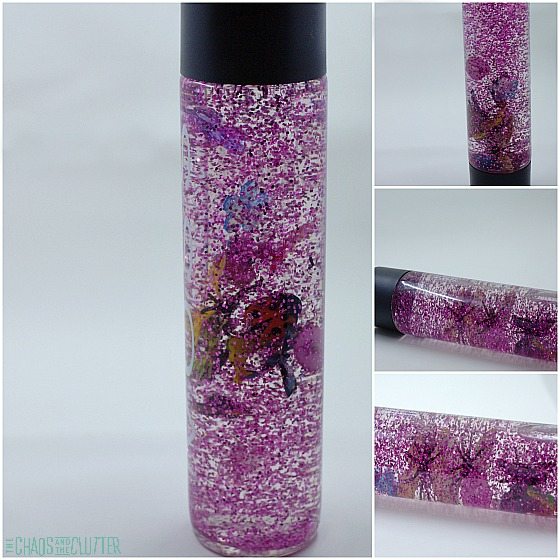
After the popularity of our American Girls Sensory Bag, I decided to use the same items and create an American Girls Sensory Bottle.

American Girls Sensory Bottle #sensorybottle

American Girls Sensory Bottle

Materials needed:

  • water bottle (I used a Voss bottle)
  • American Girls mini figures
  • liquid hand soap (I used a grapefruit hand soap because I thought the pink tint went well with this sensory bottle theme)
  • optional: hot glue

Empty the water bottle and fill it most of the way with the liquid hand soap before dropping in the American Girls mini figures. Place the lid back on the bottle.

If you’re using the sensory bottle with younger children, you will want to secure the lid in place with hot glue.

American Girls sensory bottle squareYou can customize this sensory bottle easily by choosing different mini figures. If you want to expand on this activity or get more use from the American Girl doll mini figures, you can create an American Girls Sensory Bag when you’re finished with the sensory bottle.

Looking for more simple and fun sensory activities? Join me for a free 5 part email series Sensory Solutions and Activities and get your Sensory System Behaviours Easy Reference Cards.

Pretty Princess Sensory Bottle

Spring Sensory Bottle

Filed Under: Sensory Tagged With: sensory bottles, sensory play

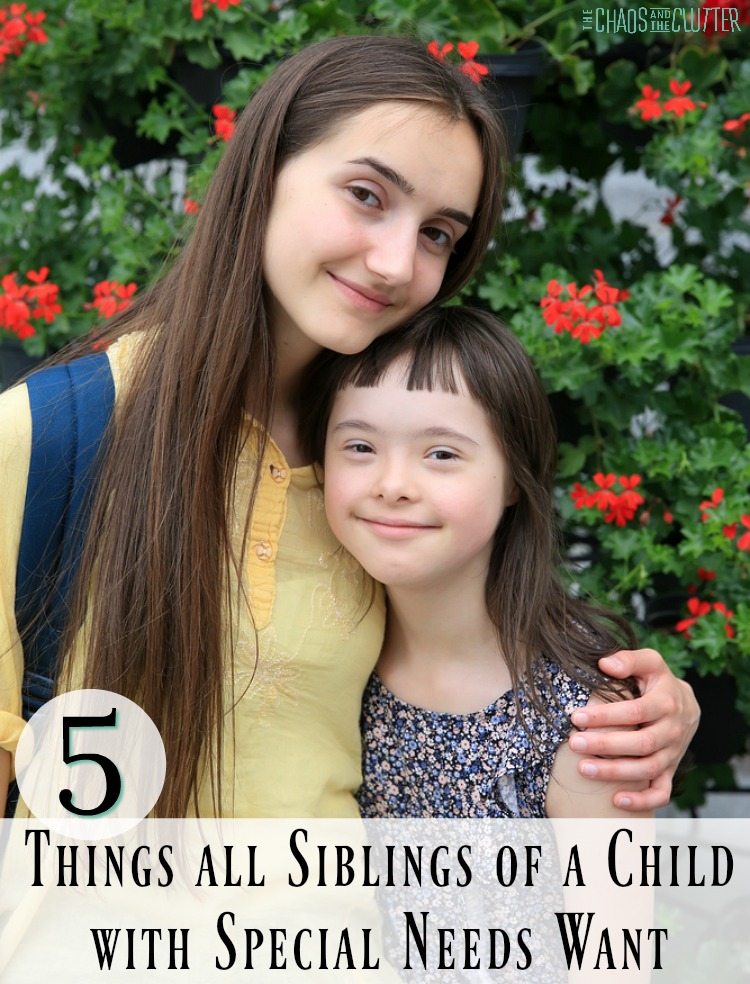
5 Things All Siblings of Special Needs Kids Need

By Sharla Kostelyk

“You don’t have to come. I understand.” Those words hung in the air and my stomach sunk. I was going to be missing something of hers again because her sister had an appointment. I couldn’t get out of it. It was an all-day assessment at a rehabilitation hospital that we had waited many months to get the call for. And of course, it was on exactly the same day that I was supposed to be taking my middle daughter to something she had been looking forward to. I couldn’t be in two places simultaneously. I was going to choose her younger sister’s appointment. We both knew it. There was nothing fair about it. It just was.

I hate that I’ve had to disappoint my other kids. I hate that they have had a childhood that is marked by so many specialists and meetings and stress. I hate that I can’t fix this for them. But on the other hand, I love that my kids show such grace towards others because they have had to learn to be patient. I love that they understand that just because a person may be different or have additional challenges doesn’t mean they are less worthwhile. I love that I see them reaching out to help strangers and neighbours and friends because of the compassion they have learned from having a sibling with special needs.

5 things all siblings of a child with special needs want from their parents

One of the most challenging things about being the parent of children with special needs is the guilt I have about my other kids. I often feel like there just isn’t enough “me” to go around. I feel like my kids whose needs aren’t as high get less than their share. It can feel impossible to meet everyone’s needs.

Last year, I shared a letter I wrote to my “other children”. In it, I shared the feelings I have about my kids having to and getting to be siblings to children with special needs. Because on one hand, it makes their lives so much harder and yet, on the other hand, it equips them with character traits and skills that they wouldn’t otherwise have.

5 things all kids with siblings who have challenges need from their parents:

Honesty

Acknowledge that their sibling’s special needs affect them too. Talk openly and honestly about the ways that they are impacted. There will be times that you will miss their games or be late to their recitals or not be able to tuck them in because of the needs of their sibling. This is disappointing for them. Of course. Acknowledge that.

Some parents think that they are protecting their kids by not sharing with them the truth of a situation, whether that be a sibling’s diagnosis or a sibling’s prognosis or other pertinent information. The parent’s intentions to shield a child are admirable, but the outcome can be that it increases worry and fear.

It is so important to give accurate (but age appropriate) information. Your child likely has worries that they do not want to share with you as they do not want to add to your burden. They may imagine things that are far worse than the reality. It is common for children to do this when they feel that something is being kept from them. They fill in the blanks with the worst case scenario. By providing factual information and letting them know that you are available to answer any questions they may have at that time or in the future, you can help alleviate their worst fears.

Check-in with them about their feelings

Just as parents of special needs children often need time to grieve, siblings need to grieve in their own ways too. Even if they are the younger sibling and have never experienced life any other way, seeing their friends’ lives may cause comparison and feelings of grief as they age. They may realize how much they are missing out on.

Teach them how to talk about their feelings. Do regular check-ins to see how they are coping. This doesn’t have to be complicated. Choose something simple like talking at tuck-in time or when you are in the car together or while they help you do dishes.

One of the traps that parents can fall into is minimizing the stress or difficulties their child faces because in comparison with the challenges of their special needs sibling, they can seem small. But issues with friends, decisions to make, bullying, schoolwork, and other hardships in childhood are very real and deserve to be acknowledged.

Encouragement and Appreciation

It’s hard to find that balance. On the one hand, you don’t want your child to resent their sibling with special needs, so you don’t want to rely on their help too much or have them grow up far too soon. On the other hand, you don’t want to rob them of the opportunity to grow in character and skill from all they have to learn from their sibling and their sibling’s challenges. It’s a fine line to balance, but an important one. One of the ways you can best balance it is to be sure to apply praise and appreciation liberally.

Be sure to also encourage them in their own talents and uniqueness. Show appreciation for who they are and what they contribute to your family. Write short thank you notes on post-its and stick them on their door or pillow. I still stand by my view that the 2 words that can have the biggest effect on your family are “I appreciate”.

Time

The thing you already don’t have enough of is time. I know it. Five of my kids have special needs. Time is already stretched thin. You have to be creative to carve out time with your other child (or children). Make the most of the time you have with them. Here are a few suggestions:

  • let them snuggle with you in your bed early in the morning
  • if just the two of you are in the car, swing by a drive-thru and pick up ice cream or a special treat and giggle about having ice cream for breakfast (or lunch or supper or late at night)
  • let that child stay up late one night a week or a month for some one-on-one time
  • have a special ritual like a secret handshake or line dance or signal
  • wake them up in the middle of the night to watch the stars or see the Northern Lights – I once woke my daughter up to see the beautiful Northern Lights and when we got outside, they were gone! We laughed and laughed and it’s such a special memory!
  • take the long way home just to finish singing the song
  • go for a walk with them
  • let them see that they are a priority by putting your phone down and making eye contact to ask about their day
  • say “yes” more often
  • eat supper as a family (if it’s at all possible)
  • have a dance party in the kitchen while you clean up
  • read to them (even to older kids) – It once took a year for us to get through a book because it didn’t happen often, but it was still worth the effort.

A Childhood

Of course their childhood will be altered and affected and may not look like what you imagined, but let them be kids. Give them breaks from the stress or chaos of home. If there is a grandparent or special friend that they can spend time with, facilitate them having regular breaks and being able to look forward to that time away without guilt.

While you may not be able to give them a childhood full of big events, trips, planned moments, complicated crafts, and cool birthday parties, you can give them small moments of special memories. Grab onto the opportunities that present themselves. Be silly. Be spontaneous. Dance in the rain. Let them stay up late once or twice a year for a special pyjama movie night. Sing in the car. Make up the songs. Invent a secret handshake.

Join me for a free 5 part email series, Little Hearts, Big Worries offering resources and hope for parents.

Filed Under: Special Needs Parenting

Welcome to The Chaos and The Clutter

By Sharla Kostelyk

I’m so glad to have you as part of The Chaos and The Clutter Community!

Most of what you’ll find here is fun family connection activities, sensory tips and ideas, and special needs parenting help and encouragement.

I’m Sharla, the mom of 7 children, 5 of whom are adopted and have special needs. I’m passionate about helping other parents find joy amidst the chaos of everyday life.

Our most popular posts:

Fun Family Connection Activities:

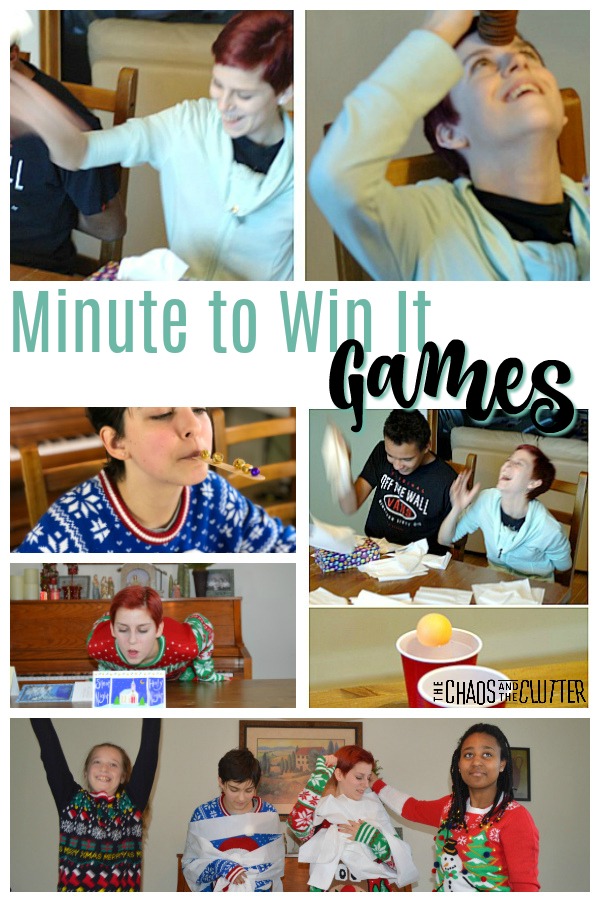
People love our Minute to Win it Games because they are easy to set up and so much fun for people of all ages. You can find a listing of all of our Minute to Win It Games here.

A collage of images of kids and teens playing games at home. The text reads Minute to Win It Games.

Family Game Night Ideas

The Flour Game

The Bag Game

Activities to Promote Eye Contact

Sensory Tips and Activity Ideas:

Overcoming Sensory Meltdowns Digital Course

Unique Slime Recipes

Printable Playdough Mats

Sleep Solutions for Your Child with Sensory Needs

Is my Child Having a Sensory Meltdown?

DIY Sensory Wall

Sensory Bins

Sensory Bottles

Sensory Bags

How to Make Sensory Balls

How to Make Squishies

Special Needs Parenting Help and Encouragement:

The Waves of Grief in Special Needs Parenting

What I Wish You Knew about Parenting a Child with RAD

Create a Calm Down Kit for Your Child

Activities to Teach Kids About Emotions

Calming Your Child’s Fight, Flight, or Freeze Response

An After School Meltdown Strategy that Actually Works

Transition Strategies for Kids


Filed Under: Parenting in the Chaos

  • « Go to Previous Page
  • Page 1
  • Interim pages omitted …
  • Page 59
  • Page 60
  • Page 61
  • Page 62
  • Page 63
  • Interim pages omitted …
  • Page 128
  • Go to Next Page »

Primary Sidebar

Categories

We are a participant in the Amazon Services LLC Associates Program, an affiliate advertising program designed to provide a means for us to earn fees by linking to Amazon.com and affiliated sites.

Copyright © 2026 • The Chaos and the Clutter • Site Design by Jeni @ The Blog Maven

Return to top of page

Copyright © 2026 · Chaos and the Clutter 2.0 on Genesis Framework · WordPress · Log in