• Skip to primary navigation
  • Skip to main content
  • Skip to primary sidebar
  • Home
  • About
  • Contact
  • Privacy + Terms
  • Affiliates

The Chaos and the Clutter

  • Facebook
  • Twitter
  • Pinterest
  • Google Plus
  • RSS
  • Email
  • School at Home
  • Sensory
    • Sensory Processing Disorder
    • Awesome Sensory Play Activities
      • Sensory Bins
      • Sensory Bottles
      • Sensory Bags
  • Family Games
    • Minute to Win It Games
  • Special Needs Parenting
    • Childhood Anxiety
    • Reactive Attachment Disorder
    • Sensory Processing Disorder
  • Store
  • Course Login

Sharla Kostelyk

Christmas Ornaments Sensory Bag

By Sharla Kostelyk

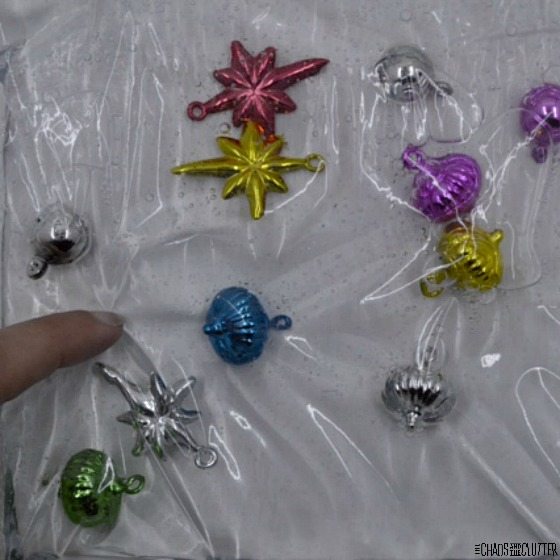
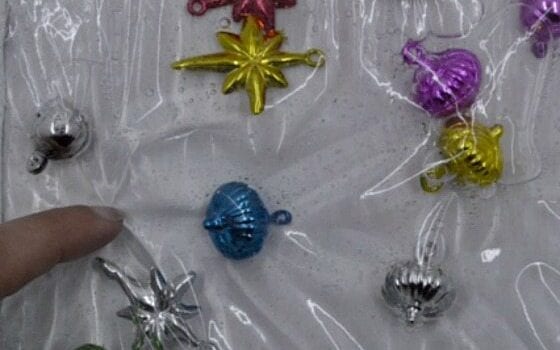
That season is fast approaching and with it, all the preparations and excitement. I find that my kids need extra sensory input around this time of year. This Christmas ornaments sensory bag is such an easy one to put together and fits with the holiday theme.

This sensory bag couldn’t be more simple. You only need 3 things to create this including the plastic bag! The nice thing about it being so simple is that you can so easily use ornaments you already have at home. I picked the ones I used up at the dollar store.
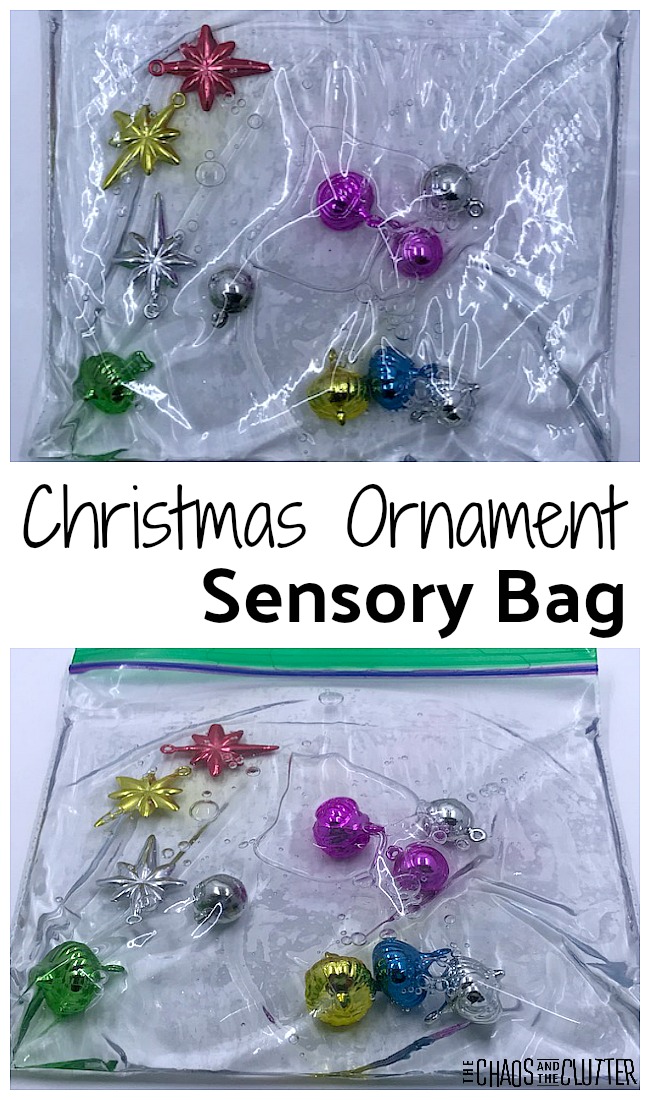
Christmas Ornaments Sensory BagChristmas Ornaments Sensory Bag

Materials needed:

  • resealable plastic bag
  • clear hand sanitizer
  • small, multi-coloured Christmas ornaments
  • optional: duct tape

To make the sensory bag, fill the resealable plastic bag about half full with the hand sanitizer. Add in the ornaments. Remove the excess air from the bag and seal.

If you are going to be giving this bag to younger children or if you want to prevent potential leaks, you can fold duct tape over all the edges. Using holiday duct tape can make it look better and add to the fun. There are lots of different types.
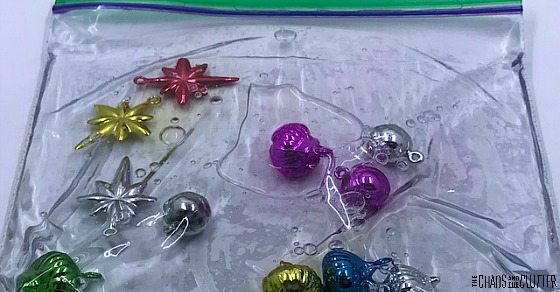
Of course, as with all sensory activities, adult supervision is recommended, especially as the small ornaments could be a choking hazard.

Looking for more easy sensory activities? Join me for a free 5 part email series Sensory Solutions and Activities and get your Sensory System Behaviours Easy Reference Cards.

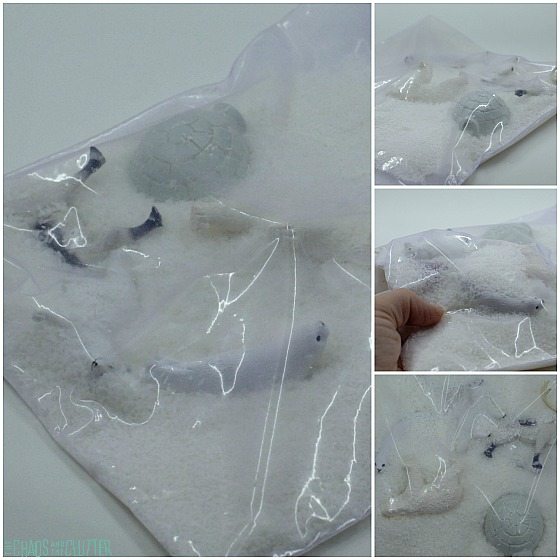
I-Spy Christmas Sensory Bag

Arctic Sensory Bag

Filed Under: Christmas, Sensory Tagged With: sensory bags, sensory play

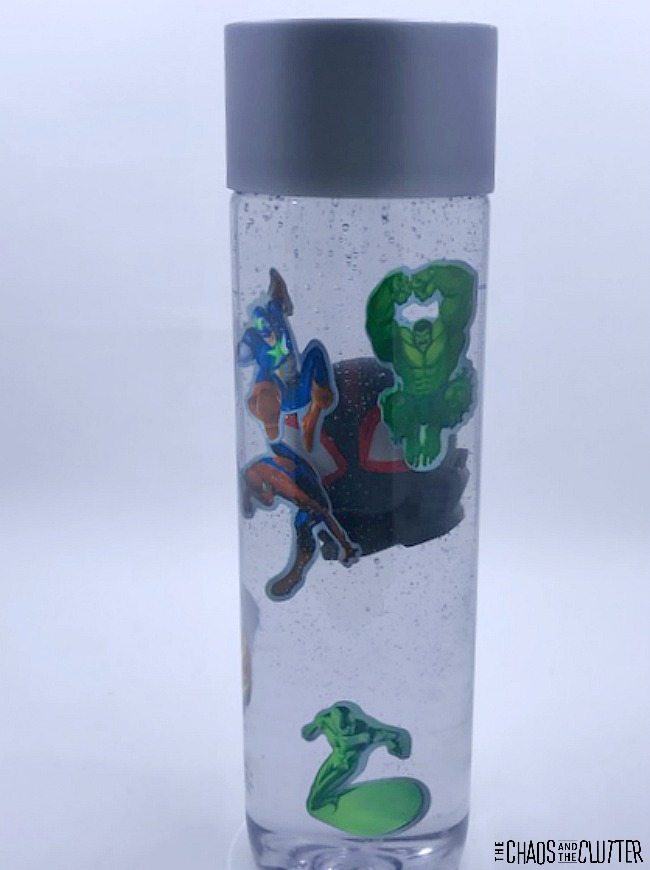
Superheroes Sensory Bottle

By Sharla Kostelyk

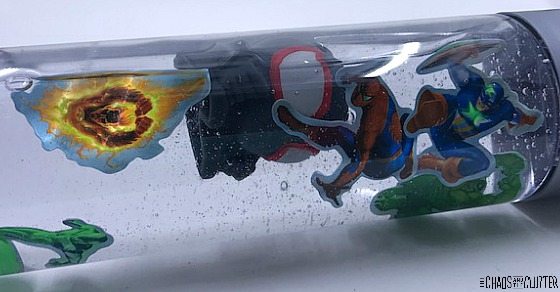
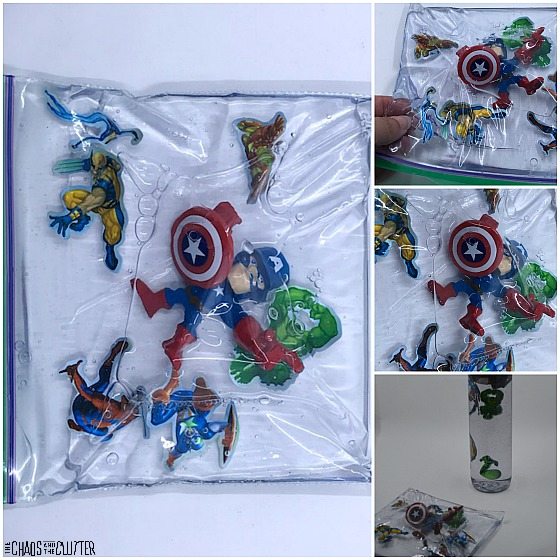
Superheroes are universally appealing for boys and girls which is one of the best things about this sensory bottle. It is also so simple to create. We used similar items last month to create a superheroes sensory bag.Superheroes Sensory Bottle #superheroes #sensory

Superheroes Sensory Bottle

Materials needed:

  • water bottle (I used a Voss bottle)
  • superheroes stickers (the ones I used happened to be glow-in-the-dark ones)
  • Spiderman squishy head
  • liquid hand soap
  • optional: hot glue

To assemble this sensory bottle, empty the water out of the water bottle and fill it about a quarter of the way up with liquid hand soap. Add a few of the superheroes stickers. Squeeze the squishy head to be able to get it through the opening of the bottle and push it in. Add another layer of the liquid hand soap and a few more stickers. Finish it off with more of the liquid soap before putting the lid back on the bottle.

If you will be giving this superheroes sensory bottle to younger children, you may want to use hot glue to secure the lid.

A tip for getting your sensory bottle to look the way you want it to:

Before adding the lid back onto the sensory bottle, use a bamboo skewer to push down, push over, turn around, and maneuver the stickers to the place you want them to be in. This way the front of the stickers will be facing outwards.

If you’re looking for other simple sensory activities, join me for a free 5 part email series Sensory Solutions and Activities and get your Sensory System Behaviours Easy Reference Cards.
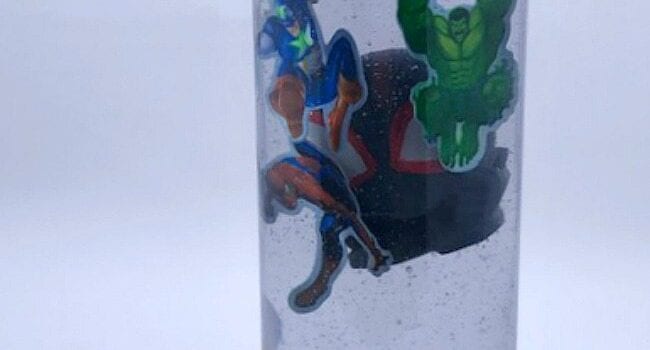
We used many of these same items to make a Superheroes Sensory Bag which the kids really enjoyed as well.

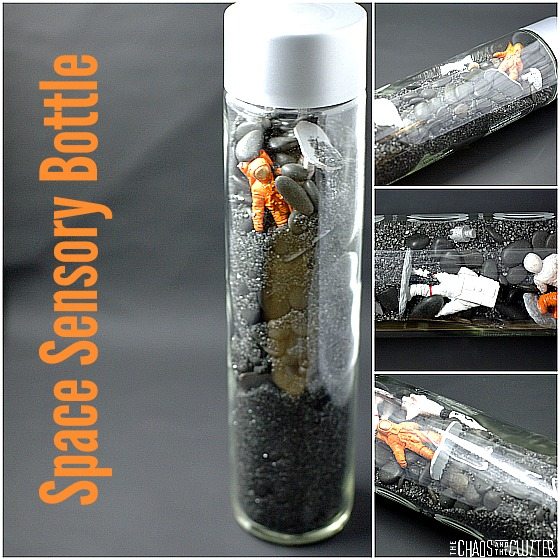
Superheroes Sensory Bag for SuperkidsThis Space sensory bottle is naturally weighted. Kids can also use it as an I-Spy activity.Weighted Space Sensory Bottle

Filed Under: Sensory Tagged With: sensory bottles, sensory play

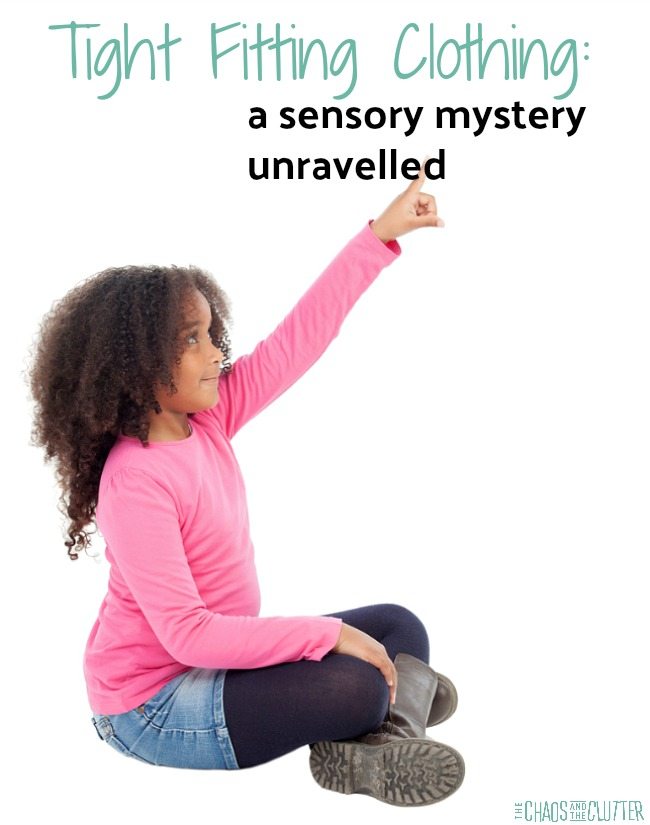
Tight Fitting Clothing: A Sensory Mystery Unravelled

By Sharla Kostelyk

Sensory Processing Disorder can create some pretty interesting choices and behaviours in children! Some of those choices can seem like they don’t make sense but when you have a better understanding of the “why” behind them, they begin to become more clear.

Tight Fitting Clothing: a sensory mystery unravelled. Plus what in the world is proprioception?

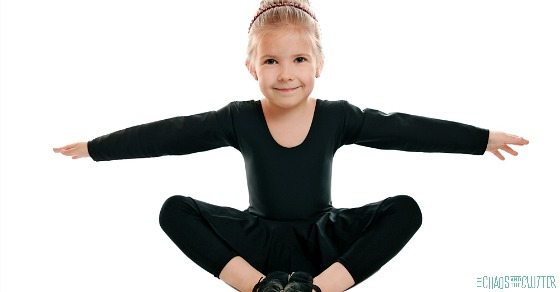
When our daughter Miss Optimism was younger, I used to get frustrated because I would get all the kids dressed and ready to go out and when I went to get them in the van, I would turn around and she had taken off her clothes and put on a bathing suit. It would be a cold winter day with two feet of snow on the ground and my little girl wanted to wear her bathing suit to the mall!

This happened day after day and my frustration grew. When I hid the bathing suits, she wore gymnastics suits! I had five kids under the age of 10 at the time and it was a lot of work to try to get anywhere on time, let alone when I had one child who was seemingly working against me!

I asked her why she wanted to wear a bathing suit in the winter instead of the lovely clothes she and I had picked out for the day and she couldn’t articulate an answer. I tried giving her choices “would you like to wear the green dress or the blue dress today?”, but inevitably, it ended in her wearing something as tight fitting as she could find.

It wasn’t until after her diagnosis of Sensory Processing Disorder (SPD) when we were working with an Occupational Therapist that I finally began to understand why she wanted to wear bathing suits in the winter (and summer, spring and fall!). What had previously seemed like a behaviour issue actually turned out to be a sensory need of hers that wasn’t being met.

The solution:

We were able to easily fix the issue by purchasing several tight gymnastics leotards* and suggesting that she wear them UNDER her clothing every day. This one tiny change enabled us to finally get out to the vehicle with her wearing clothing suitable for the weather! She wore the suits underneath her other clothing for a number of years and can now wear “regular” clothing most of the time. At times of stress though, she does still prefer to wear things that are tight.

*tip: buy the leotard a size or two too small to create that snugness your child is seeking

The reason for Miss Optimism’s choice in clothing and my subsequent frustration can be explained in one word that you may not be overly familiar with: proprioception. (Try saying that ten times fast!)

What is proprioception?

Proprioception is the body’s awareness of where it is in space. For most of us, it is as natural as breathing, but when there are sensory issues, it can require additional input (or less input) to keep that person regulated and keep that sensory system functioning in the way that it should.

Whereas some children with Sensory Processing Disorder avoid hugs, tight fitting clothing or being wrapped in a blanket, others seek out snug fitting garments and love to be wrapped like a sausage in a blanket or hugged tightly. When it comes to proprioception, I have some children who are seekers (like Miss Optimism) and some who are avoiders. It makes for an interesting household!

I am thankful that there is so much more information now than there was back when my daughter was first diagnosed with SPD. All children have sensory needs, whether diagnosed with a sensory issue or not. If you suspect that your child may have Sensory Processing Disorder, you may want to read more about the signs of SPD.

Proprioception seeking behaviours:

  • prefers tight fitting clothing
  • likes weighted blankets
  • enjoys wearing weighted vests
  • unknowingly uses too much force
  • mistakenly breaks things
  • stomps or walks loudly
  • difficulty with body awareness
  • bumps into objects, walls or people
  • kicks, bites, hits
  • chews on objects such as pencils or clothing
  • gets into others’ personal space
  • excessively physically affectionate
  • does not realize their own strength

Looking for real answers to your sensory questions? Sensory Processing Explained: a Handbook for Parents and Educators offers real strategies and practical solutions.

Join me for a free 5 part email series Sensory Solutions and Activities and get your Sensory System Behaviours Easy Reference Cards.
Does my Child Have Sensory Processing Disorder? If you are wondering whether or not your child has Sensory Processing Disorder, this list of information and resources will be a starting place for you to find help.Does my Child have Sensory Processing Disorder?

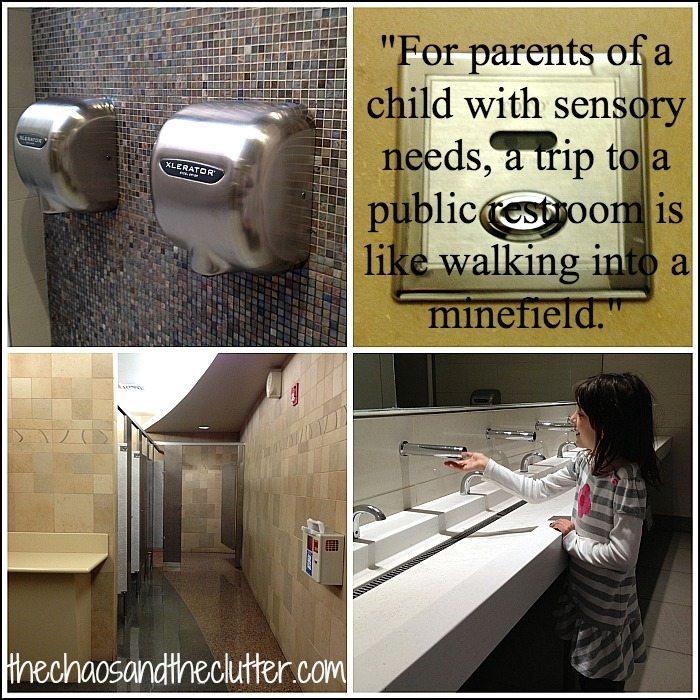
public bathroom tips for children with sensory issuesSurviving Public Bathrooms with a Child with Sensory Issues

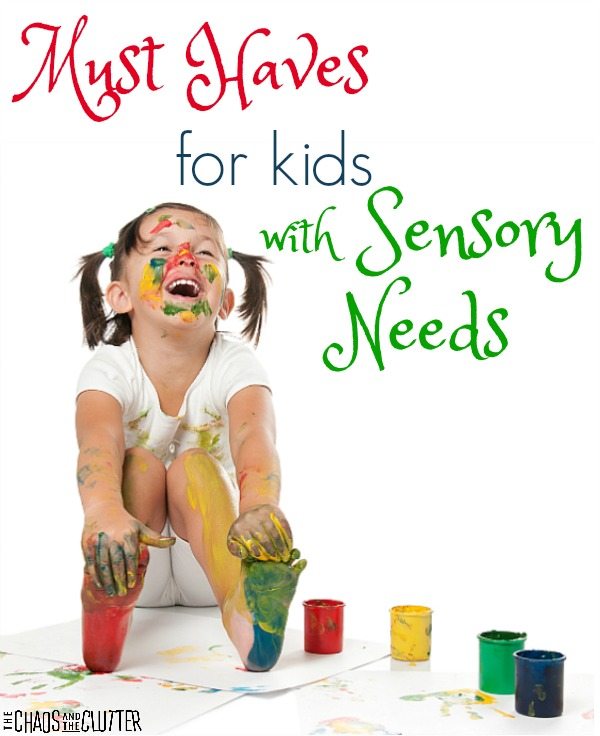
These are must-haves if you have kids with sensory processing disorder (SPD).

Must Haves for Kids with Sensory Needs

Filed Under: Sensory, Simple Sensory Solutions, Special Needs Parenting

Unicorn Sensory Bag

By Sharla Kostelyk

When I was in the fifth grade, I was obsessed with unicorns. I had unicorn stickers, posters, erasers, and even a unicorn snow globe. I remember a lot of girls in my class liking unicorns at the time. You can imagine that I found it amusing when my daughters started to like unicorns themselves right about grade five!

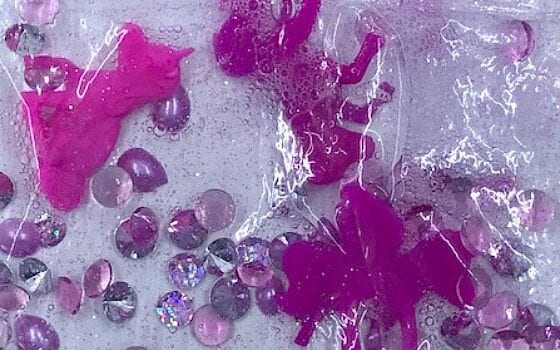
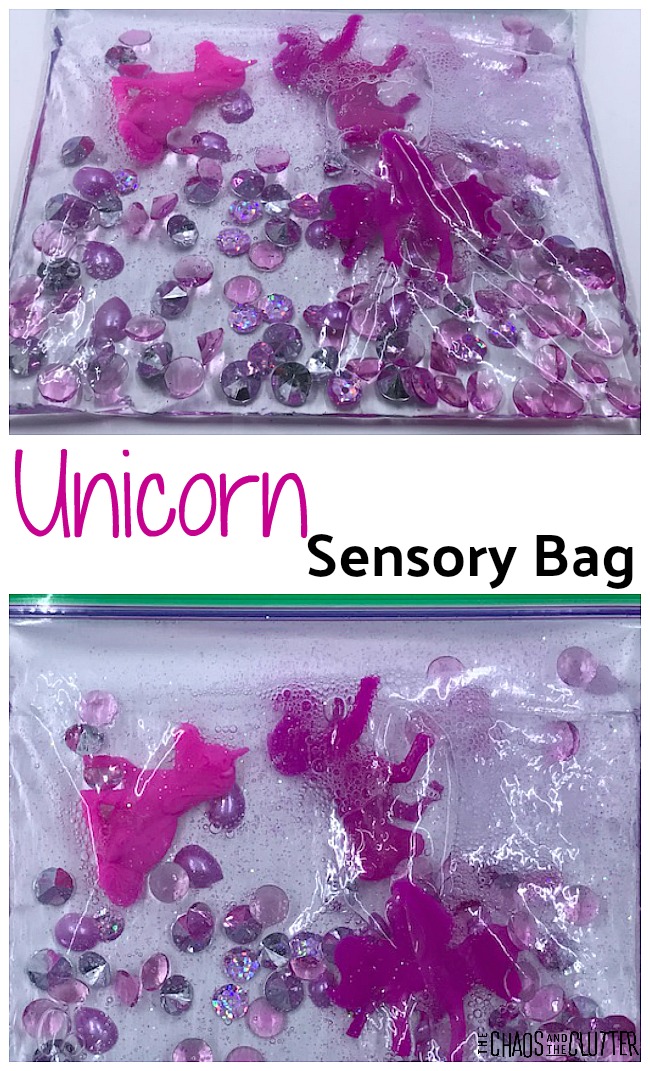
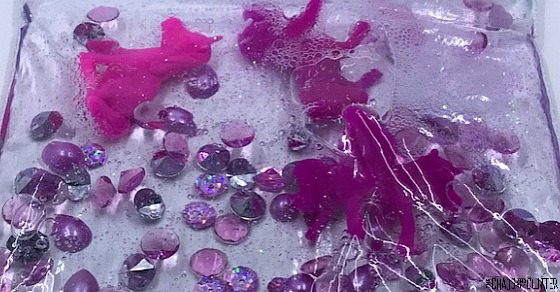
I decided of course to embrace all the unicorn madness and made them this unicorn sensory bag. Being a mom of four boys, it’s always extra fun for me when I get to make something girly! I threw in some glitter and gems and went with a pink and purple theme. My girls were pretty happy with their unicorn sensory activity.

Unicorn Sensory Bag #sensory

Make a Unicorn Sensory Bag

Materials needed:

  • resealable plastic bag
  • clear hand sanitizer
  • pink or silver glitter
  • pink, purple and silver gems and rhinestones
  • small pink and purple plastic unicorns
  • optional: duct tape

Fill the resealable bag about half full of hand sanitizer. Drop in the gems and plastic unicorns and add the glitter. Remove excess air from the bag and seal.

Sensory bags are notorious for leaking, so you may want to fold duct tape over all the sides. You can find fun rainbow duct tape that would go really well with the unicorn theme. You will also want to use the duct tape to seal it closed if younger children will be using it so that they don’t open it and dump the contents. Just like with all sensory activities, adult supervision is recommended.


Looking for more easy-to-put-together sensory activities? Join me for a free 5 part email series Sensory Solutions and Activities and get your Sensory System Behaviours Easy Reference Cards.
Squishy Mermaid Sensory Bag

Shark Sensory Bag

Filed Under: Sensory Tagged With: sensory bags, sensory play

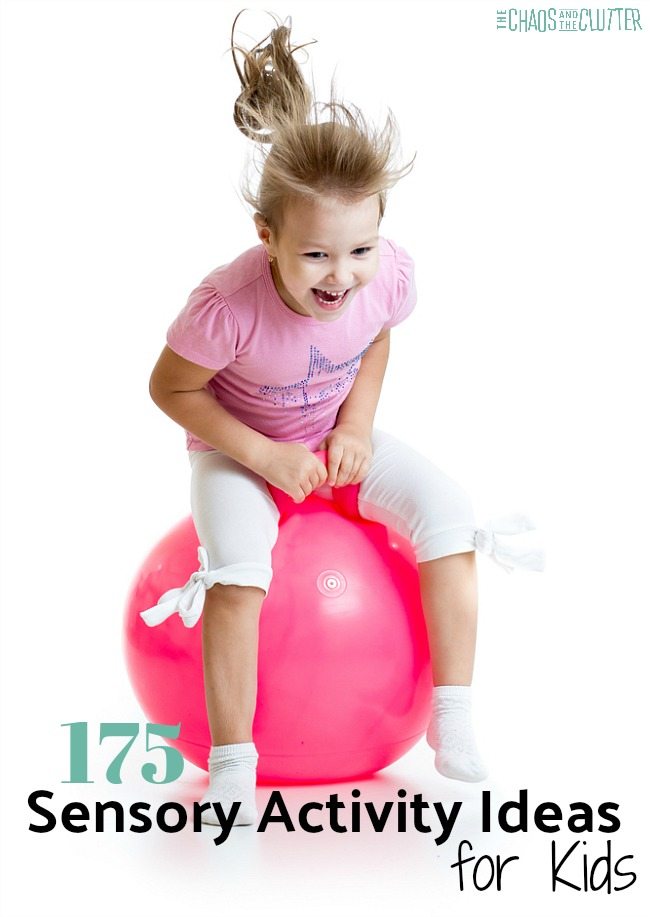
175 Sensory Activity Ideas for Kids

175 Super Simple Sensory Activities for Kids

By Sharla Kostelyk

Sensory activity ideas don’t have to be complicated to be effective. These suggestions can easily be done without a lot of prep work in the home or in the classroom. Sensory exploration is beneficial for all children, but for children with Sensory Processing Disorder, it is a critical piece of the puzzle for better sensory integration, preventing sensory meltdowns, and successfully navigating the world around them.

175 Super Simple Sensory Activities for Kids

To make the list less overwhelming and also to help you focus on specific sensory areas, I have divided the ideas by sensory systems, though there will be some overlap.

Auditory Sensory Activities:

  • use noise reduction headphones
  • use a sound machine or white noise such as a fan or fountain
  • simplify language when giving verbal instruction
  • play clapping games (you can find great ones on YouTube)
  • read books with rhyming or repetitive patterns
  • snap, clap or stomp
  • play a sound discrimination game (near, far, loud, soft, high, low)
  • blindfold child and call out directions for them to find a treasure
  • audiobooks
  • play a game where you quietly sit and listen to find as many sounds as you can
  • listen to music
  • have your child learn to play an instrument
  • go for a walk and listen to sounds in nature
  • make instruments out of household items and have a marching parade around the house
  • teach your child to anticipate noises that may occur such as the sound a balloon will make when it pops
  • drum patterns on the table with your hands and have your child copy the pattern
  • make a rainfall rattle together or rainfall sensory bottle
  • egg shakers can be held in the palm of the hand and provide a calming sound for some kids
  • use microphones or voice changers
  • play games such as “Simon Says” that involve following directions
  • pop bubble wrap
  • the steady tick of a metronome can be calming
  • add jingle bells, whistles, harmonicas, or plastic eggs filled with rice or popcorn seeds to sensory bins 
  • have them close their eyes and guess the sound (ripping paper, grinding coffee beans, popping popcorn)
  • play the telephone game where you whisper something and see if the message changes

Oral Sensory Activities:

  • blow bubbles (lavender bubbles are extra calming)
  • chew bubble gum
  • bubble painting 
  • keep a feather in the air across the room
  • drink a thick milkshake or smoothie through a straw
  • whistle
  • learn to play on a recorder
  • play a harmonica
  • party blower
  • “suck it up” (pick up small objects by sucking through a straw)
  • drink through a curly straw
  • wear chewelry
  • try crunchy foods (carrot sticks, apples…)
  • try chewy foods (marshmallows, gummy bears…)
  • make an edible necklace with Os cereal and string liquorice 
  • suck on hard candies (not safe for young kids)
  • try candy that is fizzy, spicy, tangy, sweet, or sour
  • blow up a balloon
  • blow out candles
  • use a vibrating toothbrush
  • whistle or hum
  • lick cold ice cream
  • drink through a sports bottle
  • blow a pinwheel
  • use a firm toothbrush to brush teeth, gums, roof of mouth

Visual Sensory Activities:

  • use visual schedules 
  • I-Spy books or pages
  • sensory bottles
  • sensory bags
  • reducing clutter
  • using toy rotation
  • mazes
  • sensory bins
  • I-Spy bottles or bags
  • making shadow puppets on the wall
  • shape matching games or activities
  • photo scavenger hunt
  • colour mixing activities
  • road trip Bingo
  • colour matching activities
  • glow sticks
  • lava lamp
  • puzzles
  • prism
  • kaleidoscope
  • spraying a target with a water gun
  • exploring with a magnifying glass
  • drawing or painting or crafting
  • light table or light box play
  • find or copy patterns

Tactile Sensory Activities:

  • sensory bins
  • shaving cream finger painting
  • trace letters, shapes or numbers in salt
  • playdough
  • kinetic sand
  • cloud dough
  • fidgets
  • sensory bottles or bags
  • jump in a pile of leaves in the Fall
  • sculpt out of clay
  • make slime 
  • water beads
  • play in the mud
  • finger paint with pudding 
  • bubble bath
  • bathtub paints
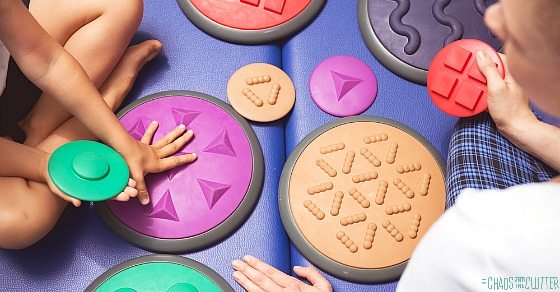
  • make tactile sensory cards
  • make a sensory cube
  • sensory balls
  • playdough mats
  • cotton ball throw painting
  • rainbow soap foam
  • fill balloons with different things like rice, water beads, flour, playdough
  • sensory walk
  • use glue to create raised lines
  • sand table or sandbox

Olfactory Sensory Activities:

  • smelling bottles
  • scented bubbles
  • scented playdough
  • scented sensory bin
  • bath salts
  • scented oobleck or scented slime
  • essential oils
  • make cinnamon ornaments
  • use scented rice, beans or salt in sensory play
  • scented sensory paint
  • scented cloud dough
  • scratch and sniff stickers
  • smelly markers
  • take a walk and explore the smells in nature
  • scented chalk paint
  • finger painting with pudding or pumpkin pie filling 
  • play a guessing game with scented candles
  • use chapstick with different smells
  • match pictures of foods to their smells
  • use a spice (like cinnamon) to create a writing tray
  • scented fidget toys or chewelry
  • chew scented bubble gum
  • taste and smell different foods
  • strong smells help with alertness (lemon, peppermint, pine)
  • softer smells help with calming (lavender, chamomile)

Vestibular Sensory Activities: (movement and balance)

  • spin or twirl
  • play Ring Around the Rosie 
  • play Duck Duck Goose
  • cartwheel
  • summersault
  • rock
  • climbing wall
  • parachute play
  • trampoline play
  • bike or tricycle riding
  • run in large circles
  • jump rope
  • have a marching parade
  • Chinese skipping
  • ride a scooter
  • dancing
  • teeter totter
  • log rolling
  • dancing
  • spinning chair
  • bounce on an exercise ball or large hopper ball
  • swinging
  • do handstand
  • go through an obstacle course
  • swing in a hammock
  • climbing and sliding at a playground
  • do the Hokey-Pokey

Proprioception Sensory Activities:

  • jump
  • hang upside down
  • tight hugs
  • push a laundry basket full of books
  • crab walk
  • “wheelbarrow” games
  • pretend to be a snake
  • cotton ball throw painting
  • rolling a ball
  • chewing bubble gum
  • chewelry
  • theraband activities
  • chair sit-ups or wall push-ups
  • bubble wrap body slam painting 
  • play Twister
  • hopscotch
  • trampoline games
  • wearing tight fitting clothing
  • yoga stretches
  • tap foot
  • put theraband on chairs for swinging legs
  • Move ’n’ Sit cushion
  • pillow fights
  • stacking books or wood or bricks
  • wearing a weighted vest or shoulder roll

Find sensory activity suggestions for the home and classroom and so much more in Sensory Processing Explained: a Handbook for Parents and Educators. 

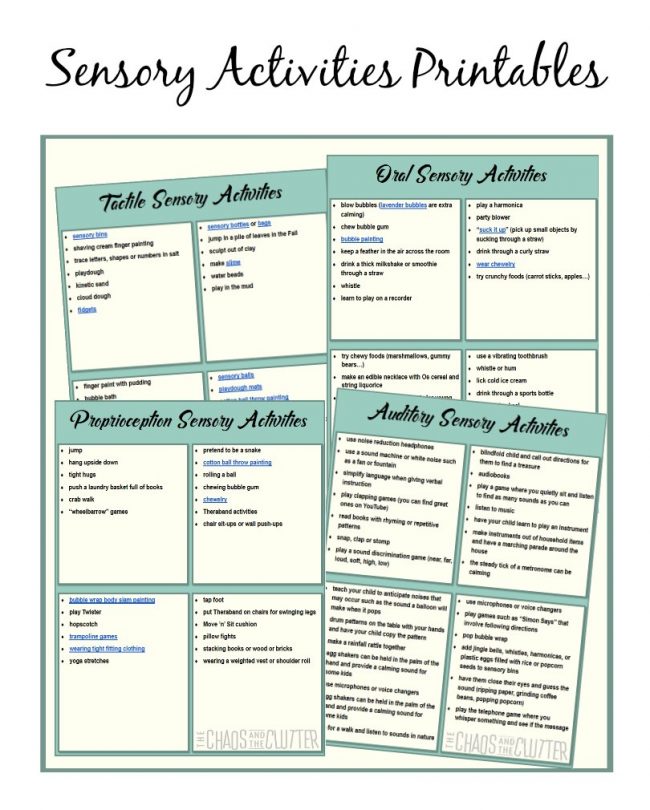
You can also get these ideas in convenient printable lists which are ideal for using in the home, classroom or in a therapeutic setting.
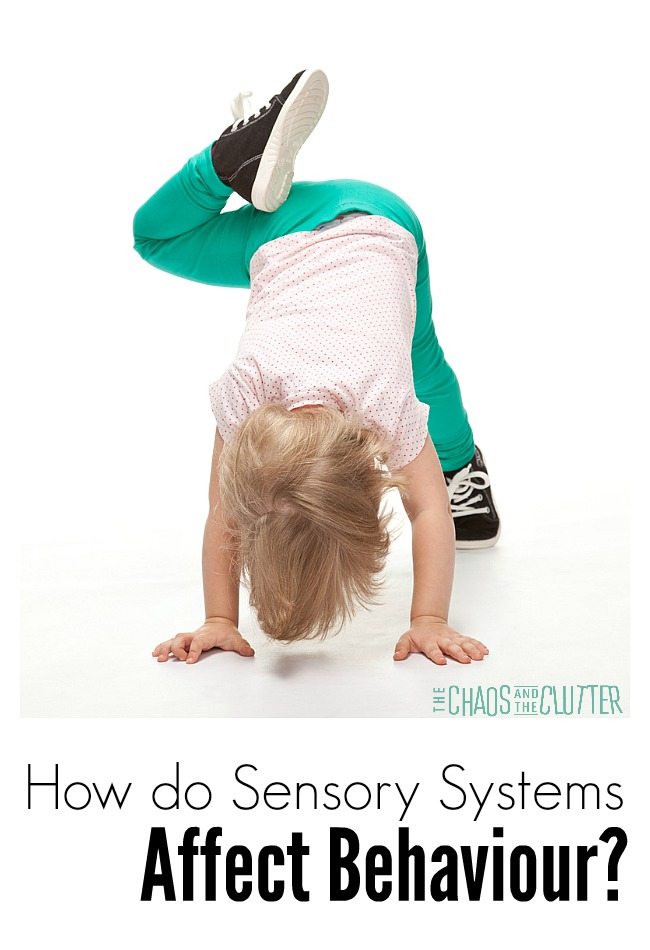
How is behaviour affected by your child's sensory systems?

What Does Behaviour Have to do with Sensory Systems?

Filed Under: Sensory Tagged With: sensory play

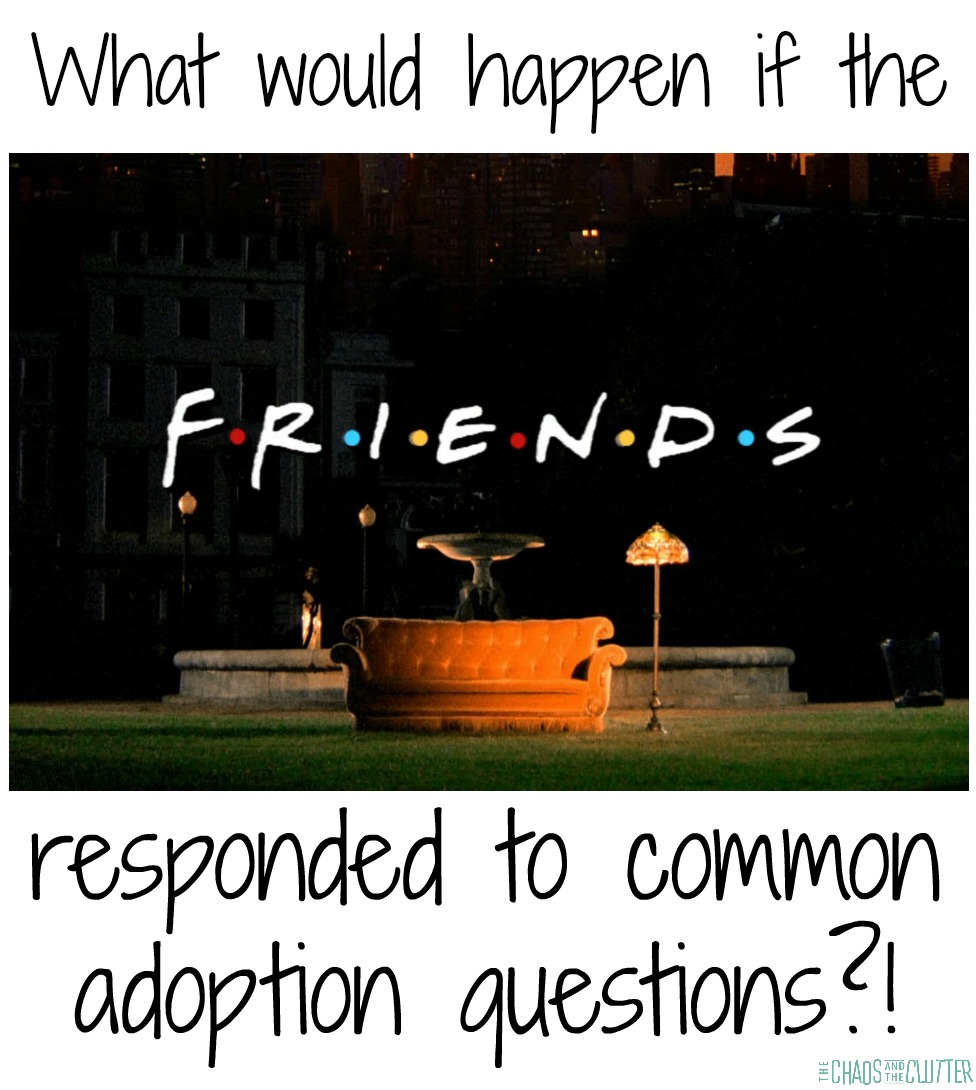
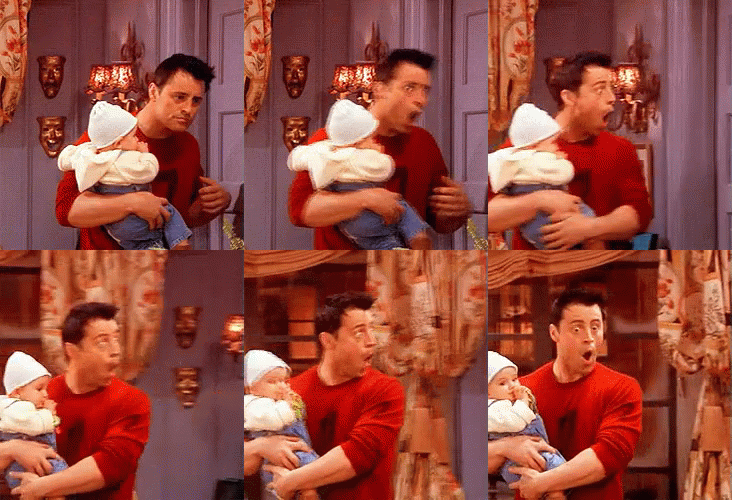
If the Friends Were Asked Adoption Questions

What would happen if the Friends responded to common adoption questions? a story told in gifs!

By Sharla Kostelyk

Adoptive families know the drill. Before you go out in public with your kids, you have to mentally prepare yourself for the onslaught of questions. I’ve found that as my kids have gotten older, the comments and inquisitions have become less frequent thankfully, but they still happen. From the well-meaning to the outright rude, adoptive parents have heard it all.

What would happen if the Friends responded to common adoption questions? a story told in gifs!

Since I’ve been writing about such heavy topics lately like the Fight, Flight or Freeze Response in Children, Reactive Attachment Disorder, Sensory Meltdowns, and Secondary Trauma in Adoptive Moms, I thought I would lighten things up today with something designed to give you a laugh.

If the Friends were asked these common adoption questions, I imagine their responses would go something like this:

“Where did you get that baby?”

“What happened to his real mom?”

“Was she on drugs?”

“Can’t you have your own children?”

“My sister’s cousin’s neighbour’s friend adopted and that child burned their house down. Aren’t you scared about things like that?”

“We adopted our dog and she used to be abused so I know EXACTLY what you’re going through.”

“How much did he cost?”

“Did you know they were going to be a different colour?”

“Are they twins?”

“She’s so cute. I just want to take her home.”

“We sponsor a kid in Africa so I totally get it.”

“Do they know they’re adopted?” (said right in front of the child!)

“Are you trying to be like Angelina?”

“She is so lucky!”

“Do you love her the same as your real kids?”

“Can I touch his hair?”

“We’re an adoptive family too.”

Disclaimer: This is just meant to add some humour, not offend. While these are just meant to add some light to this, I know that most people who ask questions of adoptive families mean well and are either curious or are perhaps even interested in adoption themselves. I have written a few things in all seriousness about this topic as well, so if you are genuinely interested in how to respond to the questions, you can check these out:

How to Answer the Rude Questions

The 10 Strangest Adoption Questions I’ve Been Asked

Self-Care for Foster and Adoptive Families

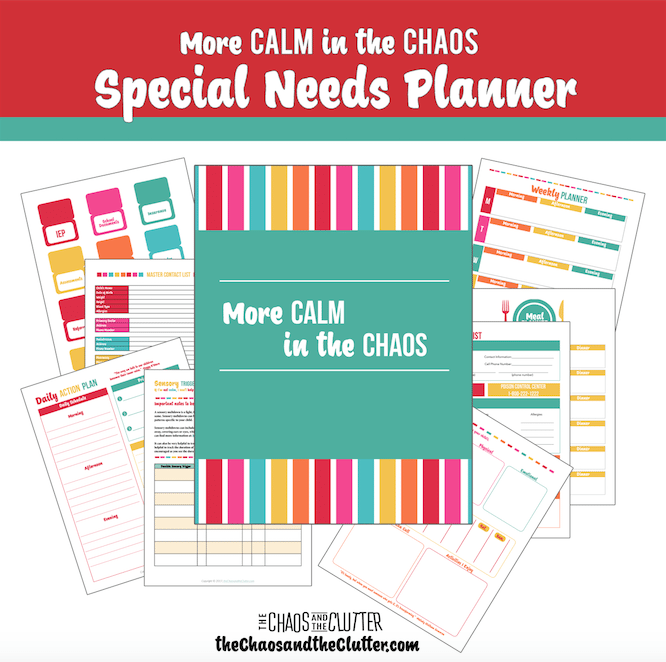
More Calm in the Chaos Printable Planner for Moms of Special Needs Kids

Filed Under: Adoption

  • « Go to Previous Page
  • Page 1
  • Interim pages omitted …
  • Page 58
  • Page 59
  • Page 60
  • Page 61
  • Page 62
  • Interim pages omitted …
  • Page 128
  • Go to Next Page »

Primary Sidebar

Categories

We are a participant in the Amazon Services LLC Associates Program, an affiliate advertising program designed to provide a means for us to earn fees by linking to Amazon.com and affiliated sites.

Copyright © 2026 • The Chaos and the Clutter • Site Design by Jeni @ The Blog Maven

Return to top of page

Copyright © 2026 · Chaos and the Clutter 2.0 on Genesis Framework · WordPress · Log in