• Skip to primary navigation
  • Skip to main content
  • Skip to primary sidebar
  • Home
  • About
  • Contact
  • Privacy + Terms
  • Affiliates

The Chaos and the Clutter

  • Facebook
  • Twitter
  • Pinterest
  • Google Plus
  • RSS
  • Email
  • School at Home
  • Sensory
    • Sensory Processing Disorder
    • Awesome Sensory Play Activities
      • Sensory Bins
      • Sensory Bottles
      • Sensory Bags
  • Family Games
    • Minute to Win It Games
  • Special Needs Parenting
    • Childhood Anxiety
    • Reactive Attachment Disorder
    • Sensory Processing Disorder
  • Store
  • Course Login

Sharla Kostelyk

Squishy Sky Sensory Bag

By Sharla Kostelyk

This squishy sky sensory bag is simple to make and you only need a few materials. Depending on the age of your child, they can even help cut out the clouds to make the sensory bag.
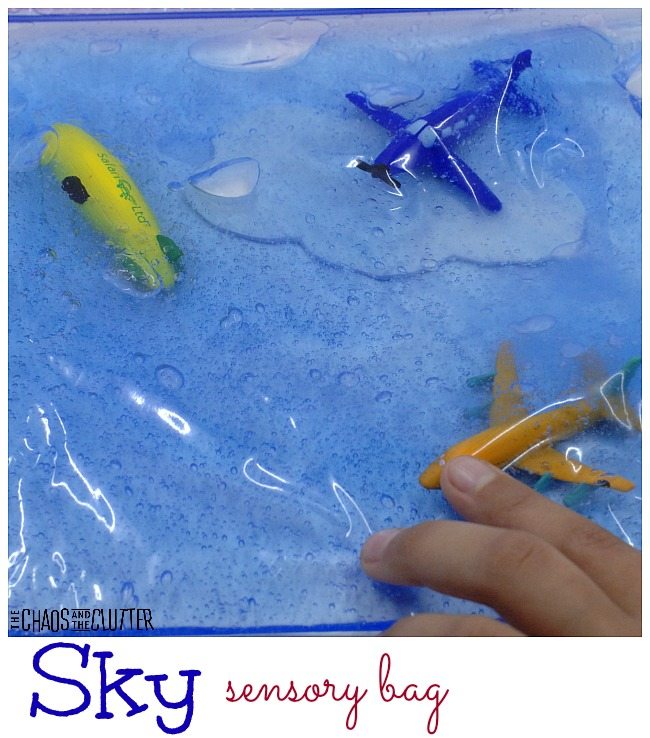
Sky sensory bag is perfect for little explorers.Materials needed:

  • medium sized resealable freezer bag
  • blue hair gel or blue body wash
  • white foam sheet
  • In the Sky toob
  • scissors

Using scissors, cut some cloud shapes out of the white foam sheet. If you are having your child help you with this step, you can lightly sketch the outline of a cloud with pencil and have them cut along the outline.

Place the foam clouds inside a resealable bag. Add a few items from the In the Sky toob and squeeze some blue hair gel or body wash into the bag. Remove excess air from the bag and seal.

I prefer to use a good quality freezer bag rather than a sandwich bag for sensory bags because they are more durable and I prefer the size as well.
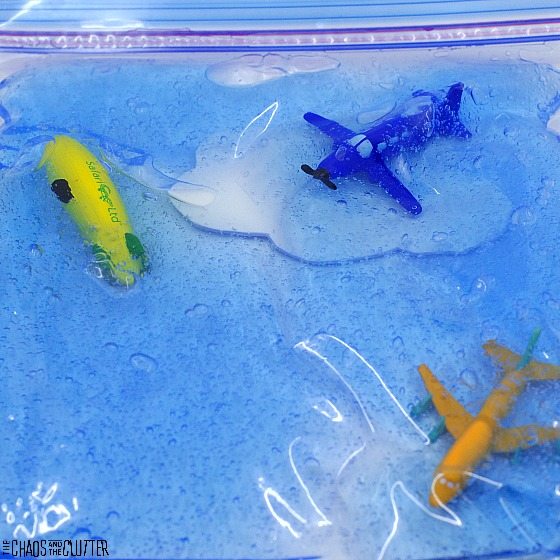
If you’re using these sky sensory bags with younger children, you can secure the opening of the bag by folding strong clear packing tape or duct tape over the top of the bag. You can also do this to all sides of the bag for extra durability.

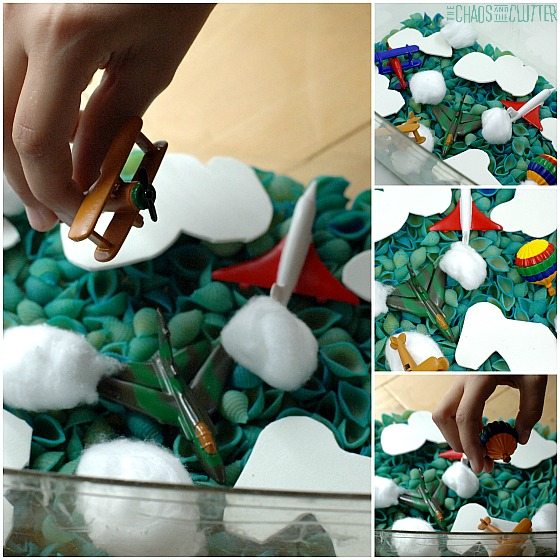
I used the same In the Sky toob to make a Sky Sensory Bottle and a Sky Sensory Bin. All of these were perfect during our Flight Unit in homeschooling.
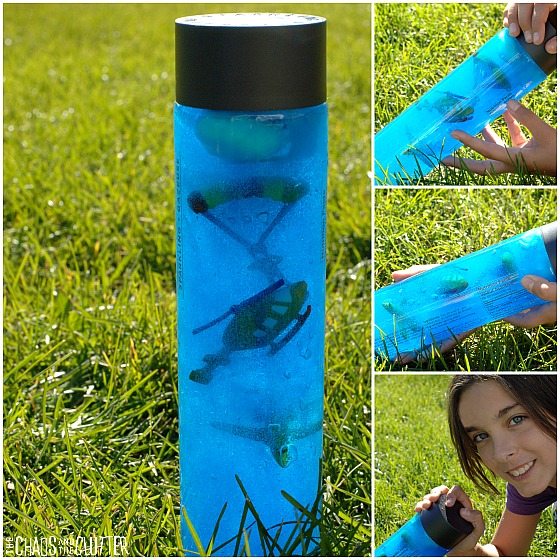
Sky Sensory Bottle

Sky Sensory Bin

Join our free 5 part email series Sensory Solutions and Activities and get our Sensory System Behaviours Easy Reference Cards.
Filed Under: Sensory Tagged With: sensory bags, sensory play

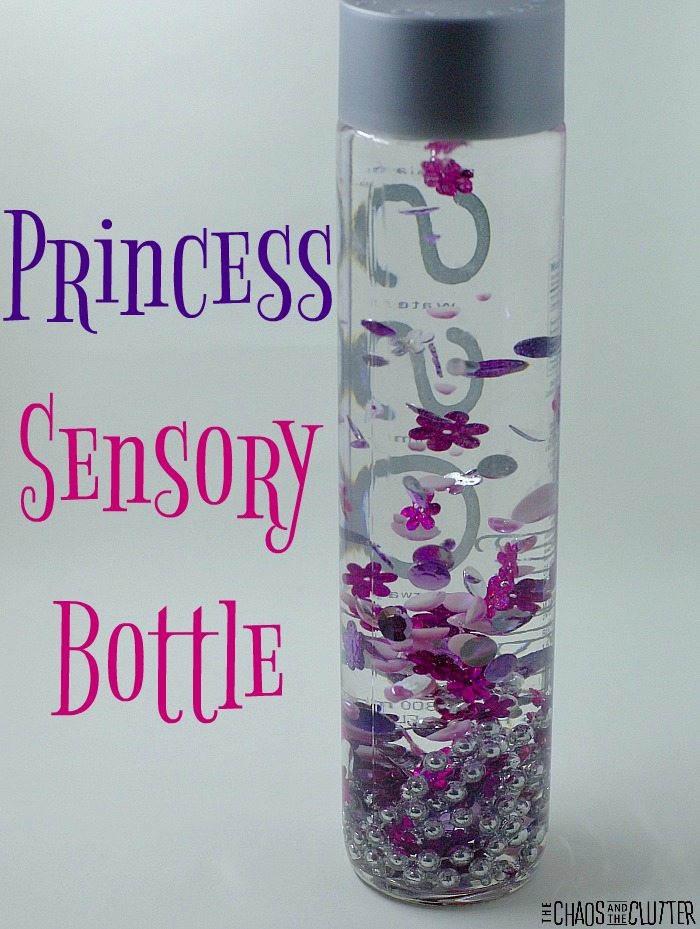
Pretty Princess Sensory Bottle

By Sharla Kostelyk

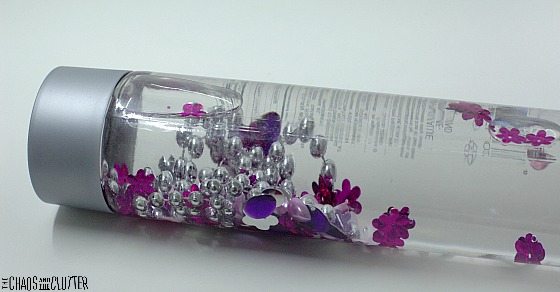
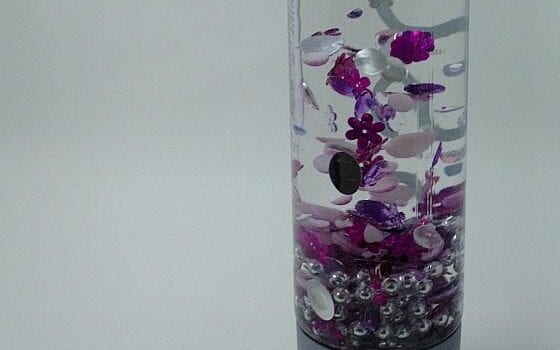
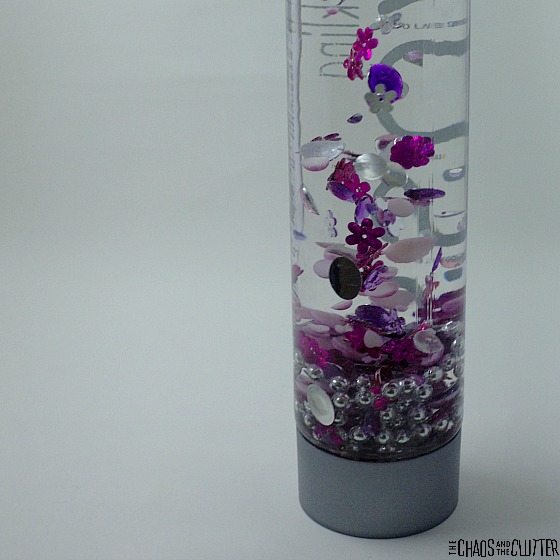
This pretty princess sensory bottle was a big hit with my two youngest daughters. They loved the beautiful colours and shapes of course, but they also liked the sound. The beads from the plastic mardi gras necklace make a tinkling sound on their way down.

Little girls will love this pretty princess sensory bottle.My girls liked listening to the beads and watching the gems and confetti sink down. They also liked how pretty this sensory bottle was.
Materials needed:

  • empty water bottle (I always use Voss water bottles because I like the size and shape of them)
  • gems
  • butterfly and flower shaped confetti
  • pink plastic hearts
  • plastic silver mardi gras necklace
  • water
  • optional: pink or purple glitter

Pour out about a quarter of the water in a water bottle. Place the mardi gras beads, pink hearts, gems, and flower and butterfly shaped confetti inside. You may need to add a bit more water to fill it up to nearly the top. If you choose to add glitter, you can add it at this point.
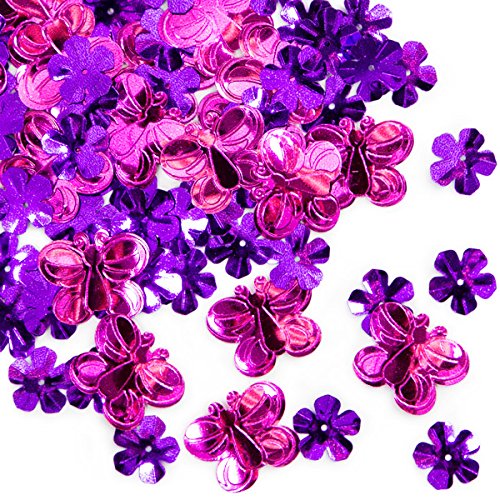
Butterfly Confetti by Creative ConvertingButterfly Confetti by Creative ConvertingVOSS Water Plastic BottlesVOSS Water Plastic BottlesLiquid Hand SoapLiquid Hand Soap

Replace the lid and give it a good shake. You can secure the lid with a hot glue gun if you are going to be using this princess sensory bottle with little ones. Adult supervision should of course be used as with any sensory activity.

Join me for a free 5 part email series Sensory Solutions and Activities (just pop your email into the box below) and get a printable list of 175 Great Sensory Ideas.
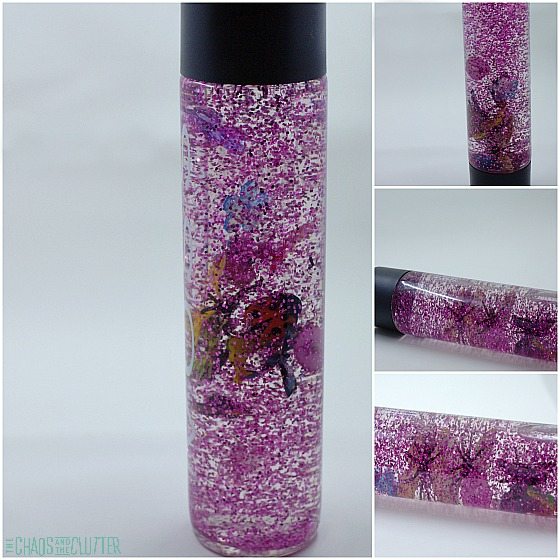
If you want to, you can add some pink or purple glitter before you add the water and give the sensory bottle a good shake.
Spring Sensory Bottle

Filed Under: Sensory Tagged With: sensory bottles, sensory play

What’s the Point of Sensory Bins, Bottles and Bags?

By Sharla Kostelyk

One of the more recent trends in sensory play is the creation of sensory bins, sensory bottles and sensory bags. Perhaps you’ve wondered what the point of sensory bins or sensory bottles or sensory bags is. Are they simply another toy? Why do children seem so enthralled with these seemingly simple sensory activities? I hope to be able to answer these questions for you.

Have you ever wondered "What's the point of sensory bins, sensory bottles and sensory bags?"Sensory play is important for all children at many of their developmental stages. It is even more critical for children who have sensory processing disorder (SPD). Sensory play is any activity that stimulates the sense.
So why sensory bins, sensory bottles and sensory bags?

Sensory bins, bags and bottles are easy and inexpensive to make. They don’t require a lot of room. This give children the opportunity to further their sensory exploration without the need to go to an indoor play place or children’s museum. They are an incredibly simple way to incorporate sensory play in your own home or vehicle or classroom.

Sensory bins, sensory bottles and sensory bags allow children to explore, discover, imagine, create, and learn while engaging their senses.

If you’ve ever made a sensory bin for your child before, you may have noticed that it captured their attention more than you expected it would. Often, kids who will only play with a toy for a few seconds or minutes will spend ten or fifteen minutes playing in a sensory bin while their mom or dad stands there, mouth agape, wondering how in the world their active child is staying focused on one activity for so long. This is because of the sensory component of the play. Your child is not able to tell you when their sensory needs are not being met, but when they encounter an activity that fills that void for them, they know immediately that it is something they need to be doing.

Why Sensory Bins, Sensory Bottles or Sensory Bags?Sensory bottles are often referred to as calm down bottles. When a sensory bottle has items such as glitter in it that move slowly, children (and adults) are often mesmerized by watching their slow descent and this calms their breathing and helps them regulate themselves and their emotions.

I also have created weighted sensory bottles for much the same reason. They can provide a calm down effect due to the sensory input they provide.

Sensory bags are often referred to as squish bags and they also meet sensory needs in a simple way. I make freezer meals and often when I’m assembling them, my daughter will press on the bags of soups and casseroles and comment how much she loves the feeling of them. When it comes time for me to put them in the freezer, she expresses that she is sad to not be able to play with them anymore, so I whip up a simple sensory bag for her to play with.

What are the benefits of sensory bins, bottles and bags?

  • Language Skills – Children are able to expand their vocabulary and language skills as they describe their play experience.
  • Fine Motor Skills – Fine motor skills are improved by manipulating small objects, dumping and scooping.
  • Social Skills – Social skills are worked on by learning about sharing, playing and communicating with others while engaged in their sensory play.
  • Science and Math Skills – Children are also using skills useful for science and math in measuring, guesstimating and learning about cause and effect while manipulating sensory materials.
  • Meeting sensory needs

What are other uses for sensory bottles, bags and bins?

Two of our children have used sand trays in their therapy. Sand trays are especially appropriate to help children work through past traumas. I believe that my children were more comfortable doing their sand tray work because they were so used to sensory bin play.

Those who work with patients with dementia and Alzheimers are finding it helpful to use sensory bags, bottles and bins. Providing appropriate sensory stimulation for patients suffering from Alzheimer’s and other forms of dementia has been shown in recent studies to decrease agitation and restlessness and to improve sleep.

Obviously, for adults, you don’t want to create a sensory bag that is too juvenile, but you can create the same effect using something like this gel bag maze. Some patients do enjoy themed or fun sensory bags. Simple sensory bins with rice and rocks or salt can be very effective and sensory bottles can have a calming effect.

Sensory bottles, bins and bags are particularly effective for children who suffer from Sensory Processing Disorder (SPD), though they are also a healthy part of learning for all children.


How do I use sensory bags, bottles and bins with my child?

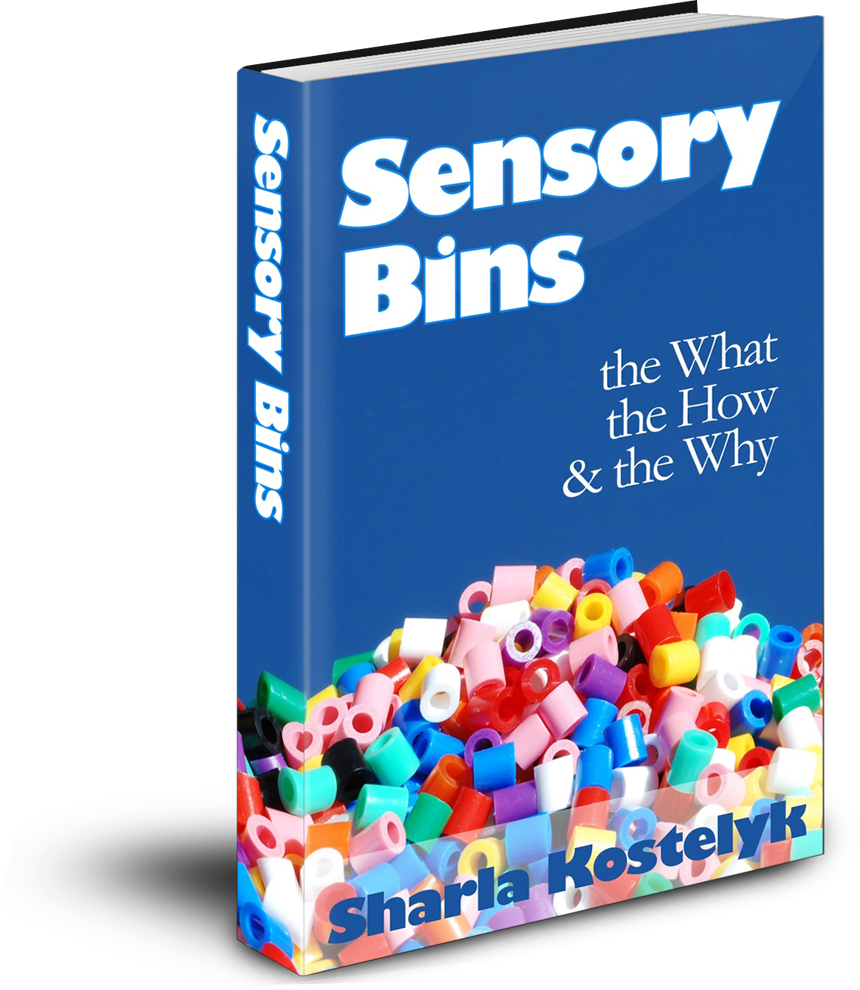
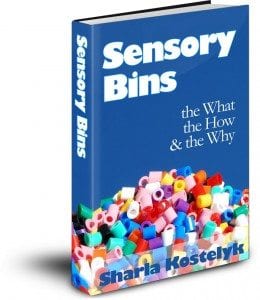
Sensory bins are very simple to create. You likely have supplies in your home today to make a sensory bin that would engage your child. If you are looking for more in-depth information on creating sensory bins including filler ideas, sensory recipes and storage and money saving ideas, you can find those in my ebook on Sensory Bins.

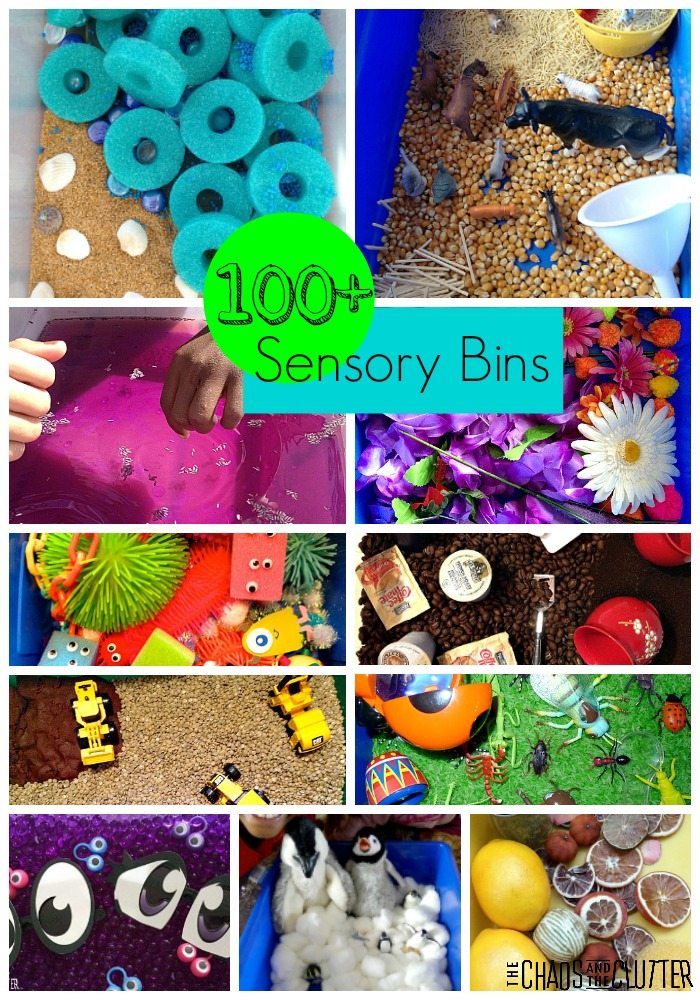
Sensory Bins ebookIf you’re looking for inspiration to create your own sensory bins, here are over 100 sensory bin ideas for all kinds of themes and holidays.

More than 100 Sensory Bin ideas to inspire you from The Chaos and The ClutterHelp your child explore by asking them questions like “what do you feel?/see?/smell?” or “what does that make you think of?” Encourage them to use their imaginations to come up with stories or characters while they play. This is particularly effective in sensory bins.

Sensory bottles can be created in any empty bottle that has a lid. For younger children, I suggest hot gluing the lid on so that they can’t open it. You can fill the bottle with liquids or solids and a variety of items. If you mix clear glue with warm water (approximately half and half), you can slow down the movement of the items in the bottle, adding to the calm-down effect. Adding heavier items or using a glass bottle (not for younger children obviously) creates a weighted sensory bottle.

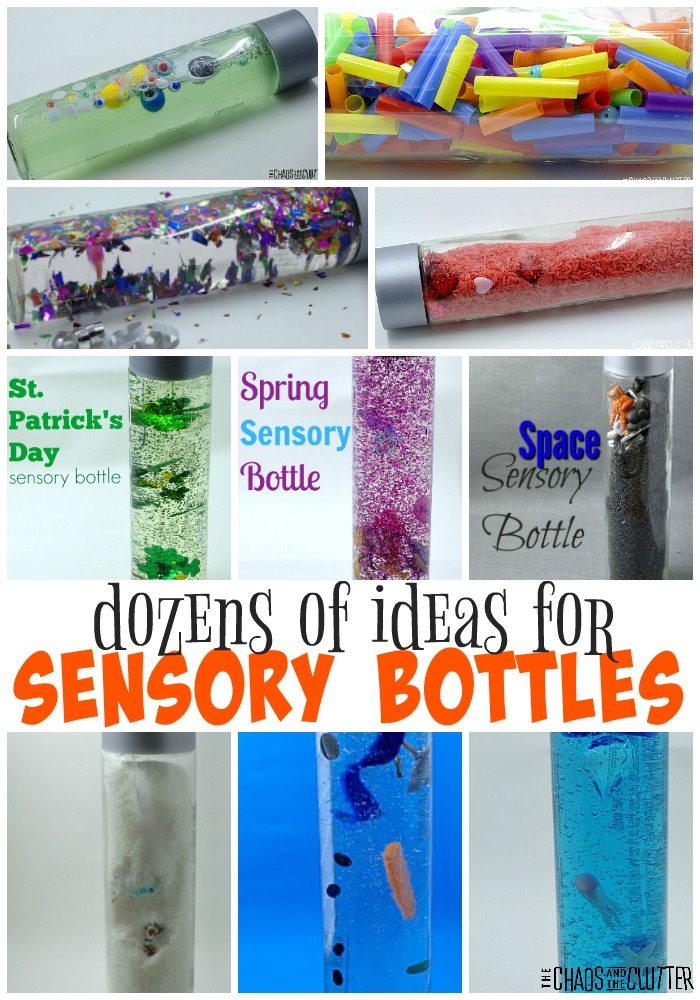
For exact instructions and over a dozen ideas to help you create your own, check out all of our sensory bottles.

So many sensory bottle ideas here!Sensory bottles and bags can be used for calming or exploration. They can also be good for taking with you in the vehicle or using in waiting rooms.

Sensory bags are also very easy to make. I like using medium freezer bags instead of sandwich bags because I find them more durable. If you are making them for younger children, you will want to secure the bag with duct tape or heavy packing tape. They can be filled with a variety of items. If you’re looking for ideas for making sensory bags, you can check out our best sensory bags.

Creating sensory activities doesn’t have to cost much. I find that the dollar store and my own cupboards are great places to find sensory filler items. I’ve used expired coconut as “snow”, coloured expired rice, used all shapes and sizes of dry beans and lentils and chickpeas, popcorn kernels, oats. Gels, body wash and hand sanitizers work well in sensory bottle and bags so I am always on the lookout them to go on clearance.

I hope this information has given you a better understanding of the purpose of sensory bottles, bins and bags and given you the knowledge and confidence needed to be able to make your own.

Join our free 5 part email series Sensory Solutions and Activities and get our Sensory System Behaviours Easy Reference Cards.

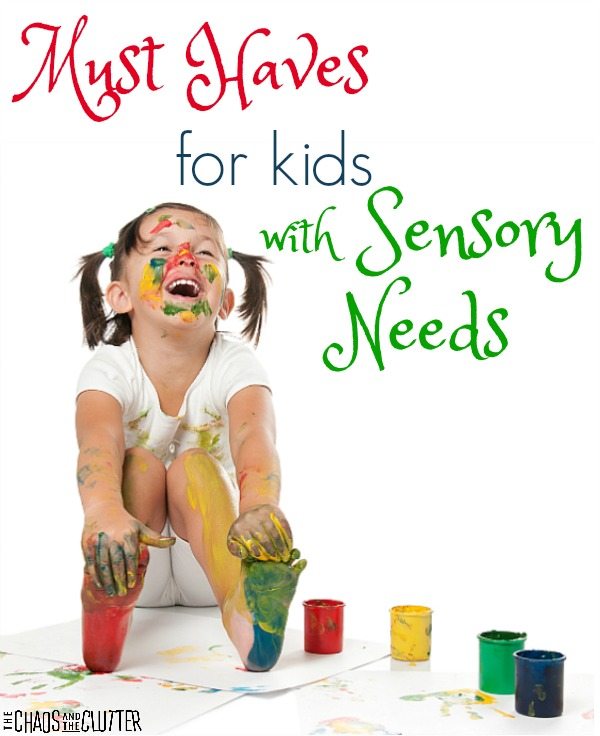
These are must-haves if you have kids with sensory processing disorder (SPD).Must-Have for Kids with Sensory Needs

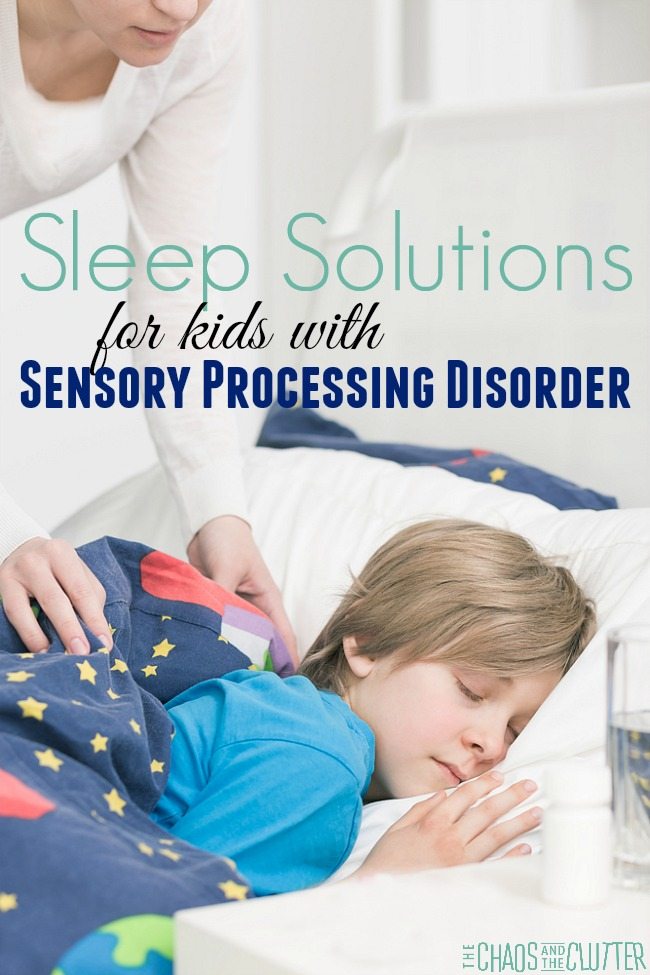
Sleep Solutions for Kids with Sensory Processing DisorderSleep Solutions for Kids with Sensory Processing Disorder

Filed Under: Homeschooling, Sensory

Melting Ice Experiment

By Sharla Kostelyk

This is a simple science experiment to do with items you likely already have in your kitchen. Our daughter wanted to do her Science Fair project on melting ice. She was curious about what would make ice melt faster. 

This melting ice science experiment is perfect for science fairs.I thought it would be an easy at home science experiment that wouldn’t take too much planning or prep on my part, but be cool for the kids. It was pretty fascinating actually!
Melting Ice Science Experiment:

Supplies needed:

  • small Dixie cups or mini Solo cups
  • water
  • scissors
  • 6 compartment muffin tin
  • salt
  • sugar

Directions:

  1. Before beginning the experiment, have students talk about what they expect the results to be. Ask them what variable will melt the ice fastest. If you want, you can have them write down their hypothesis. 
  2. Fill 6 small Dixie cups or mini Solo cups with water. Place the cups on a baking tray and place the tray in the freezer.
  3. Freeze overnight.
  4. Cut the frozen water out of the paper cups (adult help may be required for this step). If using Solo cups, you won’t need scissors as you should be able to just pop the ice out.
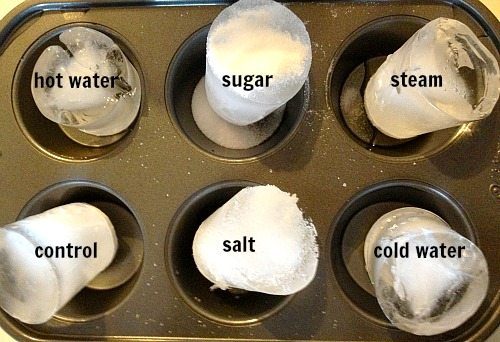
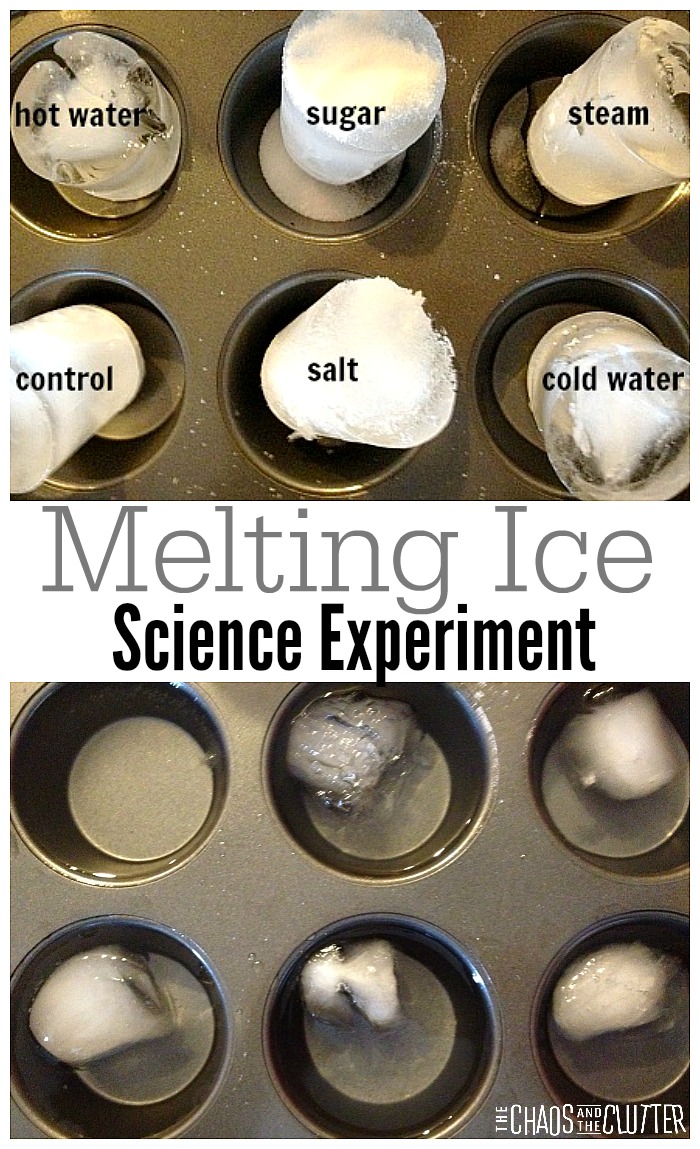
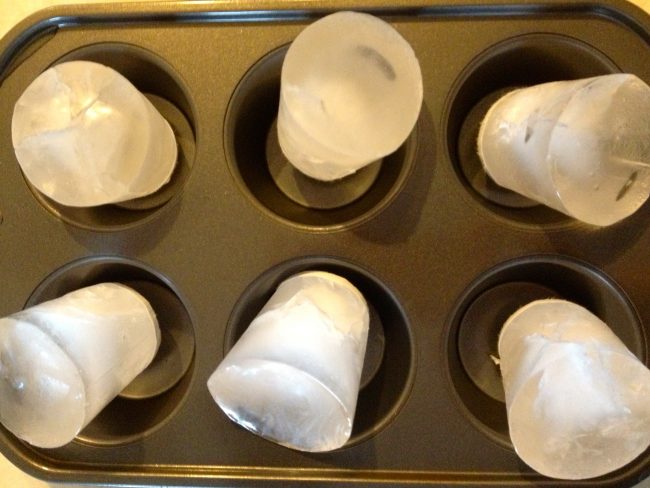
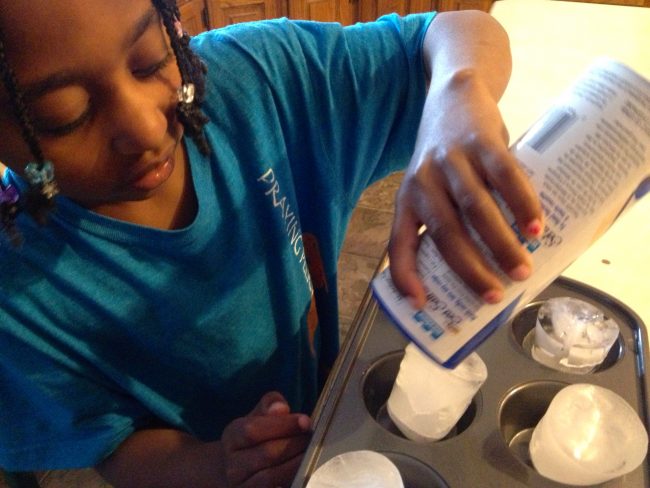
  5. Place one ice cup in each of the compartments in the muffin tin. Pour hot water on one, cold water on another, steam on another, salt on another, and sugar on another.* Leave one alone so that it can act as the control.

*Adult supervision is important, particularly with the steam and hot water.

Students can document the progress through taking pictures or journalling observations at one minute, five minutes, half an hour, and one hour after adding the variables.

Here is a picture before we added anything to the ice:

IMG_1265

IMG_1267This is immediately after adding the variables to the ice:
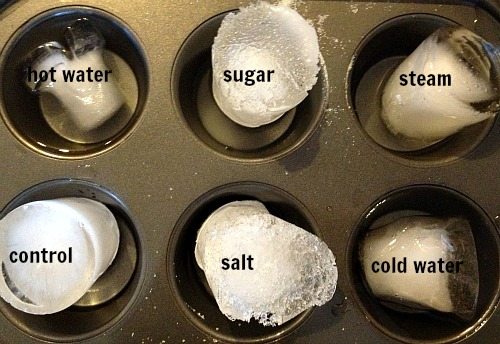
ice experiment 1Here is the ice after just five minutes:

ice experiment 2This is after half an hour:

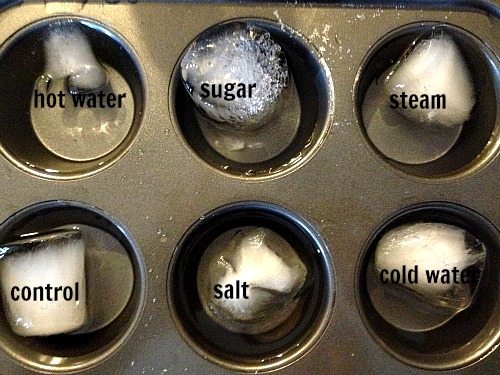
ice experiment 3Here is what our ice looked like after one hour:
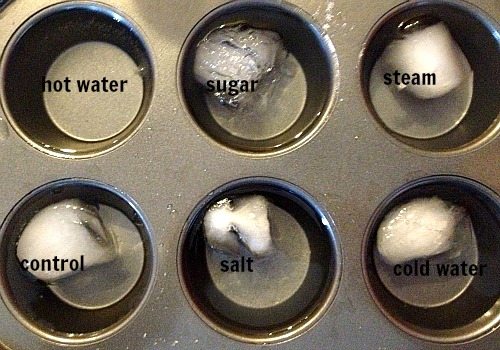
ice experiment 4As you can see, the control did melt slower than any of the others. Hot water melted the ice the fastest.
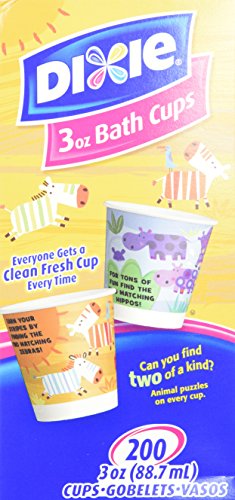
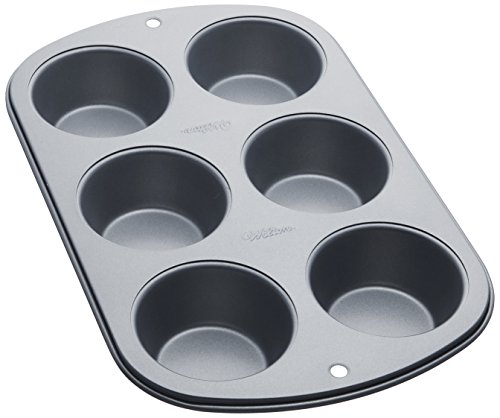
Dixie CupsDixie CupsWilton 6 Cup Regular Muffin PanWilton 6 Cup Regular Muffin PanMorton Morton SaltMorton Morton Salt

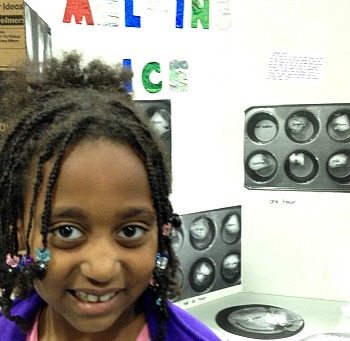
Our daughter dictated to me what she had observed during the experiment and we included that as well as a picture she drew of the process and the photographs on her display board for the Science Fair. She loved presenting and explaining her findings to the judges.

melting ice

Here are some other simple science experiments using common household items that you may enjoy doing at home or in the classroom:

This is a great hands-on science experiment to explain how fold mountains are formed.How Fold Mountains are Madejello colour mixing experiment10 Jello Science Experiments

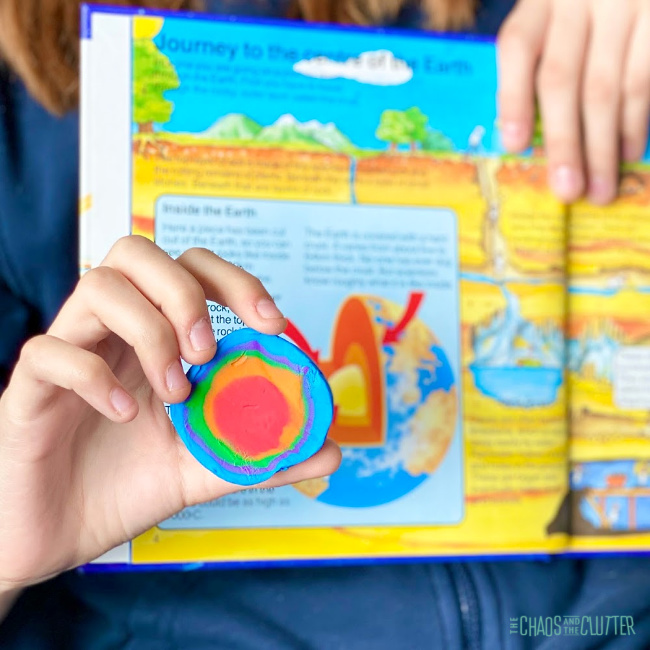
Layers of the Earth Hands-on Science Activity

Filed Under: Homeschooling, Simple Science

Arctic Sensory Bag

By Sharla Kostelyk

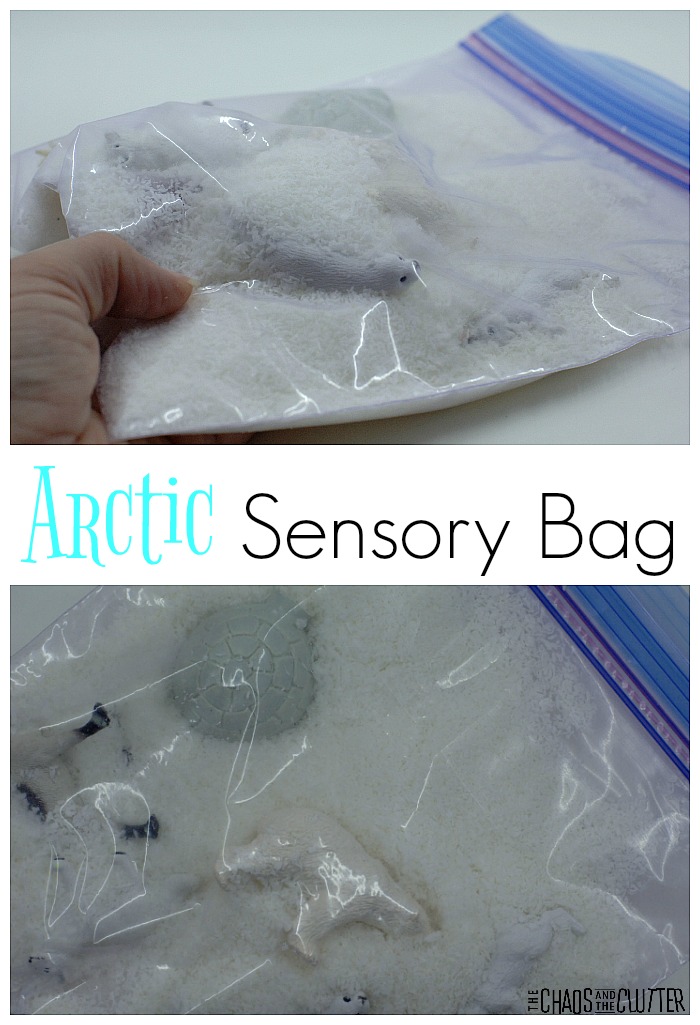
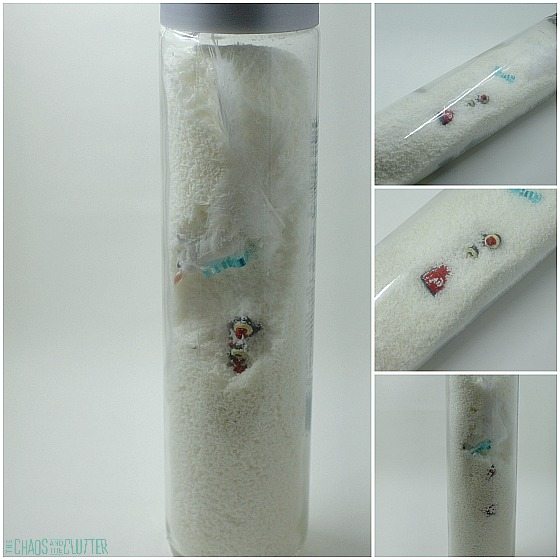
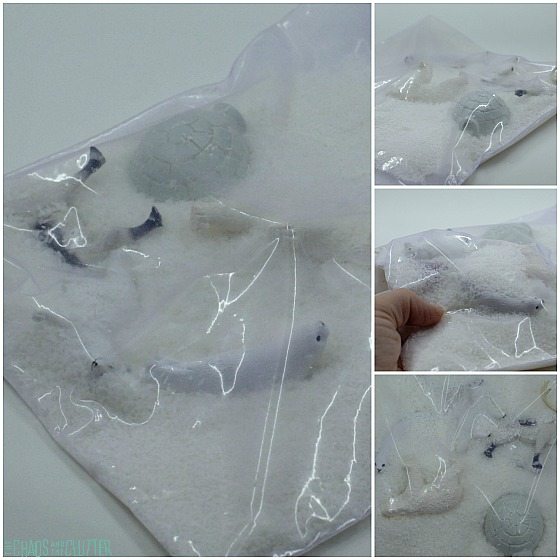
Last week when I made our arctic sensory bottle, there were some really adorable items from the arctic toob that didn’t fit in the mouth of the bottle. I wanted to be able to use them, so I decided to make an arctic sensory bag with them. I also used what was left from the expired coconut I had used as the “snow” in the sensory bottle.

This arctic sensory bag uses a rather unconventional items as the "snow". It is a cute activity to add to a winter or arctic theme unit.This sensory bag is particularly easy to make because it requires very few materials.
Materials needed:

  • medium resealable freezer bag
  • flaked coconut
  • arctic toob

Place the flaked coconut and items from the arctic toob into the resealable bag. Remove the excess air and seal.

If you are creating this sensory bag for younger children, you will want to seal the bag with duct tape or heavy, clear packing tape after closing it so that they aren’t able to open it. You may also want to fold the tape over the other sides of the bag as well to reinforce it. I choose to use good quality freezer bags for my sensory bags rather than sandwich bags because they are more durable.
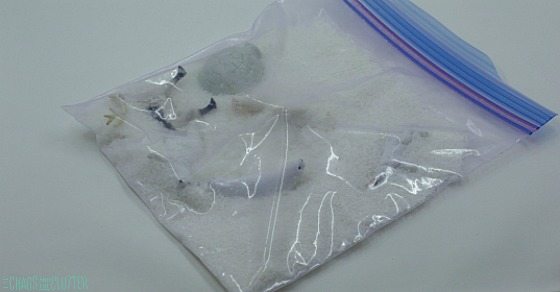
This arctic sensory bag and the arctic sensory bottle would work well for a theme unit on the North.

Arctic Sensory Bottle

Join our free 5 part email series Sensory Solutions and Activities and get our Sensory System Behaviours Easy Reference Cards.

Filed Under: Sensory Tagged With: sensory bags, sensory play

Ocean Sensory and Learning Activities

By Sharla Kostelyk

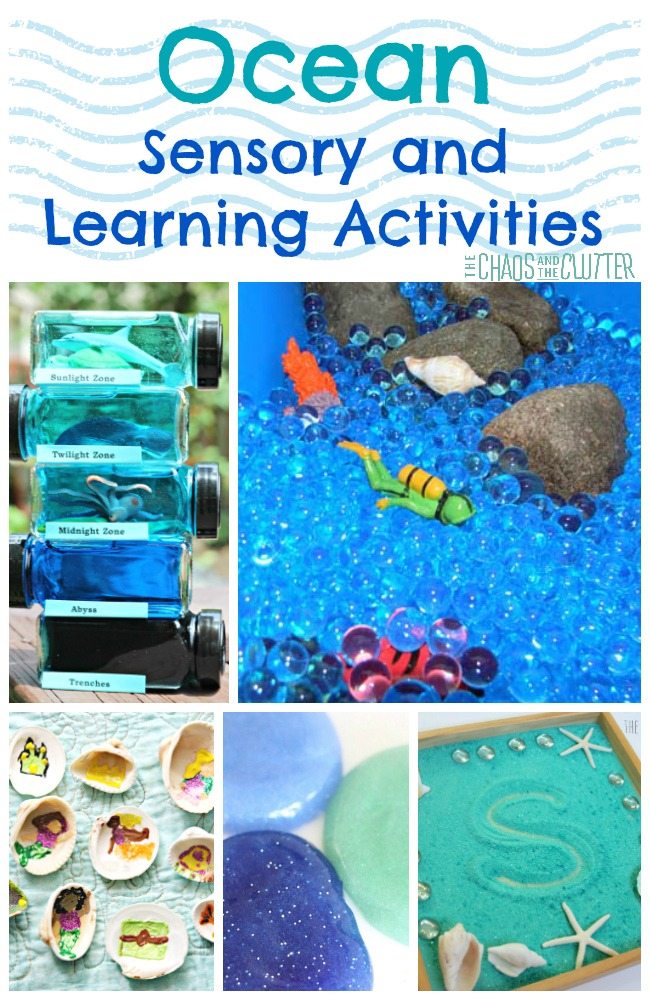
I decided to feature Ocean sensory and learning activities this week. With the beautiful weather, it’s easy to be dreaming about an oceanside vacation!

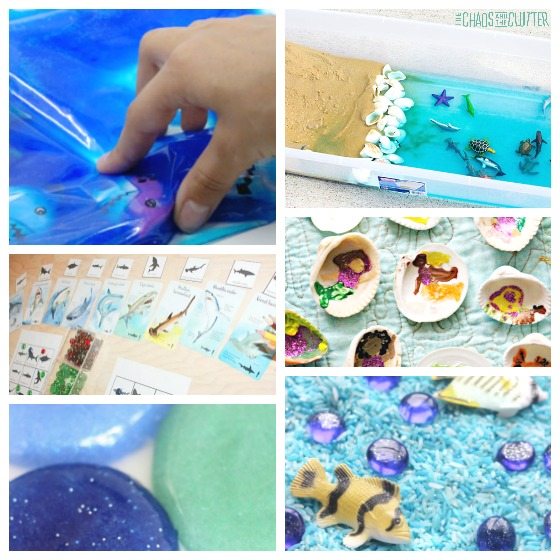
I’ve divided the activities into sensory and learning, but many of them fit into both categories. The ocean is so much fun to learn about and to explore. You will likely enjoy these activities as much as your kids will.

I decided to feature Ocean sensory and learning activities this week. With the beautiful weather, it's easy to be dreaming about an oceanside vacation!

Ocean Sensory Activities

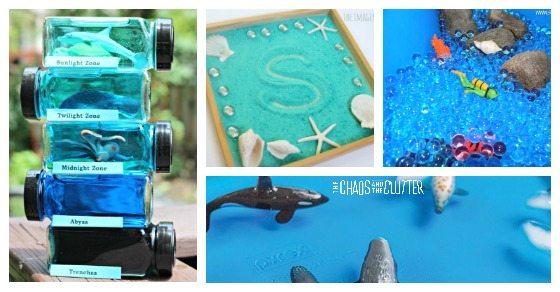
Shark Sensory Bag from here on The Chaos and The Clutter (pictured)

Ocean Floor Discovery Bin and Sensory Play from My Nearest and Dearest

Jello Ocean Sensory Play from Teaching Mama

Ocean Sensory Bottle from here on The Chaos and The Clutter

Getting Smart about Sharks (Free Printables) from The Natural Homeschool

Sand and Water Ocean Sensory Bin from Mom Inspired Life (pictured)

Super Simple Ocean Sensory Bin from Fun-a-Day

Ocean Sensory Tray with Frozen Rice from The Imagination Tree (pictured)

Gelatin Ocean Sensory Tray from No Time for Flash Cards

Ocean Slime from Buggy and Buddy

Frozen Treasure Find from here on The Chaos and The Clutter

I decided to feature Ocean sensory and learning activities this week. With the beautiful weather, it's easy to be dreaming about an oceanside vacation!

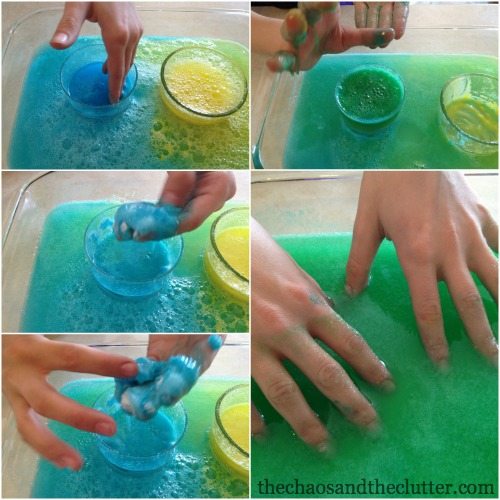
Soapy Sea Foam Sensory Play from Two Daloo

Ocean Sensory Table from Stir the Wonder (pictured)

Ocean Sensory Writing Tray from The Imagination Tree (pictured)

Rainbow Fish Sensory Bin from Mom Inspired Life

Mini Aquarium in a Bottle from A Little Pinch of Perfect

Under the Sea Ocean Slime from Little Bins for Little Hands (pictured)

Ocean Playdough from Mom Inspired Life

Shark Coloring Pages for Kids {Printables} from The Natural Homeschool (pictured)

I decided to feature Ocean sensory and learning activities this week. With the beautiful weather, it's easy to be dreaming about an oceanside vacation!

Ocean Learning Activities

Ocean Currents Science Experiment from Life Over C’s (pictured)

Free Shark Games for Kids {Printables} from The Natural Homeschool

Exploring Buoyancy with Sharks from Little Bins for Little Hands

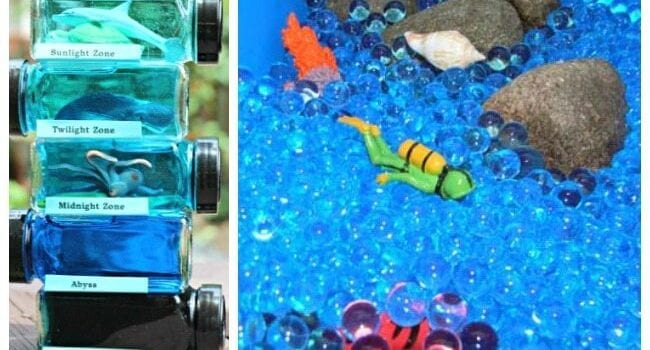
Exploring Layers of the Ocean from KC Edventures (pictured)

Make a Wave Sensory Bottle from Hands on as we Grow

Alphabet Ocean Sensory Bin from Mom Inspired Life

Hands-On Sea Life Lessons from The Natural Homeschool

Storytelling Seashells from The Educator’s Spin on It (pictured)

Sea Turtle Life Cycle Sensory Bag from The Preschool Toolbox

Sea Turtle Life Cycle Ordering from Rainy Day Mum

Shark Beginning Sounds Song from Growing Book by Book

“Land, Water & Air” Activities & Printables from The Natural Homeschool

Sensory Bins ebook

Filed Under: Homeschooling

  • « Go to Previous Page
  • Page 1
  • Interim pages omitted …
  • Page 65
  • Page 66
  • Page 67
  • Page 68
  • Page 69
  • Interim pages omitted …
  • Page 128
  • Go to Next Page »

Primary Sidebar

Categories

We are a participant in the Amazon Services LLC Associates Program, an affiliate advertising program designed to provide a means for us to earn fees by linking to Amazon.com and affiliated sites.

Copyright © 2026 • The Chaos and the Clutter • Site Design by Jeni @ The Blog Maven

Return to top of page

Copyright © 2026 · Chaos and the Clutter 2.0 on Genesis Framework · WordPress · Log in