• Skip to primary navigation
  • Skip to main content
  • Skip to primary sidebar
  • Home
  • About
  • Contact
  • Privacy + Terms
  • Affiliates

The Chaos and the Clutter

  • Facebook
  • Twitter
  • Pinterest
  • Google Plus
  • RSS
  • Email
  • School at Home
  • Sensory
    • Sensory Processing Disorder
    • Awesome Sensory Play Activities
      • Sensory Bins
      • Sensory Bottles
      • Sensory Bags
  • Family Games
    • Minute to Win It Games
  • Special Needs Parenting
    • Childhood Anxiety
    • Reactive Attachment Disorder
    • Sensory Processing Disorder
  • Store
  • Course Login

Sharla Kostelyk

Advice for Parents of Children with Special Needs

By Sharla Kostelyk

I have to admit that I cringed a little when I typed out that title. Advice for Parents of Children with Special Needs. When it comes to parenting, I try to avoid the “advice” word because each child is so different and I’m certainly no expert. So read this knowing that I am stepping tenderly here and this advice is coming with the best of intentions after years of walking this road for many years myself and still stumbling often.

Real Advice for Parents of Children with Special NeedsParenting children who have high needs can be exhausting and overwhelming. It will teach you so much about who you are, both the strength and compassion that you never knew you had and the limitations or weaknesses you hadn’t realized were there. This journey has been such a humbling one for me. I continue to learn daily from my children who are exceptional teachers. I hope that some of what I’ve learned so far can help others.

Expectations. 

This one is tricky because you need to keep your expectations realistic while still not putting limits on your child. My husband and I have always say that our job is to provide the opportunity for each of our individual children to reach their fullest possible potential. Their fullest possible potential may be to become a successful brain surgeon or it may be that they are able to successfully live semi-independantly.

It is important that we not limit our children by their disabilities or challenges, but that we give them the freedom to achieve whatever successes and accomplishments they can in life. It is equally important that we have realistic expectations. If we expect that our children will attain goals that are clearly not attainable, we will set ourselves up for disappointment and set them up for failure.

It is imperative that we keep this in mind when it comes to our parenting as well. We cannot expect too much of ourselves. We are humans, though often being the parent of a child with special needs calls us to be superhuman.

Take breaks.

Advocating for your child, taking them to appointments, caring for them, meeting their needs, reading up on all the latest articles pertaining to their condition, trying new medications or treatments, meeting with others involved in their care, plus the duties that “normal” parenting entails is all too much to sustain over an extended period of time for any person. You need to take breaks.

Accessing child care may not be something that is possible in your situation right now, but there are often programs available in your State or Province that may be able to offer cost relief on respite care or babysitting. In some areas, even the cost of cleaning your home may be covered. When you are already overwhelmed, you may not have the energy or time to look into these options. If this is the case, I suggest delegating a friend, family member, or pastor to look into this for you.

In the meantime, take breaks in your home when you can. Make yourself a bubble bath, go for an evening walk, or read a book unrelated to your child’s condition. You need to take care of yourself in order to better take care of your child. Self-care is critical to your success. This is a marathon, not a sprint and you need to be able to continue strong.

Humour.

The old saying “laughter is the best medicine” exists for a reason. You can feel the weight being temporarily lifted as the laughter releases the tension pent up in your body.

Rent a comedy, read a funny book, but most of all, look for the humour in the everyday. When you child smears an entire jar of Zincofax all over their body, you can choose to cry over the extra work it will take to clean it up, or you can choose to get out your camera and snap a picture of what you know you will laugh over someday. When your autistic son is repeating the same phrase for the four millionth time that week, you can choose frustration or anger, or humour. When you are taking your daughter to the hospital for the fifth time in four weeks, you can feel hopeless, or you can joke about how they should start giving you bonus prizes at that parking lot. It’s all in the attitude and the perspective!

Relationships.

If you are parenting a special needs child and are married, make the time to work on your relationship. This may be easier said than done, but the alternatives are not ones that make this an option not to do. Divorce rates are higher among parents of special needs children. This is something that you need to be aware of and therefore, guard against. Even when you do not agree with each other, know that you are both coming from a place of loving your child and that ultimately, puts you on the same side. Communicate, communicate, communicate. Get outside help if you need it.

We have found that instituting a non-negotiable weekly date night has completely revolutionized our marriage.

Support network.

Build yourself a support network. Of all the advice I’m sharing today, this is perhaps the most important. If you are able to join a support group of other parents who are raising kids with similar challenges to yours, you will no longer feel isolated. Build a strong support system of family and friends and build a sense of community by involving yourself (to the extent that your circumstances will allow) in a church or community centre.

When you have people who you can talk openly with, people who will pray for you, people who care about you, people who will bring meals or offer other practical help, then you will not be carrying this burden alone.


Celebrate.

Celebrate the small victories. Keep a log of where you have been so that when there are improvements with your child, you can look back and see how far they have come. This log can be accomplished through notes, journalling, scrapbooking, or blogging.

As the saying goes “Rome was not built in a day”. Raising a child with special needs is no different. It is the baby steps, the tiny accomplishments that all lead towards the bigger goals. Celebrate it all.

Cherish the gifts that your child possesses instead of focusing on their challenges. Often, special needs come with their own precious treasures and it is those that we need to be thankful for.

Join me for a free 5 part email series, Little Hearts, Big Worries offering resources and hope for parents.
Recognizing the Signs of Reactive Attachment DisorderRecognizing the Signs of Reactive Attachment Disorder

Resources to Teach Kids About Emotions and How to Manage Them

Filed Under: Special Needs Parenting

How Adoption Impacts a Marriage

shadowed figured of one person using their hand to help another up

By Sharla Kostelyk

I love adoption and do not write this article to deter anyone from adopting, but to strengthen the potential success for families who do choose this road. One of the things that is spoken of very seldom within the adoption community is the effect that it will have on your marriage relationship.shadowed figured of one person using their hand to help another upThough the actual statistics seem elusive at best, divorce rates among adoptive parents are reported to be higher than that of the general population. Parenting children with special needs and infertility are also two factors that increase divorce rates and those are present in many adoptive homes. While that is not good news for adoptive parents, there are things that can be done to help protect your marriage.

Some of the things that can place a strain on even the strongest of marriages for adoptive families include:

Public Scrutiny – When people birth their children, for the most part, strangers don’t come up to them at the grocery store and question their parenting choices and decisions. Adoptive parents are scrutinized for everything from what type of adoption they choose to pursue to their choice to bottle or breastfeed, to their discipline methods, to their stand on Immunization, to their changing or keeping their child’s first given name, to the way in which they choose to incorporate their child’s culture, to their decision to be or not be a multi-racial family, to their methods of attachment, to the foods they feed their children. People stare at us in public and come up and ask us questions almost every time we go out. Add to that the pressure to be the best parent possible because a birth mother is entrusting you to raise the most precious thing imaginable or an entire country has allowed you to take one of their most important natural resources and that’s a pretty weighty thing!

And then of course there is that most intrusive scrutiny of all – the home study. This is where a complete stranger comes into your home and because they have the title of Social Worker, they are allowed to ask you all kinds of intimate details and give their opinions of your parenting (even if they are 19 years old and have no children or nieces or nephews, but I digress!) and they ask about your sex life and about your childhood and about the whys of all the decisions you’ve made. I am not saying that checks and balances should not be put in place. I am merely pointing out that all this public scrutiny and pressure can put a strain on a relationship over time.

Sleep Deprivation – This is not unique to adoptive families but can be exaggerated by things such as time change/jet lag in the case of international adoption, drug or alcohol exposure of a baby prenatally, and of course the most obvious – that adoptive families tend to have larger families, making their years of sleep deprivation longer. Lack of sleep can change your perspective on many things and if you’re too tired at the end of the day, you don’t take the time to talk or perhaps to do other things that may be critical for a healthy marriage.

Special Needs – Adoption increases the chances that you will have a child with special needs and this alone ups your chances of divorce. Of our five adopted children, five have special needs. Among the most obvious special needs of adopted children are those related to prenatal exposures such as FASD (fetal alcohol spectrum disorder) and Fetal Drug Effect, sensory processing disorder, ADHD, Reactive Attachment Disorder, and Developmental Trauma Disorder or PTSD.

Parenting a special needs child creates less time together as you run around to specialists and appointments and make decisions that most parents don’t even have to think about and you and your spouse may not agree on the answers. Then there is dealing with the everyday, be it medical crisises or behavior or safety issues. It can be exhausting. You can also read these tips for parenting a special needs child.

Infertility – Many come to adoption after years of infertility. The stress of that and the strain that can put on a relationship, on a sex life, on finances, is significant. Some infertility treatments cause mood swings for the wife which can be pretty unpleasant in a marriage too. So now these couples who have already suffered so much hurt and loss and grief embark on another road of ups and downs where the outcome is not always clear and the scars of the years of infertility are still there. The hurts are often still raw and for some, that pain never goes away. For others, they come to the realization that adoption wasn’t meant for them to be Plan B but was God’s plan A for their family all along.

Financial Strain – The number one cause of divorce in Canada and the United States is conflict over finances. Adoption affects this in the following ways…infertility treatments are very expensive and some couples have already wiped out all their savings on that before they even get to adoption…domestic open adoption, private adoption, and International adoption are all very expensive…adoptive families tend to be larger which is expensive in itself. So adoption costs more (unless you adopt kids in the care of the Canadian or U.S. government in which case that is free but their risk of Special Needs is much higher and caring for Special Needs kids is more expensive, so the rule still applies) than birthing your children which could lead to additional financial stress.

shadowed figured of one person using their hand to help another upDisparity – In almost all cases of adoption, one spouse wants it more than the other. Sometimes, they both really want it, but often one is the driving force while the other is going along with it to make their spouse happy. That can obviously cause tremendous strain later on if there are problems adjusting. This type of disparity gives room for a lot of resentment to build.

Conflict – In any marriage, there are so many potential areas for conflict but the ones added by adoption may include things like disagreeing on birth family contact, discipline with really challenging behaviours, how to work on attachment, how to deal with questions in public, what to tell your children regarding their history, and adopting future children from the same birth mother.

There is a lot of talk in the adoption world about preparing yourself for attachment issues and toddler tantrums and parasites but preparing your marriage is rarely, if ever, mentioned.

Those that are still waiting could add some books to their reading list other than the typical parenting and adoption books. I would recommend starting with “Love and Respect” or “The Five Love Languages“. For less financial stress, I would HIGHLY recommend you getting “The Total Money Makeover” by Dave Ramsey. Not only will it help alleviate some of the financial stress, but it will get you communicating as a couple about it.

The first year home with your child may be difficult on your marriage.  As a couple, you will have far less time for each other and your relationship will undergo some major changes. As a family, there is a lot of adjustments to be made, so if at all possible, just get through that first year any way you can and don’t make any life-changing decisions until after that first year.

I am by no means an expert on marriage. There were years where my husband and I barely managed to stay together, but we held on and have now been married for 21 years. When we were at our lowest point, marriage counselling helped, as did changing our communication styles, but what we found to be the most effective prescription for our marriage was instituting a weekly date night. I have suggested it to other couples who have seen it turn their marriages around as well. We have some set rules for our date nights to increase the impact they have on our marriage. We have a set night each week that is our date night regardless of circumstances. If we can’t find a babysitter, we have an at-home date night. If we don’t have much money, we do something that’s free. Putting in that time commitment and being able to be a couple once a week instead of just parents was the magic for us.

Protect your marriage by:

– working on your communication,

– putting in place weekly or at least monthly date nights,

– budget, attend marriage counselling or marriage retreats or seminars,

– take care of your own self-care and encourage your spouse to do the same.

Join me for a free 5 part email series, Little Hearts, Big Worries offering resources and hope for parents.

Date Night Ideas

Filed Under: Adoption

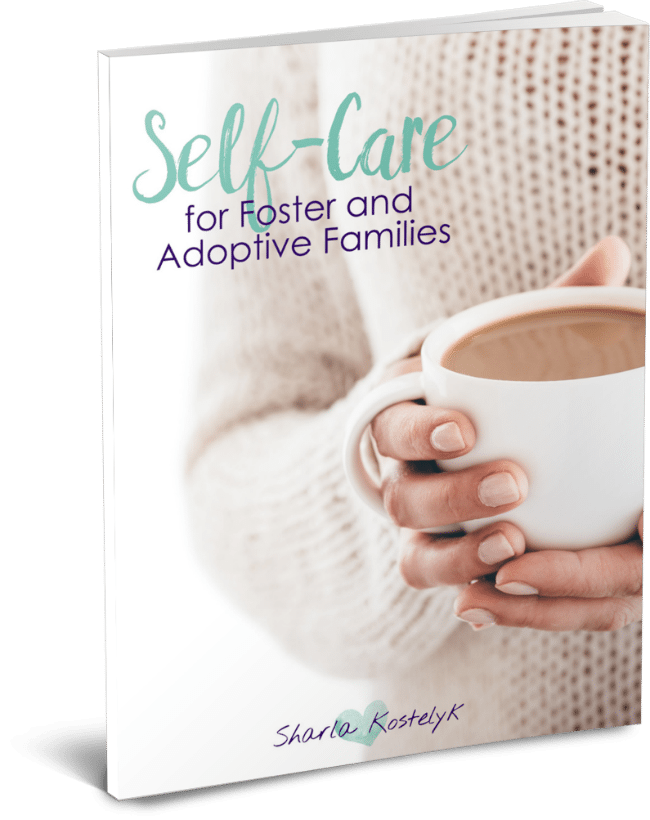
Self-Care for Foster and Adoptive Families

By Sharla Kostelyk

We have all heard the parenting analogy of having to put on our own oxygen mask before putting the masks on our children. The thinking behind this being of course that we must put our mask on first to make sure we are conscious to put the masks on them. As caregivers, we must take care of ourselves so that we are able to give full and proper care to our children. However, actually putting this into practice in our everyday lives is difficult for most parents and it can seem nearly impossible for foster and adoptive parents. 

Self-care for foster and adoptive families is critical. It can make the difference between success and burnout, thriving or breakdown.Self-care is even more important for foster and adoptive parents than it is for other parents because foster and adopted children require more from their caregivers and the stakes are much higher.

Foster parents are in very high demand. There are not enough foster homes in this country to meet the growing number of children entering into foster care. There are even fewer foster parents who are qualified to meet the needs of the growing number of children entering the child welfare system requiring specialized care. This results in greater demands being placed on existing foster families, which often results in foster parent burnout. With such overwhelming demands being put onto foster parents, how do they make time for self-care?

Adoption disruption rates are also on the rise. Adoption disruption occurs when an adoptive family is unable to continue to care for their adopted child and that child is placed into foster care or another adoptive home. Though a failed adoption is obviously a worst case scenario for a child who has already lost his or her birth family, it is also devastating for the adoptive family. It is not something that any family resorts to lightly and the judgment and guilt the family experiences during and after the failed adoption is both heartbreaking and debilitating. 

Not all adoption disruption and foster care burnout can be prevented, but by laying and maintaining a solid foundation of self-care and making it non-negotiable in your household, you can help protect yourself and your family from some of the pitfalls that may otherwise await you. Consider self-care the best shield of protection your family can have.

I am not an expert in self-care. After our two sons were born, we were foster parents for eight years. We went on to adopt three of our foster children and then adopted two children internationally. In the course of what would be eleven years between when we began the journey to expand our family and when we brought our last two children home, I made a lot of mistakes when it came to self-care. Later, when I began my work as an adoption advocate, I heard first-hand countless stories from others who were suffering because of what boiled down to a lack of self-care. 

It is my hope that others who are on the journey to adoption, have already adopted, or are fostering can implement solid self-care strategies to help protect their families. I still am better at talking the talk than walking the walk, so writing this has also been a good reminder to myself. Self-care is something that is a conscious decision and something that doesn’t come naturally for me, so I hope that you will join me on the journey and we can find our way together.

Self-care is both simpler and more complicated than people realize. Particularly when it comes to the dynamics involved in foster care and adoption, there is a lot to consider. I have written a book on the topic of self-care for foster and adoptive families that addresses such things as:

  • things you can do regarding your home, relationships, finances, and education in order to prepare
  • building a support network
  • 12 steps to survive the triage stage
  • Post Adoption Depression Syndrome (PADS)
  • loss
  • actionable, sustainable ways to practise effective self-care

You can read more about the book as well as hear from those who have read it by clicking here or clicking the image below.

For today, you can begin by ensuring that you are taking care of your body and that your basic needs are being met so that you can better care for your family.

Join me for a free 5 part email series, Little Hearts, Big Worries offering resources and hope for parents.

This is part of a series written by moms of special needs kiddos on the topic of self-care. You will find wonderful self-care suggestions shared by these moms.

7 Practical Self Care Activities for Stressed Out Special Needs Parents | My Home Truths

Self-Care for Foster and Adoptive Families | The Chaos and The Clutter

What Happens When You Ignore Self Care | This Outnumbered Mama

50 Self-Care Activities You Can Do Together With Kids | And Next Comes L

Why You Should Keep a Journal as a Part of Your Self Care Routine | Kori at Home

Filed Under: Adoption, Special Needs Parenting

One Year of Awesome Sensory Bottles

By Sharla Kostelyk

Sensory bottles, sometimes called discovery bottles can be used for a variety of purposes. My kids can’t seem to be able to get enough of them, so I make a new one every few weeks. I find it easier to create them when I choose a theme.

These sensory bottles are perfect for each month of the year. They are also a good starting point for giving you ideas to create your own themed sensory bottles. You can click on each link or picture below to find full instructions as well as find out what materials you’ll need.

I use Voss water bottles for mine because I like the look of them, but you can use any water bottle. Vary the look by using different shapes and sizes of water bottles.

These sensory bottle ideas will take you through a year of themes and ideas, making it easier for you to create your own for the home or classroom.One Year of Sensory Bottles:

January – This New Year’s Celebration bottle is perfect to kick off the year with!

February – Valentine’s Day is made for kids to enjoy as well with this sensory bottle.

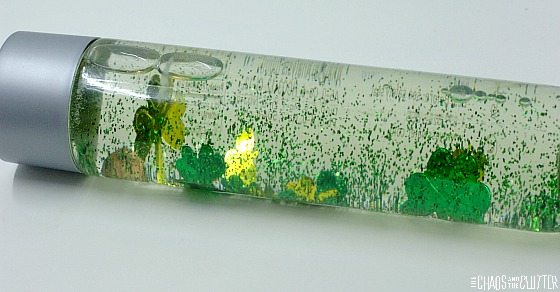
Valentine's Day Sensory BottleMarch – St. Patrick’s Day of course! This calm down bottle is simple to create for the season.

April – This Spring sensory bottle is one of our favourites of all time. I especially like the slow, calm-down effect it has.

May – Your kids will enjoy this colourful Rainbow Rainfall Sensory Bottle.

June – My girls adored our princess themed bottle.

July – Your kids can take this sky bottle outside with them and compare it to the actual sky.

August – Find sea creatures in this Ocean sensory bottle.

September – In honour of back to school, this sensory bottle has a Space theme. It’s weighted, offering great sensory feedback.

Space Sensory BottleOctober – The beautiful colours outdoors are mimicked in this Fall sensory bottle.

November – Our melted snowman sensory bottle was so much fun to make!

December – A Christmas I-Spy discovery bottle is just in time for the holidays.

Christmas I Spy Discovery Bottle

If you suspect that your child or student has sensory processing issues or differences, read Sensory Processing Explained: A Handbook for Parents and Educators. It will answer your questions and give you practical suggestions as well as sensory activity ideas for the home or classroom. 

Join me for a free 5 part email series Sensory Solutions and Activities (just pop your email into the box below) and get a printable list of 175 Great Sensory Ideas.

If you’re looking for more ideas, my friend Angela has compiled a collection of 12 months of their sensory bottles including an adorable pencil-shaped one.

Filed Under: Sensory Tagged With: sensory bottles, sensory play

Our Favourite Books for Kids About Special Needs

By Sharla Kostelyk

Whether or not you have a child with special needs, it is important for your kids to understand special needs and develop compassion for others. Five of our kids have special needs, so I am always on the lookout for good children’s books on the topic.

Whether or not you have a child with special needs, it is important for your kids to understand special needs and develop compassion for others. I am always on the lookout for good children's books on the topic.

These are some of our family’s favourites in no particular order:

1. My Brother Charlie written by Holly Robinson Peete and her 12 year old daughter Ryan is based on their real life experience as Ryan’s twin brother has autism. While it certainly speaks about the differences that a child with autism may portray, it also speaks about their strengths.

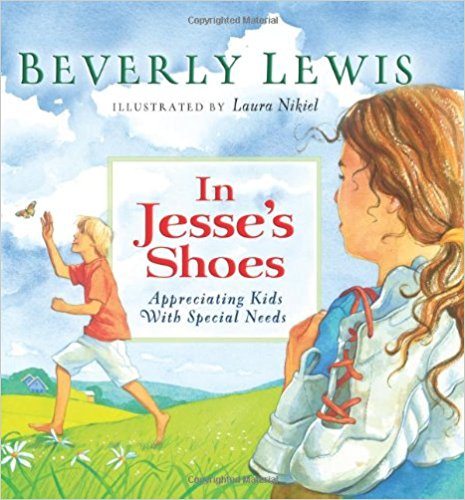
2. In Jesse’s Shoes…Appreciating Kids with Special Needs by Beverly Lewis is also about a sister learning to accept and appreciate her brother’s special needs.
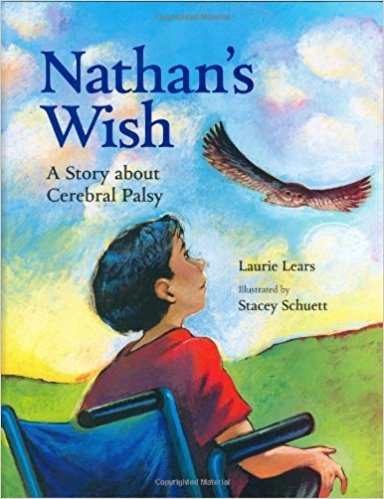
3. Nathan’s Wish: A Story About Cerebral Palsy by Laurie Lears is a great book for opening conversation with kids about very obvious differences in others such as them being in a wheelchair.
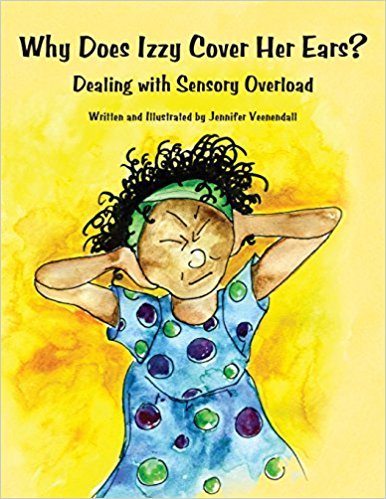
4. Why Does Izzy Cover Her Ears? Dealing with Sensory Overload by Jennifer Veenendall is an especially good book for explaining sensory processing disorder to kids.
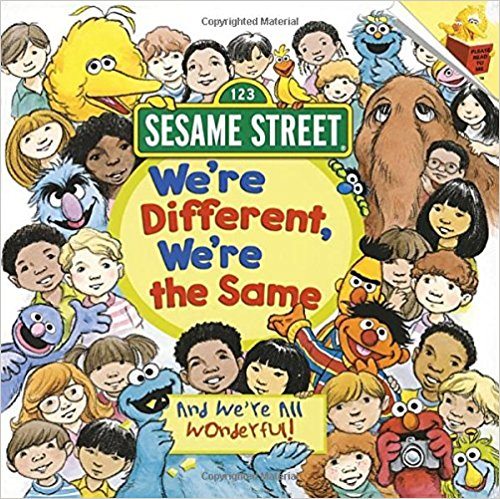
5. We’re Different, We’re the Same (a Sesame Street book) by Bobbi Jane Kates is a great book. We use it for talking about differences in terms of race and looks and in terms of special needs.
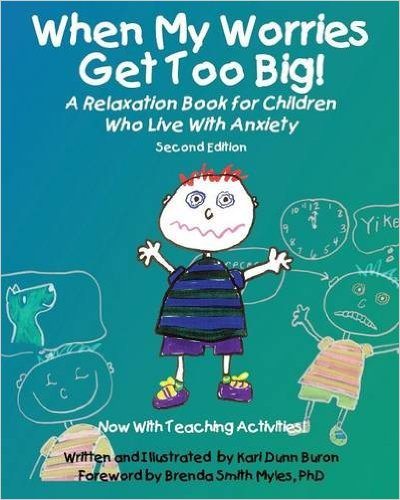
6. When My Worries Get Too Big! A Relaxation Book for Children Who Live with Anxiety by Kari Dunn Buron is one of the few books that deal with childhood anxiety, something talked about very little but it is all too real for those families living with it.
7. Forgetful Frankie, the World’s Greatest Rock Skipper, Fetal Alcohol Spectrum Disorder does a really good job of explaining in easy to understand language the positives and some of the challenges of FASD (fetal alcohol spectrum disorder).
8. Ellie Bean the Drama Queen: A Children’s Book About Sensory Processing Disorder by Jennie Harding is another cute book about sensory processing disorder. There are actually quite a few good books out there on this particular topic so it was hard to just pick two for this list.
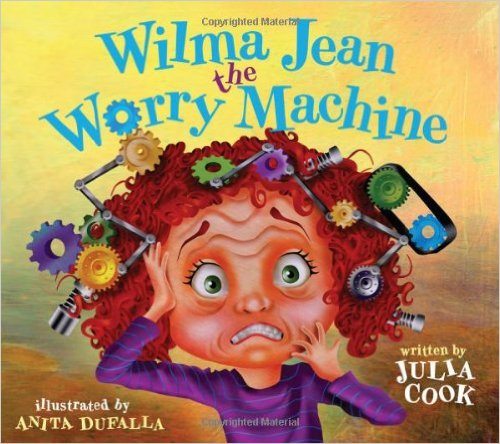
9. Wilma Jean the Worry Machine by Julia Cook is a book to explain anxiety disorders in children to children. Again, this is not a subject that is talked about very much and yet more and more children are suffering from anxiety related issues.
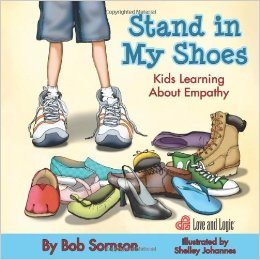
10. Stand in My Shoes: Kids Learning About Empathy by Bob Sornson, PhD is more of a general book but can be used to open dialogue with kids who may have questions about special needs or who may be struggling with how to relate to kids they see as different.

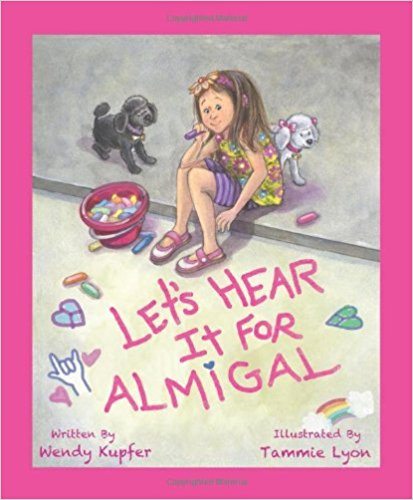
11. Let’s Hear it for Almigal by Wendy Kupfer tells the story of a girl who loses her hearing and gets cochlear implants. As the mom of a daughter who has gone deaf and gets many questions from other kids about her hearing equipment, I would love for more kids to be educated about this.

Join me for a free 5 part email series, Little Hearts, Big Worries offering resources and hope for parents.

Filed Under: Special Needs Parenting

Navigating the Store with a Child with Sensory or Anxiety Issues

By Sharla Kostelyk

When you’re the parent of a child with sensory or anxiety issues, a simple trip to the grocery store can be daunting. With so many of my kids having special needs, I’ve certainly had to endure my share of public meltdowns. Now I go into those situations armed with the right tools to help my kiddos cope. Grocery shopping is manageable again.

Grocery Shopping Survival Tips for children with sensory or anxiety issuesThe most important thing I’ve learned is to better understand my child. If I believe that my child is just trying to be difficult, I am going to go into the situation with frustration as my foundation. If I believe that the situation is one that is extremely difficult for my child, I go in with compassion as my foundation. 

As I’m sure you can imagine, me coming from a place of compassion is going to go over very differently than me coming from a place of frustration.

This video simulation shows what a trip to the store would be like for someone experiencing sensory overload.

For children with Sensory Processing Disorder, a typical grocery store is a veritable nightmare of sounds, lights, colours, temperature changes, and smells. These can lead to challenging behaviours.

For children with anxiety, any public place can trigger fears. There is so much that is unknown even if it’s a location they have visited many times because the people who will be there are an unknown variable. Anything could potentially happen.

If there is nothing else you take with you from reading this, please take this with you. Understanding why your child is reacting to the triggers they face when they go to the store (or another public place) is crucial to being compassionate in your reactions to their behaviours and being sensitive to their feelings.

Other tips for navigating the store with a child with sensory or anxiety issues:

  • Optimize your chances of success by ensuring your child is well rested and well fed.
  • Have your child use the bathroom before you leave home. If you forget this step, you’ll want to read these tips for surviving a public washroom with a child with sensory issues.
  • Give as much warning as possible. Tell them also how many stops or stores will occur on the outing.
  • Let them know what to expect. When going to a new store, I have even shown my child pictures (either ones I have taken or ones I find online) to help them prepare. Give them as much information as you can. My kids like to see my grocery list ahead of time so they know about how long it will take us.
  • Discuss potential or known triggers and have a plan for coping with them. Encourage your child to talk to you if they begin to feel overwhelmed. Sometimes meltdowns occur before they can pinpoint the source of the trigger but other times, communication can avert a potential meltdown.
  • If it’s a new store, take a short trip there first to buy one item. Build your child’s trust by really just buying that one item even if you remember other things you need while there. I know this is not easy to do but building that trust with your child is so important.
  • Use sensory solutions such as noise cancelling headphones, fidgets, sensory balls, and tight fitting clothing or weighted vests to help your child cope.
  • Give your child something to hold in their pocket such as a sensory ball or fidget. This will serve two purposes. It will help calm them and it will keep their hands in their pockets instead of touching everything in sight.
  • Acknowledge and praise any success. Celebrate the baby steps and don’t make a big issue out of setbacks. There will be setbacks, but it is possible to go out in public with a child with sensory or anxiety issues without it being a disaster.
  • And if there is a meltdown, be sure to be compassionate towards your child instead of being distracted by the potential judgment of others.

Join me for a free 5 part email series, Little Hearts, Big Worries offering resources and hope for parents.

This post is part of a Parenting a Child with Special Needs series with special needs moms who share their thoughts on “managing public situations.” These articles may help you navigate your way through your next time out in public.

How I’ve Learned to Manage Public Situations as a Special Needs Parent | My Home Truths

10 Tips for Running Errands with a Special Needs Child | Every Star is Different

7 Tips to Surviving Judgment as the Parent of a Special Needs Child | The Chaos and The Clutter

Navigating the Store with a Child with Sensory or Anxiety Issues | The Chaos and The Clutter

Dear Mom at the Park | This Outnumbered Mama

Dear Mom Who Is Afraid to Leave Her House | Kori at Home

How to Help a Mom When Her Child Suffers a Public Meltdown | Finding the Golden Gleam

public bathroom tips for children with sensory issuesSurviving Public Bathrooms with a Child who has Sensory Needs

Filed Under: Sensory, Special Needs Parenting

  • « Go to Previous Page
  • Page 1
  • Interim pages omitted …
  • Page 63
  • Page 64
  • Page 65
  • Page 66
  • Page 67
  • Interim pages omitted …
  • Page 128
  • Go to Next Page »

Primary Sidebar

Categories

We are a participant in the Amazon Services LLC Associates Program, an affiliate advertising program designed to provide a means for us to earn fees by linking to Amazon.com and affiliated sites.

Copyright © 2026 • The Chaos and the Clutter • Site Design by Jeni @ The Blog Maven

Return to top of page

Copyright © 2026 · Chaos and the Clutter 2.0 on Genesis Framework · WordPress · Log in