• Skip to primary navigation
  • Skip to main content
  • Skip to primary sidebar
  • Home
  • About
  • Contact
  • Privacy + Terms
  • Affiliates

The Chaos and the Clutter

  • Facebook
  • Twitter
  • Pinterest
  • Google Plus
  • RSS
  • Email
  • School at Home
  • Sensory
    • Sensory Processing Disorder
    • Awesome Sensory Play Activities
      • Sensory Bins
      • Sensory Bottles
      • Sensory Bags
  • Family Games
    • Minute to Win It Games
  • Special Needs Parenting
    • Childhood Anxiety
    • Reactive Attachment Disorder
    • Sensory Processing Disorder
  • Store
  • Course Login

Sensory

Fidgets You Can Make Yourself

By Sharla Kostelyk

While it may seem like fidgets are a trendy fad, for kids (or adults) who need to fidget, they are anything but. For those who need them, fidgets are a way to calm the anxiety, calm the nerves, settle the body, focus the attention, and improve concentration.

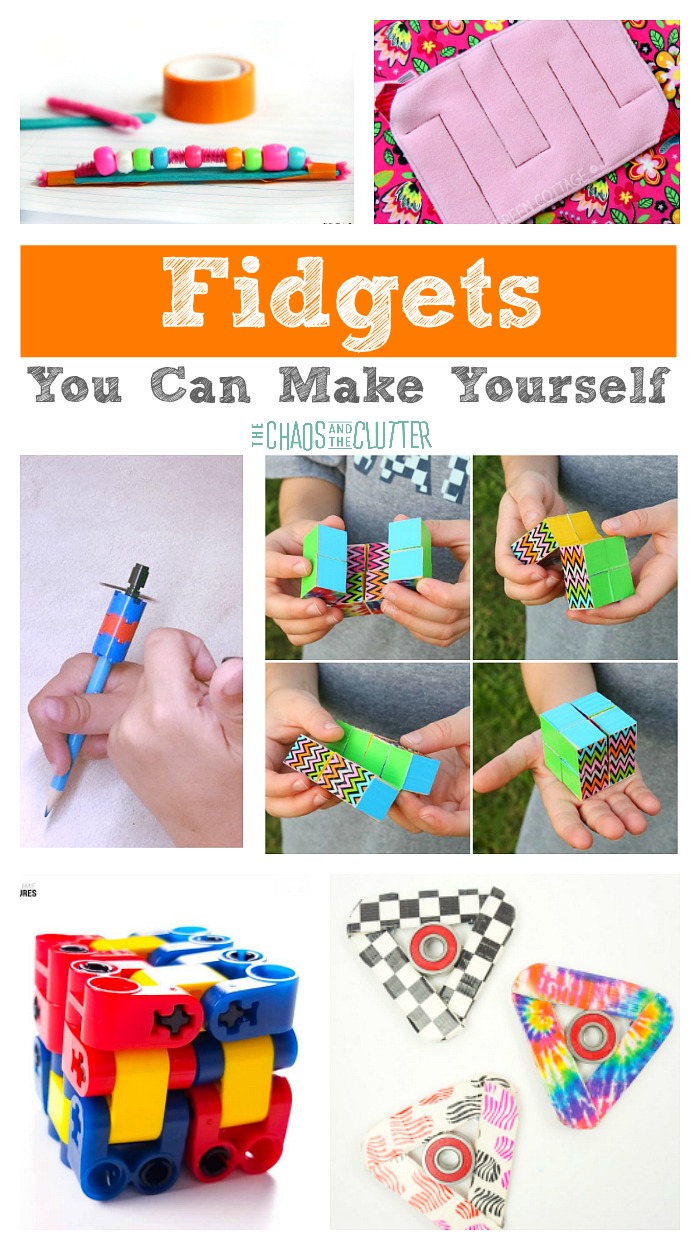
While fidget spinners and fidget cubes are the obvious fidget choice of the moment, there are many fidgets that you can make yourself at home.
While fidget spinners and fidget cubes are the obvious fidget choice of the moment, there are many fidgets that you can make yourself at home.

Fidgets You Can Make Yourself

Make Your Own Sensory (Stress) Balls – These are so easy (and inexpensive) to make. You can tuck them into backpacks or lockers and are a nice quiet fidget for school.

Homemade Emoji Squishies – These are another quiet fidget that are great for squeezing which makes them a good calm down tool.

DIY Fidget Toolkit for Wiggly Kids by Growing Hands-on Kids

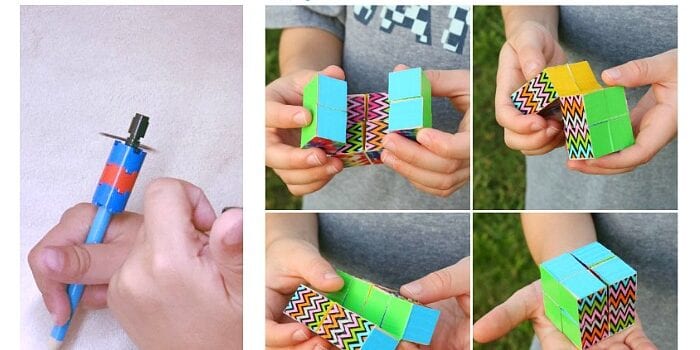
Duct Tape Endless Cube from Frugal Fun 4 Boys and Girls (pictured)

DIY Desk Fidget Tool from The OT Toolbox (pictured)

How to Build a Fidget Spinner with LEGO Bricks by Frugal Fun 4 Boys and Girls

How To Make a Fidget Spinner by Kids Activities Blog (pictured)

Super Simple Fidget Spinners Kids and Parents Can Make by Pint-Sized Treasures

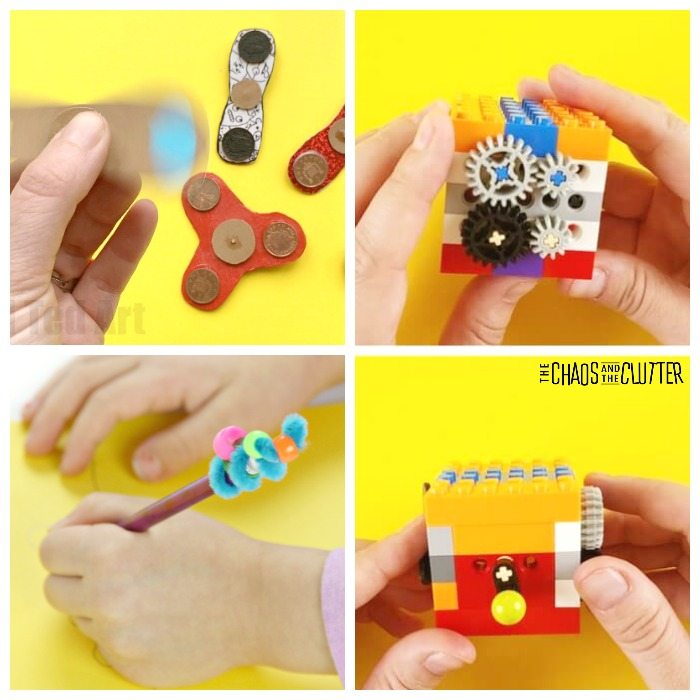
Lego Spinner Pencil Topper from Teach Me Mommy (pictured)

Make Your Own Marble Maze by Apple Green Cottage (pictured)

Magically Endless DIY Lego Fidget Cube for Kids Who Can’t Sit Still from Lemon Lime Adventures (pictured)
While fidget spinners and fidget cubes are the obvious fidget choice of the moment, there are many fidgets that you can make yourself at home.

More Fidgets You Can Make

How to Make a Fidget Spinner DIY by Red Ted Art (pictured)

LEGO Fidget Spinner by Frugal Fun 4 Boys

How to Make an Epic DIY Lego Fidget Cube by Lemon Lime Adventures (pictured)

DIY Pencil Topper Fidget Toy from The OT Toolbox (pictured)

Ninja Fidget Spinner DIY by Red Ted Art

Magically Endless DIY Lego Fidget Cube for Kids That Can’t Sit Still by Lemon Lime Adventures

The Easiest Ever DIY Fidget Toy for Kids Who Need to Move by Schooling a Monkey

One of our sons made fidget spinners using zip ties and bearings.

The OT Toolbox has some great suggestions for DIY fidgets using things you probably have around the house such as paper clips or beads and pipe cleaners.

Carolyn from Wise Owl Factory suggests using coffee stir sticks as they can be used to drum on a desk without making much sound at all.

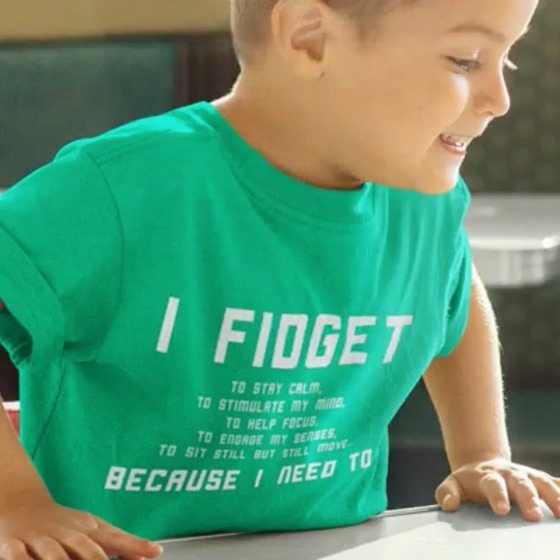
You may know someone who would love this shirt about the need to fidget.
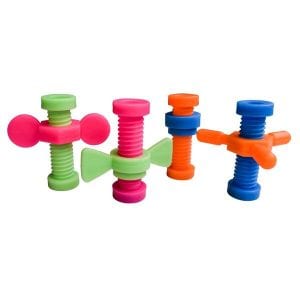
While fidget spinners and fidget cubes are the obvious fidget choice of the moment, there are many fidgets that you can make yourself at home.Of course if you don’t want to make your own fidgets, there are also some pretty awesome and unique fidgets you can purchase, like these fidget spinner rings and pen toppers.
Read more about anxiety and fidget toys and so much more when it comes to sensory processing in Sensory Processing Explained.

Filed Under: Sensory

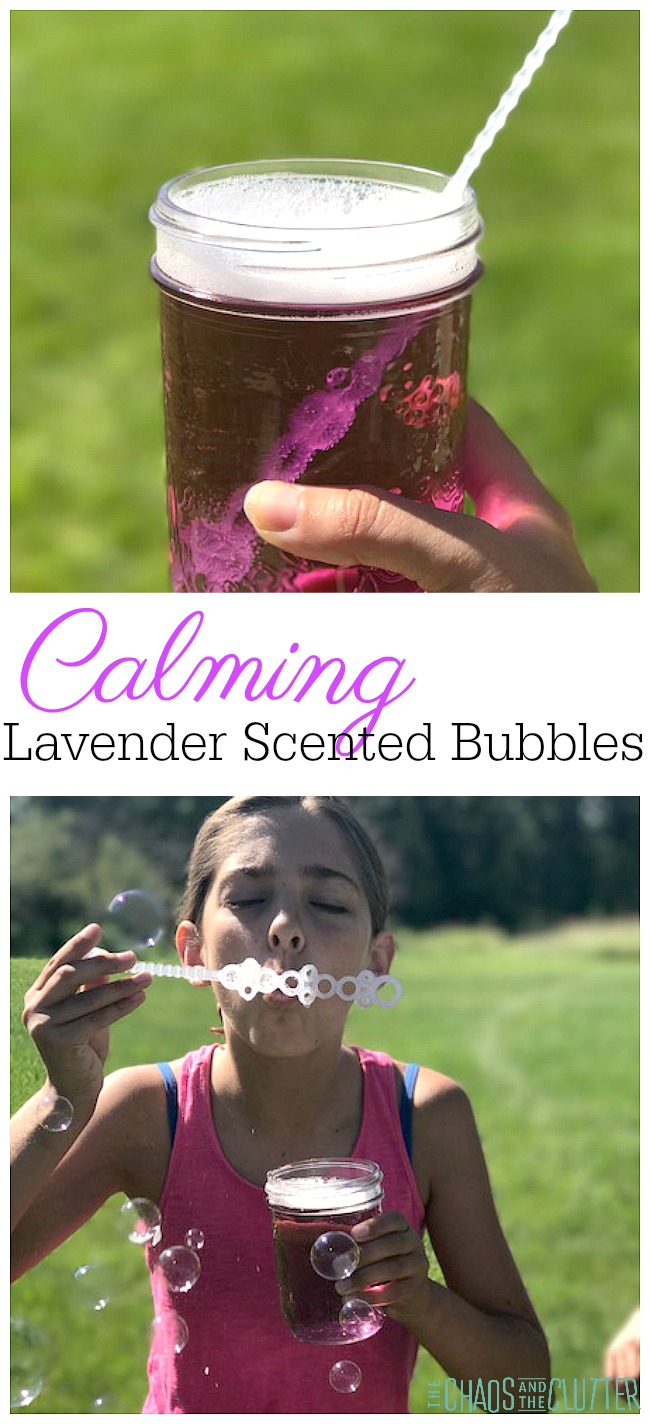
Scented Bubbles: Calming Lavender Bubble Recipe

By Sharla Kostelyk

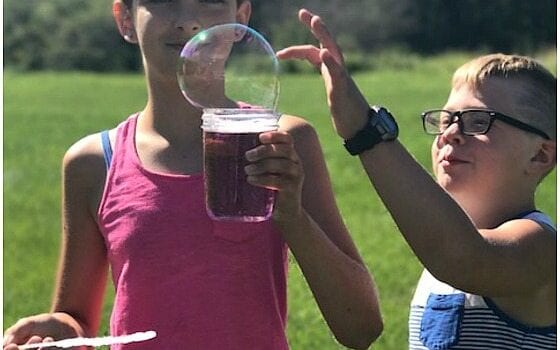
Blowing bubbles is a great strategy to teach kids as a calming technique. It helps to slow down breathing and bring their bodies back into a state of relaxation. It’s a technique I use often with two of my girls, particularly in the summer. There are also many sensory benefits to blowing bubbles. One day, it occurred to me that I could combine the calming benefits and sensory benefits to an even greater extent if I made lavender scented bubbles for them to use.

These lavender scented bubbles provide a wonderful calming technique for kids.This lavender scented bubble recipe is so easy to make and the bubbles it creates are strong and plentiful. I used lavender essential oil to create the scent because I wanted it to actually have a calming effect.
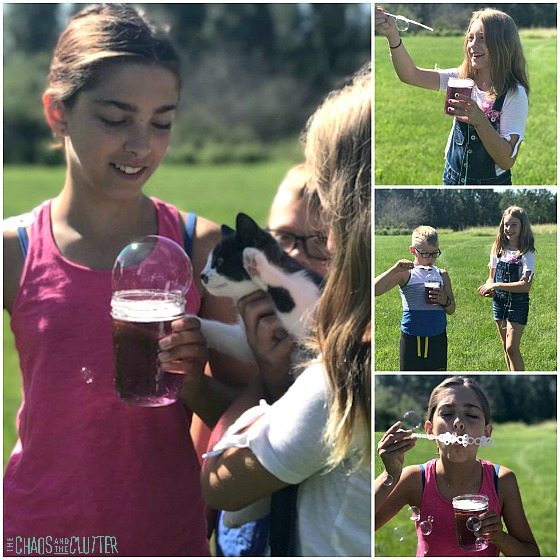
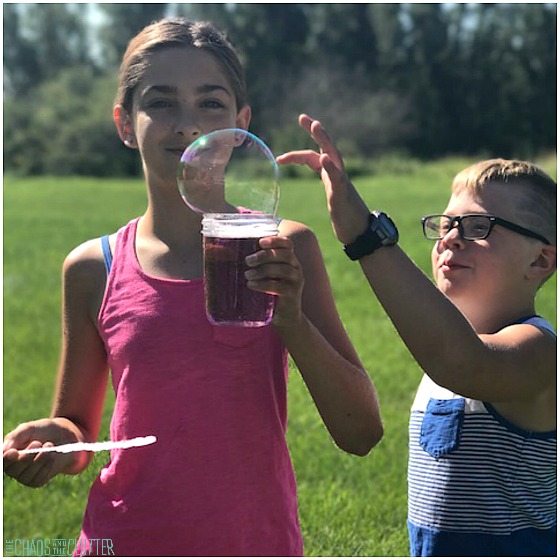
Two neighbourhood friends came over to test out the new bubbles with us and our new kitten was super curious about them too, making for some great pictures!

Lavender Scented Bubble Recipe:

  • 1 1/2 cups lukewarm water
  • 1/2 cup unscented, clear dish soap
  • 1/4 cup light corn syrup
  • 3-5 drops lavender essential oil
  • optional: 3 drops of food colouring

Directions:

Mix together the water, dish soap and corn syrup. Once it is well combined, add the drops of essential oil and food colouring and mix in. Pour the bubble mixture into a container, add a bubble wand and start making bubbles!

We used a glass mason jar for our bubble mixture, but later in the day when we had younger kids visiting, I transferred it into a plastic container.

If you don’t have a bubble wand handy, you can create a loop at one end of a pipe cleaner and use that for a bubble wand. With this bubble solution, my daughter also was able to blow bubble using her hand held in a loose fist and by using mesh cording.
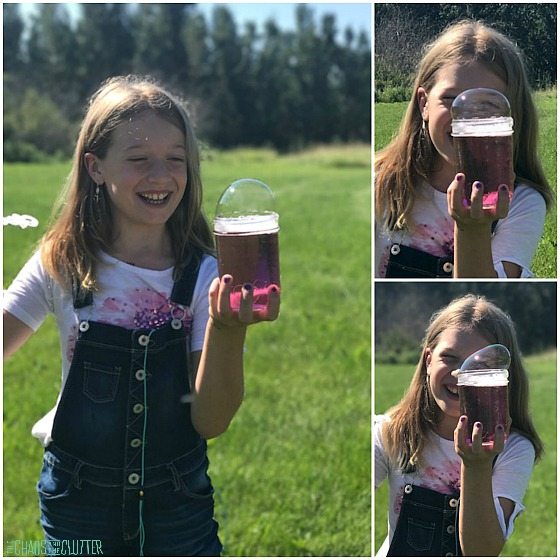
As you can see, these lavender scented bubbles are not only calming, they also make some pretty large bubbles that last and last! The kids had such a good time playing with them.
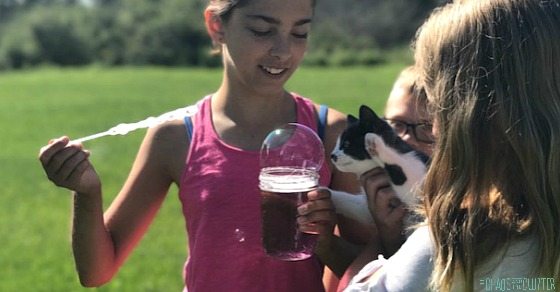
I think this bubble solution would keep well in an airtight container, but I wouldn’t be able to tell you first-hand because this recipe was so popular that in two days at our house, it was all used up!

For answers to your sensory questions and great sensory activity ideas, check out Sensory Processing Explained: a Handbook for Parents and Educators. 
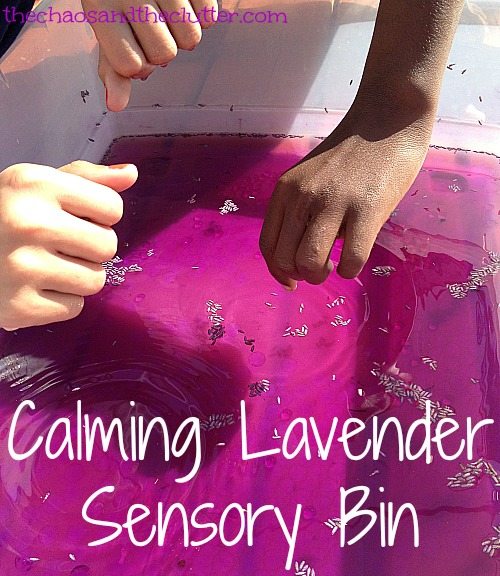
You may also be interested in these other sensory activities we have done that use the calming effects of lavender:

Calming Lavender Sensory BinLavender Sensory Bin

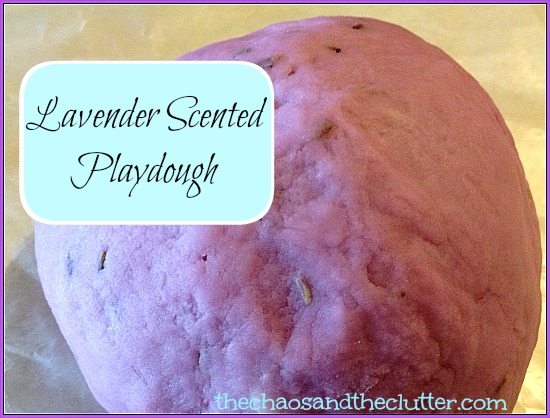
Lavender Scented Playdough

Join me for a free 5 part email series, Little Hearts, Big Worries offering resources and hope for parents.

Filed Under: Sensory Tagged With: sensory play

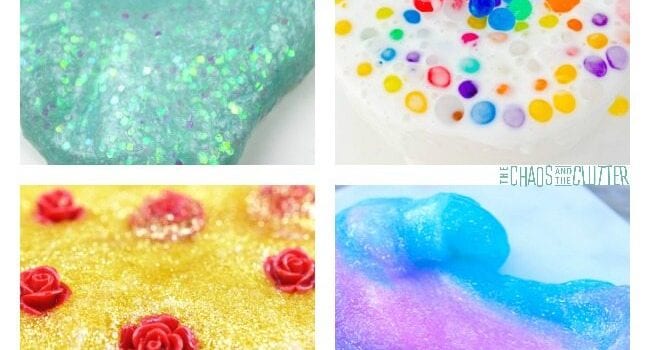
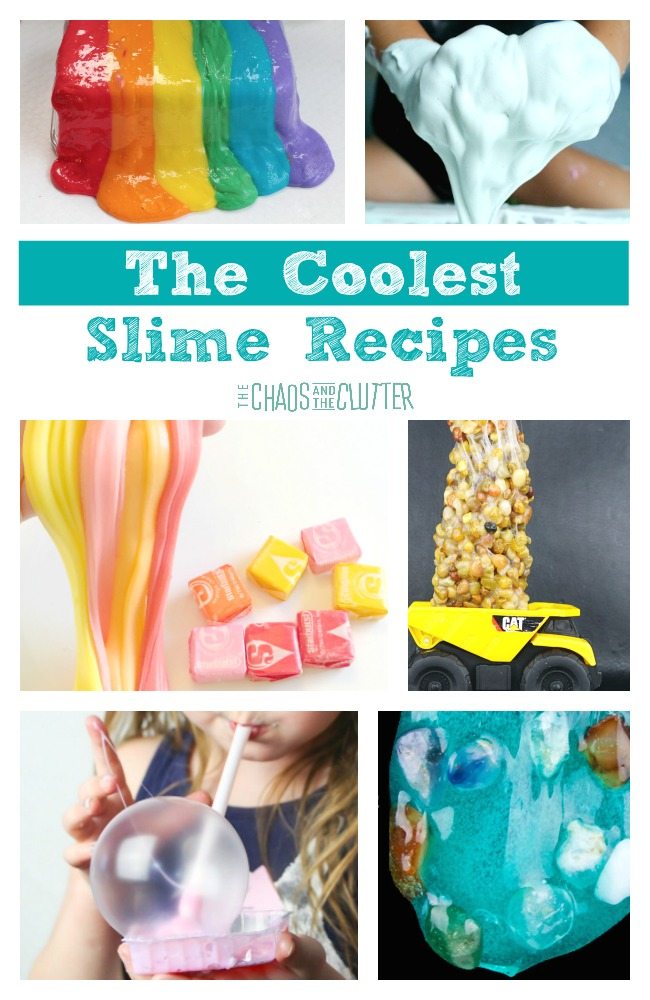
The Coolest Slime Recipes

By Sharla Kostelyk

Slime has been gaining in popularity as parents and kids discover its play and sensory possibilities. If you are getting bored with the usual slime ideas, these cool slime recipes are sure to bring a new level of excitement to your slime play!

If you are getting bored with the usual slime ideas, these cool slime recipes are sure to bring a new level of excitement to your slime play!The Coolest Slime Recipes

Rainbow Confetti Party Slime found right here at The Chaos and The Clutter

Buildable Rock Slime from over on Left Brain, Craft Brain (pictured)

Unicorn Poop Slime from Schooling a Monkey

Holiday Jingle Bell Slime from The Chaos and the Clutter

Egg Slime from The Pinterested Parent

Bubble Bath Slime from Teaching Mama

Chocolate Milk Slime from The Chaos and the Clutter

Geology Gemstone Slime from STEAM Powered Family (pictured)

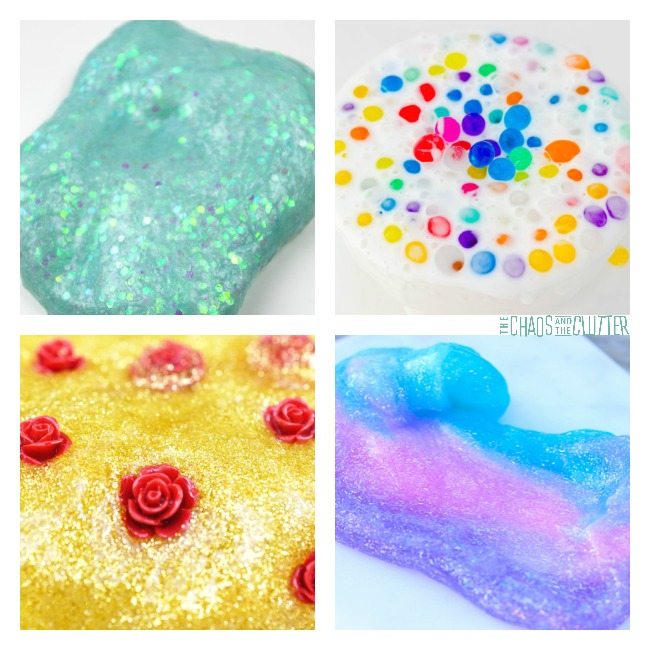
Bubble Slime from Sugar, Spice and Glitter (pictured)

Fluffy Oobleck Slime from Fantastic Fun and Learning (pictured)

Unicorn Slime by My Frugal Adventures (pictured)

Rainbow Slime by Schooling a Monkey (pictured)

If you are getting bored with the usual slime ideas, these cool slime recipes are sure to bring a new level of excitement to your slime play!

Join me for a free 5 part email series Sensory Solutions and Activities and get your Sensory System Behaviours Easy Reference Cards.

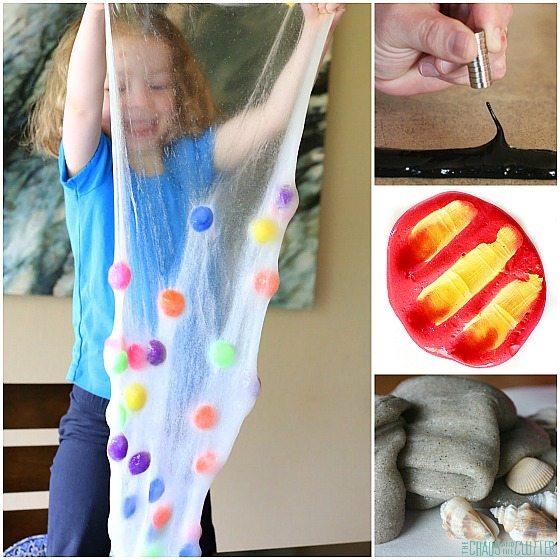
Edible Starburst Slime by Teach Beside Me (pictured)

Beauty and the Beast Slime from As the Bunny Hops (pictured)

Mermaid Slime by The Nerd’s Wife (pictured)

Toothpaste Orbeez Slime from Savvy Naturalista (pictured, and yes, it’s actually made with toothpaste!)

Fluffy Sand Slime from Mom Dot

Erupting Slime by STEAM Powered Family

Fake Snot Edible Slime by Little Bins for Little Hands (yep, you read that right – it’s edible snot slime!)

Avalanche Slime from Mom Luck

Heat Sensitive Colour Changing Slime from Left Brain, Craft Brain

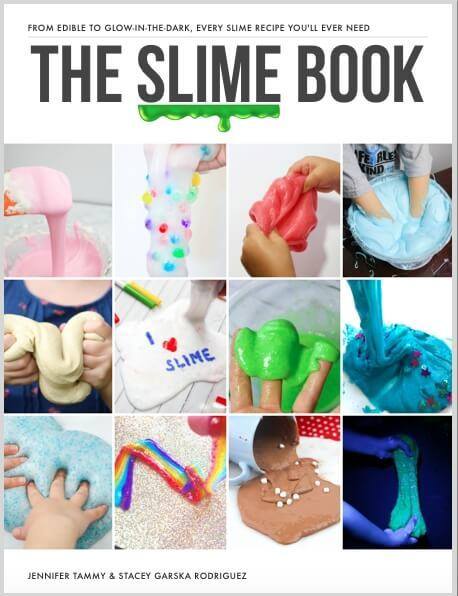
For awesome slime recipes at your fingertips, check out The Slime Book – From Edible to Glow-in-the-Dark Slime – it’s got it all!

You may also want to check out these Unique Slime Recipes.

Filed Under: Crafts and Activities, Sensory Tagged With: sensory play

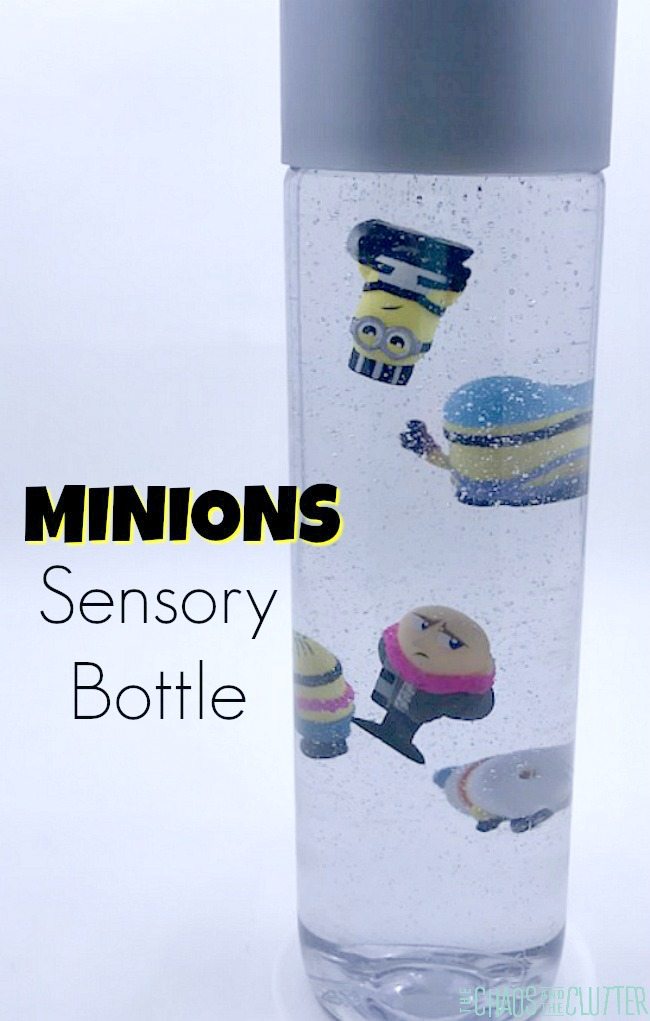
Despicable Me Minions Sensory Bottle

Minions Despicable Me Sensory Bottle

By Sharla Kostelyk

The Despicable Me movies are close to our hearts as an adoptive family and as fans of laughter. They are such cute stories so I thought I would create some sensory play opportunities for the kids. This Despicable Me Minions sensory bottle was simple to make. I later used the same items to make a Minions sensory bag.

Adorable Minions Despicable Me Sensory BottleI often use a clear glue and water mixture in my sensory bottles but due to the recent slime craze, it has been more challenging to find clear glue so I have switched most of my sensory bottles over to liquid hand soap as the main filler.
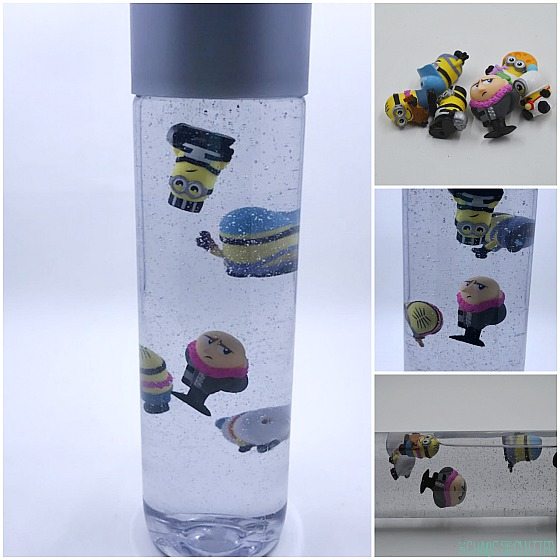
Materials needed:

  • water bottle (I used a Voss bottle)
  • Despicable Me mini figures
  • liquid hand soap
  • Goo Be Gone (optional)

To make this Minions sensory bottle, empty the water out of the water bottle either by drinking it or pouring it into another container. Next, peel off the labels. If you end up with residue from the labels on the bottle, you can use Goo Be Gone to remove it. Add a bit of liquid hand soap to the bottle and then drop in a mini figure. Add more liquid hand soap and then another mini figure. Continue to layer them.
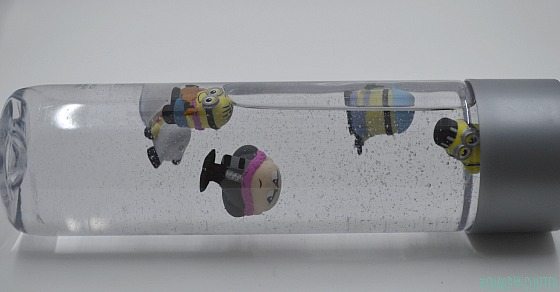
One trick I have is to use a long bamboo skewer to move the mini figures in the bottle so that they are facing the way I want them to.

Fill the bottle to the top with the liquid hand soap and screw on the lid. If you are using this sensory bottle with younger children, you will want to secure the lid in place using hot glue.

If you are looking for other sensory ideas, sign up for our free 5 part email series Sensory Solutions and Activities and get our Sensory System Behaviours Easy Reference Cards.

Rainbow Rainfall Sensory Bottle

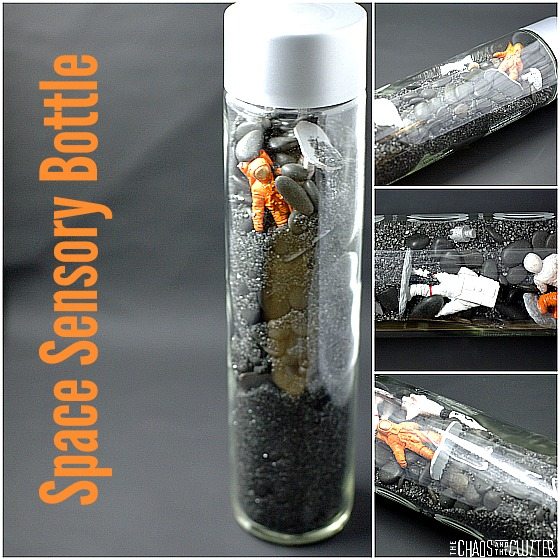
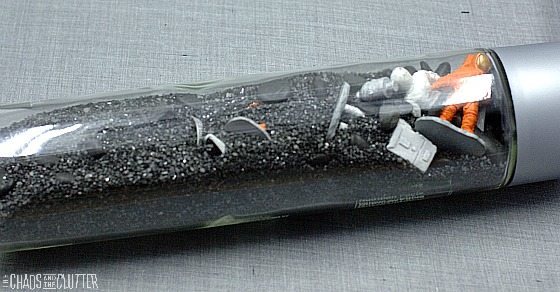
This Space sensory bottle is naturally weighted. Kids can also use it as an I-Spy activity.Weighted Space Sensory Bottle

Filed Under: Sensory Tagged With: sensory bottles, sensory play

What to Do With Kids Who Chew

If your child chews on clothing or pencils or licks everything in sight because of sensory or anxiety issues, these tips may help.

By Sharla Kostelyk

Have you noticed that your child has been putting things in her mouth and chewing them incessantly? Does your child have sensory challenges? Is an oral fixation a good outlet for your child to process anxiety, perhaps? I have found some solutions that work with my kids and will hopefully help you too.

If your child chews on clothing or pencils or licks everything in sight because of sensory or anxiety issues, these tips may help.

Chewing and the Root of the Problem

Children can be chewing on things because of stress, proprioceptive sensory needs, oral sensory needs, anxiety, body awareness or stimming. It is important for us to figure out why they are turning to this behaviour to try to deal with the root of the issue. But in the meantime, it is also appropriate to help the child with coping mechanisms.

Chewable Jewelry

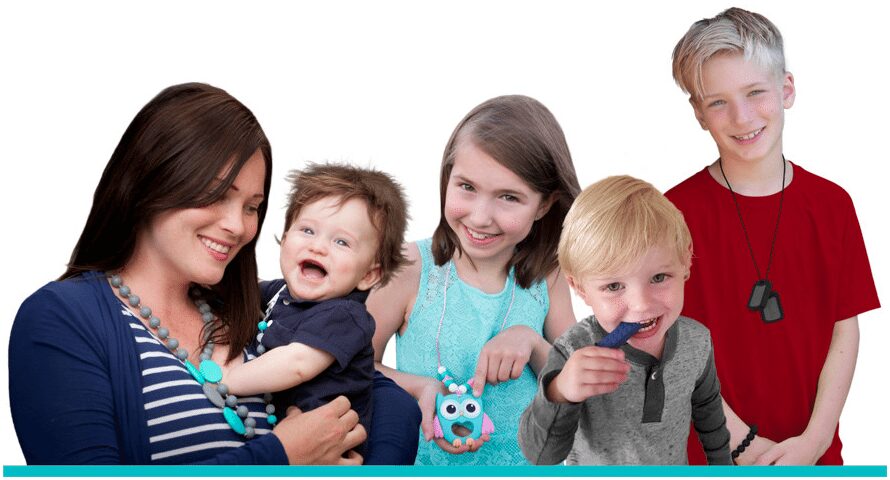
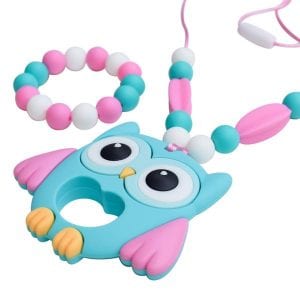
Having a go-to item to chew on is much better than having your child chew on shirt collars, pencils, nails or even rubber balls. We have found some wonderful munchable chewelry for kids to use as an outlet that won’t lead to them wrecking shirts or pencils.

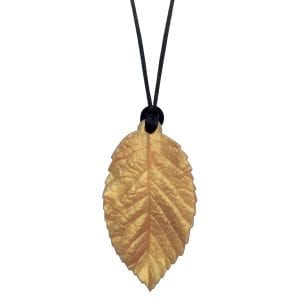
These leaf pendants are great for older kids, especially teen girls as they look just like regular jewelry.

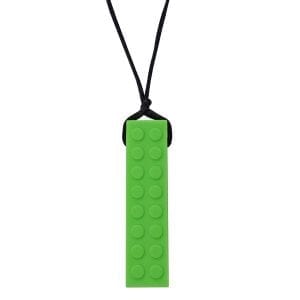
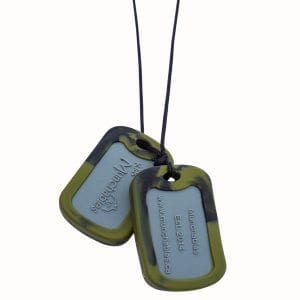
The Lego pendants and dog tag style necklaces are a great option for boys of all ages.

Chewing gum

I used to have a “no gum in the house” rule. Now, I carry packs of bubble gum with me everywhere I go! Gum is an excellent sensory solution, particularly for kids looking for oral input. Chewing gum, especially a thick bubble gum gives good sensory feedback and can even reduce anxiety. You can buy sugar-free, dye free chewing gum as a healthier alternative to regular gum.

Drinking through a straw

This is particularly effective with thicker liquids such as milkshakes or smoothies. You can combine oral input and calming with this sleep smoothie.

Chewable Pencil Toppers

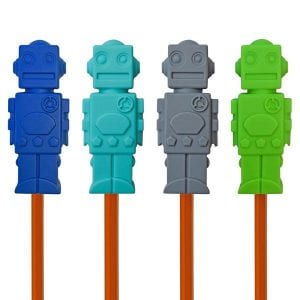
Say goodbye to chewed up pencils by using fun chewable pencil toppers. My kids’ personal favourite are these robot toppers.

Crunchy Food or Hard Candy

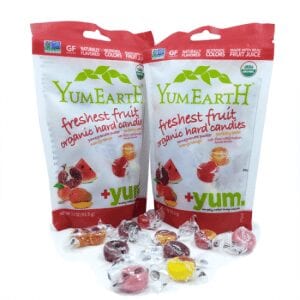
Providing crunchy food such as carrot sticks or celery sticks or hard candy for your child to chew can also be an appropriate way to meet their oral sensory needs. Of course, you need to be sure that your child is old enough to have hard candy because of the potential choking hazard.

Read more suggestions for oral sensory seekers as well as find practical advice for everyday sensory challenges pertaining to clothing, eating, grooming, sleep, and more in Sensory Processing Explained: a Handbook for Parents and Educators. 

You might also like:

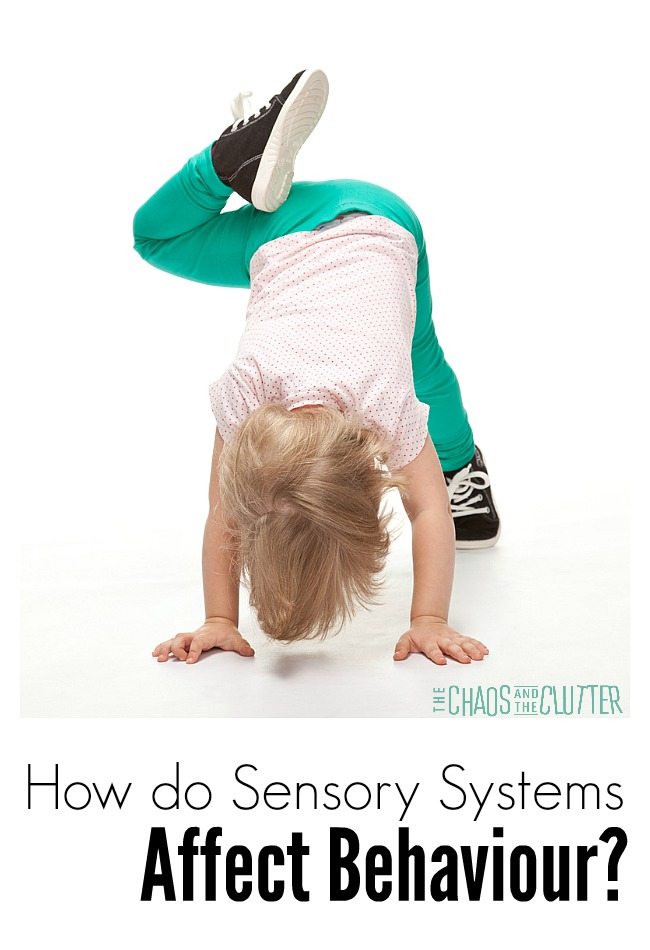
What Does Behaviour Have to do with Sensory Systems?

How is behaviour affected by your child's sensory systems?

Must Haves for Kids with Sensory Needs

These are must-haves if you have kids with sensory processing disorder (SPD).

Does My Child Have Sensory Processing Disorder?

Does my Child Have Sensory Processing Disorder? If you are wondering whether or not your child has Sensory Processing Disorder, this list of information and resources will be a starting place for you to find help.

Filed Under: Sensory

One Year of Awesome Sensory Bottles

By Sharla Kostelyk

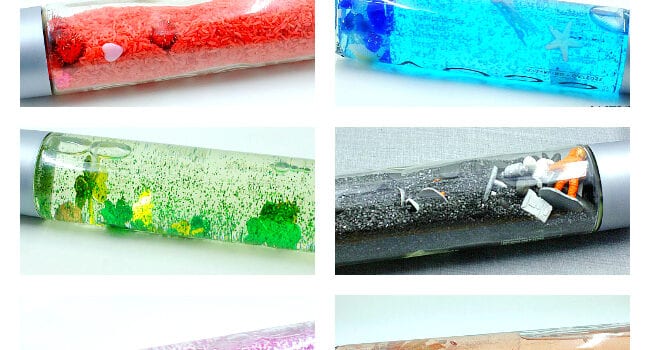
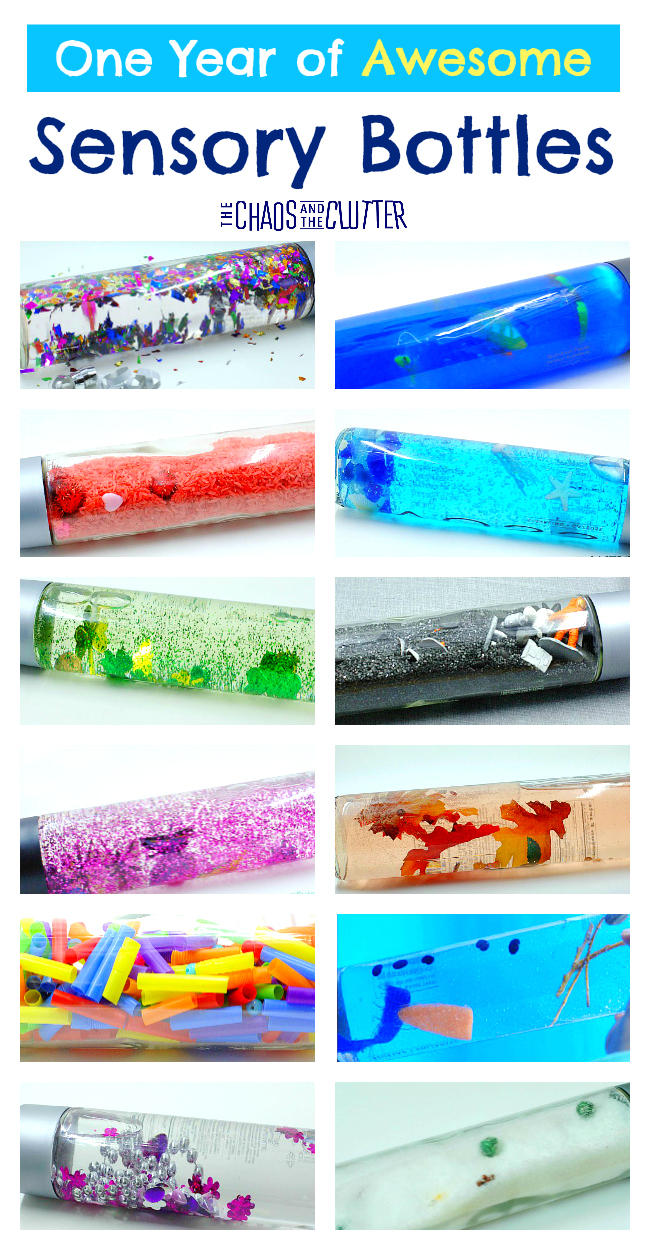
Sensory bottles, sometimes called discovery bottles can be used for a variety of purposes. My kids can’t seem to be able to get enough of them, so I make a new one every few weeks. I find it easier to create them when I choose a theme.

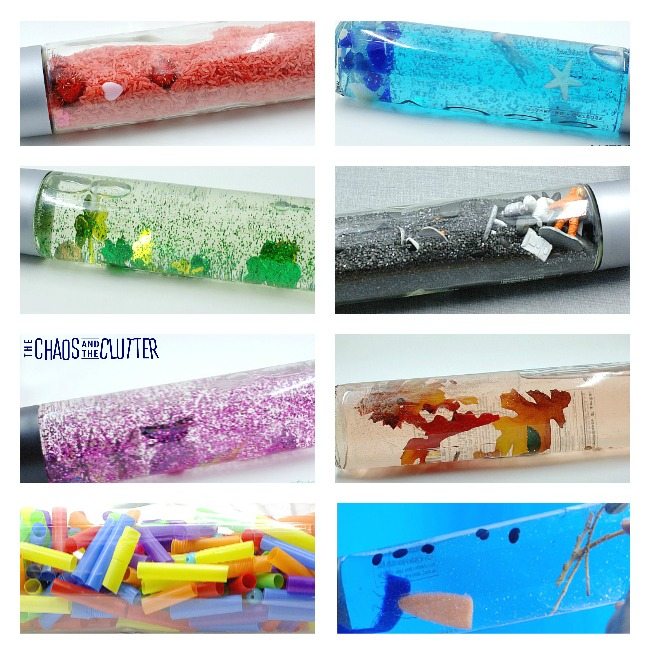
These sensory bottles are perfect for each month of the year. They are also a good starting point for giving you ideas to create your own themed sensory bottles. You can click on each link or picture below to find full instructions as well as find out what materials you’ll need.

I use Voss water bottles for mine because I like the look of them, but you can use any water bottle. Vary the look by using different shapes and sizes of water bottles.

These sensory bottle ideas will take you through a year of themes and ideas, making it easier for you to create your own for the home or classroom.One Year of Sensory Bottles:

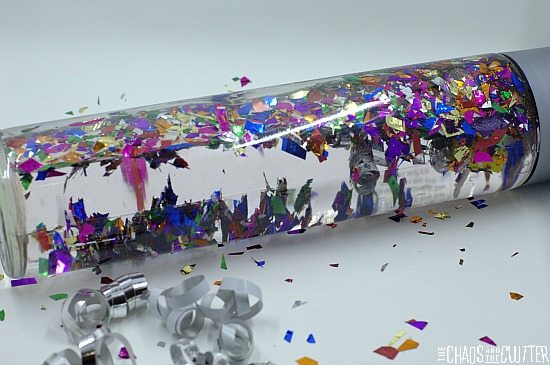
January – This New Year’s Celebration bottle is perfect to kick off the year with!

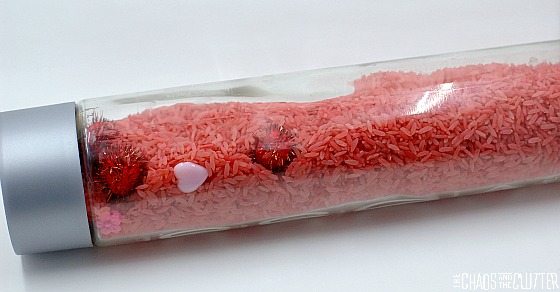
February – Valentine’s Day is made for kids to enjoy as well with this sensory bottle.

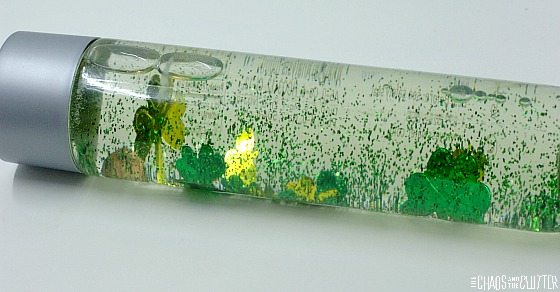
Valentine's Day Sensory BottleMarch – St. Patrick’s Day of course! This calm down bottle is simple to create for the season.

April – This Spring sensory bottle is one of our favourites of all time. I especially like the slow, calm-down effect it has.

May – Your kids will enjoy this colourful Rainbow Rainfall Sensory Bottle.

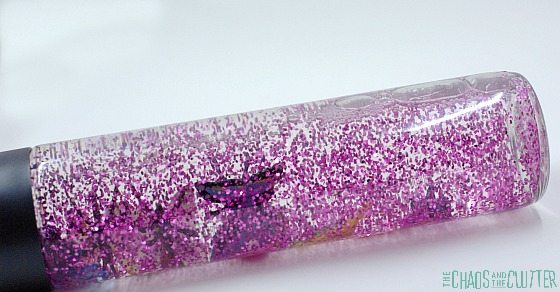
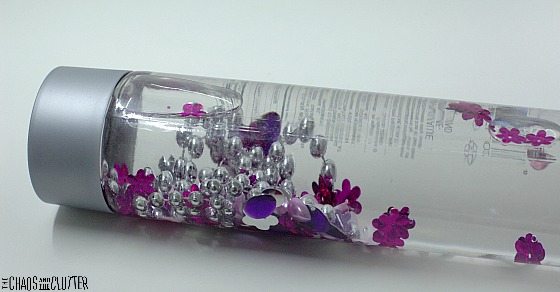
June – My girls adored our princess themed bottle.

July – Your kids can take this sky bottle outside with them and compare it to the actual sky.

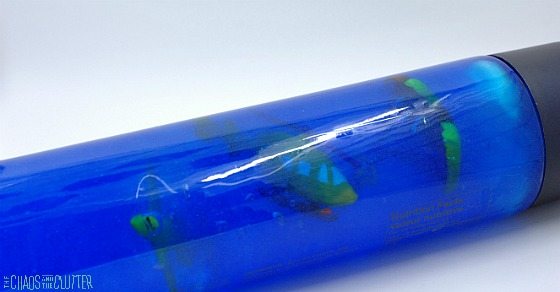
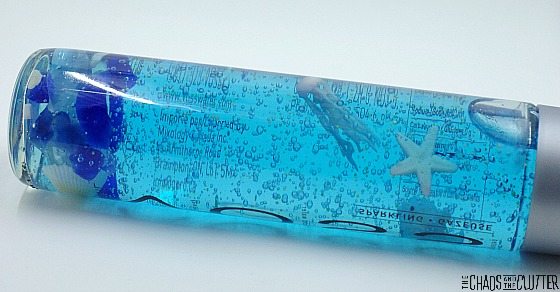
August – Find sea creatures in this Ocean sensory bottle.

September – In honour of back to school, this sensory bottle has a Space theme. It’s weighted, offering great sensory feedback.

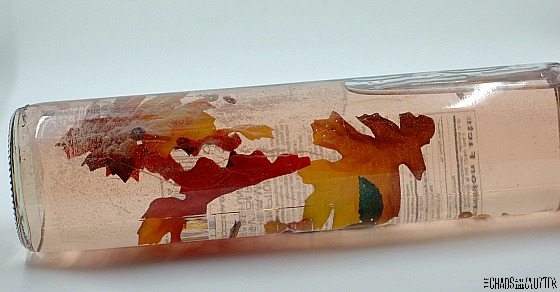
Space Sensory BottleOctober – The beautiful colours outdoors are mimicked in this Fall sensory bottle.

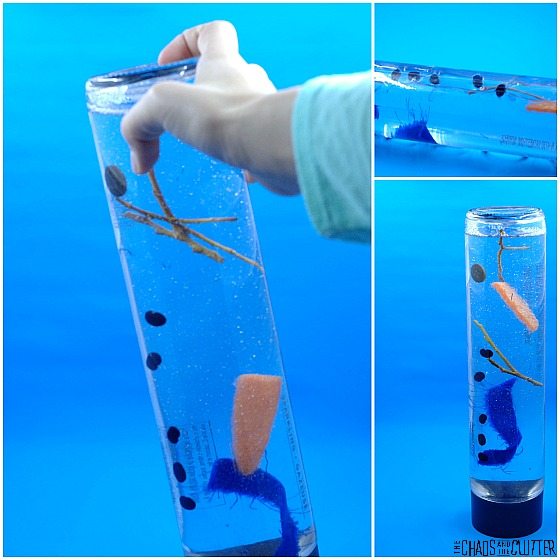
November – Our melted snowman sensory bottle was so much fun to make!

December – A Christmas I-Spy discovery bottle is just in time for the holidays.

Christmas I Spy Discovery Bottle

If you suspect that your child or student has sensory processing issues or differences, read Sensory Processing Explained: A Handbook for Parents and Educators. It will answer your questions and give you practical suggestions as well as sensory activity ideas for the home or classroom. 

Join me for a free 5 part email series Sensory Solutions and Activities (just pop your email into the box below) and get a printable list of 175 Great Sensory Ideas.
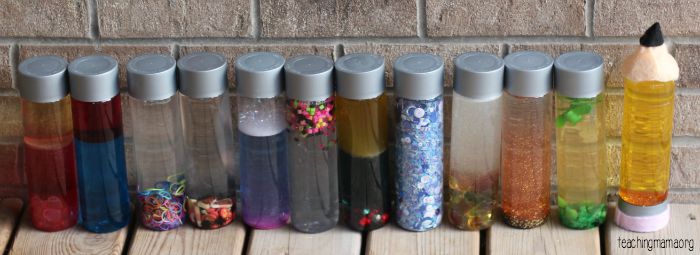
If you’re looking for more ideas, my friend Angela has compiled a collection of 12 months of their sensory bottles including an adorable pencil-shaped one.
Filed Under: Sensory Tagged With: sensory bottles, sensory play

  • « Go to Previous Page
  • Page 1
  • Interim pages omitted …
  • Page 30
  • Page 31
  • Page 32
  • Page 33
  • Page 34
  • Interim pages omitted …
  • Page 50
  • Go to Next Page »

Primary Sidebar

Categories

We are a participant in the Amazon Services LLC Associates Program, an affiliate advertising program designed to provide a means for us to earn fees by linking to Amazon.com and affiliated sites.

Copyright © 2026 • The Chaos and the Clutter • Site Design by Jeni @ The Blog Maven

Return to top of page

Copyright © 2026 · Chaos and the Clutter 2.0 on Genesis Framework · WordPress · Log in