• Skip to primary navigation
  • Skip to main content
  • Skip to primary sidebar
  • Home
  • About
  • Contact
  • Privacy + Terms
  • Affiliates

The Chaos and the Clutter

  • Facebook
  • Twitter
  • Pinterest
  • Google Plus
  • RSS
  • Email
  • School at Home
  • Sensory
    • Sensory Processing Disorder
    • Awesome Sensory Play Activities
      • Sensory Bins
      • Sensory Bottles
      • Sensory Bags
  • Family Games
    • Minute to Win It Games
  • Special Needs Parenting
    • Childhood Anxiety
    • Reactive Attachment Disorder
    • Sensory Processing Disorder
  • Store
  • Course Login

Sensory

175 Sensory Activity Ideas for Kids

175 Super Simple Sensory Activities for Kids

By Sharla Kostelyk

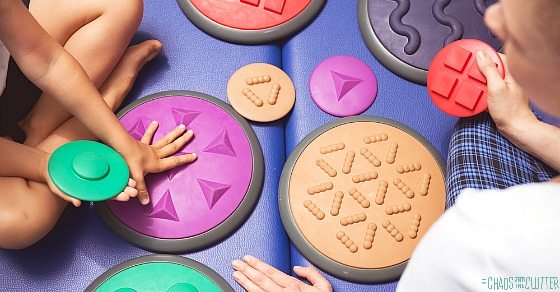
Sensory activity ideas don’t have to be complicated to be effective. These suggestions can easily be done without a lot of prep work in the home or in the classroom. Sensory exploration is beneficial for all children, but for children with Sensory Processing Disorder, it is a critical piece of the puzzle for better sensory integration, preventing sensory meltdowns, and successfully navigating the world around them.
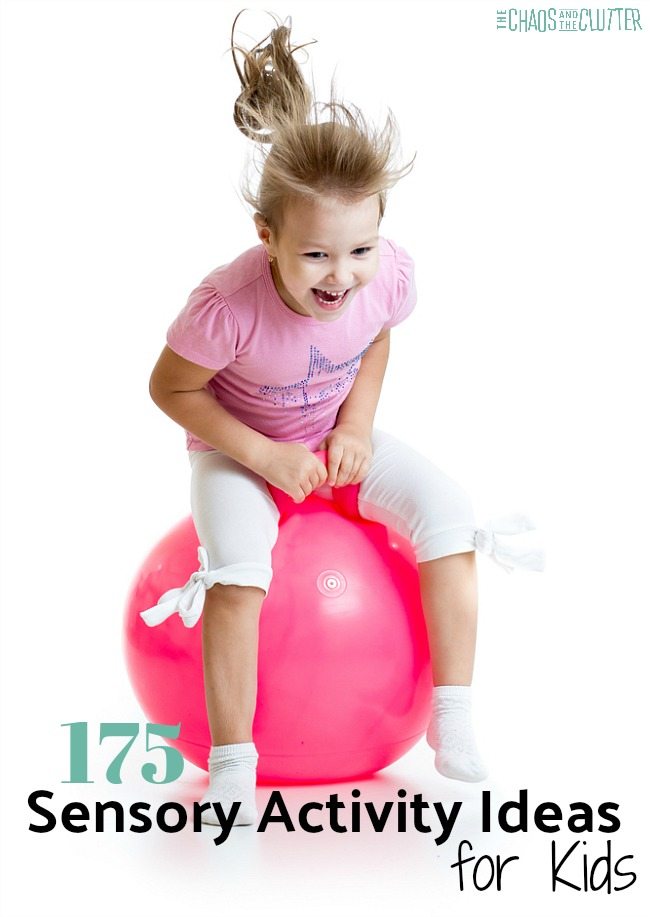
175 Super Simple Sensory Activities for Kids

To make the list less overwhelming and also to help you focus on specific sensory areas, I have divided the ideas by sensory systems, though there will be some overlap.

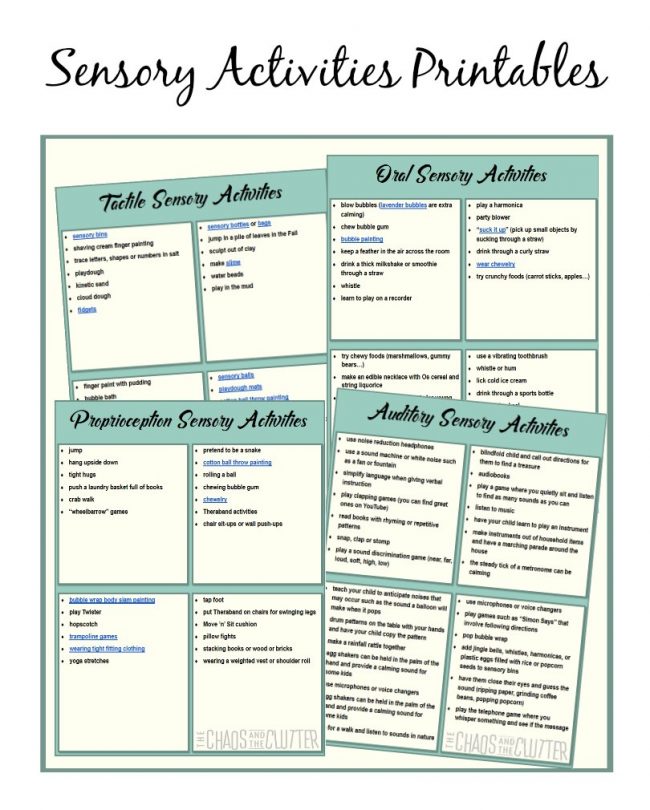
Auditory Sensory Activities:

  • use noise reduction headphones
  • use a sound machine or white noise such as a fan or fountain
  • simplify language when giving verbal instruction
  • play clapping games (you can find great ones on YouTube)
  • read books with rhyming or repetitive patterns
  • snap, clap or stomp
  • play a sound discrimination game (near, far, loud, soft, high, low)
  • blindfold child and call out directions for them to find a treasure
  • audiobooks
  • play a game where you quietly sit and listen to find as many sounds as you can
  • listen to music
  • have your child learn to play an instrument
  • go for a walk and listen to sounds in nature
  • make instruments out of household items and have a marching parade around the house
  • teach your child to anticipate noises that may occur such as the sound a balloon will make when it pops
  • drum patterns on the table with your hands and have your child copy the pattern
  • make a rainfall rattle together or rainfall sensory bottle
  • egg shakers can be held in the palm of the hand and provide a calming sound for some kids
  • use microphones or voice changers
  • play games such as “Simon Says” that involve following directions
  • pop bubble wrap
  • the steady tick of a metronome can be calming
  • add jingle bells, whistles, harmonicas, or plastic eggs filled with rice or popcorn seeds to sensory bins 
  • have them close their eyes and guess the sound (ripping paper, grinding coffee beans, popping popcorn)
  • play the telephone game where you whisper something and see if the message changes

Oral Sensory Activities:

  • blow bubbles (lavender bubbles are extra calming)
  • chew bubble gum
  • bubble painting 
  • keep a feather in the air across the room
  • drink a thick milkshake or smoothie through a straw
  • whistle
  • learn to play on a recorder
  • play a harmonica
  • party blower
  • “suck it up” (pick up small objects by sucking through a straw)
  • drink through a curly straw
  • wear chewelry
  • try crunchy foods (carrot sticks, apples…)
  • try chewy foods (marshmallows, gummy bears…)
  • make an edible necklace with Os cereal and string liquorice 
  • suck on hard candies (not safe for young kids)
  • try candy that is fizzy, spicy, tangy, sweet, or sour
  • blow up a balloon
  • blow out candles
  • use a vibrating toothbrush
  • whistle or hum
  • lick cold ice cream
  • drink through a sports bottle
  • blow a pinwheel
  • use a firm toothbrush to brush teeth, gums, roof of mouth

Visual Sensory Activities:

  • use visual schedules 
  • I-Spy books or pages
  • sensory bottles
  • sensory bags
  • reducing clutter
  • using toy rotation
  • mazes
  • sensory bins
  • I-Spy bottles or bags
  • making shadow puppets on the wall
  • shape matching games or activities
  • photo scavenger hunt
  • colour mixing activities
  • road trip Bingo
  • colour matching activities
  • glow sticks
  • lava lamp
  • puzzles
  • prism
  • kaleidoscope
  • spraying a target with a water gun
  • exploring with a magnifying glass
  • drawing or painting or crafting
  • light table or light box play
  • find or copy patterns

Tactile Sensory Activities:

  • sensory bins
  • shaving cream finger painting
  • trace letters, shapes or numbers in salt
  • playdough
  • kinetic sand
  • cloud dough
  • fidgets
  • sensory bottles or bags
  • jump in a pile of leaves in the Fall
  • sculpt out of clay
  • make slime 
  • water beads
  • play in the mud
  • finger paint with pudding 
  • bubble bath
  • bathtub paints
  • make tactile sensory cards
  • make a sensory cube
  • sensory balls
  • playdough mats
  • cotton ball throw painting
  • rainbow soap foam
  • fill balloons with different things like rice, water beads, flour, playdough
  • sensory walk
  • use glue to create raised lines
  • sand table or sandbox

Olfactory Sensory Activities:

  • smelling bottles
  • scented bubbles
  • scented playdough
  • scented sensory bin
  • bath salts
  • scented oobleck or scented slime
  • essential oils
  • make cinnamon ornaments
  • use scented rice, beans or salt in sensory play
  • scented sensory paint
  • scented cloud dough
  • scratch and sniff stickers
  • smelly markers
  • take a walk and explore the smells in nature
  • scented chalk paint
  • finger painting with pudding or pumpkin pie filling 
  • play a guessing game with scented candles
  • use chapstick with different smells
  • match pictures of foods to their smells
  • use a spice (like cinnamon) to create a writing tray
  • scented fidget toys or chewelry
  • chew scented bubble gum
  • taste and smell different foods
  • strong smells help with alertness (lemon, peppermint, pine)
  • softer smells help with calming (lavender, chamomile)

Vestibular Sensory Activities: (movement and balance)

  • spin or twirl
  • play Ring Around the Rosie 
  • play Duck Duck Goose
  • cartwheel
  • summersault
  • rock
  • climbing wall
  • parachute play
  • trampoline play
  • bike or tricycle riding
  • run in large circles
  • jump rope
  • have a marching parade
  • Chinese skipping
  • ride a scooter
  • dancing
  • teeter totter
  • log rolling
  • dancing
  • spinning chair
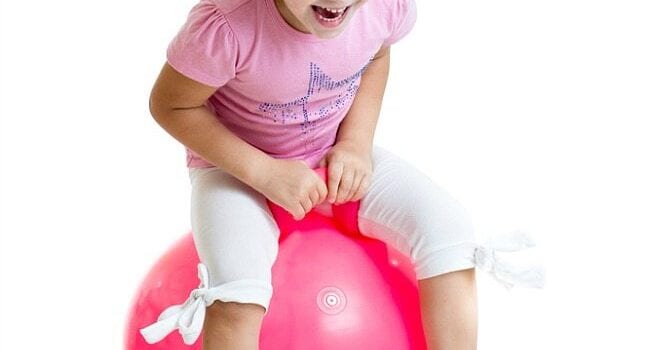
  • bounce on an exercise ball or large hopper ball
  • swinging
  • do handstand
  • go through an obstacle course
  • swing in a hammock
  • climbing and sliding at a playground
  • do the Hokey-Pokey

Proprioception Sensory Activities:

  • jump
  • hang upside down
  • tight hugs
  • push a laundry basket full of books
  • crab walk
  • “wheelbarrow” games
  • pretend to be a snake
  • cotton ball throw painting
  • rolling a ball
  • chewing bubble gum
  • chewelry
  • theraband activities
  • chair sit-ups or wall push-ups
  • bubble wrap body slam painting 
  • play Twister
  • hopscotch
  • trampoline games
  • wearing tight fitting clothing
  • yoga stretches
  • tap foot
  • put theraband on chairs for swinging legs
  • Move ’n’ Sit cushion
  • pillow fights
  • stacking books or wood or bricks
  • wearing a weighted vest or shoulder roll

Find sensory activity suggestions for the home and classroom and so much more in Sensory Processing Explained: a Handbook for Parents and Educators. 
You can also get these ideas in convenient printable lists which are ideal for using in the home, classroom or in a therapeutic setting.
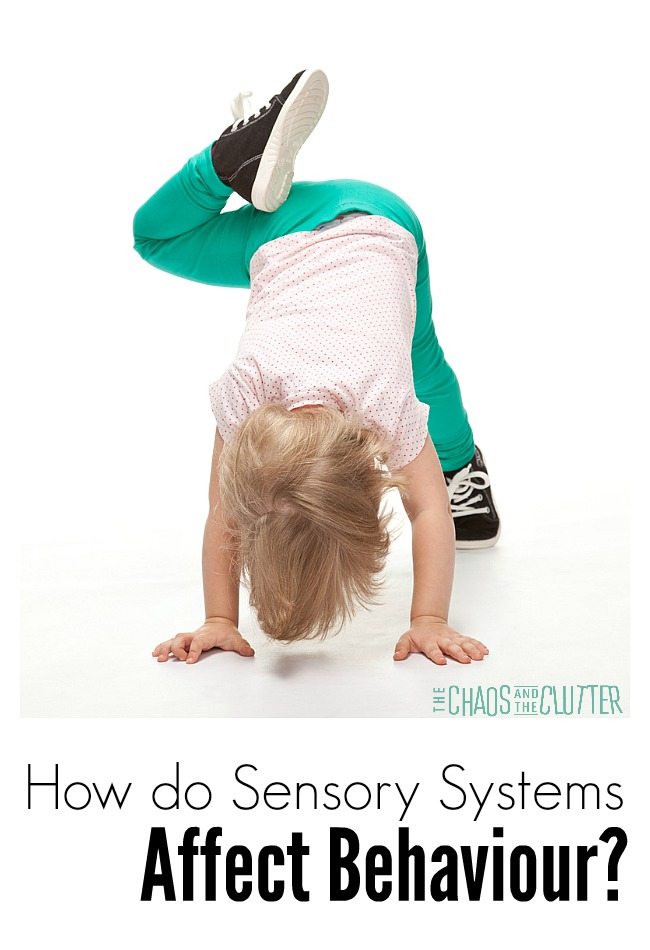
How is behaviour affected by your child's sensory systems?

What Does Behaviour Have to do with Sensory Systems?

Filed Under: Sensory Tagged With: sensory play

What Is Triggering the Fight, Flight or Freeze Response in My Child?

By Sharla Kostelyk

There has been a tremendous response to my article about Calming Your Child’s Fight, Flight or Freeze Response and a lot of questions. I wanted to follow up with some additional information to help you identify what may be triggering the fight, flight or freeze response in your child.

Determining what is triggering the fight, flight or freeze response in your child is an important step towards creating healing and lasting change.

As a bit of a recap, the fight, flight or freeze response is our brain’s built-in alarm system designed to help us in times of imminent danger. The problem occurs when that response system is misfiring due to increased cortisol levels from prenatal stress or early childhood trauma or from external factors such as sensory triggers.

In the other article, I went over some of the signs of fight and flight and freeze. I also discussed ways to talk to your kids about recognizing their responses and shared my favourite video for kids on the amygdala and losing control of their emotions. I shared strategies for calming your child once they are in fight, flight or freeze mode and a few tips on preventing them from “flipping their lid” in the first place. You can read all of that here.

A common frustration for parents whose children are losing control of their emotions is not understanding what the cause is. The thing is, it’s complicated, but there are some commonalities that can help you play detective and determine what your child’s triggers may be.

For children who have experienced early childhood trauma or prenatal stressors, reminders of that trauma are usually a root of their triggers. If a child witnessed domestic violence or loud fighting, yelling or loud noises may be a trigger for them. For a child who was neglected or abandoned, feeling left out or alone can send the alarm bells sounding.

Children who were abused may associate change or unpredictability with their trauma and just a change in routine or sense of chaos can trigger that alarm. A child who spent time in the hospital, even as a baby in the NICU, can be triggered by the sound of beeping that mimics the sounds they would have heard in the hospital.

Triggers can be subtle and even a smell or passing by a sound or visual that reminds them of their past trauma can be enough to send a child into full blown fight, flight or freeze mode. For parents, it can be like living in a minefield. You can feel like you don’t know where or when the next thing that will set them off will be.

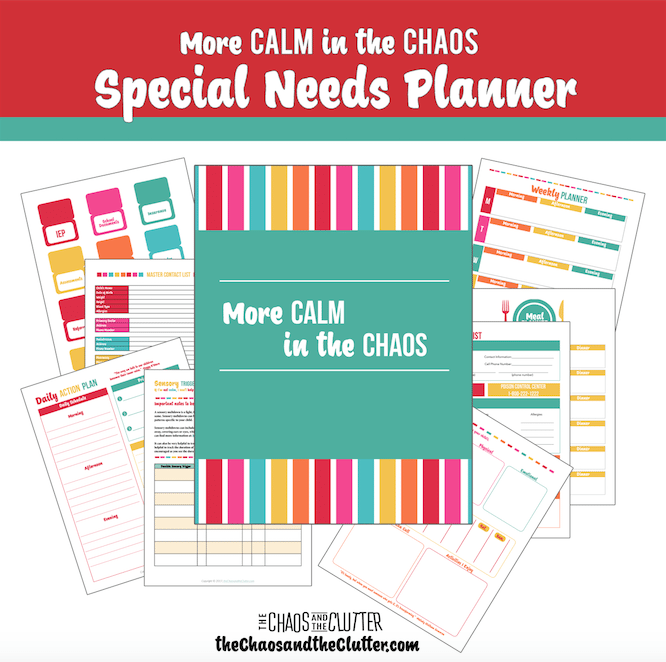
Keeping a record of your child’s fight, flight or freeze responses along with notes on possible triggers can help you to see patterns emerging. This is an effective tool for parents. You can create your own or you can use the sensory triggers log or behaviour tracker found in the More Calm in the Chaos printable planner.

Common triggers for fight, flight or freeze:

  • transition from one activity or place to another
  • hunger
  • thirst
  • sudden change
  • sensory overload
  • unpredictability/feeling lack of control
  • chaos
  • feelings of vulnerability or rejection
  • loss
  • loneliness
  • lack of attention
  • confrontation or “getting in trouble”
  • authority including parents, teachers, police, social workers depending on past history
  • praise
  • attention
  • calm
  • routine/structure

I know that both “attention” and “lack of attention” are on the list. That is because for some children, for instance those who have been neglected, lack of attention may be a trigger, while for others, such as those who have experienced sexual abuse, attention may be viewed as a threat and therefore, a trigger.

Likewise, both chaos and calm can be a trigger. For children who had an early childhood plagued by chaos or abuse, calm or routine and structure can feel unsettling and unfamiliar. Depending on the particular child, they may be triggered by peace in the home or they may be triggered by chaos or unpredictability.

One big signal to parents that a child is being triggered is when their response to something seems disproportionate to the situation. It is important to get to the root of your child’s triggers so that they can continue on their healing journey and begin to calm their responses to those triggers.

Join me for a free 5 part email series, Little Hearts, Big Worries offering resources and hope for parents.


Filed Under: Adoption, Sensory, Special Needs Parenting

Calming Your Child’s Fight, Flight or Freeze Response

By Sharla Kostelyk

The body’s alarm system is located in the brain. The amygdala, part of the limbic system, is designed to recognize danger and prepare our body to react to it. When it’s working properly, it should send signals only when there is real danger present. For some kids, the system is faulty and transmits false alarms, sending them into full blown fight, flight or freeze mode weekly, daily or even multiple times a day. Often, this faulty alarm system is due to increased cortisol levels due to prenatal stress or early childhood trauma. It can also be due to conditions such as SPD (sensory processing disorder), where sensory triggers cause alarm sensors to sound when no real danger is present.

Calming Your Child's Fight, Flight or Freeze ResponseTo make matters even more complicated, your brain sees higher functioning tasks such as logic and planning as nonessential in a crisis. so it effectively shuts down that part of your brain once the fight, flight, freeze response is triggered. This is good if you’re in mortal danger and need all your energy to run away, but bad if your amygdala is triggered by everyday occurrences such as loud noises or the smell of vanilla.
Fight can look like:

  • kicking
  • screaming
  • spitting
  • pushing
  • throwing anything he can get his hands on
  • his hands clasped in fists, ready to punch
  • glaring
  • clawing at the air
  • gasping for breath

Flight can look like:

  • darting eyes
  • restlessness
  • excessive fidgeting
  • doing anything to get away
  • running without concern for his own safety

Freeze can look like:

  • holding his breath
  • heart pounding and/or decreased heart rate
  • shutting down
  • feeling unable to move
  • escaping into his own mind
  • feeling numb
  • whining
  • daydreaming

Did you do a double-take when you read “whining” on the list of flight and freeze responses? When I first learned that whining can be a flight or freeze response, I was surprised too. When I thought more about it though, I realized that whining could be an effective stalling tactic, therefore could be a learned freeze response or could be used to escape from something unpleasant.

Having your body going into fight, flight or freeze response often and unnecessarily can be debilitating. It is no wonder that some of our kiddos struggle with regulation!

There are ways that you can help your child to recognize when their brain starts to respond this way. The first step in helping them out of fight, flight, freeze response is to recognize the signs as quickly as possible and help your child learn to identify them.

There are a few easy ways to explain brain concepts to your kids. I like to use “upstairs brain/downstairs brain” and “flipping the lid” (thanks to Dan Siegel – a very useful video of his explanation here), but you can also use the lizard brain explanation (video about that here).

Explain the amygdala to your child. Empower them with knowledge to enable them to talk about their responses and better understand themselves. This also gives them a scientific reason for why they respond the way they do instead of just feeling like they are “bad” or out of control. I particularly like this video for kids.

Talk about the things they notice in their bodies right before the fight, flight or freeze response like their breathing speeding up, a funny feeling in their tummy, tightness in their chest, or their face getting hot. Then arm them with calm down skills that they can use the next time they notice those same feelings creeping up.

It is beneficial to track the patterns of these fight, fright, freeze responses in your child. They are likely not aware of what their triggers are, but by tracking their behaviours and the preceding events and possible sensory triggers, you will be able to pinpoint patterns that emerge over time. This will help you not only avoid those triggers, but anticipate them and be able to help your child navigate through those situations because they will be prepared for them.

The More Calm in the Chaos planner is perfect for helping you track these patterns in your child. It includes tracking logs for sensory triggers and behaviour. It is designed to help you see patterns and get to the bottom of what is triggering your child.


While your child is in fight, flight or freeze mode, help them to focus on their breathing. Regulating their breathing can help bring their “upstairs brain” back on board.

Avoid using the words “calm down”. Instead, use “let’s breathe” or “in through the nose, out through the mouth” or “you’re okay, just breathe”. Keep your words simple. Remember that they are only accessing their base brain right now, so lecturing or trying to reason with them is pointless.

Having them do crossing the midline exercises can also help re-set their brain, as it encourages the right and left hemispheres of the brain to talk to each other which can help stimulate the “”upstairs” brain to get engaged.

Once their breathing is regulated, you can try other calming techniques. Squeezing a stress ball, spending time in a sensory room or calm down area, blowing bubbles, colouring, yoga poses, chewing bubble gum, doing sensory activities (particularly heavy work ones), and calm down bottles are all good strategies to use. Some will work better for your child than others, which is something else to keep track of for future purposes.

After the incident has passed completely and they are no longer triggered, you can start a discussion about what factors may have contributed to the fight, flight, freeze response, what they felt in their body just before it happened, and what techniques worked for calming them quickly.
Are you confused about what is triggering your child and causing them to go into fight, flight or freeze mode? You can read about common triggers here.

Join me for a free 5 part email series, Little Hearts, Big Worries offering resources and hope for parents.

Filed Under: Adoption, Sensory, Special Needs Parenting

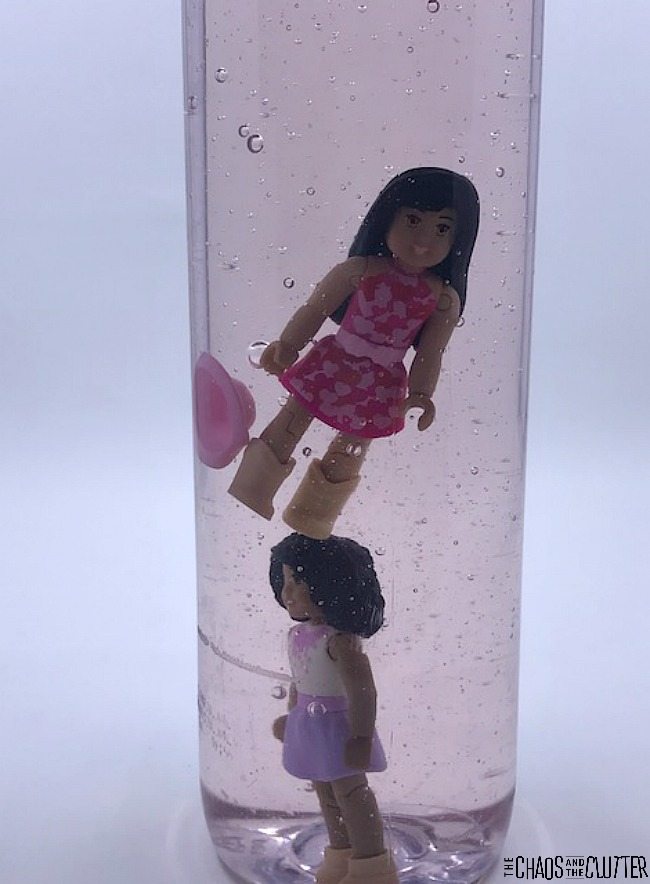
American Girls Sensory Bottle

American Girls sensory bottle square

By Sharla Kostelyk

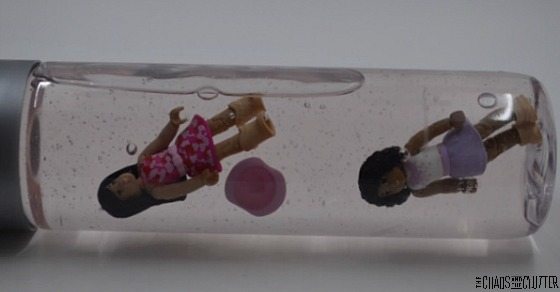
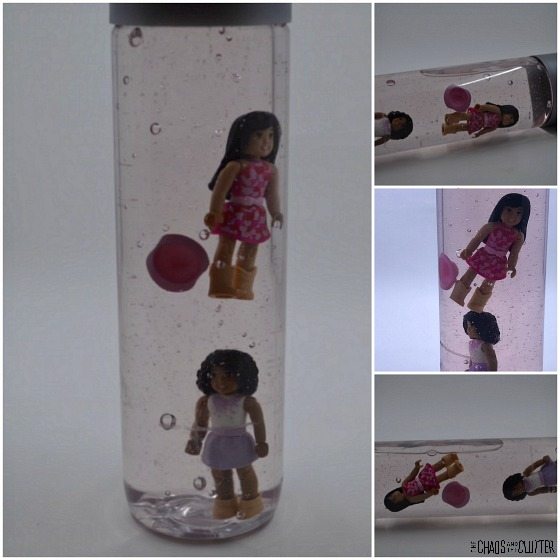
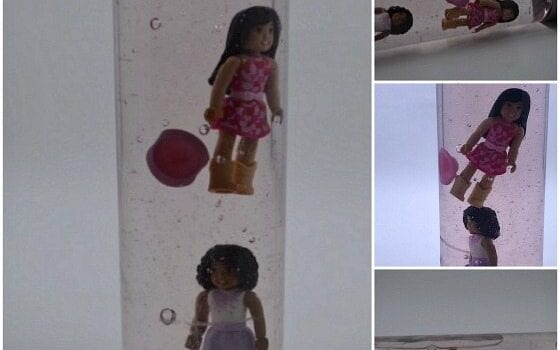
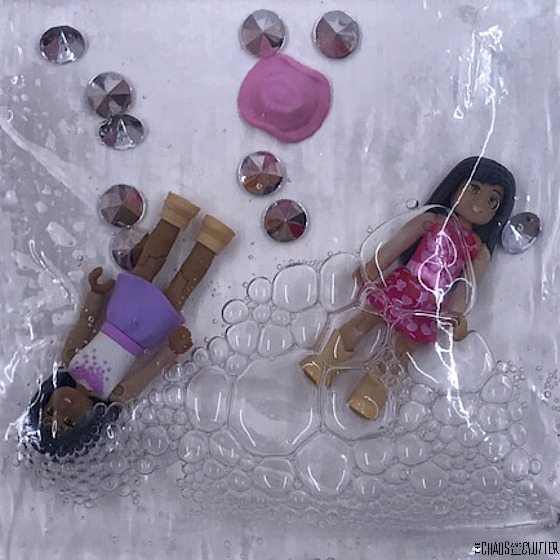
After the popularity of our American Girls Sensory Bag, I decided to use the same items and create an American Girls Sensory Bottle.

American Girls Sensory Bottle #sensorybottle

American Girls Sensory Bottle

Materials needed:

  • water bottle (I used a Voss bottle)
  • American Girls mini figures
  • liquid hand soap (I used a grapefruit hand soap because I thought the pink tint went well with this sensory bottle theme)
  • optional: hot glue

Empty the water bottle and fill it most of the way with the liquid hand soap before dropping in the American Girls mini figures. Place the lid back on the bottle.

If you’re using the sensory bottle with younger children, you will want to secure the lid in place with hot glue.

American Girls sensory bottle squareYou can customize this sensory bottle easily by choosing different mini figures. If you want to expand on this activity or get more use from the American Girl doll mini figures, you can create an American Girls Sensory Bag when you’re finished with the sensory bottle.
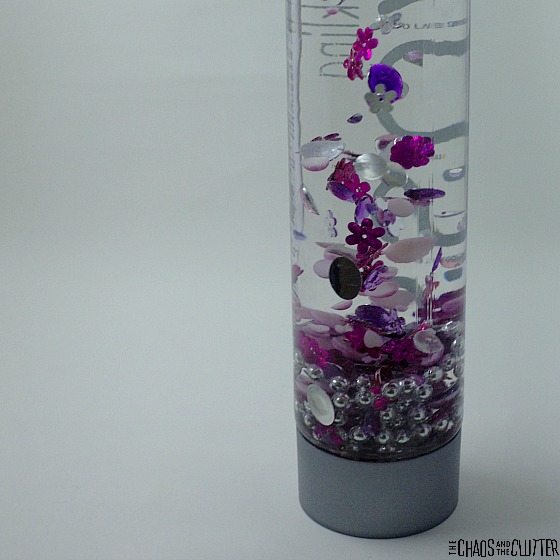
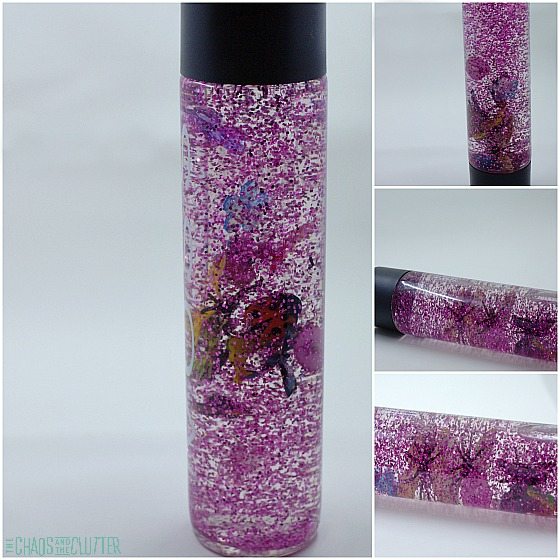
Looking for more simple and fun sensory activities? Join me for a free 5 part email series Sensory Solutions and Activities and get your Sensory System Behaviours Easy Reference Cards.

Pretty Princess Sensory Bottle

Spring Sensory Bottle

Filed Under: Sensory Tagged With: sensory bottles, sensory play

Space Sensory Activities

By Sharla Kostelyk

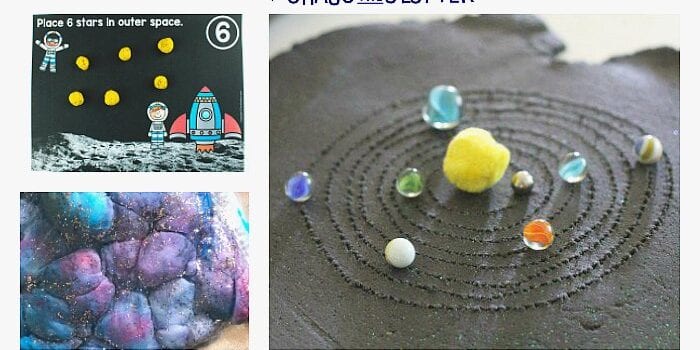
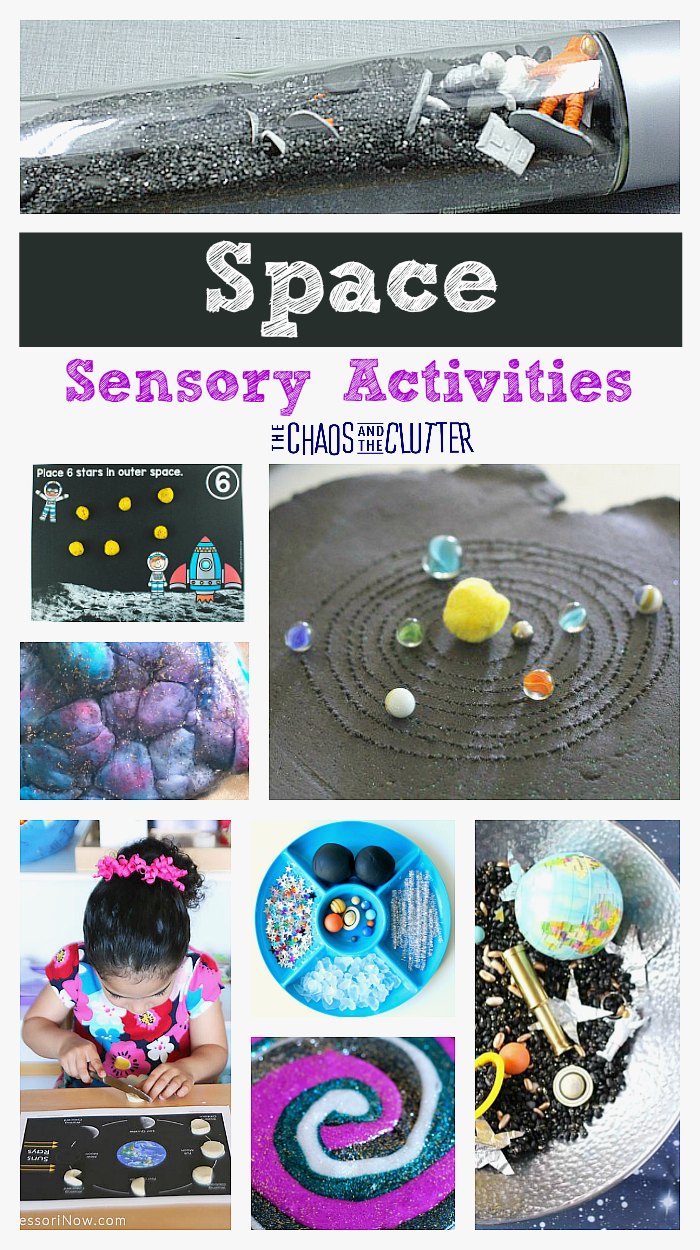
Learning about outer space is fascinating for kids (and adults) of all ages. These space sensory activities are a great way to supplement a unit on the solar system or just to inspire individual discovery while engaging all the senses.These space sensory activities are a great way to supplement a unit on the solar system or just to inspire individual discovery while engaging all the senses.

Space Sensory Activities

Weighted Space Sensory Bottle from here on The Chaos and The Clutter

Glow-in-the-Dark Solar System Sensory Bin from here on The Chaos and The Clutter

Space Sensory Bin from Sugar, Spice and Glitter

Solar System Activities for Kids – Hands-on Planet Fun! from The Natural Homeschool

Galaxy Sensory Bag from Views from a Stepstool

Space Playdough Mats over at PreKinders

Space Themed Sensory Tray from Learning and Exploring Through Play

Phases of the Moon Playdough Tray at Living Montessori Now

Galaxy Calm Down Bottle from Preschool Inspirations

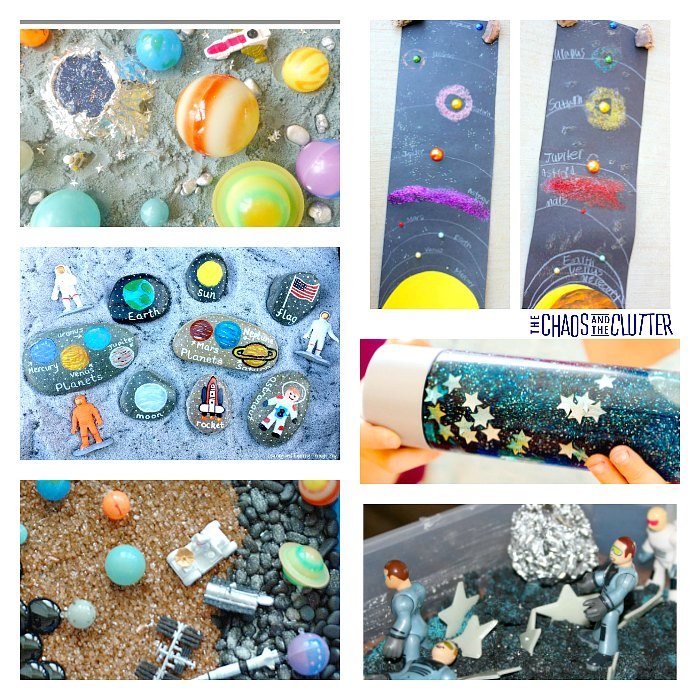
These space sensory activities are a great way to supplement a unit on the solar system or just to inspire individual discovery while engaging all the senses.

Outer Space Facts and Fun Activities! from The Natural Homeschool

Outer Space Playdough at I Can Teach My Child

Moon Sand Space Sensory Play Recipe from Little Bins for Little Hands

Outer Space Playdough Invitation from Fantastic Fun and Learning

Galaxy Slime from Two-Daloo

Outer Space Discover Bin from Craftulate

Space Theme Sensory Bin from Pre-K Pages (not pictured)

Our Space Explorer Adventure from The Natural Homeschool

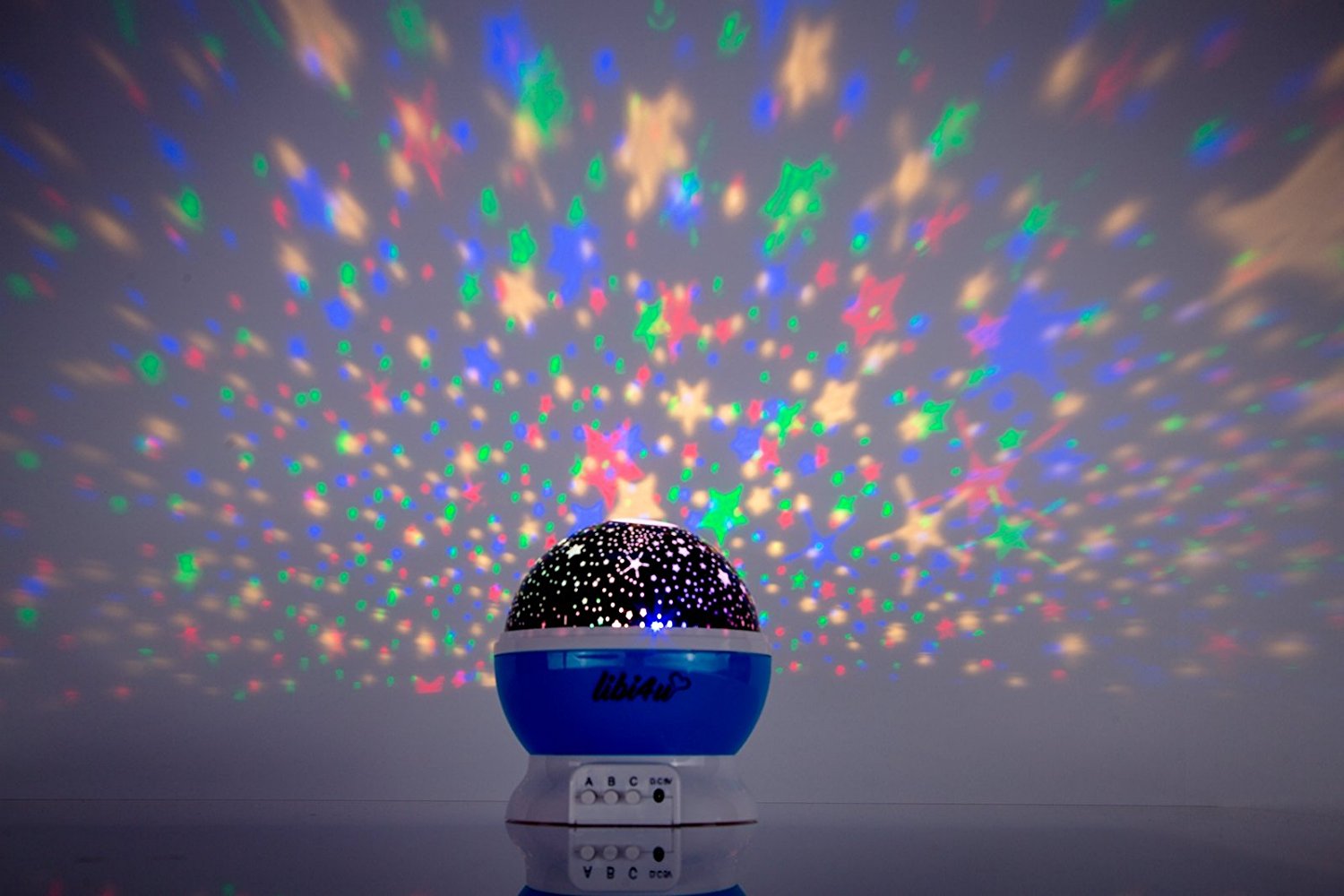
This space light adds a fantastic sensory element to any room and would be perfect for a calm down area or sensory room.


For more hands-on sensory activity ideas, join me for a free 5 part email series Sensory Solutions and Activities and get your Sensory System Behaviours Easy Reference Cards.

Filed Under: Sensory

16 Calming Sensory Activities With Lavender

By Sharla Kostelyk

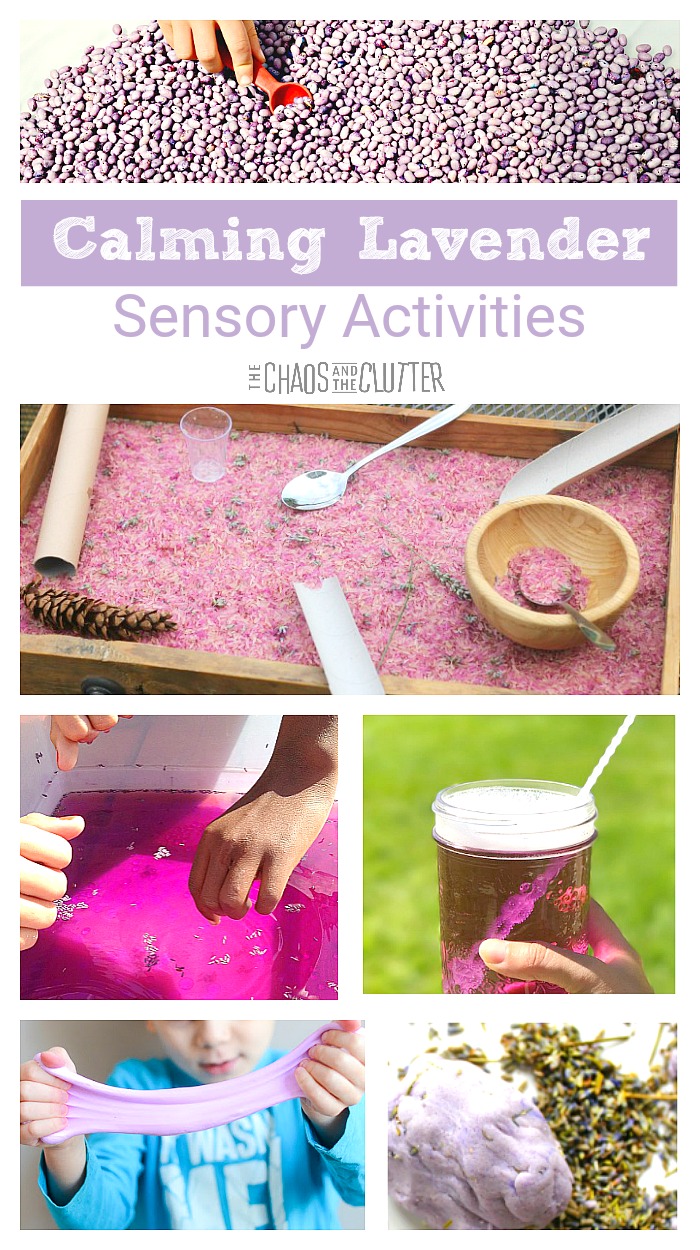
Sensory activities don’t always mean high-energy, fast-faced or messy activities. Some sensory activities help to calm children and bring about peace and calm to their little hearts. Lavender is a calming scent and can provide more grounding to a child who is struggling with anxiety or who is having a hard time self-regulating.In this post, we share some wonderful  Calming Lavender Sensory Activities that are sure to hit the spot!

Calming Sensory Activities With Lavender

Calming Lavender Scented Bubble Recipe from here at The Chaos and The Clutter

Calming Lavender Playdough from here at The Chaos and The Clutter (not pictured)

Lavender Scented Beans for Sensory Play from And Next Comes L

Calming Lavender Sensory Bin from here at The Chaos and The Clutter

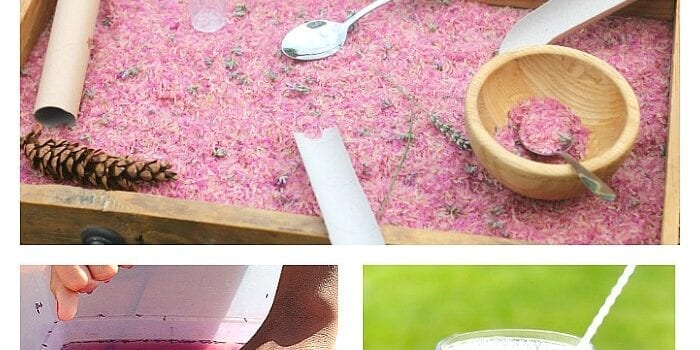
Natural Lavender Scented Rice from The Imagination Tree

Lavender Scented Slime from And Next Comes L

Natural Lavender Play Dough Recipe from Natural Beach Living

In this post, we share some wonderful  Calming Lavender Sensory Activities that are sure to hit the spot!

More Calming Sensory Activities

Lavender Scented Sensory Paint at The Preschool Toolbox

Lavender Soap Foam from And Next Comes L

Calming Lavender Water Bin for Sensory Play from Frogs, Snails and Puppy Dog Tail (not pictured)

Lavender and Glitter Sensory Salt at The Imagination Tree

Lavender Waterbead Sensory Bin from The OT Toolbox (not pictured)

Soothing Lavender Playdough Recipe at B-Inspired Mama (not pictured)

Lavender Epsom Salt Writing Tray from And Next Comes L

Lavender Scented Cloud Dough Recipe from The Imagination Tree

Calming Lavender Bath for Kids at Frogs, Snails and Puppy Dog Tail (not pictured)

My favourite lavender to use for calming is this essential oil.

If you’re looking for more calming sensory activities, join me for a free 5 part email series Sensory Solutions and Activities and get your Sensory System Behaviours Easy Reference Cards.

Filed Under: Sensory Tagged With: sensory play

  • « Go to Previous Page
  • Page 1
  • Interim pages omitted …
  • Page 28
  • Page 29
  • Page 30
  • Page 31
  • Page 32
  • Interim pages omitted …
  • Page 50
  • Go to Next Page »

Primary Sidebar

Categories

We are a participant in the Amazon Services LLC Associates Program, an affiliate advertising program designed to provide a means for us to earn fees by linking to Amazon.com and affiliated sites.

Copyright © 2026 • The Chaos and the Clutter • Site Design by Jeni @ The Blog Maven

Return to top of page

Copyright © 2026 · Chaos and the Clutter 2.0 on Genesis Framework · WordPress · Log in